

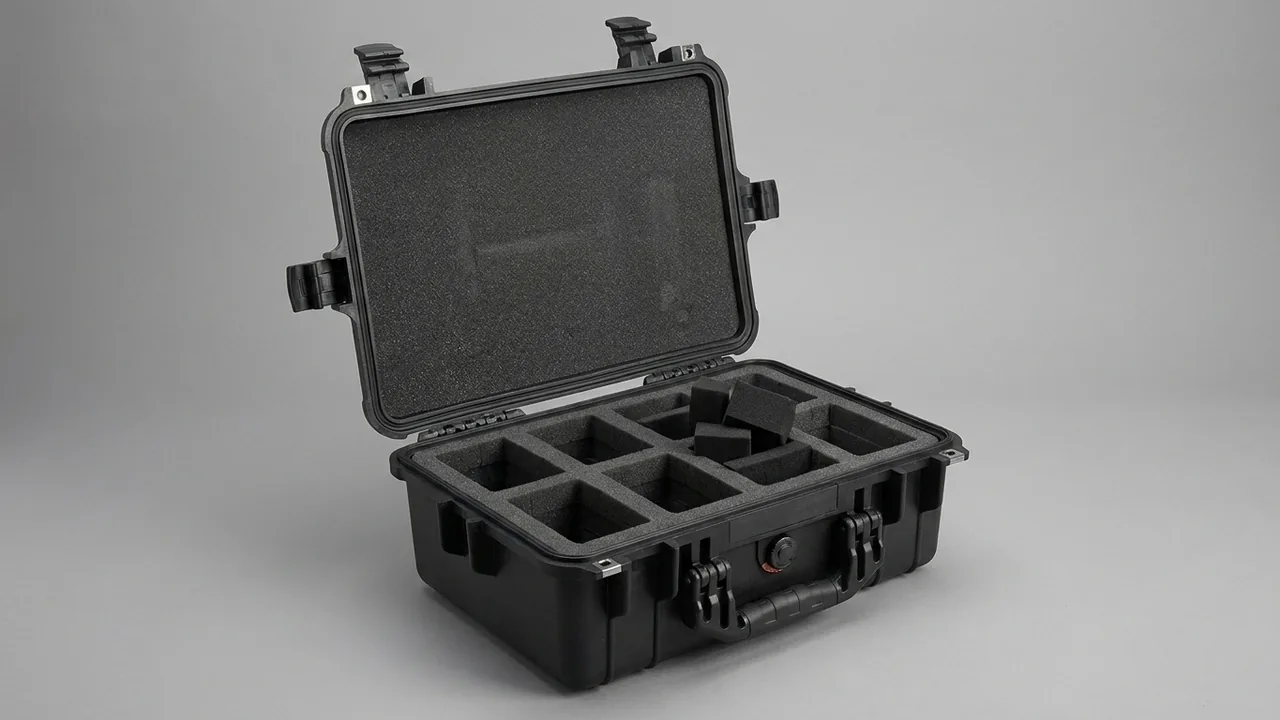
The granite polishing line, composed of a multi-head continuous polisher, transfer bridge, and polishing heads, is the final critical process determining the mirror gloss of stone slabs. The two categories of parts that are most delicate and most easily destroyed by transport are exactly the grinding heads and the polishing belts: heads fear contamination and counterweight shift, while belts fear creases and oil stains. The core judgement of this article is that configuring a moisture-proof anti-fouling compartmentalized transport case for granite polishing heads and belts, and maintaining belt coil curvature with a shaping bracket, turns arrival defect rate from "luck dependent" into "controllable." Focusing on the anti-fouling transport of granite heads and polishing belts, we break down the complete method from compartment layout, cushion padding, belt shaping, sealing grade, to acceptance documents.
A granite polishing head internally uses resin-bonded abrasive blocks or diamond discs, whose surface micropores easily absorb dust and oil. Once contaminated inside the package by adjacent metal chips or grease, it leaves periodic dark spots on the slab after installation, with rework cost far exceeding one case. The polishing belt, nylon or polyester substrate with cerium oxide or aluminum oxide abrasive layer, is more fragile: if pressed into a dead crease during long transport, the abrasive layer at the crease peels and the whole belt is scrapped. Therefore "anti-fouling" and "anti-crease" must be the two design anchors of the polishing line parts case. Reading below, you will master head counterweight protection, belt winding curvature control, dust-water sealing selection, and citable transport test paths such as ISTA and GB/T 4857.
Table of Contents
- Value and transport risk of granite polishing line parts
- Grinding disc and counterweight protection of heads
- Winding and crease avoidance of polishing belts
- Anti-fouling compartment layout
- Cushion padding and contact face protection
- Belt anti-crease and shaping bracket
- Dust-proof and water-proof sealing requirements
- Handling and forklift positioning
- Drop and vibration verification in transport
- Environmental corrosion and cleaning maintenance
- JUNZHIJIA custom solution
- Material and inspection delivery
- Storage and circulation suggestions
- Frequently Asked Questions FAQ
- Conclusion and Related Reading
Value and transport risk of granite polishing line parts
The output of a granite polishing line directly determines the first-grade rate of slabs. A continuous polisher configured with 16-20 heads can produce thousands of square meters per shift. As consumables and vulnerable parts, heads and belts must be shipped with the case almost every line overhaul, cross-plant transfer, or overseas project delivery. Their transport risk is summarized in three points: first, the head abrasive surface is contaminated causing slab defects; second, the internal counterweight or bearing shifts from collision destroying dynamic balance; third, the polishing belt is creased by pressure, damped, or contacted by solvent causing abrasive layer failure.
Unlike the marble saw machine case that focuses on long-part deflection, the polishing line parts case faces the combined difficulty of "small volume, high precision, fearing contamination and creasing." A single head may weigh only a few to a dozen kilograms but demands high precision; the belt is light yet fears shape failure. This "light but precise" characteristic means packaging emphasizes clean isolation rather than pure load bearing, sharing the idea with woodworking machine case that protects precision cutter shafts.
From a business view, granite processors are mostly order-driven, and equipment downtime directly breaches contracts. A reasonably designed parts case essentially converts "transport loss" from an uncontrollable variable into a budgetable cost. Front-loading protection is far better than the passive situation of discovering belt creases on arrival and then urgently air-freighting replacements.
Grinding disc and counterweight protection of heads
A common granite head structure includes a bottom grinding disc (resin or metal bonded diamond or silicon carbide), a middle counterweight block, and a top connection flange with bearing housing. The most protected during transport are the grinding disc working face and the fixed state of the counterweight. Once the disc is scratched by metal chips or stained with oil, it leaves dark lines on the slab that cannot be polished away; if the counterweight loosens and shifts from impact, it changes the head center of mass, causing vibration noise after installation or even spindle damage.
Protection is in two layers: wrap the working face with anti-static clean film, then add a PE foam positioning sleeve outside the film so the disc contacts neither the wall nor other parts; re-tighten the counterweight and flange joint to process torque before boxing, mark with torque seal, and lock its circumferential and axial freedom with limiter blocks inside the case. For heads with bearings, inject rust-preventive grease into the bearing cavity or fit a temporary protective cap to block transport dust from the raceway. Referring to the isolation process of a sealed cushion case, heads should be positioned in an independent clean compartment.
It must be noted that heads should not share a compartment with polishing belts. If the cerium oxide abrasive layer on the belt rubs the head disc, cross-contamination occurs; both should have independent clean space, consistent with the logic in a wire saw machine case that separates diamond wire and flywheel by compartment, both being "isolation by contamination characteristic."
Before boxing, every head should pass a final calibration audit: measure grinding disc face runout and axial play with a dial indicator, record the original calibration value for each head, and tag the flange with its matching serial number. A granite continuous polisher commonly carries 16-20 heads, and the counterweight blocks on one machine are managed as matched mass groups; a block whose mass falls outside its group must never be mixed in, because uneven stock removal across heads then prints periodic ripple onto the slab. Transport is exactly what destroys that group order, so the liner must locate each head by number and must never stack two different numbers in one cell. On arrival, verify the tag against the recorded calibration value and re-measure face runout, so any counterweight shift caused by transit is found before installation rather than after a costly tear-down.
Winding and crease avoidance of polishing belts
The polishing belt is the part most afraid of pressure in the polishing line. Its substrate is nylon or polyester fabric with a composite cerium oxide or aluminum oxide abrasive layer on the surface, flexible overall but weak in crease resistance. If pressed into a dead crease by heavy objects during transport, the abrasive layer delaminates from the substrate at the crease, and after installation that spot cannot polish effectively, forming bright-dark bands across the slab. More hidden is the "soft crease" where curvature is abnormal though not broken, causing belt deviation and uneven tension.
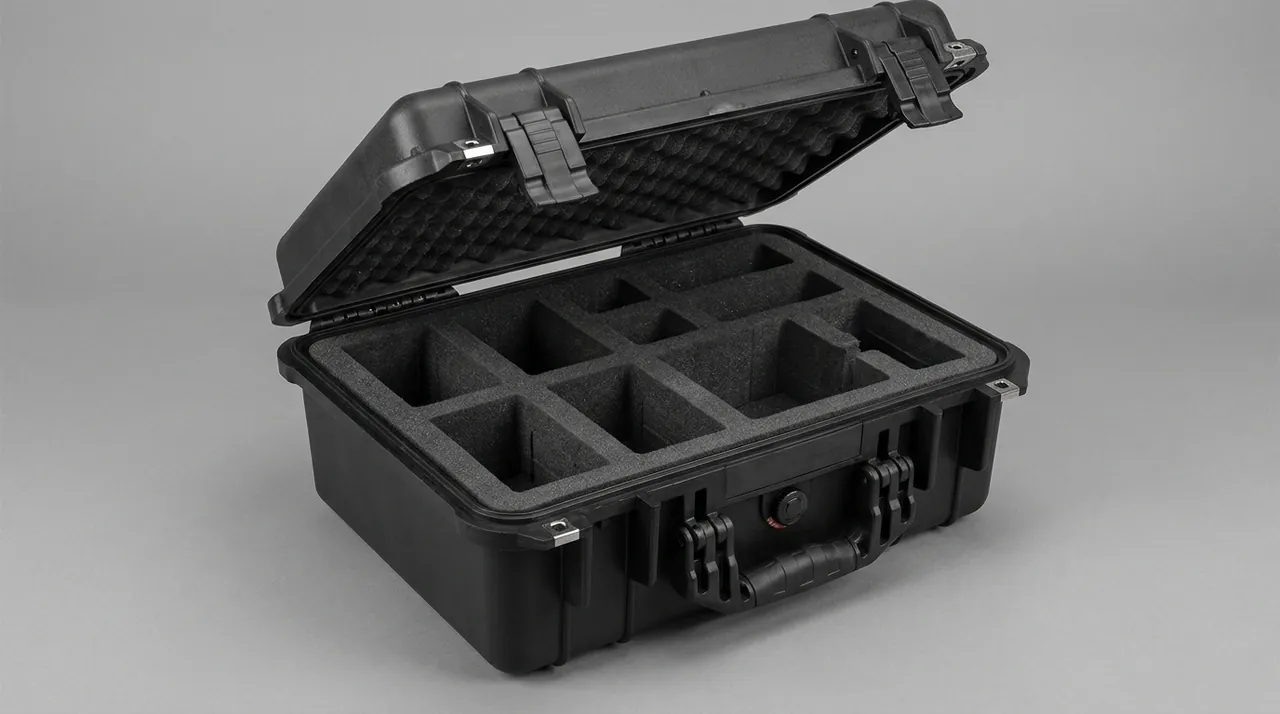
The fundamental method to avoid creases is "shaped winding plus rigid support." The belt should maintain its factory natural winding curvature inside a dedicated coil or arc bracket, absolutely forbidding folding or acute-angle bending; the coil outer wall has limit flanges to prevent the belt from loosening and slipping during transport. For long belts, spiral shaping winding on a flanged drum keeps each turn curvature consistent. Similar to the rubber mold case protecting elastic curved surfaces, the core of a belt case is "maintaining factory curvature without bending."
Layer isolation during winding is also important: line low-friction anti-stick paper or PE film between belt layers to avoid the abrasive layer sticking to the substrate back, so unfolding on arrival will not tear. For cut joint belts, wrap the joint with hard cardboard corner guards to prevent local crush causing misaligned joints. These details determine the arrival yield of an expensive belt.
Anti-fouling compartment layout
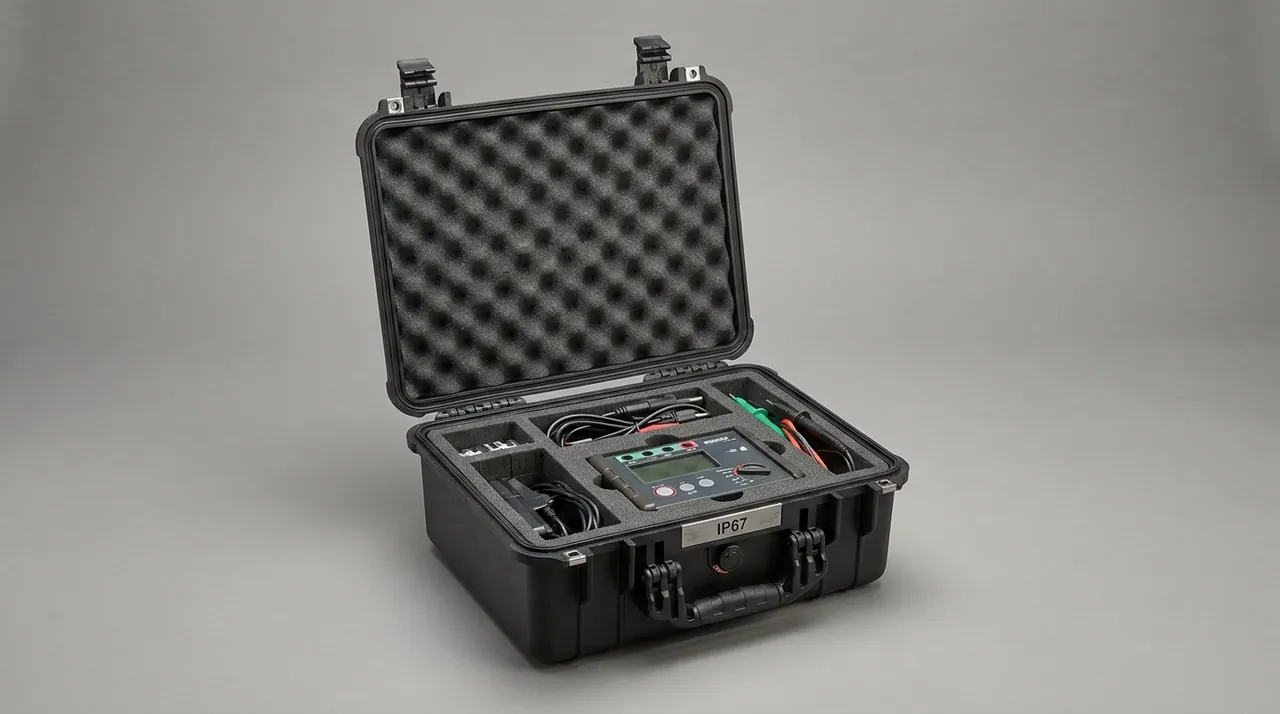
The compartment logic of a polishing line parts case revolves around "pollution source grading." It is suggested to divide into: head clean compartment (highest cleanliness), belt shaping compartment (curvature control and crease prevention), metal accessory compartment (bolts, flanges, bearings, general dust-proof allowed), and document and consumable compartment (sealing rings, gaskets). The head clean compartment inner wall should be covered with anti-static clean film and hold desiccant, targeting an environment close to the dust control idea of a cleanroom equipment case, only with a moderately relaxed grade.
The physical isolation between compartments must be reliable: use solid-wall EVA partitions rather than soft curtains to prevent parts shifting compartments during transport jolts. The head compartment and metal accessory compartment must be hard-isolated to stop metal chips drifting in. The belt compartment should be independent and not pressed from above by other compartments, leaving enough top space to avoid heavy pressure. Consistent with the concept of removable divider system, modular partitions facilitate flexible reconfiguration of the internal layout per different orders.
In pollution control, it is suggested to paste an "opening cleaning checklist" on the inside of the lid, listing three items: visual head working face, visual belt crease, and desiccant status, letting the receiver confirm contamination and dampness at the first moment of opening, facilitating responsibility division and early claims.
Granite dust is the most stubborn contamination source in a polishing workshop. Granite contains quartz, and the fines produced by cutting and polishing sit near Mohs 7 in hardness with angular particles and long suspension time; with sizes down to a few hundred nanometres they pass through ordinary cotton cloth and low-density open-cell foam. If dust settles in the head clean compartment or the belt shaping compartment, it is carried into the grinding interface at installation and produces slab scratches or abnormal abrasive wear. Compartment design should therefore front-load dust control: blow the case and liner surfaces clean before boxing, choose closed-cell foam so microparticles are not absorbed, and use solid-wall EVA rather than soft curtains between the head and belt zones to limit cross-compartment drift. Storage and handling areas should also sit upwind of the polishing units, with an outer dust cover where needed and a full wipe-down before reuse.
Cushion padding and contact face protection
Head and belt contact face protection is achieved by cushion padding. The head positioning sleeve is carved from 30-45 kg/m³ density EVA, its inner wall fitting the disc shape, with 8-12 mm buffer gap outside; PE cross-linked foam is padded between the belt coil bracket and case bottom to absorb vertical shock. Padding selection can refer to density and rebound data in foam liner material comparison, avoiding wrong hardness.
Contact face protection has another meaning: preventing metal direct contact between parts or with the wall causing collision scars. All exposed metal faces are suggested to be covered with temporary protective film before loading, and the positioning groove lined with flannelette or non-woven fabric to reduce fretting wear. For the precision connection flange on top of the head, add a hard top cover inside the groove to prevent upper parts from falling and smashing it. This "soft-hard combined" padding idea is also systematically discussed in the instrument case selection guide.
It must be reminded that cushion padding is not the thicker the better. Over-thick foam collapses under constant-pressure creep during long sea voyages, instead making the limiter fail. Empirically, static compression of support pads is controlled within 20% of original thickness with dynamic load margin reserved, consistent with the material principle of the marble gang saw case.
Belt anti-crease and shaping bracket
The shaping bracket is the soul of the belt compartment. Two common structures: one is a removable arc bracket made into a semi-circular support by the belt natural diameter, with the belt laid flat maintaining curvature; the other is a coil bracket where the belt winds on a flanged drum, suitable for long belts. Either way, the bracket must be rigidly connected to the case bottom and cannot "float," otherwise bracket shift during transport instead twists the belt. This can be analogized with the coil core positioning idea of a paper roll transport case.
The bracket material should use light aluminum alloy or engineering plastic, ensuring stiffness while controlling case weight; the contact face with the belt is covered with low-friction PE film or flannelette to avoid friction fuzz. For very long belts, double brackets with segmented support can be made inside the case, each independently limited. The arc tolerance of the shaping bracket should be controlled within ±2 mm to ensure the belt naturally fits without suspension, which is the key process parameter to prevent "soft crease."
Bracket fixing bolts should be treated with anti-loosening, and confirmed with torque mark after boxing. It is suggested to attach a bracket assembly diagram with the case, facilitating reuse after return and off-site assembly, reducing dependence on professionals.
Dust-proof and water-proof sealing requirements
Polishing line parts have clear dust-proof and water-proof requirements. The head clean compartment is suggested to reach IP54 of GB/T 4208 (dust-proof, splash-proof), the belt compartment is suggested above IP54 with built-in desiccant because it fears dampness, and the overall case outer shell in dusty stone areas should preferably be engineering plastic or film-coated plywood. It needs stating that the IP grade describes the inherent protection of the case, not that the interior is already clean, and cleaning before opening cannot be omitted.
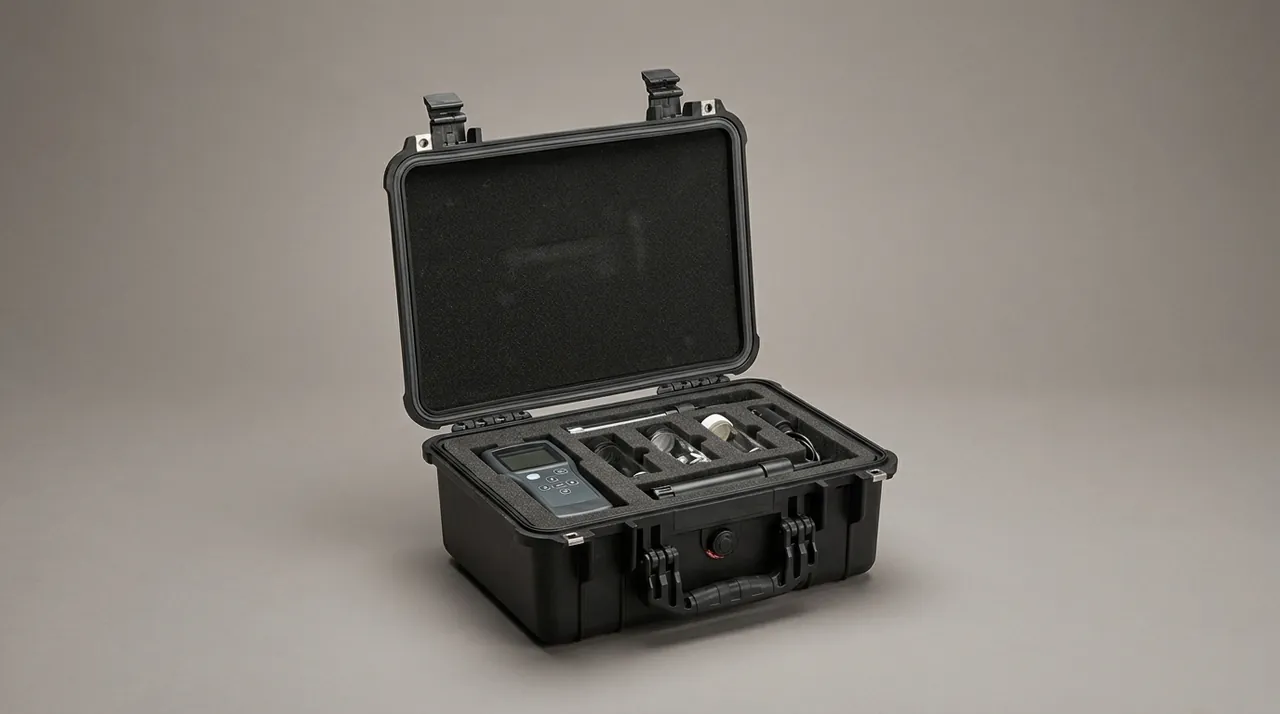
Reliable sealing comes from a continuous foamed strip (EPDM or silicone) held down by compression buckles rather than friction alone. Wire holes and ventilation holes are blocked with PG connectors or a case pressure equalization valve, relieving the case internal "breathing" moisture absorption caused by day-night temperature difference at sea. Unlike the full-immersion protection of an IP67 protective case, the polishing line case focuses on "dust control and humidity control" rather than pressure water-proofing, and grade selection should be realistic.
Another side of dust-proofing is oil pollution prevention. Stone plants commonly have cutting fluid and lubricating oil drifting; if packaging is temporarily stored near machine shops, the surface may be stained with oil and penetrate. Therefore the case surface should use smooth easily-wiped material, and the storage guideline should explicitly require keeping away from oil and solvent storage.
A granite polishing line normally runs wet, and water mist plus abrasive slurry splash into neighbouring areas. Once the slurry dries it leaves a pale hard shell on the case surface, and the fine abrasive trapped in that shell is enough to drop into the seal groove the moment the lid opens, wearing the sealing strip early or preventing it from closing properly. The case surface should therefore be a smooth easy-wipe material, and before every reuse the slurry residue must be removed with a damp cloth and neutral cleaner, rinsed with pure water and fully dried before the lid is closed. The seal groove is the most overlooked spot; inspect it quarterly with a cotton swab for hardened particles and replace the strip if needed. As containment, fit a splash guard or drip tray between the polishing units and the temporary storage area to cut slurry drift at the source.
Handling and forklift positioning
Polishing line parts cases are mostly medium-sized, handled by forklift and manual cooperation. The case should carry GB/T 191 markings "lift here," "center of gravity," "stacking layer limit," "keep dry," "this way up," and set forklift pocket reinforcement plates at the bottom to prevent repeated insertion tearing the case bottom. Combined with a case wheel and trolley handle, it can be pushed short distances inside the workshop to reduce forklift frequency.
The key to forklift positioning is "pocket aligned, slow up and slow down." Heads and belts are precisely positioned fragile parts inside, and violent jolts will wear through the limiter blocks. It is suggested to add anti-slip rubber pads between the case bottom and limiter blocks when boxing, and mark "fragile precision part, handle gently" outside. For multi-case stacked orders, the bottom case should mark the maximum stacking layers to avoid crushing the upper belt compartment.
Manual handling should prevent drops. If a medium case single weight exceeds 25 kg, configure two-person handles or pulley blocks, forbidding single-person barbaric lifting, consistent with the ergonomic consideration of a portable transport box.
Drop and vibration verification in transport
Reliability verification relies on standard tests. Domestic uses GB/T 4857 series for drop, stacking, vibration; international projects can overlay ISTA 3 series (such as ISTA 3A single piece, 3E unitized) or ASTM D4169 distribution cycle. For the "light but precise" characteristic of the polishing line, vibration tests should cover broadband random vibration, focusing on monitoring head counterweight displacement and belt coil bracket acceleration response to confirm limiter validity.
Drop height is set by the mass grade, with the corner drop aimed at the head bay to confirm the disc sleeve still has buffer left. Complete test design can refer to ISTA transport test procedure and ASTM D4169 distribution cycle. For environmental verification, MIL-STD-810H methods may be cited as a reference framework covering combined thermal, humid, and vibrational extremes, yet this citation is strictly an environmental test basis and must not be read as a military certification; JUNZHIJIA does not assert any military qualification, and the reference scope should be stated explicitly to remain compliant with the MIL-STD-810H compliance note.
It is suggested to do "loaded transport simulation" on each batch first piece: put real heads and belts into the case, run a measured road section or vibration table, open and check displacement and creases, which is more credible than pure theoretical estimation.
Environmental corrosion and cleaning maintenance
Polishing line parts contain metal head seats and bearings, and the high humidity of stone areas plus cutting fluid drift constitute dual threats of corrosion and contamination. Place desiccant and humidity indicator cards inside the case; coat exposed metal faces with temporary rust-preventive oil, wiped on arrival. Referring to the salt fog idea of GB/T 10125, exposed case hardware preferably uses 304 stainless steel or dichromate treatment.
Cleaning maintenance emphasizes "check on opening, clean on return." On arrival, first check desiccant and belt creases; after return, clean internal dust, check sealing strip aging, replace failed desiccant. High-frequency cases build a protective case cleaning and maintenance ledger, replacing limiter blocks when permanent dent exceeds 30%. The belt compartment shaping bracket should be returned to original position after return to avoid next-batch assembly errors.
When a case stays in storage beyond three months, open it every two months to read the humidity card and, if needed, swap the desiccant or apply nitrogen sealing. This inspection cadence belongs in the spare-parts management procedure instead of being left to the false comfort of "finished at boxing."
JUNZHIJIA custom solution
Addressing the moisture-proof anti-fouling needs of granite polishing heads and belts, JUNZHIJIA develops compartmentalized transport cases, providing OEM/ODM customization from customer drawings and samples, serving wholesalers, regional agents, and overseas stone engineering projects. Its process determines the head positioning sleeve contour and belt shaping bracket arc by 3D arrangement, then CNC-carves EVA and forms aluminum alloy brackets to ensure batch consistency; it can separately mold the belt compartment per contract, achieving the flexible combination of "universal head compartment plus dedicated belt bracket," supplying globally.
The customization process contains four nodes: drawing confirmation, first-piece proofing, transport test, and batch delivery. It is suggested that customers provide the head 3D model and belt natural coil diameter to calibrate positioning sleeve gap and bracket arc; if modeling is impossible, physical scanning is acceptable but needs larger tolerance. Judged by the criteria in how to choose a case OEM factory, a supplier's small-batch flexibility and proofing speed say most about fit for polishing line spare-parts work.
It must be reminded that the custom case external size is constrained by container interior, and the disassembly convenience of the belt shaping bracket should also be included in design. If an over-long belt needs on-site winding, the bracket should support quick assembly to avoid inability to restore curvature on arrival without professional equipment.
Material and inspection delivery
At delivery, acceptance splits into full appearance inspection and sampled performance checks. Appearance covers marking completeness, sealing-strip continuity, and liner fit; performance sampling follows the custom case acceptance AQL plan, with batch verification of drop or vibration and a recommended AQL of 1.0 for critical items and 2.5 for minor ones.
On the document side, JUNZHIJIA can issue per contract a material certificate that lists the case plastic grade, foam density, and UL94 flame-retardant class, together with liner CNC machining records and transport test reports citing the specific clauses of GB/T 4857, ISTA, and ASTM D4169; for export we can add IP grade evidence and GB/T 10125 salt-fog data on request. Serializing every case, or filing a report per production run, ties each paper to a physical shipment, which separates a packing fault from a handling fault in global transit and cuts dispute cost, while also feeding the machine builder's FMEA file and spare-parts records.
Storage and circulation suggestions
The polishing line parts case is a reusable asset. After return, clean dust, check sealing strip, replace failed desiccant; high-frequency cases build "in-out registration plus bracket life count." Belt shaping brackets are suggested to be fixed with the case or stored in a dedicated bag to avoid loss causing next batch inability to shape. Case hardware preferably uses 304 or dichromate for salt resistance.
Storage environment should be dry and ventilated, away from oil and solvent, with pallets under the case to prevent ground moisture. Multi-case stacking marks maximum layers, and bottom load bearing should be checked. Consistent with the aging law of protective case service life, plastic cases become brittle under long-term ultraviolet exposure, so outdoor temporary storage should be covered.
Include the case in the equipment procurement technical agreement attachment, making packaging part of the delivery standard. When heads and belts always circulate in a "protected state," the slab first-grade rate and equipment life-cycle cost both benefit.
Frequently Asked Questions FAQ
Q: Why can't granite heads be shipped in ordinary cartons? A: Ordinary cartons lack the three protections a polishing head needs: structural stiffness, dust isolation, and moisture resistance. In a dusty humid stone plant, a carton quickly wets and softens, losing its ability to support the part. The head grinding disc is a resin or metal bonded diamond surface full of micropores that readily suck up paper fibers, stray metal chips, and the oil film drifting from nearby cutting-fluid zones, leaving periodic dark bands on slabs after installation; once the disc is stained the whole head is effectively scrapped. Cartons also provide no shaping limiter, so heads slide inside and knock their precision flanges and bearing housings. The correct method is an engineering plastic or film-faced plywood case carrying an anti-static clean film compartment and an EVA positioning sleeve that wraps and isolates the working face while locking its degrees of freedom, removing both contamination and collision risk at the source rather than patching them later.
Q: Why can't polishing belts be pressed into creases? A: A polishing belt is a nylon or polyester fabric carrying a cerium oxide or aluminum oxide abrasive layer, flexible yet poor at resisting creases. When a heavy object presses a dead crease, the abrasive layer peels from the substrate exactly at that line, and after installation that segment cannot polish, producing bright-dark stripes across the slab and often scrapping the entire belt. A subtler failure is the "soft crease": the belt is not broken but its curvature is locally wrong, which makes it wander and tension unevenly, accelerating wear. A crease is also effectively irreversible, because once the binder at the fold line has cracked no field repair can restore the abrasive layer, so the belt must be replaced and the machine stopped until a spare reaches the site. The remedy is "shaped winding plus rigid support" inside an arc cradle or flanged coil that keeps the factory curvature, with anti-stick paper between layers and an absolute ban on folding or sharp bending. Holding the original curvature without bending is the decisive process control that determines whether an expensive belt arrives usable or not.
Q: Can heads and belts be placed in the same compartment? A: Keeping them together is strongly discouraged. The head disc is a precision face demanding the highest cleanliness, while the belt carries a cerium oxide abrasive skin that, if it touches the disc, creates mutual contamination; their hazard profiles are opposite yet they damage one another. The proper layout separates them: heads go into an independent clean compartment lined with anti-static film and desiccant, belts go into a separate shaping compartment that controls curvature and avoids top weight, and metal fittings get their own general dust-proof bay. Solid-wall EVA partitions hard-isolate each zone so nothing shifts during jolts. Consider what happens on a real granite polishing line: a scratched disc face is only discovered after the first slabs run through, and a contaminated belt shows up as a repeating mark at a fixed pitch. Separate compartments also keep inspection honest, because the head bay is checked for dust while the belt bay is checked for creases, and one contaminated module can be swapped without disturbing the rest of the shipment. This zoning by contamination type is not optional trimming but a hard requirement that directly drives down the arrival defect rate of a polishing line spare-parts shipment.
Q: Should the case liner use EVA or PE foam? A: The two foams play different roles, so the question is not which is better but where each belongs. EVA rebounds well and CNC-carves cleanly, making it ideal for head positioning sleeves and limiter blocks; it is cheap and fast, fitting small and medium batches. PE cross-linked foam has low compressive creep and wide temperature tolerance, so it suits belt coil cradles and case-bottom support pads where long life and reuse matter. As a rule, keep support-pad static compression under 20 percent of original thickness with reserve dynamic margin, because over-thick soft foam collapses under sea-voyage constant load and then the limiter fails. In practice PE carries the main support and EVA handles the positioning, balancing accuracy and durability without wasting budget on a single material, a balance also seen in the marble gang saw case material choice. For a granite polishing line spare-parts case the usual split is a PE support layer under the lengthwise beams and an EVA carved shell around each head, because the two failure modes differ: creep governs the long support spans, while abrasion resistance and carving accuracy govern the cavities.
Q: How to moisture-proof the belt compartment during sea transport? A: Belt fear of dampness is really fear of abrasive-layer bonding failure, so moisture control is threefold. First, load enough desiccant, silica gel or montmorillonite, with a humidity indicator card for visual check. Second, fit a waterproof breathable valve using an ePTFE membrane to equalize the pressure swing caused by day-night temperature change and stop negative-pressure suction of humid air. Third, place low-friction anti-stick paper between belt layers to limit trapped moisture. Total sealing is wrong because it makes the lid hard to open and lets negative pressure pull it inward, so "controlled breathability" is the correct idea. Since a container crossing equator and temperate zones can see temperature swings above 20°C, these three measures must work together; a sealing strip alone will not solve the problem. On arrival, read the humidity card first and judge belt dampness before fitting. We also recommend a humidity indicator card with three colour steps, so the receiver can judge severity without instruments, plus a rechargeable desiccant pack that can be dried in an oven and reused, which lowers consumable cost on frequent shipments.
Q: Which standard for transport tests, and can MIL-STD-810H be used? A: For domestic projects we apply the GB/T 4857 series covering drop, stacking, and vibration; for international ones we add ISTA 3, for example 3A for single parcels or 3E for unitized loads, or use ASTM D4169 distribution-cycle risk assessment. Because polishing parts are light yet precise, the vibration program uses broadband random excitation and tracks head counterweight shift and belt-cradle acceleration, while drop height follows mass grade with a dedicated corner drop on the head bay. On the question of MIL-STD-810H, it may be borrowed as a method framework for combined high-low temperature, damp heat, and vibration environments, but it is only an environmental test reference and never a military certification; the product makes no military-qualification claim, and the citation scope must be stated plainly to stay compliant, matching the wording of the MIL-STD-810H compliance note. For a granite polishing line we prefer to test with heads and belts loaded in their production posture, because an empty-case test says nothing about how the carved cavities behave under a real mass distribution.
Q: Can JUNZHIJIA customize the case according to our head model? A: Yes. Built for the moisture-proof anti-fouling needs of granite polishing heads and belts, JUNZHIJIA delivers compartmentalized transport cases through OEM/ODM work from customer drawings or samples, supplying wholesalers, agents, and overseas stone projects worldwide. The workflow runs drawing confirmation, first-piece proofing, transport verification, then batch release; clients are advised to supply the head three-dimensional model and the belt natural coil diameter so the sleeve gap and bracket arc are calibrated, while physical scanning is acceptable when modeling is impossible though it needs looser tolerance. The belt bay can be molded separately to realize a "universal head bay plus dedicated belt bracket" combination. Early in customization one must fix the container inner profile and bracket disassembly ease, otherwise the curvature cannot be restored on site without specialized equipment. Send the head three-dimensional model together with the machine head count and pitch, because the number of heads decides how many cavities share one liner and therefore the wall thickness left between them.
Q: What inspection documents can the supplier provide on delivery? A: Against the contract, JUNZHIJIA issues a material certificate listing the case plastic grade, foam density, and UL94 flame-retardant class, plus liner CNC machining records and transport test reports that cite concrete clauses of GB/T 4857, ISTA, and ASTM D4169. For shipments to the EU or North America we can additionally attach IP grade test data and GB/T 10125 salt-fog results on request. To keep evidence credible we recommend numbering each case, or filing a single report for the whole batch, so every document maps to a physical batch, which helps separate a packaging fault from a handling fault during cross-border transit and cuts dispute cost; these sheets also serve as quality inputs to the buyer's FMEA file and spare-parts records. Ask for foam density and cell structure to be stated on the same certificate as the plastic grade, because liner behaviour depends on both and a split document set is hard to audit.
Q: What should be noted for returning and reusing the protective case? A: Each returned case should be cleared of internal dust, its sealing strip checked for aging or cracks, and any spent desiccant replaced at once; high-frequency cases deserve an "in-out log plus bracket life count" so modules are swapped when limiter dent exceeds 30 percent of original thickness. Belt shaping cradles travel with the case or in a marked bag so they are not lost and the next batch can be shaped correctly. Hardware should be 304 stainless or dichromate treated for salt resistance. Keep storage dry and ventilated, away from oil and solvent, with the case on pallets above floor moisture. Record the shaping cradle serial number in the same case file as well, so cradles from two different orders are never mixed together and made to support a belt they were not cut for. Treating the case as a reusable asset instead of a throwaway consumable steadily reduces the per-shipment cost of spare-parts logistics over the equipment lifetime.
Conclusion and Related Reading
The granite polishing line head and belt, one fearing contamination and the other fearing crease, must be treated separately inside a compartmentalized protective case. Isolating pollution with a clean compartment, holding curvature with a shaping bracket, and letting the standard test program sign the design off are what get a light but precise part to the machine unscathed.
Related Reading