

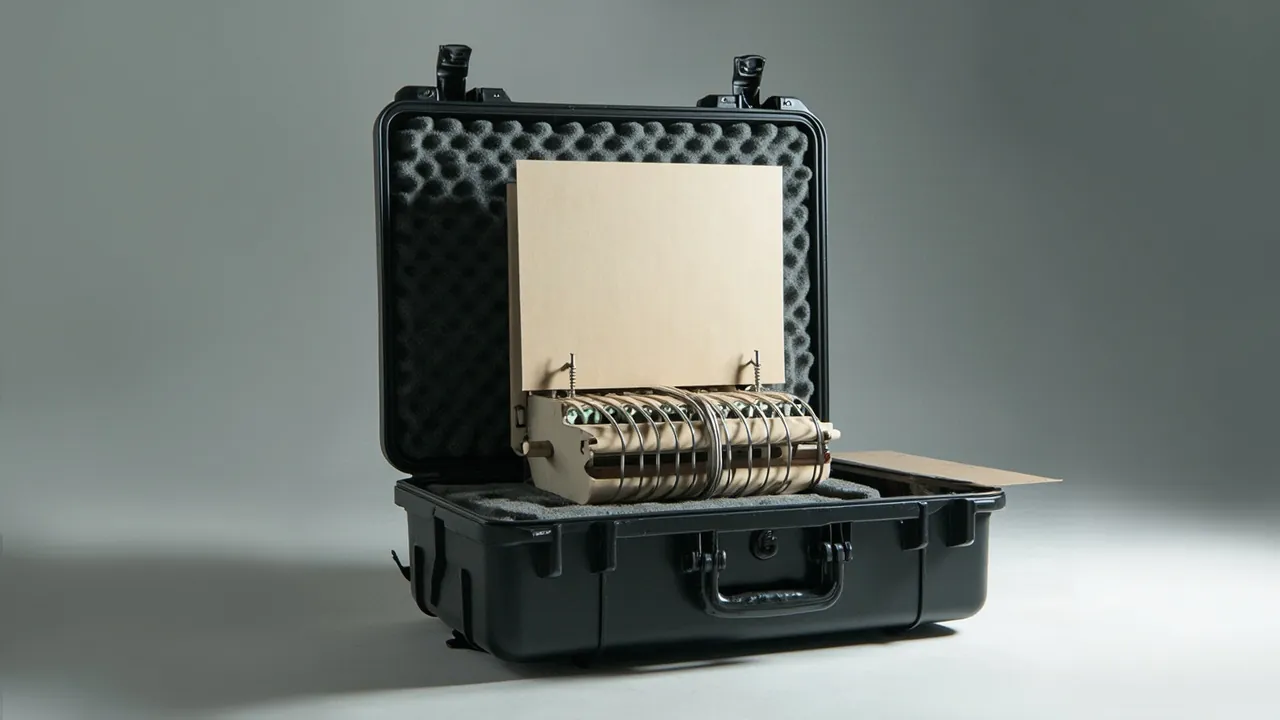
Wire-section and press-section spares on a paper machine — forming fabrics, wire rolls, vacuum box covers, press rolls, shoe press assemblies and press felts — operate in a high-humidity, chemically loaded wet-end environment with pronounced temperature gradients, and the primary threats to those spares during transport and storage are moisture absorption and dimensional change, electrochemical corrosion, damage to the forming and covered working surfaces, and crushing of rolled items. The selection logic for pulp and paper machinery cases must therefore follow three threads: moisture-proof sealing, material compatibility with the corrosive media of the wet end, and protection of the working surfaces — not the logic of an ordinary timber crate or a precision instrument case. Relative humidity in the wet end of a paper machine is routinely above 80 percent, and some wire and press locations are effectively saturated with entrained water mist. At the same time, pulping and papermaking introduce kraft residual liquors, bleaching chemical residues, sizing agents, wet-strength resins and biocides; in damp conditions these form weakly acidic or weakly alkaline electrolyte films that drive stainless-steel pitting, carbon-steel rusting, aluminium corrosion and rubber ageing simultaneously.
The pain points cluster tightly. Forming fabrics — woven from polyester monofilament or multifilament yarns — are high-value, thin-walled, flexible items that must not be creased, compressed, scratched by hard edges, or allowed to absorb moisture and change dimension; a single localised crease or surface defect propagates rapidly at machine speed into a sheet break. Wire rolls and guide rolls are usually stainless or rubber-covered, and the cover layer is vulnerable to gouging, oil contamination and permanent compression set; a scratched roll face causes fabric mistracking and accelerated wear. Vacuum box covers, forming boards and dewatering elements are thin-walled long components with strict flatness requirements that bend easily under inadequate support. The rubber or polyurethane cover on a press roll is the critical dewatering surface, and any damage to its grooves, blind-drilled pattern or crown accuracy directly degrades nip dewatering uniformity and cross-machine moisture profile. Shoe press components — the shoe, the hydraulic cylinder and the loading system — are precision items vulnerable to dust, impact and seal damage. Press felts are heavy fabrics that must not absorb moisture and mould, compress and thin out, or take a crease, and they are extremely humidity-sensitive. On top of all this, paper machine spare purchasing is driven by planned shutdowns for fabric, roll and felt changes, so spares must be on site and in an install-on-open condition before the window opens.
This article sets out protection logic in the order of wire-section components, press-section components, and dryer, calendar and reel components. It focuses on four schemes — wet-end moisture and condensation control, material matching under corrosive media, working-surface protection for forming and covered faces, and load bearing for long rolls and rolled items — and includes material selection tables, a method for determining sealing class, transport test items and acceptance criteria. JUNZHJIA serves paper machinery manufacturers, pulp and paper producers and paper machine spare-part integrators with moisture-proof, corrosion-resistant case design, custom inserts, model-matched seals and OEM/ODM volume delivery, manufactured and shipped worldwide by Kexin New Materials (Guangdong) Co., Ltd.
Table of Contents
- 1. Why Paper Machinery Spares Need Purpose-Built Cases
- 2. Logistics Risk Profile: High Humidity, Corrosion and Precision Combined
- 3. Protecting Wire Section Components: Fabrics, Rolls and Dewatering Elements
- 4. Protecting Press Section Components: Press Rolls, Shoe Press and Felts
- 5. Additional Protection for Dryer, Calendar and Reel Components
- 6. Corrosion Mechanisms in the Wet End and Material Matching
- 7. Determining Sealing Class: IEC 60529 and GB/T 4208
- 8. Moisture and Condensation Control: RH, Desiccant and Pressure Equalisation
- 9. Custom Inserts: Different Strategies for Rolls, Thin Plates and Rolled Goods
- 10. Heavy Load, Lifting and Stacking Design
- 11. Transport Testing: ISTA, GB/T 4857 and ASTM D4169
- 12. Marking, Spare Traceability and Shutdown Window Alignment
- 13. Procurement Acceptance, AQL and Specification Selection Table
- 14. Export and Sea Freight: Condensation and Repeated Handling
- Frequently Asked Questions
- Conclusion & Related Reading
1. Why Paper Machinery Spares Need Purpose-Built Cases
Paper industry equipment management has a distinctive characteristic: extremely short planned shutdown windows and an extremely high requirement for spare availability. A paper machine is a large continuous production line, and unplanned downtime is measured in hours at very high cost. Even for a planned shutdown, tasks such as changing a forming fabric, replacing press felts or swapping a press roll must be completed inside the reserved window, or the whole line restarts late. Spares therefore have to be in place before the window opens and in a condition that allows installation straight out of the case. That means a case may sit in the warehouse for weeks or months and still have to deliver the spare with its as-shipped geometry and surface condition intact.
Wet-end damage is continuous and irreversible. Unlike a dry machining workshop, wire and press section spares begin to be attacked by moisture the moment they leave the factory. Timber crates absorb water themselves, and the relative humidity inside a timber crate swings sharply with the ambient conditions, producing pitting and rust bloom on stainless parts (particularly where carbon-steel contact has introduced iron contamination), white rust and corrosion patches on aluminium, accelerated curing-system ageing in rubber covers, and dimensional change and local slackening in polyester forming fabrics. The more troublesome mechanism is condensation: as a case cycles through day-night temperature swings, water vapour in the trapped air condenses on the coldest surfaces — usually the metal parts — forming a liquid film too thin to see but entirely sufficient for electrochemical corrosion and mould growth.
Working-surface protection is the third core requirement. The fabric face of a forming fabric, the cover face of a press roll, the shell face of a wire roll and the contoured face of a dewatering element are functional surfaces whose integrity determines whether the spare is usable, and they are usually the most fragile part of the item. A forming fabric that has been scratched by a hard edge or creased into a dead mark tears rapidly at machine speed. A press roll cover that has been gouged or has taken a permanent compression mark produces an uneven nip and a cross-machine moisture deviation. Insert design must therefore do more than hold the item in place: it must guarantee that the functional surface never contacts a hard material under any transport condition.
In summary, the three core requirements for a paper machinery parts case are reliable moisture-proof sealing starting at IP65 and reaching IP67 for precision items, a material system matched to the corrosive media of the wet end including chemical resistance and corrosion protection, and a functional-surface-centred insert design. Missing any one of these causes irreversible loss during transport or storage. A general selection framework is set out in the Instrument case selection guide.
2. Logistics Risk Profile: High Humidity, Corrosion and Precision Combined
Spare logistics in a paper mill is more complex than for general industrial spares: there are frequent short in-plant moves, long inter-provincial or international shipments, and an intermediate state of long-term storage in a spare store close to the wet end. The dominant stress differs completely between these three scenarios.
| Chain stage | Dominant stress | Typical consequence | Protection focus |
|---|---|---|---|
| --- | --- | --- | --- |
| In-plant forklift and crane transfer | Local point load, squeezing | Collapsed insert, bent thin-wall parts | Reinforced base, defined lifting points, large-area bearing |
| Long-distance road and rail | Sustained low-frequency vibration, occasional shock | Roll displacement, working-surface scuffing | One item per compartment, rigid restraint, soft isolation |
| Long-term storage in wet-end spare store | High humidity, temperature swing, condensation, chemical atmosphere | Pitting, mould, cover ageing | Sealing plus desiccant plus pressure equalisation |
| Open or semi-open transfer nodes | Rain, ultraviolet, dust | Case ageing, seal failure | Weathering materials, UV stabilisers, seal durability |
| Overseas project shipments | Sea-freight humidity, repeated handling, stacking | Condensation, case deformation, lost marking | Sealing plus desiccant plus stacking strength |
The wet-end spare store deserves special emphasis because it is so often overlooked. Paper mills routinely keep spare rolls, spare fabrics and spare felts in a store adjacent to the wire or press section to shorten the changeover path. That area has high humidity year-round and may contain volatiles from bleaching chemicals or biocides. A case stored there for months must have a body material that tolerates moisture and chemical atmosphere, seals that resist ageing, an insert that does not support mould, and metal parts with adequate corrosion protection. A case designed for a dry indoor environment typically shows hardened seals, mould spots on the insert and rust points on metal parts after a few months in a wet-end spare store.
Vibration and shock come mainly from rolls and long components. Press rolls and wire rolls have large length-to-diameter ratios, and their critical issue is mid-span deflection combined with shaft-end loading: supporting only the two ends and leaving the middle unsupported allows sustained transport vibration to bend the shell at low frequency, leaving an unrecoverable compression mark in the cover, while supporting on the functional surface damages the roll face directly. Dewatering elements and forming boards are thin-walled long components whose flatness is extremely sensitive to support spacing, and any point support can cause permanent bowing.
The management-level risk is spares becoming disconnected from the shutdown plan. Mill spares arrive in batches tied to a changeout cycle, and where marking is unclear and batches are mixed, the crew cannot find the right fabric or roll within a short shutdown window — producing the situation where the spare is in the store but the machine cannot run. This is addressed by the marking and traceability system in Section 12.
3. Protecting Wire Section Components: Fabrics, Rolls and Dewatering Elements
The wire section is the first critical stage of the wet end, and its spares are numerous, precise and permanently exposed to high humidity.
Forming fabrics are among the most critical and most expensive spares in the wire section. Whether single-layer, multi-layer or SSB (sheet support binder) designs, they are flexible thin-walled woven structures with clearly defined failure modes. Creasing — a fold or a sharp bend that fractures monofilaments and leaves a dead mark — produces a water line and a sheet-break point at machine speed. Scratching from contact with a hard sharp edge cuts monofilaments. Moisture-driven dimensional change causes uneven warp and weft movement, so that tension distribution is abnormal after installation. Mould growth on residual organic contamination in a damp environment attacks the monofilaments biologically. The protection approach is large-diameter winding, rigid core support, full moisture-proof wrapping, no contact between any hard sharp edge and the fabric face, and no stacking. An already opened fabric should be stored on a dedicated suspension frame or a large-diameter mandrel, never folded and never loaded locally.
Wire rolls, guide rolls and couch rolls are generally stainless shells or covered rolls. Covered faces fail by gouging, oil contamination and long-term compression set; stainless faces fail by pitting and iron contamination, where embedded foreign matter then damages the fabric in the nip. Protection requires a soft cover over the roll face with no load applied to it, rigid support at the shaft ends, dust and rust protection at the bearing seats, and horizontal or vertical restraint of the whole roll in its actual attitude with rolling freedom removed.
Vacuum box covers, forming boards, dewatering elements and foil blades are thin-walled long items in ceramic or polymer composite with contoured or perforated surfaces. Their failure modes are loss of flatness, chipped edges, damaged holes and scratched faces. Protection requires contoured support that follows the profile rather than point contact, full-face flat bearing, soft protection on edges, and soft interleaves between stacked items.
Wire section ancillary items — stretchers, guides and shower pipes — are metal structures whose main risks are corrosion and deformation; they need corrosion protection and must not be loaded.
| Wire section component | Main failure mode | Protection strategy | Critical prohibitions |
|---|---|---|---|
| --- | --- | --- | --- |
| Forming fabric (rolled) | Creasing, scratching, moisture change | Large-diameter winding, core support, moisture wrap | No folding, no stacking, no hard contact |
| Wire and guide rolls | Cover gouging, compression set | Soft covering, rigid shaft support, rolling restraint | No load on working face, no free rolling |
| Vacuum box covers | Flatness loss, hole damage | Contoured support, full-face bearing, soft interleaves | No point support, no edge loading |
| Forming boards and foils | Bowing, chipped edges | Large-area flat support, soft edge protection | No local loading, no bulk co-shipping |
| Stretchers and guides | Corrosion, shaft deformation | Corrosion protection, dedicated cavity | No shared cavity with wet items |
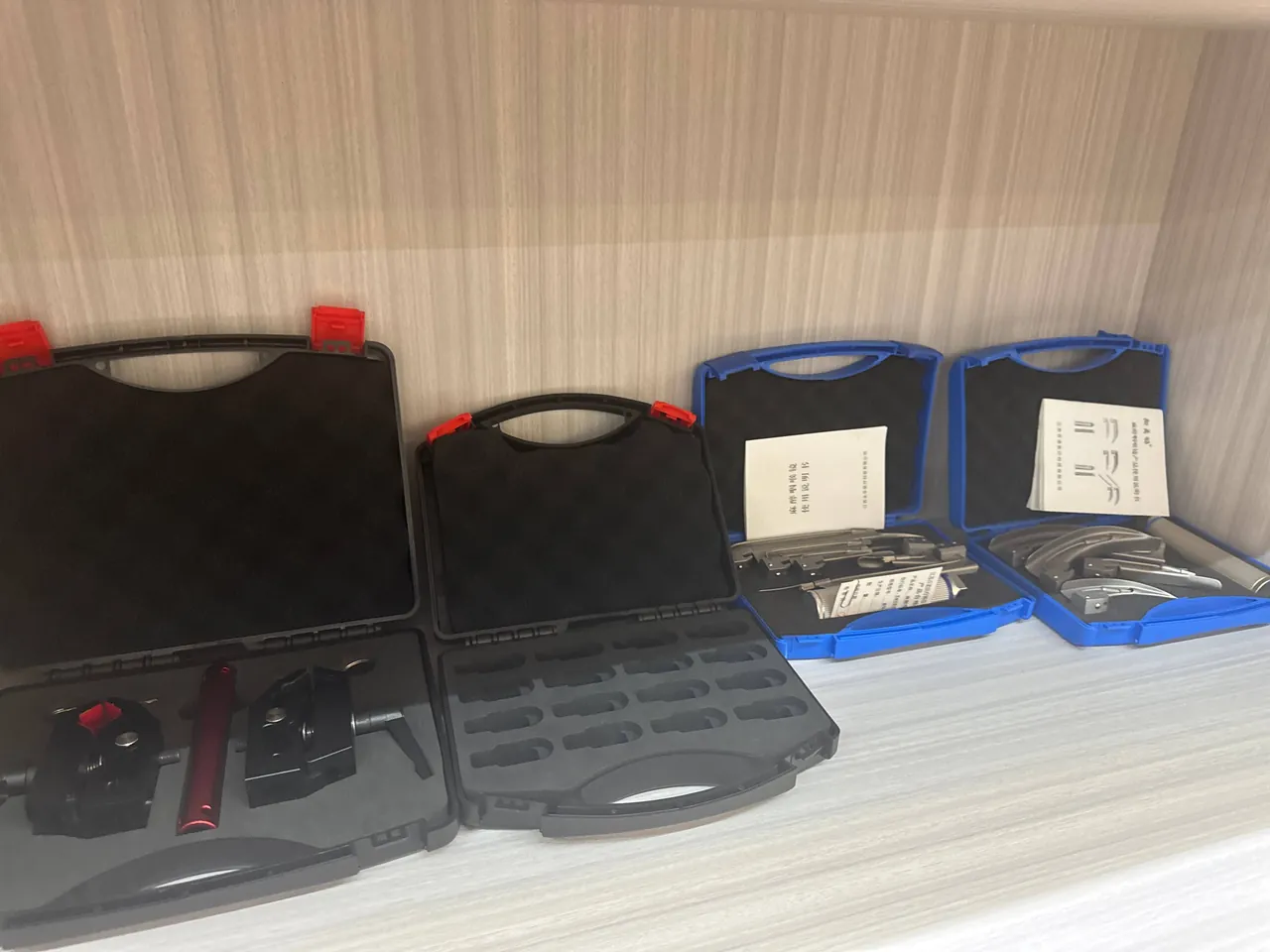
4. Protecting Press Section Components: Press Rolls, Shoe Press and Felts
The press section performs most of the mechanical dewatering, and its spares are high in value, high in precision and tightly coupled to hydraulic systems, so their protection class is well above that of ordinary structural parts.
Press rolls — including grooved, blind-drilled and suction press rolls — are the central press-section spare. Their working face is a rubber or polyurethane cover with grooves, blind holes or drilled passages and with strict crown and roundness requirements. Four failure risks dominate. Gouging and compression marks on the working face create an uneven nip and a cross-machine moisture deviation. Permanent cover deformation follows from long-term point support or stacking. Loss of crown and roundness results from an incorrect support attitude bending the shell in transit. Bearing seat and shaft-end damage produces vibration and temperature rise. Protection requires a soft cover on the working face with no load applied, multiple equally spaced supports along the shell length so the middle is never unsupported, rigid support and dust and rust protection at shafts and bearing seats, removal of rolling freedom, and a dedicated cavity with no contact with other hard items.
Shoe press assemblies — the shoe, the loading cylinder and the loading system — are high-precision hydraulic parts. The shoe working face determines the nip shape and is vulnerable to impact, dust and scratching. The cylinder contains a precision bore, piston rod and seals, and the piston rod plating is the most fragile element. Protection requires contoured protection on the shoe working face with no load, a rigid sleeve over the piston rod, dust caps and plugs on hydraulic ports, orientation with ports upward so that residual oil cannot contaminate the insert, and a dedicated sealed cavity. Hydraulic parts and rolls should be shipped in separate cases or at minimum in strictly separate compartments, because hydraulic items are extremely sensitive to dust and moisture while rolls are large and comparatively unclean. Compartmenting options are covered in Removable divider systems.
Press felts are the classic must-not-get-wet, must-not-be-compressed, must-not-be-creased item. A felt is a heavy fabric construction of base cloth and batt fibre, and its failure modes include moisture absorption and mould growth, where microorganisms multiply inside the batt, reducing strength and transferring stains; compaction and thinning under load, where the batt loses resilience and dewatering capacity is permanently lost; creasing, where a fold or a bend of too small a radius leaves a dead crease that prints through into the sheet; and chemical degradation, where acidic or alkaline residues embrittle the fibres over time. The scheme requires large-diameter winding on a rigid core to preserve roundness, full moisture-proof wrapping with desiccant, no stacking, no direct ultraviolet exposure and a controlled storage humidity range.
Press section transfer belts, threading ropes and vacuum system components are mainly at risk from corrosion, deformation and rubber ageing, and need corrosion protection and no compressive loading.
| Press section component | Main failure mode | Protection strategy | Critical prohibitions |
|---|---|---|---|
| --- | --- | --- | --- |
| Press roll | Cover gouging, crown loss, bearing damage | Equally spaced multi-point support, soft covering, rigid shaft location | No load on working face, no unsupported mid-span |
| Shoe press shoe | Working-face impact and scratching | Contoured protection, dedicated cavity | No load on working face |
| Hydraulic cylinder and loading system | Rod plating damage, dust ingress | Rod sleeve, port plugs, dedicated sealed cavity | No rod loading, no shared cavity with castings |
| Press felt (rolled) | Mould, compaction, creasing | Large-diameter winding, moisture wrap, desiccant | No stacking, no folding, no direct sun |
| Threading ropes and belts | Rubber ageing, moisture elongation | Moisture-proof sealing, no tension | No long-term tensile deformation |
5. Additional Protection for Dryer, Calendar and Reel Components
Although the dryer and calendar sections are less humid than the wet end, spares of the same family are often bought in one batch and shipped in one case group, so the scheme should cover them together.
Dryer cylinders and dryer accessories — siphon pipes, rotary joints and turbulence bars — are combinations of metal parts and precision seals. A rotary joint contains precision sealing faces that are vulnerable to dust, impact and scratching, and needs a dedicated cavity with dust protection. The dryer surface is a polished metal face vulnerable to corrosion and scratching, and needs corrosion protection plus soft isolation.
Calender rolls and soft rolls, including controlled-crown rolls, are ultra-precision items whose surface hardness and roundness determine sheet smoothness. A controlled-crown roll contains internal hydraulics and control elements, making it a classic heavy, precision, hydraulic composite with requirements close to a press roll but stricter. Protection requires a soft cover on the working face, equally spaced multi-point support, plugged hydraulic ports, a dedicated cavity, and where necessary a vertical attitude with an anti-toppling structure built into the case.
Reel and winder components include core shafts, pneumatic expanding shafts, slitter blades and guide rolls. An expanding shaft contains air passages and seals and needs dust and moisture protection plus protection of the air valve. Slitter blades are thin-edged items requiring edge protection in a dedicated cavity. Guide rolls are treated as rolls.
Machine condition monitoring and measurement components — moisture sensors, basis weight sensors and break detection heads — are precision electronic or optical items vulnerable to moisture, vibration and static contamination. They should follow a precision instrument protection scheme; see the IP67 protective case solutions.
| Component class | Precision requirement | Suggested sealing class | Insert strategy |
|---|---|---|---|
| --- | --- | --- | --- |
| Rotary joints and hydraulic parts | High | IP67 | Dedicated cavity, port plugs, desiccant |
| Calender and controlled-crown rolls | Very high | IP67 | Equally spaced support, soft covering |
| Expanding shafts and core shafts | Medium-high | IP65 | Longitudinal restraint, valve protection |
| Slitter blades and thin edges | High | IP65 | Soft edge protection, dedicated cavity |
| Sensors and measurement heads | Very high | IP67 | Contoured insert, static protection |
6. Corrosion Mechanisms in the Wet End and Material Matching
Understanding the corrosion mechanism is a precondition for choosing the case material. Corrosion in the wet end of a paper machine is not a single mechanism but three superimposed ones.
The first is electrochemical corrosion. When a thin liquid film covers a metal surface — from condensation or from adsorption in high humidity — dissolved oxygen in the film drives oxygen depolarisation corrosion. Carbon steel rusts quickly under these conditions. Stainless steel pits in chloride-bearing environments. Aluminium alloys develop white rust and intergranular attack in alkaline or chloride-bearing environments. The thinner the film, the more oxygen is available, and the higher the temperature, the faster the corrosion rate.
The second is direct chemical attack. Sulphates, sulphites, bleaching residues (chlorine-based or oxygen-based), sizing agents, wet-strength resins and biocides introduced during pulping and papermaking form weakly acidic or weakly alkaline electrolytes under damp conditions. These media selectively corrode aluminium, ordinary carbon steel and certain rubbers, and accelerate seal ageing.
The third is microbial corrosion and mould. Paper machine systems are rich in organic matter and water — an ideal environment for microorganisms. Their metabolic organic acids aggravate metal corrosion, and inside a case, mould contaminates the insert and compromises surface cleanliness on the spare, which is especially damaging to woven items such as forming fabrics and felts.
The material matching principles are as follows.
| Environment | Recommended case material | Materials to avoid | Additional measures |
|---|---|---|---|
| --- | --- | --- | --- |
| Normal wet-end spare store (RH 60-80 percent) | PP, HDPE, modified PP | Untreated carbon-steel hardware | Desiccant, sealing, corrosion-protected insert |
| High-humidity near-water area (RH above 80 percent, mist present) | Modified PP, PC alloy | Ordinary ABS, moisture-absorbing fibre inserts | IP65/IP67 sealing plus pressure equalisation valve |
| Chemical-bearing atmosphere | Chemical-grade PP, PE | Aluminium hardware, ordinary rubber seals | Sealed dedicated cavities, chemically resistant seals |
| Open or semi-open transfer | PP/PE with UV stabiliser | General plastics without UV stabiliser | Shading, stacking location, thick-wall structure |
| Precision hydraulic and measurement items | PP/PC case with sealed liner | Moisture-absorbing insert materials | IP67 plus desiccant plus humidity indicator card |
Seal material selection deserves separate mention. Ordinary nitrile rubber ages faster in damp, chemically loaded environments, so a more weather-resistant compound should be chosen against the actual media, and the seal must be replaceable. Selection methods are covered in Choosing seal materials for protective cases. Where a customer needs a documented flammability rating for the case body or insert, materials can be specified against the UL94 classification, and the rating should be confirmed against the actual part rather than assumed from the generic polymer family.
7. Determining Sealing Class: IEC 60529 and GB/T 4208
The ingress protection rating of a protective case is defined by IEC 60529 internationally and by GB/T 4208, the equivalent national standard, using the letters IP followed by two digits: the first for solids protection (0-6) and the second for water protection (0-9).
For paper machinery spares, the commonly used classes and their applications are as follows. IP54 — dust protected and splash resistant — suits ordinary structural parts in a dry workshop and is not recommended for wet-end spares. IP65 — dust tight and protected against water jets — suits general wet-end spares, long rolls, dewatering elements and felt reels, and is the recommended starting class for paper machinery cases. IP66 — dust tight and protected against strong water jets — suits transfer scenarios where washdown or heavy mist is possible. IP67 — dust tight and protected against temporary immersion under the conditions defined in the standard — suits hydraulic parts, sensors, rotary joints and export spares that pass through many handling steps. IP68 — dust tight and protected against continuous immersion, with conditions agreed between manufacturer and user — is used only for special requirements.
Three points require emphasis. First, an IP rating protects against liquid water, not against water vapour. Water molecules diffuse slowly through most sealing constructions in the vapour phase, so for wet-end spares in long-term storage an IP65 or IP67 seal alone cannot control internal humidity; desiccant and a pressure equalisation valve are essential. Second, achieving a class depends jointly on seal channel geometry, seal material, latch preload and case rigidity; any one falling short means actual performance is below the nominal figure. Third, IP ratings do not cover corrosion resistance, mould resistance or chemical resistance, which are addressed separately through material selection and surface treatment. The underlying concepts are set out in Waterproof cases and IP ratings.
A quick on-site check: draw a strip of thin paper right around the seal channel and feel whether resistance is uniform; inspect the closed seal channel for visible gaps or misalignment; and check that the lid-to-body joint line is continuous once the latches are closed. These checks cannot replace a type test, but they detect assembly defects quickly.
8. Moisture and Condensation Control: RH, Desiccant and Pressure Equalisation
For paper machinery spares, humidity control matters as much as the sealing class. This is the engineering point this article most wants to stress.
Why a sealed case still gets damp. Even at IP67, a case has two internal moisture sources. The first is the water vapour in the air trapped at packing — at 25 degrees Celsius and 60 percent RH, a 100 litre case can enclose more than one gram of water vapour. The second is vapour that diffuses slowly through the seals and the case body. When the case cools, the internal relative humidity rises, and once saturation is reached condensation forms on the coldest surface, normally the metal parts.
The control strategy has four layers. First, reduce trapped moisture: pack in the lowest practical ambient humidity, dry the spares thoroughly, and apply corrosion protection to metal parts using rust-preventive oil, vapour-phase inhibitor film or inhibitor bags. Second, use desiccant: size the amount to case volume, sealing class, storage duration and target humidity, using silica gel type desiccant against empirical values, and include a humidity indicator card so the state can be judged immediately on opening. Third, equalise pressure: a sealed case develops alternating positive and negative pressure as temperature changes, and if the case is fully sealed and insufficiently rigid, the negative phase deforms the lid, breaks the seal and draws moisture in. A pressure equalisation valve fitted with a hydrophobic breathable membrane passes air while blocking liquid water, and is the standard remedy; see How case pressure equalisation valves work. Fourth, build condensation resistance into the structure: place a moisture-buffering layer between insert and case wall, avoid metal parts lying directly against the case wall, since the wall tracks ambient temperature fastest, and for high-value precision items use a two-level pack of inhibitor bag plus desiccant.
| Storage duration | Case sealing class | Suggested desiccant provision | Monitoring |
|---|---|---|---|
| --- | --- | --- | --- |
| 1-4 weeks | IP65 | Base quantity | Visual inspection |
| 1-6 months | IP65 plus pressure equalisation valve | Increased quantity | Humidity indicator card |
| 6-24 months | IP67 plus pressure equalisation valve | High-capacity, replaceable provision | Indicator card plus periodic recheck |
| Export sea freight (1-3 month voyage) | IP67 plus pressure equalisation valve | Increased quantity plus container desiccant | Indicator card plus opening procedure |
On internal humidity targets, for forming fabrics, felts and paper-based spares it is generally advisable to hold long-term storage relative humidity in the 45 to 55 percent band and avoid sharp swings; for purely metal parts the priority is simply the absence of a liquid film, so humidity can be relaxed somewhat. Specific values should be agreed in the technical protocol between buyer and supplier in light of the moisture-absorbing characteristics of the item itself, rather than copied from a generic figure.
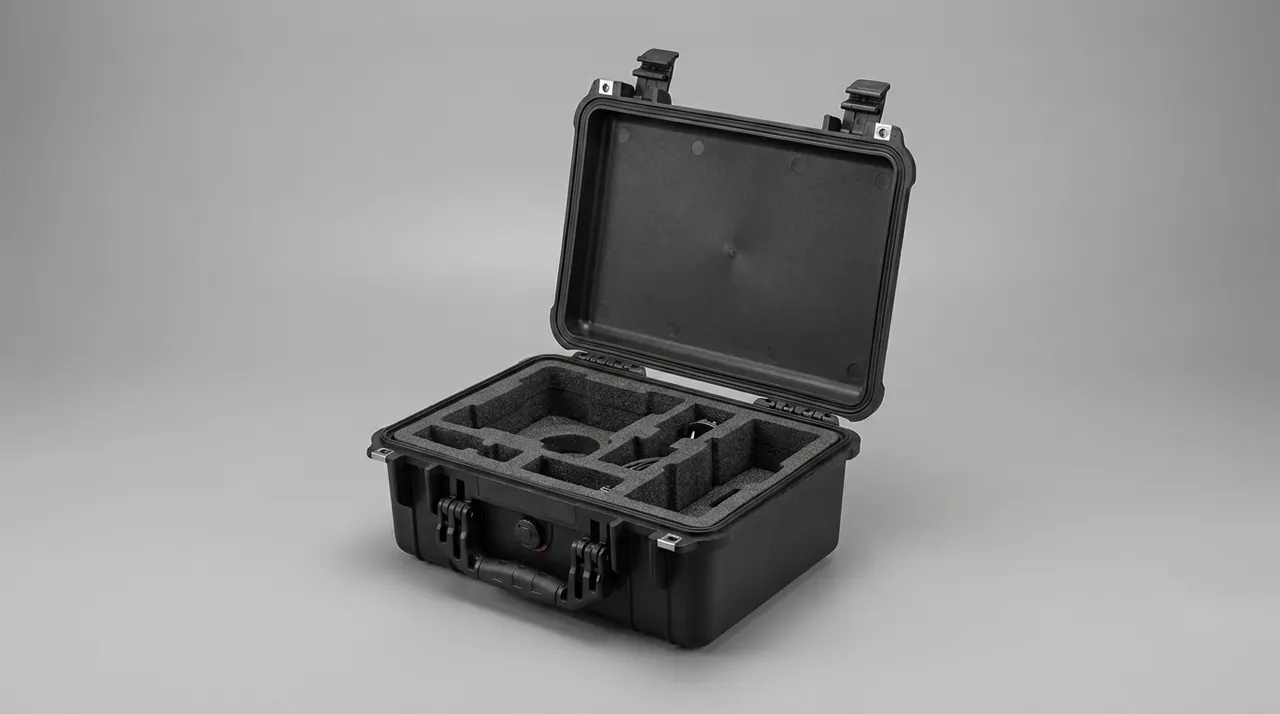
9. Custom Inserts: Different Strategies for Rolls, Thin Plates and Rolled Goods
The insert is the last line of defence. Paper machinery spares vary enormously in form, so inserts must be designed by class.
Long rolls — press rolls, wire rolls, guide rolls, calender rolls — require equally spaced multi-point support with functional-face isolation. Support points should be placed on non-functional locations such as shaft ends or non-working shell ends, distributed at equal intervals along the length so that the shell takes distributed rather than concentrated load. The functional face must not contact any hard material over its full length. Rolling freedom must be removed, which can be done with a contoured cradle plus strapping or with end stops. For very long rolls, such as a press roll on a wide machine, the overall rigidity of the case in transit also matters and additional case reinforcement may be needed.
Thin-walled long items — dewatering elements, forming boards, foil blades — require no point support and no edge loading. Contoured support following the item profile should be used with the bearing area as large as possible. Multiple items should be separated by soft interleaves and prevented from touching each other, and edges should be soft-protected against chipping.
Rolled goods — forming fabrics, press felts — require preserved reel roundness and freedom from creasing. The reel should be supported on a rigid core, either vertically or horizontally in a dedicated cradle, so that the reel itself is never compressed. The whole reel should be moisture-wrapped, stacking is prohibited, and reel diameter should not be too small, since too tight a winding radius leaves a memory crease. Related support designs are covered in Cushion liner design for protective cases.
Irregular precision items — hydraulic cylinders, rotary joints, sensors — require contoured cavities with independent sealing. Cavity shape should follow the actual outline to avoid interference fits and point contact. Dedicated cavities prevent cross-contamination between items. Oil-bearing parts need port plugging so that leaked oil cannot contaminate the insert.
Insert material selection: EVA foam, PE foam, polyurethane foam and IXPE each have advantages. Where moisture protection matters, closed-cell structures with low water absorption should be chosen, because open-cell foam absorbs moisture and becomes a mould substrate. Material comparisons are given in Case foam material comparison, and the custom workflow in EVA foam insert custom process.
10. Heavy Load, Lifting and Stacking Design
Paper machine spares are generally heavy; roll items range from tens of kilograms to several hundred kilograms each, and some calender and press rolls are heavier still. Heavy load raises three structural questions: base strength, lifting scheme and stacking stability.
Base strength: a roll is a longitudinal concentrated load. If the base lacks rigidity, long storage and stacking cause creep and sagging at the bottom, which shifts the insert support surfaces out of position. Design points include a reinforced base using ribs or a sandwich structure, load-transferring structure beneath each support point, and a static load verification against the actual load.
Lifting scheme: paper mills rely on overhead cranes, and incorrectly positioned lifting points crush the case locally or allow slings to cut into the body. The lifting point positions and the permitted sling angle range should be fixed at the design stage; lifting points must carry the full load; the case marking must show lifting positions and maximum lifting load; and for very heavy cases dedicated lifting gear is advisable.
Stacking stability: paper mill warehouses and shipping containers routinely stack several tiers, so the bottom case in a heavy stack carries a large sustained static load, and long-term creep failure is more common than instantaneous failure. The case top should have a stacking location feature such as a locating recess or shoulder to prevent the upper case sliding, the static load should be calculated at the actual tier count and verified, and side walls must not bulge under the stacking load.
Handling accessories: where frequent short transfers occur, castors and a trolley handle can be fitted. Castors must be selected for the load with attention to wheel material and floor compatibility, and the handle must attach to the case structure reliably. Selection points are covered in Case wheels and trolley handle.
11. Transport Testing: ISTA, GB/T 4857 and ASTM D4169
Paper equipment is exported in significant volume, so packaging schemes for paper machine spares should be validated against citable standards.
The ISTA series is graded by transport form and weight: the 1 series covers non-simulation performance tests, the 2 series partial simulation, the 3 series general simulation with temperature and humidity conditioning, and the 6 series carrier-specific programmes. For heavy rolls and long components, ISTA 3E for unitised loads is closer to the palletised heavy-load scenario, while 3A suits smaller export spares. The procedure is explained in ISTA transport testing procedures.
The GB/T 4857 series comprises the basic test methods for transport packages in China, covering vibration, impact, stacking and drop, and is widely cited in domestic contracts. For paper machinery the most important items are stacking and vibration testing, because displacement and scuffing of rolls and long components under sustained vibration are the dominant failure modes. Details are in GB/T 4857 transport packaging tests.
ASTM D4169 combines a test sequence from distribution cycle and assurance level, suits sea-land and multimodal transport, and is often cited for North American exports and overseas projects. See ASTM D4169 distribution cycle testing.
| System | Emphasis | Application to paper machinery spares | Common procedures |
|---|---|---|---|
| --- | --- | --- | --- |
| ISTA | General simulation and carrier-specific | Export unit loads, palletised heavy rolls | 3E, 3A, 2A |
| GB/T 4857 | Domestic road and rail | Inter-plant transfers within paper groups | Stacking, vibration, drop series |
| ASTM D4169 | Multimodal distribution cycle | Overseas projects, sea-land transport | DC12, DC13 and similar |
Supplementary verification: beyond the standard tests, three dedicated validations are advisable for paper machinery spares. First, moisture verification: hold the whole case in a high-humidity or humid-heat cycling environment for a defined period, then open it and inspect the humidity indicator card, corrosion on metal parts and mould on the insert. Second, static stacking verification: convert the actual tier count and storage period into a static load, hold it for the specified duration, and check for permanent deformation of the base and support structure. Third, lifting and drop verification: simulate crane lifting and an accidental drop, inspect the lifting points, corners and base, and confirm that the roll has not shifted inside the case.
Where a customer asks to cite MIL-STD-810H, it can be used as a methodological basis for designing environmental test conditions such as high-temperature storage, low-temperature storage, humid-heat cycling and vibration endurance, but it must be stated that this is a test-method standard and is not equivalent to military certification; no military certification claim may be made. Related compliance notes are in MIL-STD-810H environmental test basis.
On package marking, domestic shipments can follow the general requirements of GB/T 191 for pictorial marking of packages and GB/T 6388 for consignment marking, showing keep-dry, do-not-stack, centre-of-gravity and lifting-position symbols. This matters especially in paper mills where cranes handle the cases.
12. Marking, Spare Traceability and Shutdown Window Alignment
Spare management in a paper mill is driven by the changeout cycle: forming fabrics, press felts and press rolls all have defined life cycles and replacement plans. If marking is unclear and the crew cannot find the right specification inside a short shutdown window, downtime is extended directly. The case marking system must therefore align with the shutdown plan.
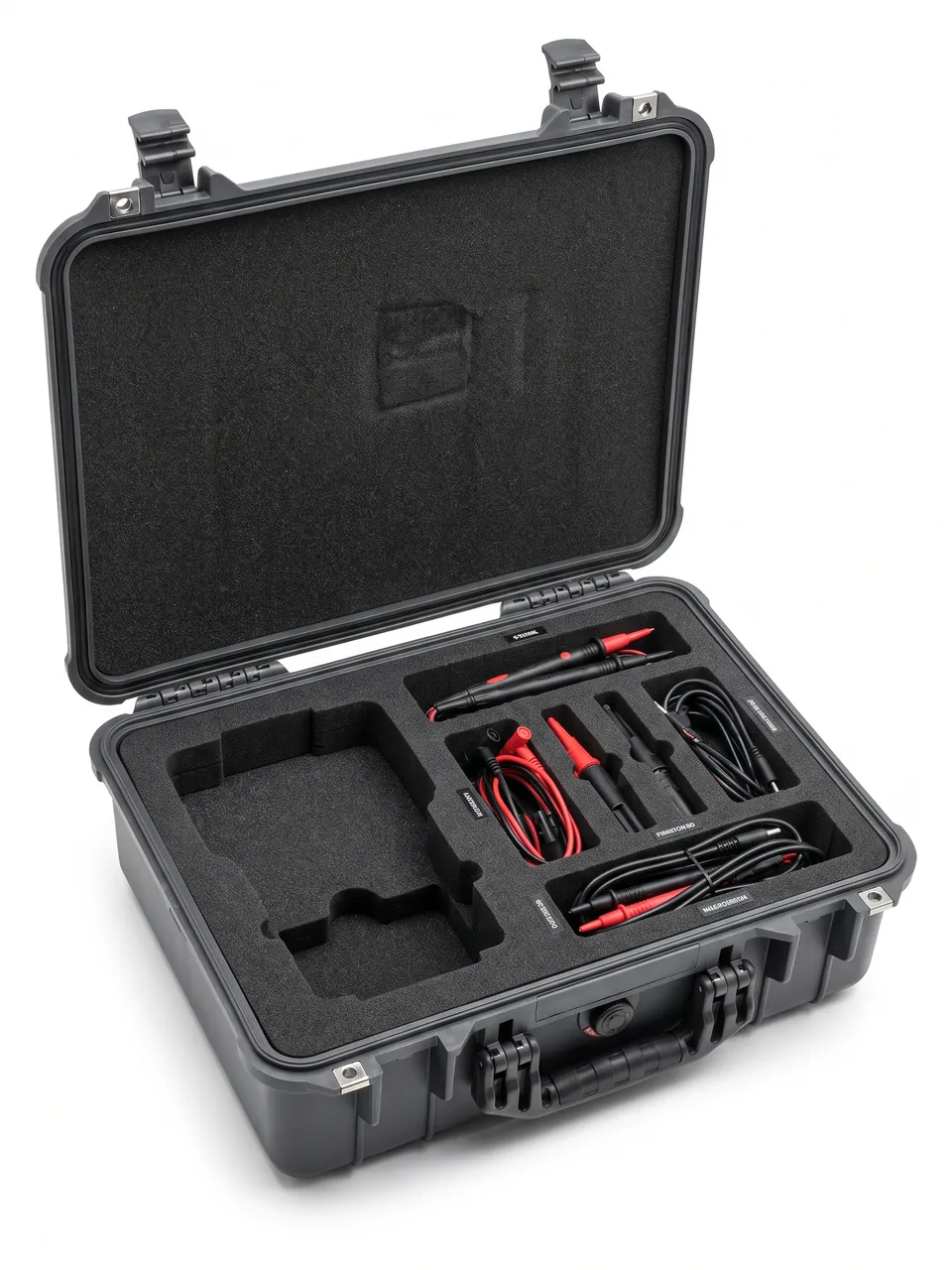
A recommended marking system covers the following. Permanent external marking: asset number, applicable machine position such as PM1 press section, component name and specification including width, diameter and mesh count, gross case weight, maximum stacking tiers and lifting point identification, applied by in-mould labelling, screen printing or engraving rather than adhesive labels that fall off. Pictorial marks following the general practice of package pictorial marking, showing keep-dry, do-not-stack, centre-of-gravity and lifting position. Internal position marking: each cavity labelled with component name, part number, quantity and installation position. Document pocket: packing list, material certificates, test reports, installation instructions, and a seal and fastener list. Status marking: distinguishing spare, awaiting inspection, inspected and released, and reserved for planned shutdown. Traceability code: a QR or barcode linking purchase batch, arrival date, inspection record and installation record to support life assessment and quality traceback.
Aligning with the shutdown plan means building case groups around shutdown jobs. One shutdown job such as a press section felt change corresponds to one group of cases, marked on the outside with the job name, machine position and planned shutdown date. On arrival the group is accepted and racked as a unit. Before the shutdown the group is issued as a unit, so the crew is not searching item by item. This shortens shutdown preparation significantly and simplifies stocktaking and gap identification.
For export spares, destination labelling language requirements must be considered, and where a spare contains oil, batteries or hydraulic fluid, marking must follow the applicable dangerous goods transport regulations; the framework is set out in ADR and IMDG hazmat transport case compliance.
13. Procurement Acceptance, AQL and Specification Selection Table
When paper machinery cases are bought in volume, acceptance criteria must be written into the contract. For moisture-proof, corrosion-resistant cases, acceptance places more weight on seal durability, chemical resistance of materials and insert fit than for ordinary cases.
Recommended incoming inspection items. First, appearance and dimensions: case dimensions and insert cavity dimensions against drawing; no cracks, sinks or flash; reinforcing structure complete; stacking location face correctly formed. Second, sealing and moisture protection: sampling against the agreed class; a full-perimeter seal contact check using the thin-paper draw method as a quick on-site indicator; pressure equalisation valve flow and hydrophobic membrane integrity; confirmation that seals are replaceable. Third, structural strength: a sampled static load test at a multiple of the rated load held for the specified duration, confirming no permanent deformation or cracking, plus a sampled corner or simulated drop test. Fourth, materials and chemical resistance: material certificates, UV stabiliser declaration, colour and appearance against the reference sample, and confirmation that the insert is closed-cell and low-absorption for high-humidity duties. Fifth, insert fit: trial fit with the actual item or a gauge, confirming no interference, no point support, no contact with the functional surface, and smooth insertion and removal. Sixth, latches and hinges: opening force, positive engagement feel, fatigue sampling, plus a loaded open-close test for heavy cases; structural points are covered in Case hinge, latch and seal structure. Seventh, lifting and handling accessories: lifting point strength where applicable, forklift pocket position and edge reinforcement, castor load capacity and swivel function. Eighth, marking and documents: content, position and durability of marking; conformity of pictorial marks; completeness of supplied documents.
AQL sampling: sample size and acceptance criteria follow the lot size, inspection level and AQL value. For the paper industry, critical defects such as a cracked case, seal failure, a failed pressure equalisation valve, contact between a functional surface and hard material, a collapsed insert or a non-replaceable seal should take a tighter AQL, while minor defects such as colour variation, slight flow marks or font weight differences take a looser AQL. Methods and sampling tables are in Protective case acceptance and AQL sampling.
Specification selection table:
| Component class | Suggested case type | Insert scheme | Suggested sealing class | Suggested transport test |
|---|---|---|---|---|
| --- | --- | --- | --- | --- |
| Forming fabric (rolled) | Dedicated reel cradle case | Rigid core support plus moisture wrap | IP65 | ISTA 3E plus moisture verification |
| Wire and guide rolls | Dedicated long roll case | Equally spaced support plus soft covering | IP65 | ISTA 2A plus vibration |
| Vacuum box covers and forming boards | Long flat-plate case | Contoured support plus full-face bearing | IP65 | ISTA 2A |
| Press and calender rolls | Large long roll case | Equally spaced support plus functional-face isolation | IP67 | ISTA 3E plus static load |
| Shoe press shoe and hydraulic cylinder | Medium sealed case | Dedicated cavity plus rod sleeve | IP67 | ISTA 2A plus humid heat |
| Press felt (rolled) | Dedicated reel cradle case | Core support plus moisture wrap plus desiccant | IP65 | ISTA 2A plus moisture verification |
| Rotary joints and expanding shafts | Medium sealed case | Dedicated cavity plus port plugging | IP67 | ISTA 2A |
| Sensors and measurement heads | Precision instrument case | Contoured insert plus static protection | IP67 | ISTA 2A plus vibration |
JUNZHJIA provides full custom delivery capability in paper machinery, pulping equipment and paper industry spares: case and insert development from component drawings or physical samples, sealing class and moisture scheme matched to the scenario, case material and seal selection matched to the media, colour and marking customisation to customer requirements, and OEM/ODM manufacturing with stable volume supply. Kexin New Materials (Guangdong) Co., Ltd. operates a complete chain from tooling development and rotational or injection moulding through insert machining and case assembly, serving paper machinery manufacturers, paper groups, paper machine spare integrators and regional distributors. For a first engagement, a small sample batch with physical trial fitting is recommended before moving to volume supply. Evaluation points for a contract manufacturing partner are covered in How to choose a case OEM factory.
14. Export and Sea Freight: Condensation and Repeated Handling
Paper equipment is exported in growing volume, and packaging schemes for paper machine spares must be designed specifically for sea freight.
The greatest threat in sea freight is condensation, not rain. As a container crosses climate zones, day-night temperature swings and latitude changes repeatedly bring the internal air to its dew point, producing container rain. On a sealed spare case, external condensation does not enter directly, but it keeps the case surface wet for long periods and strips labels; on a case fitted with a pressure equalisation valve, external moisture can migrate in slowly during pressure cycling. An export scheme should therefore specify a sealing class of at least IP67, a pressure equalisation valve, an increased desiccant charge with a humidity indicator card, vapour-phase corrosion protection on metal parts, and thorough drying of spares and inserts before packing.
Repeated handling demands greater structural strength. Export cargo typically passes through factory loading, port storage, vessel loading, discharge and inland transport, far more handling steps than domestic shipping. The scheme should be designed to a more severe distribution cycle and validated to ISTA 3E or the relevant ASTM D4169 cycle. Corners, lifting points and the base are the reinforcement priorities.
Stacking and in-container restraint. Containers are usually loaded in multiple tiers for long voyages, so the base and top of a heavy case carry sustained static load. A stacking location face should be provided to prevent sliding, and a static load verification should be run at the actual tier count. Anti-slip and anti-shift restraint inside the container protects against vessel roll causing case displacement and collision.
Differences in yard and destination conditions. Lifting and storage conditions at an overseas paper mill or distributor warehouse may be weaker than domestic ones, so lifting method, stacking tiers and handling method should be specified on more conservative assumptions, with clear handling and opening instructions supplied with the case.
Documents and compliance: the case should travel with a packing list, material certificates, test reports and opening instructions, and where spares contain oil, batteries or hydraulic fluid, the applicable dangerous goods marking and documentation must be prepared. The framework is described in ADR and IMDG hazmat transport case compliance.
Frequently Asked Questions
Q: Should a paper machinery parts case use IP65 or IP67?
A: It depends on the component and the storage environment. For general wet-end spares such as long rolls, dewatering elements, forming boards and felt reels, stored in a normal spare store and shipped domestically, IP65 satisfies dust-tight and water-jet requirements, and the result is better still when combined with desiccant and a pressure equalisation valve. For precision items such as hydraulic cylinders, rotary joints, sensors and controlled-crown roll internals, and for spares that go by sea freight, pass through many handling steps, or sit for long periods near water, IP67 is advisable to cover temporary immersion and harsher transfer conditions. It must be stressed that an IP rating protects against liquid water, not water vapour, so humidity control in long-term storage depends on desiccant and a pressure equalisation valve working together and cannot be achieved by sealing class alone. The actual class should be agreed in the technical protocol against real storage duration and transfer steps, then confirmed by sampling.
Q: Why can't rolled items such as forming fabrics and press felts be shipped in ordinary timber crates?
A: The reason is that a timber crate cannot provide the three conditions a rolled item needs. The first is preserved roundness: if a reel simply rests on the case floor, its own weight crushes the reel locally, and a forming fabric or felt takes a memory crease at the compressed area that later prints as a water line, a press mark or a sheet break. The second is moisture exclusion: timber itself absorbs water, so humidity inside a timber crate swings sharply with ambient conditions; felt batt absorbs moisture and supports microorganisms that reduce strength, while forming fabrics change dimension as they take up water. The third is cleanliness: wood chips, dust and possibly volatile preservatives from the crate contaminate the fabric face and the felt working surface, and that contamination transfers directly into paper defects. Rolled items should therefore use a dedicated cradle case with rigid core support, with the whole reel moisture-wrapped and supplied with desiccant, and stacking and folding prohibited.
Q: Why does a sealed case still become damp inside, and what is the remedy?
A: Because water vapour diffuses slowly through seals and case materials in the vapour phase, and because the air trapped at packing already contains water vapour. In a fairly humid packing environment, a medium-volume case can enclose several grams of water vapour. When the case cools, internal relative humidity rises, and on reaching saturation it condenses on the coldest surface as a liquid film that drives corrosion and mould. The remedy has four layers. First, reduce packing-environment humidity and dry and corrosion-protect the spare. Second, size the desiccant to volume, sealing class and storage duration, and include a humidity indicator card. Third, fit a pressure equalisation valve with a hydrophobic breathable membrane to balance internal and external pressure, preventing the negative-pressure phase from breaking the seal and drawing moisture in. Fourth, place a moisture-buffering layer between insert and case wall and avoid metal parts resting directly against the wall, which tracks temperature fastest.
Q: May a press roll working surface carry load during transport?
A: No. The covered working face of a press roll, including its grooves, blind holes or drilled pattern, determines nip pressure distribution and cross-machine moisture profile, and its elastic recovery directly affects dewatering efficiency. If the working face carries a point load or is stacked against during transport, it takes unrecoverable compression marks and local hardness changes, which appear on the machine as uneven cross-machine moisture, local sheet crushing or breaks, at a cost far exceeding the packaging spend. The correct approach is to place multiple equally spaced supports on non-functional locations such as shaft ends or non-working shell ends, so the shell takes distributed support; to isolate the working face completely from hard materials over its full length using a soft covering; and to remove rolling freedom so the roll cannot roll and strike the case wall. Very long rolls also require the case itself to be rigid enough that it does not deform in transit and shift the supports.
Q: How should the case body material be selected for a wet-end spare case?
A: Judge on three dimensions. First, moisture and chemical resistance: prefer PP, HDPE or modified PP, which have low water absorption and good resistance to most acidic and alkaline media, while ordinary ABS degrades more noticeably in long-term humidity and chemical atmosphere; insert materials must be closed-cell and low-absorption, because open-cell foam absorbs moisture and becomes a mould substrate. Second, seal compatibility: ordinary nitrile rubber ages comparatively quickly in damp, chemically loaded environments, so a more weather-resistant compound should be selected against the actual media, and the seal must be replaceable. Third, weathering: if the case may sit outdoors or under semi-open shelter, the material must contain a UV stabiliser, otherwise the plastic surface chalks, fades and loses impact strength. Metal hardware such as latches, hinges and valves should also be corrosion-protected so that it does not become the corrosion origin for the whole case. A useful confirmation step is to leave a trial case with representative spares in the actual wet-end spare store for one full seasonal cycle and then inspect seals, insert and hardware before committing to volume.
Q: Which standards should be cited in transport testing a paper machine spare?
A: Combine three lines: general simulation, domestic methods and distribution cycle. For export unit loads and palletised heavy rolls, ISTA 3E for unitised loads with temperature and humidity conditioning is recommended, with ISTA 3A for smaller export spares. For domestic inter-plant transfers and road and rail transport, cite the GB/T 4857 series, where stacking and vibration tests matter most for rolls and long components. For overseas projects and sea-land multimodal transport, cite ASTM D4169, combining the test sequence from distribution cycle and assurance level. Three dedicated validations are also advisable: moisture verification, where the case is held under high humidity or humid-heat cycling and then opened to inspect the humidity indicator card, corrosion and mould; static stacking verification at the real tier count and storage period; and lifting and drop verification. Where MIL-STD-810H is cited, it can serve as a methodological basis for environmental test conditions, but it is not equivalent to military certification.
Q: Can a custom insert be reused, and how is its service life assessed?
A: Reuse is possible, but material ageing and deformation must be assessed. Insert life depends on three factors. Moisture absorption and ageing: in high-humidity service, foam takes up water, hardens and loses resilience, with closed-cell materials degrading more slowly. Wear from repeated insertion and removal: cavities gradually enlarge and locating accuracy falls. Contamination: oil, dust and mould change insert performance and contaminate the spare. The assessment is straightforward: periodically check whether cavities still fit the spare properly, whether the foam has become noticeably harder or is shedding particles, and whether there are mould spots or odour. If any of these appear, replacement is advisable. To extend life, choose closed-cell low-absorption materials, keep the case interior dry, prevent oil leakage onto the insert, and store in a clean environment. Maintenance practice is covered in the case cleaning and care guidance. Where inserts are replaced while the case body is still serviceable, retaining the original cavity drawing makes the replacement straightforward and preserves fit accuracy.
Q: Shutdown windows in a paper mill are tight. How can the case system improve changeover efficiency?
A: The core idea is grouping by shutdown job, position marking inside the case, and visible status. In practice: build case groups around shutdown jobs, for example a press section felt change or a wire section forming fabric change, so one group of cases corresponds to one shutdown task, marked externally with the job name, machine position and planned shutdown date. Label every cavity inside with component name, part number and installation position so the crew knows immediately where each item fits. Include installation instructions and a seal and fastener list in the case so nothing has to be hunted for on the floor. Use status marking to separate spare, awaiting inspection, released and reserved for planned shutdown so items cannot be misused. Accept and rack the group as a unit on arrival, and issue it as a unit before the shutdown. These practices shorten shutdown preparation considerably, simplify stocktaking and gap identification, and reduce the situation where the spare is in the store but the machine cannot run.
Conclusion & Related Reading
The core of a pulp and paper machinery case is holding the functional surfaces of the spares intact under high humidity and corrosive media. Among wire section components, forming fabrics must not be creased, scratched or allowed to take up moisture, and need large-diameter winding on a rigid core; wire rolls and dewatering elements must not take point support or edge loading, and need equally spaced support and contoured bearing. Among press section components, the covered working face of a press roll must never carry load and needs equally spaced multi-point support with functional-face isolation; hydraulic parts and shoe plates are precision items needing dedicated sealed cavities and port plugging; press felts must not get wet, be compressed or be creased, and need moisture wrapping with stacking prohibited. Every one of these components also depends on the case itself: sealing to block liquid water and dust, a pressure equalisation valve and desiccant to control water vapour, material selection to resist chemical media and ultraviolet, and structural design to carry heavy load, lifting and stacking.
For paper machinery manufacturers, paper groups and spare-part integrators, a sensible sequence is: inventory the spares and classify them by functional-surface sensitivity, weight and form; define insert strategy, sealing class and moisture scheme by class; develop inserts for critical items and physically trial fit them; validate with ISTA, GB/T 4857 or ASTM D4169 transport and moisture testing; and finally write acceptance criteria, the marking system, traceability codes and the mapping to shutdown jobs into procurement and warehouse processes. JUNZHJIA supports this from structural design, material selection and sample development through volume supply, with Kexin New Materials (Guangdong) Co., Ltd. manufacturing and delivering to customer drawings and service conditions, so that paper machine spares remain under control from dispatch and storage through to installation.
Related Reading