

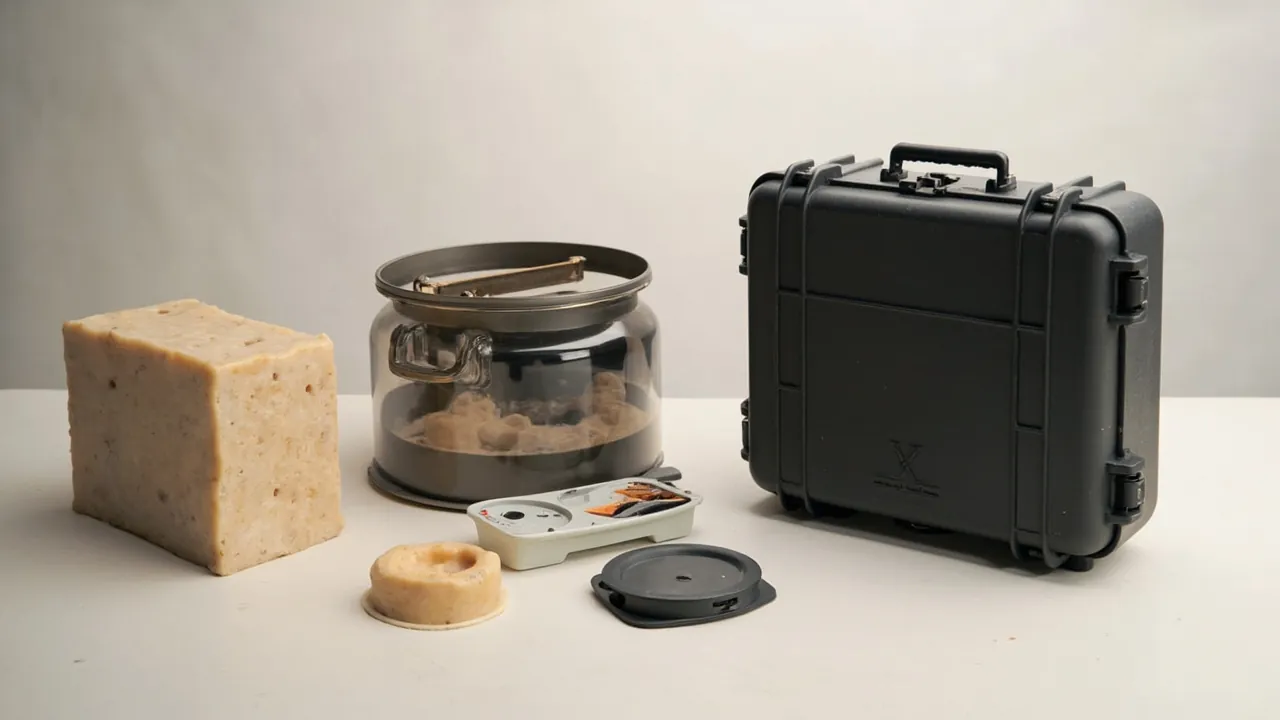
Bakeries, home studios and the central kitchens of chain brands all depend on expensive baking equipment every single day. A built-in oven, a set of anodized cake molds and a 0.1-gram precision scale may look rugged, yet during delivery, off-site demos, market pop-ups and inter-store transfers they are easily damaged by vibration, impact, moisture and odor. The conclusion up front: baking equipment does not belong in an ordinary cardboard carton or a generic plastic storage bin. The reliable approach is a purpose-built protective case with divided foam inserts, cushioning, sealed gaskets and a compliant ingress rating that minimizes the risk to ovens, molds and scales in transit.
Many purchasing managers and head chefs underestimate the loss incurred in the "last one kilometer." A single unsecured oven move can crack the glass door; a set of molds rattling loose inside a box scratches the non-stick and anodized surfaces; an electronic scale left in a damp or shocked environment drifts quietly, eventually ruining recipe consistency. This article walks through risk, structure, materials, standards and a buying checklist to explain exactly how a baking equipment case should be selected and used, and how to turn protection into a repeatable, auditable standard for a professional kitchen.
Table of Contents
- Why baking equipment needs a dedicated protective case
- Transport risks of ovens and heated appliances
- Divided protection for molds: cake, loaf and silicone
- Shock protection and calibration for weighing tools
- Storage notes for whisks and hand mixers
- Sealing and ingress ratings: IP65/IP67 and IEC 60529
- Inserts and cushioning: EVA foam and load design
- Hinges, latches and seals
- Temperature, humidity and odor control
- Transport testing and standards: ISTA, MIL-STD-810H and GB/T 4208
- Materials and flame retardancy: the meaning of UL94
- Customization and OEM/ODM: model-matched inserts
- Cleaning and routine maintenance
- Buying checklist and scenario recommendations
Why baking equipment needs a dedicated protective case
The fragility of baking equipment rarely shows during a single use; it shows during repeated circulation. Store openings, trade-show demos, pop-up events and central-kitchen transfers to branch stores all expose equipment to risk. A plain carton has poor compression resistance, no moisture barrier and no way to fix equipment in place. A generic plastic bin has hardness but a bare interior with no dividers, so items can only be buffered with newspaper and arrive scratched and shifted.
A professional protective case separates "shell protection" from "insert support." The shell provides a rigid, impact-resistant, waterproof and dustproof cavity. The insert (usually a custom EVA foam process) is routed to the 3D dimensions of each item, so ovens, molds and scales each have a home, never touch one another and never slide vertically. This point-to-point fixation is the core of bakeware loss prevention.
The cost math is also clear. A set of premium anodized molds often costs more than one custom case, and a scale that loses accuracy from shock must be returned for calibration, with downtime and freight on top. Covering a whole batch of equipment across many trips with one case amortizes the per-shipment cost of each item to almost nothing. That is why more baking brands now put equipment cases on the standard bill of materials, and why a removable-divider case is valued when the kit changes between events.
Beyond cost, there is a workflow benefit. When every item has a labeled pocket, setup at a new location takes minutes instead of a frantic search through loose foam peanuts. Teaching kitchens and demo teams especially gain from "open the lid, see everything, close the lid, nothing left behind." This discipline reduces both damage and the silent loss of small but essential tools such as couplers, scrapers and thermometer probes.
A second benefit is insurance and accountability. A documented case with a fixed pocket map and an asset code turns a loose pile of gear into a countable, auditable kit. When a mixer or a precision scale goes missing, the gap is obvious the moment the lid opens, not at the end of a busy service when the cost of a delay is highest. For multi-site brands this also standardizes training: a new baker in any branch opens the same case layout and knows where everything sits, which shortens onboarding and reduces the chance that an expensive item is handled wrongly because nobody recognized it. In practice, the case becomes part of the recipe, not just a box for the recipe.
A third benefit is consistency of output. When the same tools travel in the same arrangement and arrive in the same condition, the variables that affect a bake shrink. A scale that is not drifting, a mold that is not scratched, an oven door that is not cracked, all feed the same goal: the customer gets the same product in branch A and branch B. For a brand that lives on repeat purchase, that quiet consistency is worth more than any single feature of the case, and it is exactly what a disciplined protective case delivers trip after trip.
Transport risks of ovens and heated appliances
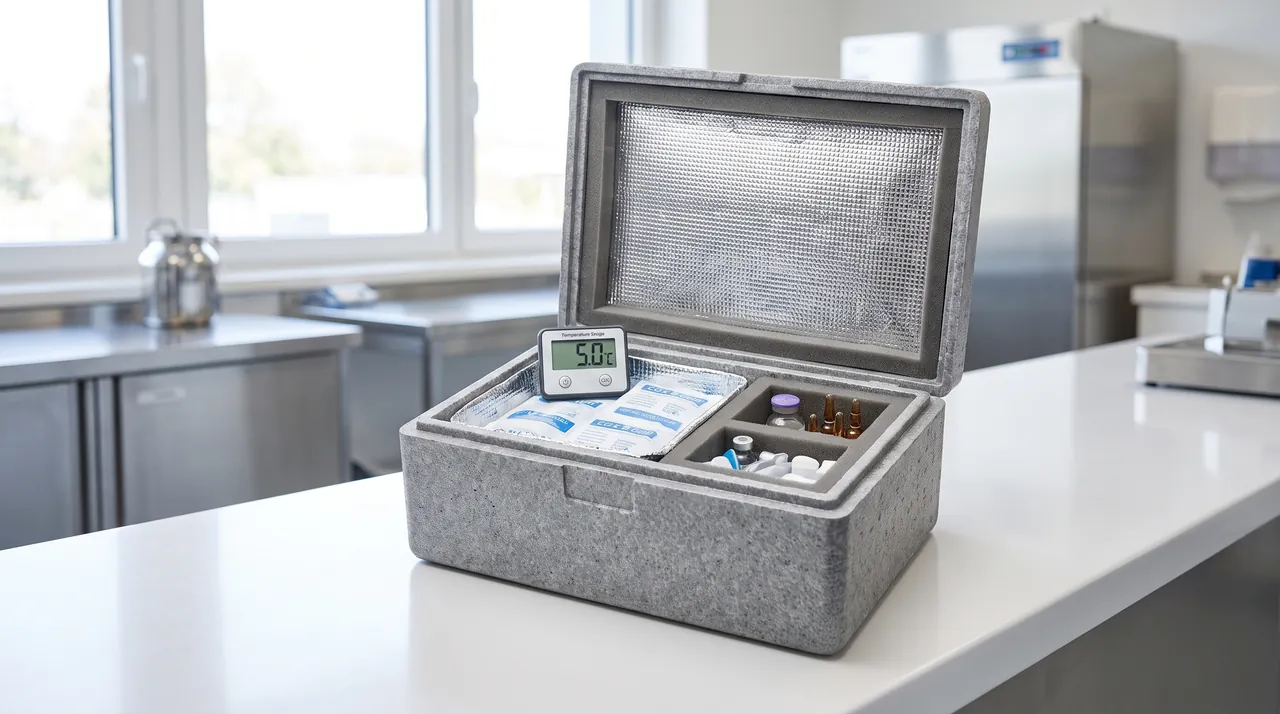
Countertop ovens, built-in ovens, convection ovens and proofing cabinets are the largest, least stable and most breakable category in a bakery. Their weak points cluster in three places: the glass door and viewing window, the internal temperature probe and heating elements, and the door hinge.
The most common transport problem is "door movement relative to the cavity." If the oven simply lies flat without a positional limit, bumpy roads make the door flap open and closed, and the glass edge striking the wall can chip. The right method borrows the logic of a cushion-liner case: add perimeter foam around the oven and insert a support block in the door gap so the door is "gently held" — free enough not to be over-pressed, fixed enough not to swing.
For ovens with digital panels and touch controls, consider static and moisture. The circuitry behind the panel fears humidity and salt mist (especially on coastal deliveries), so the shell's seal should at least reach a dustproof level, and long sea voyages or high-humidity environments should follow the IP67 protective case approach with gaskets and a pressure-equalization valve. If the oven must travel long distance by truck, reference the insulation design of an extreme-temperature case to avoid summer cabin heat prematurely aging the door seal. A practical pre-shipping step is to let the unit cool fully, remove loose racks and ship racks in their own padded cell so they cannot rattle against the cavity walls.
Divided protection for molds: cake, loaf and silicone
Molds are the "disaster zone" of baking loss. Anodized aluminum has a porous oxide layer that, once scratched by hard objects or friction, hurts release and harbors grime. Non-stick coatings fear sharp impacts; a small nick makes a whole batch stick to the bottom.
The key to divided protection is an independent "nest" for each mold. Using the method in the custom foam insert guide, route a pocket 3 to 5 mm larger than the mold's outer diameter, and separate molds with foam walls so they never touch. For springform pans, fix the base plate and ring separately to prevent the base sliding inside the cavity and scratching the ring wall. This also speeds teardown, because the base and ring are already separated for washing.
Loaf pans (with lids) are bulky and hard-edged, best placed on the bottom layer with a rigid tray underneath; the lid should be strapped or pocketed so it does not slide. Silicone molds are soft and pressure-sensitive, never under heavy objects; put them in an upper dedicated cell or a flat layer to avoid permanent creases. On material choice, compare EVA and polyurethane sponge in the foam material comparison: EVA rebounds well and does not shed, suiting food-grade molds; ordinary sponge is softer but sheds, needing a non-woven isolation layer between the sponge and any food-contact surface. A good rule is: contact layer equals EVA, bulk filler may be sponge, and every cut edge should be sealed or socked so no crumb reaches the mold.
Shock protection and calibration for weighing tools
Electronic scales, measuring spoons, cups and timers are the lifeline of recipe consistency. Many assume "a scale is fine if not dropped," but the sensor most fears long-term micro-vibration causing zero drift. A 0.1-gram scale tossed loosely into a box and knocked against metalware can read systematically high or low after just a few trips, and the error is invisible until a batch fails.
The right method gives the scale a "floating" position: a thick EVA or closed-cell pad under the body so it never touches the hard case floor, and a pressure plate above the pan to stop vertical jumping. If you buy a removable-divider case, keep the scale in one cell with a "precision instrument" label and a small bubble level so handlers know to set it down gently. Mechanical scales and balance beams need their knife edges protected; a dedicated cradle prevents the beam from rattling.
Mechanical spoons and cups do not drift electronically but deformed heads hurt consistency; secure each with elastic straps. Crucially, on arrival do a zero check and standard-weight comparison before production — the "calibrate on arrival" step many central kitchens skip. Log the reading in a simple sheet; over months this catches a drifting scale before it spoils a costly batch, and it also builds the audit trail that procurement and food-safety teams expect from a professional kitchen program.
Storage notes for whisks and hand mixers
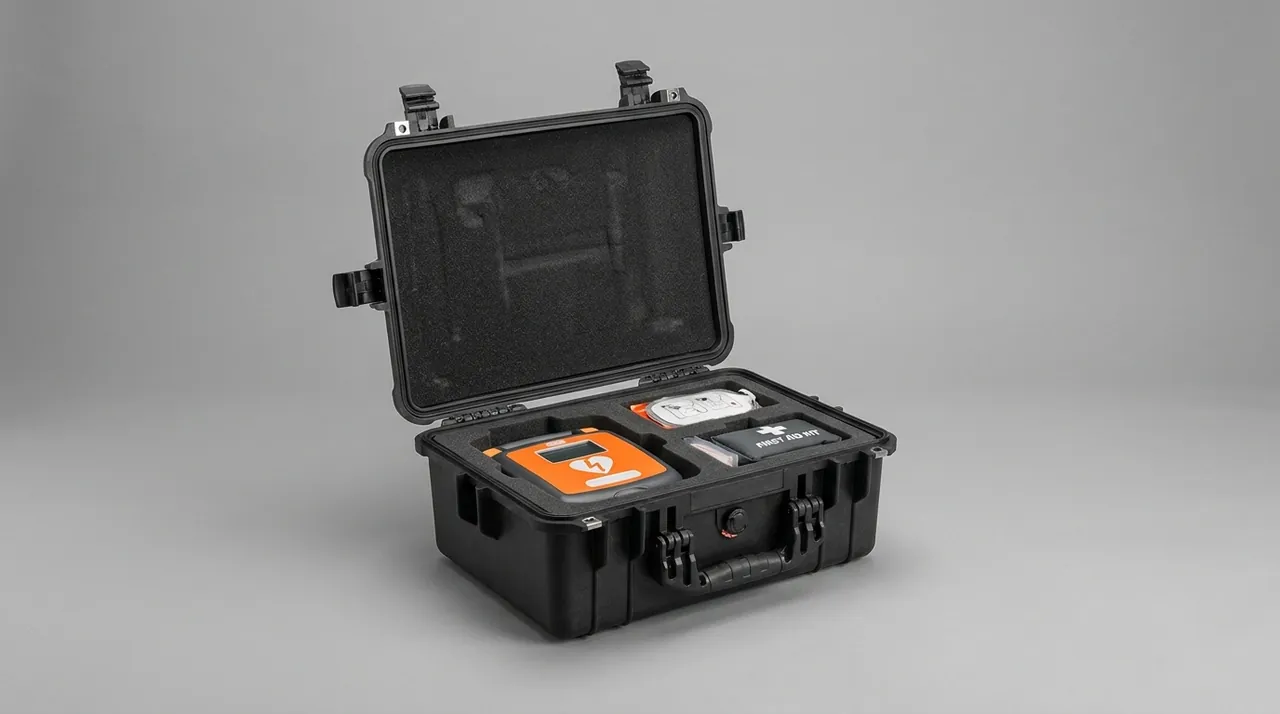
Hand whisks, electric mixers and immersion blenders share the risk of "thin shafts" and "tangled cables." Mixer heads are stainless steel wires that splay under pressure and lose whipping efficiency; cables bent freely for long trips break internally, and the break may be intermittent and hard to diagnose on site.
Store heads in vertical foam sockets so each wire is gripped by the wall, and sleeve the wire bundle so it cannot cut neighboring items. Coil cables with a wrap tie into loops no smaller than 10 cm to avoid dead bends; label the coil with the device name so reassembly is foolproof. Bodies with motors fear water and humidity, so place them in the dry zone and separate them from potentially leaking liquids (vanilla, food coloring, extracts). If batteries are removable, ship them insulated per logistics rules, with body and battery separate for safety, and tape the battery terminals so a loose coin cannot short them in transit.
Sealing and ingress ratings: IP65/IP67 and IEC 60529
Ingress rating is the parameter most worth understanding when choosing a case. The international basis is IEC 60529 (mirrored by China's GB/T 4208), expressed as two digits after "IP": first digit dust (0 to 6), second digit water (0 to 8). For daily bakery delivery, dust level 5 (protection against harmful deposit) is enough; if you move through wet kitchens or brief rain, the waterproof rating explainer recommends IP67 — immersible to 1 m for 30 minutes without ingress.
Note that an IP rating is a lab value with the lid closed and latches fastened. In reality, if latches are open or the gasket is aged, protection fails. So gasket life and maintenance matter as much as the rating itself, covered later under "Hinges, latches and seals." For cases that must fly or cross high altitude, add a pressure-equalization valve so cabin pressure differences do not suck the gasket open or bulge the door. The valve should carry a dust and moisture filter so it breathes without letting humid, particle-laden air in. Pair the rating with a real test report rather than a printed number, because a well-sealed case is only as good as its weakest latch and oldest gasket.
Inserts and cushioning: EVA foam and load design
The insert decides whether equipment gets hit, and how much energy is absorbed when it is. EVA (ethylene-vinyl acetate copolymer) closed-cell foam is the mainstream: adjustable density (typically 30 to 80 kg/m3), good rebound, no shedding, resistant to most oils. Heavy items (whole ovens) need high-density EVA as a base with PP or ABS hard plates at load points to spread pressure; light molds use medium-density EVA for soft wrapping.
A frequently missed point: thicker foam is not better. Too thick leaves play inside the pocket and increases shift; too thin under-cushions. The field-proven practice is 10 to 20 percent slight compression when the lid closes, so the item is "gently clamped." Leave 8 to 12 mm foam walls between cells for both isolation and energy absorption. Users switching many specifications can reference a removable-divider case for modular stations, where a base of fixed pockets is topped with adjustable dividers for items that change between events. Document the pocket map on the lid so any team member can repack correctly after a job.
Hinges, latches and seals
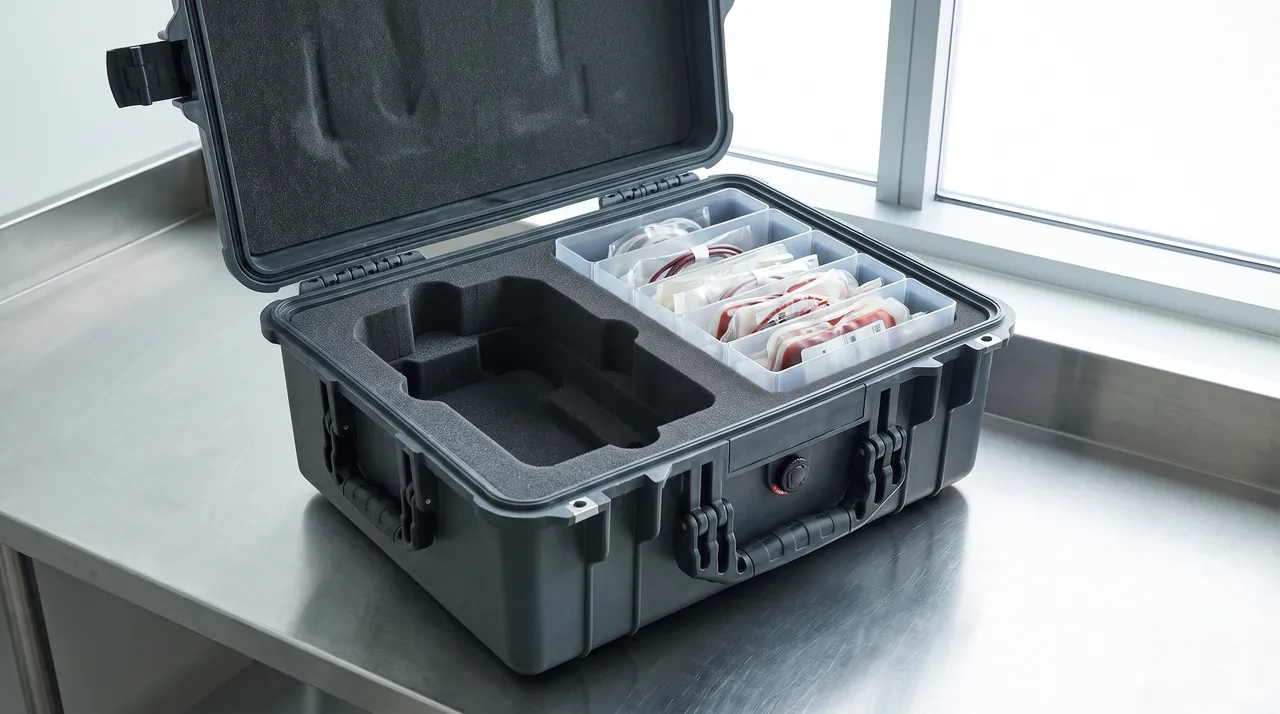
Case open-close life and whether it pops open in transit depend entirely on hinges and latches. JUNZHJIA commonly uses stainless or nylon-clad hinges with labyrinth latches that resist rust and stay locked on rough roads. Critically, internal links should target the live page toolbox hinge latch seal for selection and maintenance detail — this is a real, indexed page; do not misspell it as another slug.
Seals (gaskets) are mostly EPDM or silicone, responsible for the IP rating. EPDM resists ozone and weathering, suiting outdoor and vehicle use; silicone tolerates a wider temperature range, suiting scenarios that may touch warmer equipment. Choose a "dual-action lock" latch that a single accidental touch will not open; for high-value gear add a padlock eye or TSA position from lock customization options. A useful field habit is to keep one spare latch and one tube of compatible silicone grease in the maintenance kit, so a failed latch or a dry gasket never becomes a reason to ship unprotected.
Temperature, humidity and odor control
Baking equipment is extremely odor-sensitive: if molds, silicone and scale pans absorb the last shipment's spice smell (cinnamon, vanilla), the next cake picks it up. So interior materials should be low-odor and never share a compartment with strong-smelling goods such as extracts or flavored oils.
On humidity, kitchen and coastal transport are wet; put food-grade desiccant bags inside and replace them regularly. For long storage keep relative humidity at 45 to 60 percent. For "use on arrival" transfers, the gasket-plus-desiccant combo of a seal-shock case meets both moisture and shock needs. Desiccant must not touch food-contact surfaces; bag it and fix it to the inside lid. A simple humidity card or indicator inside the lid gives a visual cue that the desiccant is still active, which is especially helpful when cases sit in storage for weeks between seasons and someone opens one expecting dry gear.
Transport testing and standards: ISTA, MIL-STD-810H and GB/T 4208
Whether a supplier can provide test basis is a dividing line of professionalism. The international transport simulation standard is ISTA (e.g., ISTA 3A for single-parcel shipment), with drop, vibration and compression simulating real logistics. Domestically, GB/T 4857 transport packaging offers equivalent tests that many buyers already recognize.
For environmental adaptability, MIL-STD-810H is a US military environmental test method (note: used only as a product-line environmental test basis, not a military certification). Method 514.7 vibration and 516.8 drop verify structural integrity under rough handling. We cite it to give B2B customers a reproducible test flow, not to claim any military certification. Together with the ISTA transport testing procedure it gives a fuller picture of real-world capability, and it lets a buyer compare two vendors on the same method rather than on marketing language. Ask each supplier for the actual test report number and the sample configuration, because a case tested empty is not the same as a case tested loaded with your real kit.
A practical tip: request the drop sequence and the filled mass used in the test, then replicate the worst case yourself with a loaded case before signing. Drop the case from the heights and on the orientations the standard prescribes, open it, and confirm nothing shifted enough to touch a neighbor. If your real kit is heavier than the tested mass, ask for a re-run at your mass, because foam compression and latch load both scale with weight. This small verification step catches a mismatch between a vendor's certificate and your actual use, and it is far cheaper than discovering the gap after a damaged shipment arrives at a customer's door.
Materials and flame retardancy: the meaning of UL94
If a case enters a supermarket kitchen, a trade booth or a vehicle, flame retardancy is unavoidable. UL94 is the common plastic flammability standard, with HB, V-2, V-1, V-0, where V-0 self-extinguishes within 10 seconds and drips do not ignite. Near heat and circuits, a rating of UL94 V-1 or above is safer.
Distinguish: flame retardancy addresses the material's behavior under accidental fire, not "safe near open flame." Even a flame-retardant case should not receive a still-hot baking tray. JUNZHJIA can provide material solutions at the required flame class and a material declaration file for the buyer's compliance archive in OEM projects. When specifying, also ask about low-smoke and low-toxicity behavior, because a kitchen evacuation is safer when the case does not add heavy smoke. Keep the declaration with the equipment manual so a future safety audit finds it without a chase.
Customization and OEM/ODM: model-matched inserts
A standard case only solves "it fits." What solves "it is stable and quick to find" is a custom insert. JUNZHJIA supports one-to-one mapping of the customer's equipment list, typically using 3D scan or physical impression to locate each mold, scale and whisk, then CNC or die-cut. Even with twenty or thirty items, opening the lid shows every position at a glance, boosting teaching, pop-up and transfer efficiency.
OEM/ODM also means brand visibility: laser-engrave the store logo, equipment list and color on the lid; batch orders get unified material codes for asset management. On cost, reference the custom case mold cost analysis for the break-even between one-time tooling and unit price — the larger the batch, the lower the amortized unit. When picking a factory, verify capacity, sampling and QC using the how to choose a case OEM factory checklist, and insist on a first-article sample that you load with the real kit and drop-test yourself before committing to volume.
Cleaning and routine maintenance
Over time a case accumulates flour, frosting and grease. Poor cleaning causes odor and ages foam and gaskets. Routine care follows the protective case cleaning guide: neutral cleaner with a soft cloth, avoid solvent degreasers; foam can be removed and air-dried, never in direct sun.
The gasket is the key to seal life; inspect quarterly for hardening, cracks and loss of elasticity; a drop of silicone oil keeps latch moving parts smooth. A case's service life in years strongly correlates with maintenance — a well-kept metal case lasts over ten years, while neglected foam may shed in two. Also see genuine vs fake case identification to avoid substandard boxes that look similar but fail on the first rough trip. A short maintenance sticker inside the lid with the last-inspection date turns good intent into a habit.
Buying checklist and scenario recommendations
Condensing the points above into a checklist and scenario advice is most intuitive when shown as a table:
| Scenario | Core equipment | Recommended protection | Suggested rating |
|---|---|---|---|
| --- | --- | --- | --- |
| Daily store transfer | Molds, scale, measures | Divided EVA, scale float, desiccant | IP54 to IP65 |
| Expo / pop-up | Hand mixer, molds, cables | Vertical sockets, cable wrap, light weight | IP65 |
| Central kitchen dispatch | Countertop oven, convection | Perimeter foam, door support, isolation | IP65 to IP67 |
| Coastal / sea freight | All categories | Salt-spray hinge, valve, seal | IP67 |
| Training teaching | Multi-spec aids | Removable dividers, numbered labels | IP54 to IP65 |
| Insert material | Suits | Advantage | Caution |
|---|---|---|---|
| --- | --- | --- | --- |
| High-density EVA | Oven, heavy gear | Strong support, rebound | Slightly costlier |
| Medium-density EVA | Molds, measures | Soft wrap, no shed | Calibrate thickness |
| Polyurethane sponge | Temporary buffer | Cheap, soft | Sheds, needs isolation |
| Non-woven layer | Food-contact face | No shed, low odor | Replace periodically |
JUNZHJIA can combine the above into a full-case solution from shell, seal to insert in one pass, and provide test documents for procurement archiving. The point is not to buy the toughest box, but the right box whose insert matches your actual kit and whose maintenance you can actually sustain.
Frequently Asked Questions
Q: Does a baking case have to be custom-inserted, or can I just cut sponge myself? A: Cutting sponge yourself solves "it fits" but rarely "it is stable." Hand-cut pockets have large tolerances, leaving play so items still rattle and scrape the wall in transit. A custom insert (see the EVA foam custom process) routes to the actual item with 10 to 20 percent compression that gently clamps it, far better than hand cutting. If budget is tight, at least custom-pocket the scale, springform base and glass parts, and fill the rest with removable dividers for good value. Remember that the goal is repeatability: a custom pocket accepts the same item the same way every time, which is what protects the gear across a hundred trips, not just the first one.
Q: After putting the scale in the case, does it still need calibration on arrival? A: Yes. A scale sensor is sensitive to long-term micro-vibration; even with a floating pad, a cross-province trip can drift the zero. On arrival, do a zero check and a three-point comparison (empty, half, full scale) with standard weights; if error exceeds the maker's tolerance, recalibrate or return. Writing "calibrate on arrival" into the central kitchen SOP prevents a whole recipe batch from being scrapped by a measuring error — the most important quality action beyond the case itself. Keep a small logbook in the case so each site records the reading, building the audit trail that food-safety and procurement teams expect from a professional program.
Q: Does an IP67 case mean I can ship it underwater? A: No. IP67 is a lab condition: lid closed and latched, immersed 1 m for 30 minutes without ingress, simulating rain, brief drop and high humidity — not long diving or washing. In reality, open latches, aged gasket or deformed shell break protection. Sea or long wet environments should add desiccant and a pressure valve, with periodic gasket checks. See the waterproof rating explainer for rating boundaries, and remember that the printed number is only as trustworthy as the latch that holds the lid and the gasket that seals it. A field test with a paper towel inside after a rainy carry tells you more than the label.
Q: Can silicone molds share a case with metal molds? A: Yes, but they must be divided. Silicone is soft and pressure-sensitive, never under metal; otherwise it keeps a permanent crease that hurts release, and it absorbs odor, so clean the case first if it carried spices. Put silicone in an upper dedicated cell or flat layer, metal on a lower hard tray, separated by foam walls. On material, the foam material comparison recommends non-shedding EVA as the contact layer, and a non-woven sock over any sponge so no crumb reaches the food surface. Label the silicone cell clearly so it is never buried under heavier items during a rushed pack.
Q: The oven glass door keeps cracking in transport; more foam? A: The core is "limit + support." Add perimeter foam around the door to limit movement relative to the cavity, then insert a support block in the door gap so the door is gently held — not free to swing, not over-pressed. If the glass door is removable, ship it separately in a hard cell on long trips. Also never stack weight on the case top. For higher protection see the cushion-liner case perimeter design, and remove loose racks and ship them in their own padded cell so they cannot rattle against the cavity. A door that cannot move is a door that cannot crack.
Q: Is the difference between UL94 V-0 and V-1 large? A: There is a difference but do not over-pursue it. Both V-0 and V-1 self-extinguish within 10 seconds; V-0 drips must not ignite the cotton, V-1 allows a lower bar on drip ignition. Near heat, V-1 is already far safer than HB; if the case sits by exposed circuits or a dense booth, V-0 is steadier. Flame retardancy is not heat resistance — never put a hot tray inside. OEM projects can request a material declaration, and you should also ask about low-smoke behavior, because a kitchen evacuation is safer when the case does not add heavy toxic smoke to an already difficult situation.
Q: How to control unit cost in bulk purchase? A: The key is tooling amortization and MOQ. One-off CNC routing has no fixed mold cost but higher unit price; die stamping is cheaper per unit but needs MOQ. Reference the custom case mold cost analysis for the break-even; the larger the batch, the lower the unit. Also unify specifications (same-size case + swappable insert) to cut SKUs, inventory and shipping volume. Pick a factory by the how to choose a case OEM factory checklist, and insist on a first-article sample you drop-test with the real kit before volume commitment, because the cheapest quote often hides rework cost later.
Q: Shipping overseas by sea, what extra design? A: Sea freight stresses salt spray, pressure difference and long humidity. Hinges and latches need salt-spray treatment (stainless or nylon-clad); add a pressure-equalization valve for day-night and altitude pressure; choose weather-resistant EPDM gasket. Inside, enough food-grade desiccant fixed in place, outer case labeled waterproof with an equipment list. On arrival, ventilate and dehumidify before inventory to avoid condensation damaging the scale and metal molds. The biggest sea-freight mistake is sealing a damp case; dry the interior and the gear first, then close, then add desiccant, so you are not trapping humidity inside for weeks.
Q: How often to replace the case foam? A: Depends on frequency and environment. High-frequency pop-ups and humid kitchens should inspect EVA every 2 to 3 years; replace on shedding, collapse or lost elasticity. Polyurethane sponge sheds more, replace every 1 to 2 years. The gasket is often the bottleneck — replace on hardening or cracks. Maintenance frequency directly affects the protective case service life; a well-kept metal case lasts over ten years. A simple rule: if the item no longer sits flush with a slight clamp, the foam has done its job and it is time to refresh the insert rather than risk the gear.
Conclusion and Further Reading
A baking equipment case is not a container that "holds things"; it is a protection system covering divided support, sealed moisture barrier, cushioning, compliant testing and routine maintenance. From the scale's floating position to the oven door's support block, from the EVA compression ratio to the real boundary of IP ratings, every detail bears on recipe stability and equipment life. JUNZHJIA offers a complete solution from shell, seal to custom insert, and can issue test documents for B2B buyers so protection becomes an archivable, repeatable standard.
Further Reading