

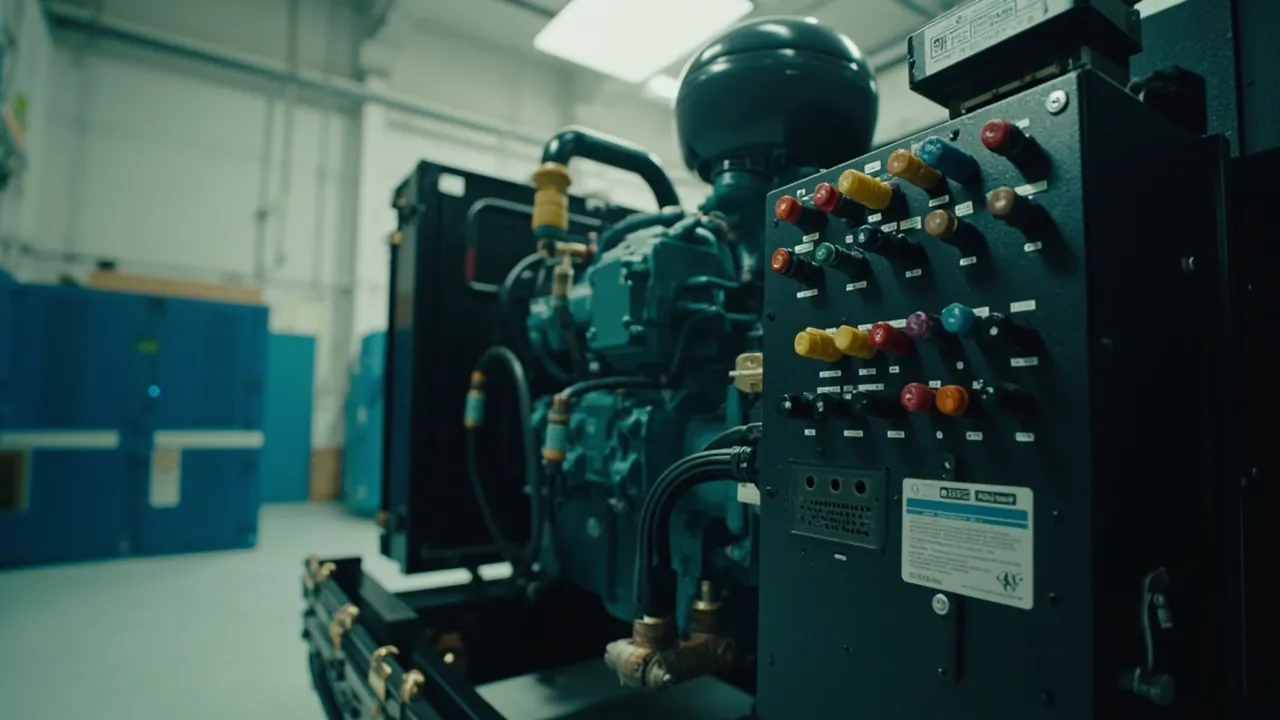
The hard part of a generator set spare-parts case is not fitting everything in. It is putting objects of completely different natures into one box without them damaging each other. A typical random-spares case holds electrostatic-sensitive control modules and AVRs, moisture-sensitive sensors and harness terminals, particle-sensitive high-pressure fuel system parts, crush-sensitive filters, leak-sensitive battery accessories and rust-prone steel tools all at once. Their requirements for humidity, vibration, cleanliness and static are almost contradictory. Control modules need ESD protection, fuel system parts need to be oil-free and dust-free, filters must not be compressed, and batteries must stand upright without leaking. Trying to satisfy all of this with one cavity and one material guarantees failure on at least one dimension. JUNZHJIA supplies model-and-spares-list-specific multi-zone inserts, ESD protection modules, spare-part locating features and OEM/ODM programmes for generator set applications.
Generator sets have another distinctive property: delivery destinations are extremely dispersed. A set may go to a data centre, a telecom base station, a hospital, a mine, an island, an oil and gas field, or an overseas EPC project site. Spare parts are often used months or even years after commissioning, so a spare case must not only survive transport but also allow parts to be installed straight out of the case after long storage. That forces the packaging plan to address both long storage and long-haul transport. Long storage means more time exposed to humidity and temperature swings, and natural ageing of seals, batteries and rubber parts. Long-haul transport means multiple handling legs and stacking loads. This article is written for spare-parts management, quality and procurement staff at generator set manufacturers, engine and alternator suppliers, electrical installation and O&M service companies, equipment distributors and export traders. Figures quoted are typical industry values or empirical ranges; the governing inputs are the product technical documentation, mandatory regulations and the customer's acceptance specification.
Table of Contents
- 1. Risk Profile for Genset Spares: Why a Spares Case Is Harder Than a Genset Case
- 2. Genset Accessories and Control Electronics: Critical Parts and Failure Modes
- 3. Control Modules and AVRs: The Twin Risks of Vibration and Static
- 4. Sensors, Harnesses and Connectors: Terminal and Contact Protection
- 5. Random Maintenance Spares: Filters, Injectors, Gaskets and Drive Parts
- 6. Batteries and Starting System Accessories: Leakage, Short Circuit and State of Charge
- 7. Special and Random Tools: Compartments, Counting and Loss Prevention
- 8. Component-to-Case Selection Matrix
- 9. Insert and Vibration-Isolation Materials Compared
- 10. Sealing, Moisture Control and IP Ratings: IEC 60529 and GB/T 4208
- 11. Transport Test Basis and Standard Packing Workflow
- 12. Sea Export, Returnable Re-Use and OEM/ODM Customisation
- 13. Arrival Acceptance and Whole-Life Spare Management
- Frequently Asked Questions
- Conclusion and Further Reading
1. Risk Profile for Genset Spares: Why a Spares Case Is Harder Than a Genset Case
To understand the design difficulty of a genset spares case, start with the diversity of its contents.
How the set itself differs from the spares case. A generator set, comprising engine, alternator, control panel and base frame, is a relatively uniform object in transit. It is heavy, structurally robust, and its main risks are lifting, stacking and rain. Its packaging logic is heavy-duty plus weatherproof plus secured. A spares case, by contrast, is a collection of many objects of many natures in small quantities. One case may hold an 8 kilogram AVR module, a 30 kilogram starter motor, a pack of filters, a gasket set and a special wrench. Each class has a different sensitivity, and that is where the difficulty lies.
Four sensitivities, four conflicting requirements.
The first is control electronics, meaning control modules, AVRs, sensors, paralleling modules and protection relays. Their common enemies are static, moisture and vibration. ESD damage is hidden and delayed and may only surface after commissioning. Moisture causes electrochemical corrosion of circuit boards and oxidation of terminals. Vibration causes solder fatigue and loosened connectors.
The second is precision fuel system parts, meaning injectors, high-pressure pumps and fuel circuit valves. Diesel injection clearances are measured in microns and are extremely sensitive to particulate contamination. A single grain of sand entering an injector can cause sticking and poor atomisation. These parts require no dust and no oil contamination with all ports capped, which is not the same as the antistatic material required by electronics.
The third is porous and flexible parts, meaning filters, belts, hoses and gaskets. Filter media fear compression, and a crushed element has altered filtration area and flow characteristics. Belts and hoses fear kinking and long-term bending. Gaskets fear moisture and compression.
The fourth is energy storage and chemical items, meaning batteries and their accessories, acidic or alkaline items, and greases and cleaners. Batteries fear short circuit, tipping and heat. Greases and solvents fear leakage and evaporation.
The first design principle follows: zone the case rather than merely dividing it. A divider separates things. Zoning separates them by environmental requirement. An electronics zone needs ESD protection and desiccant. A fuel parts zone needs cleanliness and port caps. A filter zone needs crush protection. A chemical zone needs independent sealing and leak containment. All four zones can share one case body, but the insert materials, sealing strategy and markings differ.
The second principle: design for long storage, not for a two-week shipment. Many sets' random spares sit in a plant room or warehouse long after commissioning and are used only when a fault occurs, which means one to three years of humidity and temperature cycling. Seal, rubber and battery ageing must therefore be considered, and the desiccant plan should be sized by storage duration rather than by transit time. Specific storage conditions and replacement intervals follow the product technical documentation and the user's maintenance manual.
The third principle: counting efficiency is a design metric. Half the value of a spares case lies in protection and half in letting a maintenance technician quickly confirm what is on hand. One part per numbered compartment, with the packing list corresponding one to one, substantially shortens the search during an outage. In emergency power applications, time is itself a cost.
A common misconception treats a spares case as a box that merely needs filling. Filling prevents rattle but does nothing about static, contamination or long-term humidity. For a spares case, repeatable positioning matters far more than filling, because only fixed positions permit fast counting and condition verification.
2. Genset Accessories and Control Electronics: Critical Parts and Failure Modes
| Component | Critical parts | Primary failure modes | Trigger | Priority countermeasure |
|---|---|---|---|---|
| --- | --- | --- | --- | --- |
| Control module or controller | Circuit board, terminal block, display | ESD damage, moisture corrosion, solder fatigue | Static, high humidity, vibration and shock | ESD shielding plus low-rebound float plus desiccant |
| AVR | Power devices, potentiometer, terminals | Moisture short circuit, terminal oxidation, setting drift | Humidity, salt fog, vibration | Separate compartment plus sealed bag plus desiccant |
| Paralleling or protection module | Circuit board, communication ports | ESD damage, port oxidation | Static, humidity | ESD protection plus port caps |
| Speed sensor | Sensing head, lead wire, plug | Sensing head damage, plug deformation | Impact, squeeze | Separate compartment plus plug protection |
| Temperature or pressure sensor | Probe, thread, capillary | Probe deformation, thread damage, capillary kink | Hard contact, bending | Protector plus minimum bend radius |
| Current or voltage transformer | Core, winding, terminals | Core deformation, insulation moisture | Impact, humidity | Dedicated cavity plus moisture control |
| Genset harness | Sheath, connectors, terminals | Terminal deformation, sheath cracking, insulation moisture | Squeeze, cold bending, humidity | Large coil plus connector caps |
| Connectors including circular plugs | Pins, seals, locking sleeve | Bent pins, seal failure | Impact, dust, squeeze | Protective caps plus separate compartments |
| Oil filter element | Media, housing, seal ring | Media crushing, housing damage, seal deformation | Compression, stacking, moisture | Separate position plus axial protection |
| Air filter element | Pleats, end caps | Pleat deformation, end cap debonding | Compression, impact | Dedicated cavity plus crush protection |
| Injector or nozzle | Needle and seat, spray holes, sealing face | Particulate contamination, hole damage, rust | Dust, hard contact, humidity | Port caps plus clean compartments plus rust prevention |
| High-pressure fuel pump | Plunger and barrel, rack, housing | Particulate contamination, sticking, rust | Dust, humidity | Full capping plus VCI plus independent fixing |
| Gaskets and seals | Sealing face, elastomer | Compression set, moisture ageing, loss through mixing | Stacking, humidity, no compartments | Flat compartments plus moisture control plus labels |
| Drive belts | Belt body, tooth profile on synchronous belts | Kinking, indent marks, ageing | Bending, squeeze, heat and light | Large-diameter coiling plus light and heat exclusion |
| Starter motor or charging alternator | Brushes, terminals, pinion | Terminal damage, pinion damage, moisture | Impact, humidity | Independent fixing plus terminal protection |
| Battery | Terminals, case, vent | Terminal short circuit, case damage and leakage, self-discharge | Metal contact, tipping, heat | Upright fixing plus insulated terminal caps plus separate zone |
| Special tools | Working surfaces, taps, torque mechanism | Working surface damage, rust, loss | Mixed packing, humidity | Compartments plus VCI plus hanging points plus list |
| Greases and chemicals | Container, label | Leakage, evaporation, label damage | Squeeze, inversion, heat | Separate sealed zone plus upright fixing |
These eighteen object classes share one property: their failure is not about whether they work but about when they fail. ESD damage may be delayed by weeks. Particulate contamination in a fuel system may cause injector sticking months into service. Battery self-discharge and sulphation accumulate slowly during storage. Seal ageing happens over years. Verification for a spares case therefore cannot stop at intact appearance on arrival; it must consider reliability after commissioning.
3. Control Modules and AVRs: The Twin Risks of Vibration and Static
Control modules and AVRs are the highest value-dense and most carefully handled class in a genset spares case.
What an AVR does and where it is fragile. An automatic voltage regulator holds alternator output voltage steady, and internally contains power devices, sampling and comparison circuitry and a potentiometer or digital setting stage. An AVR is typically compact, but it is sensitive to three things. Moisture degrades insulation on power devices and circuit boards and can cause short circuit, with saline sea freight especially unfavourable. Vibration can loosen or drift potentiometers and terminals, shifting the voltage set point. Static endangers the control circuitry, and ESD damage is hidden and delayed. The packaging essentials for an AVR are therefore a separate compartment, a sealed bag, desiccant and low-rebound cushioning, none of which can be omitted.
What makes a controller different. Engine controllers and generator control modules typically include a display, keys, terminal blocks and communication ports. The display is an exposed fragile face, and squeezing it causes liquid crystal bleeding or large dark patches. Terminal blocks deform under squeeze and make wiring difficult. Communication port pins, on RS485, CAN or Ethernet for example, are very thin and bend from a single impact. Face the display inward or overlay it with soft material, fit caps or clearance cavities over terminal blocks and ports, and float the module on low-rebound material rather than clamping it rigidly.
Why rigid clamping is wrong. Control modules often carry a heat sink or metal base plate and therefore have appreciable mass. If the insert clamps the module rigidly, external shock passes through case and insert to the module with almost no attenuation and then into solder joints and device pins, causing solder fatigue and pin fracture. The correct approach envelops the module in a cushioning layer so shock energy is absorbed by material compression, while restraint limits travel to an acceptable range, with an empirical criterion of no more than 2 mm under hand pressure. For the underlying principles see cushion liner design for protective cases and shock and vibration protection in case design.
How to implement ESD protection properly. Electrostatic protection is more than putting a module in a plastic bag. Practical measures include ESD shielding bags around the module itself, dissipative or conductive foam as the insert, packing in an area where static-control measures are already in place, and, for a case holding many static-sensitive items, a dissipative liner throughout with an electrostatic-sensitive marking on the outside. The IEC 61340 family provides a general framework and can be used to set work-area and packaging requirements. See ESD shielding case configuration.
Relationship to the alternator. Note that in service an AVR usually sits inside the alternator terminal box, sharing the machine's cooling and vibration environment. A spare AVR held in long-term storage should avoid high temperature and high humidity and should be checked against the supplier's stated storage life. Specific storage and installation requirements follow the product technical documentation.
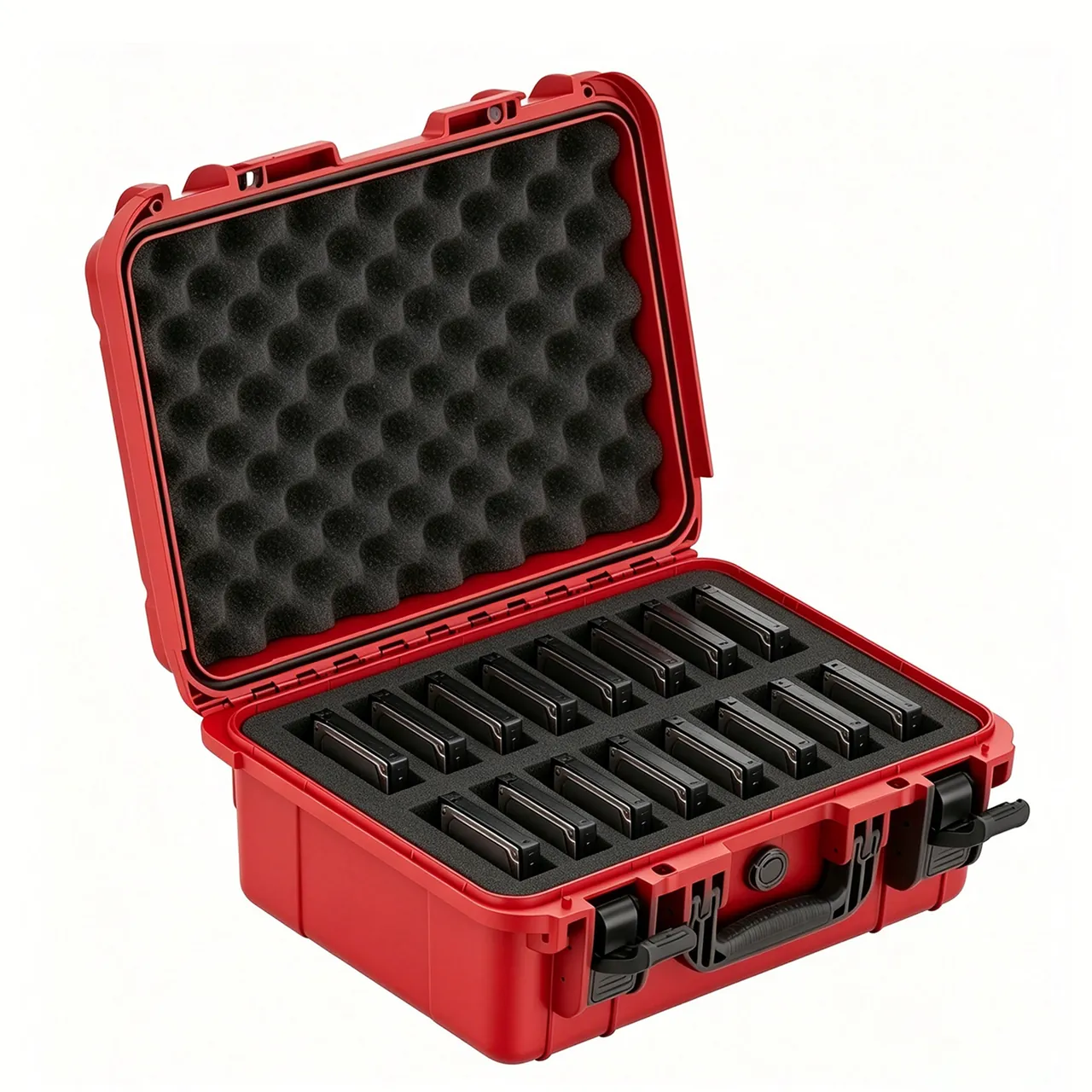
4. Sensors, Harnesses and Connectors: Terminal and Contact Protection
Sensors, harnesses and connectors form the nerves and blood vessels of a generator set and are among the items that quietly degrade during spare-parts storage.
Three fragile points on a sensor. Common genset sensors include coolant temperature, oil pressure, speed sensors of the electromagnetic or Hall type, level sensors, exhaust temperature thermocouples, and current or voltage transformers. Each has three fragile points. The first is the sensing head or probe. A speed sensor's head runs at a small air gap to a toothed wheel, and damage or deformation of the head face causes signal loss or distortion. A temperature or pressure sensor's probe and thread are fit surfaces, and damage causes installation difficulty and poor sealing. The second is the lead wire or capillary. Sensor leads are thin and break if over-bent, and a capillary tube on instruments that use one cannot be restored after a kink or crushing. The third is the plug and terminal. Sensor plugs are mostly moulded parts that deform under squeeze and then make poor contact.
What makes transformers unusual. Current and voltage transformer cores are built from stacked silicon steel laminations, and impact can misalign the stack and change magnetic behaviour. Moisture in the winding reduces insulation resistance. Transformers are usually heavy and regular in shape, so they are easily mistaken for robust items and set down carelessly. Fix them in a dedicated cavity, keep the core free from impact, and address moisture.
Protection logic for the genset harness. Harness failure comes in three forms. Terminal deformation, where connectors are crushed and contact resistance and heating rise. Sheath cracking, where rubber or PVC hardens at low temperature and cracks when bent. Insulation moisture, where long-term high humidity degrades insulation performance. Handling inside a spares case should therefore follow four rules:
- Coil to at least the specified minimum bend radius, standardise the coil diameter, and tie each coil after winding.
- Fit a protective cap to every connector so no pin is exposed.
- Keep harnesses out of tool compartments so dragging and impact cannot abrade the sheath.
- Label purpose and number so parts can be matched to a specific set on site.
Protecting connectors, including circular plugs. Circular plug pins are very thin and numerous, and once bent they are practically unrepairable on site. Their seals, meaning O-rings and gaskets, are also contamination-sensitive. Fit protective caps, isolate each connector in its own compartment so they cannot strike each other, keep them clean and dry, and check that seals have not aged on connectors held in long storage.
Electrochemical corrosion of terminals. Copper and tin- or silver-plated terminals corrode electrochemically and sulphide in humid and sulphur-bearing environments, showing as a dark surface and rising contact resistance. Genset spares are frequently stored in plant rooms or coastal warehouses, so this risk cannot be ignored. Cap or protect terminals, using a dedicated electrical contact grease where the supplier specifies one, fit desiccant and a humidity indicator card to control internal humidity, and note that VCI materials release a corrosion-inhibiting atmosphere that can affect plated contacts and terminals and should not be used directly in an electronics cavity.
A practical observation: terminal protection inside a spares case is the step most often skipped and the one most likely to cause rework on site. One bent pin or one oxidised terminal can prevent a standby set from starting when it is needed.
5. Random Maintenance Spares: Filters, Injectors, Gaskets and Drive Parts
Random spares account for most of a spares case's volume and weight, and their protection requirements vary enormously with material.
Filters: vulnerable to compression, not to impact. Oil, fuel, air and water-separator filters share a robust housing or end cap but a crush-sensitive media. A flattened element loses filtration area and gains flow resistance, and in severe cases the media tears and bypass occurs. The packing principle is therefore to carry load axially and avoid radial compression: pass weight through the end cap, never through the pleats, never stack filters on one another, and give large thin-walled air filters their own cavity with soft pads at the end caps. Moisture also matters, since paper media lose strength when damp and may grow mould.
Injectors and high-pressure pumps: vulnerable to particulate contamination. Diesel injection clearances are measured in microns, so sensitivity to particulate contamination is extreme. A grain of sand, a metal chip or even a fibrous packaging fragment can cause needle sticking, spray hole wear and poor atomisation. Four rules apply. Cap every port, including inlet, return, spray end and high-pressure connections, with a dedicated plug or cap. Keep the packing environment clean, away from castings and machined parts. Use non-shedding inserts, avoiding low-density open-cell foam and poor-quality non-woven. And apply short-term rust prevention, since precision fits seize when they corrode. For longer storage, VCI material with barrier film may be used, provided compatibility with internal rubber seals is confirmed.
Gaskets and seals: vulnerable to compression and moisture, and above all to mixing. A full gasket set, covering head, sump, inlet and exhaust, is usually supplied to suit a specific set, and the pieces look similar while differing in size. Mixing them causes wrong installation on site. Lay them flat in compartments, never folded or rolled, label each piece or stack them in sequence with positions identified on the packing list, and protect against moisture, since paper gaskets swell when damp. Rubber seals also need shelf-life management: mark the production date or expiry, avoid long inventory, and keep them free from compression set, direct sunlight and long contact with oils.
Drive belts and hoses: vulnerable to kinking. Both V-belts and synchronous belts suffer from kinking, which damages internal cords and leaves a permanent crease that produces vibration, noise and eventual failure in service. Coil to at least the specified minimum bend radius, avoid reverse bending on synchronous belts, store away from light and heat, since rubber ages faster under ultraviolet and elevated temperature, and keep them away from oils. Hoses follow similar rules, and should be confirmed free of residual liquid.
Bearings, oil seals and drive parts. These are precision fits that fear impact, moisture and contamination. Bearings should stay in their original packaging until installation. Oil seal lips are precision sealing faces and must not be squeezed out of shape. Gear and shaft fit surfaces need protection and should be compartmentalised as precision parts.
Numbering filters by installation position. A useful practice is to label each spare position not only with the part name and number but also with its installation position on the set. Maintenance staff can then match parts directly during an outage without consulting the parts manual, which matters greatly for users with several sets and several models.
6. Batteries and Starting System Accessories: Leakage, Short Circuit and State of Charge
A battery is the only item in a spares case that raises both electrical and chemical safety concerns, and its management deserves its own section.
Transport safety points for batteries. A flooded lead-acid battery contains dilute sulphuric acid electrolyte and is classified as a dangerous good. Under international dangerous goods frameworks, flooded acid batteries and non-spillable batteries fall under different UN numbers and packaging requirements, and their transport, packaging, marking and declaration must follow the applicable dangerous goods rules. No compliance conclusion is offered here. Requirements must be confirmed with the supplier and carrier according to battery type, transport mode and destination country legislation. For the general framework see ADR and IMDG hazmat transport case points.
From a protection-design standpoint, three hard constraints apply inside a spares case:
- Keep the battery upright. Tipping causes electrolyte leakage, and dilute sulphuric acid is corrosive and will damage other spares and the case itself. Give the battery its own zone with a non-slip, restraining base, and mark the case as not to be tipped.
- Insulate the terminals. Terminal short circuit is the most serious battery transport risk: a metal tool or a metal case fitting bridging the two terminals creates a high-current loop that can cause arcing, melting and even an explosion hazard. Fit insulated terminal caps and never place a battery in the same compartment as bare metal tools.
- Avoid heat and direct sunlight. Heat accelerates self-discharge and grid corrosion and ages the case. Avoid direct sunlight and hot storage locations.
How sealed batteries differ. Valve-regulated lead-acid (VRLA) and absorbed glass mat (AGM) batteries do not spill under normal conditions and generally attract lighter transport requirements, since non-spillable types are often classified separately under international rules, but they still need terminal protection, upright transport and temperature control. Lithium starting batteries fall under separate provisions and should be handled according to battery type and transport mode. No compliance judgement is made here; requirements follow the battery supplier's instructions and the carrier's rules.
State of charge and long storage. Batteries self-discharge during long storage, and deep discharge causes sulphation and permanent capacity loss. A spares case should therefore include storage and top-up charging instructions, normally as specified in the user maintenance manual, plus a maintenance reminder card in the case or document wallet. Specific top-up intervals and state-of-charge requirements follow the battery supplier's instructions and the user maintenance manual; no process conclusion is offered here.
Starting system and other electrical accessories. Starter motors, charging alternators, relays and preheat devices are electrical accessories whose protection points are terminal protection, independent fixing and moisture control. A starter motor is heavy and needs its own load-bearing compartment, and its pinion is a fit part that must not be struck.
The isolation rule for tools and metal items. Wherever a battery is present, the rule that metal tools never share a compartment with a battery must be enforced. This is often overlooked because tools are habitually kept within easy reach. Safety takes priority over convenience.
7. Special and Random Tools: Compartments, Counting and Loss Prevention
Tool management is the least glamorous and most troublesome part of a spares case.
Why tools need their own zone. Tools are usually made of tool steel, harder than most spares. Loose in a case under vibration, a tool repeatedly strikes other spares and acts as an internal blade: it can score harness sheaths, damage sensor heads, crush filter media and bend connector pins. Tools must therefore be compartmentalised, with working surfaces protected.
The value and risk of special tools. Generator sets often ship with special tools such as injector pullers, valve adjustment tools, barring tools, dedicated sockets and torque wrenches. These are often costly and difficult to buy at short notice. Losing one can stop a service call from being completed. Special tools should therefore have fixed positions, clear numbering and a defined relationship to the packing list, with protectors or caps over working surfaces such as puller threads and wrench drive squares.
Additional requirements for torque tools. A torque wrench is a measuring instrument whose indicated accuracy is affected by storage and transport conditions. Avoid dropping it, avoid leaving it at full scale or under spring preload for long periods, following the supplier's instructions on release or retention settings, and avoid rust from high humidity. Specific handling requirements follow the tool's instructions and the company's metrology management system.
The management logic of compartments and lists. Use a three-layer correspondence: compartment number in the case, label number on the tool, and line number on the packing list. With that in place, counting takes minutes and a missing item is found immediately, which directly shortens repair time for emergency power users. For compartment methods see removable divider system concept.
Tool rust prevention. Tool steel rusts readily in humid conditions, especially in coastal and sea-freight scenarios. Apply short-term rust-preventive oil to working surfaces or use VCI packaging kept away from electronics, fit desiccant and a humidity indicator card, and wipe tools clean before returning them to the case, since salt in perspiration accelerates corrosion.
Managing consumable sundries. Sealants, tape, cable ties, markers, lamps and fuses are small, numerous and easily scattered. Keep them in a dedicated sundries compartment and count them periodically. Fuses and lamps should be compartmentalised by rating and labelled, so the wrong item is not fitted on site.
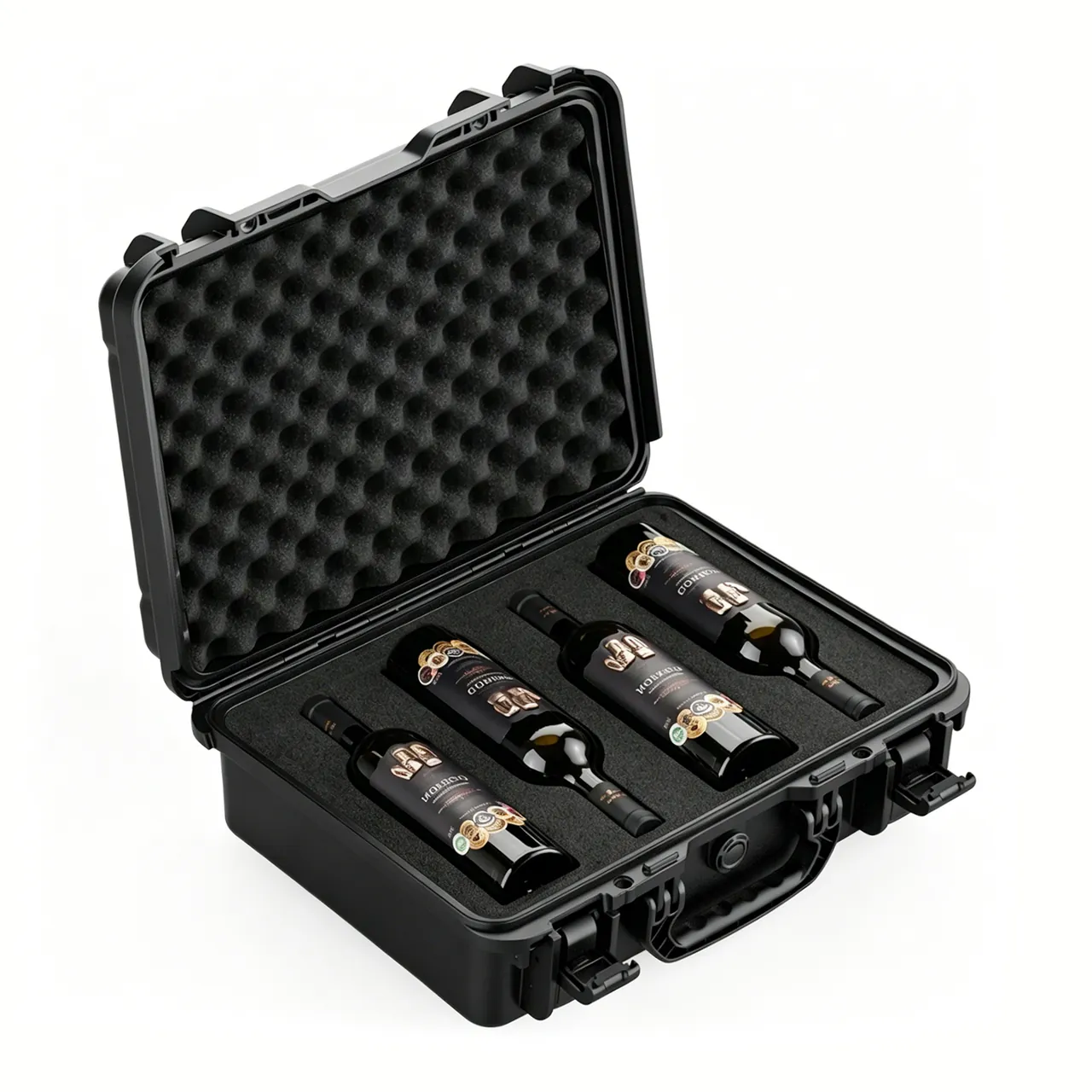
8. Component-to-Case Selection Matrix
| Component | Typical weight | Insert approach | Case form | Sealing | Key constraint |
|---|---|---|---|---|---|
| --- | --- | --- | --- | --- | --- |
| Control module or controller | 1–10 kg | ESD foam plus low-rebound float plus face overlay | Medium or multi-zone case | IP65 plus desiccant | ESD, vibration, display unloaded |
| AVR module | Under 5 kg | Separate compartment plus ESD bag plus soft lining | Compartment or accessory case | IP65 plus desiccant | Terminals unloaded, moisture control |
| Probe-type sensor | Under 3 kg | Probe protector plus separate compartment | Compartment box | IP65 plus desiccant | Probe and thread touch nothing |
| Transformer | 3–30 kg | Dedicated cavity plus soft pad plus moisture control | Medium case | IP65 plus desiccant | Core free from impact |
| Genset harness | 5–40 kg | Large coil plus connector caps plus independent fixing | Cable or multi-zone case | IP54–IP65 | Minimum bend radius, no cold bending |
| Connectors and circular plugs | Under 3 kg | Protective caps plus compartments | Compartment box | IP65 | Zero pin bending |
| Oil or fuel filter element | 1–8 kg | End cap load path plus axial restraint plus separate position | Spares or compartment case | IP54–IP65 | No radial media compression |
| Air filter element (large) | 2–15 kg | Dedicated cavity plus soft end pads | Large spares case | IP54 | Pleats unloaded |
| Injector and nozzle | Under 3 kg | Port caps plus clean compartments plus VCI | Clean or compartment case | IP65 plus desiccant | Zero particulate, no rust |
| High-pressure fuel pump | 5–40 kg | Full capping plus VCI plus independent fixing | Medium or multi-zone case | IP65 plus desiccant | Zero particulate, no impact |
| Gaskets and seals | Under 5 kg | Flat compartments plus moisture barrier plus labels | Flat or compartment case | IP65 plus desiccant | No folding, no mixing, shelf life |
| Drive belts and hoses | 1–10 kg | Large-diameter coiling plus light and heat exclusion | Medium case or coiling module | IP54 | No kinking, no light |
| Starter motor or charging alternator | 8–40 kg | Dedicated load-bearing cavity plus terminal protection | Medium or heavy case | IP65 plus desiccant | Terminals and pinion free from impact |
| Battery | 10–60 kg | Upright restraint plus insulated terminal caps plus separate zone | Dedicated battery zone or heavy case | IP54–IP65 | Upright, no short circuit, no heat |
| Special tools and torque wrenches | 3–20 kg | Compartments plus working surface protectors plus numbering | Tool or compartment case | IP54–IP65 | Zero working surface damage, no rust |
| Sundries and fuses | Under 5 kg | Compartment box plus rating labels | Compartment box | IP65 | No scattering, no wrong fitment |
| Greases and chemicals | 2–20 kg | Separate sealed zone plus upright fixing | Dedicated chemical zone | IP54 | No leakage, no evaporation, no inversion |
Three empirical rules apply. First, in any case containing a battery, metal tools must be physically isolated from the battery zone. Second, for any fuel system precision part, every port must be capped and the insert must not shed. Third, for any electronic component, static, vibration and moisture protection must all three be satisfied; missing one invalidates the scheme.
9. Insert and Vibration-Isolation Materials Compared
| Material or structure | Typical density | Load-bearing behaviour | Surface and moisture behaviour | Suited to | Notes |
|---|---|---|---|---|---|
| --- | --- | --- | --- | --- | --- |
| EVA (medium to high density) | 60–120 kg/m³ | Good load bearing, low compression set | Closed cell, low water uptake | Spare base supports, compartment walls | Softens slightly when hot |
| Low-rebound EVA | 40–90 kg/m³ | Good vibration absorption | Closed cell | Control modules, AVRs, sensors | Needs structural parts to bear load |
| PU foam | 25–60 kg/m³ | Medium to low load bearing | Mostly open cell, may absorb moisture | Tool and sundries compartment lining | Not for prolonged high humidity |
| XPE or IXPE | 30–80 kg/m³ | Low load bearing | Closed cell, flat surface | Interlayer pads, face overlays | Not for load bearing |
| Structural foam (cross-linked PVC or PE) | 60–300 kg/m³ | High load bearing, low deformation | Closed cell, machinable | Load blocks, base supports, heavy part seats | Contact face needs a soft overlay |
| ESD foam (conductive or dissipative) | 30–90 kg/m³ | Medium to low load bearing | Controlled surface resistivity | Control modules, AVRs, paralleling modules | Confirm the resistivity range |
| Fleece or non-woven overlay | — | No load bearing | Extremely soft, anti-scuff | Displays, probes, sealing faces | Absorbs moisture, needs mould control |
| Corrugated or honeycomb board | — | Medium | Flat | Gasket layering, filter end pads | Absorbs moisture, needs protection |
| VCI material | — | No load bearing | Releases a corrosion-inhibiting atmosphere | Injectors, fuel pumps, steel tools | Never use in the electronics zone |
| Foil laminate barrier film | — | No load bearing | High barrier, low moisture transmission | Gaskets, seals and sensor inner packs | Requires desiccant |
Selection logic: choose by zone, not by case. Insert selection for a spares case must be done zone by zone. The electronics zone uses antistatic material, low-rebound cushioning and a closed-cell moisture layer. The fuel parts zone uses clean, non-shedding material plus VCI, physically separated from electronics. The filter zone uses load-bearing end pads and generous clearance. The tool zone uses an abrasion-resistant overlay plus VCI. The chemical zone uses corrosion-resistant, easily cleaned material. Trying to cover all zones with one material guarantees failure at the most sensitive point.
Three high-risk material combinations. The first is VCI in the same cavity as electronics, where the corrosion-inhibiting atmosphere can affect plated contacts and terminals and reduce contact reliability. The second is open-cell foam with fuel system precision parts, where the foam sheds and absorbs moisture, creating both contamination and corrosion. The third is ordinary, non-antistatic foam with circuit boards, which generates static through friction and attracts dust. All three combinations are common in practice and should be explicitly excluded during insert design review.
Compatibility with rubber parts. A spares case contains a great deal of rubber: seal rings, belts, hoses, anti-vibration mounts and battery cases. Rubber is sensitive to oils, solvents and ozone. Insert materials must therefore be confirmed free of migratable oils and plasticisers, and grease-based chemicals must not be stored in the case long-term. Where they must be carried, use a separate sealed zone. See case foam material comparison and EVA foam insert custom process.
10. Sealing, Moisture Control and IP Ratings: IEC 60529 and GB/T 4208
Genset spares often need long storage, which makes moisture control a whole-life issue.
What the IP code means. The IP code defined in IEC 60529 consists of two digits, the first for dust protection (0–6) and the second for water protection (0–9K). The equivalent Chinese standard is GB/T 4208. Common configurations for spares cases are:
- IP54: limited dust protection and splash resistance, suited to covered long-term storage in a plant room and short domestic transport;
- IP65: dust-tight and resistant to water jets, suited to most spares cases in domestic and near-sea transport and indoor storage;
- IP67: dust-tight and resistant to temporary immersion, typically 1 m for 30 minutes, suited to sea freight, open or semi-open storage and high-humidity, high-salinity regions;
- IP68: continuous immersion, needed only in extreme scenarios such as a storage yard that may flood.
For how to choose, see choosing the IP rating of a waterproof case and IP67 protective case design points.
One distinction matters. A generator set's own enclosure rating is normally expressed within the rotating machinery standards framework, such as the IEC 60034 family provisions for the classification of degrees of protection of rotating electrical machines, and addresses solid and liquid ingress in the service environment. The sealing level of a spares case addresses the storage and transport environment. The two are not interchangeable.
Key point one: an IP rating verifies that external water does not enter. It does not mean condensation cannot form inside. A sealed case cannot easily vent internal moisture across day-night and seasonal temperature changes, so condensation may form on circuit boards, sensor probes and tool surfaces. For spares held in long storage this matters especially, because the longer the storage period, the more temperature cycles are experienced and the greater the accumulated condensation risk. Combine sealing with desiccant and a humidity indicator card, and fit a pressure equalisation valve where routes or storage locations have large temperature swings.
Key point two: moisture control is not only about excluding external water; it is also about controlling internal moisture sources. Timber case components, paper inner packaging, undried cleaning residue and newly manufactured rubber parts are all internal moisture sources. Confirm parts are fully dry before packing, avoiding the most common error of putting damp parts into a sealed case.
How to size desiccant. Desiccant quantity should be calculated from free volume inside the case, the hygroscopicity of packing materials, storage or transit days and target humidity. A spares case is unusual in that exposure may be 30 to 45 days of transport plus one to three years of storage, far longer than for an ordinary transit case. Two strategies work. Either size the desiccant for the full storage period and replace it on a maintenance schedule, or use a two-layer structure in which critical parts are sealed in barrier film with desiccant of their own while the outer case provides mechanical protection and general moisture control, so that critical parts remain protected even if the outer seal degrades. The choice should follow the user's maintenance regime and supplier advice. For high-value electronics, add a humidity indicator card so the peak humidity history can be read at unpacking.
How seals and latches behave in long storage. Seals in silicone, EPDM or foamed TPE take a permanent set when compressed for long periods, which is compression set, and sealing performance declines. Cases held in long storage should therefore be opened periodically to check seal condition and replace it if necessary. Seals are consumable and belong on the spare-parts list with defined replacement criteria; see case hinge, latch and seal selection and protective case service life evaluation.
Where flame-retardant material applies. UL94 is a plastics flammability classification that evaluates the case plastic, insert foam and seal material themselves; it is not a fire certification for a machine or a packaging system. Note that a UL94 rating must always be stated together with material and thickness, because the same material can achieve different ratings at different thicknesses. Where the customer requires flame retardance, for example in data centre, hospital or marine applications, specify the material and thickness combination at the enquiry stage.
11. Transport Test Basis and Standard Packing Workflow
Test basis. Verification of a spares case typically draws on four families of standards. These sit at a different level from the set's own performance and safety standards, such as the ISO 8528 family for reciprocating internal combustion engine driven alternating current generating sets and its Chinese equivalents, and the two should not be confused.
ISTA. The International Safe Transit Association programme is graded by pack form and weight. Larger spares cases commonly use ISTA 3E for unitised loads or ISTA 3B for less-than-truckload shipments, and single packs reference ISTA 2A or 2B. Its value lies in sequencing: preconditioning, then impact or drop, then vibration, then re-inspection. See understanding ISTA transport test procedures.
GB/T 4857. The Chinese series of basic test methods for transport packages covers vibration, impact, stacking and drop, and is widely cited in domestic tendering and acceptance. See applying GB/T 4857 to transport packaging.
ASTM D4169. This standard assigns test intensity from a distribution cycle and is often used for packaging verification into North America. See ASTM D4169 distribution cycle testing.
MIL-STD-810H. Frequently cited for its vibration, shock, temperature-humidity and salt-fog environmental test methods. Note clearly that MIL-STD-810H is used here as a source of environmental test methods and does not mean the product holds any military certification. See MIL-STD-810H environmental compliance note.
| Test type | Common standard | Example parameters | Meaning for a spares case |
|---|---|---|---|
| --- | --- | --- | --- |
| Random vibration | ISTA 3E / ASTM D4169 | Power spectral density, duration | Verifies compartment stability and inter-part movement |
| Impact or drop | GB/T 4857 / ISTA | Drop height, peak acceleration | Verifies electronics, sensor and fuel part protection |
| Stacking | GB/T 4857.3 | Load, time, temperature and humidity | Verifies case strength and filter resistance to crushing |
| Temperature-humidity cycling | MIL-STD-810H method 507 | Temperature range, cycle count | Verifies moisture plan and condensation risk |
| Salt fog | ISO 9227 / ASTM B117 | Concentration, duration | Verifies terminals, tools and steel parts |
| Water ingress | IEC 60529 / GB/T 4208 | IP rating, test duration | Verifies case sealing effectiveness |
| Flammability (material) | UL94 | Rating at a given material and thickness | Verifies case plastic and insert material |
Checks on arrival and at unpacking. Verification for a spares case should be judged by function and installability, and checks should follow the list: whether control modules and AVRs are deformed, whether terminals are oxidised and whether they power up and self-test normally; whether sensor probes are damaged and threads intact; whether harness and connector pins are straight and sheaths uncracked; whether injectors and pumps remain properly capped and free from rust and particulate; whether filter media are crushed; whether belts and hoses show creases; whether battery cases are intact and leak-free, terminals uncorroded and open-circuit voltage within the supplier's specified range; and whether special tools are complete with working surfaces intact. Electrical and battery checks must be performed by qualified personnel under the applicable safety rules.
Standard packing workflow.
- Verify and sort. Check model, quantity and set relationships against the random spares list, and sort into groups: electronics, fuel precision parts, filters and flexible parts, tools, chemicals and battery.
- Clean and pre-treat. Place electronics in ESD shielding bags; cap all fuel part ports; fit probe protectors to sensors; apply short-term rust prevention to metal parts; fit insulated caps to battery terminals.
- Pre-fit the insert. Place the right material in each zone, antistatic for electronics, clean for fuel parts, load-bearing end pads for filters, abrasion-resistant overlay for tools; confirm no foreign matter and no misalignment; run and record a first-article trial fit.
- Seat the components. Place to the designed posture without dragging or dropping: electronics floating on cushioning, fuel parts fixed independently, filters loaded axially, battery upright and restrained.
- Fix and limit. Add top restraint; where several items share a case, compartment them strictly with no stacking; confirm hand pressure produces no appreciable movement, with an empirical criterion of no more than 2 mm of travel.
- Isolate battery and chemicals. Give the battery its own zone, physically separated from all metal items; seal greases and chemicals in their own upright, fixed zone.
- Seal and dry. Add desiccant sized from volume, transit days and storage period, together with a humidity indicator card; check the seal; close the latches and confirm even loading around the perimeter.
- Mark and record. Apply rain, this-way-up, do-not-tip for the battery zone, centre-of-gravity, lifting and electrostatic-sensitive markings; photograph the packed case zone by zone and file the images.
Field experience: disputes over spares cases concentrate on items that look intact on arrival but fail after commissioning. Photograph each compartment at packing and keep an electronic copy of the packing list, so that when the case is opened a year or two later the part conditions and transport responsibility can still be compared.
12. Sea Export, Returnable Re-Use and OEM/ODM Customisation
Six key variables in sea export. First, transit runs 30 to 45 days, so desiccant quantity must be calculated from volume and days and must also account for the subsequent storage period. Second, day-night temperature swings inside the container cause condensation, so fit a pressure equalisation valve and confirm components are thoroughly dry. Third, salt-laden exposure requires terminals, tools and steel parts to have appropriate corrosion resistance, with copper and plated terminals deserving particular attention. Fourth, sea stacking heights are usually greater, so compression strength must be checked against the worst stacking case and crush-sensitive items such as filters must not sit in the load path. Fifth, export timber packaging must meet ISPM 15 heat-treatment or fumigation requirements; plastic cases avoid this issue but require attention to destination-country environmental and recyclability rules, and timber block options must be assessed for the corrosion risk that acidic constituents and moisture in the wood pose to metal parts. Sixth, sea freight usually connects to a local truck leg and a further on-site handling step, and the loading impact on that final leg is often the most severe.
Compliance considerations for dangerous goods in the case. Where random spares include batteries containing acid, oil- or solvent-based chemicals, or parts that may retain fuel residue, dangerous goods transport rules may apply. Specific declaration, packaging and marking requirements must be confirmed with the supplier and carrier according to battery type, chemical class, transport mode and destination country legislation; no compliance conclusion is offered here. For the general framework see ADR and IMDG hazmat transport case points.
Criteria for returnable re-use. Spares cases are often re-dispatched on project sites, for example from a main contractor's warehouse to the installation site, so re-use criteria should be explicit. Before re-dispatch, check six items: whether the case has cracks, deformation or through damage, especially the base and corners; whether seals are hardened, cracked, debonded or permanently flattened, with compression set deserving particular attention on long-stored cases; whether latches and hinges close and carry load reliably; whether inserts have collapsed, fractured, shed their overlay or lost compartments; whether load blocks and base supports are deformed or cracked; and the condition of castors and the telescopic handle. If any item fails, replace it before re-use; criteria are summarised in protective case service life evaluation. One further warning: an insert used for fuel system precision parts must not be reused for control electronics, because VCI material and oil contamination will carry over. Conversely, ESD foam is not suitable for long-term contact with oils.
OEM/ODM customisation points. Genset spares cases form a category with wide model variation, long spare lists, medium batch volumes and long storage periods. Procurement strategy should be built around standardised cases, modular zones and customised inserts. Use three to five standard case sizes, such as a medium multi-zone case, a large spares case, a cable case, a tool case and a dedicated battery case, to cover most combinations. Design zone modules around the five classes, electronics, fuel, filters, tools and chemicals, so they can be combined freely by model. Customise inserts to specific spare dimensions while keeping zone interfaces common so modules are interchangeable. This spreads tooling cost across models; see case mould cost analysis. JUNZHJIA's standard approach for generator sets is: accept the model list, spares list and 3D data or physical samples, produce a zone and insert proposal, confirm with a first-article trial fit, then run production with sampling and supply supporting test documentation.
Five dimensions for evaluating a supplier. Engineering capability, meaning the ability to produce a zone proposal from a spares list and sensitivity classification and to run a first-article trial fit. Materials and process, meaning foam density and batch consistency, static-control material stability, overlay abrasion and shedding performance, and seal section and hardness. Test capability, meaning the ability to supply vibration, drop, stacking, water-ingress and salt-fog records. Delivery and capacity, meaning peak-season flexibility and lead-time reliability. Quality system, meaning sampling rules and non-conformance handling, summarised in custom case acceptance and AQL sampling.
Enquiry checklist. A practical enquiry should include: generator set model and application scenario; random spares list and quantities; weight and external dimensions of each spare; a list of critical sensitive items, meaning electronics, fuel precision parts, sensors and batteries; cleanliness and static-control requirements; transport mode and route; storage environment and storage period; number of round trips; target IP rating; test requirements; marking and packaging documentation requirements; and annual volume with delivery cadence. For supplier selection see how to choose a protective case OEM factory.
13. Arrival Acceptance and Whole-Life Spare Management
The value of a spares case does not end at delivery. It must still be usable three years later, which means the packaging plan belongs inside whole-life spare management.
Three levels of arrival acceptance. The first is appearance and packaging acceptance: whether the case is damaged, whether the seal is intact, whether the humidity indicator card is within the acceptable band and whether markings are legible. The second is completeness acceptance: checking compartment by compartment against the packing list for model, quantity and completeness of accessory sets, for example whether an injector includes its sealing washer or a sensor includes its mounting hardware. The third is condition acceptance, which is specific to spares cases: control module and AVR appearance and terminal condition; sensor probe and thread condition; harness connector pins and sheath condition; injector and pump capping, rust and particulate contamination; filter media crushing; belt and hose creasing; battery case integrity, terminal corrosion and open-circuit voltage; and special tool completeness and working surface condition. Electrical and battery checks must be performed by qualified personnel under the applicable safety rules. Since spares may be used one or two years after arrival, photograph each compartment at unpacking and keep an electronic copy of the packing list for later responsibility assessment.
Storage management after receipt. Four practices help. Keep the original seal and open the case only when necessary. Control the storage environment, avoiding high temperature, high humidity, direct sunlight and large temperature swings; a plant room or spares store should at least have basic temperature and humidity control and should not be open to the weather. Inspect periodically, checking seal condition, humidity indicator cards, battery condition and rubber ageing at intervals set by the user's maintenance regime. And keep a log recording case number, receipt date, opening records, part replacement records and the next inspection date.
The return-to-position principle after use. After parts are used on site, the case and remaining spares should be returned to position and re-sealed rather than left open. This simple action is the key to long-term usability: within weeks an open case reaches equilibrium with the warehouse environment and the moisture control design stops working.
Interface with the user maintenance manual. Storage conditions, desiccant replacement intervals, battery top-up charging requirements and seal replacement criteria for a spares case should be written into the generator set's user maintenance manual. Specific storage temperature ranges, humidity limits and inspection and replacement intervals follow the set's technical documentation and the battery supplier's instructions; no numeric conclusion is offered here. Writing the key packaging points, especially which parts fear what, into the spares chapter of the maintenance manual substantially improves correct use on site.
Using spare failures to improve the packaging. Keep a record mapping spare failures to packaging factors. Repeated corrosion of a particular spare suggests the moisture plan is inadequate. Repeated terminal oxidation suggests sealing or terminal protection needs strengthening. Repeated filter crushing suggests the load path is wrong. Repeated belt creasing suggests the coil diameter or fixing method needs optimisation. That record is the most direct basis for iterating the packaging plan and the strongest technical input when talking to a supplier.
Frequently Asked Questions
Q: Why is a generator set spares case harder to design than packaging for the set itself?
A: Because the contents of a spares case are far more diverse than the set itself. A generator set in transit is a relatively uniform object: heavy and structurally robust, with lifting, stacking and rain as its main risks, and with a packaging logic of heavy duty, weatherproof and secured. A spares case is a collection of many objects of many natures in small quantities. One case may hold a few-kilogram AVR module, a tens-of-kilograms starter motor, filters, gaskets, belts, injectors and special tools. Their sensitivities conflict: electronics fear static and moisture, fuel system precision parts fear particulate contamination and require oil freedom, filters fear radial compression, batteries fear short circuit and tipping, and tools fear rust. Satisfying all of that with one cavity and one material guarantees failure on at least one dimension. The design core is therefore zoning by environmental requirement rather than simple division. A spares case must also satisfy install-straight-from-the-case-after-long-storage, which is far more demanding than surviving a two-week shipment.
Q: Why should an AVR or control module not be rigidly clamped inside a spares case?
A: Because rigid clamping transmits external shock to the electronics with almost no attenuation. An AVR or controller contains power devices, circuit boards, potentiometers and terminal blocks, and some modules carry a heat sink or metal base plate and therefore have appreciable mass. If the insert clamps the module rigidly, shock passes through case and insert into the module and then into solder joints and device pins, potentially causing solder fatigue, pin fracture and potentiometer drift. The correct approach is full floating cushioning in low-rebound material with restraint to limit travel: the module is enveloped in cushioning so shock energy is absorbed by material compression, while travel is limited to an acceptable range, with an empirical criterion of no more than 2 mm under hand pressure. ESD protection and moisture control must be combined with this, because the module also fears static and humidity. Note also that heavy modules suit floating cushioning while thin pins, terminals and displays suit separate compartments with soft overlays; one scheme cannot serve both.
Q: Why is packaging so critical for fuel system spares such as injectors and high-pressure pumps?
A: Because diesel injection clearances are measured in microns and are extremely sensitive to particulate contamination. A grain of sand, a metal chip or even a short fragment of packaging fibre can cause needle sticking, spray hole wear, poor atomisation and scoring of pump plunger and barrel assemblies. The damage is progressive and irreversible: early symptoms may be only poorer atomisation and higher fuel consumption, developing later into misfire and hard starting. Four protection rules follow. Cap every port, including inlet, return, spray end and high-pressure connections, with dedicated plugs or caps. Keep the packing environment clean, away from castings, machined parts and uncleaned tools. Use non-shedding insert materials, avoiding low-density open-cell foam and poor-quality non-woven. And apply short-term rust prevention, because precision fits seize when they corrode. In addition, an insert used for fuel parts should not subsequently be used for electronics, since VCI material and oil contamination will carry over.
Q: What needs attention for items like filters and belts that look robust?
A: They look robust but each has a clear failure mode. A filter housing or end cap is indeed strong, but the media itself is vulnerable to radial compression: a flattened element loses filtration area and gains flow resistance, and severe cases tear and bypass, letting contaminants straight through to the engine. The packing principle is therefore to carry load axially and avoid radial compression, passing weight through the end cap rather than the pleats, never stacking filters on one another, and giving large thin-walled air filters their own cavity. Paper media also lose strength when damp and may grow mould, so moisture protection matters. Belts and hoses fail through kinking: bending damages internal cords and leaves a permanent crease that causes vibration, noise and eventual failure in service, and synchronous belts should not be reverse bent. Coil them to no less than the specified minimum bend radius, store away from light and heat, and keep them clear of oils. The common thread is that using the wrong stowage method damages the part before it is ever installed.
Q: Is it safe to put a battery in the same case as other spares?
A: Only with physical isolation, and subject to three hard constraints. First, the battery must stand upright, because tipping causes electrolyte leakage and dilute sulphuric acid is corrosive and will damage other spares and the case. Second, terminals must be insulated, because terminal short circuit is the most serious battery transport risk: a metal tool or case fitting bridging the two terminals creates a high-current loop that can cause arcing, melting and even an explosion hazard, so insulated caps are essential and a battery must never share a compartment with bare metal tools. Third, heat and direct sunlight must be avoided, since heat accelerates self-discharge and grid corrosion. Compliance also matters: flooded acid batteries are dangerous goods whose transport, packaging, marking and declaration follow the applicable rules, and sealed non-spillable and lithium starting batteries have their own provisions. No compliance conclusion is offered here; requirements must be confirmed with the supplier and carrier according to battery type, transport mode and destination country legislation. Note also that the protective case discussed here is for storing and protecting spares and is not a substitute for a compliant transport device.
Q: Why do special tools need their own fixed positions?
A: Because the availability of a special tool directly determines repair time. Generator sets often ship with injector pullers, valve adjustment tools, barring tools, dedicated sockets and torque wrenches, which are costly and hard to obtain at short notice. Losing one can prevent a service call from being completed, which is especially serious for emergency power users. Beyond loss prevention there are two further reasons. The first is damage prevention: tool steel is harder than most spares, so a loose tool under vibration repeatedly strikes other items and acts as an internal blade, scoring harness sheaths, damaging sensor heads, crushing filter media and bending connector pins, so tools need their own zone with protected working surfaces. The second is rust prevention: tool steel rusts readily in humid conditions, especially in coastal and sea-freight scenarios, so short-term rust prevention plus desiccant is needed. For management, use a three-layer correspondence between compartment number, tool label number and packing list line number, so counting takes minutes and a missing item is found immediately. Torque wrenches are also measuring instruments that must not be dropped or left at full scale, with handling requirements following the tool instructions and the company's metrology system.
Q: How should moisture control be planned for a spares case held in long storage?
A: The key is to shift the design condition from a two-week shipment to one to three years of storage. Long storage means more humidity and temperature cycles, higher accumulated condensation risk, permanent set in seals, and natural ageing of rubber parts and batteries. Two strategies, used singly or together, work well. The first is to size desiccant for the storage period and put it on a maintenance schedule: calculate quantity from free volume, the hygroscopicity of packing materials, storage days and target humidity, fit a humidity indicator card so peak humidity history can be read at unpacking, and replace desiccant on the inspection cycle. The second is a two-layer structure: seal critical parts individually in high-barrier film with their own desiccant while the outer case provides mechanical protection and general moisture control, so critical parts remain protected even if the outer seal degrades. Internal moisture sources must also be addressed: timber case components, paper inner packaging, undried cleaning residue and newly manufactured rubber parts all release moisture, so confirm parts are fully dry before packing. Specific storage temperature and humidity limits and inspection and replacement intervals follow the set's technical documentation and the user's maintenance regime.
Q: What should be checked when a spares case arrives?
A: Three levels of checks are recommended, with the third being the priority. The first is appearance and packaging acceptance: whether the case is damaged, whether the seal is intact, whether the humidity indicator card is within the acceptable band and whether markings are legible. The second is completeness acceptance: checking each compartment against the packing list for model, quantity and completeness of accessory sets, such as whether an injector includes its sealing washer or a sensor its mounting hardware. The third is condition acceptance, which is specific to spares cases: control module and AVR deformation and terminal condition; sensor probe and thread condition; harness connector pin straightness and sheath condition; injector and pump capping, rust and particulate contamination; filter media crushing; belt and hose creasing; battery case integrity, terminal corrosion and open-circuit voltage within the supplier's specified range; and special tool completeness and working surface condition. Electrical and battery checks must be performed by qualified personnel under the applicable safety rules. Because spares may be used one or two years later, photograph each compartment at unpacking and keep an electronic copy of the packing list so responsibility can be assessed later.
Q: How do I judge whether a spares case can keep being reused or kept in storage?
A: Establish explicit criteria and a log rather than relying on judgement. Check six items: whether the case has cracks, deformation or through damage, focusing on the base and corners; whether seals are hardened, cracked, debonded or permanently flattened, with compression set deserving particular attention in long-stored cases because a seal held under compression for a long period loses its resilience; whether latches and hinges close and carry load reliably; whether inserts have collapsed, fractured, shed their overlay or lost compartments; whether load blocks and base supports are deformed or cracked; and the condition of castors and the telescopic handle. Any failed item should be replaced before reuse or continued storage. Two additional cautions apply to spares cases. An insert used for fuel system precision parts must not be reused for control electronics, because VCI material and oil contamination carry over, and conversely ESD foam is not suitable for long-term contact with oils. And any case whose battery zone shows signs of leakage must be thoroughly cleaned and confirmed free of acid residue before reuse, with the insert replaced if necessary. A log recording case number, receipt date, opening records, inspection records and usage history is the lowest-cost and most effective management tool.
Conclusion and Further Reading
Protecting generator set spares in transit is fundamentally a coordination problem involving many objects with many sensitivities. AVRs and control modules fear static, moisture and vibration. Fuel system precision parts fear particulate contamination and must be oil-free. Filters fear radial compression. Belts and hoses fear kinking. Batteries fear short circuit, tipping and heat. Tools fear rust and loss. These requirements conflict, so an effective plan is not a bigger and thicker case but one that assigns load bearing, isolation, contact, moisture control, static control and contamination control to the right structures, while addressing both long storage and long-haul transport. JUNZHJIA's standard approach in this area is to accept the model and spares list, 3D data or physical samples, produce a zone and insert proposal, confirm with a first-article trial fit, then run production with sampling and supply supporting test documentation.
The path to implementation compresses into five steps: sort spares into five zones by sensitivity, define the load path and fixing method for each zone, apply targeted measures such as ESD protection, port capping, end-cap load paths and insulated terminals to each weakness, control humidity across the whole life with sealing, desiccant and a humidity indicator card, and close the loop with transport testing and three-level arrival acceptance. Following these five steps markedly reduces the chance of a case that looks fine on arrival but shows problems after commissioning. Where a zone and insert proposal is needed for specific models and random spares lists, provide the list, drawings or physical samples to JUNZHJIA and request a drawing plus a first-article trial fit.
Further Reading