

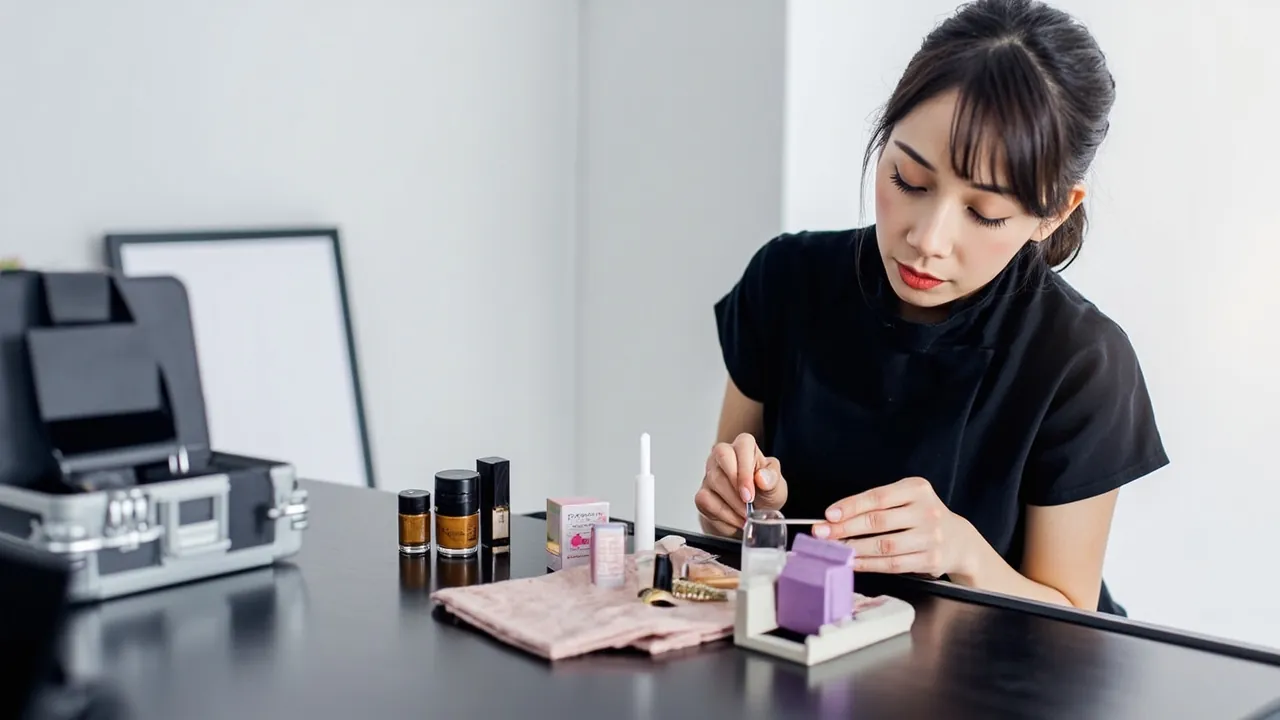
The two most expensive accidents in perfume and cosmetics logistics are not broken glass. They are leakage that contaminates an entire consignment, and goods that arrive looking perfect while their contents have already degraded. Perfume typically contains 60-90% ethanol and is therefore a flammable liquid, so its packaging is governed simultaneously by dangerous goods transport rules and cosmetics labelling regulations. Once a bottle leaks at the neck under vibration or differential pressure, ethanol rapidly dissolves carton inks, attacks labels and renders the batch and expiry information illegible - and the loss spreads from one bottle to the whole consignment. The second failure class is subtler: UV and heat slowly change the contents, altering the scent profile, fading natural colorants, degrading actives such as retinol and vitamin C, and splitting emulsions. These changes are usually invisible at unpacking and only surface during shelf life or in the consumer's hands. A perfume and cosmetics case must therefore solve four engineering problems simultaneously: leak prevention through structure and secondary sealing, light blocking against UV and short-wavelength visible light, temperature control against heat-induced separation and freeze-thaw breakdown, and compliance with dangerous goods and labelling rules. JUNZHJIA supplies leak-resistant compartmented inserts, upright locating slots, absorbent layers, opaque case bodies and OEM/ODM programmes for perfume and beauty applications.
The second defining trait of this category is extreme variety, which defeats any single design. One production line may carry a 30 mL glass perfume bottle, a 200 mL plastic lotion pump, a metal aerosol can, a lipstick bullet, a pressed powder pan, a sheet mask sachet and a serum ampoule at the same time, each with a different failure mechanism, compliance status and temperature sensitivity. Ampoules and glass bottles fear fracture and puncture; aerosols fear heat and pressure; lipsticks soften when hot and crack when cold; emulsions break down under freeze-thaw; perfume leaks and degrades under light. Packing these categories into a single case essentially stacks their risks on top of one another. This article is written for supply chain, quality and packaging engineering staff at cosmetics and fragrance brands, and for professionals at distributors, duty-free channels, e-commerce fulfilment operations and contract manufacturers. It sets out executable parameters and selection methods along four lines: leak prevention, light blocking, temperature control and compliance. All figures are typical industry values or rules of thumb; actual requirements should follow product technical files, formulation stability data, applicable regulations and customer acceptance specifications.
Table of Contents
- 1. Core Risks: Leakage, Photodegradation, Temperature and Compliance
- 2. Leak Path Analysis: Where and Why Bottles Leak
- 3. Component Failure Comparison Table
- 4. Light Blocking: Protecting Against UV and Short-Wavelength Visible Light
- 5. Temperature Control: Heat Separation, Cold Crystallisation and Freeze-Thaw
- 6. Dangerous Goods Status and Transport Compliance
- 7. Inserts and Secondary Sealing: Compartments, Upright Location, Absorbent Layers
- 8. Category-to-Case Selection Table
- 9. Case Structure and Sealing: IEC 60529, GB/T 4208 and Pressure Equalisation
- 10. Labelling Compliance and Label Protection: GB 5296.3 and Related Requirements
- 11. Packing SOP and Arrival Inspection
- 12. Transport Test Evidence, E-commerce and Cold Chain Channels
- 13. OEM/ODM Customisation and Supplier Evaluation
- Frequently Asked Questions
- Conclusion and Related Reading
1. Core Risks: Leakage, Photodegradation, Temperature and Compliance
Risk one: leakage - a single-unit incident that escalates into a consignment incident. Liquid leaks propagate. Once liquid leaves its container it travels downward under gravity, penetrates the insert, dissolves inks and adhesives, and contaminates the outer packaging and labels of neighbouring products. Paper and paperboard are liquid transport media, so one leak point can contaminate an entire layer of goods. Ethanol-based perfume leakage brings an additional consequence: ethanol is an excellent solvent and causes label adhesive failure and blurred printing, so batch numbers and expiry dates become illegible. In most markets, illegible labelling alone constitutes grounds for goods being unsaleable, and the commercial loss far exceeds the value of the liquid itself.
Risk two: photodegradation - the slowest and most easily overlooked. UV and short-wavelength visible light trigger two reaction classes. One is fading or discolouration of dyes and colorants, seen as liquid becoming paler, browner or off-shade. The other is oxidative degradation of actives and fragrance materials, seen as a changed scent profile - citrus top notes change first - and falling concentrations of functional ingredients. These changes are not visible at unpacking and require instrumental measurement or long observation to detect, so by the time they are noticed the goods are already in the market.
Risk three: temperature - both heat and cold cause irreversible damage. Heat causes emulsion separation or breakdown, crystallisation of fats and waxes, syneresis (weeping) in creams, softening and deformation of wax-based systems such as lipstick, and higher internal vapour pressure that worsens pump leakage. Cold causes some natural oils and fragrance components to crystallise or precipitate out, producing cloudiness or floc in perfume; it causes emulsions to break down irreversibly after freeze-thaw; and it can embrittle some plastics. Freeze-thaw cycling is the classic irreversible case: as the water phase freezes, ice crystals rupture the interfacial film, and on thawing the emulsion cannot rebuild, leaving water separation, layering and grittiness. This differs from heat-induced separation, which in some systems can be partly recovered by slow cooling and homogenisation.
Risk four: compliance - the fundamental difference from ordinary industrial goods. Perfume and alcohol-containing cosmetics usually fall under flammable liquid management in transport, bringing UN numbers, packing groups, per-package quantity limits, packaging performance requirements, marking and documentation. Their retail packaging labels are separately governed by cosmetics labelling regulations covering ingredient lists, net content, responsible person information, expiry and warnings. A perfume and cosmetics case is therefore not simply "a box" but a compliance component that must satisfy transport rules and labelling rules at the same time. Details appear in Sections 6 and 10.
Five design principles follow.
Principle one: the primary leak defence is attitude and secondary sealing, not thicker walls. Liquid does not stop leaking because the wall is thicker. It stops leaking because the neck points up, the pump is locked and the seal is intact.
Principle two: every liquid product needs its own secondary containment layer. The logic is a bottle within a bottle: even if the inner bottle leaks, the liquid is confined to its own cavity and does not contaminate other goods.
Principle three: light blocking must be structural, not a film stuck on afterwards. Blocking UV requires understanding wavelengths and material transmission; a clear bag or colourless film provides essentially no light blocking.
Principle four: temperature control is about damping fluctuation rather than holding one extreme. As with cigar cases, repeated phase change from freeze-thaw and day-night cycling is more damaging than sustained cold or sustained heat.
Principle five: material compatibility must be verified. Fragrance and essential oils are aggressive solvent systems that cause plasticiser migration, ink dissolution and odour adsorption - and a case that has adsorbed odour becomes a contamination source on the next shipment.
Correcting one intuition: upright placement is not an aesthetic requirement, it is leak prevention design. When a bottle lies on its side or upside down, liquid sits permanently against the pump piston, gaskets and neck threads, and the probability of leakage under vibration and differential pressure rises sharply. The first design constraint of a transport case is therefore to provide upright location with properly matched relief cavities so that bottles cannot fall over under any circumstance.
2. Leak Path Analysis: Where and Why Bottles Leak
Designing reliable leak prevention starts with the concept of a leak path: leakage is rarely a single cause but the combination of seal design defects, unfavourable attitude, pressure or temperature disturbance, and vibration.
Link one: seal design defects. Perfume and cosmetics bottles are closed by non-permanent seals whose sealing surfaces involve several components: the pump's metal or plastic spring and piston, the bottle neck threads, the gasket (commonly PE, PTFE or silicone) and the crimp ring. Any dimensional deviation, assembly eccentricity or material ageing in any of these creates a leak path. Typical defects include a crimp ring not fully seated; a gasket that does not match the neck bore; thread tolerances that leave tightening torque insufficient; and micro-cracks or moulding defects in the glass neck - the shoulder being a common stress riser and origin point.
Link two: unfavourable attitude. This is the most common transport trigger and the one most easily eliminated by packing design. When a bottle lies on its side or inverted, liquid presses continuously against the sealing surface, which then carries hydrostatic head pressure plus vibration-induced dynamic pressure fluctuation. In the upright attitude the seal surface carries only a small gas-liquid interface pressure. Upright placement converts continuous loading into virtually no loading.
Link three: pressure disturbance. Two sources. Rising temperature raises internal vapour pressure - markedly so in ethanol-based products - pushing liquid out through weak points in the seal. Falling ambient pressure (air-freight cruise, high-altitude road legs, altitude changes in surface transport) creates a differential across the bottle wall, and the pump can enter a suction-and-leak cycle. This is why a pressure equalisation valve matters just as much on a perfume case: it removes the differential across the case, which in turn reduces the differential the container itself must withstand.
Link four: vibration. Vibration amplifies any looseness in the seal. Sustained random vibration slowly unscrews threaded closures, causes fretting wear in gaskets and fatigues pump springs. Cases that were sound at dispatch and leaking on arrival are mostly explained by vibration-induced seal degradation.
Five lines of defence follow:
- Container level: choose pumps with a locking feature that can be rotated shut; confirm the crimp ring is fully seated; confirm gasket material is compatible with the contents (ethanol- and essential-oil-bearing products require swelling testing).
- Primary seal: induction seal (foil) or heat seal at the neck; for pressure-sensitive products use a lined closure plug.
- Secondary seal: a shrink band or shrink sleeve over the shoulder and neck, providing mechanical restraint against thread back-off and pump movement.
- Third-level containment: an individual zip bag or individual cavity acting as secondary containment, confining leakage to a single item.
- Attitude and absorption: upright locating slots plus an absorbent pad whose capacity matches the maximum single-bottle liquid volume, absorbing residual leakage in place.
On the limits of absorbent layers. An absorbent layer slows spread, extends the handling window and isolates neighbouring goods; it does not absorb every possible spill. For high-value and high-risk categories such as essential oils and concentrated serums, combine the absorbent layer with an individual cavity rather than relying on absorbent material alone.
3. Component Failure Comparison Table
| Category | Critical Zones | Main Failure Modes | Triggers | Priority Countermeasures |
|---|---|---|---|---|
| --- | --- | --- | --- | --- |
| Perfume (glass bottle with pump) | Pump piston, neck threads, gasket, shoulder | Leakage, pump seizure, shoulder cracking | Side placement, vibration, rising temperature, differential pressure | Upright slots, pump lock, shrink band, absorbent layer |
| Perfume (aluminium travel tube) | Tube neck seal, tube body | Neck leakage, body denting | Squeezing, temperature, differential pressure | Compartments, body relief, upright location |
| Lotion and cream (plastic pump bottle) | Pump, base, wall | Pump leakage, body deformation, content separation | Heat, compression, freeze-thaw | Upright location, insulation, freeze-thaw avoidance |
| Cream (wide-mouth jar) | Lid threads, inner lid, product surface | Lid loosening, syneresis, surface contamination | Vibration-induced back-off, heat | Secondary banding, upright placement, heat avoidance |
| Serum ampoule (glass) | Body, neck, snap point | Fracture, puncturing other packaging | Vibration, point load | Individual compartments, full support, protective sleeve |
| Lipstick and wax-based sticks | Bullet, barrel, cap | Heat softening and deformation, cold cracking, cap loss | Heat, impact | Insulation, upright placement, secondary cap fixing |
| Pressed powder and eyeshadow pans | Powder, pan, mirror | Powder shattering, pan impact damage, mirror scratching | Shock, vibration | Cushioned inserts, full support, anti-scuff layer |
| Sunscreen and aerosols | Can, valve, neck | Pressure rise in heat, valve leakage, can deformation | Heat, impact | Heat avoidance, upright placement, compartments, compliant packaging |
| Essential oils and concentrated actives | Amber glass bottle, dropper | Leakage, photodegradation, dropper fracture | Light, vibration, side placement | Light-blocking insert, upright, sleeve, absorbent layer |
| Sheet masks and sachets | Seal edges, pouch body | Seal-edge leakage, puncture | Compression, sharp objects | Compartments, never share with hard items |
| Labels and printed information | Label stock, ink, batch coding | Adhesive failure, blurring, illegible batch codes | Solvent contact, rubbing, humidity | Over-lamination, anti-rub separation, absorbent layer |
| Outer gift boxes and sets | Corners, foil stamping, laminated faces | Chipping, scratching, compression marks | Impact, stacking, rubbing | Corner guards, compartments, relief cavities |
The twelve failure classes reduce to one sentence: liquids fear attitude and vibration, emulsions fear thermal cycling, wax systems fear heat, glass fears point loads, actives fear light, and labels fear leakage. The six solutions are entirely different, which is why different categories in the same case must be handled by zone rather than with a single uniform insert.
4. Light Blocking: Protecting Against UV and Short-Wavelength Visible Light
Light blocking is not simply making the case a dark colour. It requires understanding which wavelengths matter and by which path they reach the product.
Three paths by which light arrives.
- Through the container wall. Clear glass and some plastic bottles transmit both UV and visible light readily. Dark glass such as amber or cobalt blue markedly reduces UV transmission but still transmits visible light, so it does not amount to complete light blocking.
- Through the outer case and insert. If the case is white or transparent and the insert is open-cell foam or clear film, light reaches the product after multiple scattering events.
- Exposure during unpacking and display. Transport is only part of the exposure. Retail display, trade-show presentation and consumer use often accumulate far longer exposure than the shipment itself, so the light-blocking design should cover the whole life cycle, not only the transport leg.
The wavelength bands that matter. The main drivers of cosmetics degradation are the UV bands (roughly 290-400 nm, with both UV-A and UV-B contributing) and part of the short-wavelength visible range (approximately 400-450 nm). Different actives are sensitive in different bands: retinol-type, vitamin C-type, some UV filters and natural colorants are particularly UV sensitive, while certain essential oil and fragrance components are also sensitive to short-wavelength visible light, showing accelerated oxidation and colour change.
Engineering options, ranked by effectiveness.
| Option | Mechanism | Effectiveness | Suitable Applications | Notes |
|---|---|---|---|---|
| --- | --- | --- | --- | --- |
| Dark bottle (amber or cobalt glass) | Glass body absorbs part of the UV | Medium (reduces UV transmission only) | Essential oils, some serums | Still transmits visible light; cannot be the only measure |
| Opaque plastic bottle or tube | Material body blocks light | Medium-high | Lotions, cleansers, sunscreen | Confirm wall thickness and even masterbatch dispersion |
| Frosted or coated bottle | Surface scattering plus coating absorption | Medium | Premium bottle formats | Coating durability must be verified |
| Individual light-blocking bag (metallised or laminate) | Reflection, absorption and barrier combined | High | High-value actives, essential oils | Confirm no plasticiser migration and no odour |
| Opaque case design | Blocks light at assembly level | High | All categories | Preferred solution; also solves dust and confidentiality |
| Light-blocking insert (dark closed-cell material) | Absorption and shadowing | Medium-high | Used together with the case | Dark materials must be verified for dye migration |
| Combined light-blocking and insulating outer layer | Blocks light and heat at once | High | Cold chain and thermally sensitive categories | Higher cost; configured by category |
An opaque case is the cheapest and most reliable option. Making the case material itself opaque - by adding carbon black or another light-blocking masterbatch - covers every category's light-blocking need in one step without adding complexity to the inner pack. Two points require attention: the masterbatch must contain no migrating components that could contaminate products in contact; and the case interior should be light or neutral in colour so that leaks and stains are easy to spot during unpacking, since a dark interior hides evidence.
On "UV coatings" and "UV absorbers". Adding UV absorbers to a film or bottle, or applying a UV-blocking coating, can reduce transmission to some degree. Three preconditions apply. First, request spectral transmission data showing transmittance at specific wavelengths, rather than accepting a general "UV protection" claim. Second, verify coating compatibility with the contents to avoid migration. Third, consider coating durability under rubbing and cleaning. Relevant ageing testing references include the ISO 4892 series (plastics - methods of exposure to laboratory light sources) and the Chinese equivalent GB/T 16422 series, with colour difference assessed using grey-scale methods. Specific test conditions and acceptance limits should follow the product stability study protocol and customer standards.
Practical experience: light blocking cannot be verified by eye. Many materials that "look opaque" still transmit appreciably in the near UV, which is a common cause of active-ingredient degradation.
5. Temperature Control: Heat Separation, Cold Crystallisation and Freeze-Thaw
Temperature is the most complex variable in cosmetics logistics, because different categories respond to it in different - sometimes opposite - directions.
Effects of heat, by category.
- Emulsion systems (lotions, creams, serums): higher temperature weakens the interfacial film and accelerates droplet coalescence, appearing as lower viscosity, water separation and layering. In most systems this is irreversible, because coalescence is thermodynamically driven.
- Wax and lipid systems (lipstick, lip balm, stick products): the main risk is softening, deformation and syneresis, where liquid components migrate to the surface. Lipstick bullets soften, lean or snap when hot, and deformation cannot be reversed; weeping leaves an oily appearance and staining.
- Perfume: heat accelerates oxidation and polymerisation of fragrance components, changing the scent profile, while higher internal vapour pressure worsens pump leakage.
- Aerosols and pressurised packaging: heat raises can pressure significantly, increasing leakage and deformation risk. This category requires the strictest heat avoidance.
- Actives-bearing products: retinol-type, vitamin C-type, probiotic and some biological actives are especially temperature sensitive, and heat accelerates potency loss. These products typically require cold chain or tightly controlled temperature transport.
Effects of cold.
- Perfume: some natural materials and essential oil components crystallise or precipitate at low temperature, appearing as cloudiness, floc or sediment. The critical question is reversibility. Some precipitates redissolve on slow warming, while others do not; the authoritative answer comes from stability study data.
- Emulsion systems: freezing forms ice crystals in the water phase, which rupture the interfacial film and cause breakdown. The structure cannot be rebuilt on thawing. Freeze-thaw cycling is more dangerous than sustained cold, because every phase change damages the interface again.
- Glass containers: ordinary glass does not embrittle at normal low temperatures, but impact resistance may fall, and expansion of frozen contents can load the bottle internally.
- Plastic containers: some plastics become more brittle when cold, reducing drop resistance.
The design objective should be to damp fluctuation and avoid phase change, not simply to chase low temperature. Measures include:
- Insulated cases that increase the thermal time constant, making internal temperature insensitive to short external heat or cold shocks.
- Phase change materials (PCM) that hold internal temperature in a narrow band around the transition point, suited to short precision routes; dosing must be calculated from shipment duration and the external temperature profile, and PCM surfaces must not fall below the dew point or they will cause internal condensation.
- Away from doors, windows, heat sources and cold sources in warehousing and retail - free and effective.
- Stowage position: in containers, prefer non-top positions away from the doors.
- Cold chain configuration for categories requiring 2-8 degrees C, using active refrigeration or eutectic cold storage with full temperature recording; general methods appear in cold chain case design essentials.
- Avoid abrupt temperature change. As with cigars, allow a case taken from a cold environment to equilibrate before opening, to avoid surface condensation and instantaneous phase change.
The value of temperature records. Because thermal damage to cosmetics usually appears late, full temperature recording is the only way to settle liability. Fit data-logging recorders to cold chain and high-value consignments, and set per-category acceptance criteria, for example a limit on the cumulative hours the product temperature may exceed a stated value. Specific figures come from formulation stability studies.
| Category | Typical Storage Temperature (industry values) | Main Heat Risk | Main Cold Risk | Temperature-Controlled Transport Needed? |
|---|---|---|---|---|
| --- | --- | --- | --- | --- |
| Perfume | 15-25 degrees C | Scent change, worse leakage | Component precipitation, cloudiness | Yes (avoid heat; controlled temperature on long routes) |
| Lotions and creams | 15-25 degrees C | Layering, water separation, thinning | Freeze-thaw breakdown | Yes (avoid freeze-thaw) |
| Serums and actives | 15-25 degrees C; some 2-8 degrees C | Active degradation | Freeze-thaw and precipitation | Some require cold chain |
| Lipstick and wax sticks | 15-25 degrees C | Softening, deformation, weeping | Bullet cracking | Yes (strict heat avoidance) |
| Aerosols and pressurised packs | 15-25 degrees C | Can pressure rise, leakage | Generally limited | Yes (strict heat avoidance) |
| Powders and pressed powders | 15-30 degrees C | Generally tolerant | Generally tolerant | No (mechanical protection is the focus) |
| Essential oils | 15-25 degrees C | Oxidation, colour change | Crystallisation and precipitation | Yes (light and heat avoidance) |
| Sheet masks and sachets | 15-25 degrees C | Seal strength loss | Freeze-thaw effects | Depends on formulation |
6. Dangerous Goods Status and Transport Compliance
The dangerous goods status of perfume and alcohol-based cosmetics. Perfume normally contains a high proportion of ethanol and is a flammable liquid, generally managed as such in international transport under entries such as UN 1266 (Perfumery products); aerosols correspond to UN 1950 (Aerosols); high-concentration ethanol solutions have their own entries. The specific classification, packing group, packaging requirements and per-package quantity limits depend on flash point, initial boiling point and ethanol content, and must be determined by qualified personnel or bodies under the rules currently in force.
Four rule sets. Cross-border transport of perfume and cosmetics typically involves the following, whose requirements can differ from one another:
| Rule Set | Scope | Relationship to Case Design | Focus |
|---|---|---|---|
| --- | --- | --- | --- |
| ADR (European Agreement concerning the International Carriage of Dangerous Goods by Road) | European road transport | Packing group, combination packaging, marking | Differences between full load and LTL |
| IMDG (International Maritime Dangerous Goods Code) | International sea freight | Packaging performance, segregation, stowage | Voyage duration and container thermal environment |
| IATA DGR (Dangerous Goods Regulations) | International air freight | Per-package limits, packaging specification, documentation | Significant limit differences between passenger and cargo aircraft |
| Chinese domestic regulations and standards | Transport within China | Packaging performance, marks, documentation | Alignment with the dangerous goods list and transport management rules |
Three concrete effects on case design.
- Per-package limits drive compartmentalisation. Air transport imposes strict limits on the net quantity of alcohol-containing liquids per package, which may mean a single outer case needs internal compartmentalisation by limit, or a construction of several small packages forming one combination packaging. Packing schemes must be confirmed with compliance staff at the design stage, not improvised at dispatch. See hazmat transport case compliance design.
- Packaging performance requirements set the case strength class. Dangerous goods packaging normally has to pass drop, stacking, airtightness or hydraulic tests, and the test object is the package itself, comprising inner and outer packaging, not simply the outer case material.
- Marking and documentation requirements shape the case surface. This includes the UN packaging mark, orientation arrows and accompanying transport documents. The case surface must offer enough flat marking area, and marks must not wear off in transit.
Compliance statement: this article discusses packaging engineering in general terms and does not constitute a conclusion on dangerous goods classification, packaging performance determination or regulatory applicability. Product classification, packing group, per-package limits, marking and documentation requirements should all follow the currently effective international rules, Chinese regulations and carrier requirements, and be confirmed by qualified personnel or bodies.
The boundary between non-dangerous goods and "exemptions". Some low-alcohol or alcohol-free formulations may not be dangerous goods, or may qualify for certain exemptions. Whether an exemption applies must be verified item by item and cannot be assumed from experience. Even where goods are not dangerous goods, the case must still meet leak prevention, light blocking, temperature control and mechanical protection requirements - compliance does not replace engineering protection.
7. Inserts and Secondary Sealing: Compartments, Upright Location, Absorbent Layers
Inserts and secondary sealing are the core of a perfume and cosmetics case: they determine whether one leaking bottle becomes one lost bottle or one lost consignment.
Layer one: upright location. The insert must give every bottle both a relief cavity and upright restraint: the cavity matches the bottle diameter to prevent movement; the base provides a bearing surface so the bottle bottom is not locally loaded (a glass base is a stress-sensitive zone); an upper stop prevents upward movement in transit; and overall height must match the bottle so the shoulder and neck carry no external load. The critical point: neck orientation must be defined and consistent across the whole case, so that no mishandling during unpacking can invert a bottle.
Layer two: compartmentalisation. Compartments solve three problems: preventing bottle-to-bottle impact (glass striking glass is the main cause of fracture); preventing leak propagation (each compartment is independent, confining leakage); and preventing labels from rubbing against each other (label wear destroys batch legibility). A rule of thumb is a soft separation layer of at least 3-5 mm between adjacent bottles, refined by bottle size, weight and transport severity.
Layer three: absorbent layer. The absorbent layer's job is to absorb residual leakage in place and prevent it running along the insert. Three design points: capacity must match the maximum single-bottle liquid volume (never less); the absorbent material must be compatible with the contents (for alcohol- and essential-oil-bearing products, verify that the material is not dissolved and does not release migrants); and the absorbent should sit at the base and around the walls of the relief cavity, not as a sheet across the whole case, since a full-case sheet spreads the leak rather than trapping it.
Layer four: secondary sealing and secondary containment. This is the final insurance in the leak prevention system:
| Measure | Mechanism | Suitable Applications | Notes |
|---|---|---|---|
| --- | --- | --- | --- |
| Induction seal (foil) at the neck | Forms a complete barrier at the neck | Lotions, serums, products opened by the user | Verify seal integrity and opening experience |
| Shrink band or shrink sleeve | Mechanically restrains the neck and pump against back-off | Perfume, pump-equipped products | Confirm even shrink with no trapped air |
| Pump lock (twist-lock) | Mechanically locks pump travel | Perfume and pump products | Confirm it holds under vibration |
| Individual zip bag | Secondary containment | High-value units, samples | Verify no migration between bag and product |
| Individual cavity (rigid compartment) | Physical isolation limiting spread | Full-case shipments | Adds volume and cost |
| Thread gasket | Supplements thread sealing | Wide-mouth jars, creams | Verify swelling behaviour and compatibility |
Material compatibility: a recurring problem specific to this category. Fragrance, essential oils and ethanol are aggressive solvent systems and cause three problems:
- Plasticiser migration: plasticiser-containing soft PVC or low-grade foam left in contact causes surface tackiness and discolouration, and can migrate to product contact surfaces.
- Ink and print dissolution: leaked ethanol rapidly dissolves label inks and carton printing, destroying information.
- Odour adsorption and cross-contamination: insert materials adsorb fragrance and then release it slowly, contaminating different fragrance families on the next shipment. This is the most easily overlooked risk in reusable cases.
Inserts for perfume and cosmetics should therefore be plasticiser-free (or verified as having no migrating plasticiser), low-odour, closed-cell, non-shedding and cleanable. Comparisons appear in case foam material comparison and custom foam insert guide.
Managing odour carry-over in reused cases. Assign cases by fragrance family or category rather than rotating one case across families; ventilate and clean thoroughly before reuse; and confirm no residual odour, tested by closing the case, leaving it, then smelling on opening - no detectable odour should be present. Cleaning methods appear in protective case cleaning and maintenance.
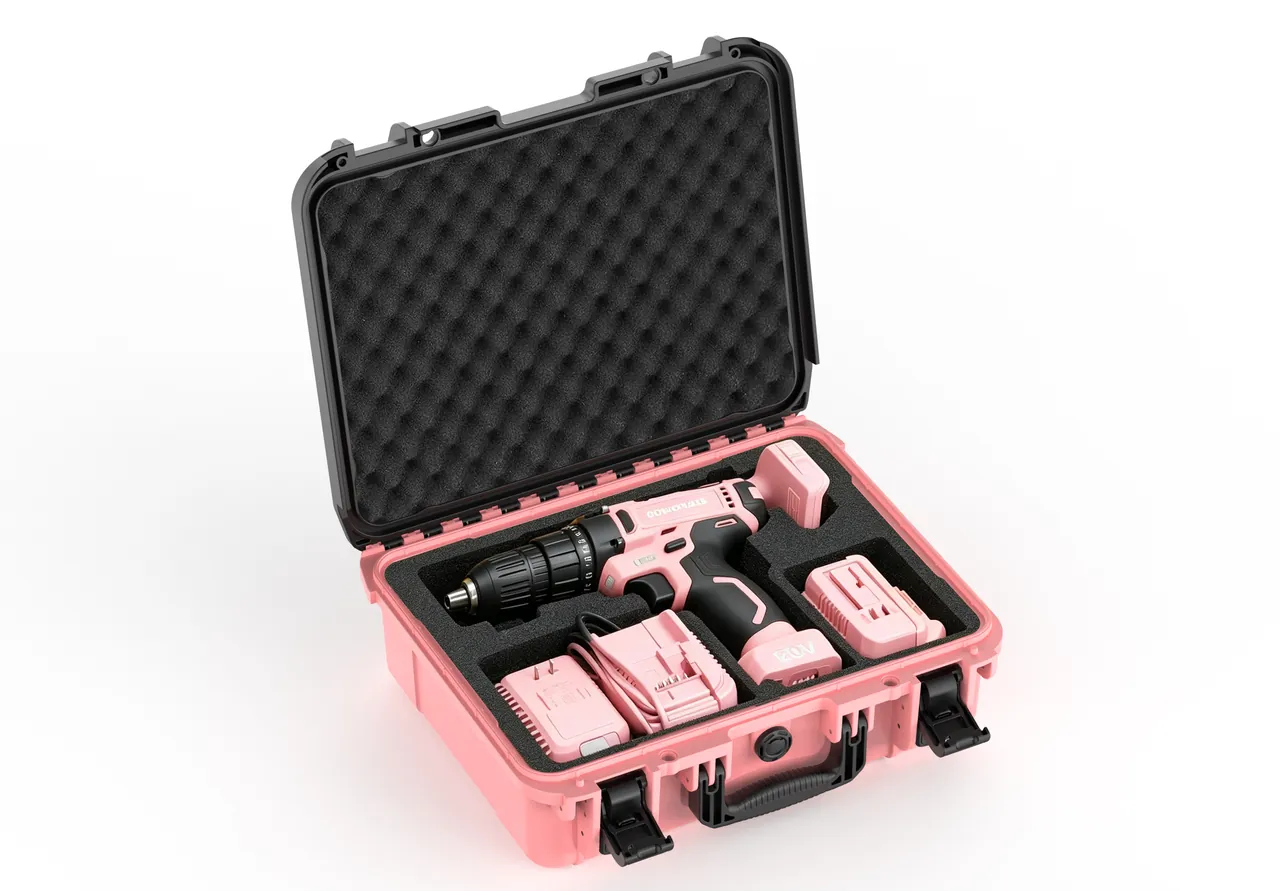
8. Category-to-Case Selection Table
| Category | Typical Format | Insert and Leak Prevention | Case Format | Light Blocking | Temperature Requirement | Key Constraints |
|---|---|---|---|---|---|---|
| --- | --- | --- | --- | --- | --- | --- |
| Perfume (30-100 mL glass) | 0.1-0.5 kg per bottle | Upright slots, shrink band, individual bag, absorbent layer | Portable or transit case | Opaque case | Avoid heat; controlled temperature on long routes | Upright, pump locked, compliant limits |
| Perfume travel (10-30 mL aluminium) | 0.05-0.15 kg per unit | Compartments, body relief, upright | Portable case | Opaque case | Avoid heat | Against squeezing and denting |
| Lotion and cream (50-200 mL) | 0.1-0.4 kg per bottle | Upright relief, secondary band, absorbent layer | Transit case | Opaque case | Avoid freeze-thaw | Consistent pump orientation |
| Serums and actives (ampoule or amber bottle) | 0.02-0.1 kg per unit | Individual compartments, sleeve, light-blocking bag | Compartment case | Individual plus case level | Some require cold chain | Against fracture and puncture |
| Lipstick and wax sticks | 0.02-0.05 kg per unit | Vertical slot, secondary cap fixing | Compartment case | Opaque case | Strict heat avoidance | Against softening and deformation |
| Pressed powder and eyeshadow | 0.05-0.2 kg per unit | Cushioned insert, full support, anti-scuff layer | Compartment case | Generally not required | Generally tolerant | Against powder shattering |
| Aerosols and pressurised packs | 0.1-0.5 kg per can | Upright compartments, heat-avoiding insulation | Transit case | Opaque case | Strict heat avoidance | Compliant packaging and limits |
| Essential oils (amber dropper bottle) | 0.03-0.2 kg per bottle | Light-blocking slot, sleeve, absorbent layer | Compartment case | Individual plus case level | Light and heat avoidance | Against dropper fracture and leakage |
| Sheet masks and sachets | 0.02-0.05 kg per sachet | Flat lay, compartments, no shared hard items | Transit case | Generally not required | Depends on formulation | Against seal-edge leakage and puncture |
| Gift boxes and sets | 0.5-3 kg | Corner guards, compartments, relief | Transit or framed case | Opaque case | Avoid heat | Zero damage to corners and laminated faces |
| Samples and travel kits | 0.2-1 kg | Compartments, labels, packing list | Portable case | Opaque case | Avoid heat | Complete, repeatedly re-packable |
| E-commerce direct despatch | Per unit | Individual secondary containment, absorbent, corner guards | SIOC or outer case | Opaque case | By category | Must pass channel packaging tests |
Three rules of thumb: first, every liquid product travels upright with an individual secondary containment layer and an absorbent capacity no less than the maximum single-bottle volume; second, every alcohol-containing or pressurised product must have its packaging and limits confirmed through the dangerous goods process, never assumed from experience; third, every light-sensitive active requires both individual and case-level light blocking, not one alone.
9. Case Structure and Sealing: IEC 60529, GB/T 4208 and Pressure Equalisation
What the IP rating means and how it applies. IEC 60529 defines the IP code as two digits: the first for solid-particle protection (0-6) and the second for liquid protection (0-9K). China's equivalent standard is GB/T 4208. For perfume and cosmetics cases the rating means two things: externally, protection against rain and dust so that goods and labels are not damaged by outside water; and internally, containment of liquid so that if leakage occurs the case holds it rather than letting it run out and contaminate the vehicle and other cargo. The second meaning matters especially in dangerous goods transport.
- IP54: limited dust protection and splash resistance; suitable for domestic short transfers and indoor rotation.
- IP65: dust-tight and water-jet resistant; suitable for most domestic and near-sea routes.
- IP67: dust-tight and resistant to short-term immersion (typically 1 m for 30 minutes); suitable for sea freight, open transhipment and rainy regions.
- IP68: continuous immersion; normally not a standard requirement for cosmetics cases.
For trade-offs see choosing the IP rating of a waterproof case and IP67 case design essentials.
Why a pressure equalisation valve matters. As described earlier, differential pressure propagates down the case-to-container chain: the greater the differential across the case, the greater the differential the inner container must withstand alone. Fitting a valve significantly reduces the load on the container, which is particularly valuable in air freight, at altitude and on routes with severe temperature swings. Selection points: valve vapour transmission (choose a low-transmission type for categories requiring humidity or temperature control), cracking pressure matched to the route, and no solvent residues or volatile compounds in the valve body, to avoid odour contamination. See pressure equalisation valve function and selection.
Reminder one: an IP rating does not address internal leakage. A waterproof case means outside water cannot get in; it does not stop one bottle inside from leaking. Preventing one leak from contaminating the whole case depends on compartments, secondary containment and absorbent layers - a completely different design dimension. Reminder two: condensation inside a sealed case harms cosmetics too. On routes with large day-night swings, a sealed case can condense internally, damaging labels, deforming cartons and corroding metal parts such as pump springs and mirrors. Use sealing combined with desiccant where appropriate for non-liquid items and a data-logging temperature and humidity recorder, and fit a pressure equalisation valve on routes with severe temperature swings. Reminder three: a light-coloured case interior is recommended. A dark interior makes leaks, mould spots and stains hard to spot at unpacking, delaying the response. A light interior is a detectability feature, not an aesthetic choice.
Gaskets and latches. Gaskets are commonly silicone, EPDM and TPE foam, with the profile matched to the groove. Gaskets are wear parts and belong on the spare parts list with defined replacement criteria. Latch count should match lid stiffness - as a rule of thumb, a lid edge longer than 800 mm should carry at least three latches. See case hinges, latches and gasket selection, case seal material analysis and protective case service life assessment.
Where flame-retardant materials apply. UL94 is a classification standard for the burning behaviour of plastics, used to rate case plastics, insert foams and gaskets themselves; it is not a fire certification for the appliance or packaging system, and the rating must always be quoted with material and thickness. Because perfume and cosmetics transport often involves flammable liquids, some carriers and customers impose flame-retardancy requirements on packaging materials; specify the material and thickness combination at the enquiry stage and test to the customer's nominated standard and acceptance method.
10. Labelling Compliance and Label Protection: GB 5296.3 and Related Requirements
The retail label on a cosmetic is a regulated information carrier, and the most common compliance incident in transport is precisely that the label is dissolved by leaked ethanol, rubbed off, or buckled by moisture until the batch code is illegible. Label protection is therefore a hard functional requirement of the packaging design.
The general framework of label content. In the Chinese market, cosmetic labels typically carry the Chinese product name, the registrant, notifier or manufacturer information, net content, the full ingredient list, the period of use (production date with shelf life, or batch number with use-by date), directions for use and required safety warnings. The relevant requirements appear in GB 5296.3, Instructions for use of products of consumer interest - General labelling for cosmetics, together with the Regulations on the Supervision and Administration of Cosmetics and the Measures for the Administration of Cosmetics Labelling. Imported and exported products are subject to different requirements, and language, ingredient naming (such as INCI names) and warning wording vary by market.
Compliance statement: label content, format and language requirements are regulatory matters and should follow the currently effective regulations, departmental rules and standards of the destination market, confirmed by company regulatory affairs staff or professional advisers. This article discusses only how labels should be protected in transport from an engineering standpoint and does not constitute a labelling compliance conclusion.
Four label damage modes in transport and their countermeasures.
| Damage Type | Cause | Consequence | Countermeasure |
|---|---|---|---|
| --- | --- | --- | --- |
| Adhesive failure, lifting | Leaked liquid (especially alcohol-based) dissolving the adhesive; high humidity | Label loss, missing information | Secondary containment, absorbent layer, compartment separation |
| Ink blurring, fading | Solvent contact; light; rubbing | Illegible batch codes and ingredient lists | Label over-lamination; light blocking; no label-to-label rubbing |
| Buckling, distortion | Dampness then drying; stacking | Barcode unreadable | Moisture protection, no stacking, flat placement |
| Scratching, scuffing | Rubbing against neighbouring packs; hard objects | Poor appearance, partial information loss | Compartments, soft separation, no shared hard items |
Distinguishing product labels from case marks. It is important to note that the retail label (governed by cosmetics regulation) and the transport marks on the case (orientation arrows, keep-dry, fragile, dangerous goods marks) are two different systems. The transport case must offer enough flat marking area, marks must resist rubbing and weathering and must not peel, and they must not cover or obscure dangerous goods marks or UN packaging marks that the rules require to be displayed.
On unpacking detectability. Consider printing an unpacking checklist on the inside of the case lid listing what to check - neck band integrity, label integrity, traces of leakage, odour in the cavity - and including a leak-indicating absorbent pad that visibly changes colour when wet, so that assessment on arrival is fast. This costs very little and substantially shortens the decision time on arrival.
11. Packing SOP and Arrival Inspection
Pre-packing checklist.
- Container and closure condition: induction seal intact; crimp ring fully seated; gasket material compatible with the contents (swelling testing for alcohol- and essential-oil-bearing products); no micro-cracks in the bottle, with particular attention to the shoulder.
- Compliance confirmation: product dangerous goods status, packing group, per-package limits and required marks and documents confirmed under the rules in force; label content aligned with destination requirements.
- Case and insert condition: insert free of residual odour (mandatory for reused cases); absorbent capacity matched to the maximum single-bottle volume; compartment dimensions matched to bottles; case opaque with a light interior.
- Temperature configuration: insulation and PCM dosing confirmed by category; verified against shipment duration and external temperature profile; no condensation risk.
Standard operating procedure (SOP).
- Clean. Clean the case and insert; confirm no dust, debris, residual odour or residue from the previous shipment.
- Seal and secondary seal. Complete the neck seal, fit the shrink band or sleeve, and lock the pump where a locking type is used; confirm the band has shrunk evenly with no trapped air or creasing.
- Individual secondary containment. Place each bottle or unit in an individual zip bag, expel excess air and seal; confirm the bag is undamaged and that no migration risk exists between bag and contents.
- Install the insert. Confirm cavities match the bottles, upright restraint is effective, the base provides a bearing surface, and the shoulder and neck carry no external load; confirm absorbent material sits at the base and around the cavity walls.
- Load the compartments. Place units one by one into their compartments, keeping all necks oriented upwards; maintain soft separation between adjacent bottles; confirm no cross-slot placement and no forced compression.
- Accessories and documents. Put nozzles, instruction cards, gift boxes and checklists in separate compartments, and confirm no hard items share a compartment with liquid bottles.
- Temperature components and monitoring. Fit PCM or insulation by category; for temperature-controlled categories fit a data-logging recorder inside the same cavity as the product, not in contact with it.
- Close and clamp. Confirm the gasket is correctly seated with nothing trapped; close the latches in a diagonal sequence and confirm even compression all round; check the seal around the pressure equalisation valve.
- Mark and record. Apply this-way-up, keep-dry, do-not-invert, keep-away-from-light-and-heat and, where applicable, dangerous goods marks; photograph the packing (band condition, compartment layout, absorbent layers, instrument readings) and record packing time, ambient conditions, initial instrument readings and the batch number mapping.
Arrival inspection. Work through the following sequence, in a ventilated area away from ignition sources - especially important for alcohol-containing products and pressurised packs:
- Data first. Read the temperature recorder curve and confirm whether limits were exceeded and whether a freeze-thaw window existed.
- Inspect the case. Check for damage, rain marks and crushing, and for any trace of liquid escaping the case, which directly affects dangerous goods contamination assessment.
- Smell. The odour at opening is the fastest indicator. A pronounced alcohol or fragrance smell should immediately trigger suspicion of leakage and the isolation procedure.
- Inspect insert and absorbent layers. Check for deformation, liquid traces and saturated absorbent material; check compartments for pooled liquid.
- Inspect each unit. Check neck band integrity, pump displacement, bottle cracks and chipping, liquid level against expectation (an unexplained drop is direct evidence of leakage), label integrity and legibility, and batch and expiry clarity.
- Check contents condition. For thermally sensitive categories, check for layering, water separation, precipitation, colour change and weeping; sample for stability comparison where necessary.
- Isolate and dispose. On detecting a leak, immediately isolate the leaking unit and its neighbours and process them under the quality procedure. Paper-based outer packaging and labels contaminated by liquid are generally unrecoverable, so assess whether repackaging is required. Specific disposition should follow company quality procedures, dangerous goods transport rules and customer requirements.
Reuse criteria. Reuse criteria for perfume and cosmetics cases should cover six items: case cracks or deformation; gasket replacement need; condition of the pressure equalisation valve; insert deformation, odour and leakage traces; whether the absorbent layer has already been used (absorbent layers are normally single-use and should be replaced); and compartment deformation that allows bottles to move. Before reuse, complete ventilation, cleaning and odour confirmation, and assign cases by fragrance family or category to prevent cross-contamination.
12. Transport Test Evidence, E-commerce and Cold Chain Channels
ISTA series. The International Safe Transit Association grades procedures by package format and weight. Cosmetics commonly use ISTA 2A (single package) and ISTA 3A (parcel delivery); unitised loads follow ISTA 3E and less-than-truckload shipments ISTA 3B. Their value lies in sequencing: preconditioning, then shock and drop, then vibration, then re-inspection. For e-commerce channels, also consider the ISTA 6 series channel-specific procedures (for example those addressing a particular e-commerce platform's delivery conditions), because e-commerce drop and sortation severity is normally well above that of traditional distributor routes. See ISTA transport test procedures explained.
GB/T 4857 series. China's basic test methods for transport packages cover vibration, shock, stacking and drop, and are heavily cited in domestic tenders and acceptance. See applying GB/T 4857 to transport packaging.
ASTM D4169. This assigns test intensity by distribution cycle and is widely used for North American market packaging validation. See ASTM D4169 distribution cycle testing.
MIL-STD-810H. Frequently cited for vibration (Method 514), shock (Method 516), temperature-humidity (Method 507), low pressure (Method 500 series) and salt fog (Method 509). The low-pressure method is particularly relevant to perfume cases, since it simulates the reduced pressure of air-freight cruise and can verify container and pump sealing under differential. It must be stated clearly: MIL-STD-810H is used as a source of environmental test methods and does not mean the product holds any military certification. See MIL-STD-810H environmental test compliance note.
| Test Type | Common Standards | Example Parameters | What It Verifies for Perfume and Cosmetics Cases |
|---|---|---|---|
| --- | --- | --- | --- |
| Random vibration | ISTA 3A/3E, ASTM D4169, IEC 60068-2-64 | PSD, RMS acceleration, duration | Bottle displacement, thread back-off and pump wear |
| Shock / drop | ISTA, GB/T 4857 | Drop height, peak acceleration, cycles | Glass impact resistance and compartment cushioning |
| Stacking | GB/T 4857.3 | Load, duration, temperature-humidity | Case crush resistance and loading on lower bottles |
| Temperature-humidity cycling | MIL-STD-810H Method 507 | Temperature range, cycle count | Separation, precipitation and label stability |
| Freeze-thaw cycling | Per product stability protocol (IEC 60068-2-1 and 2-14 frameworks may be referenced) | Lower temperature, cycle count, hold time | Emulsion breakdown risk |
| Low pressure (air freight simulation) | MIL-STD-810H Method 500 series | Pressure, duration, rate of change | Pump and closure sealing under differential |
| Salt fog | ISO 9227 / ASTM B117 | Concentration, duration | Hardware, latches, valve body |
| Dust and water | IEC 60529 / GB/T 4208 | IP rating, test duration | Effectiveness of case sealing |
| Flammability (material) | UL94 | Rating at material and thickness | Case plastics and insert materials |
| Light ageing (material and product) | ISO 4892 series / GB/T 16422 series | Light source, irradiance, duration | Effectiveness of the light-blocking scheme |
Special requirements of e-commerce channels. Direct-to-consumer despatch and full-case distributor routes differ in two fundamental ways. First, more drops: parcel sortation and last-mile delivery involve repeated throwing, tumbling and conveyor impacts, so drop frequency and directional randomness far exceed palletised full-case logistics, raising the probability of glass fracture and pump displacement; test references should accordingly move from full-case procedures to channel-specific procedures (the ISTA 6 series addressing e-commerce delivery conditions), with sequential testing preferred - preconditioning, drop, vibration, re-inspection. Second, the unboxing experience is exposed directly to the consumer: insert damage, leakage traces, label wear and powder spillage all lead directly to returns and poor ratings, whereas in distributor channels they might be tidied up downstream. An e-commerce case therefore needs individual secondary containment and absorbent layers per unit; an insert that still looks intact after unpacking; a case designed for safe opening (for example, clearly instructing users not to cut directly towards liquid packaging); labels and print that remain legible after sortation abrasion; and qualification either as ships-in-own-container (SIOC) or with a reinforced outer case. In addition, e-commerce warehousing and delivery environments are often uncontrolled - the temperature in a last-mile delivery vehicle in summer can threaten perfume and lipstick more than the line-haul leg itself - so insulation and keep-away-from-heat marking matter especially on e-commerce packs.
Special requirements of cold chain channels. For actives requiring 2-8 degrees C, a cold chain scheme must solve three things at once: cooling capacity and endurance, verified against shipment duration and the external temperature profile; temperature uniformity, to avoid localised over-cooling that causes cold damage or local precipitation; and condensation management, since a PCM surface below the dew point will condense inside the case. Cold chain cases also need rigorous cleaning and sanitisation between uses to prevent cross-contamination. General methods appear in cold chain case design essentials.
13. OEM/ODM Customisation and Supplier Evaluation
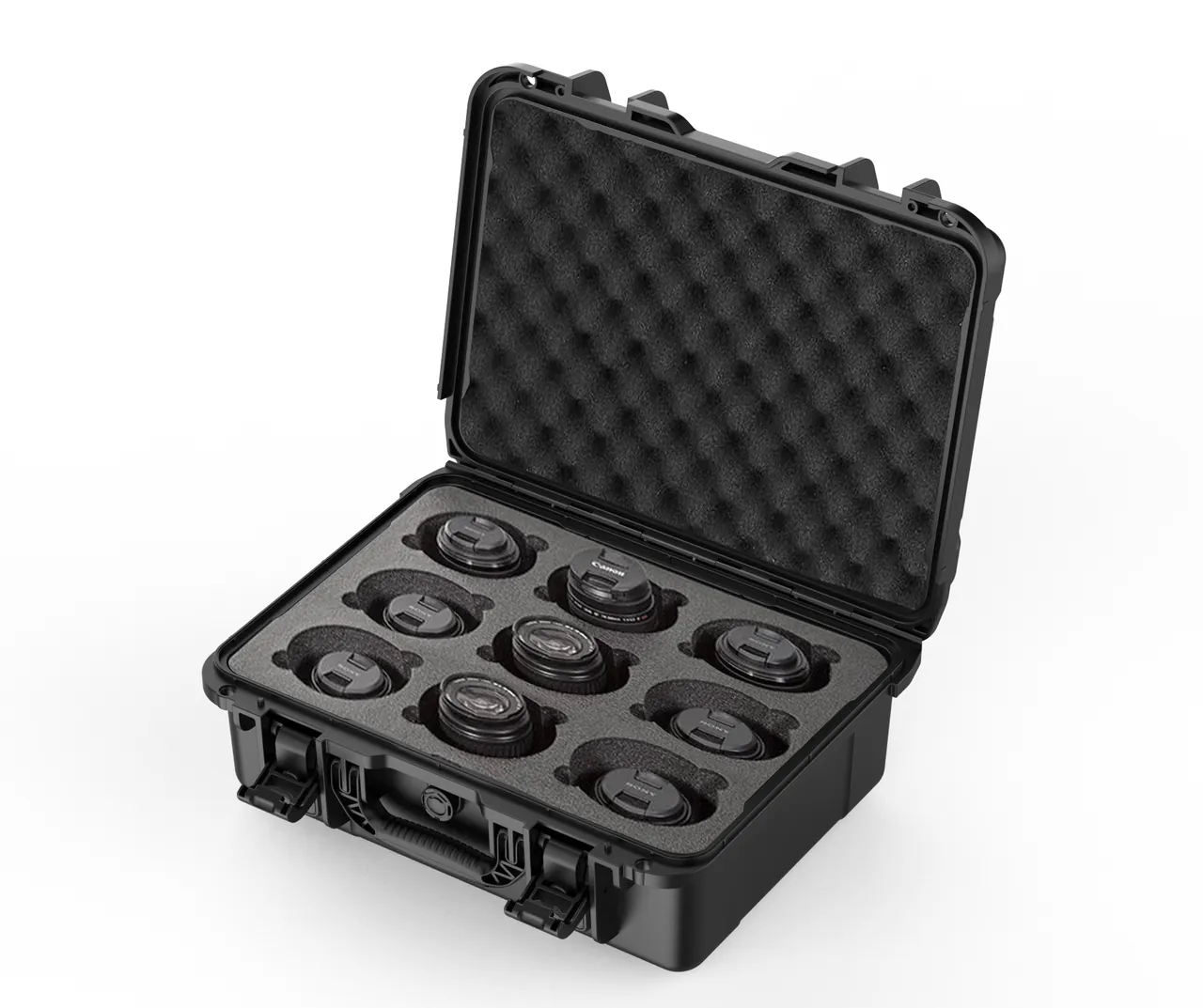
The customisation strategy: standardised cases, modular inserts by bottle format, standardised leak-prevention components. Cosmetics bottle formats are extremely varied - round, square, flat, tapered, pump, dropper, ampoule, tube, aerosol - and tooling an insert for each format is unaffordable. The workable approach is to grade case sizes by bottle height and diameter; to make inserts as replaceable modules cut to a specific bottle format on a universal case; and to make leak-prevention components (shrink bands, individual bags, absorbent layers, compartment separators) standard items selected by category. This covers many formats while spreading tooling cost; see case mould cost analysis and removable divider system design.
JUNZHJIA's normal workflow for perfume and beauty applications is: take the bottle dimension list (height, diameter, weight) and route description; produce a compartmented leak-resistant insert and upright location proposal; match absorbent layers and secondary containment components; confirm with a first-article trial fit including preliminary drop and vibration trials; move to volume production with sampling; and supply gasket specifications plus test and inspection documentation.
Six dimensions for evaluating a supplier.
- Leak-prevention engineering capability. Can they derive upright location, secondary containment and absorbent capacity from the bottle format? Can they explain how attitude affects leakage probability? Can they provide preliminary drop and vibration data? This is the single most effective question for distinguishing a specialist from a general supplier.
- Material compatibility data. Migration and odour data for insert and absorbent materials; compatibility verification with alcohol- and essential-oil-bearing systems; cleanable and low-odour material options.
- Light-blocking capability. Opaque case material options with transmission data, and the ability to design combined individual-plus-case light blocking.
- Compliance support. Ability to provide structures and marking areas that meet dangerous goods packaging requirements, and to support third-party packaging performance testing.
- Test capability. Vibration, drop, stacking, temperature-humidity cycling, low-pressure and IP records, plus freeze-thaw cycling capability.
- Quality system and lead time. Sampling rules and non-conforming product handling (see custom case acceptance and AQL sampling), plus capacity flexibility and delivery reliability during cosmetics peak seasons such as festivals and major promotions.
Enquiry checklist. A practical enquiry should include: the bottle dimension list (height, diameter, weight, neck specification); content properties (whether alcohol is present, the ethanol content range, whether essential oils or actives are present, whether it is pressurised); maximum single-bottle volume and total bottle count; transport modes and route (including air freight and whether dangerous goods limits apply); expected shipment duration and external temperature range; whether cold chain is required and the target temperature band; light-blocking requirements and whether transmission data is required; target IP rating; whether a pressure equalisation valve is required; whether full temperature recording is required; label protection requirements; whether e-commerce direct despatch (SIOC) is required; whether repeated rotation is required and the expected number of trips; test and inspection requirements; marking and checklist requirements; and project quantity with delivery milestones. The more complete the input, the closer the supplier's proposal will be to a production-ready design. Supplier selection methods are covered in how to choose a protective case OEM factory.
Frequently Asked Questions
Q: Why does perfume leak in transit, and will tightening the cap harder solve it?
A: Tightening harder usually does not help, because perfume leakage is not a loose cap but the combination of seal design and operating conditions. A perfume seal is made up of the pump piston, spring, neck threads, gasket and crimp ring, and is a non-permanent seal: any dimensional deviation, assembly eccentricity or material ageing in any of those parts creates a leak path. What makes leakage a high-probability event in transport is three conditions acting together. Unfavourable attitude: when a bottle lies on its side or inverted, liquid presses continuously against the sealing surface, which then carries hydrostatic head plus vibration-induced dynamic pressure fluctuation - whereas upright, the seal surface carries almost nothing. Rising temperature, which markedly raises internal vapour pressure in ethanol-based products and pushes liquid through weak points. Falling ambient pressure, as in air-freight cruise and high-altitude road legs, creating a differential across the bottle that can drive a suction-and-leak cycle in the pump. Sustained vibration then slowly unscrews threads and frets gaskets. The correct scheme is therefore a combination: upright locating slots to fix attitude; a pump lock and shrink band for mechanical restraint; an individual zip bag or cavity for secondary containment; an absorbent layer to take up residual leakage; and a pressure equalisation valve on the case to reduce the differential the container must withstand. Simply increasing tightening torque is not only ineffective but can damage the pump or the neck.
Q: Why is leakage considered more serious than breakage?
A: Because breakage is usually a single-unit loss, while leakage is a consignment-level loss. Once liquid leaves its container it travels downward under gravity, penetrates the insert, dissolves printing inks and label adhesive, and contaminates the outer packaging of neighbouring products. The critical point is that paper and paperboard are liquid transport media, so one leak point can contaminate an entire layer of goods. Perfume's main solvent is ethanol, and ethanol is an excellent solvent: it causes label adhesive failure, blurred printing and illegible batch and expiry information - and in most markets, illegible labelling alone makes goods unsaleable, a commercial loss far exceeding the value of the liquid. Leakage also raises transport compliance issues: if liquid escapes the case it can contaminate the vehicle and other cargo, triggering the carrier's contamination procedure and claims. The design objective is therefore not to reduce leakage probability to zero, which is not realistic in engineering terms, but to confine any leakage to a single unit - which is exactly the value of the combination of compartments, secondary containment and absorbent layers.
Q: Why can light blocking not be achieved with dark glass bottles alone?
A: Because dark glass such as amber or cobalt blue mainly reduces transmission in the UV band while still transmitting a good deal of visible light, and some light-sensitive ingredients and natural colorants are also sensitive to short-wavelength visible light. Light also reaches the product by more than one path: through the container wall, but also through the outer case and insert, and during unpacking and display. The latter path often accumulates far longer exposure during retail display, trade shows and consumer use than the shipment itself. Light blocking should therefore be layered. At the individual unit level, use metallised or laminate light-blocking bags for high-value light-sensitive categories. At the case level, use an opaque case material, for example with a light-blocking masterbatch - the cheapest and most reliable option, covering every category in one step. At the insert level, use dark closed-cell material as a supplement. Two cautions apply: always request spectral transmission data rather than accepting a general UV-protection claim, because many materials that look opaque still transmit appreciably in the near UV; and masterbatches and coatings must contain no migrating components, while the case interior should be light in colour so that leaks and stains are visible at unpacking. Material-level ageing verification can reference the ISO 4892 and GB/T 16422 series, with conditions and limits set by the product stability protocol.
Q: Why do cosmetics suffer from freeze-thaw cycling, and is avoiding low temperature not enough?
A: No, because the damage mechanism is not low temperature but repeated phase change. An emulsion consists of a water phase, an oil phase and an interfacial film. When the temperature falls below freezing, the water phase forms ice, and growing ice crystals pierce and compress the interfacial film. When it warms again the ice melts, but the damaged film cannot rebuild itself, so the system shows water separation, layering, grittiness and abnormal viscosity. Critically, this is irreversible: unlike heat-induced separation, which some systems partly recover through slow cooling and homogenisation, structural damage from freeze-thaw cannot be restored in most formulations. And "avoiding low temperature" alone cannot prevent it, because real routes cross the freezing point repeatedly - cold store to ambient warehouse, night-time vehicle to daytime platform, a cold chain break at a transhipment point - and each crossing is another phase change cycle. The correct temperature strategy is therefore to damp fluctuation rather than hold one extreme: use an insulated case to increase the thermal time constant; use phase change materials to hold internal temperature in a narrow band around the transition point; prevent goods from sitting uncontrolled during loading and transhipment; and for categories requiring 2-8 degrees C, use a eutectic or actively refrigerated cold chain with full temperature recording. Note also that PCM surfaces must not fall below the dew point, or they will cause condensation inside the case.
Q: Does a perfume and cosmetics case need a pressure equalisation valve?
A: For air freight, high-altitude and severe temperature-swing routes, one is strongly recommended. The reason is that differential pressure propagates along the case-to-container chain: the greater the differential across the case, the greater the differential the inner container must withstand alone. A perfume pump under differential can enter a suction-and-leak cycle, and air-freight cruise, with hold pressure far below ground level, is one of the largest differential environments in the chain. Fitting a valve removes the differential across the case and correspondingly reduces the load on the container. Three selection points matter. Valve vapour transmission: choose a low-transmission type for categories requiring humidity or temperature control, otherwise the valve becomes a permanent moisture channel. Cracking pressure: too high is equivalent to no valve; too low causes repeated opening under small thermally driven differentials. No solvent residues or volatile compounds in the valve body, otherwise it becomes a permanent odour source - and cosmetics, perfume above all, adsorb odour readily and will contaminate the whole consignment. Regardless of whether a valve is fitted, the case should provide basic IP sealing - IP65 upward for most routes, IP67 for sea freight and open transhipment - because its purpose is not only rain and dust protection but also containment of any internal leakage, preventing contamination of the vehicle and other cargo.
Q: How do labels get damaged in transit, and why is label protection a hard requirement?
A: There are four main damage modes, and each can make goods unsaleable. Adhesive failure and lifting usually result from leaked liquid, especially alcohol-based, dissolving the adhesive, or from high humidity; the consequence is a lost label and missing information. Ink blurring and fading result from solvent contact, light and rubbing, making batch codes and ingredient lists illegible. Buckling and distortion result from dampness followed by drying, or from stacking, leaving barcodes unreadable. Scratching and scuffing result from neighbouring packs rubbing or from contact with hard objects, producing poor appearance and partial information loss. These are called a hard requirement because in most markets a cosmetic retail label carries legally required information - product name, responsible person details, net content, full ingredients, period of use, warnings - so missing or illegible information alone makes the goods unsaleable, a loss far exceeding the packaging itself. The countermeasures map directly: compartments and soft separation to stop labels rubbing; secondary containment and absorbent layers to block liquid contact; over-lamination to improve abrasion and solvent resistance; light blocking and moisture protection for the ink and substrate; no shared compartments with hard items; and no stacking or uneven placement. It is also important to distinguish the retail product label, which is governed by cosmetics regulation, from the transport marks on the case - orientation, keep-dry, fragile and dangerous goods marks. Case marks must be clear and abrasion resistant and must not obscure dangerous goods marks that the rules require to be displayed. Label content and format requirements follow destination regulations; no compliance conclusion is drawn here.
Q: What is the problem with packing different categories - perfume, lotion, lipstick, pressed powder - in one case?
A: It introduces three problems at once, essentially transferring one category's risk onto another. The first is mismatched mechanical risk. Glass perfume bottles, plastic lotion bottles and pressed powder pans differ completely in weight, stiffness and brittleness, and one insert cannot provide suitable support for both classes: rigid support designed for glass will crush soft packaging, while compliant support designed for soft packaging lets glass rattle and collide. The second is mismatched failure mechanism. Lotions fear freeze-thaw breakdown, lipsticks fear heat softening, perfume fears leakage and photodegradation, and pressed powders fear impact shattering - their sensitivities to temperature and light can even point in opposite directions, so a uniform temperature and light-blocking scheme will inevitably overshoot at one end and undershoot at the other. The third is contamination propagation. Once a liquid category leaks it spreads through paper and paperboard onto the powders, creams and outer cartons in the same case, and surface contamination on powder products is almost impossible to clean. The sensible approach is therefore zone packing by category: group categories whose temperature sensitivities point the same way under one temperature scheme; separate liquid categories from powders, paper goods and gift boxes; and separate glass and hard items from soft packaging. This not only lowers the probability of damage in any single category but, more importantly, cuts the chain reaction in which one leak point ruins the whole case. Where mixed packing is unavoidable for cost reasons, at minimum give liquid categories individual secondary containment and separate cavities with adequate absorbent layers, and accept the higher inspection and handling cost.
Q: What extra requirements do e-commerce direct despatch channels impose on cosmetics cases?
A: Direct despatch and traditional full-case distributor routes differ in two fundamental ways. First, higher drop and sortation severity. A single parcel passes through repeated throwing, tumbling and conveyor impacts at sortation centres, so the number of drops and the randomness of their direction far exceed palletised full-case logistics, markedly raising the probability of glass fracture and pump displacement. Test references should accordingly move from full-case procedures to channel-specific procedures - the ISTA 6 series addressing e-commerce delivery conditions - with sequential testing preferred: preconditioning, drop, vibration, re-inspection. Second, the unboxing experience is exposed directly to the consumer. Insert damage, leakage traces, label wear and powder spillage all lead directly to returns and poor ratings, whereas in distributor channels they might be tidied up downstream. An e-commerce case therefore typically needs individual secondary containment and absorbent layers per unit; an insert that still looks intact after unpacking; a case designed for safe opening, for example with clear instructions not to cut directly towards liquid packaging; labels and print that remain legible after sortation abrasion; and qualification either as ships-in-own-container (SIOC) or with a reinforced outer case. In addition, e-commerce warehousing and delivery environments are frequently uncontrolled, and the temperature inside a last-mile delivery vehicle in summer can threaten perfume and lipstick more than the line-haul leg itself, so insulation and keep-away-from-heat marking matter especially on e-commerce packs.
Q: Can perfume be shipped by air, and what restrictions apply to alcohol-containing cosmetics?
A: Air shipment is possible, but perfume and alcohol-containing cosmetics are generally managed as flammable liquids and are subject to UN number, packing group, per-package net quantity limits, packaging specification, marking and documentation requirements. International air transport is governed by the IATA DGR, sea transport by the IMDG Code, European road transport by ADR, and transport within China by the corresponding dangerous goods transport management rules. Note in particular that per-package limits often differ very significantly between passenger and cargo aircraft: if a consignment moves from a passenger belly hold to a freighter, the packaging and limit scheme may need to be redesigned. That is why packing schemes must be confirmed with compliance staff at the design stage rather than improvised before dispatch. From a packaging engineering standpoint, the rules have three concrete effects. First, per-package limits drive compartmentalisation, and one outer case may need internal compartmentalisation by limit or a construction of several small packages forming one combination packaging. Second, packaging performance requirements set the case strength class, normally requiring drop and stacking tests, with the test object being the complete package including inner and outer packaging rather than the outer case material alone. Third, marking and documentation requirements shape the case surface: the case must provide enough flat marking area, marks must be abrasion and weather resistant, and they must not obscure dangerous goods marks that the rules require to be displayed. Some low-alcohol or alcohol-free products may not be dangerous goods or may qualify for exemptions, but whether an exemption applies must be verified item by item and cannot be assumed from experience. Even where goods are not dangerous goods, leak prevention, light blocking, temperature control and mechanical protection still apply. Specific classification, limits and marking requirements should follow the currently effective rules, Chinese regulations and carrier requirements, confirmed by qualified personnel or bodies.
Conclusion and Related Reading
Designing a perfume and cosmetics case is fundamentally a three-dimensional problem of liquid control, light and heat control, and compliance control. Liquids fear attitude and vibration, emulsions fear freeze-thaw, wax systems fear heat, glass fears point loads, actives fear light, and labels fear leakage - six failure classes with completely different solutions, sharing one thing in common: damage propagates and damage is delayed. A single leak point can contaminate a whole layer through paper and paperboard, and a single light or heat exposure can leave no visible sign at unpacking only to surface during shelf life or in the consumer's hands. An effective scheme is therefore not a bigger box but one that delegates attitude restraint, secondary containment, absorption, light blocking, temperature control and compliance marking to purpose-built structures, and writes the acceptance criteria for each layer into the packing and inspection procedures.
The path to implementation compresses into six steps: first zone by category (liquid, cream, powder, wax, pressurised) and establish each one's failure mechanism and light and temperature sensitivities; then lock the attitude with upright locating slots and relief cavities; then build three-level leak defence from shrink bands, individual secondary containment and absorbent layers; then achieve double light blocking with an opaque case plus individual light-blocking bags; then damp temperature swings and avoid freeze-thaw with insulation and phase change materials; and finally close the loop with dangerous goods compliance marking and full temperature recording. Where a compartmented leak-resistant insert and light-blocking scheme is needed for a specific bottle format, content properties and transport route, supply the bottle dimension list and route information to JUNZHJIA and we will produce the design and arrange a first-article trial fit with preliminary drop and vibration trials.
Related Reading