

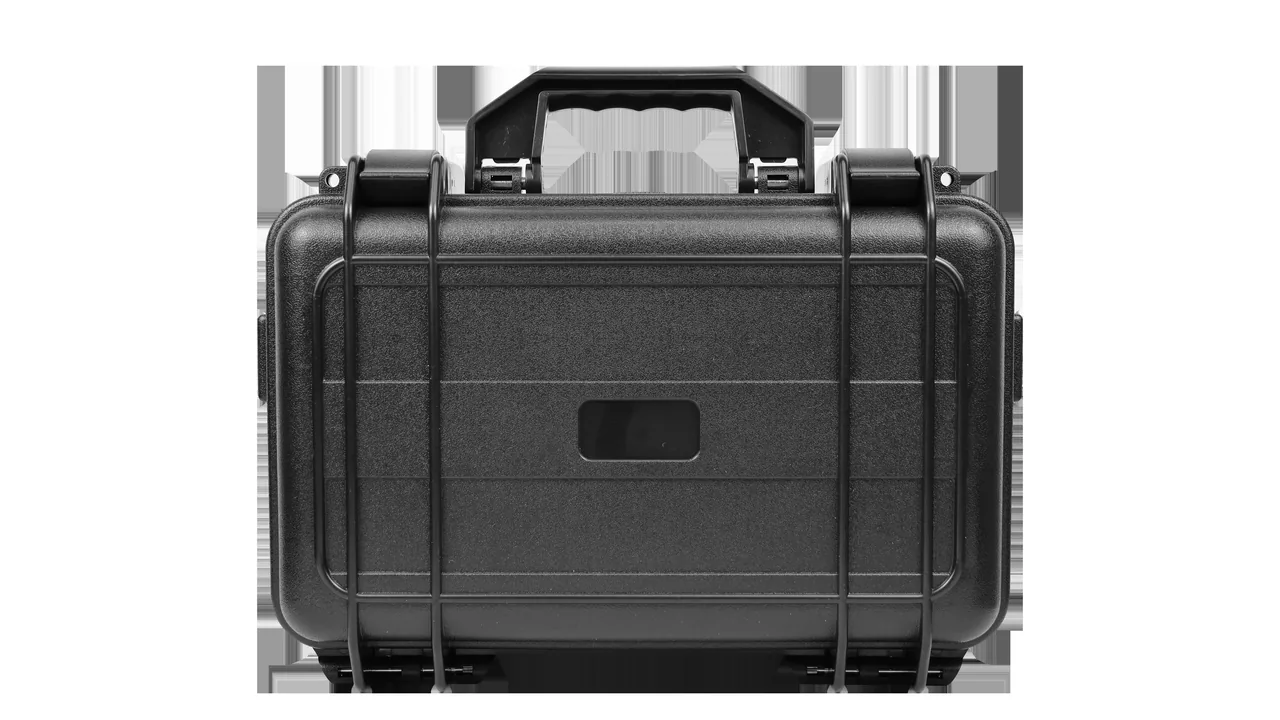
Potato harvesters perform a demanding sequence of tasks in the field: excavating the crop, conveying it upward, separating soil and stones, and cleaning the tubers before they reach the trailer. The spare and replacement parts that keep this machinery running share a difficult combination of characteristics. They are heavy, hard, sometimes brittle, and occasionally precision-machined. Digging blades must stay sharp yet are easy to chip. Separation webs are built from slender rods that bend under sideways load. Rubber carrier wheels are elastic parts that hate compression and impact. Hydraulic motors combine precision mating surfaces with sealed oil ports. For original equipment manufacturers, dealers, service workshops, and operators who move machines across regions, these parts face real damage risk during factory transfer, spare-parts distribution, and after-sales replacement shipping. Without purpose-built packaging, minor handling incidents can mean lost assembly accuracy or, worse, a scrapped batch. This article examines those transport risks from the perspective of a protective-case manufacturer and explains how JUNZHIJIA designs cases that solve them.
Why Potato Harvester Parts Need Dedicated Protective Cases
Conventional wooden crates, woven sacks, or loose pallets are cheap, but they fail potato harvester parts in three predictable ways. First, they lack precise internal compartmentalization, so blade edges, rods, and rubber parts rattle together with nothing to stop collision. Second, they do not keep water and dust out, so a rainy or dusty transfer quickly leaves rust spots on metal surfaces. Third, they provide no dedicated load-bearing cradle, so when a stack shifts the center of gravity the whole box can topple or crush the parts beneath it.
Engineered plastic cases answer all three problems at once. Through compartmentalized layout, cushioned liners, reinforced shells, and sealing gaskets, a single case can deliver impact protection, corrosion resistance, water and dust isolation, and heavy-load support simultaneously. This is why more agricultural machinery builders now fold standardized spare-parts cases into their service programs. The logic is closely related to the approach used for combine harvester parts cases, where heavy and precision components are also separated by zone.
Seen purely in cost terms, the hidden expense of parts transit damage is usually underestimated. A single chipped digging blade may need factory rewelding and rehardening whose cost exceeds the logistics packaging investment many times over; a distorted separation web forced into service produces poor cleaning and higher tuber damage, quietly hurting the machine's field reputation. Even less visible is hydraulic motor port contamination, whose valve sticking and pump scoring may surface only weeks after installation, by which point responsibility and warranty claims are hard to untangle. Treating the case as the first line of delivery quality rather than a mere handling container is the pragmatic way for builders and large farms to cut cost and lift uptime. The per-unit case spend is normally a small fraction of the part value, yet it sharply reduces after-sales claims and standby waiting.
Harvester Work Chain and How Each Part Carries Load
Before discussing packaging choices, it helps to see how the digging blade, the separation web, the rubber wheel, and the hydraulic motor actually behave on the machine. The work chain of a potato harvester has four stages. The digging stage, built around the digging blade and depth-control wheels, lifts the soil-and-tuber mass out of the ridge. The conveying stage carries that mass upward on a rod-link chain or a rubber belt. The separating stage uses the shaking motion and slot openings of the separation web to drop soil and stones through while keeping tubers on the surface. The cleaning stage finishes the job with a picking table or an air separator. Four stations mean four distinct failure modes, and therefore four distinct packaging requirements.
The digging blade is the only part that directly absorbs soil cutting resistance, so stress near its edge is extremely high in service. Its material is therefore hard with little toughness margin, and during transport it is most afraid of chipping and tip rolling. Separation web rods live under alternating shaking load, which places them near their fatigue limit by design; any plastic bend added during shipping stacks onto that existing stress and shortens remaining service life. Rubber carrier wheels exist to cushion the chain flexibly and absorb shock, so they must keep their roundness and elasticity; a permanent flat spot turns into periodic chain bounce. The hydraulic motor supplies all hydraulic power, with valve plate clearances and bearing fits measured in microns, so any foreign particle sets off a chain of wear. Because the four parts respond to force in completely different ways, a single blanket solution for heavy-load support and impact protection is unrealistic. Zoned treatment is the only dependable route.
This zoning logic carries a further benefit at the receiving end. Parts usually arrive to be counted, cross-checked against model numbers, and entered into a spare-parts register. If contents are piled on each other and blade edges are buried under wrapping, the inspector must lift layer after layer to confirm condition, and that handling itself can cause secondary damage. A compartmentalized case holds each part in a known position, so the lid opens onto a visual inventory of quantity and condition. Inbound work shortens, and accountability between the shipping and receiving stages becomes much clearer.
Damage Risks to Digging Blade Edges and How to Think About Them
The digging blade is the first component to meet soil and tubers. Its edge is hardened overall or surfaced with hard alloy, which makes it hard but not especially tough. Transport damage comes from three directions. The edge can strike the metal wall of a container or another hardware item, producing chips and rolled tips. Multiple blades stacked without support let the upper weight bear down on the lower edges, causing local plastic deformation. And if wet soil clings to the edge and is not cleaned, long storage triggers spot corrosion that later becomes a stress concentrator after assembly.
The first step in a protective plan is to give each blade its own cavity, oriented so the edge faces a soft buffer layer inside the case rather than a wall or another part. The cavity should follow the actual blade profile, letting the blade back rest on a rigid support while the edge floats in a cushioning channel. This same "edge floats, back bears" layout protects the tillage blades described in rotary tiller parts cases.
On a single production line, digging blades are usually supplied in sets covering left, center, and right positions or several wing profiles. Members of a set share similar dimensions but differ in curvature. If they share one large open trough, a more curved blade pushes against the edge of its neighbor, and every bump in transit becomes a small edge-impact test. JUNZHIJIA therefore divides the set by wing profile, milling each pocket from the same model so the support surface matches blade curvature, and leaving a rigid divider rib between adjacent blades. Even after hours of rural-road vibration, the force path into the edge is completely interrupted. At arrival, an inspector only needs to check the rib for rub marks to know whether anything shifted inside.
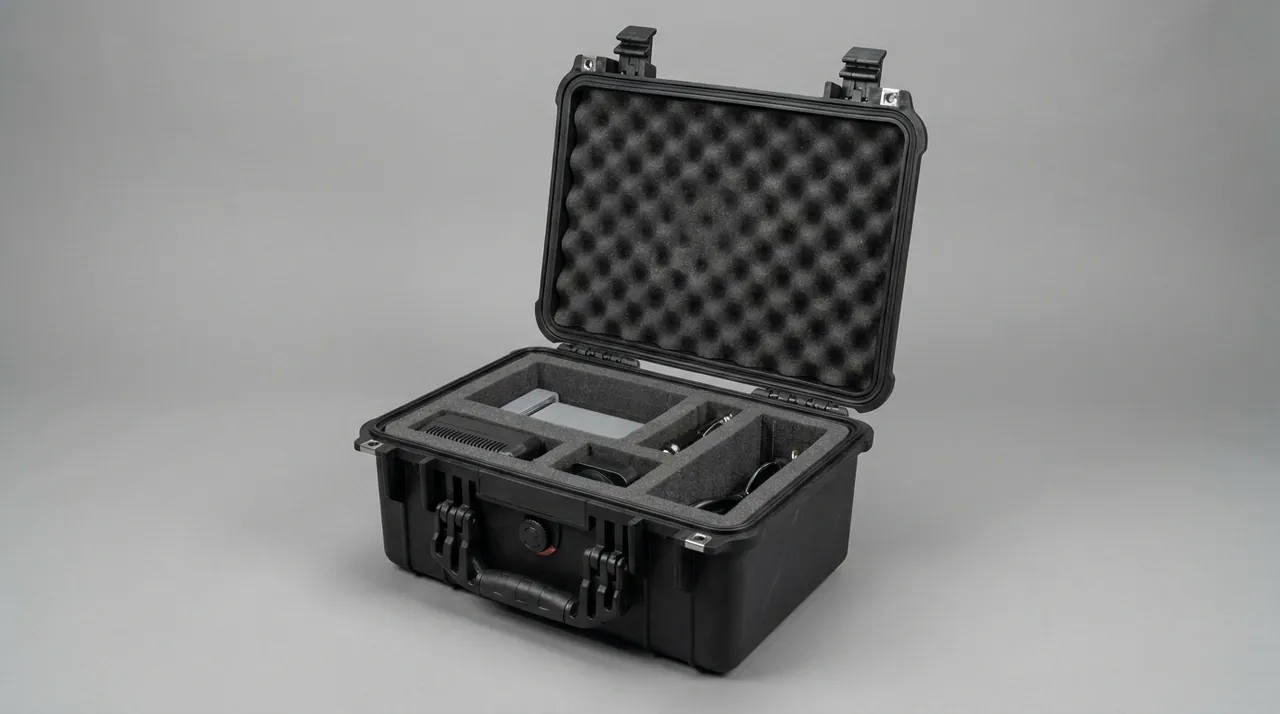
One more subtlety concerns blade hardness itself. Because the edge is hardened and the blade back is often left softer for toughness, the two zones respond differently to the same impact. A strike on the hard edge chips it, while a strike on the back may bend the whole blade. That is why the design loads the back and shelters the edge, rather than pressing the part flat against a rigid floor. For blades stored over a winter, a light oil film beneath the vapor-phase inhibitor gives an extra margin against condensation on cold mornings.
Why Separation Web Rods Distort and How Load Paths Fix It
The separation web is a mesh of slender rods welded or riveted together, tasked with screening soil and stones away from the tubers. The most vulnerable aspect in transit is the sideways bending moment. When a case is jolted or squeezed from the side and the rod centers have no support, each rod behaves like a beam and bends; beyond the elastic limit the bend becomes permanent, and once reinstalled the web shows uneven screening gaps, tuber loss, or stone carry-over.
JUNZHIJIA solves this with a grid-style support cradle matched to the web outline, so every rod drops into its own groove and no single rod ever carries load alone. The cradle uses high-density EVA or a PP frame, giving rigid support while its slight elasticity absorbs vibration. The same truss-cradle idea protects the long booms in sprayer boom component cases, where distortion control is the central challenge.
Mechanically, the deflection of a slender rod scales with the cube of the unsupported span, which means that halving the distance between supports improves bending resistance far more than thickening the material. The grid cradle exploits exactly this law. Rather than wrapping the whole web in a single block of foam, it packs support points down to each rod, with a tooth slot every twenty to thirty centimeters. For a typical two-meter web, seven to nine transverse slots are used, each slightly wider than the rod diameter so the rod settles to the bottom without being pinched. Under load the web frame then behaves as one rigid body, and bending moment cannot accumulate in any single rod. This is the fundamental reason why supporting precisely beats wrapping thickly. Longitudinal stop blocks complete the layout, preventing the frame from sliding fore and aft, which would otherwise wear the slots into oversize openings and destroy their locating function.
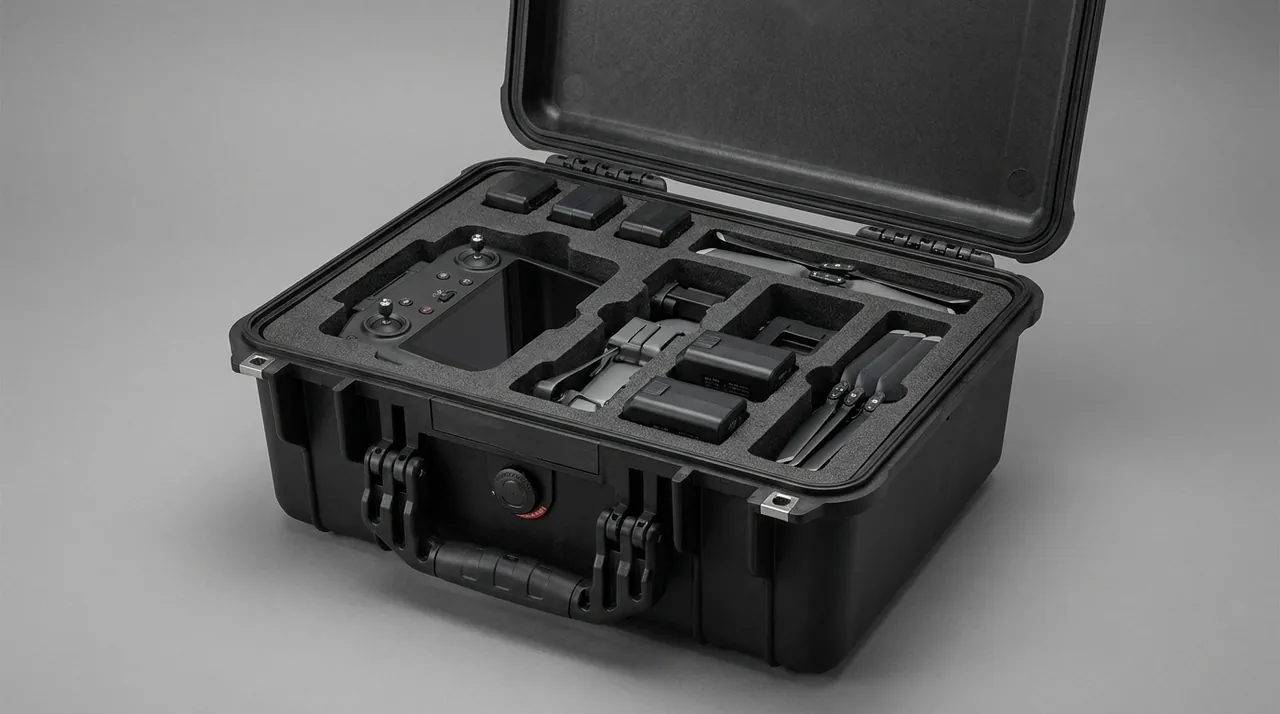
Another practical point is the state of the web when it is packed. Webs returned from the field often carry bent rods from stone strikes or from running with a loose drive. A case cannot straighten a rod that is already bent, so JUNZHIJIA recommends straightening or documenting existing distortion before packing, both to avoid blaming the case later and to ensure the grid slots are not overloaded by a pre-bent frame. Marking the distortion on the incoming inspection record also protects the dealer in any subsequent warranty discussion with the customer.
Compression and Impact Demands on Rubber Carrier Wheels
Rubber carrier wheels support and guide the conveyor chain and separation mechanism. Their surface is a vulcanized rubber layer over a bearing-equipped hub. The weakest point is neither the metal nor the rubber alone, but the bond between them and the exposed bearing seal. If a wheel is pressed directly by heavier parts, the rubber develops permanent flat spots or cracks; if the bearing seal is damaged, dust enters and the wheel fails early.
In case design, rubber wheels belong in an upper or side sub-compartment, never under digging blades or webs. Each wheel sits in a circular or U-shaped locator whose wall hugs the rim with a tiny clearance, so the rubber is neither squeezed tight nor free to move. The isolation principle of "light parts up, heavy parts down" also governs the rubber rollers in fertilizer spreader parts cases.
Compression set in vulcanized rubber is strongly time dependent. The same pressure applied for two hours and for two weeks leaves indentations that differ by several times in depth. That means the risk to a wheel during long warehouse storage is actually higher than during transport, especially when summer warehouse temperatures climb past forty degrees Celsius and creep accelerates further. JUNZHIJIA addresses this by making the floor of the locator slightly domed, so contact with the wheel approaches a point rather than a patch, and by fixing the wheel with an upper retaining bar instead of a downward press, keeping the part supported rather than loaded. A flexible cover over the bearing seal blocks dust and rain without restricting the breathing space a sealing lip needs. For dealers who hold spares for many months, this single detail often decides usable wheel life more than any transport cushion does.
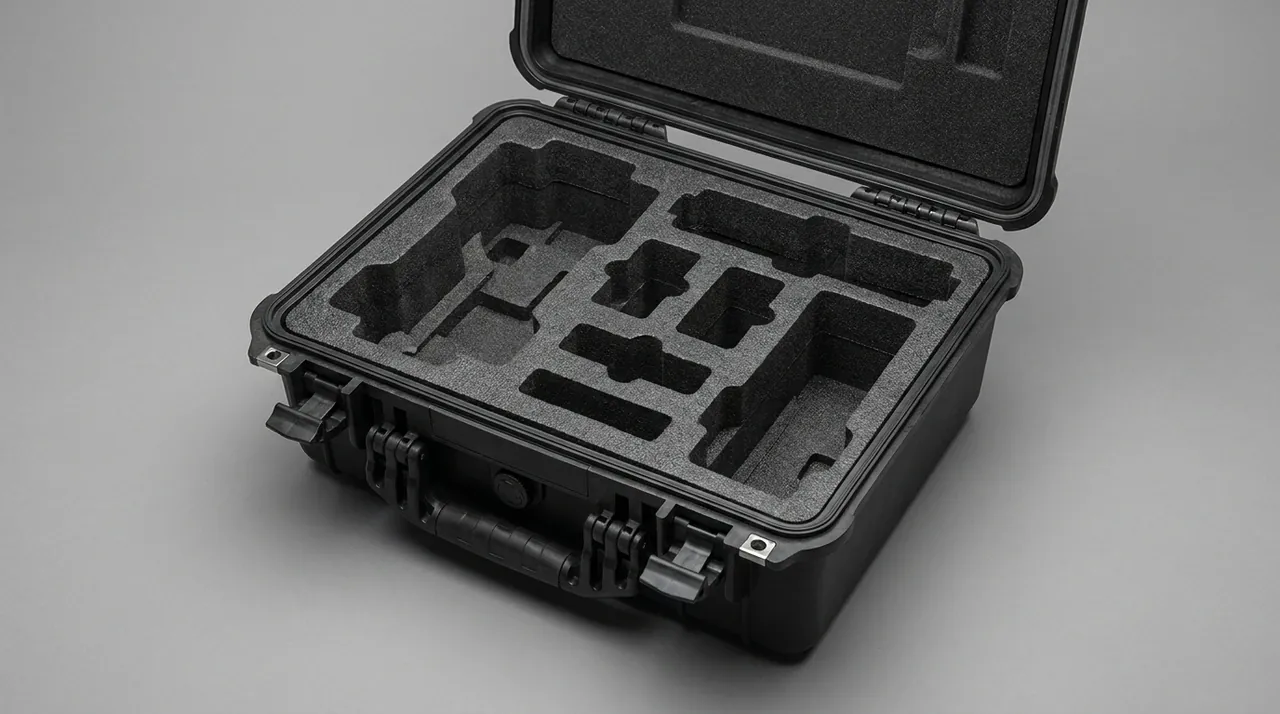
Wheel handling habits matter too. Dropping a wheel from waist height onto a concrete floor can bruise the hub-to-rubber bond even when no mark is visible, and that bruise becomes a delamination start point months later in service. Packing benches should therefore keep a soft pad under the case during loading, and operators should place wheels into their locators rather than tossing them into a general cavity to be sorted later.
Precision Protection for Hydraulic Motors and Port Sealing
The hydraulic motor drives conveying and separation. Inside are precision valve plates and bearings; outside are oil ports and mounting register faces. Two hazards dominate in transit. Open ports let dust, water, and salt spray into the circuit, contaminating the whole system after installation. Knocked register faces or shaft ends create runout that overheats the motor in service.
The case treatment is "seal and locate." Oil ports get dedicated plugs or dust caps, the motor body is wrapped in custom foam and fixed to a bottom load bay, and the shaft gets its own sleeve. Because motors are heavy and valuable, they sit in the bottom load-bearing zone, separated from blades and rods. A parallel precision-and-hydraulic handling logic appears in tractor implement transport cases for couplers and lines.
Port sealing looks trivial but is the easiest step to downgrade with a cheap substitute. Paper plugs, tape, or a wad of cotton waste have no sealing capability, fail once wet, and shed fibers that are worse for a valve plate than plain dust. JUNZHIJIA recommends a plug with both thread engagement and a face seal, installed to a stated torque for the port size, so the joint seals without damaging threads. Positioning inside the case matters as much: shaft up and mounting flange down keeps the most sensitive bore away from the case floor and lets a technician lift the motor by its housing rather than pulling on the shaft. When two or more motors ship together, each gets its own cavity rather than sharing a large compartment, so they cannot strike one another during a rough leg of the journey. Loose valve plates, hose adapters, and small fittings travel in a labeled sub-tray, where they can be counted without disturbing the motor itself.
Heavy-Load Support: Reinforced Shell and Load-Bearing Cradle
Among potato harvester parts, digging blades, web frames, and hydraulic motors are all on the heavier side, and a single filled case often weighs well into the tens of kilograms. A thin-wall box bulges at the walls or tears at the hinges under forklift or stacking load. JUNZHIJIA uses thicker walls with internal longitudinal and transverse ribs, plus an embedded load cradle in the base that spreads weight to the perimeter instead of one point.
For warehouses that stack long term, the case top can carry location bosses and the bottom matching recesses, so stacked cases interlock and will not slide when a truck brakes hard. This heavy-load thinking also fits the snapping rolls and sprockets handled in corn harvester parts cases.
In practice, JUNZHIJIA works backward from the estimated full-case weight to set wall thickness and rib density. When a single case exceeds roughly twenty-five kilograms, the walls are thickened and the loaded corners get rounded transitions to spread stress concentration; beyond forty kilograms, side handles or a trolley pairing is recommended to avoid drops from manual handling. The connection between the load cradle and the case base is also checked by stress simulation, so the impact of a forklift pickup will not separate the cradle from the shell. This "calculate before build" engineering discipline is what upgrades a case from ordinary packaging to dependable logistics equipment, and it is the reason heavy agricultural spares can be moved with confidence rather than apprehension.
Rib direction deserves the same care as rib density. In forklift handling, side walls mainly resist horizontal squeezing while the base resists vertical compression, and the two worst cases do not occur at the same moment. JUNZHIJIA therefore places vertical ribs on the side walls to raise lateral crush resistance, uses a lattice grid on the base to resist concentrated load, and links the two paths with diagonal ribs at the corners so force flows continuously through the structure. In a tall stack, the weight of the upper cases is eventually carried by the corner columns of the lowest case, which is why corner wall thickness and rib density set the design limit for the whole shell. For warehouses planning stacks of five cases or more, metal inserts can be added in the base to pass stacking load directly to the pallet face and prevent long-term plastic creep in the shell.
Blade-Edge Protection: Cavity Location and Soft Buffering
Returning to the digging blade edge, JUNZHIJIA uses a two-layer "rigid back, soft edge" structure. The blade back rests on a high-density EVA support that holds it still; the edge floats above a slow-rebound sponge channel, so even if the outer shell is struck the impact is absorbed by the soft layer and the edge meets no hard surface. For multiple blades in one case, each has its own cavity divided by separators, eliminating mutual scraping.
This location logic carries over directly from the opener-disc handling in planter and seeder parts cases, where sharp faces and load faces are managed separately. Before tooling, JUNZHIJIA collects the customer's blade drawings or physical samples and replicates the profile with 3D scanning, so the cavity fits the part exactly.
The choice of slow-rebound material sets the ceiling on impact protection. Ordinary polyurethane foam rebounds quickly and is dense, so it resists a single shock but can powder under repeated vibration; slow-rebound sponge instead converts impact energy into internal airflow resistance through its open-cell structure and recovers shape gradually, which suits small contact areas such as a blade edge. JUNZHIJIA typically specifies slow-rebound material between thirty and fifty kilograms per cubic meter in the edge channel, with about five millimeters of compression allowance in the base, so the edge is neither too loose nor loaded by the closing lid. For orders shipping to humid regions, a thin non-woven layer over the channel prevents the sponge from absorbing moisture and creating the conditions for galvanic corrosion against the steel edge.
Vibration Damping and Impact Absorption with EVA Liners
Road, rail, and sea-container transit all subject cases to continuous random vibration from roughly a dozen hertz up past a hundred. Long vibration walks unsecured parts across the interior, driving collisions, and can loosen fasteners. JUNZHIJIA lines the inner wall and cradle interface with EVA damping material and adds limit straps or hook-and-loop fixings so parts are constrained in three dimensions.
For impact, the shell uses high-impact engineering plastic with rounded corners and ribs that absorb the energy of a dropped case. Buyers who need a quantified impact grade can review IK impact rating and case selection to match the real logistics environment of harvester parts.
Beyond material and structure, damping performance depends on how much freedom each part keeps inside the case. Many transit failures are not caused by one large shock but by accumulated small movement: an unsecured digging blade slides back and forth, its edge brushing the wall or a neighbor until a barely visible roll appears that still affects assembly fit; a web wrapped as a whole without positive location lets rods rub each other, and once paint wears through, corrosion accelerates. JUNZHIJIA constrains every part to "micro-movement only" by limiting heavy items with straps, keying rods into the grid, matching edged parts to their cavities, and seating rubber parts in locators. Once the vibration path is interrupted, most external energy is absorbed by the liner and displacement reaching the part surface becomes minimal. For a sea container crossing with long-duration, multi-band excitation, this layered restraint outperforms simply thickening foam, and it protects high-value hydraulic motors and precision mating surfaces best. Where a formal test record is required, the procedures and acceptance criteria in transport vibration testing cases provide a usable framework.
IP67 Water and Dust Isolation from the Outside World
Potato regions ship and transfer parts through rain and mud. A case that is not waterproof lets moisture in fast. JUNZHIJIA cases ship with an IP67 gasket that blocks water and dust under short immersion and high-pressure spray; once closed, the case is a clean cavity separating rain, soil, salt spray, and the parts. This matters most for cross-region distribution and export sea freight.
Beyond the gasket, the lid can carry a pressure-equalization valve that balances internal and external pressure through altitude or temperature change, preventing the seal from being sucked flat or leaking. For the meaning and testing of IP grades, see IP67 protective case rating differences and the pressure equalization valve guide.
Gasket material and aging rate decide how long that seal actually lasts. Nitrile rubber handles oil well but hardens under ozone and ultraviolet exposure; silicone tolerates wide temperature swings yet loses rebound after long compression; EPDM balances weather resistance with low compression set and is the usual compromise for agricultural spare-parts cases. JUNZHIJIA recommends a gasket compound based on the delivery region's average temperature, humidity, and ultraviolet intensity, and shapes the seal groove as a trapezoid rather than a rectangle so the gasket has defined room to deform instead of being crushed into a permanent flat. For cases that will sit in storage for years, an annual elasticity check and gasket replacement costs far less than one moisture event that forces the whole case through derusting and re-inspection.
Corrosion Control with VCI Vapor Phase Inhibitors
Even a waterproof case cannot stop corrosion if residual moisture and salt from handling remain on metal. JUNZHIJIA can integrate VCI bags or film inside the case; inhibitor molecules volatilize in the sealed space and adsorb onto metal as a nanoscale film that suppresses electrochemical corrosion without the oily residue of traditional coatings. For large metal areas like blade edges and web rods, VCI coverage is especially efficient.
Used with desiccants, the internal relative humidity stays in a safe band. For broader agricultural-metal rust practice, metal toolbox rust prevention is useful background, though the controlled interior of a protective case allows a leaner inhibitor setup.
A practical detail often overlooked is part cleanliness before closing the lid. VCI and desiccants work best on surfaces that are already free of wet soil and plant sap, because residual electrolytes undermine the protective film and can even accelerate local corrosion. JUNZHIJIA therefore recommends a quick rinse and thorough dry of used blades and webs before they go into the case, with a light oil film as optional double insurance on parts that will sit for more than a season. The inhibitor bag should also be sized to the case volume rather than piled in arbitrarily; too much can condense on cold surfaces and raise humidity instead of lowering it. For export shipments with a sea leg longer than six weeks, the specification can include a salt spray verification requirement, confirming that the inhibitor and seal combination still holds protection in a chloride-laden environment. Following this small routine turns the case into a genuine preservation environment rather than just a dust cover.
Stacking, Palletizing, and Loading Precautions
Even the best case needs correct loading. Before shipment, confirm per-case weight against vehicle capacity: heavy cases low, light cases high; align stacks and use interlocking to cut sway; insert forks fully into the base pallet position to avoid point-loading the shell. On long hauls, tie the whole stack down so it cannot shift in a hard corner.
For multi-batch, multi-model distribution, color tags and QR labels on the case exterior speed warehouse turnover. For stack-load testing method and height limits, stacking load test for cases is a practical reference.
A further practical point is the human factor in loading. Even a perfectly designed case is defeated by careless handling, so JUNZHIJIA prints clear pictograms on the shell: which face is up, where the fork pockets sit, and the maximum safe stack height. During peak season, a forklift operator typically cares only about lifting the load and rarely knows whether a case holds blade edges or a hydraulic motor, so the pictograms remove guesswork and prevent the common mistake of stacking a heavy case on top of a lighter one. For mixed-mode or cross-province freight, it also helps to keep a packing list inside a sealed document pouch on the lid, so receivers can verify contents without opening the cushioned interior and exposing parts to the environment. Small habits like these, repeated across hundreds of shipments, are what turn a good case into a reliable spare-parts pipeline with consistently low damage rates and predictable lead times for field service.
Customizing the Cavity Layout from a Parts List
No two spare-parts lists are identical, so standard boxes rarely fit everything. JUNZHIJIA's customization starts with a parts list noting name, dimensions, unit weight, quantity, and whether the item has an edge or rubber element. From that, the engineering team drafts an internal zoning sketch that routes heavy, edged, rod, rubber, and precision parts into separate cavities.
A physical sample then confirms fit, with buffer thickness and limit structure adjusted as needed. The liner process detail is covered in EVA foam insert custom process and custom foam factors, which explain tooling cost and lead time more concretely.
The more complete the list, the lower the chance of rework. Experience shows the two items customers most often omit are quantity and handedness. Digging blades for some models are supplied as left-and-right pairs, and if the list does not say so, the cavity may only be modeled as a mirror of one side. The second omission is storage duration: if a dealer plans to hold wheels in stock for more than half a year, the design needs a stronger long-term compression solution for the rubber, not just a transport case. After receiving a list, JUNZHIJIA returns a confirmation sheet that checks dimension datum, tolerance allowance, and packed quantity item by item. Modeling begins only after the customer signs off, which keeps later change cost at the lowest possible level and shortens the path from drawing to delivered case.
Selection Parameters: Size, Load, and Seal Grade
Before ordering, lock four dimensions. External size needs clearance for part removal and lid closure. Load rating must cover total part weight with a safety factor. Seal grade: IP67 suits normal land transport, while sea or high-humidity routes justify stronger sealing and inhibitor. Temperature range: engineering plastic grows brittle when cold, so cold-region service should confirm low-temperature impact performance.
JUNZHIJIA samples every batch for load and seal compliance before delivery. Buyers evaluating cold behavior can read low-temperature brittleness test as supplementary material.
A point worth stressing is that bigger is not better. Too much internal void lets parts rattle and raises collision risk; too little void cannot hold the buffer and makes handling awkward. JUNZHIJIA typically leaves fifteen to twenty-five millimeters of cushion margin around the largest part outline, which keeps the fit close yet allows hand access. For load rating, the marked value should sit near one and a half times the total part weight as a safety factor, covering the stacked load the bottom case must bear. Seal grade should also be matched, not maximized by reflex: an IP65 rating already serves in-plant short transfer, while sea export or humid production zones justify IP67 paired with VCI inhibitor. Aligning parameters with the real logistics scenario controls cost while still guaranteeing protection, which is the balance every spare-parts manager should aim for.
Documentation should not be forgotten at the specification stage. JUNZHIJIA can laser-etch or label the case exterior with part numbers, gross weight, and stack limit, so receiving staff never have to open the cushioned interior to identify contents. That single habit keeps parts sealed until the moment of use and shrinks the chance of mistaken handling during a busy season. It also makes cycle counting faster, because a warehouse clerk can reconcile the case against the register from the outside, which in turn shortens the time a delivered batch spends waiting on the inbound dock before it reaches a shelf.
JUNZHIJIA Custom Flow and Delivery Standard
JUNZHIJIA's case customization follows five stages: list confirmation, zoning design, sample validation, mass production, and outgoing inspection. Customers may supply drawings, samples, or just key dimensions, and a proposal arrives within a short cycle. Mass production uses injection or rotomolding of engineering plastic; the case is light yet tough, with standardized hinges, latches, and seals for interchangeability across boxes.
Each delivered case carries a material note and load label for inventory building. For overall lead time and minimum order quantity, extend reading to custom case prototyping timeline and custom case MOQ baseline. JUNZHIJIA is manufactured by Kexin New Materials (Guangdong) Co., Ltd. and serves agricultural machinery, precision instruments, and heavy equipment spare-parts logistics.
Frequently Asked Questions
Q: Can I just ship potato harvester digging blades in a ordinary wooden crate? A: A plain wooden crate has clear weaknesses for digging blades. It usually has no profile-accurate cavity, so multiple blades stacked together let edges touch each other or press against the crate wall, and a single jolt can chip or roll the tips. Wood also fails to repel water, so blades carrying wet soil develop spot rust in damp storage, and that rust later becomes a stress concentrator once the blade is hardened and returned to service. A compartmentalized case is far safer: each blade edge floats in a soft buffer channel while the blade back rests on a rigid support, structurally eliminating both impact and compression damage at the same time. For a very short, single-piece move a wooden box can act as an emergency option, but any cross-region transfer or long-term spare storage should use an engineered plastic case to protect assembly accuracy and avoid premature scrapping of expensive hardened edges. The small added packaging cost is trivial next to the value of a reusable, clean, and damage-free blade at the destination.
Q: Do separation web rods really distort during transport? A: Yes, and the distortion is often invisible until reinstallation. A separation web is a set of slender rods, essentially a group of long beams welded into a frame. When a case is squeezed sideways or jolted with the rod centers unsupported, each rod takes a bending moment; past the elastic limit the bend becomes permanent, and once back on the machine the web shows uneven screening gaps, tuber loss, or stone carry-over that no field adjustment can fully correct. The fix is not thicker padding but accurate support: a grid cradle matched to the web outline drops every rod into its own groove, so no single rod ever carries load alone and the bending moment simply cannot develop. Because deflection scales with the cube of the unsupported span, packing support points every twenty to thirty centimeters does more good than doubling foam thickness. Long-part transit therefore depends on supporting precisely rather than wrapping thickly, which is why purpose-built cradles outperform generic foam in protecting slender agricultural structures, and why field crews routinely report that webs arriving in dedicated cradles need zero straightening before mounting.
Q: What actually happens if a rubber carrier wheel is pressed by something heavy? A: The real damage is not a surface scratch but a permanent flat or micro-crack at the bond between the rubber layer and the hub, plus possible harm to the bearing seal. If a wheel is pinned under digging blades or a web frame, the vulcanized rubber takes an irreversible compression set and may later delaminate in service, throwing the conveyor out of alignment; a damaged bearing seal lets dust in and the wheel wears out early, often without visible warning until failure. Compression set is also time dependent: the same load applied for two weeks instead of two hours leaves a far deeper indentation, so long warehouse storage in a hot season can be riskier than the shipment itself. The correct method is a dedicated upper sub-compartment where the wheel sits in a circular or U-shaped locator whose wall hugs the rim with a tiny clearance, so the rubber is neither squeezed tight nor free to rattle, fully isolated from heavy parts above it. This keeps the elastic component in its designed shape and preserves bearing life through storage and transit.
Q: Must hydraulic motor ports be sealed before shipping? A: They must. Open ports let dust, rain, and salt spray enter the internal oil circuit and valve plate; after installation this contaminates the entire hydraulic system, clogging spools or scoring precision surfaces that are costly to repair and easy to misdiagnose. Use dedicated plugs or dust caps with properly seated threads and reliable seals, and verify them during packing rather than assuming they survived handling. Avoid paper plugs, tape, or cotton waste, because they seal nothing once wet and shed fibers that damage a valve plate more than plain dust would. Beyond ports, the mounting register and shaft should get protective sleeves so a knocked face does not create runout that overheats the motor in service. Orientation inside the case matters too: shaft up and mounting flange down keeps the sensitive bore off the floor and helps a technician lift the motor by its housing. Treating the motor as a sealed, located, isolated unit is the only dependable way to receive it service-ready at the destination workshop without flushing or partial teardown.
Q: Will an IP67 seal fail in cold regions? A: IP67 describes dust and water protection and is not directly reduced by low temperature, but cold changes material behavior in ways that matter for a sealed case. Engineering plastic and gasket rubber harden and embrittle below zero, so a case struck in freezing conditions can crack the shell or gasket and break the seal that the rating depends on. Gasket compound selection also matters independently of the rating: nitrile hardens under ozone and ultraviolet, silicone loses rebound after long compression, and EPDM usually balances weather resistance with low compression set for agricultural spare-parts cases. For cold or high-altitude routes, confirm the shell's low-temperature impact performance and choose a gasket that stays elastic when cold; a pressure-equalization valve also relieves differential pressure from temperature swings. Standard IP67 configuration is sufficient for normal temperate land transport, while severe cold demands material-grade verification rather than assuming the rating alone guarantees integrity, and specifying the right polymer up front is far cheaper than replacing a cracked case after one winter.
Q: Does VCI vapor corrosion inhibitor contaminate part surfaces? A: No. VCI works by volatilizing inhibitor molecules inside a sealed space; they adsorb onto metal as a nanoscale film that suppresses electrochemical corrosion without leaving the oily film traditional coatings leave behind. Unlike oil, VCI needs no wipe-off before assembly and does not interfere with later painting, bonding, or sealing of the part. It is ideal for large metal areas such as blade edges and web rods in long storage, where brushing oil onto every surface would be slow and messy. One condition matters: VCI needs a relatively sealed environment, so it must pair with a genuinely sealing case, because an open or leaking package dissipates the vapor and sharply weakens protection. Cleanliness before packing is equally important, since wet soil and plant sap carry electrolytes that undermine the protective film. Dosage should follow case volume rather than guesswork, because an excessive charge can condense on cold surfaces and raise humidity. Used correctly, the case and inhibitor give clean, assembly-ready metal after months of storage.
Q: Can one case mix digging blades, separation webs, and hydraulic motors? A: Technically yes, but only with strict zoning and load planning. Blades and webs are heavy and respectively edged or slender, so they belong in bottom load-cradle cavities with their own profiles; the motor is also heavy but more precise, needing a separate cavity with sealed ports; rigid separators keep the three from shifting into one another even under hard braking. If quantities and total weight are high, separate boxes by category, with edges in one, rods in another, and precision hydraulics in a third, which lowers per-case weight for easier handling and reduces cross-material damage from parts that should never touch. The decision should weigh handling ergonomics against the convenience of a single consolidated shipment for a given service route. Many dealers adopt a hybrid approach: a heavy consolidated case for structural parts and a smaller precision case for motors and sensors that travels with the technician rather than with the freight, so urgent field repairs are never delayed by a large shipment.
Q: How long does a JUNZHIJIA protective case take to deliver? A: Lead time depends on whether the case is customized and how complex that customization is. Using an existing shell with only liner adjustment is fast to sample and deliver, because the structure is proven and only the internal foam or grid changes. A fully new profiled cavity from a parts list passes through list confirmation, zoning design, sample validation, mass production, and outgoing inspection, which naturally takes longer but yields a case matched exactly to your components. JUNZHIJIA confirms each stage's schedule during design and starts mass production only after sample sign-off, avoiding batch error that would be expensive to correct later. Buyers should share the harvest window during the inquiry, because planting and harvest dates often dictate when cases must arrive at a dealer or service point. For the full sampling-to-mass-production timeline and minimum order quantity, consult the two published notes, or send your parts list during inquiry to receive a precise plan tailored to your harvester spare-parts program.
Q: How do I judge whether a protective case truly fits my spare parts? A: Judge on four points. First, does the compartment match the part profile, with edges, rods, rubber, and precision items each in their place rather than loosely sharing one open volume? Second, can the shell and cradle carry total weight evenly without bulging at the walls or straining the hinges, and do the corner columns have enough margin for the stack heights you actually plan? Third, is there genuine IP67 water and dust sealing with reliable latches that survive being dropped, using a gasket compound suited to your climate? Fourth, are value features present, such as VCI inhibitor, a pressure valve, and a QR label, that make the case useful beyond a single trip? The recommendation is to request a sample or prototype, test-fit real parts, and simulate forklift pickup, stacking, and a short road run before bulk purchase to avoid later rework and part damage. A case that passes this practical validation is far more trustworthy than one judged only from a catalog photograph.