

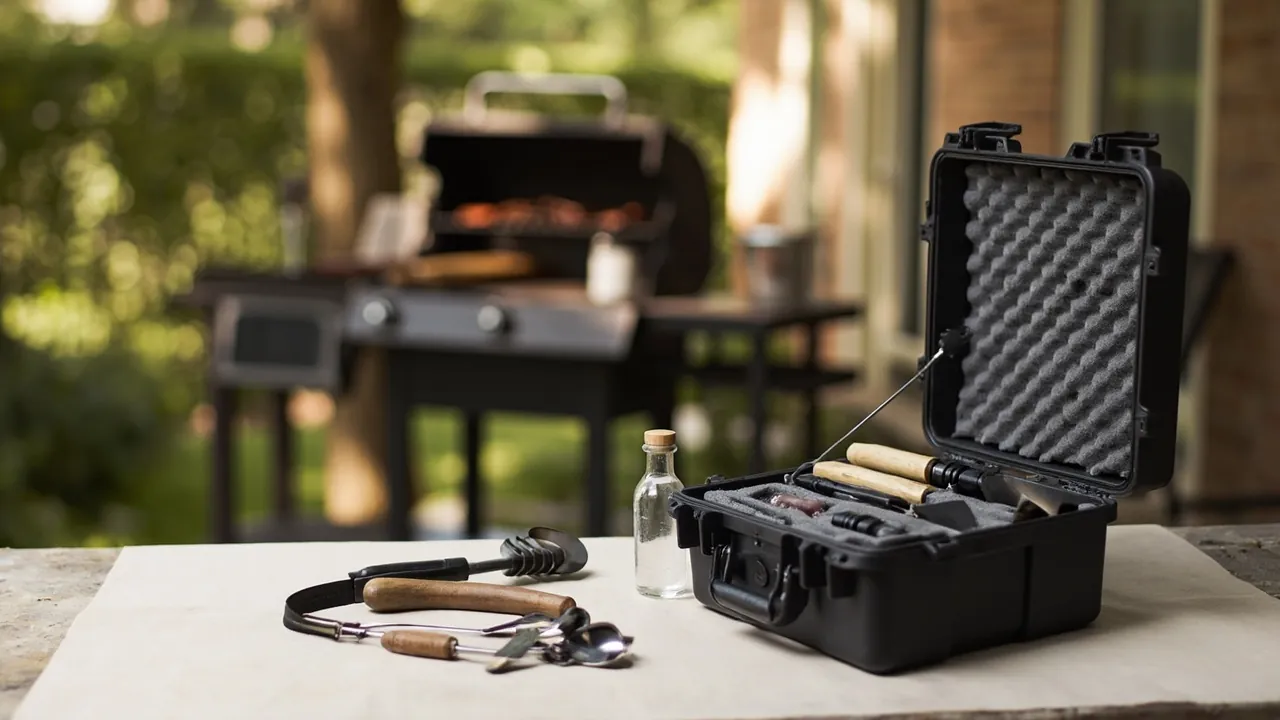
Outdoor grilling is a high-frequency scene for food brands, camping operators and private chefs on the move, yet grill transport is often overlooked. A cast-iron charcoal grill, a set of stainless grates, a few leak-prone sauce bottles and flammable fire starters, if tossed into a trunk, usually arrive greasy, scratched and leaking. The conclusion up front: grill gear deserves a case designed for the outdoors — with compartment isolation, leak-proof sealing, cushioning and a compliant ingress rating that controls the contamination, loss and damage of grill, charcoal tools and seasonings in one pass.
Many users think "the grill is tough, it will not break," ignoring three hidden risks: residual heat warping interior plastic, grease seeping out under bumps and contaminating the whole case, and sauce bottles leaking after knocking each other. This article walks through risk, structure, materials, standards and a buying checklist for selecting and using a BBQ equipment case, and shows how to turn a messy trunk into a repeatable, auditable roll-out kit.
Table of Contents
- Why grill equipment needs a dedicated protective case
- Transport risks of the grill body
- Divided protection for charcoal tools and igniters
- Leak-proof sealing for seasonings and sauces
- Rust-proof storage for grates, forks and tools
- Sealing and ingress ratings: IP65/IP67 and IEC 60529
- Inserts and cushioning: EVA and load design
- Hinges, latches and seals
- Heat-resistant and oil-resistant materials
- Transport testing and standards: ISTA, MIL-STD-810H and GB/T 4208
- Materials and flame retardancy: the meaning of UL94
- Customization and OEM/ODM: kit-matched inserts
- Cleaning and routine maintenance
- Buying checklist and scenario recommendations
Why grill equipment needs a dedicated protective case
Grill gear is "dirty, heavy and messy," which makes it wrong for generic storage. Dirty from grease and ash, heavy from cast-iron bodies and cylinders, messy from dozens of small items across grill, charcoal, seasoning and tools. A plain plastic bin has hardness but no compartments; oil and ash mix, small parts get lost, bottles clash, and you often need a full cleanup before the campsite is even ready.
A professional case thinks by function. Grease and ash are isolated; sauce bottles stand fixed; charcoal tools and igniters gather in one cell away from flammables; the grill body is limited by perimeter foam. This zoning lets you open and cook immediately, avoiding cross-contamination. JUNZHJIA commonly uses compartment-plus-gasket design in outdoor cases, and with a removable-divider case you can reconfigure quickly by event list.
A second benefit is speed of setup. When every item has a fixed pocket, the team opens the lid, places the grill, hangs the tools, sets the sauces and starts, instead of digging through a greasy tote while guests wait. At a paid event this is not a comfort, it is revenue: a ten-minute faster setup is ten more minutes of selling, and a cleaner kit reads as a more professional brand to everyone in line. A third benefit is traceability: a labeled case with a gear list turns a loose pile into a countable kit, so a missing igniter or a cracked bottle is obvious the moment the lid opens, not halfway through service when a refund is already owed. For a multi-site operator the same layout across every case also standardizes training, because a new crew member already knows where everything sits.
From a business view, a single spilled bottle of premium rub can ruin a whole set of tools and a timetable; a missing igniter turns a booked event into a refund. Fixing the kit as "one case to roll out" protects both assets and the brand promise. A labeled case also shortens setup: the team opens, places the grill, hangs the tools, sets the sauces, and starts, instead of digging through a greasy tote while guests wait.
Transport risks of the grill body
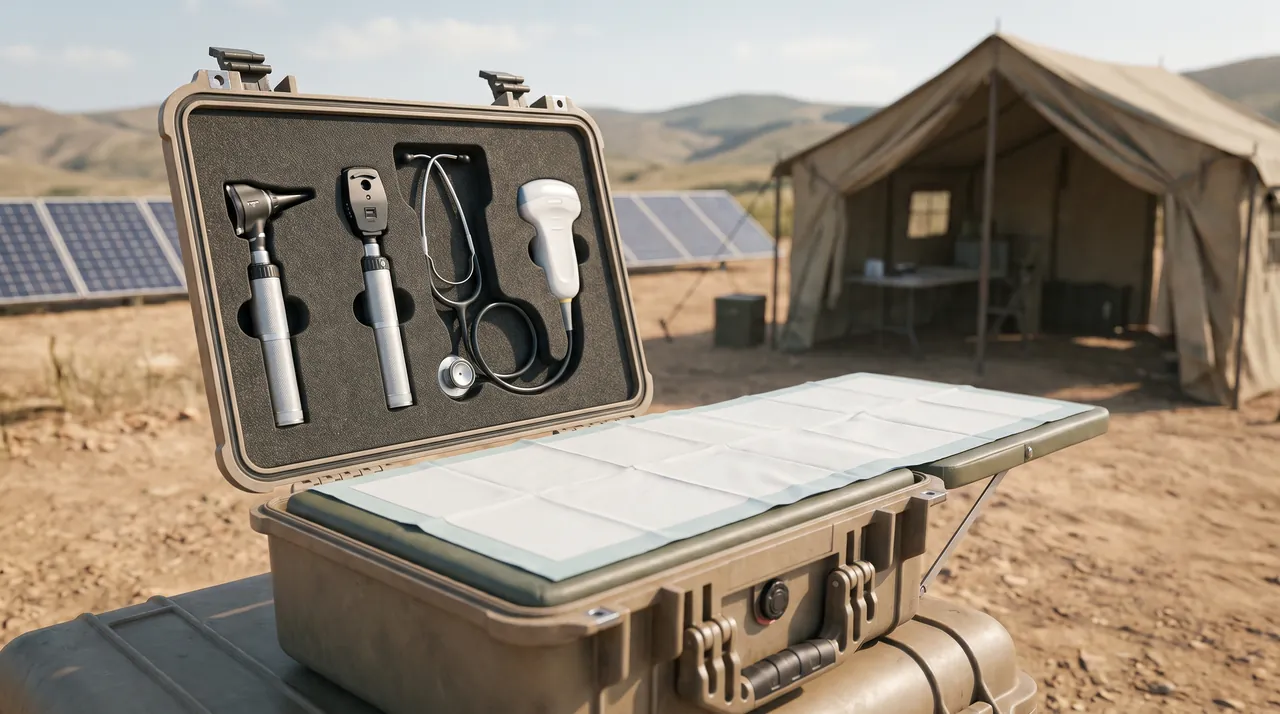
A grill (charcoal, gas, portable) is most at risk not from drops but from "residual heat + grease + center of gravity." Just packed, the body may still be 60 to 80 C; sealed in a case, interior plastic and gaskets warp; residual grease seeps under bumps and contaminates other gear.
The right method is to cool fully, empty ash and residual oil before packing. If you must pack fast, add a heat-tolerant layer between body and case contact and leave ventilation space, referencing the insulation design of an extreme-temperature case. The body is low and heavy; prevent sliding with perimeter foam from a cushion-liner case and a hard base to spread pressure, avoiding a hard brake throwing the body forward into the wall or other gear.
Gas grills need canister compliance: per the ADR/IMDG hazmat transport case logic, canisters should be fixed, upright, vented and away from fire and heat, meeting local rules for flammable gas. Never put a full canister in the same cell as igniters or starters. A practical step is to ship the canister in its own locked, vented sleeve and to carry a copy of the material safety data sheet in the case lid pocket, so any inspection on the road is smooth and lawful.
Divided protection for charcoal tools and igniters
Charcoal tongs, shovel, torch, fire starters and long matches form the ignition system and a flammable cluster. Keep them in one cell away from seasoning and grease. Starters and gel fuel are flammable; fix them and keep from heat and sparks. A torch is small but its metal head scratches gear, so seat it in a dedicated vertical socket.
Divide per the custom foam insert guide, routing each tool so tongs and shovel never compress each other. For electronic igniters and thermo-guns, float-buffer to protect internal circuits from shock. With multiple kits, use numbered dividers from a removable-divider case to separate "base ignition kit" from "spare kit" for a quick pre-event check.
Note that starter items follow different transport rules by region; roll-out teams should confirm local rules for solid fuel and canisters to avoid compliance risk. The case is only physical protection; compliant transport still needs human control. A simple rule helps: anything that can burn goes in one clearly marked, spark-free cell, and that cell is the last packed and first checked, so no one drops a lighter next to a leaking gas fitting by accident.
Leak-proof sealing for seasonings and sauces
The soul of grilling is sauce, yet sauce bottles are the top leak source. Oil-based sauces seep under bump pressure; powdered seasoning clumps when wet; liquid marinades break and contaminate the whole case. The focus is "stand fixed + secondary seal + absorbent layer."
Stand fixation uses elastic straps or foam vertical cells to clamp bottles upright, never lying and clashing. Secondary seal adds cling film or a tight inner cap over the mouth; key events bag them. Absorbent layer lays absorbent cotton or paper towel under the bottle cell so any leak is caught, not spread. For food-contact zones use low-odor oil-resistant material; compare EVA's oil behavior in the foam material comparison.
For high-value or volatile spice powders, borrow the seal-shock case approach used for tea and coffee: gasket plus desiccant locks flavor. On opening, check mouths before use to avoid cross-contaminating food. A useful field habit is to keep a small "spill kit" in the lid: spare bags, a wipe and a marker, so a leak found at the venue is contained and relabeled on the spot rather than discovered mid-service when it is too late to fix cleanly.
Another field habit that pays off is a pre-event pressure check of the canister and the lid gasket. Before a long drive, confirm the gas canister is seated, the valve closed and the case latches clicked; a five-minute check prevents the classic failure where a half-loose latch pops on a pothole and the whole lid swings open at speed. Likewise, if the case rode in a hot trunk, let it cool before opening so condensation does not form on cold glass and metal the instant humid air hits it. These small rituals are what separate a case that looks right on the shelf from a case that performs on a real, messy, time-pressured day, and they cost nothing but a place on the setup checklist.
Rust-proof storage for grates, forks and tools
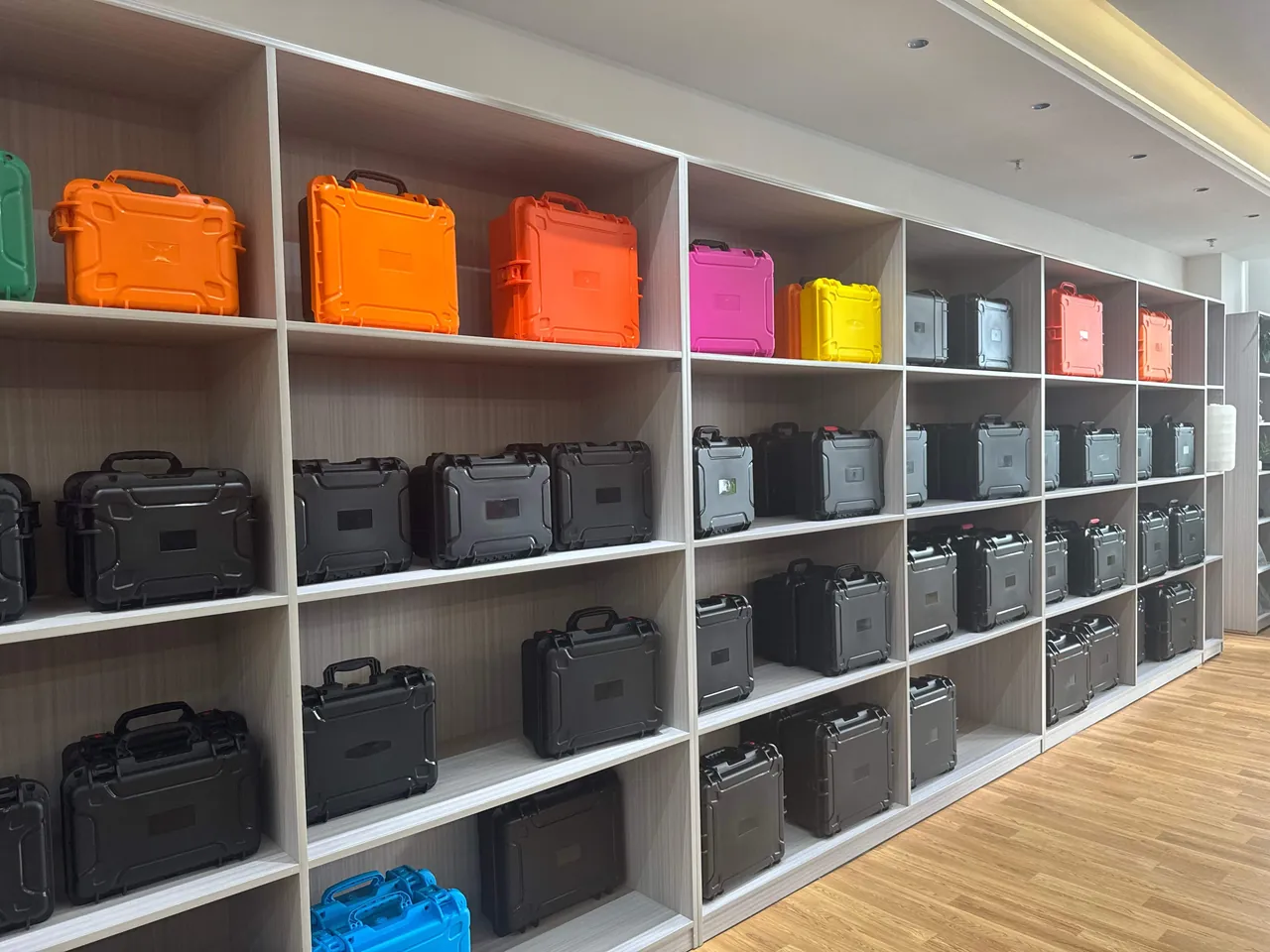
Grates, forks, thermo-probes and tongs are stainless or chrome-plated and look rust-proof, but fear salt mist and long wet storage. By the sea or in high humidity, gear packed damp then sealed rusts in spots. The points are "dry in + isolate + dehumidify."
Wipe surfaces dry before packing; bag grates in breathable mesh to avoid scraping; separate metal from ash and grease to slow corrosion; put fixed food-grade desiccant inside, referencing the IP67 protective case seal for rainy carries. Wood-handled forks also need mold prevention against long sealing.
For thin probes and forks, seat them in vertical foam sockets to avoid breaking tips when sliding; fix tongs with elastic bands so springs are not compressed long term. A quick pre-pack wipe with a light food-grade oil on bare steel edges (not on cooking surfaces) adds a short-term barrier for coastal trips, and a silica indicator card in the cell tells you at a glance whether the environment stayed dry during storage between events.
Sealing and ingress ratings: IP65/IP67 and IEC 60529
Outdoor grilling happens in yards, camps and vehicles; cases meet dust, dew, rain and mud. The international rating basis is IEC 60529 (mirrored by GB/T 4208), two digits after "IP" for dust and water. Daily outdoor delivery, dust 5 + water 5 (IP55, spray-proof) works; for showers or roof-rain carries, the waterproof rating explainer recommends IP67, immersible briefly without ingress.
An IP rating is a latched-lab value; open latches or aged gasket fail it in reality. So gasket care and reliable open-close matter as much, covered later. Cases flown or at high altitude should add a pressure-equalization valve so pressure differences do not suck the gasket open. For water-plus-grease users, the seal-shock case gasket is steadier. Remember the number is only as good as the latch that holds the lid and the gasket that seals it; ask for a test report and, better, do your own rainy-day carry test with a paper towel inside to confirm the claim.
Inserts and cushioning: EVA and load design
The insert decides whether gear is hit and how much energy is absorbed. EVA closed-cell foam is mainstream: adjustable density, good rebound, no shedding, oil-resistant. Heavy bodies use high-density EVA base with PP/ABS hard plates at load points; light charcoal tools and bottles use medium-low density for soft wrap and vertical cells.
The cushion key is compression: 10 to 20 percent slight compression when the lid closes, gently clamping; too thick leaves play, too thin under-cushions. Leave 8 to 12 mm foam walls between cells for isolation and absorption. Roll-out teams switching specifications use a removable-divider case for modular bays. Routing detail is in the EVA foam custom process. A practical note: heavier grills need a thicker, denser base and a hard plate, while bottles need softer vertical cells so glass does not crack on a hard clamp; mixing the two densities in one lid is normal and is exactly what a custom insert delivers.
Hinges, latches and seals
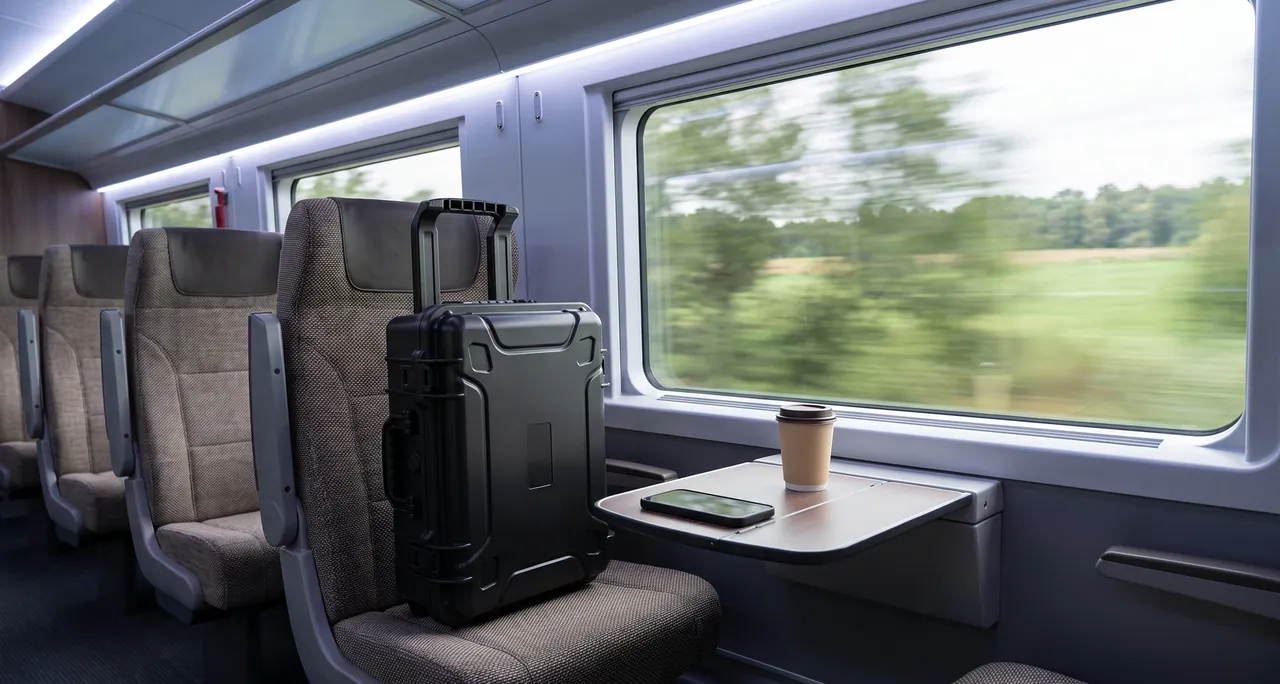
Open-close life and whether it pops open depend on hinges and latches. JUNZHJIA outdoor metal cases often use stainless or nylon-clad hinges with labyrinth latches that resist rust and stay locked on rough roads. Internal links must target the live page toolbox hinge latch seal for selection detail — this is a real indexed page; do not misspell it or you create a dead link.
Seals are mostly EPDM or silicone: EPDM resists ozone and weathering for outdoor and vehicle use; silicone tolerates wider temperature, suiting residual-heat contact. Choose dual-action lock latches a stray touch will not open; for high value add a padlock eye or TSA position from lock customization options. Keep one spare latch and a tube of compatible grease in the maintenance kit so a failed latch never becomes a reason to ship unprotected; on a busy season a five-minute field fix is the difference between a clean roll-out and a cancelled booking.
Heat-resistant and oil-resistant materials
Grilling asks two special material traits: heat and oil resistance. Residual heat can conduct to case contact surfaces, so the liner touching the body should be heat-tolerant or separated by a heat layer; confirm the shell plastic's heat-deflection temperature near heat. On oil, EVA and PP are stable against most cooking oils but avoid long contact with solvent cleaners.
JUNZHJIA can provide heat- and oil-rated material plans with declarations in OEM projects. Note "heat-resistant" means brief residual-heat contact without deformation, not holding an uncooled grill — always cool or insulate first. Related design is in the extreme-temperature case. A useful spec line for buyers: ask for the continuous-service temperature of the liner and the shell separately, because the liner sees indirect heat while the shell may see direct sun on a roof rack; the two limits are different and both matter on a hot day.
Transport testing and standards: ISTA, MIL-STD-810H and GB/T 4208
Whether a supplier gives test basis is a professionalism divide. The international transport simulation standard ISTA (e.g., ISTA 3A single parcel) uses drop, vibration and compression for real logistics; domestically GB/T 4857 transport packaging offers equivalent tests that many buyers already recognize.
For environment, MIL-STD-810H is a US military environmental test method (used only as product-line environmental test basis, not a military certification); method 514.7 vibration and 516.8 drop verify structural integrity under rough handling. We cite it to give B2B customers a reproducible flow, not to claim certification. With the ISTA transport testing procedure it gives a fuller real-world picture. Ask each supplier for the actual test report number and the sample configuration, because a case tested empty is not the same as a case tested loaded with a grill and a canister; weight and center of gravity both change how the case behaves in a drop.
Materials and flame retardancy: the meaning of UL94
Outdoor cases sit near open flame, charcoal and vehicle circuits, so flame retardancy matters. UL94 is the common plastic flammability standard, HB, V-2, V-1, V-0, where V-0 self-extinguishes within 10 seconds and drips do not ignite. Near heat, a rating of UL94 V-1 or above is safer.
Distinguish: flame retardancy is material behavior under accidental fire, not heat resistance. Even a flame-retardant case must never hold an uncooled body or open flame. JUNZHJIA can supply the required flame class and declaration in OEM projects for buyer compliance archiving. When specifying, also ask about low-smoke behavior, because a roadside flare-up near a vehicle is safer when the case does not add heavy toxic smoke; keep the declaration with the equipment manual so a future safety audit finds it without a chase.
Customization and OEM/ODM: kit-matched inserts
A standard case only solves "it fits." Custom inserts solve "stable and quick to find." JUNZHJIA maps the customer's roll-out list one-to-one: grill perimeter, charcoal vertical cells, bottle straps, grate mesh positions, all formed to real gear. Even thirty-plus items, open the lid and locate at a glance, boosting roll-out efficiency.
OEM/ODM also brings brand visibility: laser-engrave logo, gear list and color on the lid; batch orders get unified material codes for asset management. On cost, reference the custom case mold cost analysis for tooling-versus-unit break-even — larger batch, lower unit. Pick a factory by the how to choose a case OEM factory checklist. Insist on a first-article sample that you load with the real kit and drop-test yourself before committing to volume, because the cheapest quote often hides rework cost later, and a grill case that fails on the first bump is a case you cannot trust at a paid event.
Cleaning and routine maintenance
A grill case accumulates oil and ash; poor cleaning causes odor, ages foam and loosens gaskets. Routine care follows the protective case cleaning guide: neutral cleaner with a soft cloth, avoid solvents; foam removed and air-dried, never in sun.
The gasket is the seal-life key; inspect quarterly for hardening and cracks; a drop of silicone oil keeps latch parts smooth. A case's service life in years tracks maintenance — a well-kept metal case lasts over ten years. Also see genuine vs fake case identification to avoid substandard boxes that look similar but fail on the first rough trip. A short maintenance sticker inside the lid with the last-inspection date turns good intent into a habit, and it reminds the team to empty the ash tray and wipe the grease channel before the case goes back on the shelf.
One more point on cleaning: avoid solvent degreasers even on the shell, because they can swell EVA and dull the gasket; a neutral cleaner and a soft cloth do the job without shortening case life. Dry the case with the lid open in shade, never in direct sun, and store it with a desiccant pack and the latches loosely closed so air can move. These small steps are what keep a busy-season case performing like new across years of use, and they cost nothing but a place on the close-out routine.
Buying checklist and scenario recommendations
Condensing the points above into a checklist is most intuitive when shown as a table:
| Scenario | Core equipment | Recommended protection | Suggested rating |
|---|---|---|---|
| --- | --- | --- | --- |
| Backyard gathering | Portable grill, grate, sauce | Compartments, bottle fix, desiccant | IP55 to IP65 |
| Camp roll-out | Charcoal grill, tools, sauce | Perimeter limit, absorbent, oil barrier | IP65 to IP67 |
| Cross-city tour | Gas grill, canister, tools | Canister fixed, anti-theft lock | IP65 to IP67 |
| Seaside delivery | All categories | Salt-spray hinge, dehumidify | IP67 |
| Training teaching | Multi-spec aids | Removable dividers, numbering | IP54 to IP65 |
| Insert material | Suits | Advantage | Caution |
|---|---|---|---|
| --- | --- | --- | --- |
| High-density EVA | Grill body, heavy | Strong support, oil-resistant | Slightly costlier |
| Medium-density EVA | Tools, bottles | Soft wrap, no shed | Calibrate thickness |
| Polyurethane sponge | Temporary buffer | Cheap, soft | Sheds, needs isolation |
| Non-woven layer | Food-contact face | No shed, low odor | Replace periodically |
JUNZHJIA can combine the above into a full-case solution from shell, seal to insert in one pass and provide test documents for archiving. The aim is not the toughest box, but the right box whose insert matches your real kit and whose maintenance you can actually sustain through a busy season.
A practical way to choose is to start from the single worst item, not the average. If the grill is the heaviest and the glass-door risk is highest, design the case around limiting and supporting that grill first, then fit smaller items into the remaining volume. Buying a case sized to the average leaves the heaviest under-protected, which is exactly how the expensive damage happens. Next, decide which cells must lock: if you ever carry a canister or a sharp tool, that cell is non-negotiable, and the lock should be a real padlock eye, not a latch you hope stays shut. Then match the rating to the route: a backyard kit that never leaves a driveway needs only dust protection, while a coastal tour needs salt-spray hardware and IP67. Finally, price the case against the cost of one ruined grill or one ruined service, and the custom insert usually pays for itself on the first bad-weather day. The right question is not "how cheap can the box be" but "how rarely do I want to replace my gear," and the case is the lever that answers it. A useful final check is to load the real kit, close the lid, invert the case and shake it gently; if you hear parts shifting, the insert is not doing its job and you should re-pocket before trusting it on the road. That thirty-second test catches most problems a certificate will not. A second habit worth building is a photo of the packed case at each handover, so a dispute about "what was in it" is settled by evidence rather than memory, and the same photo doubles as a training reference for new crew on how a correct pack looks.
Frequently Asked Questions
Q: Can I pack the grill right after cooking? A: Not directly. A just-packed body often holds 60 to 80 C; sealed in a case, interior plastic and gaskets warp, and residual grease seeps under bumps to contaminate everything. The right flow is cool fully, empty ash and oil, then pack; if you must pack fast, add a heat-tolerant layer between body and case contact with ventilation space, referencing the extreme-temperature case insulation. Cooling is step one in protecting case and gear, and a ten-minute wait saves a melted gasket that would let the next rain into the whole kit. If the event runs back-to-back, keep a second cooled liner or a heat shield sleeve so the grill never enters the case hot.
Q: How to place sauce bottles so they do not leak? A: Three moves: stand fixed, secondary seal, absorbent layer. Clamp bottles upright with elastic straps or foam vertical cells, never lying and clashing; add cling film or a tight inner cap over the mouth, bag key events; lay absorbent cotton or paper towel under the bottle cell so any leak is caught. Use low-odor oil-resistant material in food zones; compare EVA oil behavior in the foam material comparison. Check mouths on opening before use. A spill kit in the lid (spare bags, a wipe, a marker) lets you contain and relabel a leak at the venue instead of discovering it mid-service when it is too late to fix cleanly.
Q: Can a gas canister share the case with the grill? A: A full canister must not share a cell with grill, igniter or starters. Per the ADR/IMDG hazmat transport case logic, fix the canister upright, vented and away from fire and heat, meeting local flammable-gas rules. Empty canisters are safer but still isolate. Compliant transport is human-controlled; the case is only physical isolation, so confirm local rules before cross-city moves. Carry the material safety data sheet in the lid pocket so any road inspection is smooth, and ship the canister in its own locked, vented sleeve so no one drops a lighter beside a leaking fitting by accident.
Q: Can an IP67 grill case be carried in rain? A: IP67 is a latched-lab value: immersed 1 m for 30 minutes without ingress, enough for showers and brief drops, not washing or long diving. In reality open latches, aged gasket or deformed shell break it. For rainy carries inspect gaskets regularly and add a pressure-equalization valve for altitude pressure. Rating boundaries are in the waterproof rating explainer. Do your own rainy-day carry test with a paper towel inside; the printed number is only as trustworthy as the latch that holds the lid and the gasket that seals it, and a field test tells you more than the label.
Q: How to rust-proof grates and forks? A: Dry in, isolate, dehumidify. Wipe dry before packing; bag grates in breathable mesh to avoid scraping; separate metal from ash and grease to slow corrosion; put fixed food-grade desiccant inside, referencing the IP67 protective case seal for seaside wet carries. Wood-handled forks also need mold prevention against long sealing. Seat thin probes vertically to avoid breaking tips. A light food-grade oil on bare steel edges (not cooking surfaces) adds a short barrier for coastal trips, and a silica indicator card in the cell shows at a glance whether the environment stayed dry between events.
Q: Is UL94 V-0 versus V-1 a big difference? A: A difference but do not over-pursue. Both V-0 and V-1 self-extinguish within 10 seconds; V-0 drips must not ignite cotton, V-1 is slightly looser on drip. Near heat, V-1 is already far safer than HB; a case by exposed circuits or dense booth chooses V-0. Flame retardancy is not heat resistance — never put an uncooled body inside. OEM can request a material declaration, and you should also ask about low-smoke behavior, because a roadside flare-up near a vehicle is safer when the case does not add heavy toxic smoke to an already difficult situation.
Q: How to control cost in bulk purchase? A: Watch tooling amortization and MOQ. One-off CNC routing has no fixed mold cost but higher unit; die stamping is cheaper per unit but needs MOQ. Reference the custom case mold cost analysis for break-even; larger batch, lower unit. Unify specifications (same-size case + swappable insert) to cut SKUs, inventory and volume. Pick a factory by the how to choose a case OEM factory checklist, and insist on a first-article sample you drop-test with the real kit before volume commitment, because the cheapest quote often hides rework cost later and a case that fails on the first bump is a case you cannot trust at a paid event.
Q: How can a roll-out team check gear quickly? A: Use removable dividers + numbered labels to fix gear as "one case to roll out." Per the removable-divider case, separate base ignition kit, seasoning kit and tool kit by numbered cells; pre-event check cell by cell, refill missing at once. Open the lid and locate, avoiding on-site rummaging. JUNZHJIA can map inserts to the roll-out list so checking is "see the cell, know the gear." Keep a one-page checklist laminated to the lid; the team ticks each cell before departure and after return, so nothing is left at a venue and nothing is double-packed by mistake.
Q: What about overseas sea freight? A: Focus on salt spray, pressure and long humidity. Hinges and latches get salt-spray treatment (stainless or nylon-clad); add a pressure-equalization valve for temperature and altitude negative pressure; choose weather-resistant EPDM gasket. Enough fixed food-grade desiccant inside, outer case labeled waterproof with a gear list. On arrival ventilate and dehumidify before inventory to avoid condensation rusting metal and smearing labels. The biggest sea-freight mistake is sealing a damp case; dry the interior and the gear first, then close, then add desiccant, so you are not trapping humidity inside for weeks of transit.
Conclusion and Further Reading
A BBQ equipment case is not "a box for the grill"; it is a system covering compartment isolation, leak-proof sealing, cushioning, compliant transport and routine maintenance. From insulating the grill's residual heat to fixing sauce bottles upright, from the EVA compression ratio to the real boundary of IP ratings, every detail bears on roll-out efficiency and asset safety. JUNZHJIA offers a complete solution from shell, seal to custom insert and can issue test documents so outdoor protection becomes an archivable, repeatable standard.
One practical habit worth adopting is a post-event reset: after every cookout, wipe the interior with a solvent-safe degreaser, dry the gasket, and leave the lid ajar for ten minutes so trapped moisture escapes before the case is closed for storage. This small routine keeps the seal supple, prevents mold on the foam, and means the next outing starts clean instead of sticky. Pair it with the toolbox hinge latch seal service notes so latches stay aligned.
Further Reading