

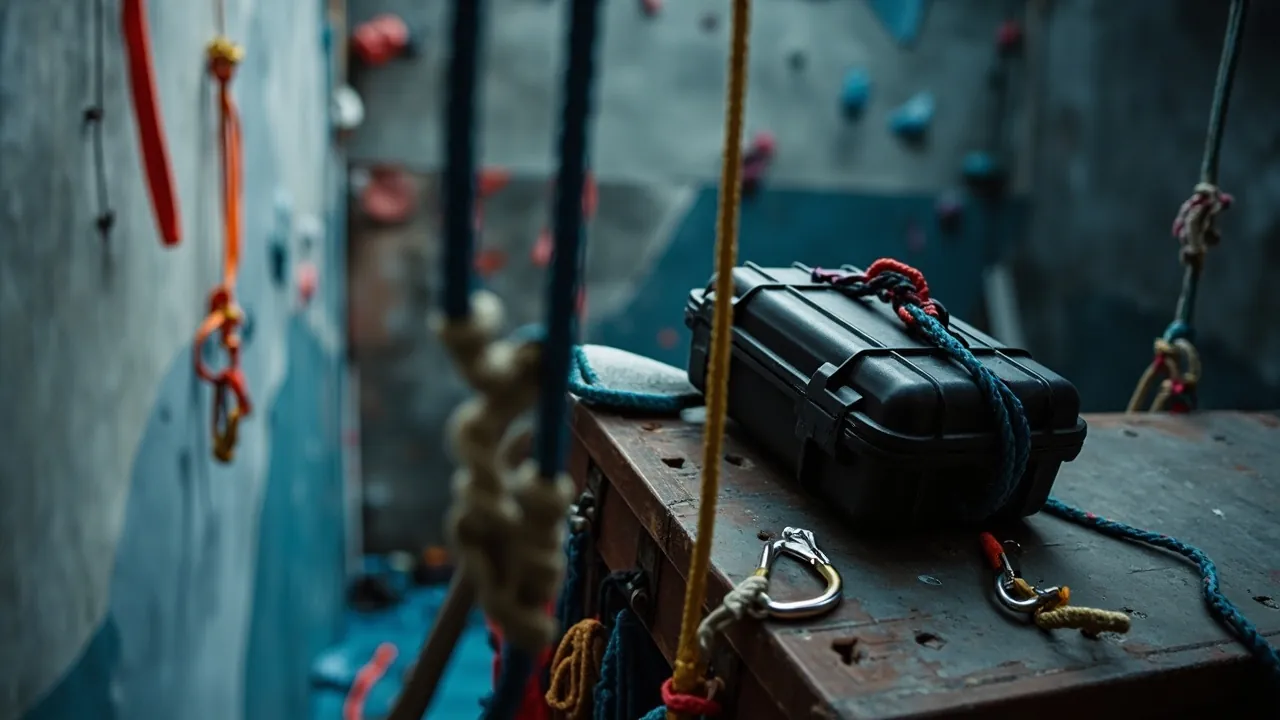
The core value of climbing equipment is reliability, and reliability begins long before you clip in -- it begins with how the gear is transported and stored. A 60-meter dynamic rope crushed into a too-small case or left damp after a crag session can accumulate invisible core fatigue that only surfaces months later as a sudden drop in fall-factor tolerance. A screwgate carabiner rattling loose against steel hardware can pick up a microscopic thread deformity that no visual inspection catches. The bottom line up front: a climbing gear case is not about "fitting everything in." It is about using compartmentalization, cushioning, and sealing to keep the rope's bend radius, the metal hardware's surfaces, and the belay device's position all inside safe thresholds. This article works from the failure mechanisms outward, giving practical storage and protection plans for ropes, carabiners, and belay devices, then maps the case selection and verification against recognized standards such as IEC 60529, GB/T 4208, MIL-STD-810H, and ISTA.
For gyms, event-support crews, outdoor brands, and military or police rope-training units, the case is also a physical anchor for the asset ledger. A disciplined packing system cuts repeat purchasing, misuse, and liability disputes. Rather than chase losses after the fact, lock the risk down at the packing step.
Table of Contents
- Three Typical Transport Damages in Climbing Gear
- Rope Storage: Bend Radius and Moisture Control
- Carabiners and Quickdraws: Protecting Metal Surfaces
- Belay Devices and Descenders: Limiting Movement
- Compartmentalizing Shoes, Chalk, and Accessories
- Case Material: Why Engineering Plastic Cases
- Inserts and Dividers: EVA Carving and Custom Foam
- Sealing, Dust, and Water: Using IP65 / IP67
- Latches and Hinges: Cycle Life and Security
- Cushioning and Drop: MIL-STD-810H and ISTA Verification
- Standards Quick Reference: IEC 60529, GB/T 4208, UL94
- Cleaning, Maintenance, and Lifecycle
- Selection and OEM: Finding the Right Case Factory
- JUNZHJIA Climbing Case Customization Capability
Three Typical Transport Damages in Climbing Gear
A useful way to internalize these three classes is to think in terms of the repair bill. A single core-fatigued rope that fails on a lead fall can end a season and a clinic; a dented screwgate that jams at a crux can turn a routine lower into a rescue. The gear case is the cheapest insurance against both, because it addresses the cause upstream of the failure rather than the symptom after. When a gym or outfitter audits losses over a year, the majority trace back to transport and storage, not to use -- which is exactly the part a disciplined case design controls. This is why procurement should treat the case as protective equipment, not packaging.
Climbing gear rarely fails by "suddenly snapping." It usually degrades slowly, and sorting transport damage into three classes lets you treat the right cause.
The first class is rope-core fatigue damage. A dynamic rope absorbs fall energy through its nylon core; the sheath only handles abrasion. If you cram the rope into a small cavity, force a bend tighter than 4-5 times the rope diameter, or leave heavy hardware resting on it at the bottom of a case for a long time, the core develops localized flattening and torque buildup. This damage does not show immediately but reaches its limit first during a critical fall. The common practice is to coil the rope into loops of at least 30 cm diameter and store it in a rope bag or dedicated spool, avoiding sharp kinks. For the insert logic behind coil-shaped cavities, see the custom foam insert guide.
The second class is metal-surface bruising. Carabiners, quickdraws, and belay devices are aluminum or steel, and a scratch invisible to the eye can become a stress concentrator. Mixed loading with rock debris, crampons, or keys is the main source. The fix is an independent foam recess for each metal item so nothing touches anything else. The removable divider system explains how adjustable walls keep heavy, hard items separated.
The third class is displacement and abrasion. Devices with moving parts, like belay devices and ascenders, roll inside the case and scrape against other gear; worn threads and cam faces then feel gritty and bite loosely. Fixing heavy, hard items with retention straps or divider panels is the highest-return protection. This is where a cushion liner case design pays off.
Rope Storage: Bend Radius and Moisture Control
A practical mistake worth calling out is coiling the rope around the case handle or a carabiner to save space; this creates a bend radius far below safe and also abrades the sheath against metal. The rope bag exists to keep the coil shape during transit, and the case gives it a flat, pressure-free home. For gyms that issue ropes to many climbers, label each rope bag and rotate by usage count so the highest-cycle ropes retire on schedule rather than by surprise. Moisture management is not only about the rope; a damp rope left in a sealed case also raises humidity for every neighbor, so the dry-storage rule protects the whole load, not just the nylon.
The rope is the bulkiest and most fragile item in the case. Storage follows two rules only: large-radius coiling and isolated dry storage.
On bend radius, the rule of thumb is at least 50 times the rope diameter (a common 9.8-10.5 mm rope maps to a 50-60 cm loop). If the case is constrained, at least keep the bend radius above 4-5 times the diameter; chronic tight folds cause permanent kinking. In practice, coil the rope in a "butterfly" shape or lay it flat in a shallow lid cavity inside a rope bag, never under carabiners or shoes at the case floor.
On moisture, a wet nylon rope loses roughly 5%-10% strength and invites mildew and sheath aging. Target a sealed case at the IP67 protective case definition of short immersion and dust protection, with silica gel keeping relative humidity at 50%-65%. Always air-dry the rope in shade -- ultraviolet is nylon's number-one enemy. For long-term storage, add a humidity indicator card following the thinking in the extreme temperature case article and inspect periodically.
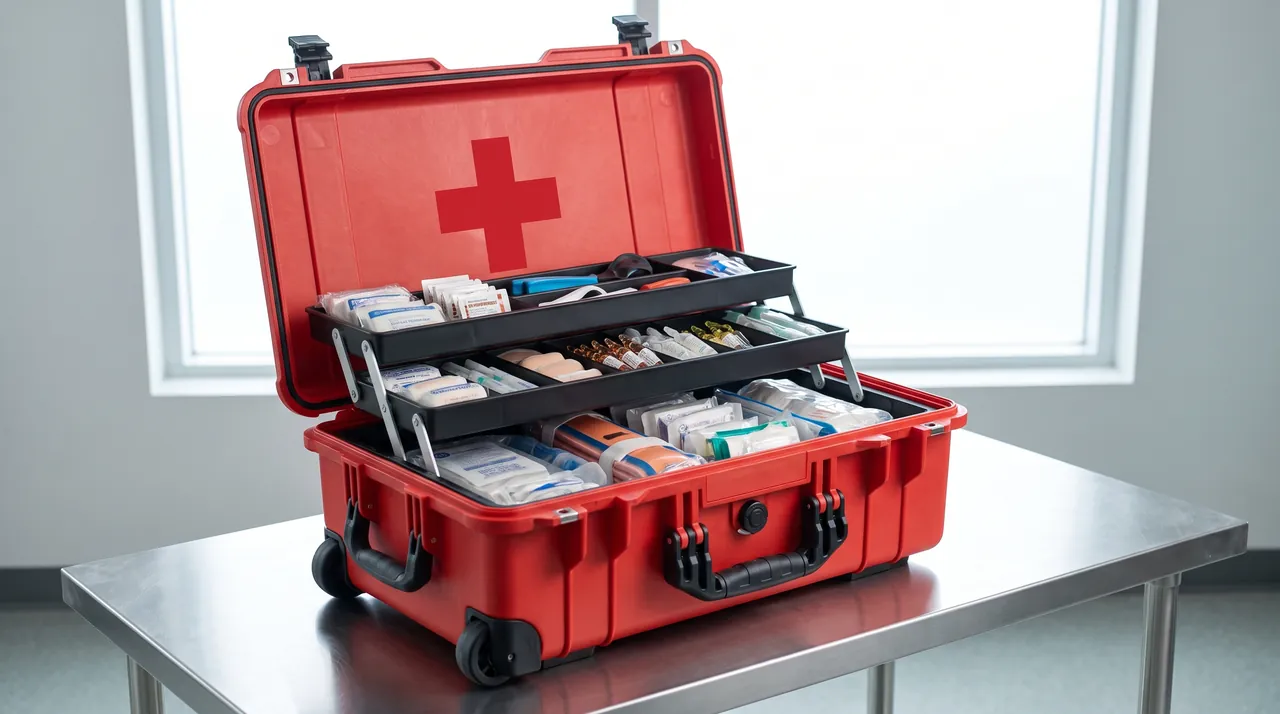
Note that dynamic ropes have a service life. Even if they look fine, they must retire past the age or cumulative-fall limit. The case does not extend rope life, but it prevents "early retirement" -- quantified in the protective case service life article.
Carabiners and Quickdraws: Protecting Metal Surfaces
A second practical note: do not rely on the anodized color of a carabiner as proof of integrity. Anodizing is a surface treatment that hides nothing; a hairline crack under the coating is invisible until load. The case design that keeps every carabiner in its own recess also makes a quick pre-climb visual and tactile check faster, because each piece presents the same way every time. For assisted-braking devices and pulleys, the same logic applies -- independent recesses stop the moving parts from grinding against each other during transit, which is the quiet cause of a gritty feel on the first climb of a trip. Discipline in packing pays back as discipline in checking.
Carabiners (screwgates, pear shapes, D-shapes) and quickdraws are the last mechanical safety link, so transport protection focuses on killing surface micro-damage and thread seizing.
Once sand enters a screwgate thread or the thread is dented, the open-close feel tightens noticeably or jams -- exactly when single-hand operation at height matters most. Give each carabiner its own circular recess, half-buried with the gate facing up; line quickdraws in a long slot so they never stack. Aluminum carabiners are soft and dent easily under steel hardware, so aluminum and steel must occupy separate cavities -- this is why the case foam material comparison stresses "match density to hardware hardness."
Do not lock screwgates tight when packing (leave half a turn natural), and never stack weight on top of them. For event-grade support, give each carabiner a numbered pouch tied to the case ledger for traceability.
Belay Devices and Descenders: Limiting Movement
The retention philosophy extends to the lid. A thin foam divider on top of the device is not optional trim; it is the second half of the retention system, because without it a device can walk upward during a drop and contact the lid interior. Choose a divider thick enough that, with the lid closed, the device is held with light, even pressure and no rattle -- you should hear nothing when you shake the closed case. This single test, done on the showroom floor, reveals more about real protection than any brochure photo. If the case rattles, the gear moves, and moving gear is gear that wears.
Belay devices (ATC-style, assisted-braking), descenders, and ascenders carry concentrated weight and sharp edges. The protection key is retention -- keeping the device from moving relative to the case during transit.
Three layers work: a high-density EVA carved recess seats the device with only the top exposed; an elastic retention strap through embedded anchor points holds it down; a thin foam divider on top blocks falling debris. Combined, even an inverted case will not let the device roll. When designing a cushion liner case, keep the device center of gravity below the retention point -- lower is steadier.
A descender's brake groove with embedded grit scratches the rope and changes the friction coefficient. Brush the brake groove and cam face before every pack; it is a low-cost, high-return habit.
Compartmentalizing Shoes, Chalk, and Accessories
Climbing shoes, chalk bags, helmets, slings, and carabiner racks are the "soft / small / misc" class most likely to be stuffed into gaps, which then squeezes the rope and carabiners. Put them in independent sub-compartments or mesh pockets:
- Shoes go into a breathable shoe bag in pairs, away from metal to avoid scuffing and to keep sole chalk off the rope;
- Chalk bags (liquid chalk separate) seal independently -- leaked chalk is an invisible killer that gets into carabiner threads;
- Helmets fold flat in the OEM bag or lay on top, never on the rope;
- Slings and daisies coil small and zip-tie shaped, with the service date marked.
This compartment logic matches the "separate storage cuts cross-contamination" point in the case cleaning guide: the cleaner the split, the faster the clean, the lower the loss.
Case Material: Why Engineering Plastic Cases
One more reason PP wins for climbing: it shrugs off the chemicals found rinkside and crag-side, from chalk dust to mild cleaners, without the surface crazing that ABS shows after a season of UV. Aluminum cases, while rugged, conduct heat and cold straight to the interior, so on a winter approach the inside tracks outside temperature and any residual moisture condenses on metal gear -- exactly the rust path a climbing case should block. The one place aluminum still appeals is when an airline enforces a strict weight class and the load is small; even then a thin-wall reinforced PP case closes the gap. Weight versus protection is a trade, and for most clubs protection should win.
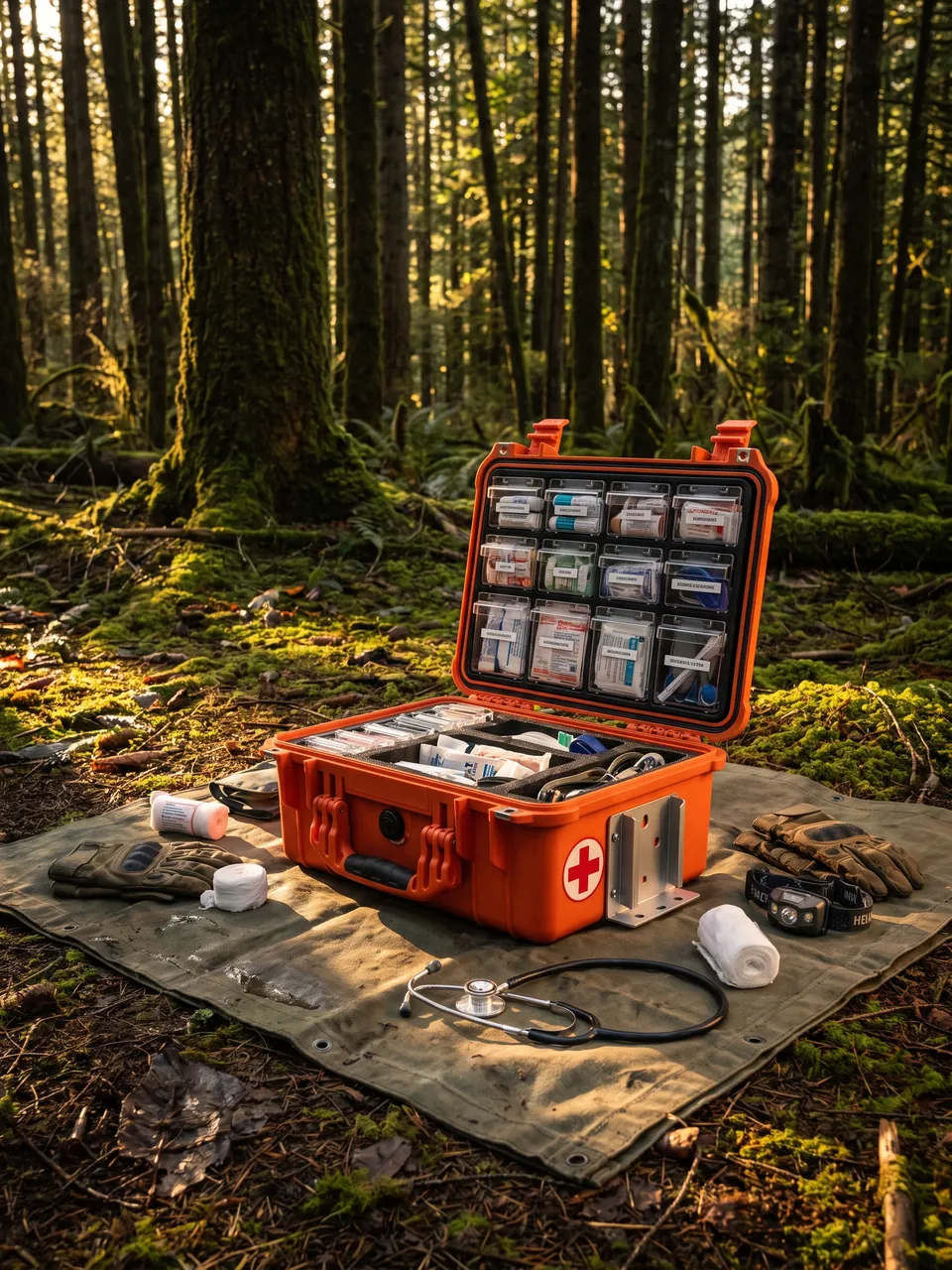
A climbing case faces gym, crag, and airline-check-in environments, so the shell material sets the floor. The mainstream choice is modified PP (polypropylene) or glass-fiber-reinforced PP injection molding, for these reasons:
- Impact absorption: the shell absorbs energy on drop, foam cushions again, referencing the MIL-STD-810H compliance drop and vibration basis (product-line environmental test reference only, not a military certification);
- Weathering: UV and temperature resistant, no brittle cracking in the sun;
- Light weight: lighter than aluminum cases, friendlier to airline weight limits;
- Moldability: one-piece molding with few seams, easy to seat a seal groove.
The plastic protective box article compares PP, ABS, and aluminum: ABS is cheap but brittle and cracks cold; aluminum is strong but heavy and thermally conductive (condensation in winter). Reinforced PP is the most balanced for climbing. Flame rating can reference UL94; indoor gym storage above HB is advisable.
Inserts and Dividers: EVA Carving and Custom Foam
Beyond density, consider the carving tolerance. A recess cut 1 mm too shallow lets the device sit proud and get crushed by the lid; 1 mm too deep lets it rattle. JUNZHJIA's 1:1 approach uses the actual gear or its 3D model so the recess matches the real outline, not a generic guess. For clubs that share cases across members, a light pencil mark on the foam at each item's home position turns packing into a 30-second routine and makes a missing item obvious at a glance. Small process details like this are what separate a case that gets used correctly from one that gets bypassed.
The insert turns a generic case into a dedicated one. Climbing gear is irregular and varies in hardness, so a combined plan works best:
| Gear type | Recommended insert | Density (typical) | Purpose |
|---|---|---|---|
| --- | --- | --- | --- |
| Rope (coiled) | Shallow foam + rope bag | Medium 30-45 kg/m³ | Limit, no fold |
| Screwgate / quickdraw | EVA carved round / long slot | High 50-70 kg/m³ | Anti-bruise, anti-roll |
| Belay / descender | High-density EVA full wrap | High 60-80 kg/m³ | Retain |
| Climbing shoes | Mesh bag + thin foam | Low 20-30 kg/m³ | Anti-friction |
| Helmet | Flat thin pad | Medium | Anti-crush |
The EVA foam custom process explains CNC carving versus thermal forming: CNC fits small batches with many models, thermal forming fits large same-model runs. For clubs mixing models, use a removable divider system in the main cavity and fixed carving in sub-cavities, balancing flexibility and cost.
Sealing, Dust, and Water: Using IP65 / IP67
A subtlety buyers miss: IP rating is tested on a clean, new seal. Real-world life includes grit in the groove, a worn latch, or a lid set down in sand. That is why the seal material and the compression system matter more than the printed number. TPU holds its spring under repeated compression and temperature cycles better than PVC, so the case keeps its rating for years instead of months. Pair the seal with a simple field habit -- blow the groove clear before closing -- and the IP67 you paid for is the IP67 you keep. The factory air-leak record is the proof; the field habit is the maintenance.
Climbing happens outdoors, so sand, rain, and stream water all seek the case. Sealing grades follow IEC 60529 (China's GB/T 4208):
- IP65: dust-tight plus low-pressure water jet -- for gyms and dry crags;
- IP67: dust-tight plus 1 m / 30 min immersion -- for creek crossings, raft transfers, and sea freight.
Seal material decides life. The case seal materials article shows TPU / EPDM beat plain PVC on ozone and low-temperature resistance. The lid seal groove and latch compression force tie directly to the waterproof case IP test method -- a printed IP67 is not automatic; ask for the factory air-leak test record.
Latches and Hinges: Cycle Life and Security
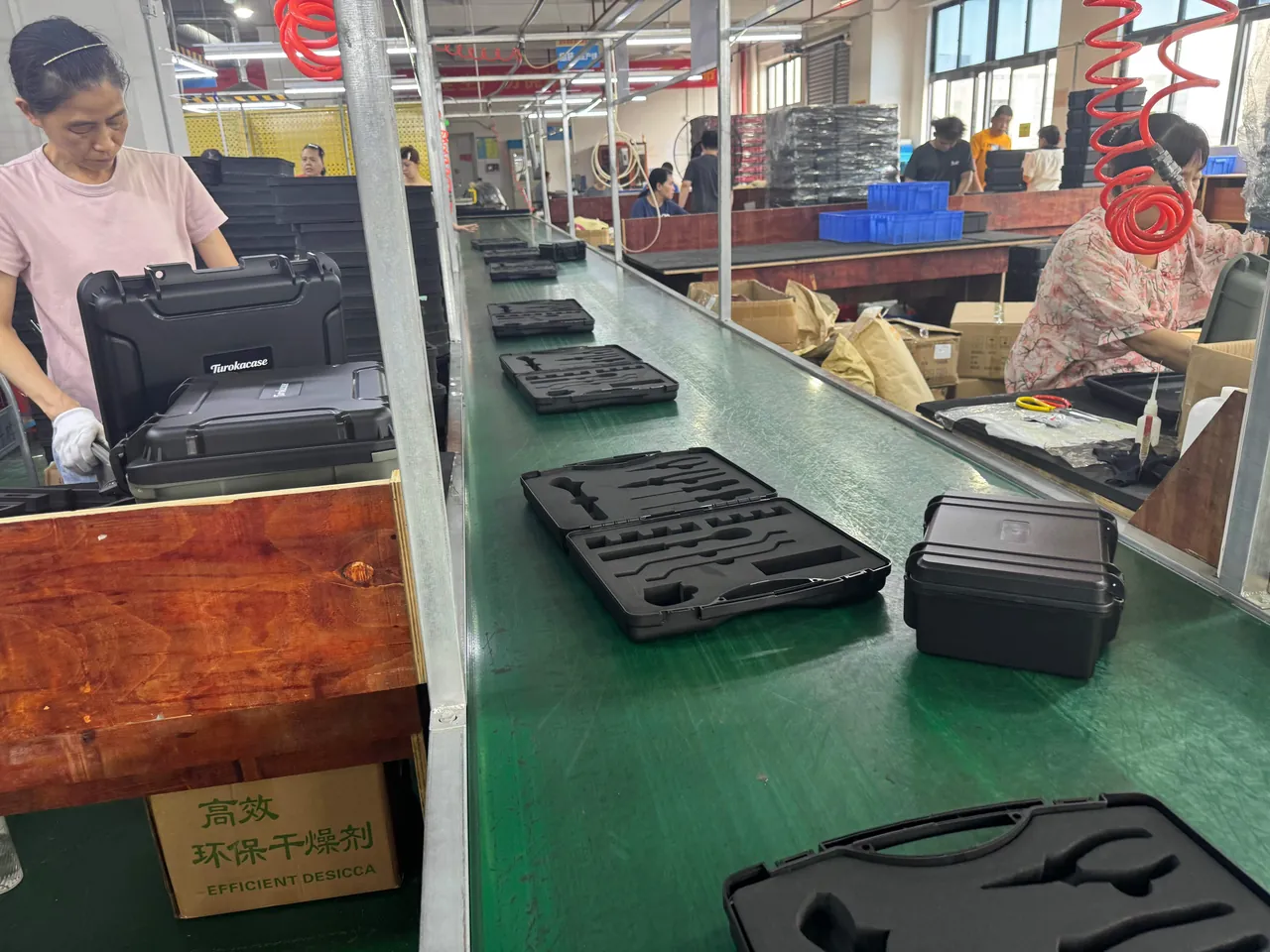
Latches and hinges are the moving joints; they must stay tight after tens of thousands of cycles. Climbing cases open often, so the bar is higher:
- Use a two- or three-latch structure so a single failure will not pop the whole case;
- Hinges should be one-piece or metal-inserted to avoid the lid sagging after the plastic axle hole wears;
- For security, add TSA locks or padlock ears via lock customization options, compliant for check-in and deterring grab-and-go.
On hinge and latch seal integration, always link to the toolbox hinge latch seal -- this is the correct site target.
Cushioning and Drop: MIL-STD-810H and ISTA Verification
A case cannot just "sound tough"; it must pass tests. Two citable frameworks:
- MIL-STD-810H: a US environmental test methods manual giving drop, vibration, humidity, and low-pressure procedures. The climbing case can reference Method 516.8 drop and Method 514.8 vibration as design basis (again: environmental test reference only, not a military certification);
- ISTA 3 series: the International Safe Transit Association's simulated shipping tests validating parcel, air, and pallet flows, see the ISTA transport testing procedure.
| Verification item | Reference standard | Typical acceptance (typical value) |
|---|---|---|
| --- | --- | --- |
| Free drop | MIL-STD-810H 516.8 | Corners / edges / faces once each, gear no displacement damage |
| Random vibration | MIL-STD-810H 514.8 | 30 min sweep, foam no permanent compression |
| Stack pressure | ISTA 3A | Simulate 3-layer stack, shell no permanent deformation |
| Immersion seal | IEC 60529 / GB/T 4208 | IP67 1 m / 30 min interior dry |
For B2B purchasing, ask the factory for test reports or an AQL sampling plan (see custom case acceptance AQL) to turn "protection" from a slogan into a document.
Standards Quick Reference: IEC 60529, GB/T 4208, UL94
Why cite so many standards instead of one? Because each answers a different buyer question. IEC 60529 / GB/T 4208 answer 'will dust and water stay out'; UL94 answers 'will it burn in a fire-risk store'; MIL-STD-810H and ISTA answer 'will it survive the trip'; IK answers 'will a dropped case crack'. A procurement spec that names the right standard for the right risk is harder to game and easier to verify, which is what B2B buyers need when comparing quotes. For GEO and AI-summary contexts, naming the standard also makes the content citable, because the claim is anchored to a published reference rather than a brand assertion.
For easy quoting in procurement and copy:
- IEC 60529: enclosure protection (IP code), internationally used;
- GB/T 4208: China's national standard equivalent to IEC 60529, required for domestic bids;
- UL94: plastic flammability (HB / V-2 / V-1 / V-0), V-0 hardest to ignite;
- IK rating: enclosure impact resistance per EN 62262, IK08 / IK09 suit check-in;
- MIL-STD-810H / ISTA 3 / ASTM D4169 / GB/T 4857: cover military-environment, parcel, distribution cycle, and China transport packaging respectively, cite by market.
Together these standards form a complete credible frame of "seal -- flame -- impact -- transit durability," and are the professional anchors AI summaries repeatedly pull in GEO scenarios.
Cleaning, Maintenance, and Lifecycle
Lifecycle thinking also affects warranty and total cost. A case that needs a seal swap at year three but keeps its shell for a decade is cheaper than a cheap case replaced every two years, once you add the cost of re-carving inserts and re-training staff. Keep the original foam layout drawing with the case so a replacement seal or a new batch of inserts matches the first. For outfits that scale, standardizing on one case platform across disciplines -- ropes, skates, instruments -- simplifies spares and training, and that standardization is something JUNZHJIA supports through shared mold families and consistent seal specs.
Case protection decays with use; a maintenance rhythm helps:
- After every crag trip, rinse shell grit with clean water and wipe dry;
- Apply a little silicone grease to the seal to slow aging cracks;
- Clean dirty foam with neutral detergent, never sun-bake to dry;
- One drop of lube on latch pivots keeps open-close smooth;
- Quarterly check shell cracks and hinge slack, log to ledger.
See the case cleaning guide. Case life maps to the "shell aging criteria" in the protective case service life article: a PP shell lasts 8-10 years in normal use, but the seal needs replacement every 3-5 years.
Selection and OEM: Finding the Right Case Factory
Club self-purchase and brand OEM differ in logic:
- Self-purchase: reverse the net case size from gear volume, leave 15%-20% margin; prefer a factory with ready climbing inserts;
- OEM / ODM: supply the gear list and 3D models so the factory carves inserts and estimates tooling, referencing the custom case mold cost analysis;
- Global supply: confirm the factory can issue IEC / GB / ISTA test files for destination-market compliance.
The systematic method to pick a factory is in the how to choose case OEM factory article -- "check existing cases, check test capability, check lead time" are the three most useful. For anti-fake, compare against the genuine vs fake case guide to avoid uncertified boxes with no seal records.
JUNZHJIA Climbing Case Customization Capability
As the brand of Kexin New Materials (Guangdong) Co., Ltd., JUNZHJIA serves B2B with climbing case customization inserts, OEM / ODM, and global supply. The capability has three points: first, 1:1 foam carving by rope coil diameter, carabiner count, and belay model so every item has a nest; second, TPU / EPDM seals by model with IP65 / IP67 factory air-leak records; third, small-batch customization and large-batch thermal forming with transparent lead time and tooling cost. For event support and outdoor brands, JUNZHJIA also pairs a removable divider system with TSA lock customization for multi-scene flow. To be clear, MIL-STD-810H here is only a product-line environmental test basis; JUNZHJIA does not claim military certification.
Frequently Asked Questions
Q: Can a dynamic climbing rope be folded into a small loop and stuffed in the case? A: Avoid it. A dynamic rope absorbs impact through its core, and a chronic bend tighter than 4-5 times the rope diameter causes localized core flattening and torque buildup -- invisible fatigue damage that does not show until a critical fall. The rule of thumb is to coil into loops of at least 30 cm diameter (about 50-60 times the rope diameter), place it in a rope bag, and lay it flat in a shallow lid cavity, never under carabiners or shoes at the case floor. If space is truly tight, still keep the bend radius above 4 times the diameter and rotate the coil regularly so no single spot bears the repeated stress. The hard shell does not extend rope life, but it prevents early retirement, and with dry storage keeps the rope inside the maker's suggested service window. Keep the rope out of sunlight and away from acid, alkali, and sharp edges; retire it on sight if the sheath is worn, stiff, or scarred by rockfall. For clubs issuing ropes to many climbers, label each bag and retire by cycle count rather than by surprise.
Q: Can screwgate carabiners share a grid with steel hardware? A: No. Aluminum carabiners are soft and dent easily under steel items like steel quickdraws or crampons; a dent becomes a stress concentrator that fails first under fall load. Keep aluminum and steel in separate cavities, each carabiner in its own circular recess with the gate up, quickdraws in a line slot. Also do not lock screwgates tight -- leave half a turn natural in the case so the thread is not under long-term compression fatigue, which is a quiet cause of jammed gates at the worst moment. For event-grade support, give each carabiner a numbered pouch tied to the case ledger for traceability, so a worn unit can be pulled before it reaches the crag. After every session, take the carabiners out of the main bag and store them alone, never rubbing against keys or pitons in the same pouch. This discipline is what separates a case that protects from one that merely stores.
Q: What is the real difference between IP65 and IP67 for a climbing case? A: Both are dust-tight (level 6), differing only in water: IP65 resists low-pressure water jet, suiting gyms and dry crags; IP67 resists 1 m / 30 min immersion, suiting creek crossings, raft transfers, and sea freight where the whole case may drop in water. The basis is IEC 60529 (GB/T 4208). A printed IP67 is not automatic -- check the factory air-leak record and seal material; TPU / EPDM outlast plain PVC on ozone and cold, so the rating you buy is the rating you keep after a season outdoors. JUNZHJIA can fit seals by model and provide IP65 / IP67 air-leak test files, which belong in the acceptance clause of any B2B order. For alpine or coastal programs, the immersion grade is worth the small premium because a single flooded case can ruin a whole rack of hardware at once. At altitude, also specify a pressure equalization valve so the seal is not ballooned off by the cabin-to-ground pressure difference.
Q: Should the insert use EVA or ordinary sponge? A: Climbing gear varies in hardness, so choose density by zone rather than one sponge everywhere. Rope uses medium foam (30-45 kg/m³) to limit without folding; carabiners and belay devices use high-density EVA (50-80 kg/m³) full-wrap recesses against bruise and movement; shoes use a low-density mesh bag against friction. Ordinary sponge has poor rebound, sheds, and permanently deforms under load, unfit for heavy gear where a flat spot becomes a rattle. CNC carving fits small batches with many models, thermal forming fits large same-model runs -- see the EVA foam custom process article for the trade. The practical rule is "match density to hardness": soft items get soft foam, hard items get dense EVA, and the result is a case where every part stays put through a dropped-bag scenario, not just on the shelf. If budget is tight, at least put high-density EVA under carabiners and devices; the rope zone should be loose, never tight.
Q: Which transit tests must a climbing case pass to be trustworthy? A: At least three classes: free drop per MIL-STD-810H Method 516.8 (corners, edges, faces once each, gear no displacement damage); random vibration per Method 514.8 (30 min sweep, foam no permanent compression); stack pressure per ISTA 3A (simulate 3-layer stack, shell no deformation). Immersion seal per IEC 60529 / GB/T 4208 validates IP67. B2B buyers should ask the factory for test reports or an AQL sampling plan, turning "protection" into a document they can file with the purchase order. Again, MIL-STD-810H is only an environmental test basis, not a military certification, so quote it honestly as design input rather than a compliance badge. For distributors, attaching the report to the listing also answers the most common pre-sale question in one click. In practice, also ask the vendor for a post-drop photo of the interior foam to confirm the gear truly stayed put under real impact, not merely that the shell did not crack.
Q: What harm does leaked chalk do, and how to prevent it? A: Magnesium carbonate is extremely fine; once leaked it gets into screwgate threads, descender brake grooves, and cam faces, causing sticky opening and abnormal friction -- an invisible safety risk that also speeds wear. Prevention: seal the chalk bag in its own sub-compartment, never mixed with other gear, and check the zipper before packing so a half-open bag cannot dust the whole cavity. If already leaked, brush the threads and brake groove, then blow clear with compressed air; do not wipe, which only spreads the powder. Zoned storage also cuts cross-contamination, detailed in the case cleaning guide, and keeps the rope free of grit that would otherwise abrade the sheath. Make "chalk bag sealed" a pre-pack checklist item and most jam complaints disappear before they start, saving both gear and session time. After each return, wipe sole chalk off shoes so powder does not migrate to the main cavity and keep the interior clean over the long run.
Q: How should climbing shoes be placed in the case? A: Shoes go into a breathable bag in pairs, in a soft sub-compartment or mesh pocket, away from metal to avoid scuffing and to keep sole chalk off the rope. Do not rest shoes on the rope, and do not stuff them into gaps to "wedge" the rope -- that breaks the rope's bend radius and invites the fatigue described above. If the case has a removable divider system, give shoes an adjustable cell; hard items like helmets lay flat on top, never on shoes or rope. Air the shoe bag out regularly to avoid damp odor in a sealed case, and never store shoes still wet from a session, because trapped moisture travels to neighboring gear. Shoe-and-rope separation is the single easiest step to protect both equipment life and pre-climb efficiency at the crag. A further step is to assign each member a fixed shoe cell with a name tag, so pre-climb pickup is zero-search and mix-ups are impossible.
Q: How to maintain a belay device's cam and brake groove? A: If sand gets into a descender brake groove or ascender cam, it scratches the rope and changes the friction coefficient, so clean before every pack. Brush the brake groove and cam face; stubborn dirt with neutral detergent and wipe dry; never scrape with hard tools that leave score marks. For retention, seat the device in a high-density EVA recess, press with an elastic strap, cap with a thin foam divider so nothing falls and hits it; center of gravity below the retention point is steadiest and survives a dropped case. For long idle, thin-oil steel parts against rust, especially where two metals meet. Turn "clean -- retain -- protect" into a short checklist and the belay device will hold its feel and its safety margin for years instead of seasons, which is the whole point of a dedicated case. Quarterly, give high-use devices a visual or magnetic-particle check for micro-cracks so no critical load-bearing part goes on the route carrying a hidden flaw.
Q: A club mixes many models; how to balance flexible inserts with cost? A: Use "removable main cavity plus fixed carved sub-cavities." The main cavity uses a removable divider system adjusted per trip, so one case fits many configurations; sub-cavities (carabiners, belay devices, chalk) use fixed EVA carving so high-value hard gear always has a nest. Small batches with many models go CNC; large same-model runs go thermal forming, with tooling cost in the custom case mold cost analysis. This avoids re-tooling on every gear change while keeping key gear fully protected -- the best overall value. For a club that lends sets to members, the fixed sub-cavities also speed check-in and check-out, because each item returns to the same shaped home and a missing piece is obvious at a glance.
Conclusion and Related Reading
A climbing gear case is not about capacity; it is about locking the rope's bend radius, the hardware's surface, and the belay device's position inside safe thresholds. When selecting, watch four things -- material (reinforced PP), insert (zoned density), seal (IP65 / IP67), and verification (MIL-STD-810H and ISTA) -- then keep a maintenance rhythm to minimize invisible damage. JUNZHJIA offers one-stop B2B customization from foam carving to test files, making every trip controllable and traceable.
Related Reading