

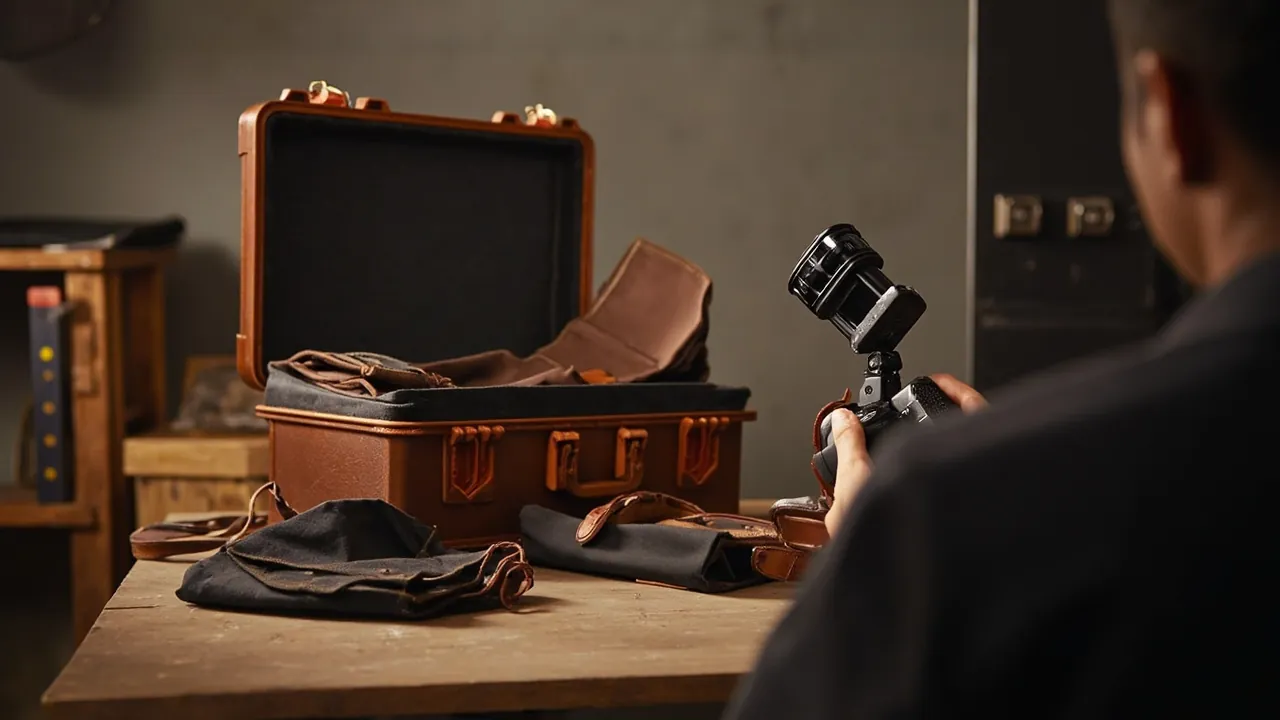
Leather goods and bags are sold on form. Around thirty percent of a structured handbag's value sits in the leather; the rest sits in shape, frame and hardware - the crisp silhouette of the body, the angle at which the handle meets the body, the drape of a metal chain, the feel of a latch closing. Three forces destroy those features in transit: stacking load that collapses the body, humidity that grows mould on the leather, and relative movement that drags hardware across the finish. The engineering goal of a leather goods case is therefore not "it fits" but holding each bag in a cavity of its own, so the body carries no stacking load, the leather sits in a stable 45% to 55% RH environment, and no relative motion occurs between hardware and leather.
Compared with garments and footwear samples, high-end leather goods present three distinctive difficulties. First, volume efficiency and protection strength are in direct conflict: a medium structured handbag occupies 8 to 20 litres, and giving every bag its own moulded cavity visibly reduces pieces per case, so the trade-off between load factor and shape retention must be made on evidence rather than preference. Second, leather is a living material: it responds to humidity, temperature, light and mould, and much of the damage is irreversible, including mould spotting, colour shift and cracking. Third, hardware is irreplaceable: once a chain, latch or rivet is scratched or oxidised, there is essentially no repair route, so protection has to achieve zero relative displacement.
This article follows the three threads of cavity, moisture control and hardware protection, covering materials, structures, ingress ratings, test references, insert design, load-factor arithmetic, retail and e-commerce turnaround, acceptance methods and cost structure, so that brand owners, OEM factories, buying offices and luxury supply-chain service providers can turn "the bag arrives exactly as it left the factory" into a purchasable, acceptable specification.
Table of Contents
- 1. Why High-End Leather Goods Need Dedicated Transport Cases
- 2. Seven Damage Classes in Leather Goods Transport
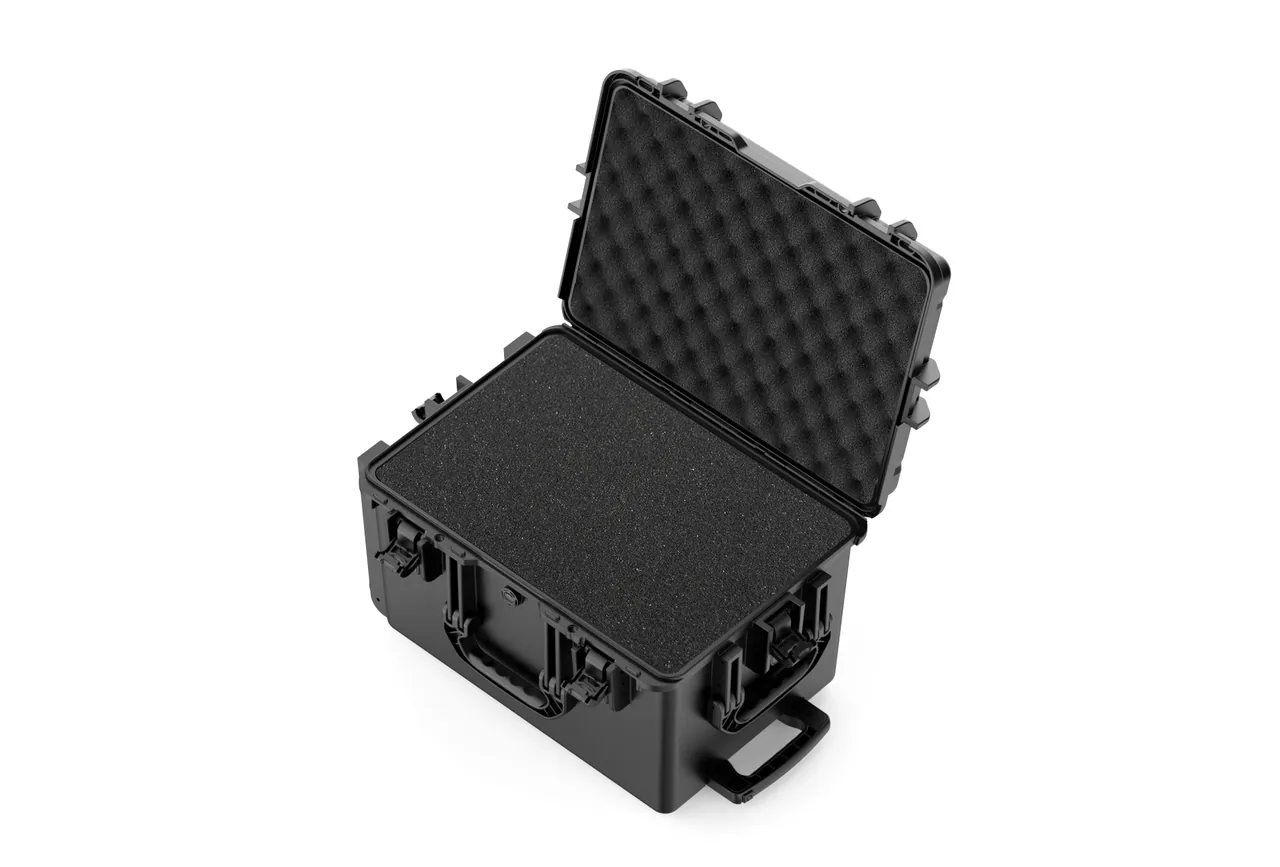
- 3. Crush Resistance and Shape Retention: Structured Inserts
- 4. Moisture and Mould: The Humidity Window and How Mould Starts
- 5. Hardware Protection: Oxidation, Scuffing and Colour Migration
- 6. Shell Materials and Structural Selection
- 7. Ingress Protection: Choosing Between IP65 and IP67
- 8. Environmental and Transport Test References
- 9. Insert Design: Cavities, Handle Positions and Accessory Bays
- 10. Retail Display and Trade-Show Turnaround
- 11. Brand Warehousing, E-Commerce Fulfilment and Dust-Bag Systems
- 12. Size Series and Load-Factor Optimisation
- 13. Gaskets, Hinges, Latches and Seals
- 14. Temperature, Light and Cross-Climate Transport
- 15. Cleaning, Maintenance and Service Life
- 16. Custom Development, Acceptance and Cost Structure
- Frequently Asked Questions
- Conclusion and Further Reading
1. Why High-End Leather Goods Need Dedicated Transport Cases
Leather brands have long relied on the three-layer model of dust bag, original retail box and outer carton. That model handles brand presentation and single-item wrapping, but in multi-piece consolidated shipments, cross-climate movement and repeated turnaround it has three structural weaknesses.
Weakness one: a dust bag has almost no compression resistance. Its job is dust exclusion and anti-abrasion, not load bearing. Once the retail box is crushed, stacking load transfers straight into the bag body. For structured handbags in calf, lamb or rigid-box construction, a collapsed body does not spring back, and the top panel takes a dent that cannot be removed.
Weakness two: the box itself is a moisture source and a mould carrier. Paper absorbs moisture readily and, in humid conditions, becomes a continuous internal moisture source; paper fibre also readily carries mould spores. On cross-climate ocean shipments, box plus dust bag is a high-incidence mould configuration.
Weakness three: single-use packaging cannot carry the information and security requirements. Leather goods need to record style, colourway, material, size and serial number plus status, and need protection against substitution and loss. A carton cannot provide reusable fixed positions and a checkable manifest, which creates administrative cost at store receipt, on returns and at any cross-party handover.
The judgement can be compressed into one sentence: the value of a leather goods case equals the repair and markdown loss avoided plus the store set-up efficiency gained plus the high-value loss risk reduced, minus the purchase and amortisation cost of the case. For bags priced in the thousands, those three benefits normally exceed the case cost by a wide margin.
In leather goods projects, Kexin New Materials typically defines the specification along three axes: bag type, material and chain. Bag type - tote, shoulder, crossbody, rigid box, travel bag - determines cavity and cradle geometry; material - calf, lamb, patent, suede, canvas, nylon - determines the humidity window and contact surface material; and the chain - store turnaround, e-commerce direct ship, cross-region ocean, trade show - determines shell strength, ingress rating and hardware configuration.
2. Seven Damage Classes in Leather Goods Transport
Leather goods damage is more irreversible than garment damage, so classification needs to be finer.
| Damage class | Typical appearance | Primary cause | Primary countermeasure |
|---|---|---|---|
| --- | --- | --- | --- |
| Body collapse and top-panel dents | Distorted body, sunken top, collapsed side gusset | Stacking load, missing cavity, insufficient shell rigidity | Structured cavities, top load plate, stacking tier limits |
| Handle and strap deformation | Bent handle, creased strap, loosened attachment | Handle under load, no cradle, tangled compression | Handle cradles, dedicated strap winding bays |
| Leather mould spotting | White or green spots, odour, mouldy lining | Sustained RH above 65%, condensation, damp paper | Sealing, desiccant bay, pre-load drying |
| Drying and oil loss | Pale surface, deepened grain, hardened hand | RH below 40%, heat, prolonged airflow | Control to 45% to 55% RH, avoid heat |
| Hardware scuffing and displacement | Chain scoring the leather, latch scratches | Relative movement in transit, no restraint | Zero-displacement restraint, individual hardware wrapping |
| Hardware oxidation and discolouration | Dull plating, spotting, colour shift | High humidity, salt fog, sulphur-bearing environment, bare-hand contact | Sealed humidity control, acid-free tissue, lint-free gloves |
| Colour migration and blocking | Dark areas staining light areas, patent leather sticking | Dye migration, unstable coating, plasticiser migration | Barrier layers, plasticiser-free inserts, temperature cap |
Among the seven, mould spotting, drying and colour migration are delayed-onset damage: they are usually invisible on the day of receipt and emerge one to four weeks after put-away. Quality judgement must therefore rest on process data - temperature and humidity records, moisture content at packing, desiccant configuration - rather than on a visual check at the dock. That is why temperature and humidity recording plus humidity indication should be standard on a leather goods case.
For how to build the underlying transport test path, see basic transport package testing and test intensity design and selecting and running ISTA transport test procedures.
3. Crush Resistance and Shape Retention: Structured Inserts
Crush resistance is the first function of a leather goods case. Its engineering essence is moving stacking load off the bag body and onto the insert frame. Four routes are available.
Route one: moulded cavity. The insert is cut to the bag outline, the cavity walls follow the side gussets, the cavity floor carries the base, and a top load plate protects the top. This is the standard solution for structured handbags and the strongest route for shape retention.
Route two: internal forming. Insert a scaled internal form - inflatable bladder, shaping pad or soft filler block - so the body cannot collapse in transit. This is low cost and flexible, but offers limited resistance to top stacking load, so it is best combined with route one.
Route three: suspension. Straps or hooks hold the bag clear of the case floor so the base carries no load. This suits soft bags, travel bags and unframed constructions, but demands careful centre-of-gravity and restraint design.
Route four: layered trays. Bags lie flat on trays with rigid divider panels between levels, transferring load into the panels. This gives the highest load factor and suits flat formats such as envelope bags, clutches and wallets.
| Route | Suitable bag types | Pieces per case | Shape retention | Structural complexity |
|---|---|---|---|---|
| --- | --- | --- | --- | --- |
| Moulded cavity | Structured handbags, rigid boxes, structured shoulder bags | Low to medium | Very strong | High (tooling per bag type) |
| Internal forming | Soft bags, totes, unframed bags | Medium | Medium to strong | Low |
| Suspension | Travel bags, large soft bags | Low | Medium to strong | High |
| Layered trays | Envelope bags, clutches, wallets, card holders | High | Medium | Medium |
In practice the most common answer is a hybrid: moulded cavities in the main compartment for four to eight flagship styles, layered trays in a lower drawer for 20 to 40 small leather goods items, and an accessory compartment in the lid for dust bags, straps, care cards and paperwork. The value of this structure is that it separates high-value flagship protection from high-efficiency small-goods handling, which both limits risk concentration and improves load factor.
One often overlooked principle: if the cavity wall does not wrap the side gusset, the cavity is only a drawer and has no shape retention capability at all. The test is simple - turn the loaded case 90 degrees, rock it gently, and if the bag moves more than 2 to 3 mm inside the slot, restraint is insufficient and relative movement with hardware scuffing is inevitable in transit.
4. Moisture and Mould: The Humidity Window and How Mould Starts
Leather is a humidity-sensitive material with a narrower safe window than textiles, and with risk on both sides.
| Relative humidity band | Leather condition | Risk level | Recommended action |
|---|---|---|---|
| --- | --- | --- | --- |
| Below 35% RH | Oil loss, pale surface, deepened grain, hardened hand | High (cracking) | Avoid; raise ambient humidity if necessary |
| 40% to 45% RH | Slightly dry but acceptable | Low | Monitor; avoid long dwell |
| 45% to 55% RH | Oil balance, soft hand, normal recovery | Lowest | Target band |
| 56% to 65% RH | Tolerable, but mould germination becomes possible | Medium | More desiccant, shorter storage cycle |
| 66% to 75% RH | Active mould; spotting on chrome-tanned leather | High | Mandatory intervention; check sealing and desiccant |
| Above 75% RH | Mould spots, odour, hardware oxidation, mouldy lining | Very high | Treat as non-conforming batch; segregate |
How mould starts. Mould spores need three conditions at the same time: relative humidity above roughly 65%, temperature between 20 and 35 C, and a nutrient source. Leather itself, especially oil- and protein-bearing tanned hide, plus textile linings, paper boxes and cotton dust bags, are all excellent nutrient sources. Holding humidity below 55% is therefore the single most effective measure, because it removes the humidity condition from the set.
Condensation is more dangerous than high humidity. When a case moves quickly from a cold environment - a winter container, an aircraft belly hold, a cold store - into warm humid air, water vapour inside condenses on leather surfaces and linings as liquid water. Liquid water penetrates leather pores within minutes, producing water staining and localised high humidity. This is the most common cause of the "mould found on opening" situation in ocean and cross-climate air shipments.
Four implementation paths follow:
- Sealing. Use a shell rated IP65 or better to block moisture exchange. For the meaning of IP ratings and how they are tested, see IP ratings for waterproof protective cases explained and the technical boundaries of IP67 protective cases.
- Desiccant bay. Provide a separate desiccant compartment so desiccant never touches leather directly, which would create localised over-drying and dust. As a starting empirical value, 25 litres of net volume over a 30-day control target can be served by 100 to 250 g of silica gel, calibrated against actual leakage rate and initial leather moisture content.
- Humidity indication and logging. Fit a humidity indicator card or a plug-in temperature and humidity logger so the receiving party can see the internal state. This is the key evidence for liability apportionment and batch traceability.
- Pressure equalisation. On cross-climate routes, pressure and temperature differentials cause a breathing effect at the gasket. Pairing with a pressure equalisation valve equalises pressure while retaining water ingress protection, avoiding hard-to-open lids and gasket fatigue.
Pre-load moisture control is equally critical. After finishing, leather goods need adequate resting and drying time. Packing while the coating is still stabilising or the leather moisture content is still high leaves a continuous internal moisture source, and the desiccant saturates quickly. Resting time before packing and moisture content sampling should both be written into the operating procedure.
5. Hardware Protection: Oxidation, Scuffing and Colour Migration
Hardware is the hardest element of a leather good to repair. Once plating on a chain, latch, rivet or zipper pull is scratched or oxidised there is essentially no local repair, only replacement - and for high-end goods, replacement usually means a factory return at very high cost.
The core of scuff prevention is zero relative displacement. Practical measures include:
- The bag must have full lateral restraint in the cavity, eliminating micro-movement under transport vibration;
- Chains and straps must go into a dedicated chain bay or strap tie-down, never loose in the same cavity as the body - the chain is the number one cause of leather scoring;
- Hardware should be individually wrapped in acid-free tissue or a dedicated soft pouch, with no plasticiser in the wrapping material;
- Insert contact surfaces should avoid hard materials; flocked or microfibre facing substantially reduces friction coefficient.
The core of oxidation prevention is humidity control plus isolation. Metal plating oxidises markedly faster above roughly 65% RH, and sulphur-bearing environments - rubber goods, some carton adhesives, industrial exhaust - accelerate discolouration of silver and copper type platings. Countermeasures include holding RH below 55%, avoiding co-packing with sulphur-bearing materials, wrapping in acid-free tissue to limit air contact, and wearing powder-free gloves throughout handling, since hand sweat is the most common cause of localised oxidation.
The core of colour migration prevention is material compatibility plus a barrier layer. Dark patent leather and vegetable-tanned leather can transfer dye to lighter leather in contact; patent leather can also block, or stick, to adjacent materials at elevated temperature. Countermeasures include:
- Insert materials must be plasticiser-free and low-migration, with EVA, PE and microfibre flocking preferred. For foam performance comparisons, see protective case foam material comparison;
- A barrier layer of acid-free tissue between individual bags, so they never touch directly;
- A cap on internal temperature, recommended below 35 C, since migration rates accelerate markedly with every 10 C rise;
- Accelerated compatibility testing for high-risk materials such as patent and vegetable-tanned leather - 40 C and 75% RH for 7 to 14 days - looking for colour transfer or blocking.
| Risk | Trigger conditions | Consequence | Main countermeasure |
|---|---|---|---|
| --- | --- | --- | --- |
| Chain or hardware scoring leather | Relative movement plus hard hardware | Surface scoring, unrepairable | Dedicated chain bay, zero-displacement restraint, soft wrapping |
| Plating oxidation and discolouration | RH above 65%, sulphur environment, hand sweat | Cosmetic downgrade of hardware | Humidity control, acid-free tissue, powder-free gloves |
| Dark-to-light colour migration | Dye migration plus heat plus direct contact | Colour mismatch, irreversible | Barrier layers, temperature cap, compatibility validation |
| Patent leather blocking | Heat plus unstable coating plus incompatible contact material | Surface marking | Plasticiser-free insert, barrier layer, temperature control |
| Metal imprinting the leather | Stacking load plus missing cradle | Localised dents | Cavity cradle, hardware kept off load-bearing faces |
6. Shell Materials and Structural Selection
Shell materials match general protective cases: injection-grade polypropylene (PP), PP copolymer and high-density polyethylene (HDPE). The difference is that leather goods cases prioritise both rigidity and surface quality: rigidity determines crush resistance, and surface quality determines that the case itself will not scuff the leather or act as a contamination source.
- PP homo- and copolymer. High stiffness, good dimensional stability and a smooth surface, well suited to precisely cut cavities. Low-temperature toughness needs assessment, particularly for winter air freight and cold-store transfer.
- HDPE. Outstanding toughness and low-temperature performance, suited to drop and handling impact, but lower stiffness, so large shells need dense ribbing.
- Twin-wall and composite construction. For large-volume rigid-box transport or where the case must pair with a display plinth.
Six structural details deserve attention:
- Whether wall ribs run continuously along the stacking direction;
- Whether the lid includes a top load plate, which is the structure that distinguishes a leather goods case from a general case, routing stacking load away from the bag top panel;
- Whether the lid-to-body mating face has a tongue-and-groove lip that raises torsional stiffness;
- Whether cavity mounting points have moulded-in metal inserts, so repeated assembly does not strip threads;
- Whether drawer compartments are reserved for small leather goods such as wallets, card holders and belts;
- Whether caster and handle mounting points are reserved, since leather goods cases commonly weigh 15 to 40 kg and mobility drives on-site efficiency.
For general selection logic, see general-purpose transport protective case selection guide.
On leather goods projects, Kexin New Materials normally prototypes the cavity insert against the customer's bag series and validates cradle position, handle loading and extraction motion with real sample bags before fixing the shell envelope and top load plate thickness. This minimises the risk of a finished case in which the bag still collapses.
7. Ingress Protection: Choosing Between IP65 and IP67
IEC 60529 and the equivalent GB/T 4208 define enclosure ingress protection through the IP code. For leather goods both digits matter equally: dust exclusion keeps abrasive particles out of the cavity, and water protection keeps liquid water off the leather.
- IP65. Dust-tight, protected against low-pressure water jets from all directions. Suitable for indoor warehousing, store turnaround and covered docks.
- IP66. Dust-tight, protected against powerful water jets. Suitable for open docks and short storm exposure.
- IP67. Dust-tight, protected against short-duration immersion under defined conditions (typically 1 m for 30 min). Suitable for water pooling on container floors, flood-season transfer and cold-chain defrost water.
What belongs in the specification is that an IP rating is a type-test conclusion, not a marketing adjective. Require a test report citing IEC 60529 or GB/T 4208 and verify that the reported sample size, gasket configuration and sealing method match the production version. Batch acceptance sampling is covered in custom case acceptance and AQL sampling.
For leather goods, a practical rule applies: where the chain includes ocean freight or cross-climate air freight, the ingress rating should be evaluated together with the humidity control plan rather than pursued on its own. What actually determines mould risk is the average internal relative humidity and temperature history, not the IP number. IP65 with a well-sized desiccant bay and humidity logging generally outperforms IP67 with inadequate desiccant.
One further reminder: over-sealing makes cases hard to open, and leather goods cases are opened frequently in stores - potentially once per customer interaction. If opening resistance is excessive, staff will leave the lid part-open or stop using the case, and effective protection falls. Validate with a real trial before freezing the specification.
8. Environmental and Transport Test References
Leather goods case capability needs to be quantified. Four reference families are commonly used.
| Standard | Scope | How it is used in leather goods case projects |
|---|---|---|
| --- | --- | --- |
| GB/T 4857 series | Basic tests for transport packages (vibration, impact, stacking, drop) | Verifies whole-case tolerance on road and rail transport |
| ISTA series | Transport packaging test procedures, by mode and weight | Simulates the full distribution cycle; closest to retail and e-commerce fulfilment |
| ASTM D4169 | Performance testing of shipping containers and systems | Builds the distribution cycle profile (drop, vibration, compression) |
| MIL-STD-810H | Environmental engineering considerations and laboratory tests | Borrows its temperature, humidity, vibration, shock and mould methodologies; a methodology reference, not a military certification |
For the applicable boundaries of MIL-STD-810H and common misconceptions, see MIL-STD-810H environmental testing and protective case compliance. For distribution cycle profile design, see ASTM D4169 distribution cycle testing and case design.
Three additional validations are recommended for leather goods projects.
- Shape-retention stacking test. Load to the target stacking tier - four or six levels - hold for 24 to 72 hours, then open and inspect body and top-panel deformation. This has the best return on effort of any test in the programme.
- Mould test. Following MIL-STD-810H mould test methodology, inoculate with mould spores in a climatic chamber and hold for 28 days, observing whether colonies develop on leather and insert surfaces. This is highly effective for confirming whether a humidity control scheme is sufficient.
- Accelerated compatibility test. Place insert materials with representative leathers - patent, vegetable-tanned, light calf - at 40 C and 75% RH for 7 to 14 days and observe colour transfer, blocking and surface change.
It should be stated plainly that these standards and tests exist to create a repeatable, comparable and acceptable test language, not to attach a military label to a case. The correct wording to customers is "environmental testing was performed using the relevant MIL-STD-810H test methods", never "military certified".
9. Insert Design: Cavities, Handle Positions and Accessory Bays
The insert is the functional core of a leather goods case. The design logic breaks into seven steps.
Step one: define the cavity unit. Classify by bag type and define a standard cavity for each. No more than three cavity specifications should share one case, to avoid mixing difficulties on the floor.
Step two: define the cradle. Base support from the cavity floor, lateral restraint from the cavity walls, and top protection from a load plate or lid pad. All three are required.
Step three: define the handle position. Handles deform more easily than any other part. Workable designs include a handle cradle that supports the handle at a fixed angle, a recessed handle slot that keeps the handle below the bag top so it carries no load, and soft wrapping. The choice depends on bag type and handle form: single handle, twin handle, chain, or detachable strap.
Step four: define hardware isolation. Chains, straps and latches need dedicated bays or wrapping. A chain bay - a narrow slot deep enough for the chain to hang freely without touching the body - is recommended.
Step five: define accessory bays. Dust bags, straps, care cards, booklets, keys and shopping bags all need positions. Lost accessories are one of the most common sources of dispute at store receipt and on e-commerce returns.
Step six: define labelling and traceability. Every cavity should have a replaceable label position for style, colourway, material, serial number and status. Insert-slot labels are preferable to adhesive ones so the case can be reused across cycles. For related structure, see protective case removable divider systems.
Step seven: define ergonomics. Store staff wearing gloves must be able to open, extract and return with one hand, so slot draft angles and finger clearance should be designed around that.
On materials and process, die-cut EVA suits regular bag geometry, thermoformed or cast inserts suit complex curves and handle cradles, and flocked facing suppresses dust and reduces friction. For custom insert tooling and prototyping workflow, see EVA foam insert custom process and the custom foam insert design guide.
10. Retail Display and Trade-Show Turnaround
In retail and trade-show settings a leather goods case is not only a transport tool; it also carries part of the display and access function. This is fundamentally different from an industrial equipment case.
Scenario one: store receipt and shelving. Stores usually receive goods in a short window before opening or after closing. The case must support a continuous open, extract, shelve motion, and the cavity order should ideally match the display order - by line, colourway and size - so that pick order equals shelving order.
Scenario two: back-of-house turnaround. Store stockrooms are tight, so leather goods cases need to stack vertically, subject to the stacking tier limit, or fit under a shelf. Case envelopes should therefore align with store shelving modules.
Scenario three: travelling shows and pop-ups. Build windows are short, often 4 to 8 hours, so the case must support open-and-display. Workable designs include a lid that flips and locks at 90 to 110 degrees, an insert that lifts out as a complete display tray, and a case aesthetic consistent with the brand.
Scenario four: VIP events and by-appointment selling. Premium brands often present single pieces off-site, and the case must look presentable. Dark matte shells, custom inserts and brand embossing are common configurations.
| Scenario | Main risk | Case capability required |
|---|---|---|
| --- | --- | --- |
| Store receipt and shelving | Time pressure, mis-handling | Quick opening, clear cavity locating, casters |
| Back-of-house turnaround | Tight space, frequent access | Stackable, shelf-module alignment, durable hardware |
| Travelling shows and pop-up build | Short build window, transport shock | Open-and-display, rigid shell, casters and handle |
| VIP event carry | Brand appearance, single-item protection | Branded exterior, single-item cavity, latches and seals |
| Strike and recovery | Omission, mixed packing | Slot mapping chart, accessory bays, checklist position |
11. Brand Warehousing, E-Commerce Fulfilment and Dust-Bag Systems
Brand warehousing and e-commerce fulfilment impose requirements that differ noticeably from standard store turnaround.
Difference one: volume and standardisation. During a peak e-commerce event, a brand warehouse may handle thousands of leather goods at once. Case dimensions must match racking, pallets and sortation lines, and cases of the same size must be identical in cavity configuration, latches and marking, so the floor never encounters "looks the same but will not work".
Difference two: last-mile delivery and unboxing. In direct-to-consumer shipping, the transport case may reach the consumer directly. Two consequences follow: case appearance becomes part of brand perception, which is why premium brands favour dark matte shells with custom inserts; and the consumer's opening action is uncontrolled, potentially involving a utility knife, so the insert should include an opening guide structure that keeps the blade away from leather.
Difference three: reverse logistics. Leather goods return rates are relatively high and returned parcels must be re-packed. The case and insert must therefore support re-packing by a non-specialist in under 60 seconds, with an illustrated slot mapping chart provided.
On the dust-bag system, a three-layer structure is recommended.
- Layer one: leather protection. Acid-free tissue or a microfibre pouch in direct contact with the leather, excluding dust and preventing hardware from touching the surface.
- Layer two: cavity restraint. An EVA cavity insert providing cradle and restraint.
- Layer three: shell sealing. An IP65 or better case plus desiccant bay controlling humidity and temperature swings.
Each layer solves a different problem and none substitutes for another. The common industry mistake is using a dust bag but omitting the cavity, which lets the bag move freely in transit and creates very high hardware scuffing risk.
A related note: do not wrap patent or vegetable-tanned leather directly in ordinary bubble wrap. Some additives in bubble film can migrate to the leather surface at elevated temperature, causing localised clouding or blocking. Where cushioning material is required, specify plasticiser-free PE foam or microfibre, with an isolating paper layer between leather and cushioning.
12. Size Series and Load-Factor Optimisation
Size design is harder for leather goods cases than for general cases, because it is in direct conflict with shape retention. Three principles apply.
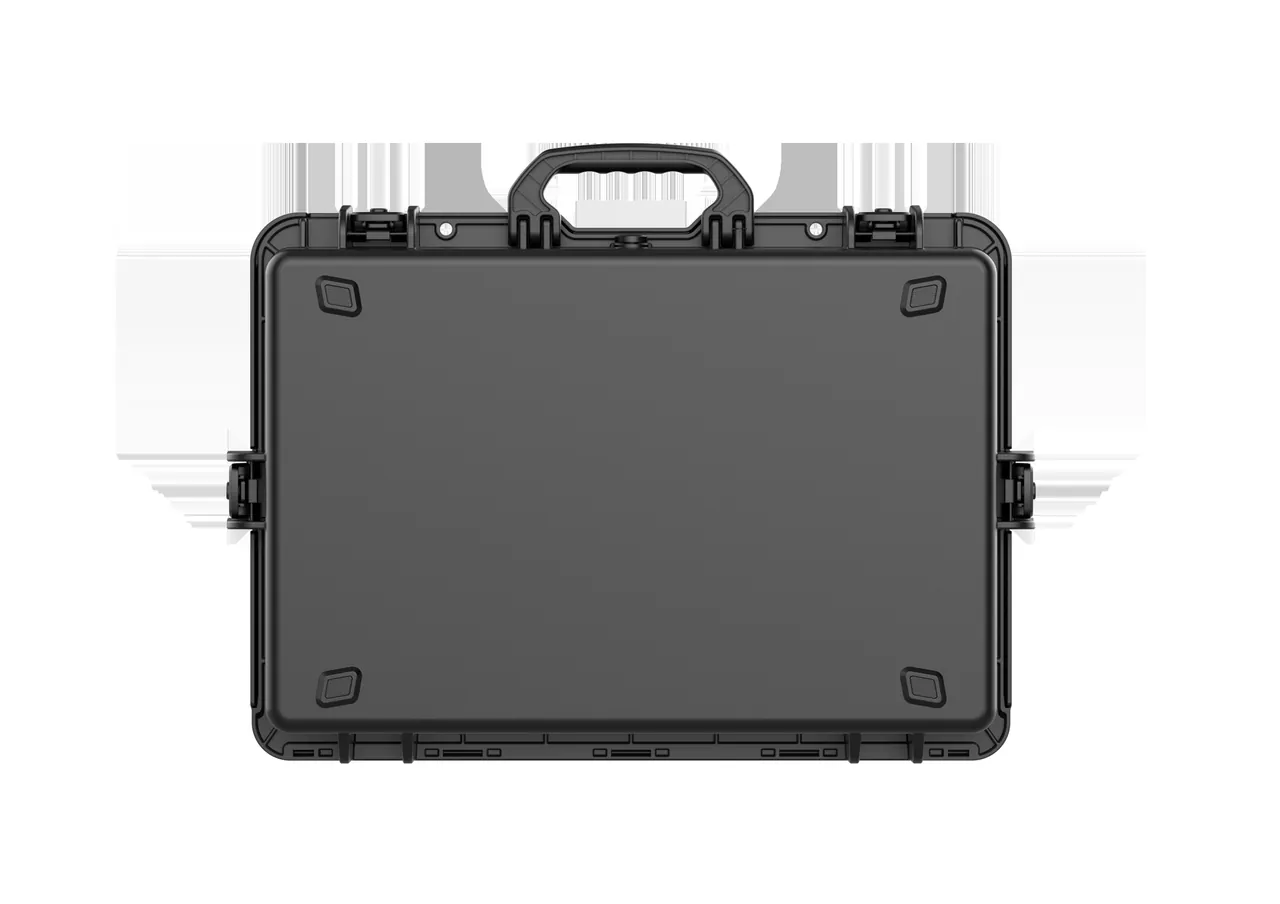
Principle one: use both pallet and shelving as modular datums. With a 1200 x 1000 mm standard pallet and typical store shelving depths of 400 to 600 mm as datums, base footprints of 600 x 400 or 400 x 300 mm balance pallet utilisation against shelving compatibility.
Principle two: derive the cavity from the bag forms. The largest leather goods dimension is usually set by a travel bag or large tote, where the long side can reach 500 to 600 mm and height up to 350 mm. Determine the largest bag type first, add cavity wall thickness and tolerance, and then fix the envelope.
Principle three: optimise by cavity count, not by size step count. Load capacity in a leather goods case is driven mainly by cavity count, which in turn follows bag type. The recommended approach is to fix three shell size steps and switch load configuration by changing insert modules: four large-bag cavities, eight medium-bag cavities, twelve small-bag cavities, or layered small-goods trays.
| Scenario | Pieces per case | Relative load factor | Shape retention | Suitable use |
|---|---|---|---|---|
| --- | --- | --- | --- | --- |
| Mixed original boxes (baseline) | 4 bags plus small goods | 100% | Low | Short-distance replenishment |
| Moulded cavities (4 large bags) | 4 bags plus 6 small items | About 110% | Very strong | Flagship high-value styles |
| Moulded cavities (8 medium bags) | 8 bags plus 10 small items | About 165% | Strong | Routine store turnaround |
| Layered trays (small goods) | 30 to 40 items | About 300% | Medium | Wallets, card holders |
| Interchangeable inserts | Switches by scenario | By scenario | By scenario | Brand warehouse, multi-scenario |
Key judgement: never use one average solution to cover all bag types. Mixing a large tote with wallets in the same case usually means the large bag lacks restraint and moves, while the wallets consume a great deal of unusable space. The sound approach separates a high-value shape-retention case from an efficient small-goods case, and distinguishes them clearly on the exterior - for example different coloured latches or different coloured tags - so they are not mixed on the floor.
13. Gaskets, Hinges, Latches and Seals
Hardware and gaskets determine long-term usability, and this matters especially for leather goods cases, which are opened frequently and carry high value.
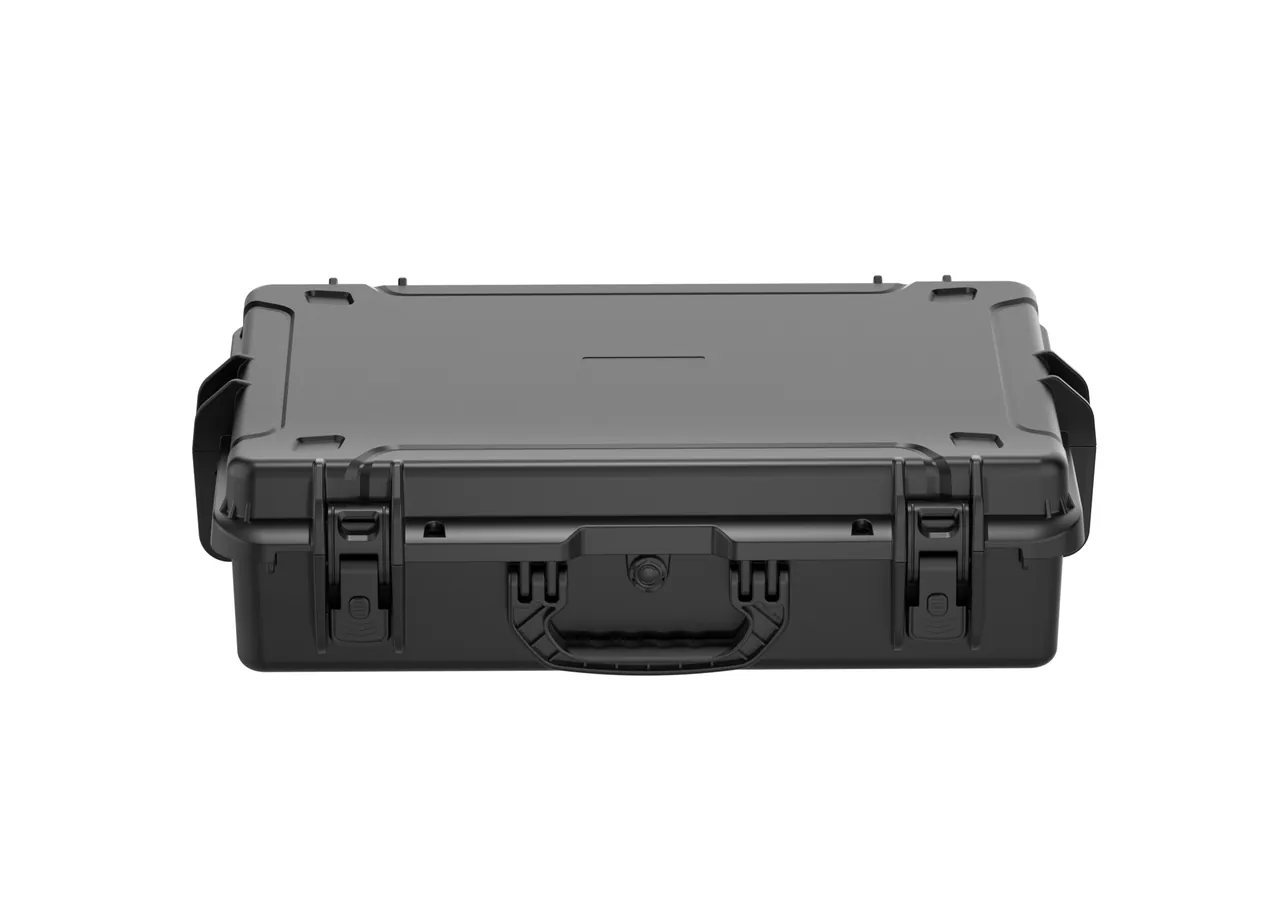
Gaskets. Common materials are EPDM, silicone and foamed polyurethane. EPDM offers good weathering resistance at moderate cost and suits outdoor and ocean routes. Silicone covers a wider temperature range and suits cross-climate routes. Foamed polyurethane seals well but is less durable. For material selection and compression-set judgement, see protective case gasket material selection. Replacement intervals should follow compression set, hardening and cracking rather than a fixed number of years.
Hinges. Full-width metal hinges are recommended, with the ability to hold the lid at any angle. For open-and-display scenarios the hinge should lock the lid at 90 to 110 degrees, and the locking mechanism should not become a source of opening resistance.
Latches and locks. Typical options include two-action draw latches, key locks, combination locks and TSA-compatible locks. For premium leather goods the recommended configuration is a two-action draw latch plus an optional key lock plus a seal point. A pure combination lock slows bulk operations and should not be the only option. For customisation, see protective case lock customisation options.
Seals. At cross-party handover - head office to store, brand to distributor, brand to show contractor - a security seal is the lowest-cost anti-tamper and liability-apportionment tool. The seal point should be a metal eyelet or reinforced plastic eyelet so that pulling the seal cannot split the shell.
On maintenance, lubrication of hinges and latches, cleaning and replacement of gaskets, and routine case washing all materially extend service life. See how to clean a protective case and protective case service life and replacement criteria.
14. Temperature, Light and Cross-Climate Transport
Temperature and light affect leather goods more directly than most people expect.
Pathway one: heat accelerates ageing. Heat accelerates oil evaporation and oxidation, hardening the leather and deepening its colour. On patent leather, heat softens the coating and can cause blocking with adjacent materials. On bonded structures - lining lamination, edge bonding - heat accelerates ageing and delamination.
Pathway two: cold embrittlement. At low temperature, some coatings and adhesive layers become brittle and repeated flexing can produce fine cracking. Patent leather in particular should not be flexed when cold.
Pathway three: condensation. This is the most destructive pathway. When a case moves quickly from cold to warm humid air, water vapour condenses on leather surfaces as liquid water, producing water staining and localised high humidity that typically develops into mould spotting or colour marks within two or three days.
Pathway four: light-induced colour shift. Ultraviolet and strong visible light fade or shift the colour of some leathers, particularly vegetable-tanned and light-coloured hides. Cases should therefore be opaque, and storage positions should avoid direct light.
Countermeasures include sealing with a pressure equalisation valve to reduce breathing intake and condensation, a thermal liner or phase-change material to slow the rate of temperature change, adequate resting and drying before packing to lower initial moisture content, and process rules against opening cases immediately after extreme temperature transitions, allowing 30 to 60 minutes in a transition zone.
For case design in extreme-temperature scenarios, see extreme temperature protective cases. For cross-climate and cold-chain concepts, see cold-chain food transport case temperature control design; its sections on phase-change materials and temperature loggers apply equally to leather goods cases.
15. Cleaning, Maintenance and Service Life
The hygiene level of a leather goods case directly affects the leather inside. Dust, fibre debris, skin particles and mould accumulating in a case will contaminate the next load, especially on light and suede finishes.
Daily cleaning. Wipe internal walls and inserts with mild detergent and a soft cloth. Avoid strong solvents, which can damage flocked facing, gaskets and insert materials. Empty the desiccant bay at each turnaround and check for caking or saturation.
Deep maintenance. Every 6 to 12 months, or every 50 to 100 turnarounds, check gasket compression set, hinge clearance, latch engagement, cavity dimensional stability, since EVA can take a permanent set under sustained load, and whether the top load plate has deformed.
Service-life judgement. Case life is assessed on structural integrity, cavity shape retention and hygiene together. Scrapping criteria normally include through-wall cracks, broken ribs, cracked hinge mounts, gasket-groove deformation that prevents the original IP rating being met, cavity collapse that lets bags move, and insert mould spotting that cannot be removed, because mould spores persist and re-contaminate the next load.
| Component | Inspection interval | Replace or scrap criteria |
|---|---|---|
| --- | --- | --- |
| Gasket | Every 20 turnarounds | Hardening, cracking, compression set beyond limit |
| Hinge | Every 50 turnarounds | Visible axial play, captive pin failure, will not hold position |
| Latch | Every 50 turnarounds | Reduced holding force, will not stay closed |
| Cavity insert | Every 30 turnarounds | Wall collapse, bag movement, worn friction surface |
| Top load plate | Every 50 turnarounds | Deformation, warping, loss of load capacity |
| Shell body | Every 100 turnarounds | Through cracks, broken ribs, deformed gasket groove |
| Insert hygiene | Every turnaround | Replace immediately on non-removable mould spotting |
Kexin New Materials supplies replaceable gaskets and insert modules, separating consumables from structural items and pushing whole-case replacement considerably further out. For inserts showing mould spotting, our recommendation is replacement rather than washing, because mould spores are highly environmentally tolerant, routine cleaning rarely removes them completely, and residual spores germinate again in the next high-humidity cycle.
16. Custom Development, Acceptance and Cost Structure
A six-step process is recommended for leather goods case development.
- Requirement clarification. Bag list (largest dimensions, weight, material), chain description (store, e-commerce direct ship, ocean, trade show), climate, load target, labelling and traceability needs, and security and anti-substitution requirements.
- Solution design. Size series, cavity solution (moulded cavity, internal forming, suspension, layered trays), ingress rating, latches and accessories, colour and brand marking.
- Prototyping and verification. Cavity insert prototyping should precede shell tooling. Use real sample bags to validate cradle position, handle loading, extraction motion and deformation after stacking.
- Testing. Run stacking, vibration, drop and water resistance tests against a profile defined by GB/T 4857, ISTA or ASTM D4169; add accelerated compatibility testing and, where appropriate, mould testing; where MIL-STD-810H methods are referenced, describe them as environmental test methodology rather than military certification.
- Pilot production and field trial. Run one or two stores, or two to four weeks of e-commerce fulfilment, and collect arrival pass rate, set-up time and return re-pack time.
- Mass production and acceptance. Apply an AQL sampling plan to appearance, dimensions, cavity accuracy, sealing, hardware function and marking.
On implementation, JUNZHJIA can support a project from requirement clarification through cavity insert prototyping and top load structure design to mass-production acceptance, and can prepare compatibility test plan recommendations and a test document list, so that zero relative displacement moves from a design intent into a verifiable delivery clause.
On cost structure, the total cost of ownership of a leather goods case should include at least the following.
| Cost item | Notes | Order of magnitude (empirical) |
|---|---|---|
| --- | --- | --- |
| Tooling and development | One-off, by size step and cavity solution | 10% to 20% (amortised by volume) |
| Case procurement | By quantity and configuration | 40% to 55% |
| Inserts and cavity modules | Cavities, handle cradles, chain bays, top load plate | 20% to 30% |
| Freight and return | Outbound plus empty return | 8% to 18% |
| Maintenance and spares | Gasket and insert module replacement | 5% to 10% |
| Cleaning and hygiene | Per hygiene requirements | 3% to 8% |
For tooling cost amortisation and mould cost ranges, see custom protective case mould cost analysis; for supplier assessment, see how to choose a protective case OEM factory.
Negotiation tip: price differences between leather goods case offers come mainly from three places - the cavity solution, the ingress rating and the hardware configuration. Ask for itemised pricing across these three so that later optimisation can target the right cost driver. Also agree spare-part unit prices and lead times for gaskets and insert modules in the contract, because case service life is largely governed by those two consumables.
Frequently Asked Questions
Q: We currently ship with a dust bag, the original retail box and an outer carton. Why do we need a dedicated leather goods case?
A: The three-layer paper approach solves brand presentation and dust and abrasion exclusion but leaves three problems unsolved. The first is compression: once the retail box is crushed, stacking load transfers into the bag body and leaves dents in the body and top panel that cannot be recovered. A leather goods case routes load through cavity inserts and a top load plate into the case structure, so the bag carries only its own weight. The second is humidity: paper absorbs moisture readily and then acts as a continuous moisture source, and paper fibre carries mould spores, which makes it a high-incidence mould configuration on cross-climate ocean shipments. A leather goods case can achieve IP65 or better and, with a separate desiccant bay, hold internal RH at 45% to 55%. The third is displacement and hardware protection: inside a box the bag moves freely under transport vibration, so chains and latches repeatedly score the leather, and such scoring is essentially unrepairable. A dedicated case eliminates relative movement through zero-displacement restraint and a dedicated chain bay. For higher-priced leather goods, these three benefits normally far exceed the case cost.
Q: Body collapse and top-panel dents are our most frequent problems. What works best?
A: This is fundamentally a load path problem, and the effective answer combines internal support, external cavity and top protection. Internally, place a scaled form inside the bag - an inflatable bladder, shaping pad or soft filler - so the body gains compressive resistance from within, which is particularly effective for soft and unframed totes. Externally, cut the insert to the bag outline so the cavity walls wrap the side gussets for lateral restraint and the cavity floor carries the base, passing load through the walls into the case. On top, fit a top load plate or a thickened lid pad, which is the most critical and most often omitted element: without a top load plate, load acts directly on the bag top panel and produces the classic dent. The stacking tier limit must also be labelled clearly, because many anti-crush case failures are caused by the site stacking above the design tier. Before freezing the design, run a shape-retention stacking test: load to the target tier, hold 24 to 72 hours, then open and inspect. That test is inexpensive and highly informative.
Q: Can a transport case completely prevent leather mould?
A: It can reduce it substantially, but it should not be promised as complete prevention, because mould depends on conditions across the whole chain. Mould spores need three conditions at once: relative humidity above roughly 65%, temperature between 20 and 35 C, and a nutrient source, which includes leather, textile linings, paper products and cotton dust bags. A case controls the humidity element and, by using nutrient-free insert materials, weakens the third. Practical measures include using an IP65 or better case with a separate desiccant bay to hold internal RH at 45% to 55%, and ensuring leather and all packaging ancillaries are thoroughly dry before loading, because damp cargo is itself a continuous moisture source. Fit humidity indicator cards and a temperature and humidity logger so the receiving party can judge the internal state and liability can be traced. One important warning: condensation is more dangerous than steady high humidity. When a case moves quickly from a cold environment into warm humid air, vapour condenses on leather as liquid water and penetrates the pores within minutes. Cross-climate routes should therefore include a pressure equalisation valve, and procedures should avoid opening cases immediately after extreme temperature transitions.
Q: Chains and hardware keep scuffing the leather. Is there a definitive fix?
A: Yes, and the core principle is zero relative displacement plus physical isolation. Four steps. First, eliminate movement: the bag must be fully restrained laterally in the cavity, and the test is simple - turn the loaded case 90 degrees and rock it gently; if the bag moves more than 2 to 3 mm in the slot, restraint is insufficient and repeated micro-movement, which is the direct cause of scoring, is inevitable in transit. Second, isolate bays: chains and detachable straps must go into a dedicated chain bay or tie-down, never loose in the same cavity as the body, because the chain is the number one cause of leather scoring. Third, wrap: hardware should be individually wrapped in acid-free tissue or a dedicated soft pouch, and the wrapping must be plasticiser-free, since plasticisers migrate at elevated temperature. Fourth, soften contact surfaces: flocked or microfibre insert facing substantially reduces friction coefficient. There is also a process point that matters: wear powder-free gloves throughout handling, because hand sweat causes localised plating oxidation and leaves fingerprints and salt marks on leather.
Q: What internal relative humidity should we target, and how much desiccant should we use?
A: The empirical comfort band for leather is 45% to 55% RH, a window with boundaries on both sides. Below 35% RH, leather loses oils, the surface pales and the hand hardens, and prolonged exposure deepens fine grain and eventually causes cracking. Above 65% RH, mould germination becomes possible, and above 75% RH, mould spotting, odour and hardware oxidation appear together. There is no universal desiccant formula because three variables drive it: net case volume and leakage rate, target transit days, and the external temperature and humidity profile. A usable starting point is 100 to 250 g of silica gel for 25 litres of net volume over a 30-day control target, then calibrated by measurement: place a logger inside, run one real route, and check whether the RH curve stays in the target band before adjusting the charge. Two cautions are essential. Desiccant must sit in a separate compartment, never in direct contact with leather, to avoid localised over-drying and dust contamination. And saturated desiccant not only stops working but can release moisture back, so it must be replaced or regenerated on schedule.
Q: Should we choose IP65 or IP67, and is a higher rating always safer?
A: No, higher is not automatically safer. IP65 means dust-tight and resistant to low-pressure water jets from all directions; IP67 means protected against short-duration immersion under defined conditions, typically 1 m for 30 minutes. For indoor warehousing, store turnaround, covered docks and ordinary road transport, IP65 is entirely sufficient. IP67 adds value mainly in three situations: long ocean routes with water pooling on container floors, open-air transfer during flood or rainy seasons, and steps involving wash water or defrost water immersion. Raising the rating carries costs: higher price, greater opening resistance, more frequent gasket replacement, and a stronger breathing effect across temperature differentials that can make cases hard to open or fatigue the gasket. For leather goods there is an additional practical constraint: stores need high-frequency access, and a case that requires two people to press shut will be left part-open or replaced by an ordinary box, so effective protection falls. Rate to the harshest genuine condition in the real chain, pair with a pressure equalisation valve to manage breathing, and require a test report citing IEC 60529 or GB/T 4208, verified against the production version.
Q: How should dust protection be configured for premium leather goods, and can bubble wrap touch patent leather directly?
A: A three-layer system is recommended, with each layer addressing a different problem and none substituting for another. Layer one is leather protection: acid-free tissue or a microfibre pouch in direct contact with the leather, excluding dust, absorbing light friction and preventing hardware from touching the surface. Layer two is cavity restraint: an EVA cavity insert providing cradle and restraint, which is the core of shape retention. Layer three is shell sealing: an IP65 or better case with a desiccant bay controlling humidity and temperature swings. The most common industry error is using a dust bag but omitting the cavity, which lets the bag move freely and creates very high hardware scuffing risk. On bubble wrap, direct wrapping of patent and vegetable-tanned leather is explicitly not recommended: some additives in bubble film can migrate to the leather surface at elevated temperature, causing localised clouding or blocking, and bubble film has a high friction coefficient that can micro-abrade the finish under sustained vibration. Where cushioning is genuinely required, specify plasticiser-free PE foam or microfibre, and keep an isolating paper layer between leather and cushioning.
Q: Our return rate is high. What does reverse logistics require of case design?
A: Reverse logistics imposes four non-standard requirements. First, self-service operation: returns are usually re-packed by non-specialists, whether consumers or temporary store staff, so the case and insert must support re-packing in under 60 seconds, with an illustrated slot mapping chart, ideally printed on the insert or inside the lid. Second, fault tolerance: a consumer may open the parcel with a utility knife, so the insert should include an opening guide that lets the blade follow a channel without reaching leather, and the cavity should not load the bag abnormally if it is placed in the wrong orientation. Third, cleaning and hygiene: returned goods carry use marks and contamination risk, so the case must be quick to clean and disinfect and the insert materials must tolerate common cleaning agents. Fourth, traceability: return cases need to record source, time and processing status, so the label positions and serial number system must support fast writing and replacement. Overall, the best validation is not reading a specification but having a store associate or consumer pack the case once with no training, recording the time taken and the error points, and then optimising the insert and labelling accordingly.
Q: What steps does a custom leather goods case project go through, and how do we control cost?
A: Typically six. The first is requirement clarification: bag list with largest dimensions, weight and material, chain description covering store, e-commerce direct ship, ocean and trade show, climate conditions, load target, and labelling and traceability needs. The second is solution design: size series, cavity solution, ingress rating, latches and accessories, colour and brand marking. The third is prototyping and verification, where cavity insert prototyping should precede shell tooling; real sample bags validate cradle position, handle loading, extraction motion and deformation after stacking, and most design problems surface here. The fourth is testing against a profile defined by GB/T 4857, ISTA or ASTM D4169 for stacking, vibration, drop and water resistance, plus accelerated compatibility testing between insert materials and leather. The fifth is pilot production and a field trial across one or two stores, or two to four weeks of e-commerce fulfilment, collecting arrival pass rate, set-up time and return re-pack time. The sixth is mass production and acceptance, applying an AQL sampling plan to appearance, dimensions, cavity accuracy, sealing, hardware function and marking. Cost control rests on three points: amortise tooling across the expected total volume, so state expected quantity at quotation stage; reduce tooling count by using a fixed shell with interchangeable insert modules; and write spare-part unit prices and replacement intervals into the contract so maintenance cost cannot drift later.
Conclusion and Further Reading
The value of a leather goods and bag transport case ultimately rests on three tables: arrival condition pass rate, store set-up and return re-pack efficiency, and high-value damage rate. As long as the specification is defined along the three axes of bag type, material and chain, shape retention, humidity control and hardware protection can be measured, accepted and continuously improved. If instead the case is treated as "a container that holds bags", no level of protective specification will stop the site from abandoning it because it is hard to open or the cavities do not match.
Three practical recommendations for procurement and engineering colleagues:
- Define the cavity first, then the shell. Cavities, handle cradles and the top load plate determine shape retention, so shell dimensions should follow the insert and the bag forms, never the reverse.
- Make zero relative displacement an inspectable acceptance item. Quantify it with a tilt-and-rock test or displacement marking rather than judging by feel.
- Write testing, spares and hygiene requirements into the contract. Reference the GB/T 4857, ISTA or ASTM D4169 test profile and an AQL acceptance plan explicitly, agree gasket and insert module unit prices and lead times, and state how inserts showing mould spotting will be handled, with replacement recommended.
Kexin New Materials (Guangdong) Co., Ltd., under the JUNZHJIA brand, provides custom development, cavity insert prototyping, top load structure design, gasket and hardware configuration, OEM/ODM manufacturing and volume supply of leather goods and bag transport cases, together with selection support, test-plan advice and batch acceptance assistance for brand owners, OEM factories, buying offices and luxury supply-chain service providers.
Related Reading