

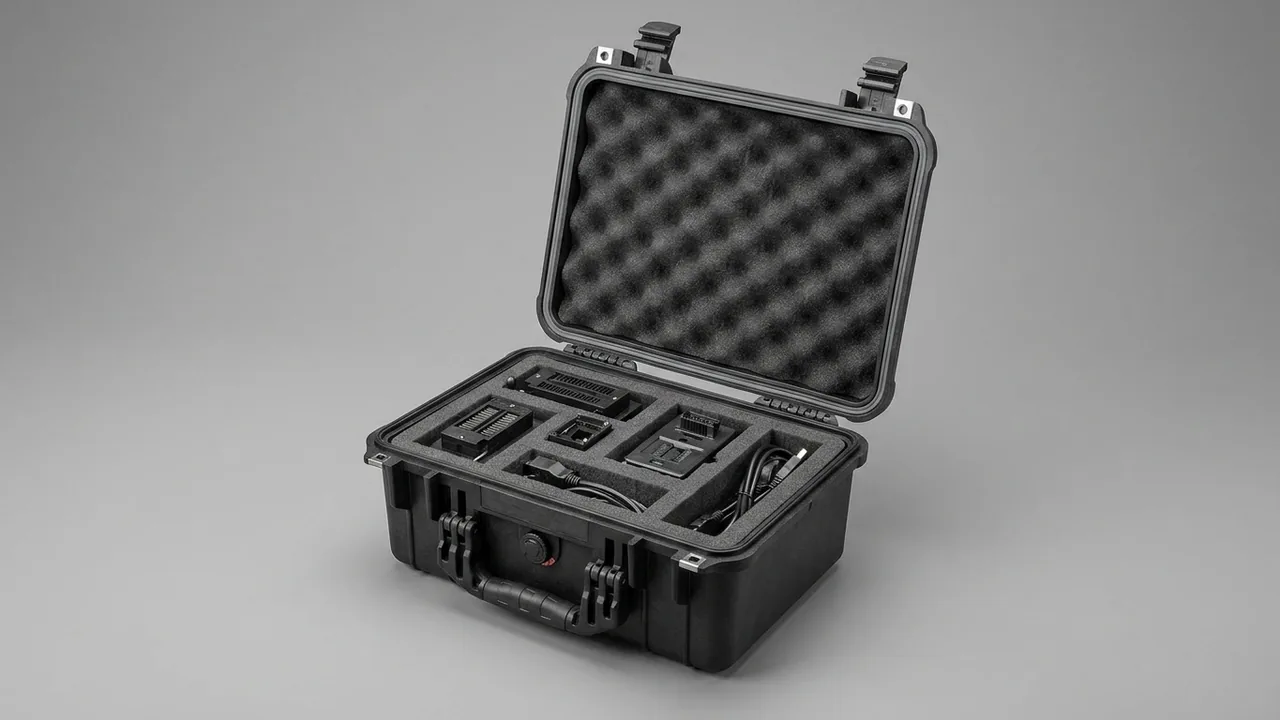
The quartz (artificial stone) cutting line, composed of CNC bridge cutter, blade spindle, and high-precision linear rail, is the core equipment for sizing countertop and engineering slabs. The two categories of parts most needing guard and most easily problematic in transport are exactly the diamond blade and the linear rail: the blade fears edge chipping and dish warping, while the rail fears bending deformation and sliding face scratching. The core judgement of this article is that configuring a vertical-clamp and shaped-support anti-deformation transport case for the quartz blade and rail minimizes arrival geometric precision loss, being a necessity for countertop line cross-border transfer and spare-parts circulation. Focusing on the anti-deformation transport of quartz blade and rail, we break down the complete method from anti-deformation support, blade clamping, rail shaping, hard-particle isolation, to acceptance documents.
A diamond blade is a steel or aluminum base sintered with diamond segments, diameter reaching 350-600 mm, with thin disc and weak rigidity; flat stacking under long-term pressure slowly warps, causing uneven cutting depth and edge chipping after installation. The linear rail is a quenched steel precision element with extremely high straightness and surface roughness requirements; once bent or its sliding face scratched by hard particles, the whole machine positioning accuracy goes to zero. Therefore "blade vertical clamp, rail shaping" are the two technical anchors of a quartz cutting line parts case. Reading below, you will master blade vertical buffer clamping, rail sleeper limiting, dust sealing grade selection, and citable transport test paths such as GB/T 4857, ISTA, and ASTM D4169.
Table of Contents
- Deformation risk control of quartz cutting line parts
- Blade edge and disc surface protection
- Precision retention and bend prevention of linear rail
- Anti-deformation support compartment structure
- Blade vertical clamping and buffering
- Rail shaping sleeper and limiting
- Dust sealing and hard-particle isolation
- Lifting and center of gravity control
- Transport vibration and stacking tests
- Climate environment and rust prevention
- JUNZHIJIA custom service
- Material document and acceptance basis
- Arrival inspection and assembly suggestions
- Frequently Asked Questions FAQ
- Conclusion and Related Reading
Deformation risk control of quartz cutting line parts
The quartz cutting line differs from traditional marble saws in that its workpiece is harder (quartz content over 90%), so blade line speed is higher and spindle rigidity and rail precision requirements are stricter. The transport objects therefore present a deformation risk combination of "thin disc easy to warp, long rail easy to bend." Where the marble saw machine case keeps a stiff frame on continuous support, this scenario pairs two opposed duties: stand a thin disc upright so it cannot warp, and carry a long rail so it cannot bow. In practice that means "thin disc vertical clamp anti-warp, long rail support anti-bend" - both are deformation control but in different directions: the blade fears planar pressure warping, the rail fears axial bending.
Another risk comes from hard particles. Quartz stone powder has Mohs hardness 7; if residual inside the case, it rolls on the blade surface or rail sliding face during transport jolts, causing irreversible scratches like grinding paste. Therefore "particle isolation" and "deformation control" must be designed simultaneously. Compared with protecting cutter shaft parts in a woodworking machine case, the quartz line demands a higher level of rail straightness with smaller tolerance.
From line economics, one day of countertop line downtime costs tens of thousands, and if a blade warps or a rail loses accuracy, the re-straightening or repurchase cycle is long and costly. Spending on packaging at the drawing stage buys insurance against a deformation whose repair cost is open-ended, the same trade the heavy-load logic of a mining equipment parts case makes.
Blade edge and disc surface protection
The most fragile parts of a diamond blade are the outer cutting edge and the thin disc. The edge is a sintered diamond segment easily chipped by lateral impact; the disc is thin overall with weak rigidity, and flat long-term pressure slowly produces plastic warping, showing as uneven cutting depth, edge chipping, or even cutting noise after installation. Therefore the first principle of blade transport is "vertical clamping, avoid stacking pressure."
Vertical clamping uses a dedicated blade rack: the frame has a semi-circular groove matching the blade diameter, the blade embeds vertically, both disc sides are buffered with EVA or PU molded pads, and the edge faces outward with clearance to prevent collision. When multiple blades share a case, each has an independent groove and hard isolation, eliminating inter-plate squeezing. Consistent with the idea of standing circular saw blades vertically in a sawmill equipment case, vertical orientation is the universal solution for thin disc anti-warp.
The second principle is edge protection. The edge is wrapped with an anti-collision guard ring or hard corner guard to prevent hoisting collision; the disc is coated with temporary rust-preventive oil or protective film to prevent oxidation in humid environments and quartz powder adhesion. For water-cooled blades, blow clean the cooling water channel before installation to avoid residual water causing rust over long distances. Taken together these small disciplines decide whether an expensive blade is ready to cut the day it lands.
When a blade is taken off the machine for shipment it normally travels together with the cutting-head assembly, whose spindle flange, locking nut, and hydraulic expansion sleeve hold tight precision grades. A pry mark or a dent from a hard object on the flange face raises blade face runout after installation, and the finished slab then shows a regular pattern of cutter marks. The head assembly should therefore travel in its own cradle with the flange face upward and touching no hard item, while the locking nut and expansion sleeve are bagged in the accessory bay; the expansion sleeve is thin-walled and must never share a bag with a blade edge. Because the assembly is heavier than a single blade, its cradle has to be bolted to the case floor so the large mass cannot shift and drive smaller parts out of position.
Precision retention and bend prevention of linear rail
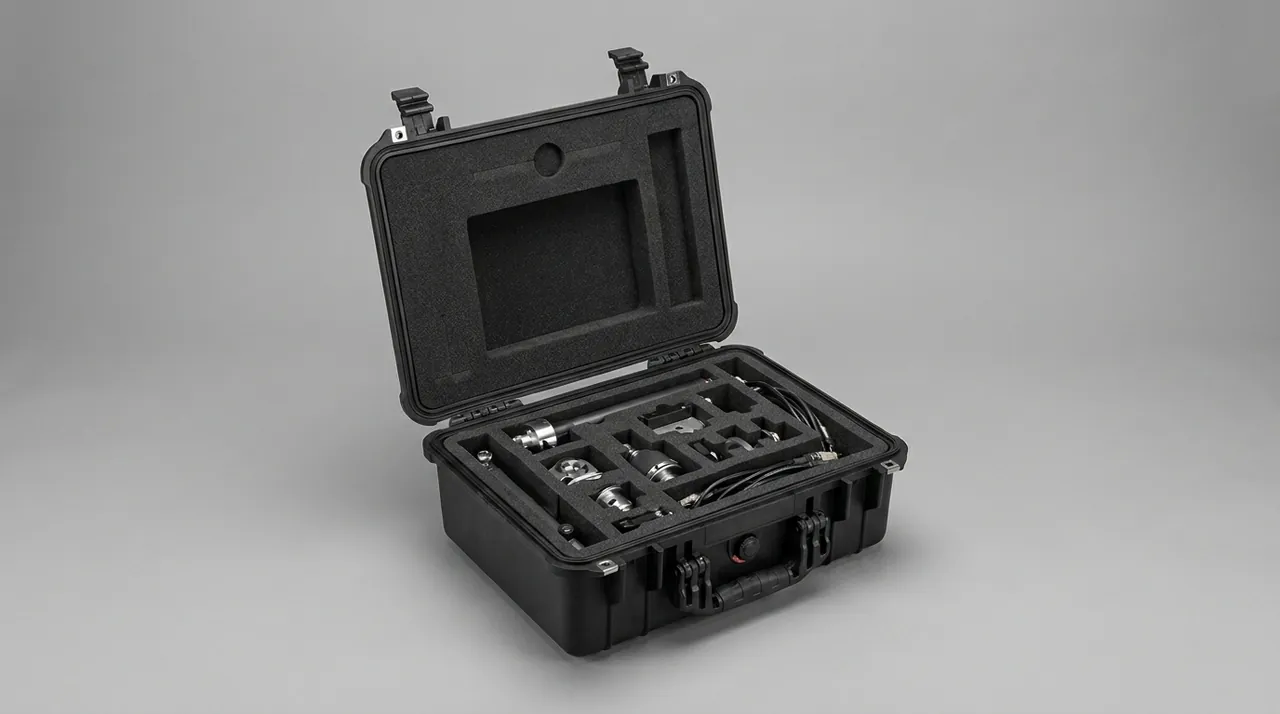
The linear rail is the gate of cutting line positioning accuracy, mostly quenched steel with extremely high straightness and surface roughness requirements. Its transport risks are two types: first, permanent deflection from bending destroys straightness; second, the sliding face (rail raceway and slider) is scratched by hard particles or corroded, causing positioning accuracy loss and noise. Since the rail is a "long and precise" element, slight deformation is amplified into whole-machine dimensional deviation after assembly.
The protection method is "shaped support plus rigid limiting." The rail should be placed horizontally in a posture close to installation on continuous support sleepers, with densely spaced support points minimizing effective span to avoid mid-span bending; adjustable limiter blocks at both ends and middle lock lateral and vertical freedom. Sliders should be fixed on the rail and travel along, with dust covers or temporary caps protecting the raceway to prevent quartz powder entry. This is consistent with the idea of protecting precision linear elements in a linear actuator case.
It must be emphasized that rails should not be suspended hoisted or single-point supported. When multiple rails share a case, each has independent sleepers and hard isolation, eliminating mutual bending. Once the lid is shut, torque-seal every fixing and stencil a warning that this rail must never be thrown or levered. An over-long rail can also be split across several brackets inside the box, each with its own limiter.
Anti-deformation support compartment structure
The compartment of a quartz cutting line parts case revolves around "thin part vertical clamp, long part shaping." It is suggested to have three compartments: blade vertical clamp compartment (warp control and edge chip prevention), rail shaping compartment (bend control and scratch prevention), and accessory compartment (spindle flange, sliders, cooling pipes, etc.). The blade compartment has a vertical semi-circular groove frame, the rail compartment has continuous sleeper support, and a solid wall stands between the two so a blade rim can never reach a lapped rail face. Consistent with the modular concept of a removable divider system, the compartment should facilitate reconfiguration by model.
Bays must be walled off with rigid EVA board rather than a curtain, so nothing wanders across the divide while the container rolls. The blade compartment and rail compartment must be hard-isolated to eliminate edge scratching precision raceways. Small parts in the accessory compartment use foam molded trays for positioning to avoid collision with the main body. Referring to the EVA foam custom process, the blade semi-circular groove and rail sleeper must be CNC-formed rather than hand-padded.
Unloading order deserves the same thought: accessory tray first, then the blade rack, then the rails, so nobody drags a sharp rim across a lapped face or a hand. It is suggested to paste operation sequence tips inside the lid, putting safety and precision requirements upfront.
Blade vertical clamping and buffering
Vertical clamping is the core process of the blade compartment. In practice a dedicated blade rack is used: the vertical semi-circular groove is CNC-machined by blade diameter, the blade embeds and is buffered bidirectionally by side EVA/PU pads, the edge faces outward with 15-20 mm clearance and soft guard wrapping. The groove spacing matches the number of blades to avoid inter-plate squeezing. The blade rack must be rigidly connected to the case bottom and cannot float, otherwise rack shift during transport instead twists the edge. Like the core chucks of a paper roll transport case, the blade rack is really a shaped cradle that takes the place of loose stacking.
In buffering, the blade side pads use 30-45 kg/m³ density EVA, and the disc contact face is lined with flannelette or non-woven fabric to eliminate fretting wear from metal direct contact. For blades with spindle holes, the hole position should be protected with a hard top cover to prevent upper parts from falling and smashing. Every fastener is torque-sealed and its mark re-read once the box is closed.
It must be reminded that clamping is not the tighter the better. Over-tightening transmits impact directly to the disc during long vibration, instead causing warping; the proper approach is "limit not lock, buffer with gap," letting foam absorb energy while hard contact only serves as final backstop. This is consistent with the buffering philosophy of a sealed cushion case.
Rail shaping sleeper and limiting
The rail sleeper must be continuous support and densely spaced. The structure is usually: the case bottom is fully laid with EVA/PE support beams, the rail rests horizontally on them, the support point spacing is reverse-calculated by rail section inertia moment and allowable deflection, with a support every 40-60 cm for long rails; adjustable limiter blocks at both ends and middle lock lateral and vertical freedom. Sleepers are cut from engineering plastic or aluminum profile, stiff enough for a long rail yet light enough to keep the box liftable. The long-axis support logic of a conveyor roller case is close, though a rail cares far more about holding precision.
The contact face between rail and sleeper must be lined with flannelette or non-woven fabric to prevent metal friction marks. Sliders are fixed on the rail traveling along, the raceway covered with temporary dust cover to avoid quartz powder entry. Where rail lengths vary, make the sleeper adjustable: swap liner modules to suit each section, so one box covers a whole family of sizes. Fixings are torque-sealed in the same pass.
It must be reminded that sleepers are not the harder the better. Too hard transmits impact directly to the rail during vibration, instead causing local indentation; the proper approach is a "hard support plus soft lining" combination, letting the PE beam absorb constant load and flannelette isolate fretting, with hard contact only as final limiting.
A bridge saw carries not one rail but a set: the beam linear rail, the lifting column rail, and the table feed rail, each with its own section and length, and together they fix the repeat positioning accuracy of the cut size. The beam rail is the longest with the widest span and is normally the first to bend, so it deserves a dedicated sleeper channel with denser support points; the lifting column rail has a short stroke but mounts vertically, so it should ship in its assembled posture rather than stripped and laid flat, which would repeatedly load the slider preload sideways. Whenever several rails share one case, keep one rail per sleeper channel with hard separation between channels, and never stack two rails to save space, because the lower rail then carries the full weight of the upper one, a classic source of uneven compressive bend.
Dust sealing and hard-particle isolation
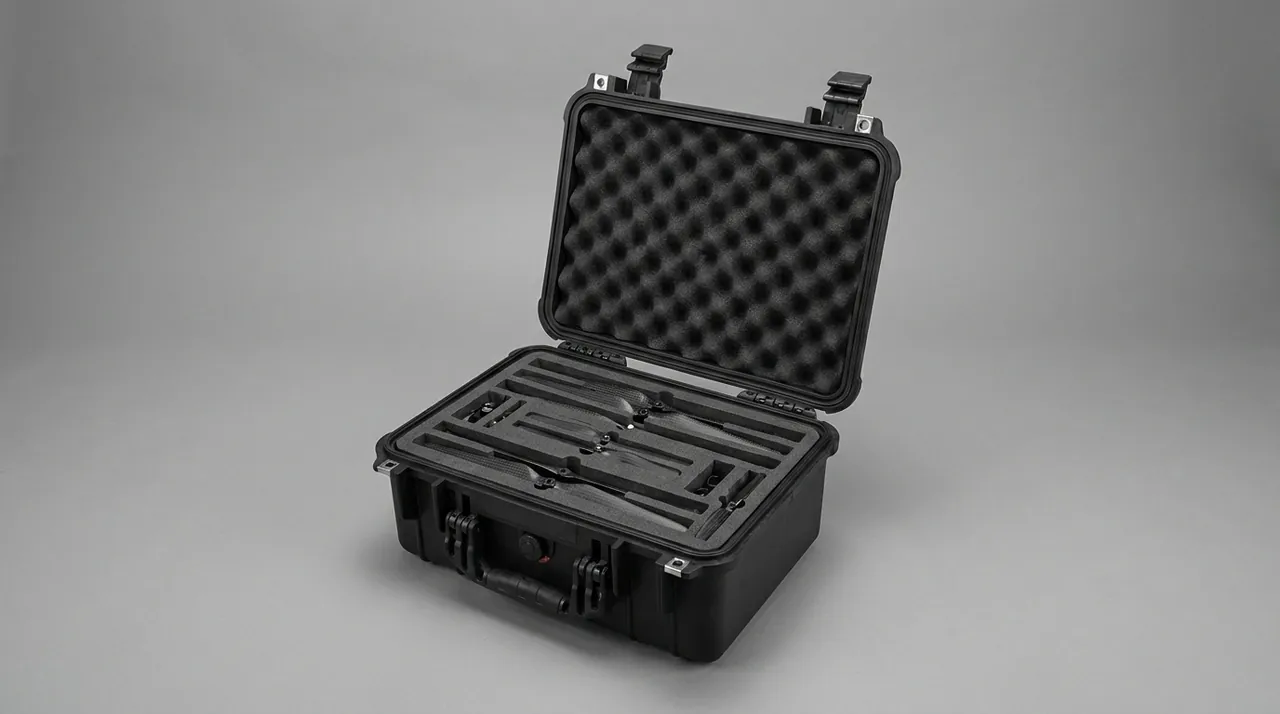
Quartz stone powder with Mohs hardness 7 is an extremely strong grinding medium that must be controlled inside the case. Clean blades and rails before boxing to remove attached quartz powder; each compartment is independently sealed to prevent particle cross-flow. The blade compartment and rail compartment are suggested to reach IP54 of GB/T 4208 (dust-proof, splash-proof), and a stone workshop is best served by a shell of engineering plastic or film-faced plywood. Consistent with the isolation process of a dust-proof sealed case, particle control relies on "clean plus isolate" dual measures.
Sealing quality depends on a continuous foamed strip in EPDM or silicone, closed by compression buckles rather than a friction lid. Every cable gland, every vent and every drain needs a PG connector or a case pressure equalization valve; on a bridge-saw case the spindle supply pipe and the water manifold both cross the wall, so each crossing is a potential powder gate. The valve lets the box breathe through its membrane yet blocks the reverse flow of damp air that the day-night sea swing would otherwise pump in. Powder control comes first here, which is not the full-immersion duty of an IP67 protective case; what a quartz case genuinely needs is tightness against abrasive dust and reasonable resistance to splash, so the grade is chosen for that duty instead of being pushed higher for its own sake.
Another side of dust-proofing is rust prevention. The rail quenched steel and blade steel base rust in humid environments, especially rust spots on the sliding face directly destroy precision. Desiccant and a humidity card go in with the parts, machined faces take a coat of temporary rust oil that is wiped off at the far end, and exposed hardware follows the GB/T 10125 salt-spray idea.
Unlike dry cutting, quartz slab bridge cutting and edge polishing are usually wet processes, and the cooling water carries quartz micropowder away as a slurry. At shutdown the slurry lingers on blade guard walls, beam rail covers, and cutting-head crevices, and once it dries it forms a hard shell whose aggregate is still quartz micropowder at roughly Mohs 7. If that shell is not removed before boxing, transport vibration grinds it into free abrasive powder that migrates into raceways and close-fit faces. Cleaning a quartz case is therefore stricter than for ordinary equipment cases: rinse the dried shell with low-pressure water, wipe sliding faces and flange faces with anhydrous ethanol, then hot-air dry, and box the parts only after confirming no slurry residue and no loose powder. Waterjet nozzles and high-pressure fittings need extra blowing so trapped water cannot freeze and crack a jewel orifice during a cold leg of the journey.
Lifting and center of gravity control
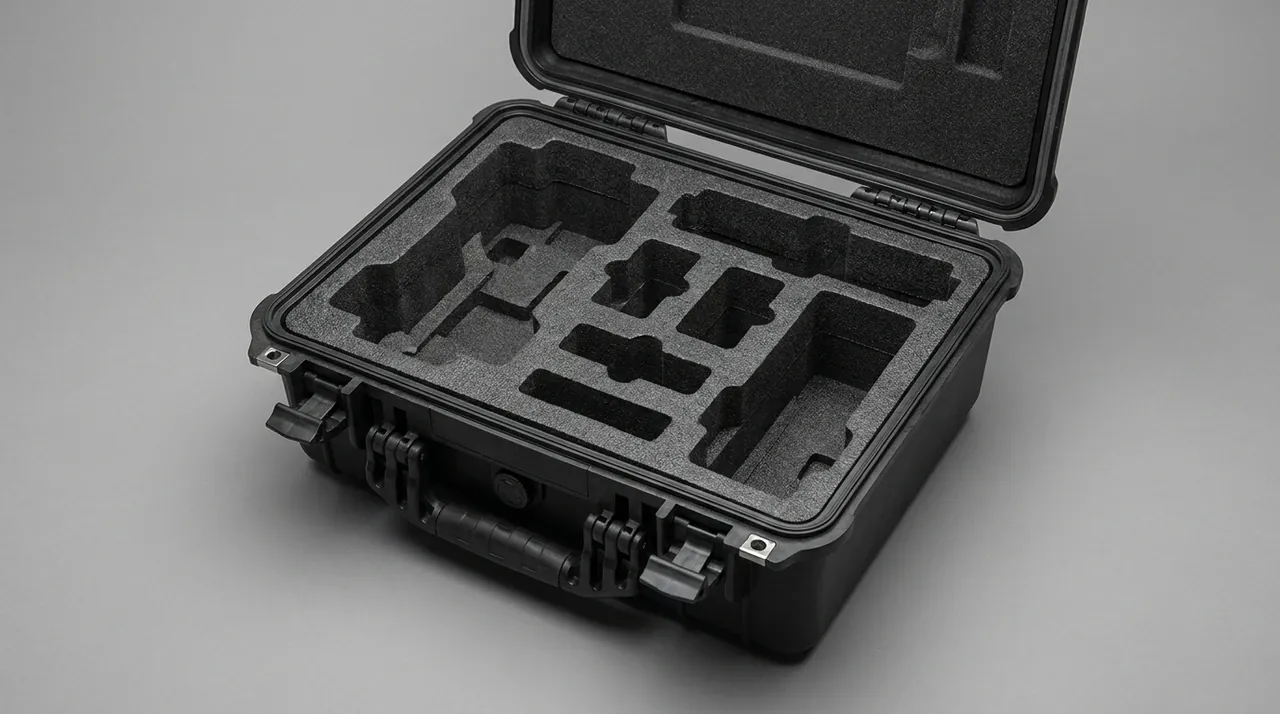
Quartz cutting line parts cases often contain vertically clamped blades and long rails with precise center of gravity distribution. Six GB/T 191 pictograms belong on the faces: stacking layer limit, keep dry, this way up, lift here, do not roll, and center of gravity. That gravity mark outweighs the other five, because a rail-heavy load sits well off the geometric middle and a sling placed by eye will tilt the box and let the sleeved parts shift.
For lifting, a spreader beam is the right rig for a quartz case rather than a two-leg choke hitch: with four legs kept at 60-90 degrees from horizontal, the inward squeeze that a narrow hitch puts on the shell disappears, and the sleeper frame is spared the compression that would lift a rail off its support. Where no overhead point exists, bolt a case wheel and trolley handle to the base and roll the box short distances, so the forks stay out of the picture and the blade rack is not nudged sideways. Roll-over is the failure that destroys a blade edge, so lashing the case to the vehicle deck matters more than the number of layers stacked on top.
Two workers should never shoulder a quartz cutting line case on their own. Once a packed box passes 25 kg, which happens as soon as a 400 mm blade and a metre of quenched rail are inside, it must ship with paired side grips or a scissor-lift pallet truck so the load is never levered from one corner by one person, an ergonomic rule that also governs a portable transport box. A blade edge that chips under point load cannot be dressed out, so the handling sheet should carry the grip points straight off the drawing. The blade clamp tower in particular wants an anti-tilt stop, and a self-locking insert keeps the clamped stack from falling sideways whenever the box is tipped on a ramp.
Transport vibration and stacking tests
Reliability verification relies on standards. Domestic uses GB/T 4857 series for drop, stacking, vibration; international overlays ISTA 3 such as 3E unitized or ASTM D4169 distribution cycle. For the "thin plus long" characteristic, vibration tests should cover broadband random, focusing on monitoring acceleration transmissibility of the blade clamp rack and rail sleeper to confirm limiter validity, and do special shock verification on the blade edge.
Drop height follows the mass grade, and the corner drop is aimed at the blade-bay corner to confirm that the clamp still has buffer left; the stacking run then checks that the lid structure carries the layers marked on the case. Test design refers to ISTA transport test procedure and ASTM D4169 distribution cycle. Where a customer asks for combined thermal, damp-heat and vibration exposure, the procedures of MIL-STD-810H may be borrowed as a reference method, yet this case is not a qualified military item, no qualification is claimed for it, and the borrowed clauses have to be named one by one so the boundary stays defensible, as the MIL-STD-810H compliance note sets out.
Every first article of a batch is worth a loaded road trial: box the real blade and rail, drive a measured route or put the box on a shaker, then open up and gauge warping and rail straightness. That beats any estimate on paper.
Climate environment and rust prevention
The quartz cutting line contains steel-base blades and quenched rails, and sea transport high humidity salt fog is the main corrosion source. Pack enough desiccant with a humidity card, and give every machined face a coat of temporary oil or water-displacing protectant that the receiving team wipes off. Following the GB/T 10125 idea, exposed hardware is best specified in 304 stainless or with a dichromate finish.
Temperature-change condensation is more hidden than rain. When containers cross equator and temperate zones the temperature difference can exceed 20°C, and complete sealing without equalization valve causes negative-pressure moisture absorption. Therefore waterproof breathable valve plus desiccant must be used together. Working to the waterproof case IP principle, the quartz package sets three goals side by side: condensate escapes through the breathing membrane, leftover moisture is mopped up by desiccant, and salt-laden air never reaches the blade base or the rail raceway.
For long-term storage over 3 months, open and check the humidity card every 60 days, replacing desiccant or nitrogen sealing as needed. Write the maintenance rhythm into the spare-parts procedure rather than relying on "once-and-for-all" at boxing. After return, blades and rails especially need quartz powder cleaning to prevent hard particles embedding and damaging surfaces over time.
JUNZHIJIA custom service
Addressing the anti-deformation requirements of quartz blade and rail, JUNZHIJIA designs transport cases with vertical clamping and shaped support, supporting OEM/ODM molding by drawing, connecting wholesalers, agents, and global countertop slab lines. Its engineers fix the blade groove rack and the rail sleeper layout in a 3D assembly first, then cut the EVA/PE liner on a router and form aluminum supports so every batch repeats itself; the rail channel can be tooled on its own under contract, so a reusable blade rack is paired with a sleeper cut to the length actually in hand, and every frame is built to order for export.
Work begins with the drawing set and runs through four gates: confirm the drawing, prove out the first liner, verify the design on a transport rig, then release the batch. Customers should hand over blade diameter and edge profile, rail length and section, and the deflection budget, because groove spacing and sleeper pitch are reverse-calculated from those numbers; when no 3D model exists, scanning the real part works but the tolerance band has to be widened to absorb scan error. Judged against the yardsticks set out in how to choose a case OEM factory, a supplier's proofing turnaround and its willingness to accept small runs say more about fit for quartz countertop spare-parts work than any brochure.
One boundary should be fixed before tooling: the outer size of the case is set by the container it will travel in. On this line the blade clamp rack and the rail sleeper are the two items most likely to need stripping on site, so their release sequence belongs in the design brief. Where a rail is longer than the case, the rack has to break down and re-seat without a dial gauge, otherwise curvature and straightness cannot be brought back at the far end without calling in a specialist.
Material document and acceptance basis
Delivery acceptance is divided into appearance full inspection and performance sampling. Appearance checks marking completeness, sealing strip continuity, liner fit; performance samples per custom case acceptance AQL, doing batch verification of drop or vibration, suggesting critical item AQL 1.0, minor item AQL 2.5.
Delivery paperwork is issued against the contract: a materials certificate states the shell plastic grade, foam density and UL94 flame-retardant class; the liner router program sheet travels with it; transport test reports quote the clauses of GB/T 4857, ISTA and ASTM D4169 that were actually run; and every rail length shipped gets a straightness sheet. Export orders can add IP grade evidence and GB/T 10125 salt fog data. Tie each document to a physical batch through a one-code-per-case or one-report-per-batch scheme, so a claim raised far from the factory can be charged to packing or to handling within a day, which also feeds the buyer's FMEA and spare-parts records.
Arrival inspection and assembly suggestions
On arrival, first check the humidity card and sealing status inside the case, confirming no condensation and no quartz powder leakage before installation. When taking out the blade, check whether the edge has chipping and the disc has warping; when taking out the rail, check straightness with a straightedge or laser and wipe the sliding face clean with non-woven fabric. The general routine in protective case cleaning and maintenance applies after return: clear quartz powder, examine the sealing strip, renew spent desiccant, log sleeper module life, and renew limiter pads once permanent dent passes 30%.
During assembly, the blade should be handled gently and aligned with the spindle hole, forbidding striking the edge; before rail installation, re-check straightness and slider flexibility, confirming no quartz powder embedded in the raceway. Pin the case drawing number, the groove and sleeper coordinates, and the agreed sampling plan into the buyer's purchasing annex, so the box stops being a shipping afterthought and becomes a contractual line item on the quartz line's spare-parts list. When blade and rail always circulate in a "protected state," first-run qualification rate and life-cycle cost both improve.
Frequently Asked Questions FAQ
Q: Why must diamond blades be vertically clamped instead of flat stacked? A: A diamond blade is a steel or aluminum core sintered with diamond segments, diameter reaching 350-600 mm, with a thin disc and weak rigidity. Flat stacked under transport pressure, the long-term constant load slowly produces plastic warping of that thin disc, showing as uneven cutting depth, edge chipping, or cutting noise after installation, with high straightening cost and often irreversibility. Vertical clamping uses a dedicated semi-circular groove rack to seat the blade upright, with EVA or PU buffer pads on both disc sides and the edge facing outward with clearance so it cannot collide, eliminating planar pressure warping at the root. When several blades share one case, each gets an independent groove with hard isolation, eliminating inter-plate squeezing. The rack must also be bolted to the case floor rather than left floating, because a rack that shifts under jolts will twist the very edge it is meant to protect. This mirrors the universal practice of standing circular saw blades upright and is a hard requirement for thin disc transport that thick foam flat stacking cannot replace.
Q: Why does a linear rail easily lose accuracy in transport? A: A linear rail is a quenched steel precision element with extremely high straightness and surface roughness requirements, which makes it a long and precise part whose geometry decides machine positioning accuracy. During transport, if the mid-span hangs unsupported or rests on a single point, long-term vibration plus self-weight superimposes into permanent deflection of the rail, destroying straightness; a more hidden failure is the sliding face, meaning raceway and slider, scratched by quartz powder at Mohs hardness 7 or rusted by moisture, which directly causes positioning accuracy loss, noise, and premature slider wear. Because the rail is long, even a slight deformation is amplified into whole-machine dimensional deviation once assembled, and the fault is usually only discovered at the first cut. Protection therefore relies on shaped support plus rigid limiting: continuous densely spaced sleepers minimize the effective span, adjustable limiter blocks lock lateral and vertical freedom, sliders travel on the rail beneath temporary dust caps, and torque marks on every fixing confirm anti-loosening after boxing.
Q: Can blade and rail be placed in the same compartment? A: Absolutely not recommended. The blade outer diamond edge is extremely hard and brittle, while the rail sliding face is a quenched precision raceway; their hazard characteristics are opposite, yet they damage each other. If the blade edge rubs the rail raceway it leaves irreversible scoring, and quartz powder clinging to the rail, once it reaches the blade disc, acts as grinding paste and dulls or chips the segments. The correct approach is hard-isolated compartments: the blade enters a vertical clamp compartment that prevents warp and edge chip, the rail enters a shaped sleeper compartment that prevents bend and scratch, and spindle flanges, sliders, and cooling pipes take a third accessory bay. Every compartment uses solid-wall EVA partitions to prevent shifting during transport jolts, and small parts sit in foam molded trays so they cannot strike the main items. Hazard-based zoning is a hard rule for lowering arrival precision loss in precision anti-deformation scenarios and should never be merged merely to simplify the case.
Q: Should the case liner use EVA or PE support beam? A: They are not competitors; on this line they carry different duties. EVA has the better rebound and carves crisply on a router, so it suits the semi-circular blade grooves, the limiter blocks and the small chocks that stop the groove rack from shifting, and its low blank cost and fast cutting keep short and medium runs affordable. PE cross-linked foam creeps far less under a standing load and holds its properties across a wider temperature band, which is what a sleeper running the length of a metre-plus rail needs when the box sits in a container for weeks, and it survives many more trips so it pays back on routes that circulate. As a working figure, keep static compression of a support pad inside 20 percent of its original thickness and leave a dynamic margin on top, because a soft oversize pad sags under sustained sea-voyage load and lets the limiter open up. The usual build makes the PE beam the structural spine and the EVA groove rack the shaping layer, which buys straightness retention without over-buying either material. Whichever foam is used, any face that meets blade steel or a raceway gets a flannelette or non-woven lining so metal never frets on metal, and the rail sleeper follows a hard-support-plus-soft-lining rule.
Q: How to isolate hard particles and moisture in the rail compartment at sea? A: Quartz stone powder with Mohs hardness 7 is an extremely strong grinding medium that must be controlled by "clean plus isolate" dual measures. Clean blades and rails before boxing to remove quartz powder; the blade compartment and rail compartment are independently sealed to IP54, with overall shell using engineering plastic or film-coated plywood. Moisture-proofing relies on a three-piece set: desiccant with humidity card monitoring, waterproof breathable valve with ePTFE membrane balancing day-night temperature pressure difference to avoid negative-pressure moisture absorption, and temporary rust-preventive oil on metal faces. A dead-tight lid is a liability: negative pressure grips it shut and pulls damp air in the moment it is opened, which is why controlled breathing beats total sealing. Equator-to-temperate runs can swing past 20°C, so the valve, the desiccant and the humidity card have to work as one system, and a gasket on its own will not hold the line. On arrival, first check the humidity card and quartz powder status before installation, wiping the sliding face with non-woven fabric.
Q: Which standard for transport tests, and can MIL-STD-810H be used? A: Domestic moves use the GB/T 4857 series for drop, stacking and vibration; an international move adds ISTA 3, for example 3E for a unitized load, or runs the ASTM D4169 distribution cycle. On a quartz line the paired risks are a thin disc and a long rail, so the vibration profile is broadband random with transducers watching the blade groove rack and the rail sleepers, proving that the limiters hold rather than merely assuming they do; the blade rim gets its own shock pass, and drop height is picked from the mass grade with the corner aimed at the blade bay. When a buyer wants cold, hot, humid and vibrating conditions combined, the MIL-STD-810H procedures can be borrowed into the plan as a reference method, but nothing about that makes the case a military-qualified article and no such claim is made; the borrowed clauses are listed individually so the compliance boundary stays unambiguous. One loaded run on the first case of every batch remains the cheapest confidence check available.
Q: Can JUNZHIJIA customize according to our blade diameter and rail length? A: Yes. Addressing the anti-deformation requirements of a quartz blade and rail, JUNZHIJIA designs transport cases with vertical clamping and shaped support, supporting OEM/ODM molding by drawing and connecting wholesalers, agents, and global countertop slab lines. No order skips a step: the blade and rail data are frozen on paper, one liner is carved and tried, the loaded case goes on the rig, and only then does volume tooling start. Clients should hand over blade diameter and edge form, rail length and section, and the allowable deflection, because groove spacing and sleeper pitch are derived from those figures; with no model to work from, a physical scan will do, provided the tolerance band is widened to absorb its error. The rail compartment can be molded separately to achieve a universal blade rack plus dedicated rail sleeper pairing, which keeps tooling cost low when only the rail length changes between orders. During customization, fix the container interior size and the disassembly convenience of the rack early, because an over-long rail needs on-site support and the frame must allow quick assembly to restore posture without professional equipment.
Q: Which blade and rail records come with the case when it is delivered? A: On signature, JUNZHIJIA hands over a set of papers written around this line rather than a generic folder. The material certificate names the shell plastic grade, the foam density and the UL94 flame-retardant class, each with the standard clause it was measured against, and it travels with the router program record for the blade groove rack, the laser-trace record for the rail sleeper channel, and a straightness sheet taken with a straightedge or laser before the rail was boxed. Transport reports are quoted clause by clause from GB/T 4857, ISTA and ASTM D4169, so a quality engineer can see which run covered drop, which covered stacking and which covered vibration. For a shipment into the EU or North America, IP grade evidence and GB/T 10125 salt-fog data are added on request at no extra design cost. A one code per case or one report per batch trail lets a receiving team separate a packing fault from a handling fault within a day of arrival, which shortens any claim and lowers its cost. The same sheets feed an equipment maker's FMEA and spare-parts traceability, and sampling follows an AQL plan at 1.0 for critical items and 2.5 for minor ones.
Q: What care does a quartz line case need before it goes out again? A: Once a case comes back, clear the quartz powder out of every bay, look over the seal for aging or splits, and renew spent desiccant at once. Cases in heavy rotation need an in-and-out register and a sleeper life count, so a module is renewed once limiter dent reaches 30 percent of its original thickness. Blade racks and rail sleepers stay with the box or in a labeled bag, because a missing rack means the next batch cannot be shaped. Hardware should be 304 stainless or dichromate-treated for salt duty. Stand the case on pallets in a dry, airy store, away from oil and solvent. Treated as a reusable asset instead of a consumable, it steadily cuts the logistics cost of every spare-parts shipment.
Conclusion and Related Reading
The diamond blade and linear rail of a quartz cutting line, one fearing warp and the other fearing bend, must be treated separately within an anti-deformation case of vertical clamping and shaped support. Clamp the disc upright against planar pressure, keep the rail on sleepers to hold its straightness, and let the standard test series prove the package before it ships. The clamping rules, sleeper design and acceptance paperwork above can be lifted straight into a quartz line spare-parts procedure.
Related Reading