

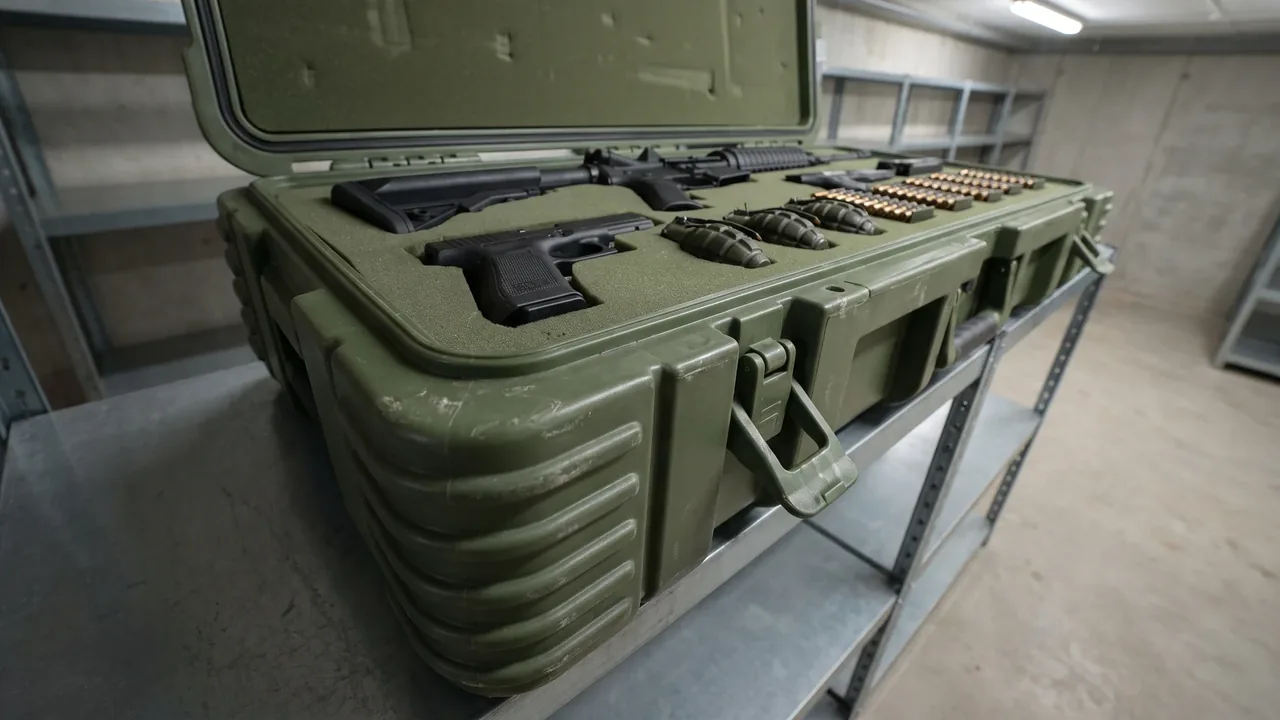
A scientific expedition instrument case is a purpose-built protective container engineered for extreme environments such as polar ice, high plateaus, deserts, rainforests, and the edges of deep marine systems. It is used to store and transport research instruments, sensors, measuring devices, and the collected samples including rock, water, soil, and biological specimens. In polar regions where temperatures fall dozens of degrees below zero, and on plateaus thousands of meters above sea level, an ordinary storage box often fails within hours through brittle cracking, water ingress, or frozen seals. A properly engineered scientific expedition instrument case maintains an internal environment that stays dry, thermally stable, and shock resistant across a temperature span from minus forty degrees Celsius to plus sixty degrees Celsius, making it the first and most critical line of defense for equipment reliability on any expedition. This article walks through twelve dimensions - material, sealing, insulation, vibration control, sample compartments, temperature logging, pressure equalization, stacking, locks, certification, customization, and maintenance - to explain how to select and manage such containers for different field scenarios, helping research institutes, polar teams, and field stations build a dependable protective baseline from the equipment-planning stage onward.
1. Definition and Typical Uses of the Expedition Instrument Case
A scientific expedition instrument case is a reusable professional protective container with an engineering plastic or alloy shell, a cushioned and insulated liner, and sealing plus temperature control capabilities. Its fundamental difference from a common toolbox is that a toolbox pursues only convenient storage, while an expedition case must simultaneously satisfy dust resistance, water resistance, impact resistance, temperature tolerance, pressure resistance, and traceability. In polar glacier surveys, these cases hold ice-core drilling accessories, temperature probes, and positioning instruments. In high-altitude ecological monitoring, they protect atmospheric samplers, portable gas chromatographs, and battery packs. In desert and gobi expeditions, they resist sand intrusion and severe day-night temperature swings. In coastal and estuarine surveys, they carry water-quality sensors and sample bottles while preventing corrosion from saline spray. For research institutes, polar expedition teams, and field monitoring stations, the instrument case is not a simple storage item but core infrastructure that safeguards data continuity and sample integrity across the entire field operation chain. When a team goes deep into uninhabited territory, losing one instrument costs more than the device itself - it can mean the loss of a whole sampling season of data. Therefore, including the instrument case in the procurement plan during the equipment planning stage is far more reliable than improvising a replacement on the trail. Related storage and sampling scenarios are covered in the dedicated guides on field research sampling cases and geological exploration cases. Understanding this chain of "protecting instruments to protect data" is the first step in sound expedition logistics.
2. Shell Material and Structural Engineering
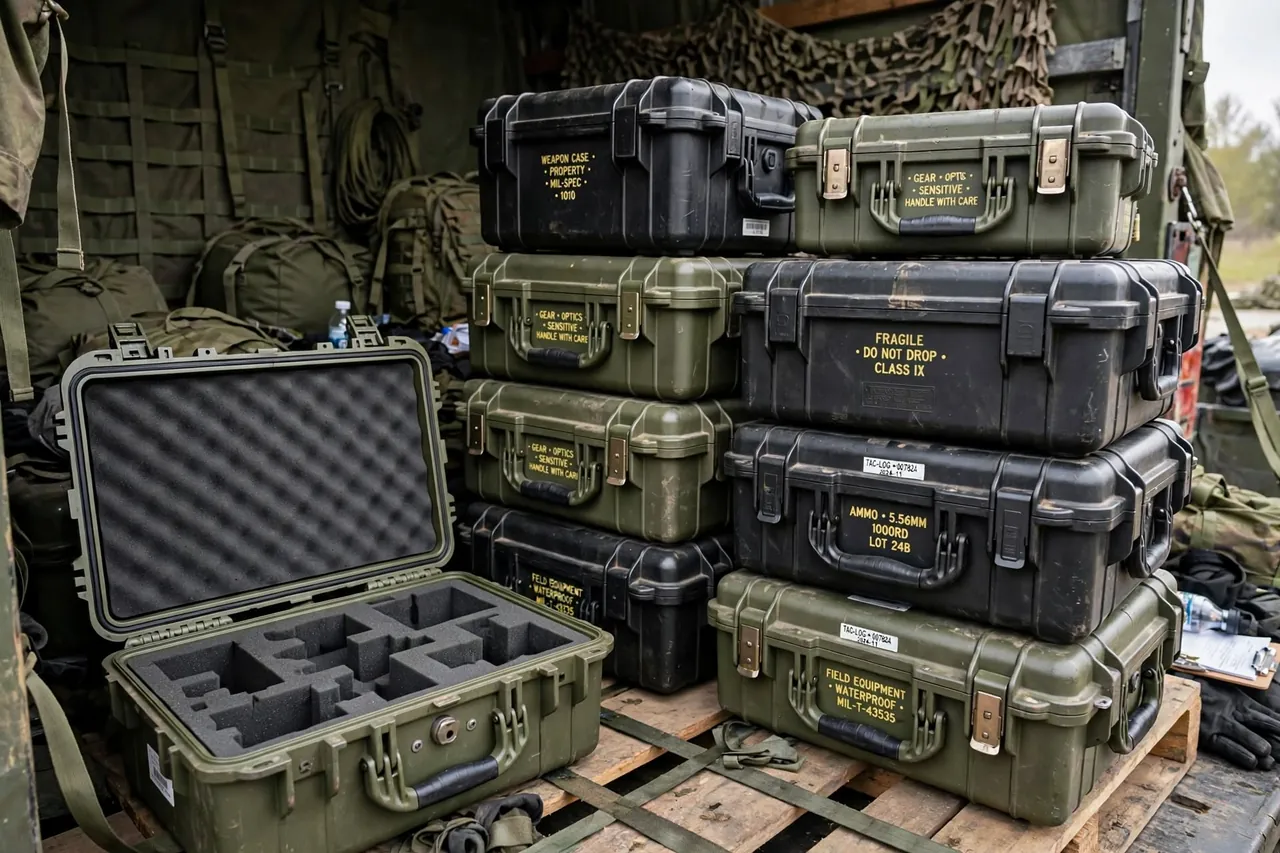
The shell material of an expedition case directly determines its weight, strength, and weather resistance. There are three mainstream approaches: modified PP (polypropylene) co-injection molded bodies, rotomolded PE (polyethylene) one-piece bodies, and aluminum alloy profile frame composite panels. The PP injection case is light, low cost, and dimensionally accurate, suited to medium-light instruments. The rotomolded PE case has uniform wall thickness, excellent impact toughness, and resists low-temperature brittleness, making it the preferred choice for polar missions. The aluminum case offers advantages where electromagnetic shielding or high stacking strength is required, but at higher cost and weight. In structural engineering, the four corners typically feature reinforcement ribs and impact bumpers, while sidewalls use double-wall hollow or honeycomb reinforcement to distribute drop impact. The mating face between lid and body must maintain flatness; otherwise even the best seal strip will leak through local warping. The engineering plastic shell should also pass UL94 flame-retardant evaluation to avoid accelerating combustion in cabins or vehicles during accidental fire. During procurement, request the shell material grade, wall thickness distribution map, and rib layout from the manufacturer. These seemingly trivial parameters are precisely the basis for judging whether a case can serve long term in the field. Reading this alongside the guide on outdoor case engineering plastics clarifies the trade-offs between materials. In measured polar and plateau experience, wall thickness and rib density often reveal real durability better than a nominal "compression number" on a brochure. From a procurement standpoint, material choice also affects total cost of ownership. A rotomolded PE case costs more upfront but survives more field seasons, while a PP case may need earlier replacement in cold climates. Logistics weight is another factor: air-freight budgets are charged by mass, so shaving kilograms on each case across a large team compounds into meaningful savings. JUNZHIJIA typically prepares a side-by-side comparison table listing shell mass, wall thickness, rated temperature range, and suggested unit price so procurement teams can balance performance against budget before committing to a mold. This disciplined comparison prevents the common mistake of over-specifying an expensive alloy case where a well-designed plastic case would perform equally well.
3. Sealing Design and the IP67 Rating
Sealing is the core of waterproof protection. According to IEC 60529 and the corresponding national standard GB/T 4208, the IP rating is expressed by two digits: the first is the dust-protection level and the second is the water-protection level. Expedition scenarios generally require IP67, meaning complete prevention of dust ingress and protection against immersion in one meter of water for thirty minutes without leakage. Achieving IP67 depends on a continuous elastic seal strip laid around the lid perimeter and on the uniform clamping force applied by latches when the lid closes. The seal strip commonly uses EPDM (ethylene propylene diene monomer) or silicone; EPDM excels in ozone and weather resistance, while silicone offers a wider temperature range. It must be stressed that the IP rating is a typical value under laboratory conditions. In real field use it can drop because of thermal expansion and contraction from temperature swings or because sand embeds in the sealing face. Therefore, before and after every mission, visually inspect the seal for deformation, voids, or embedded debris. For the differences and test essentials of protection ratings, consult the guides on IP67 protective cases and the IP rating guide. A qualified expedition case should also undergo random immersion checks, using empirical values to verify seal consistency rather than trusting only the nameplate. In coastal salt-spray environments, the seal's ozone and UV resistance is likewise a hidden factor deciding service life and should not be ignored during selection.
4. Insulation Liner and Temperature Control
Polar and plateau environments can swing dozens of degrees Celsius between day and night, and both samples and instruments are extremely temperature sensitive, so the case body must provide thermal insulation. The common method is to fill the cavity between shell and liner with closed-cell foam such as EPE (expanded polyethylene) or PUR (polyurethane) rigid foam, whose low thermal conductivity and low water absorption form an effective thermal resistance at the wall. For samples needing active control, phase-change cold storage material (PCM) packs or miniature thermoelectric cooling modules can be embedded inside, working with external power or batteries to achieve active temperature holding. Passive insulation is advantaged by being power-free, reliable, and maintenance-free, ideal for transport legs without power; active control offers higher precision but requires power management and an energy budget. Regardless of method, pay attention to the airtight separation between liner and shell to prevent external humid air from condensing on the wall and seeping into the cavity. In long-term customization practice, JUNZHIJIA found that liner thickness and cold-storage configuration should be matched separately for plateau and polar differences rather than using one template. For transporting temperature-sensitive samples, the temperature-control thinking in the cold-chain case guide is also useful. Under polar-night or continuous-sun exposure, the case's reflective outer coating and liner thickness together decide the internal temperature-rise rate, and these details should be included in scheme review from the start. Field teams should also account for the heat generated by powered instruments inside the case. A running spectrometer or active pump raises internal temperature, and without ventilation the insulated wall can trap that heat and overheat sensitive samples. The remedy is to separate heat-producing devices from sample cells using a divider, or to route a small exhaust path that still preserves the IP rating. PCM selection follows the same logic: choose a phase-change temperature slightly above the upper safe limit so the material absorbs excess heat during the day and releases it at night. This passive buffering smooths the daily curve without any power input, which is exactly why polar and high-altitude teams favor it for unattended staging.
5. Anti-Vibration and Cushioning Systems
Field transport is full of jolts, from snowmobiles to helicopter slings, and vibration and shock are everywhere. The expedition case resists through two layers: the rigid energy-absorbing structure of the shell itself, and the cushioning material of the liner. The inner cushion commonly uses EVA (ethylene-vinyl acetate) or PU (polyurethane) foam, CNC carved into a profile that fits the instrument shape so the device is constrained in all six degrees of freedom. For optical instruments, inertial navigation, and precision sensors, a suspended inner tray can be added, leaving an elastic gap between device and case to reduce peak shock acceleration below safe thresholds. The essence of cushioning design is "fit, not suspend" - too loose causes collision inside the case, too tight concentrates stress and cracks the shell. Engineering practice uses sine sweep and random vibration tests to confirm the liner's limiting effect. MIL-STD-810H Method 514 systematically addresses transportation vibration and can serve as an acceptance reference. Related cushioning selection ideas are also found in the case foam lining guide. In practice, the density and fit accuracy of the cushion matter more than simply "thicker foam"; the wrong low-density foam will collapse after repeated handling and lose its limiting ability, so material density should be chosen against instrument weight rather than guessed. Field teams sometimes underestimate the cumulative effect of many small shocks. A single bump may be harmless, but thousands of micro-impacts across a long traverse can loosen connectors and drift calibration. The liner's role is therefore not only to survive one big drop but to attenuate the daily grind of travel. Choosing the correct foam density, as noted earlier, is the difference between a case that looks intact yet has quietly damaged its contents and one that truly protects across the whole journey.
6. Sample Compartments and Modular Liners
Expedition missions often collect multiple sample types at once; mixing them undermines management and risks cross-contamination. Therefore the interior of an expedition case usually adopts modular compartment design: fixed large bays hold the main instrument, while extractable small cells classify rock cuttings, water bottles, filter membranes, and biological specimens. Compartment material should be inert, non-toxic, and easy to clean to avoid chemical reaction with samples; cells contacting water samples are best equipped with sealing rings and leak trays to prevent liquid leakage from contaminating other cells during transport. Another value of the modular liner is fast reconfiguration - the same case can hold ice-core accessories in a glacier survey and soil samplers after moving to a grassland survey, simply by swapping the inner tray rather than buying a new case. For teams needing liners precisely matched to specific models, JUNZHIJIA offers OEM/ODM services that custom-cut trays to the equipment list, ensuring every instrument has its dedicated restraint. The architecture philosophy of sample classification aligns with the sample transport case, treating order itself as part of protection. In microbial and water-sample scenarios, the leak-proofing and independent labeling ability of compartments directly affect later experimental validity, so each cell's purpose and capacity should be defined at the design stage.
7. Pressure Equalization Valve and High-Altitude Adaptation
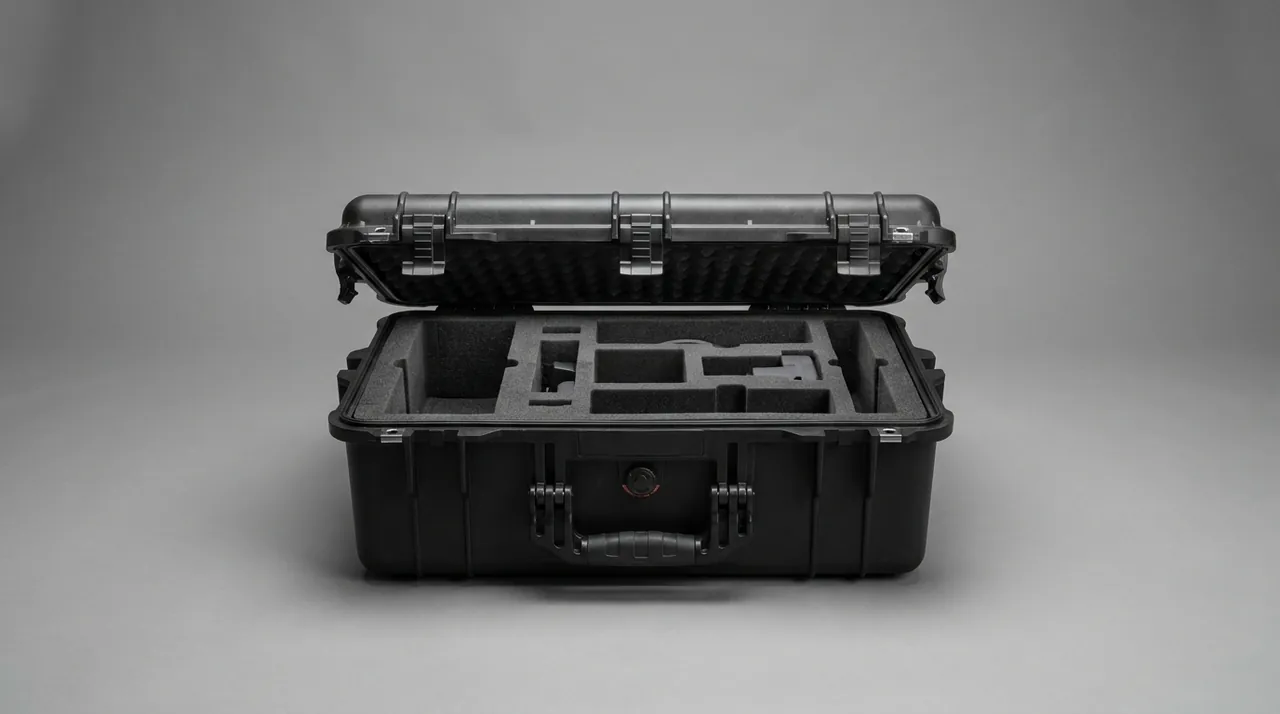
When an expedition team flies or drives over a snowy mountain pass, outside pressure changes sharply. If the case is fully sealed, the internal-external pressure difference will tear the seal strip outward; in severe cases the lid is "sucked shut" and hard to open, or the shell deforms. The solution is a pressure equalization valve (breather valve) that allows air to move slowly to balance the pressure difference while blocking liquid water and dust through a waterproof breathable membrane. Such valves typically rely on an ePTFE (expanded polytetrafluoroethylene) membrane to be both breathable and waterproof, making them essential for plateau and air-freight expeditions. When selecting, focus on the valve's airflow rate, opening-closing pressure differential, and protection rating to ensure it matches the case IP level. It must be emphasized that the pressure equalization valve is a "breather," not a "water inlet"; once the membrane is clogged by sand or ice, it fails, so clean the valve body after high-altitude missions. The principles are further explained in outdoor case pressure valve and the case pressure equalization valve guide, which share the same engineering logic. During the rapid ascents of helicopter sling loads, the valve's response speed decides whether brief internal negative pressure appears, so missions combining high altitude and air freight should prefer models with a lower opening-closing differential. The valve's membrane is a consumable, not a permanent part. Under heavy dust or ice exposure its effective airflow slowly drops, and the only reliable indicator is periodic function testing: briefly seal the case, create a small pressure difference, and confirm the valve equalizes within the rated time. Replacing the membrane or the whole valve insert is inexpensive compared with the cost of a lid that will not open at altitude. JUNZHIJIA ships spare valve inserts with customized orders so field teams can swap them without returning the case, keeping the protective function available throughout a remote season.
8. Temperature and Humidity Logging Modules
For samples, whether they suffered freeze-thaw along the way often matters more than whether they were dropped. Modern expedition cases commonly integrate a temperature-humidity logger that records internal environmental data at fixed intervals, then exports the curve after the mission as evidence of sample compliance. Loggers fall into two types: single-use low-temperature labels and reusable electronic loggers. The former is low cost and suited to one-way transport; the latter is precise and Bluetooth readable, suited to long cycling missions. A more advanced approach places wireless sensors inside the case to report data in real time to the team's phone or satellite terminal, alerting immediately on over-temperature. The logging module should be powered independently of the main instrument to avoid interruption when the instrument shuts down; the battery should also tolerate low temperatures, since ordinary lithium cells lose capacity sharply below minus twenty degrees and require low-temperature cells or an insulation sleeve. Retaining temperature logs is the same quality-loop step emphasized in the lab sample transport case. In cross-border projects or those needing third-party audit, the completeness and tamper-resistance of the recorded curve often become the key to whether samples are accepted by international peers, so time synchronization and export format should be standardized in advance.
9. Locks, Stacking, and Transport Safety
In camp, expedition cases are often stacked to save space, so the stacking structure and locks must be reliable. The four corners usually have locating bosses or guide ribs so upper and lower cases align and share load evenly; bottom ribs mating with the top plane can bear several times the self-weight in vertical load without collapsing. For locks, double latches plus a valve port lock are most common; latch material is mostly stainless steel or reinforced nylon, requiring salt-spray corrosion resistance. For cross-border or air-freight scientific supplies, TSA-compatible locks allow customs inspection without destroying the case. Transport safety also includes external marking: the case should carry fragile, moisture-proof, upward, and center-of-gravity labels, and be numbered and marked with the owning unit for quick sorting when supplies are mixed. Stacking and transport details complement the protective case stacking guide, both emphasizing the principle of a clear load path. In multimodal transport, the case should also mark lifting points and forbidden stacking layers on the side to avoid forklift or sling damage; these seemingly small marks are an indispensable link in the safety chain and should never be skipped on expedition consignments.
10. Certification Standards and Testing Systems
The reliability of an expedition case cannot rest on verbal promises but on verifiable standards and test reports. Internationally, MIL-STD-810H is a US military environmental test method covering low temperature, high temperature, drop, vibration, and humid heat sequences, and is an authoritative basis for checking field equipment weather resistance. The ISTA series focuses on transport packaging performance validation, simulating the impact of handling, stacking, and vibration on contents. IEC 60529 and GB/T 4208 jointly define the IP rating. For air freight, UN testing and dangerous-goods packaging rules also matter. Domestic research institutes often require test reports from CNAS or CMA accredited laboratories. It must be clear that standards give test methods and pass criteria; specific values should be treated as typical or empirical, varying by manufacturer and batch, so always draw samples for retest before bulk purchase. The comparison with MIL-STD-810H compliant cases helps understand how standards are actually implemented. In polar-specific programs, additional tests such as low-temperature open-close life and salt-spray corrosion resistance are often added; though not mandatory in generic standards, they are important references for judging whether a case can survive a full field season without hidden failure. Beyond the headline standards, buyers should ask how the test was sampled and reported. A single prototype passing a drop test says little about a production batch; a credible report states sample size, batch identity, test laboratory accreditation, and the actual measured values rather than a pass-or-fail stamp. JUNZHIJIA attaches per-case-number test documents so a specific delivered unit can be traced to its own record, closing the gap between generic claims and accountable evidence. For international collaborations, aligning the chosen standards with the partner institution's expectations avoids duplicate retesting and speeds customs or compliance review at the destination port.
11. Customization Process and OEM/ODM Services
When standard cases cannot fit special instruments, customization becomes necessary. The typical process has six stages: requirement list sorting, 3D modeling and liner design, prototype sampling, drop and seal validation, small-batch trial, and bulk delivery. The requirement list should specify instrument dimensions, weight, center of gravity, sensitive directions, temperature range, and transport mode, because these parameters decide the liner cut and shell reinforcement. In prototyping, use 3D printing or CNC rapid forming to make the inner tray, confirm restraint, then open the mold - this significantly reduces rework cost. JUNZHIJIA has built a mature OEM/ODM system through years of expedition equipment support, able to match seals by instrument model, attach test documents by case number, and provide traceable factory inspection records at delivery. The value of customization lies not only in "fitting" but in "lasting and controllable." For custom foam liner methods, see the custom foam lining case guide, which details the cutting process. When signing a customization contract, define mold ownership, minimum order quantity, and spare-parts supply lead time to avoid the passive situation of having no replacement parts during later maintenance.
12. Maintenance, Care, and Lifecycle Management
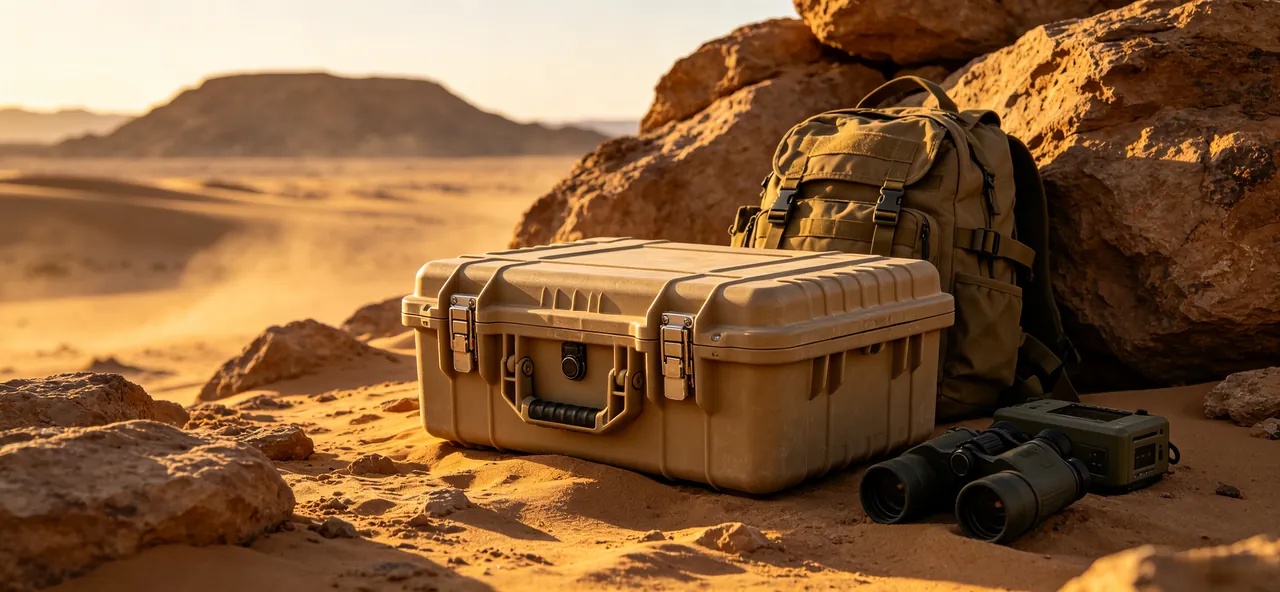
The service life of an expedition case depends on daily maintenance rather than one-time quality. After every mission, wipe the interior and exterior with a soft cloth and neutral cleaner to remove salt, sand, and ice - especially cleaning the seal groove and pressure equalization valve. If the seal strip hardens, cracks, or shows permanent compression marks, replace it promptly, because an aged seal is the main source of leakage. For long-term storage, leave the case half-open or release the latches to avoid permanent deformation of the seal from prolonged compression, and store in a cool, dry, sun-shaded place to slow material aging. For metal parts, apply a thin layer of rust-preventive oil periodically; for cushion liners, keep dry to prevent mildew. Establish a "one case, one file" ledger recording each mission's environment, load, and damage to judge retirement timing. Scientific lifecycle management can extend a single case's service years well beyond the empirical three to five. More systematic care is in the protective case maintenance guide, which addresses seal replacement intervals. For multi-year continuous expeditions, include cases in the annual inspection list and make seal replacement, logger calibration, and seal retest fixed actions, forming a repeatable equipment-support rhythm that keeps the whole fleet field-ready. A practical maintenance cadence links directly to mission rhythm. At the end of each deployment, the case is cleaned, dried, and inspected; at the end of each season, seals are rotated and loggers calibrated; at the end of each service life, a retirement decision is recorded. Capturing this cadence in the one-case-one-file ledger turns maintenance from ad hoc habit into a managed process, and the data also supports warranty and spare-parts planning. Teams that adopt this discipline report fewer mid-expedition failures and lower long-term cost per deployed instrument, which is the ultimate measure of a protective case program.
FAQ
Q: What is the core difference between a scientific expedition instrument case and an ordinary toolbox? A: The core difference lies in design objective and verification standard, which are completely different. An ordinary toolbox only solves the problem of putting things inside and moving them conveniently, with almost no hard indicators for waterproofing, temperature tolerance, or impact resistance. An expedition instrument case, by contrast, must provide system-level protection for instruments and samples in extreme environments. It requires a shell with low-temperature and impact-resistant engineering structure, sealing that reaches the IP67 dust and water rating, a liner that precisely locates instruments to withstand transport vibration, a pressure equalization valve to adapt to high altitude and air freight, and often an integrated temperature-humidity logger to retain sample environment evidence. In short, the ordinary box protects against "losing tools," while the expedition case protects against "broken data and wasted samples." In actual procurement, require the supplier to provide test reports corresponding to the standards rather than trusting only advertised parameters. Only by grounding protective capability in verifiable standards can the case truly be trusted in uninhabited territory. Many teams have suffered from "cheap boxes cracking en route," and post-mission reviews almost always trace the failure back to the absence of standard acceptance checks.
Q: How should shell material be selected for polar and plateau expeditions? A: Material selection starts with the mission's lowest temperature and transport mode. For polar work that operates dozens of degrees below zero for long periods, prefer rotomolded PE one-piece cases because PE keeps good toughness at low temperature without brittle cracking, and its uniform wall and strong impact resistance suit the environment. If the mission is dominated by light instruments and emphasizes portability, modified PP injection cases are friendlier in weight. For plateau air freight or scenarios needing electromagnetic shielding, aluminum profile cases are an option, but watch their self-weight and cost. Whatever the material, the shell should pass UL94 flame-retardant evaluation, and attention should go to reinforcement ribs and impact bumpers. Note that material choice must be linked with liner and temperature-control plans: polar favors passive insulation and cold storage, plateau favors pressure equalization and light weighting. Following the selection logic in the outdoor high-altitude case avoids the trap of buying by feel. Ultimately, accept based on measured typical values rather than brochure claims, and specify in the contract the proportion and method of arrival sampling inspection to be performed.
Q: How reliable is the IP67 rating in real field conditions? A: IP67 is a typical protective capability measured under laboratory conditions per IEC 60529 and GB/T 4208, meaning full dust protection and no water ingress after immersion at one meter for thirty minutes. But real fields have thermal expansion from temperature swings and sand embedding in the sealing face, both of which lower actual protection. Safeguards are fourfold: first, visually inspect the seal before and after every mission and replace it on any deformation or void; second, ensure all four latches clamp evenly with no single-side gap; third, avoid prolonged direct sun that accelerates seal aging; fourth, draw samples from bulk delivery for immersion checks, using empirical values to verify consistency. True reliability comes from "standard testing plus daily maintenance," not just the nameplate. For more specific validation methods, the IP67 submersion test guide explains the procedure in detail and is worth reading before acceptance. In coastal and polar salt-spray environments, the seal's weather resistance should also be listed as a separate arrival inspection item to prevent hidden aging from surfacing mid-mission when replacement is hardest.
Q: Why must an expedition case be equipped with a pressure equalization valve? A: When a team flies or drives over a pass thousands of meters high, outside pressure drops sharply in a short time. If the case is fully sealed, the internal-external pressure difference tears the seal strip outward; at best the lid is "sucked shut" and hard to open, at worst the shell bulges and the seal fails. The pressure equalization valve is essentially a breather with a waterproof breathable membrane: it lets air move slowly to balance the difference while blocking liquid water and dust through an ePTFE membrane, so it breathes yet stays waterproof. It is essential for plateau and air-freight expeditions. When selecting, focus on airflow rate, opening-closing differential, and whether the protection rating matches the case. After missions, clean sand and ice from the membrane surface to prevent clogging failure. The principle is explained more finely in the outdoor case pressure valve guide, and the engineering logic is consistent across both resources. During the rapid ascents of helicopter sling loads, the valve's response speed decides whether brief internal negative pressure appears, so missions combining high altitude and air freight should prefer models with a lower opening-closing differential for safer operation.
Q: What practical value does the sample compartment design bring to expeditions? A: The practical value of sample compartments shows in three aspects: order, isolation, and reuse. For order, multiple extractable cells let rock cuttings, water bottles, filter membranes, and biological specimens be stored separately, avoiding the confusion of mixed packing. For isolation, cells contacting liquid carry leak trays and sealing rings so that even if one bottle leaks it will not contaminate other samples, which is critical for research that tolerates zero cross-contamination. For reuse, the modular liner reconfigures quickly; the same case only needs a new inner tray when moving between sites, avoiding repeated purchase. Compartment material should be inert, non-toxic, and easy to clean to avoid reacting with samples. For instrument hosts, a fixed bay plus a fitted groove liner achieves six-degree restraint. Teams needing keyway-cut liners can borrow the layout thinking from the sample transport case to plan cell arrangement effectively and reduce design iteration. In microbial and water-sample tasks, the leak-proofing and labeling ability of compartments directly affect later experimental validity, so each cell's purpose, capacity, and seal grade should be defined early.
Q: What role does the temperature-humidity logger play in sample transport? A: The logger's role is to leave traceable evidence of the sample's entire-environment journey, which is vital for research compliance. Many samples become invalid after a single freeze-thaw or overheating exposure, yet show no visible change; only the recorded curve can prove they stayed within the specified range. Loggers split into single-use low-temperature labels and reusable electronic loggers; the former suits one-way transport at low cost, the latter is precise and Bluetooth readable for long cycling missions. An advanced approach uses wireless sensors to report data in real time and alert on over-temperature. Deployment needs three points: power independent of the main instrument so logging continues if it shuts down; low-temperature cells for the battery; and sensor placement at a position representing the actual sample temperature rather than near a heat source. This matches the quality loop emphasized in the lab sample transport case and strengthens audit readiness. In cross-border or third-party-audited projects, the completeness and tamper-resistance of the curve often decide peer acceptance, so time sync and export format must be standardized beforehand to avoid disputes later.
Q: Which certifications and test documents should be required when procuring expedition cases? A: Procurement should require certifications and test documents matched to mission risk. At the base level, dust and water protection should correspond to IP testing under IEC 60529 and GB/T 4208; weather resistance can reference the low-temperature, high-temperature, drop, vibration, and humid-heat procedures of MIL-STD-810H; transport performance can look at the ISTA series; air freight also needs attention to UN testing and dangerous-goods packaging rules. Domestic research institutes often require reports from CNAS or CMA accredited labs. It must be stressed that standards give methods and pass criteria; specific values are typical or empirical and vary by batch, so always retest samples before bulk purchase. Suppliers able to attach test documents by case number improve full traceability. More compliance detail is in the MIL-STD-810H explained guide, which helps interpret how each procedure maps to field reality. In polar programs, add low-temperature open-close life and salt-spray corrosion tests as extra items to judge whether a case can survive a full field season without hidden failure that only appears far from support.
Q: What are the key steps in daily maintenance of an expedition case? A: Daily maintenance decides the actual service life, and the key steps are five. First, after every mission wipe interior and exterior with a soft cloth and neutral cleaner, focusing on the seal groove and pressure equalization valve to remove salt, sand, and ice. Second, inspect the seal strip and replace it promptly if it hardens, cracks, or shows permanent compression marks, because aged seals are the main leakage source. Third, during long storage release the latches and leave the case half-open to avoid plastic deformation of the seal from prolonged compression, and store in a cool, dry, sun-shaded place. Fourth, periodically apply a thin rust-preventive oil to metal parts and keep cushion liners dry to prevent mildew. Fifth, build a one-case-one-file ledger recording each mission's environment, load, and damage to judge retirement timing. Scientific maintenance markedly extends service years. Systematic methods appear in the protective case cleaning guide with dedicated seal replacement cycles. For multi-year continuous expeditions, include cases in the annual inspection list and make seal replacement, logger calibration, and seal retest fixed actions to form a repeatable equipment-support rhythm that keeps the fleet ready.