Home / Boxknow / Skiing & Snowboard Cases: Move the Gear Through Snow
Skiing & Snowboard Cases: Move the Gear Through Snow
Published 2026-09-05
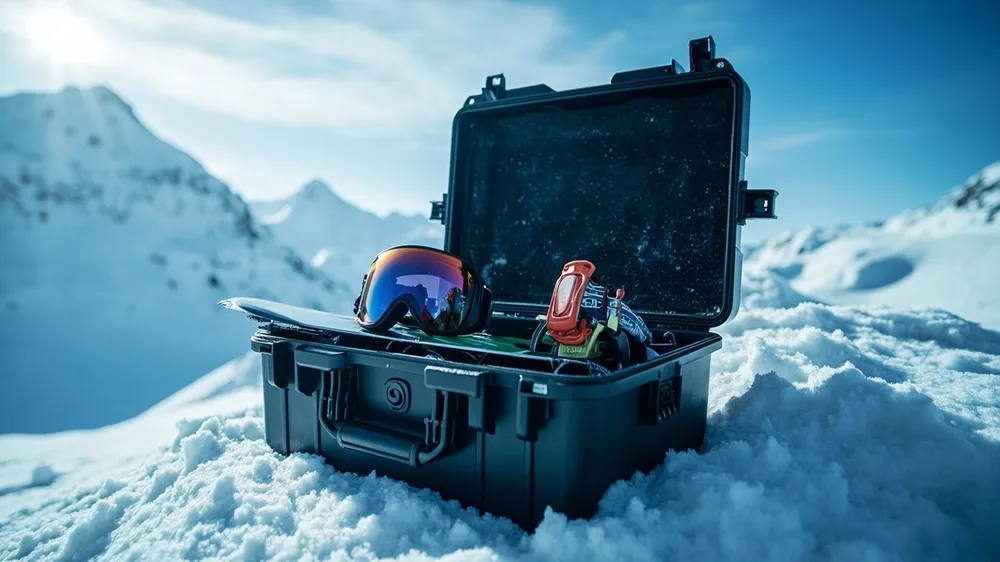
Skiing gear is 'precise and cold-sensitive' slope kit. Goggle lenses fear scratch, an avalanche beacon fears crush and mishandling, and bindings fear knock. A soft bag resists dust but not drops; bare gear is both damaged and lost on the slope. A qualified ski case fixes the goggles, isolates the beacon, absorbs shock and protects gear through snowfield carry. This guide covers choice and use from a slope view.
Three Kinds of Ski Risk
Goggle loss: lens fears scratch and crush.
Beacon hazard: crush or mishandling.
Binding loss: metal knocked.
Priority: beacon isolation > goggle care > binding care.
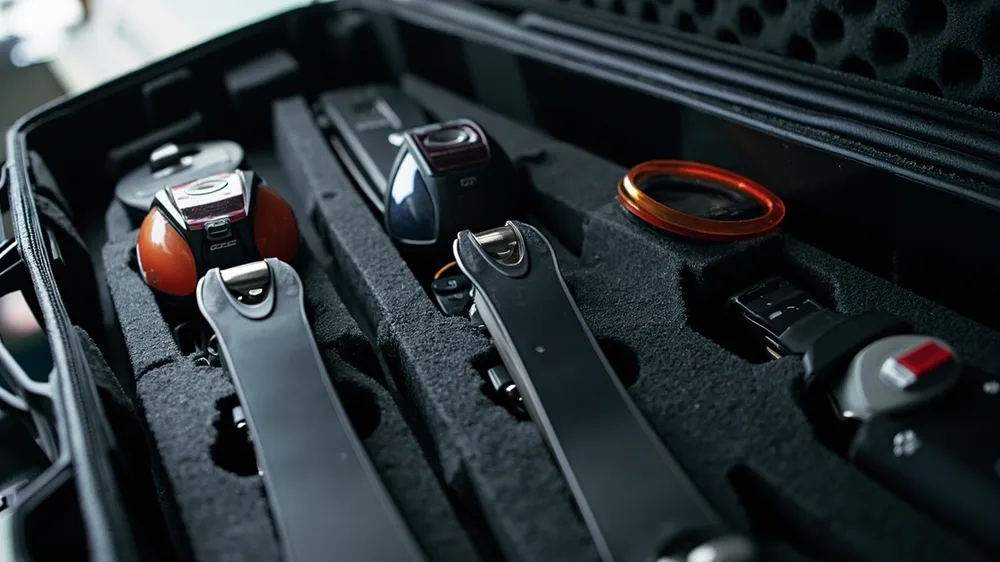
Cutouts fix the goggles and isolate the beacon from crush.
The avalanche beacon is the risk source and must sit in an independent hard cavity, not crushing, not mishandled. The idea follows drone battery case hard isolation; the cavity method is in custom foam. In transit the beacon is fixed separately, not crushed against goggles.
First, beacon mixed mishandling hazard. Second, goggle bottoms out scratches lens. Third, binding knocked metal hurt. Fourth, no metal pin loosens after thousands of cycles. Fifth, recycled resin, see virgin vs recycled. Sixth, no humidity control grows mold.
Summary
The key to a skiing and snowboard case is 'isolate the beacon, care for goggles, protect bindings, resist cold': independent hard isolation removes mishandling risk, floating cavities protect the lens, the binding's own cavity avoids knocks, metal latches survive slope bumps, and cold-rated material fights low-temperature brittleness. At order time, write the kit list (with beacon spec) and travel mode as clauses, then ask the supplier to show material and test proof. With the habit of 'beacon isolated alone, goggles floating in place, snow off after return, desiccant replaced regularly', slope gear stays sharp across many seasons. For isolation and floating, cross-read drone battery case and drone foam design.
Ski cases reuse the same rugged discipline as outdoor boxes.
Q5: How to size? A: Measure the longest item and beacon count, see how to size.
What is the difference between a ski and snowboard equipment case and an ordinary gear bag?
An ordinary gear bag only solves carrying, while a ski and snowboard equipment case must also handle low temperature, meltwater damp, rough airline handling and long vibration. Skis, bindings and boots are precise and expensive, and a knocked binding may release or deform, a compressed boot shell loses fit and power transfer, and a bumped edge is damaged. A dedicated case fixes the board with a moulded liner, leaves clearance for bindings and locates boots separately while staying tough in the cold. It combines low-temperature protection, moisture resistance, impact protection and sorted fixation, whereas an ordinary bag usually covers only part of this.
Why does ski transport need low-temperature protection?
Because low temperature changes material performance. A ski is built from a core, glass or carbon layers and a base, a binding contains plastic and springs, and a boot shell is usually hard plastic; in the cold these materials lose toughness and become brittle, cracking more easily on impact, and springs and plastic buckles may stiffen and fail. If equipment is exposed to severe cold or repeated freeze-thaw in transport, micro-cracks grow. The case should therefore stay tough at low temperature, the liner should not harden, and the board and bindings need cushioning so that cold combined with impact does not cause irreversible damage.
How are bindings protected in transport?
Bindings are the most easily overlooked and most easily damaged parts. They contain springs, plastic housings and adjustment mechanisms, and after a knock may release, deform or change their release value, directly affecting riding safety. Leave independent clearance for the bindings, wrap them in soft padding and fix them together with the board so they touch neither the case wall, the boots nor the other board; removing the bindings for separate storage further lowers the risk. Record the binding release (DIN) setting before transport and verify it on arrival; for smart bindings with electronics, also watch the cold and the battery. Fix bindings and board as one unit to prevent mutual knocking.
What should be noted when storing snowboard boots?
Boot shells are hard, bulky and high-centred and most fear deformation under heavy objects and mutual crushing in transport. Locate each boot independently and keep the shaft in shape, using boot trees or filling to stop it collapsing; drain moisture from inside before packing to prevent mould and odour; clear snow and mud from the soles so the liner is not contaminated. Separate hard shells from soft socks and gloves and cover metal buckles to avoid scratching board surfaces. Boots are usually heavy, so put them in the lower layer or in a separate boot bag rather than on top of skis and bindings. For boots with heat-mouldable liners, avoid long hot storage that distorts them.
Can a ski case be checked as airline baggage, and what are the requirements?
Most airlines allow ski and snowboard equipment as checked baggage, but requirements vary by carrier. They generally require a hard or reinforced case, internal fixation and locking, with dimensions and weight within oversize baggage rules, and some routes need advance declaration and a fee. Fix skis and bindings so they do not shift under hold handling; boots can go in a separate case or the same case but must be fixed. Electronic items with lithium batteries, such as heated insoles and action cameras, must be handled under lithium battery rules. Confirm the latest carrier rules before departure and mark the case with name and contact details to avoid loss and mix-ups.
What effect do snow and meltwater have on equipment and the case, and how is moisture prevented?
Snow and meltwater are the most common moisture source in ski equipment transport. Snow melting inside the case leaves the liner and equipment damp for a long time, rusting ski edges, corroding binding metal parts, causing boot liner mould and odour and ageing the foam liner. Shake snow off skis and boots before leaving the resort, wipe edges and metal parts dry and give the edges a thin coat of rust-preventing wax if necessary; put replaceable desiccant in the case and open and air the liner at home. The case itself should be water-resistant so meltwater does not seep in and pool at the base.
How should the liner and fixation be designed to stop skis sliding inside the case?
The key is fit, limit and cushion. The liner should be grooved or raised to fit the board profile so the body sits into it, with lateral limits at both sides and at tip and tail to stop fore-and-aft movement; straps or elastic bands press the board and bindings onto the padding to stop vertical bouncing; and the binding area is recessed with a soft pad to reduce hard contact points. A two-ski case also needs a divider between the boards so surfaces and edges do not scrape. Liner material should not harden or shrink in the cold so grip is retained; for an adjustable case, confirm there is no board movement with a loaded bump test before finalizing.
What is most often overlooked when procuring a ski and snowboard equipment case?
Four items are most often overlooked. First, low-temperature performance, where material is chosen on room-temperature data and the case and liner turn brittle and crack at the resort. Second, binding clearance and release protection, where the release value changes after transport without anyone noticing. Third, moisture and drainage, where meltwater pools at the base and rusts edges and breeds mould. Fourth, airline oversize and weight limits and locking requirements, discovered only at the airport. Write the equipment list and dimensions, case material and low-temperature toughness, liner and fixation scheme, moisture and drainage design, baggage fit and locks, and material certificates and sampling rules into the file, and agree a first-article confirmation.