

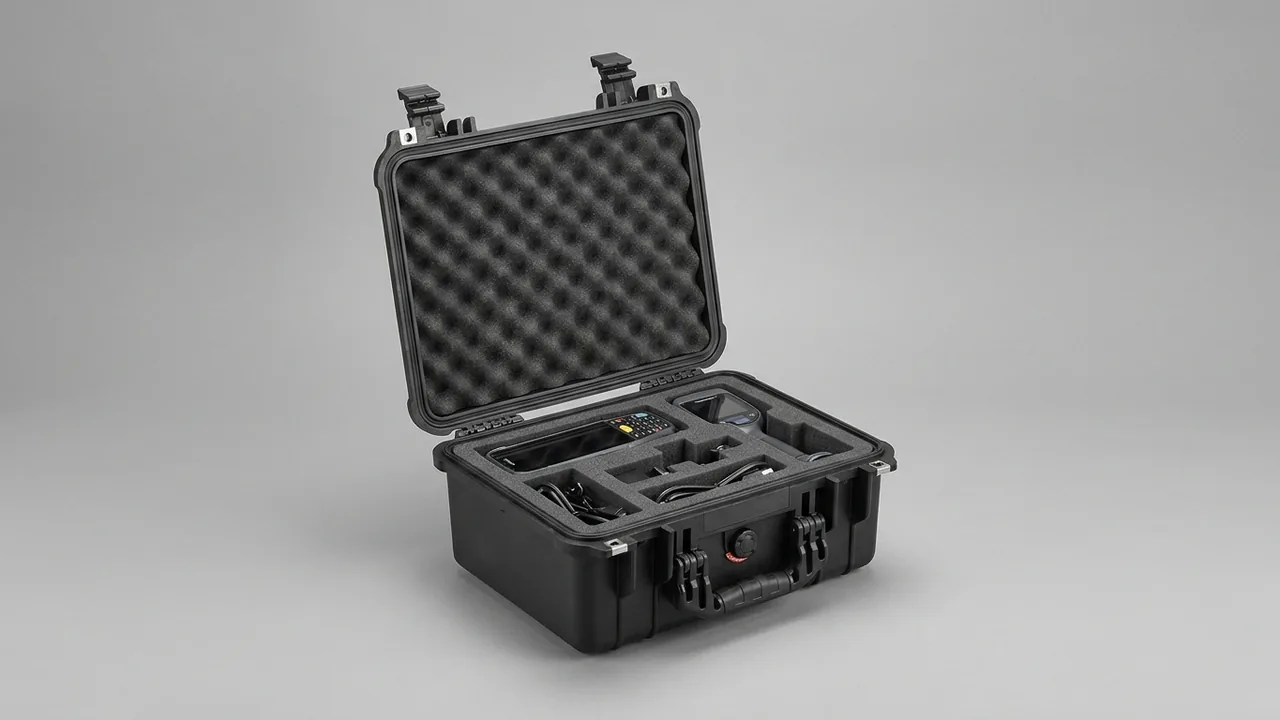
Wine estates expanding, performing seasonal overhaul or building a cellar overseas routinely move destemmer-crusher components, grape press membranes, fermentation-tank fittings, oak-barrel hardware, corks and closures, wine pumps and filtration units across continents. The takeaway is blunt: what decides success is not how tough the shell is, but how three things are solved at once — hygienic materials that will not bleed, tight separation from oxygen and sulfur, and an insert that can live with clean-in-place (CIP) duty. A model-matched protective case brings stainless pitting, oak-hoop distortion, cork compression failure, pump-rotor scoring and filter-element contamination risk down together. The sections below cover how the parts are grouped, what the material chemistry does, hygiene rules, sealing requirements, insert design, climate handling and carriage trials, so a cellar team or an equipment builder ends up with real numbers and a picking checklist.
Many estates still pack equipment parts in wooden crates with loose foam chips, and four failure modes dominate on arrival. Stainless fermentation-tank sample valves and temperature sockets deform in transit collisions and seal poorly after refit, leaking wine. Oak-barrel hoops and bungs shift under compression and need reshaping on arrival. Corks and screw caps lose elasticity after pressure and compromise closure reliability. The hidden one is filter elements and piping contaminated by ordinary foam debris, needing extra rinse before commissioning. Besides, ocean and warehouse humidity triggers stainless pitting, and residual sulfur dioxide or fermentation odor inside the case, if not isolated, crosses into later batches. Similar exposure appears in the distillery column case and the brewery equipment case, though the medium is different. What follows turns each issue into a concrete protective step.
Table of Contents
- Winery Equipment Component Classification and Vulnerable Points
- Oxidation and Sulfur Sensitivity of Stainless and Oak Parts
- Sanitary-Grade Material and Food-Contact Compliance
- Ingress Protection and Sealing: IP67 per IEC 60529 and GB/T 4208
- Cushioning Liner Customization and CIP-Compatible Design
- Separation Protection for Corks, Closures and Fragile Parts
- Temperature, Humidity and Sulfur or Oxidation Control
- Transport Test Standards and Validation
- Packing Procedure and Traceability
- Model-Matched Liner and OEM/ODM Customization
- Wine Equipment Sizes and Case Spec Reference
- Transit Damage Modes and Avoidance
- FAQ
- Closing Notes and Further Reading
Winery Equipment Component Classification and Vulnerable Points
Wine-line equipment splits into four groups — pre-treatment, fermentation, aging and bottling — and the precise parts moved often include destemmer-crusher augers, screens and crushing rollers; grape-press bladders, plates and juice valves; fermentation-tank manways, sample valves, temperature sockets and level probes; oak-barrel hoops, bungs, taps and gaskets; corks, screw caps, capsules and closure films; wine-pump heads, rotors, impellers and seals; and filter housings, cartridges, plates and piping. Arrival damage seldom traces to sheer mass; the trouble sits at the mating faces and in the compliant members.
From a protective rating view, wine parts fall into three classes. Sanitary interfaces and polished faces (such as 316L ports with Ra ≤ 0.8 µm) are "zero-scratch" class: the liner must fully wrap them and keep clearance. Soft deformable parts (bladders, corks, cartridges) are "zero-compression-loss" class, needing pressure-limited support so elasticity is not lost. Heavy tank parts and frames are "impact-limited" class, relying on a bottom load layer to absorb energy. Unlike the dairy processing parts case, which centers on microbial control, the wine scenario emphasizes oxidation and sulfur isolation, so the rating logic must shift accordingly.
Oxidation and Sulfur Sensitivity of Stainless and Oak Parts
Wine is extremely oxygen-sensitive; trace oxidation produces cooked, nutty fault flavors. It is also sulfur-sensitive: sulfur dioxide is a legal preservative, yet sulfur residue on equipment surfaces or sulfur odor picked up in transit causes "reduction" or rubbery off-notes. Mechanically, 316L stainless in chloride and high-humidity environments easily forms pitting craters where the passive film breaks and corrosion accelerates; oak-barrel iron hoops rust under salt mist and compression, cracking the wood; corks compressed beyond their rebound threshold deform permanently and lose elastic sealing.
The first protection principle is soft-contact, isolation and humidity control. Soft parts rest in flexible pockets with low sustained pressure so elasticity is not lost. Polished metal faces are wrapped in dust-free PE film or food-grade isolation paper before entering locating slots. The case carries humidity indication and desiccant, holding relative humidity around 40% to 55% to suppress pitting without drying seals. It must be stressed that ordinary recycled foam may bleed odor molecules and contaminate corks and closures, so the custom foam insert guide must specify a low-bleed, odor-free food-grade recipe. These humidity numbers are experience values from long wine-shipping cases, not one-off test results, and they work only as part of a layered barrier rather than alone.
Sanitary-Grade Material and Food-Contact Compliance
Any face that touches wine is a contact face, so nothing may migrate out of the packing. Taking the GMP and ISO 14644 cleanroom view, the insert, barrier film and tray we choose are all safe for contact and contain no plasticizer, sulfide or smell that could transfer onto valves or corks. Overseas buyers receive a declaration of contact suitability tied to the EU 10/2011 framework or their own national rule.
Unlike the aseptic filling case, which is built around keeping microbes out, a cellar worries about chemistry and smell crossing between parts, so four rules drive the hygiene layout: no sulfur, no halogens, minimal bleed, no off-odour. Should the insert include a metal tray, pick 316L with a surface finish of Ra ≤ 0.8 µm so CIP washing and repeated use stay easy; if the polymer shell can ever reach a wine-path item, confirm it complies with the contact rules of the destination market. Experience documented in the cleanroom equipment case transfers usefully here, though cellars add their own twist: the material must also stand up to tartaric acid, citric acid and the alkaline wash used on site.
Ingress Protection and Sealing: IP67 per IEC 60529 and GB/T 4208
Reading IEC 60529 together with GB/T 4208, the leading digit of the IP rating stands for dust protection and the following digit for water protection. Wine hardware moves between docks, cellar floors and border containers, so we set the case exterior to IP67, meaning complete dust exclusion and survival of a thirty-minute one-meter dunk without ingress. That rating is earned by the whole closure system — seam, foamed gasket, drain slope and latch force — not by any single gasket on its own.
The table below gives an IP selection reference for wine scenarios.
| Rating | Dust | Water | Wine-part scenario |
|---|---|---|---|
| --- | --- | --- | --- |
| IP54 | Partial | Splash | Cellar moves, indoor storage |
| IP65 | Full | Low-pressure jet | Road haul, non-sea |
| IP66 | Full | Strong jet | Yard storage, wet season |
| IP67 | Full | 1 m / 30 min | Sea freight, quay lift, damp cellar |
The seal material must tolerate tartaric acid and CIP alkali, avoiding hardening and cracking after long contact. For seal-structure detail and clamp force, the waterproof-case-ip and case-seal-materials references give compression values that help when a winery sizes a damp-cellar package.
Cushioning Liner Customization and CIP-Compatible Design
A liner for wine parts has one job: hold the impact peak acceleration below what the piece tolerates. We base the design on an equivalent drop of 60 to 120 cm, the range that represents rough yard handling and truck vibration, and we size foam thickness and modulus against that. For zero-scratch 316L ports the foam gets a wrap-around pocket keeping 3 to 5 mm between steel and wall, with a flexible film as the only contact. For zero-compression-loss soft parts we build a cradle plus a low-pressure pad so the weight above never squeezes the elasticity out of a cork or membrane.
Material selection: cross-linked PE (XPE) foam resists tartaric acid and alkali wash and rebounds well, ideal for ports and tank parts; EVA foam (density 30 to 80 kg/m³) suits pump-head small parts; PU self-skinning suits frame bottom load bearing. The table compares three liner materials in wine scenarios.
| Liner material | Density | CIP resist | Rebound | Wine-part use |
|---|---|---|---|---|
| --- | --- | --- | --- | --- |
| XPE foam | 33 to 100 kg/m³ | Excellent | Excellent | Ports, tanks, temp sockets |
| EVA foam | 30 to 80 kg/m³ | Medium | Medium | Pump head, impeller, small parts |
| PU self-skin | 40 to 120 kg/m³ | Good | Good | Frame, press plate bottom |
JUNZHIJIA cuts XPE inserts to drawing for wine equipment, shaping pockets that follow destemmer screen curvature, the fermentation manway flange and the pump-head outline; one box can hold two grades of foam so scratch-critical and impact-limited parts travel together. This EVA foam insert custom process has served several wine-equipment OEM projects, and the liner itself tolerates the winery's clean-in-place conditions.
Separation Protection for Corks, Closures and Fragile Parts
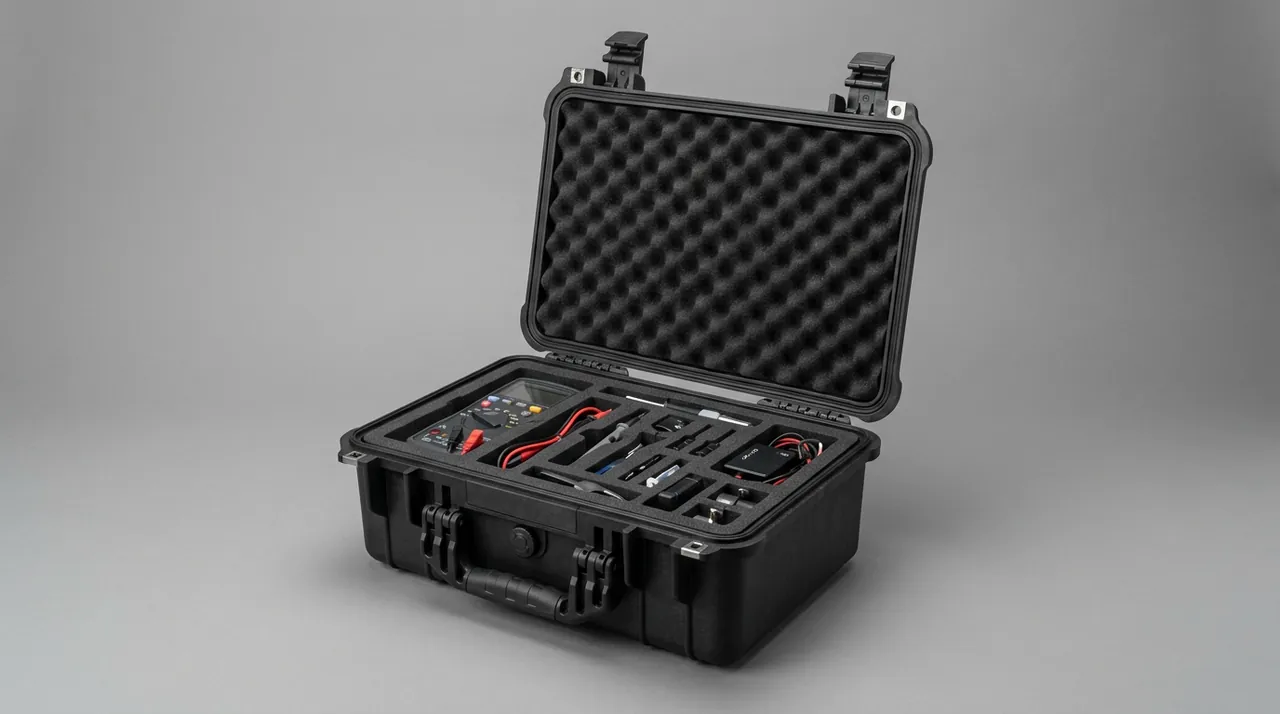
Corks, screw caps, capsules and closure films are the key to closure reliability yet fear sustained pressure and odor cross-talk most. Protection separates these into their own cells, physically isolated from metal parts and foam debris, with a low-pressure flexible pad inside so stacking weight cannot crush elasticity. Natural cork is humidity-sensitive: too dry shrinks and leaks, too wet molds, so a small humidity packet in the cell holds local humidity around 50% to 65%.
Closure films and capsules are thin-wall and fold-prone, so lay them flat in rigid tray grooves and forbid curling under pressure. Filter cartridges and plates are the filtration core; once contaminated by foam debris or oil they directly lower wine clarity, so they must be sealed in dust-free bags before entering locating slots. Oak-barrel hoops, bungs and taps should be fixed by a shaping bracket to prevent wood cracking or hoop shift from collision in transit. Unlike the cheese vat case, which guards tank hygiene, the wine closure parts emphasize elasticity retention and odor isolation, so the cell logic must be designed accordingly rather than borrowed wholesale.
Temperature, Humidity and Sulfur or Oxidation Control
A sealed IP67 shell still leaves the interior climate to be managed actively. On equatorial lanes a container interior can pass 60°C, and as night follows day the internal volume breathes; if any seam is imperfect, that pump action pulls damp, sulfur-bearing outside air in. We set indicating desiccant — silica gel or montmorillonite at roughly 50 to 200 grams per cubic meter of case volume, by experience value — beside a humidity card; for very sensitive cork we add a small humidity packet instead of a VCI tablet.
To suppress oxidation, place an oxygen absorber or a small nitrogen-atmosphere sachet (where parts tolerate it) to lower oxygen concentration; to avoid sulfur cross-talk, separate metal parts from corks with a sulfur-free isolation film and confirm no residual disinfectant odor before packing. The insulation-panel thinking in the extreme temperature case can buffer extremes when embedded in the wall, protecting heat-sensitive closure films and enzyme-based accessories. Keeping the air dry is the last guard against oxidation and sulfur taint, and it only holds when a barrier film and climate control are stacked with it rather than trusted alone. Saturated desiccant later gives the moisture back, so any storage past three months should swap the pack at a transit stop and log it.
Transport Test Standards and Validation
Wine hardware deserves proof rather than assumption, so we test against recognized standards. Our wine-equipment plan draws on ISTA 3 for container and LTL random vibration and drop; GB/T 4857 for the stacking, drop and vibration fundamentals; ASTM D4169 to pick the hazard grade from the distribution cycle (rail, truck, aircraft, warehouse); and MIL-STD-810H purely as a source of environmental test recipes — thermal, hygrometric and vibration spectra — clearly outside military certification, so the methods are borrowed and no certificate is claimed.
For wine equipment we apply this gradient: (1) a vibration sweep from 5 through 200 Hz at between 0.5 and 1.5 g for one or two hours; (2) a corner-edge-face drop sequence — one corner, three edges, six faces — at the GB/T 4857 mass-based height (commonly 60 to 80 cm); (3) a spray or dunk check of the IP67 seal. The step-by-step methods are in the ISTA transport testing procedure and the GB/T 4857 transport packaging case, with the hazard grade chosen from the ASTM D4169 distribution cycle case. Because wine parts often move by sea then by truck then wait in a warehouse, we prefer choosing the worst-case leg from ASTM D4169 and testing to that level instead of averaging the route, since the single rough container transfer is what actually breaks an under-rated soft-part cradle in practice.
Packing Procedure and Traceability
Packing should follow a locked routine so nobody improvises: (1) goods-in check — confirm the model and count, and photograph ports and corks as received; (2) steel care — wipe with a lint-free cloth and a food-grade solvent, then let it air dry; (3) barrier wrap — polished ports go into dust-free PE film while corks move to their own humidity compartment; (4) insert loading — seat every part in its pocket and check the scratch-free clearance; (5) drying agents — add desiccant, an oxygen absorber and a humidity card, then log the batch; (6) lid down — bring the latches to the specified torque; (7) outer marking — name, gross weight, centre of gravity, this-way-up, keep-dry, fragile; (8) closing seal and a photograph for the file.
Traceability matters for every step. Every OEM consignment ships with a packing-card template and an inspection sheet, so a cellar can hold the same discipline through a seasonal rebuild or a change of vendor without retraining staff. The canning line case shows how much repeatable rules matter for steady batch delivery; wine adds its own twist, since cork condition and odour checks must be recorded or closures arrive already spoiled.
Model-Matched Liner and OEM/ODM Customization
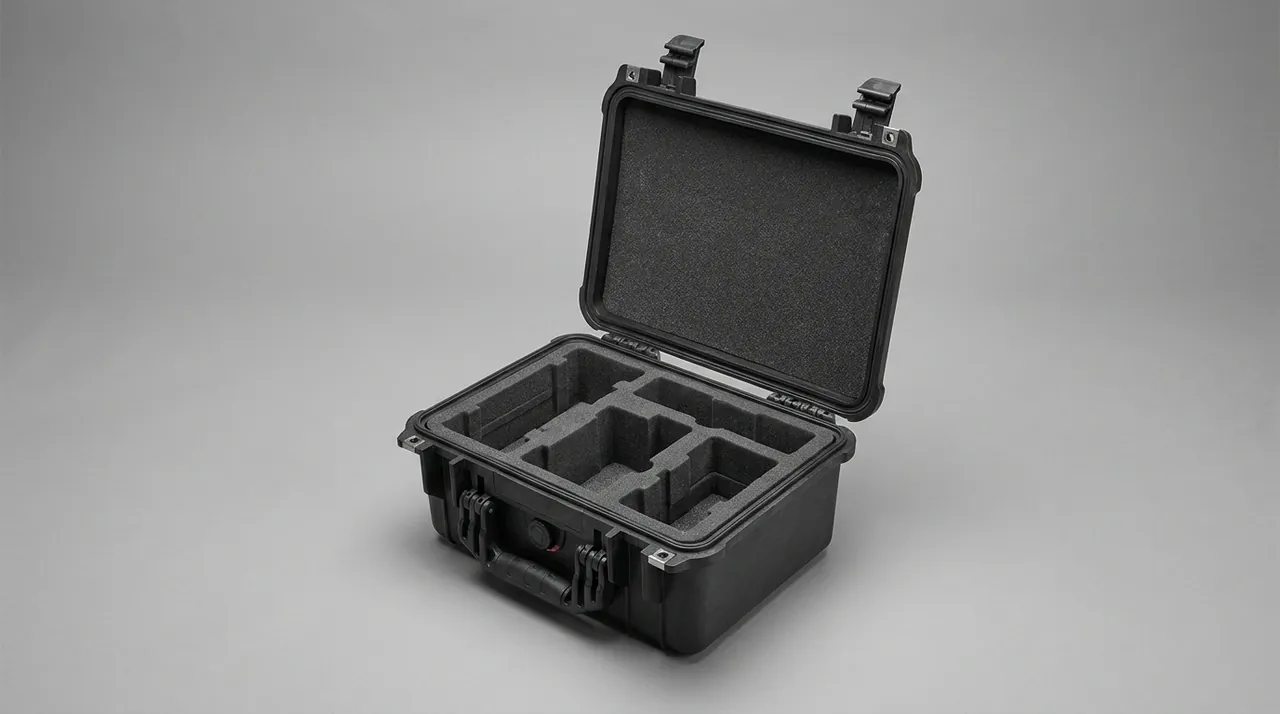
Wine machinery comes in countless shapes — screen curvature, manway flange, pump-head profile and hoop span all change from model to model, which is why a one-size insert ends up "close but unstable." Matching the drawing is the answer: take a single tank's manway and temperature-socket geometry, or a single pump-head profile, and cut an insert plus locator that gives every piece its own pocket. JUNZHIJIA takes OEM/ODM work and will go from a customer's 3D model or a physical scan to a finished insert — mould making, gasket choice, shell adaptation — then hand over the packaging validation documents (vibration, drop and IP readings given as typical or experience values, never as certification).
Wine-equipment makers should treat the case as a standard accessory designed and delivered with the machine, which guards brand quality at handover and trims on-site delays caused by damaged parts. Model-matched design also allows reuse: the same model returning for service drops straight back into its original case, closing the loop. For a supplier's moulding skill and quality system, the piece on how to choose a case OEM factory is worth reading, so the winery ends up with packaging made for the machine rather than improvised.
Wine Equipment Sizes and Case Spec Reference
As a rule we leave 30 to 50 mm of liner and cushion clearance beyond the part's largest envelope on every side. The table below gives experience-value references for common wine-equipment parts — always confirm against a physical measurement.
| Component | Approx. OD / length | Clear interior suggestion | Liner class |
|---|---|---|---|
| --- | --- | --- | --- |
| Destemmer crusher screen | 500 mm dia | 620×620×200 mm | Zero-scratch |
| Fermentation manway cover | 400 mm dia | 520×520×180 mm | Zero-scratch |
| Grape press membrane | 700 mm long | 820×420×120 mm | Zero-compression |
| Wine pump head | 350 mm long | 470×320×320 mm | Impact-limited |
| Filter cartridge set | 600 mm long | 720×280×280 mm | Zero-compression |
| Oak barrel hoop kit | 600 mm span | 720×200×200 mm | Impact-limited |
Aim to keep each case within one-person carry weight (roughly 25 to 30 kg); if it is heavier, fit case wheels and trolley handle or switch to a forklift-slot base. Pipes that run long are better split across modular boxes, each numbered so they go back together at the far end; long-part handling is covered in the beverage bottling parts case.
Transit Damage Modes and Avoidance
In our own long service record with wine-equipment clients, five kinds of arrival damage keep recurring: (1) scratched ports, caused by pockets that grip too hard or by hard items sharing a space — answered with full wrapping and one cell per part; (2) cork elasticity loss from stacking pressure — solved by independent pressure-limited cell and humidity control; (3) oak-hoop shift from collision — solved by shaping bracket fixation; (4) cartridge contamination from foam debris — solved by dust-free bag and separate slot; (5) pitting on stainless, tracked to damp air and a shell rated below IP67 — fixed with desiccant plus a fresh seal check. Every entry above ties back to one engineering fix, so the list doubles as a damage-cause-to-countermeasure sheet that travels in the lid pocket.
Cross-border freight also calls for wood-packaging quarantine compliance (ISPM 15 marks among them); confirm conformity when the outer case is solid wood or fumigation-free board. Pictograms for up, fragile and keep dry should track GB/T 191 and the matching international symbols. For the winery's yearly equipment check, the protective case service life years article supports a periodic inspection plan.
FAQ
Q: Why does a winery equipment case specifically demand sanitary-grade materials? A: Wine-equipment inner surfaces are food-contact surfaces, and if packaging materials bleed plasticizer, sulfide or odor molecules, they directly contaminate ports, corks and closures, then cross into the wine as a hard-to-trace quality incident. Therefore liners, isolation films and trays should use food-contact-safe materials under four principles: sulfur-free, halogen-free, low-bleed, odor-free. Ordinary recycled foam bleeds odor and must never touch corks; a metal pan should be 316L stainless with surface Ra ≤ 0.8 µm for CIP cleaning. Overseas markets additionally expect a written contact-suitability statement tied to the EU 10/2011 framework or the equivalent local rule. Sanitary grade is not a marketing word but the real defense against extra pre-commissioning rinse, rework and flavor contamination, and it belongs in the purchase specification rather than a verbal agreement between buyer and supplier. For estates bottling under their own label, we suggest photographing the port condition at goods-in and comparing it with the pre-ship record, because a contaminated fitting discovered after filling is far more expensive than a five-minute inspection that confirms the sanitary barrier held through transit.
Q: Why do corks fail in transit and how are they protected? A: Natural cork seals by elasticity and is sensitive to both sustained pressure and humidity. If upper parts press it onto a hard base beyond the rebound threshold, it deforms permanently and loses sealing ability on arrival; too dry makes it shrink and leak, too wet invites mold. The correct method is to give corks their own cell, physically isolated from metal and foam debris, with a low-pressure flexible pad inside and no stacking compression; place a small humidity packet to hold local humidity around 50% to 65%. Screw caps and capsules are thin-wall and fold-prone, so lay them flat in rigid tray grooves and forbid curling under pressure. Oak-barrel bungs need a shaping bracket too. This cell-plus-pressure-limit protection raises arrival pass rate from luck-based to predictable, the single most watched point when an estate buys cork across oceans and cannot inspect every piece. A useful habit is to pack a spare set of closures in a separate small case so that if one cork shows pressure marks on arrival the line is not stopped, and the damaged piece becomes a sample for the supplier rather than a reason to delay the vintage that year.
Q: If a case is rated IP67, are wine parts absolutely moisture-safe? A: Per IEC 60529 and GB/T 4208, an IP67 rating means the case is fully dust-tight and can sit in one meter of water for thirty minutes without leakage; that proves the seal's water resistance, yet it is not a license to treat the case as a submersible container. For wine parts the value of IP67 is resisting dock rain, container condensation and cellar-floor damp, not prolonged submersion. The sealing result comes from the whole closure path — seam, foamed gasket, drain slope and latch force acting together — so no single gasket alone can be trusted. Compression on the gasket deserves a check at each pack-out, and elasticity should be re-tested after any long spell in storage; where a route really does cross water, tuck in a drying agent and a humidity card as insurance for the micro-climate inside. Sealing stops outside water while humidity control stops inside condensation, and both are needed for stability. We also advise keeping the humidity card visible through a lid window so the cellar team can read it without opening, because every needless opening lets humid cellar air in that the desiccant must then absorb, slowly eroding the dry condition the wine parts were shipped to keep.
Q: Does a wine equipment liner need to survive CIP washing? A: Yes, and this is a wine-specific requirement. Cellar clean-in-place (CIP) commonly circulates alkali, nitric acid or citric acid, and a liner that dissolves or corrodes would contaminate the next loaded part. Therefore the liner should be XPE cross-linked polyethylene, which resists tartaric acid and CIP alkali better than ordinary EVA, while a 316L stainless pan with Ra ≤ 0.8 µm can be washed with the equipment. The distinction is that "CIP-compatible" means the material is stable and non-bleeding, not that it must soak in strong acid or alkali for long periods — it serves transit and temporary storage, not replacement of equipment washing. Ask the supplier for a chemical-tolerance declaration and write CIP compatibility into the acceptance list to avoid later disputes over contaminated batches and rejected closures. In our winery projects we often pair the XPE liner with a 316L tray that can run through the same CIP loop as the equipment, so the packaging is cleaned with the machine rather than by hand, which removes the most common source of residue that later taints a sensitive closure.
Q: How are filter cartridges kept from transit contamination? A: Cartridges and plates decide wine clarity, and once contaminated by foam debris or oil they need extra rinse or even scrap before use. Step one is sealing each cartridge in a dust-free bag, then placing it in a locating slot so it never touches foam debris directly. Step two is a zero-compression-loss cradle so the cartridge is not pressed out of shape, which would loosen the filter layer. Step three is a clean case interior, confirmed free of disinfectant or previous-wine odor before loading. Folded plates should lie flat on a hard tray to avoid bending. In wine-equipment projects JUNZHIJIA often zones the cartridge cell away from metal cells and marks them by color, so the winery simply takes parts by cell on arrival, markedly lowering both contamination and misloading probability. A simple receiving rule we recommend is to open the cartridge cell last and only inside a clean area, because the filter is the one part whose defect shows up in the glass rather than on the line, and a contaminated element is the quiet cause of haze complaints that are hard to trace back to the shipment that carried it.
Q: Which standard should transport testing follow, anything special for wine? A: Several standards should be combined so the real risks are covered. ISTA 3 addresses random vibration and drop profiles for LTL and container carriage. GB/T 4857 supplies the stacking, drop and vibration fundamentals, with drop height taken from the gross-weight table (typically 60 to 80 cm). ASTM D4169 sets the distribution-cycle hazard grade so you can pick rail, truck, aircraft or warehouse severity. MIL-STD-810H serves purely as a catalogue of environmental test recipes — thermal, hygrometric and vibration spectra — and the case stays explicitly outside military certification. The wine-specific point is soft parts: beyond normal vibration and drop, add a pressure-retention check that simulates stack weight and confirms corks and membranes show no permanent deformation. Because wine parts often move by sea then by truck then wait in a warehouse, we prefer choosing the worst-case leg from ASTM D4169 and testing to that level instead of averaging the route, since the single rough container transfer is what actually breaks an under-rated soft-part cradle in practice. Step-by-step detail sits in the ISTA, GB/T 4857 and ASTM D4169 topic documents, with soft-part zero-compression written into the test plan rather than left implicit.
Q: Is the liner reusable, and what is the cleaning method? A: Reuse is both possible and worth doing to lower cost. XPE and PU foams shrug off tartaric acid and wipe down with a lint-free cloth and a neutral cleaner, then air dry; if they met wine or CIP residue, check that no sugar, acid or alkali stays before loading food-contact parts. A 316L or 304 pan brought to Ra 0.8 micrometer or finer can run through the same food-grade wash and dry. Before each reuse, look for foam compression set, confirm seal elasticity and make sure the locating pockets are not deformed, swapping any part that has aged. We suggest marking each liner with a cycle counter and pulling it from service after a fixed number of trips or the moment compression set appears, because a pocket that no longer keeps its shape is the quiet cause of a cork or membrane arriving out of spec even with an undamaged outer case. For care and life tracking, the cleaning a protective case and case service life years references fit the winery's annual stock check and turn it into a routine job that costs little time, so equipment and packaging both stay protective over many trips instead of failing unexpectedly at the worst moment.
Q: What else for EU-bound wine equipment cases? A: Wood packing must satisfy ISPM 15 fumigation or fumigation-free marking. The up, fragile and keep-dry pictograms should track GB/T 191 and the matching international symbols. Materials destined to touch food should carry a conformity statement referencing the EU 10/2011 framework or its equivalent. Corks and closures should travel with multilingual status cards and humidity logs so overseas wineries apply the same standard. If sulfur dioxide or fermentation smell may remain inside, apply sulfur-free isolation and odor checks to prevent cross-talk. For dangerous-goods and liquid-transport law, the ADR/IMDG protective-case framework gives a reference we execute against, so the shipment stays lawful at every border and customs step without surprises that delay a cellar's first crush after a long ocean voyage. For cross-border cellar jobs we seal the packing record and humidity log in a pouch on the lid, keeping them with the case through any customs check so the winery reads the sanitary and moisture evidence the moment the equipment is opened on site.
Q: How to judge whether a case factory can customize wine equipment well? A: Judge a supplier on four points. One, molding: can it make model-matched liners from 3D drawings or a physical scan rather than generic cut pockets. Two, materials: will it supply contact-safe foam and barrier film, low in sulfur and halogen-free, CIP-tolerant and documented? Three, proof: can it supply vibration, drop and IP typical-value reports plus an SOP template, and does the soft-part test include a pressure-retention check. Four, track record: does it have comparable wine or beverage-equipment OEM jobs. Prototype one fermentation-manway case for an IP67 and pressure-retention recheck before a volume run. Before you commit a batch, ask for a winery reference and, if feasible, watch a real pack-out so you see the liner loaded; the difference between a contoured pocket and a generic cut only appears once the manway is seated and the clearance measured on the part. On qualification, pair how to choose a case OEM factory with the custom case mold cost analysis note; a cheap crate that needs rework after arrival rarely lowers cost once rework and delay hit the budget.
Closing Notes and Further Reading
Wine-equipment parts hold half their value in the equipment and half in how cleanly they arrive. Non-bleeding materials, oxygen and sulfur barriers, a sealed shell and drawing-cut inserts together shorten overhaul delays and keep the wine consistent. JUNZHIJIA builds custom inserts to drawing and offers OEM/ODM support for winery projects.
Further Reading