

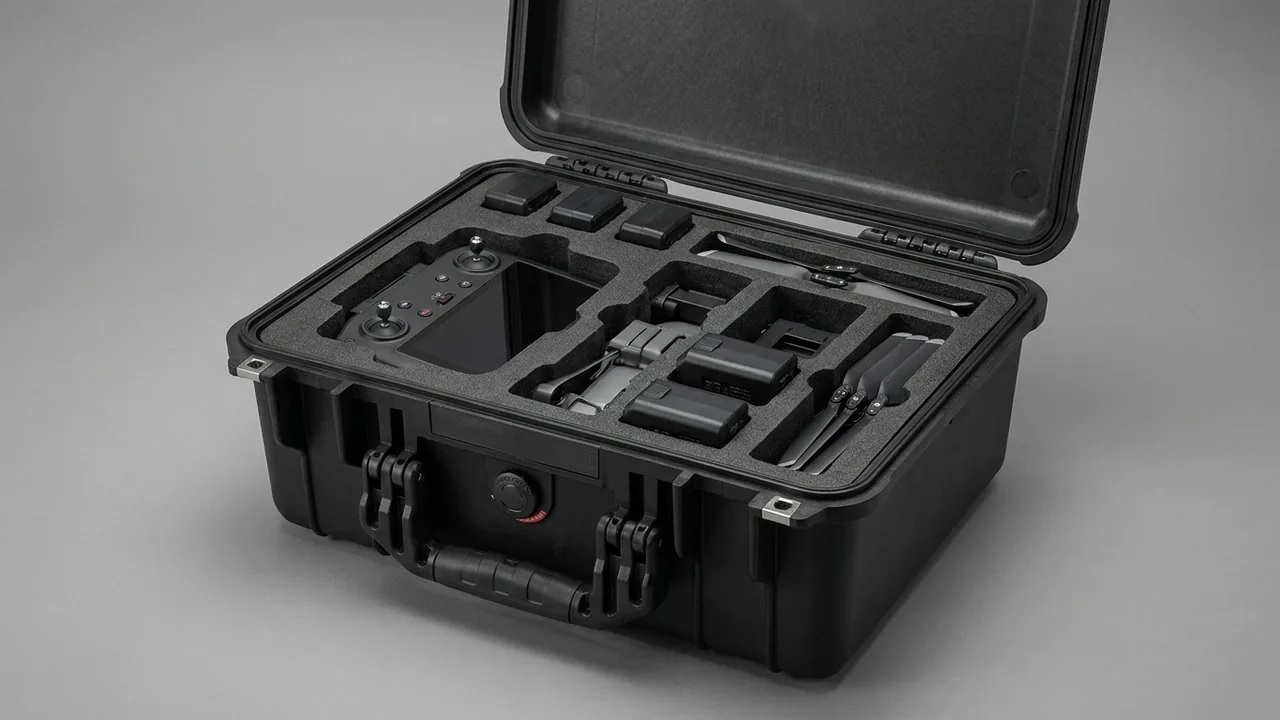
Distilleries procuring, overhauling, or exporting still equipment routinely move distillery column sections, condensers, fractionating heads, copper pot still components, thermometers, spirit-run piping and proofing gauges across thousands of kilometers. The core conclusion is direct: protection for these items is not primarily about impact resistance, but about three engineering problems solved together — copper tarnish and oxidation control, anti-static and explosion-safe handling of residual alcohol vapor, and an IP67 seal that survives humid ports and rainy production sites. A model-matched protective case brings copper-surface oxidation, thread seizure, sealing-face scoring and static ignition risk down to a minimum at the same time. This article walks through component breakdown, material mechanisms, explosion-safe design, sealing standards, liner customization, sanitary compliance and transport validation, giving engineering parameters and a selection checklist that still makers and craft or industrial distilleries can reuse.
Most distilleries still pack still parts in wooden crates, bubble wrap and woven sacks, and three failure modes dominate on arrival. Copper columns develop broad black sulfidation and lost lustre that needs re-polishing. Fractionating head and thermometer port threads suffer fretting wear from vibration and seize during assembly. The dangerous case is residual alcohol vapor inside the case, where ordinary plastic and foam generate static through friction and create an ignition hazard in a closed space. Customs holds, ocean humidity and dock rain also drive condensation inside packages that were never sealed to IP67, accelerating copper corrosion. Similar exposure appears in the winery equipment component case and the brewery equipment case, though the sensitive medium differs. The sections below turn each problem into an executable protective action.
Table of Contents
- Distillery Column Component Breakdown and Vulnerable Points
- Copper Oxidation Mechanism and Protection Principles
- Anti-Static and Explosion-Safe Design for Alcohol Vapor
- Ingress Protection and Sealing System: IP67 per IEC 60529 and GB/T 4208
- Shock-Absorbing Liner Logic and Material Selection
- Sanitary and Food-Contact Material Compliance
- Temperature, Humidity and Micro-Environment Control
- Transport and Environmental Test Validation Standards
- Standardized Packing Procedure
- Model-Matched Seals and OEM/ODM Customization
- Typical Equipment Sizes and Case Specification Reference
- Common Transit Damage and Avoidance
- FAQ
- Conclusion and Further Reading
Distillery Column Component Breakdown and Vulnerable Points
A distillery column is built either as a packed column or a tray tower. Common shipped sections are column bodies, condensers, fractionating heads (lyne arms), reflux splitters, temperature wells and spirit-collecting elbows. Pot still parts — the copper pot, swan neck, dome and lyne arm — are equally high-value and fragile. What fails in transit is rarely the gross weight; it is the surface and the interface. A mirror-polished copper interior dented by a hard object changes turbulent flow and alters the distillation of flavor compounds. A fractionating head conical seat scratched beyond roughly 0.05 mm will leak alcohol vapor after assembly. Thermometer and gauge ports with NPT or G threads fret under vibration and will not tighten on arrival.
From a protective engineering view, still components fall into three rating classes. High-gloss copper faces are "zero-contact" class: the liner must fully cover them with a sulfur-free isolation film and keep clearance from any hard surface. Precision threads and instrument ports are "zero-displacement" class, needing locating slots that limit axial and radial movement. Heavy column sections are "impact-limited" class, relying on bottom load-bearing foam to absorb drop energy. Unlike the dairy processing parts case, which centers on sanitary sealing, still parts emphasize copper-surface protection and explosion safety, so the rating logic must shift accordingly.
Copper Oxidation Mechanism and Protection Principles
Red and purple copper oxidize extremely fast in sulfur- or chloride-bearing environments, forming black cuprous sulfide and green basic copper chloride — the familiar "blackening" distilleries see on arrival. Mechanically, when relative humidity stays above 60% and trace hydrogen sulfide is present (a fermentation byproduct or port air), the oxide film thickens quickly and the surface loses lustre. The first protection principle is isolation: wrap copper faces in sulfur-free copy paper, sulfur-free PE film or VCI (vapor corrosion inhibitor) paper so the surface is physically separated from ambient moisture and sulfides. The second principle is humidity control: keep interior relative humidity around 35% to 50%, which suppresses oxidation yet avoids over-drying that embrittles seals.
Ordinary kraft and recycled paper contain sulfur and must never touch copper directly. Some foams also bleed sulfur and contaminate copper, so the custom foam insert guide must specify a low-sulfur, halogen-free recipe. For mirror-polished pot still parts, applying a neutral-pH protective wax or food-grade mineral oil film before the sulfur-free wrap can preserve surface lustre through six to twelve months of storage. This is an experience value drawn from long ocean-shipping cases, not a one-off test figure. The point is a layered barrier: oil film, sulfur-free film, controlled humidity, and a sealed case working together rather than any single step alone.
Anti-Static and Explosion-Safe Design for Alcohol Vapor
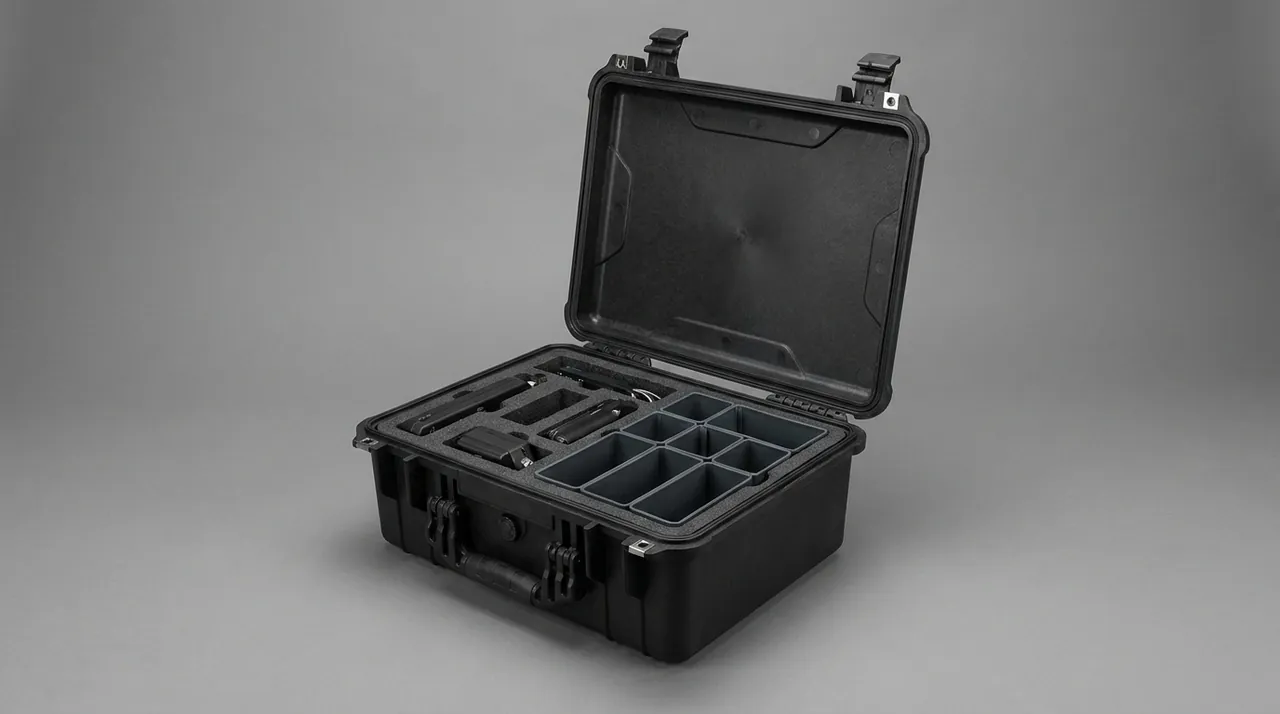
Ethanol vapor has a lower explosive limit near 3.3% vol in air, a classic flammable atmosphere. When residual liquor or vapor remains in the case, the interior can briefly sit in a combustible zone, so anti-static and explosion-safe handling cannot be ignored. The design delivers three points. First, external metal parts — hinges, latches, corner guards — connect through a continuous conductive path to a grounding terminal, with surface resistance held below 1×10⁶ ohms, following the spirit of GB 3836 on electrostatic discharge limits. Second, the liner prefers conductive or static-dissipative foam with volume resistivity around 10⁶ to 10⁹ ohm·cm to stop charge accumulation from friction. Third, where equipment carries a motor or heater, the package follows an ATEX zone-classification mindset for isolation and labeling.
It must be stressed that this protective case is transport packaging, not an explosion-protected electrical device, and cannot replace the equipment's own certification; it addresses the ignition hazard of "residual vapor plus friction static" in transit. For still equipment exported to the EU, the case exterior may carry ATEX-related warnings and a grounding mark, with static-dissipation test records (typical-value records) shipped for the receiver to verify. For the broader compliance of dangerous goods and flammable-liquid transport, the general framework in the ADR/IMDG hazmat transport case applies as a reference.
Ingress Protection and Sealing System: IP67 per IEC 60529 and GB/T 4208
Under IEC 60529 and GB/T 4208 the IP code's first digit covers dust exclusion and the second covers water exclusion. Because still parts travel through ocean boxes, quays and distillery floors, we specify the outer shell to IP67: it stays fully dust-tight and can sit immersed one meter deep for thirty minutes without letting water in. Reaching IP67 is never about one seal strip; it comes from the joint work of the case seam, the continuous foamed gasket, a drainage bevel and the clamp compression that holds everything shut.
The table below maps common IP ratings to still-part scenarios for selection.
| Rating | Dust | Water | Still-part scenario |
|---|---|---|---|
| --- | --- | --- | --- |
| IP54 | Limited | Splash | In-plant transfer, dry warehouse |
| IP65 | Complete | Low-pressure jet | Overland trunk, non-ocean |
| IP66 | Complete | Strong jet | Open storage, rainy overland |
| IP67 | Complete | 1 m / 30 min | Ocean, dock lift, humid site |
The seal material itself must meet food-contact safety and resist alcohol swelling, avoiding hardening and cracking after long contact with residue. For structure details and latch compression, see the IP67 protective case and the toolbox hinge latch seal articles, which give compression-force parameters useful when evaluating a still-part package.
Shock-Absorbing Liner Logic and Material Selection
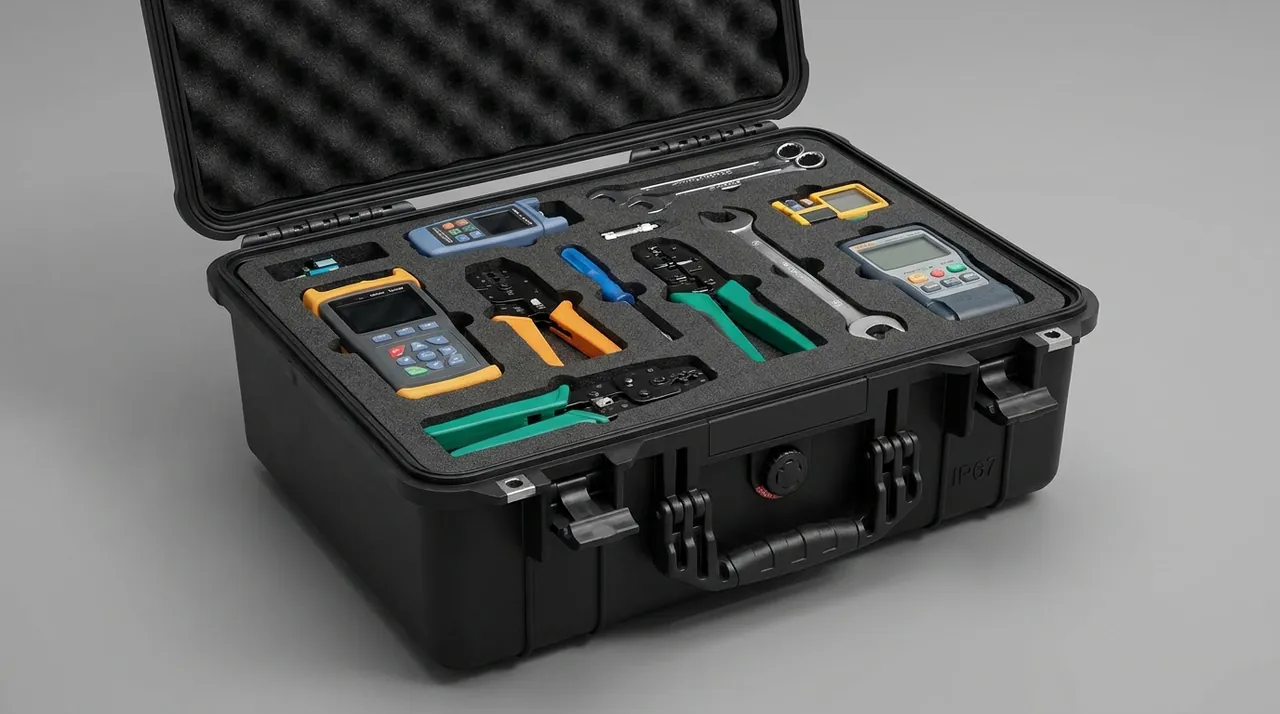
The cushioning layer exists to keep the shock acceleration peak inside the limit the component can survive. In still work we normally take an equivalent drop height between 60 and 120 cm as the design basis, because that span covers typical container and forklift mishandling; peak g relates to liner thickness and modulus. For the zero-contact copper faces we cut a fully enclosing pocket that leaves the metal 3 to 5 mm clear of the foam wall and rests it only on a flexible film, so no hard point can touch the polish. For precision threads we add a locating post and a clamp that lock all six degrees of freedom during transit.
Material selection: EVA foam (density 30 to 80 kg/m³) suits light instruments; cross-linked PE (XPE) foam has better rebound and alcohol resistance, ideal for copper-face support; polyurethane (PU) self-skinning suits heavy column-section load bearing. The table compares three liner materials in still scenarios.
| Liner material | Density | Alcohol resist | Rebound | Still-part use |
|---|---|---|---|---|
| --- | --- | --- | --- | --- |
| EVA foam | 30 to 80 kg/m³ | Medium | Medium | Thermometer, proofing gauge, small parts |
| XPE foam | 33 to 100 kg/m³ | Excellent | Excellent | Copper faces, heads, piping |
| PU self-skin | 40 to 120 kg/m³ | Good | Good | Column sections, pot bottom |
JUNZHIJIA supplies drawing-based XPE liners for copper pot stills, with contoured pockets matching the fractionating head cone and swan-neck curvature, and can zone different foam types in one case to serve both zero-contact and impact-limited ratings. This EVA foam insert custom process has been used in several pot-still OEM projects.
Sanitary and Food-Contact Material Compliance
Although still parts finally contact high-alcohol spirit, their inner surfaces are food-contact surfaces, so material migration from packaging must be controlled. Following GMP and the ISO 14644 cleanroom mindset, liners and isolation films should use food-contact-safe materials that avoid plasticizer, sulfur and halogen bleed onto copper or the spirit path. For export, materials should carry a food-contact compliance statement such as the EU 10/2011 framework or the corresponding national-standard conformity.
Unlike the aseptic filling case, which emphasizes microbial control, the still scenario cares about chemical migration and copper-face contamination, so the sanitary design centers on three principles: sulfur-free, halogen-free, low-bleed. If the case uses an internal metal pan, 304 or 316L stainless steel with surface Ra ≤ 0.8 µm eases cleaning and reuse; when the outer polymer shell can touch a food-path component, verify that it satisfies the applicable food-contact regulation before shipment. The material-selection thinking in the cleanroom equipment case is a useful cross-reference here.
Temperature, Humidity and Micro-Environment Control
Even at IP67, the interior micro-environment needs active management. Ocean containers on equatorial routes can exceed 60°C inside, and day-night temperature swings drive a "breathing effect" — trapped air expands and contracts, drawing outside moisture inward if the seal is imperfect. Countermeasures: place indicating desiccant (silica gel or montmorillonite, roughly 50 to 200 g per cubic meter of case volume, chosen by experience value) and a humidity indicator card; for very sensitive copper, add a VCI vapor-corrosion tablet.
For precision instruments needing temperature control, the phase-change or insulated-panel thinking in the extreme temperature case can buffer extremes by embedding an insulation layer in the wall. Note that saturated desiccant releases moisture back, so storage beyond three months should replace desiccant at a transit point and record it. Humidity management is the final line of defense against copper oxidation, working with isolation film and humidity control as a three-layer system rather than a single barrier.
Transport and Environmental Test Validation Standards
A protection plan cannot lean on experience by itself; it must be proven through standard tests. For still parts we pull four references together: ISTA 3 for less-than-truckload and container random vibration and drop; GB/T 4857 for stacking, drop and vibration basics; ASTM D4169 to assign a hazard level across the distribution cycle (rail, truck, aircraft, warehouse); and MIL-STD-810H only as an environmental test-method reference — its temperature, humidity and vibration profiles — with the case explicitly marked non-military-certified, borrowing the methods without the certification.
Our suggested still-part test sequence is: (1) vibration, frequency sweep 5 to 200 Hz at 0.5 to 1.5 g for one to two hours; (2) drop, one corner, three edges, six faces, with height taken from the gross-weight column of the GB/T 4857 table (typically 60 to 80 cm); (3) spray or immersion to confirm the IP67 seal. Full procedures sit in the ISTA transport testing procedure and the GB/T 4857 transport packaging case, and we set the hazard level using the ASTM D4169 distribution cycle case.
Standardized Packing Procedure
To avoid human error, turn packing into a standard operation with key steps: (1) incoming inspection, verify model and quantity, photograph the initial copper state; (2) copper cleaning with a lint-free cloth and food-grade solvent, air dry; (3) apply protective film, mirror parts get neutral mineral oil plus sulfur-free wrap; (4) seat liner, place parts in locating pockets, confirm zero-contact gap; (5) add desiccant and humidity card, record lot; (6) close lid, tighten latches to specified torque; (7) connect grounding terminal to static-dissipative liner and apply label; (8) external labels (name, gross weight, center of gravity, up, moisture, flammable); (9) seal and photograph for record.
Each step should be traceable. When JUNZHIJIA delivers an OEM project, it ships a packing-card template and inspection record so distilleries reuse the same standard during overhaul or supplier change, cutting training cost. Like the canning line case, standardization is the key to batch-delivery stability, but the still scenario additionally emphasizes copper-state records and anti-static confirmation.
Model-Matched Seals and OEM/ODM Customization
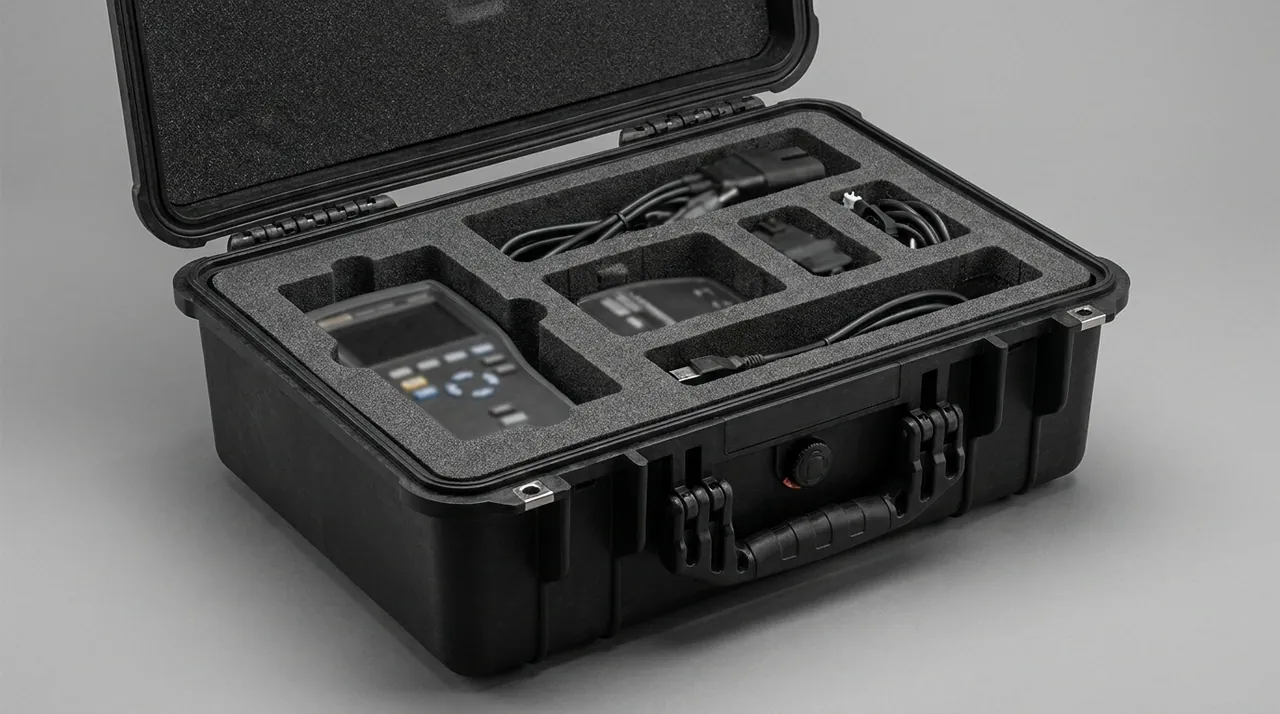
Still equipment comes in countless models — fractionating head cone angles, pipe-thread specs and column flange sizes all differ, so a universal liner is "close but unstable." The better route is model matching: for one pot still's swan-neck curvature, head bore and leg span, mold a liner and locator so each part has a unique pocket. JUNZHIJIA supports OEM/ODM customization, completing liner molding, seal selection and case-structure adaptation from customer 3D drawings or physical scans, and providing corresponding packaging validation files on delivery (vibration, drop, IP test records as typical-value or experience-value reports, not certification data).
For still-equipment manufacturers, treat the case as a standard equipment accessory designed and supplied together, protecting brand delivery quality and reducing on-site delays from damaged parts. Model matching also enables reuse: when the same model returns for service, the old case fits directly, closing the loop. The guide on selecting a case OEM factory helps assess a supplier's molding and quality capability.
Typical Equipment Sizes and Case Specification Reference
In practice, the case interior clear dimension should exceed the part's largest envelope by 30 to 50 mm per side for liner and cushion. The table gives experience-value references for common still parts (confirm by physical measurement).
| Part | Typical OD / length | Suggested clear interior | Liner rating |
|---|---|---|---|
| --- | --- | --- | --- |
| Small pot still copper pot | 400 mm dia | 520×520×600 mm | Zero-contact + impact |
| Fractionating head set | 300 mm long | 420×420×360 mm | Zero-contact |
| Tray column section | 250 mm dia / 600 mm | 360×360×700 mm per section | Impact-limited |
| Condenser assembly | 800 mm long | 920×320×320 mm | Impact-limited |
| Thermometer and proofing gauge | 300 mm long | 360×120×120 mm cell | Zero-displacement |
Keep gross weight within one-person carry (about 25 to 30 kg); over-weight should add case wheels and trolley handle or shift to a forklift-slot structure. For over-long sections, use segmented cases with serial numbering reassembled on arrival. This mirrors the logic used in the beverage bottling parts case for long transfer components.
Common Transit Damage and Avoidance
From long service to still-equipment clients, arrival damage clusters in five types: (1) copper-face dents from over-tight pockets or mixed hard items — solved by full-wrap clearance and zoning; (2) thread seizure from vibration — solved by anti-seize grease and locator clamps; (3) sealing-face scores from metal-tool collision — solved by dedicated cone sleeves; (4) interior condensation from no humidity control or no IP67 — solved by desiccant and seal recheck; (5) static hazard from ordinary foam — solved by conductive liner and grounding terminal. Each maps to one design action above and can be a "damage-cause-countermeasure" checklist shipped with the case.
Cross-border shipping also needs wood-packaging quarantine compliance (such as ISPM 15 marks); if the outer case uses solid wood or fumigation-free board, confirm conformity. The "up," "fragile" and "keep dry" pictograms should follow GB/T 191 and the corresponding international symbols. For periodic inspection, the protective case service life years article fits the distillery's annual equipment inventory.
FAQ
Q: Must copper still parts be treated against oxidation before transport? A: Strongly recommended. Red and purple copper in relative humidity above 60% with trace hydrogen sulfide can form black cuprous sulfide within weeks, dulling polished faces and sometimes requiring re-polishing. The correct method is to first coat the copper with a neutral-pH food-grade mineral oil film or protective wax, then wrap it in sulfur-free PE film or VCI vapor-corrosion paper so the surface is physically isolated from moisture and sulfides. At the same time place indicating desiccant inside the case and keep relative humidity around 35% to 50%. This three-layer protection cuts oxidation risk to a minimum. Remember that ordinary kraft and recycled paper contain sulfur and must never touch copper directly, and the liner foam should be specified as low-sulfur and halogen-free, because otherwise it accelerates contamination rather than preventing it. For pot still makers shipping mirror-finish domes, we recommend documenting the copper state with photos before wrap, because any pre-existing mark must be distinguished from transit tarnish during the receiver's acceptance check, which protects both the OEM and the distillery from disputed claims. The oil film plus film plus desiccant combination is what actually preserves the mirror finish through long ocean transit.
Q: If a case is rated IP67, does that mean it can be shipped submerged? A: IP67 per IEC 60529 and GB/T 4208 means fully dust-tight and able to survive immersion at one meter for thirty minutes without water entry; it validates the sealing system's water resistance, but it does not encourage using the case as a diving device. In ocean and dock environments the value of IP67 is resisting rain backflow, dock spray and container condensation, not prolonged submersion. Achieving IP67 depends on case seam, continuous foamed gasket, drainage slope and latch compression working as a system, so a single gasket cannot guarantee it. We advise rechecking seal compression after every pack and re-inspecting seal elasticity after long storage. In practice the rating is proven by the test, not by the label, so we advise keeping the IP67 validation record with the shipment and re-running a quick spray check after any lid repair, because a replaced gasket that was not compression-set tested can quietly lose the rated protection that the still parts depend on during a humid crossing. If the route necessarily involves water, add desiccant and a humidity card as internal micro-environment insurance, because the rating proves the shell, not the contents, stays dry under defined test conditions only.
Q: How is static safety ensured in an alcohol-vapor environment? A: Ethanol vapor has a lower explosive limit near 3.3% vol, so if liquor or vapor remains inside the case the space may be combustible, and friction static plus a discharge path must be managed. First, external metal parts — hinges, latches, corner guards — connect through a continuous conductive path to a grounding terminal with surface resistance below 1×10⁶ ohms, following the GB 3836 thinking on electrostatic discharge limits. Second, the liner prefers conductive or static-dissipative foam with volume resistivity around 10⁶ to 10⁹ ohm·cm to stop charge accumulation. Third, the case exterior carries a grounding mark and flammable warning, with static-dissipation test records shipped alongside. Receivers should verify the grounding path with a simple ohmmeter at goods-in, because a painted hinge or a missing jumper wire can break continuity without any visible damage, and that single gap is enough to let a static spark find the residual vapor inside the case. Be clear: this protective case is transport packaging, not an explosion-protected electrical device, so it cannot replace the equipment's own certification; it only resolves the transit ignition hazard from residual vapor and friction static, which is the practical risk shippers actually face.
Q: A distillery column section is too long for one case; what then? A: The standard approach is segmented cases with serial-numbered reassembly. Measure each section's actual length and diameter, give each section an impact-limited liner case, and mark the outside with section number, assembly order and orientation arrow; on arrival reassemble by number to avoid mis-fit. The case clear interior should exceed the part by 30 to 50 mm per side for cushion, and gross weight should stay within 25 to 30 kg for easy handling, with over-weight sections shifted to a forklift-slot structure or fitted with wheels and a handle. Segmentation also lowers single-case drop energy and improves overall transport reliability. JUNZHIJIA can mold liners from column-section 3D drawings so each section has a unique pocket, and the old case fits directly when that model returns for service, forming a closed-loop reuse that saves cost. For very long column trains we also supply a reusable transit frame that holds two or three section cases in a fixed orientation, so forklift handling cannot shift them, and the serial map printed on each lid lets the distillery re-stack the column in the exact original order without opening every box.
Q: Is EVA or XPE better for the liner? A: It depends on the part. EVA foam at 30 to 80 kg/m³ has medium rebound and alcohol resistance, suiting light small parts like thermometers and proofing gauges. XPE cross-linked polyethylene at 33 to 100 kg/m³ has excellent alcohol resistance and rebound, better for copper faces, fractionating heads and piping, and its low-bleed recipe reduces copper-face contamination. PU self-skinning at 40 to 120 kg/m³ suits column sections and pot bottoms for load bearing. In practice one case often zones materials: XPE full-wrap pockets for copper zero-contact areas, PU at the bottom for heavy parts, EVA cells for small items. The key is assigning material by the three ratings — zero-contact, zero-displacement, impact-limited — rather than picking a single foam for everything, which is the usual mistake we see in generic crates. In our pot still projects we often combine all three in one case: a soft XPE cradle for the copper swan neck, a PU pad under the heavy pot base, and small EVA cells for the thermometer and the proofing gauge, which keeps each part in its own rated zone and simplifies the receiver's unpacking checklist.
Q: Which standard should transport testing follow? A: We suggest combining several standards to cover real risk. The ISTA 3 series handles random vibration and drop for less-than-truckload and container shipping. The GB/T 4857 series gives stacking, drop and vibration basics, with drop height read from the gross-weight table (typically 60 to 80 cm). ASTM D4169 assigns distribution-cycle hazard levels so you can choose rail, truck, aircraft or warehouse intensity. MIL-STD-810H is used only as an environmental test-method reference — temperature, humidity, vibration profiles — with the case explicitly marked non-military-certified. Because still parts may travel by sea then by truck then sit in a warehouse, we prefer selecting the worst-case leg from ASTM D4169 and testing to that level, rather than averaging the route, since the single rough handling event during a container transfer is what actually breaks an under-rated liner in the field. The recommended gradient is vibration sweep 5 to 200 Hz at 0.5 to 1.5 g for one to two hours, then one corner three edges six faces drop, then spray or immersion to verify IP67, with step-by-step detail in the ISTA, GB/T 4857 and ASTM D4169 topic documents referenced throughout this article for planners who need exact procedures.
Q: Can the case liner be reused, and how to clean it? A: Yes, and reuse is recommended to cut cost. XPE and PU liners resist alcohol and wipe clean with a lint-free cloth and neutral cleaner, then air dry; if they contacted liquor residue, confirm no sugar or acid remains before loading copper. A metal pan of 304 or 316L with surface Ra ≤ 0.8 µm can be rinsed with food-grade cleaner and dried. Before each reuse, inspect foam for compression set, check seal elasticity and verify locating pockets are not deformed, replacing parts that age. We recommend tagging each liner with a reuse counter and retiring it after a set number of cycles or at the first sign of compression set, because a tired foam pocket that no longer holds the clearance is the silent cause of the scratched copper faces we are hired to prevent in the first place. For cleaning and life management, the how to clean a protective case and protective case service life articles fit the distillery's annual inventory, turning inspection into a scheduled, low-effort routine that protects both the equipment and the packaging investment over multiple shipping cycles.
Q: What else for EU-bound still equipment cases? A: Beyond the explosion-safe and food-contact points above, note a few items. Wood packaging should meet ISPM 15 fumigation or fumigation-free marks. External pictograms for up, fragile and keep dry should follow GB/T 191 and the corresponding international symbols. Food-contact materials should carry a compliance statement under the EU 10/2011 framework or equivalent. If alcohol vapor may remain inside, the exterior should carry ATEX-related warnings and a grounding mark, with static-dissipation test records shipped. We also advise a multilingual packing card and inspection record so overseas distilleries follow the same standard. A practical tip for overseas still projects is to ship the packing card and the test records as a sealed pouch inside the lid, so customs inspection cannot separate them from the case, and the receiving distillery has the grounding and IP evidence exactly where the equipment arrives. The broader dangerous-goods and flammable-liquid transport compliance can be executed against the ADR/IMDG protective-case general framework, keeping the shipment lawful across borders and through customs without surprises that delay commissioning of the still.
Q: How to judge whether a case factory can customize still parts well? A: Focus on four areas. First, molding: can the supplier build model-matched liners from 3D drawings or a physical scan instead of generic cut pockets. Second, material control: can it supply low-sulfur, halogen-free, food-contact foam and isolation film with a written declaration. Third, validation: can it give vibration, drop and IP typical-value reports plus a packing SOP template. Fourth, delivery record: does it have comparable still or beverage-equipment OEM cases. We suggest prototyping one fractionating-head case for an IP67 and drop recheck before any volume order. Before committing, ask for one reference still maker and, if possible, watch a pack-out so you see the copper part seated and the clearance measured, because the gap between a drawn contour and a die-cut pocket only shows on the actual component. For supplier scoring read how to choose a case OEM factory and the custom case mold cost analysis note; a cheap crate that needs re-polishing after arrival rarely lowers cost once delay and rework hit the project budget.
Conclusion and Further Reading
A distillery column or pot still holds half its value in the equipment and half in its arrival state. Copper oxidation control, anti-static safety, IP67 sealing and model-matched liners together cut overhaul delays and protect flavor consistency. JUNZHIJIA supplies drawing-based custom liners and OEM/ODM support for still-equipment projects.
Further Reading