

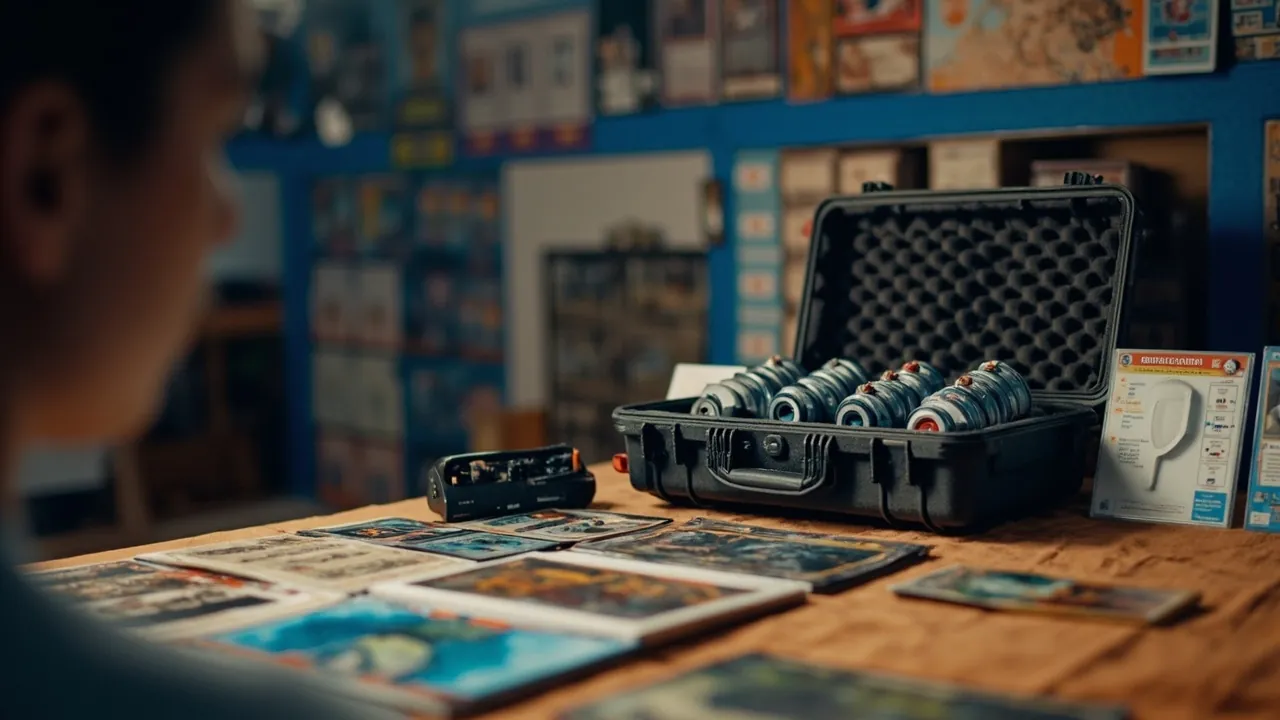
Protecting board games and trading cards comes down to one conflict: you are protecting a stack of paper that deforms when it absorbs moisture, dents under compression, molds when damp and fades in light. Paper is hydrophilic, so its dimensions change with ambient humidity, and the direction of that change depends on fiber orientation — which is the physical origin of card bowing. A card graded at the top of the scale can pick up bending stress inside its sealed holder after a single humid shipment. A sealed board game can have its lid deflected by stacking load from above and drop from collector grade to trade grade. The engineering objective for a card and board game case therefore reduces to three statements: zero friction on card faces (scratch prevention), zero card deformation (moisture control plus zero preload) and zero damage to factory seals (tamper evidence plus compression control).
Beyond paper, board games contain miniatures, plastic tokens, wooden pieces, cloth mats, metal coins and printed rulebooks, making material heterogeneity higher than in almost any other collectible category. Mixed loading risk is routinely underestimated: a single loose metal coin can score a stack of cards, and the corner of a miniature can press a permanent mark into a card brick. This guide works through paper physics, damage classes, graded-card specifics, moisture and light control, acid-free enclosures, whole-box protection, zoning, test evidence, tamper evidence, acceptance and cost, with parameters and tables that can go straight into a purchasing specification.
Table of Contents
- 1. Value Structure and Transport Risk in Board Games and Trading Cards
- 2. Paper Physics: Moisture Content, Curling and Card Bowing
- 3. Ten Damage Classes in Transit
- 4. Dedicated Protection for Graded Cards and Their Holders
- 5. Decks and Raw Cards: Bricks, Boxes and Compartments
- 6. Moisture Control: The RH Window for Paper and Desiccant Sizing
- 7. Temperature, Light and Fading: Inks, Holo Films and Coated Cards
- 8. Acid-Free Materials and Archival-Grade Enclosures
- 9. Whole-Box Board Game Protection: Shrink Wrap, Inserts and Corners
- 10. Zoning for Miniatures and Accessories
- 11. Insert Materials and Structural Selection
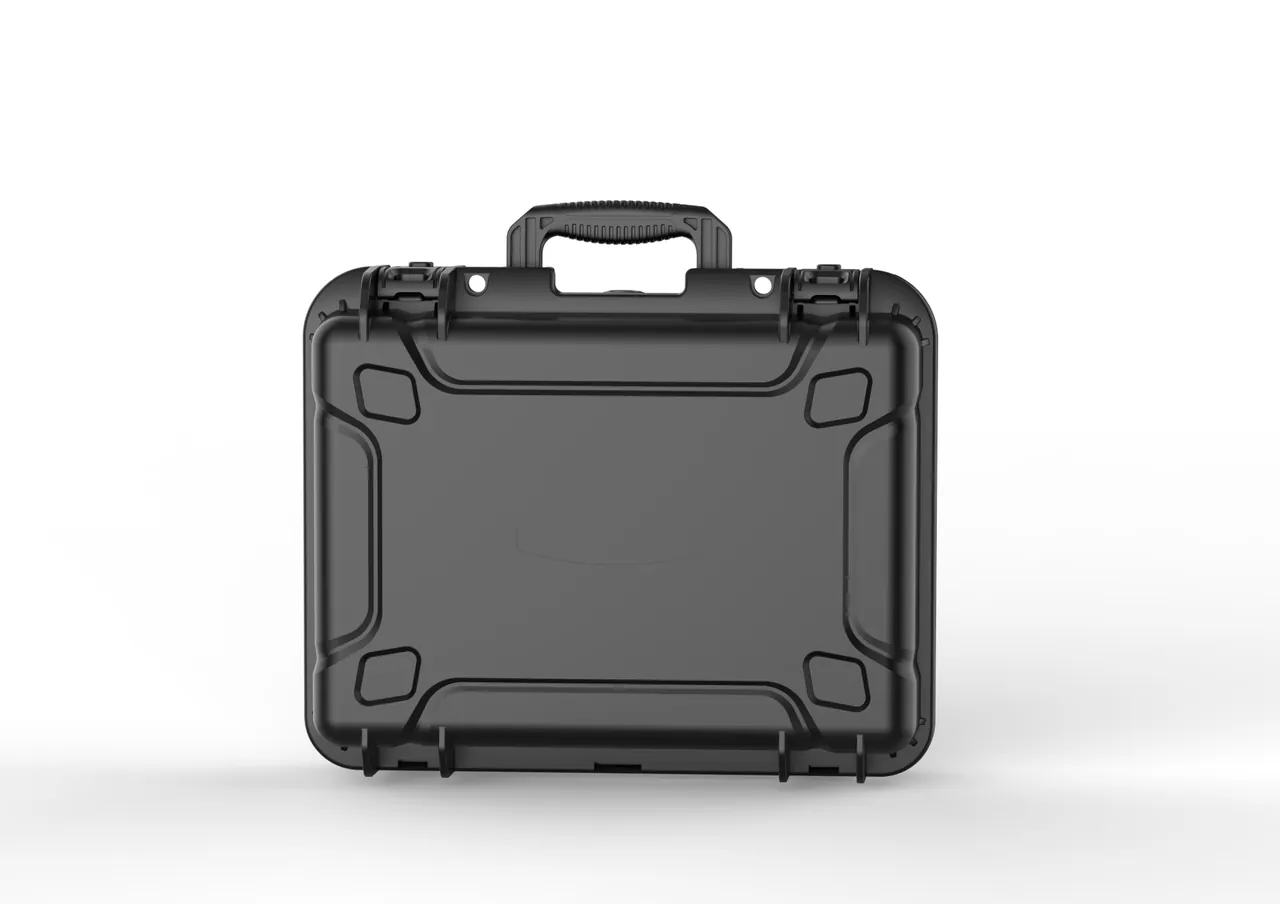
- 12. Ingress Protection and Shell Structure Selection
- 13. Environmental and Transport Test Evidence
- 14. Trade Shows, Tournaments and Retail Turnaround
- 15. Tamper Evidence, Numbering and the Manifest System
- 16. Customization Flow, Acceptance and Cost Structure
- Frequently Asked Questions
- Conclusion and Further Reading
1. Value Structure and Transport Risk in Board Games and Trading Cards
Understanding where value comes from determines how budget is allocated.
| Object | Primary value source | Most transport-sensitive factor | Markdown sensitivity |
|---|---|---|---|
| --- | --- | --- | --- |
| High-grade collectible card | Grade plus card surface plus holder condition | Holder scratches, holder cracks, card bowing | Very high |
| Raw single card | Condition grade (centering, corners, edges, surface) | Corner dings, edge wear, surface scratches | High |
| Deck or playset | Completeness plus per-card condition | Wrong card order, corner damage, bundle impressions | Medium to high |
| Sealed board game | Shrink wrap integrity plus box condition | Lid deflection, corner wear, wrap damage | High |
| Opened board game | Component completeness plus miniature integrity | Missing components, broken miniatures, box distortion | Medium |
| Miniatures inside games | Paint and structural integrity | Fracture, paint rub, part-to-part collision | Medium to high |
One conclusion stands out: holder condition is itself part of the value, not a by-product of packaging. Once a graded card holder shows obvious scratches or a crack, price is immediately questioned, so the protected object has to expand from "the card" to "the card and its holder." That is why Section 4 is devoted to graded card specifics.
2. Paper Physics: Moisture Content, Curling and Card Bowing
To solve bowing you first have to understand why paper bends.
Paper is a hydrophilic porous material. Pulp fibers bond through hydrogen bonds, and water molecules can enter the spaces between fibers. As ambient humidity rises, fibers swell; as it falls, they shrink. The critical point: swelling in the cross-grain direction is typically substantially larger than along the grain, with ratios reaching 2:1 or higher.
How bowing happens. Because cross-grain and along-grain expansion rates differ, when the moisture content of a card, or a whole stack, changes, the two directions change dimension by different amounts and the card curves. The direction depends on grain orientation and on coating distribution: coatings, especially back coatings and holo films, further alter the moisture absorption rate of the two faces and amplify curvature. This is why "drier is better" is wrong: over-drying embrittles paper, and when it returns to normal conditions it absorbs moisture aggressively, worsening curl.
Moisture content versus relative humidity. The equilibrium moisture content of paper tracks ambient relative humidity. As an experience reference, paper sits near 6% to 8% moisture content at 50% RH and can climb to 10% to 12% at 80% RH. This process takes time rather than being instantaneous — a stack of cards may need days to weeks to equilibrate internally. The implication: short exposure to high humidity does not immediately cause bowing, but sealed transport in a humid environment over a long period inevitably accumulates moisture inside the stack, and deformation appears gradually after unpacking.
Operational conclusion. For cards and board games, hold in-case relative humidity between 45% and 55% and temperature between 18 and 24 degrees Celsius, and keep both stable — stability matters as much as the target value, because repeated absorption and desorption cycles fatigue paper and crack coatings.
3. Ten Damage Classes in Transit
| Damage class | Typical manifestation | Primary cause | Countermeasure |
|---|---|---|---|
| --- | --- | --- | --- |
| Card face scratching | Fine surface scratches, hazed holo film | Relative friction, hard parts in contact, dust | Zero displacement, acid-free soft barrier, discrete slots |
| Corner dings | Frayed corners, white spots, delamination | Free displacement, point contact at corners | Brick and slot retention, corner relief |
| Edge wear | Whitened edges, rubbed color edges | Edge face friction within stacks, bundling | Unconstrained flat storage, soft barrier layers |
| Bowing and curling | Curved cards, arched stacks | Humidity change, anisotropic expansion | Stable 45% to 55% RH control |
| Holder scratches and cracks | Scuffed faces, chipped corners | Holders rubbing, point loads | Discrete slots, no hard contact |
| Mold and odor | White or green spots, musty smell, foxed paper | Sustained RH above 65%, condensation | Sealing, desiccant, pre-pack equilibration |
| Ink fading | Desaturated colors, UV bleaching | UV exposure, elevated temperature | Opaque liner, UV blocking, temperature control |
| Plastic and miniature fracture | Broken tokens, snapped fine parts | Stacking load, part-to-part collision | Discrete compartments, soft contact, load-bearing board |
| Component loss and mismatch | Missing coins or tokens, shuffled card order | No zoning, no manifest | Zoned numbering plus in-case manifest |
| Wrap damage and box collapse | Split shrink wrap, deflected lid | Stacking load, friction, no corner protectors | Top load-bearing board, corner protectors, stacking limit |
Among these ten, bowing, mold and fading are delayed-onset. They are nearly impossible to judge on delivery day and emerge over one to four weeks. Condition judgment should therefore rely on process data — moisture state at packing, desiccant configuration, and the temperature and humidity curve in transit — rather than on the moment of unpacking.
For the broader framework of package performance testing, see transport packaging basic tests and strength design.
4. Dedicated Protection for Graded Cards and Their Holders
Graded cards carry the highest unit value and the most delicate requirements. Their holders are typically rigid transparent plastic, often polycarbonate-class material, with square or slightly rounded corners and high-gloss surfaces.
Risk list. First, surface scratching: a single visible scratch on a high-gloss face can be questioned at re-grading or resale. Second, corner chipping: right-angle geometry cracks under point load, and cracks propagate along stress concentrations. Third, in-holder card migration: some holder constructions allow slight card movement under strong vibration, so card corners rub against the inner wall. Fourth, thermal stress: the holder and the card inside have different coefficients of thermal expansion, so sharp temperature swings generate internal stress.
Specific countermeasures.
- Discrete vertical slots. Graded cards belong upright in dedicated slots, sized about 1 to 2 mm wider than holder thickness and 60% to 75% of holder height deep, so the card is constrained by slot walls rather than bearing on its bottom edge. Vertical orientation keeps card faces away from adjacent holders.
- Rigid inter-slot dividers. A rigid divider, such as PP or PE sheet, should separate adjacent slots so there is no direct contact or friction path between cards.
- Soft slot floors. A 3 to 5 mm layer of acid-free soft foam at the slot floor absorbs vertical shock and keeps the holder's bottom edge from bearing load.
- Never compress. Do not pack graded cards under foam compression. Sustained compressive stress on a gloss face can lead to stress cracking over time. The correct principle is retention, not compression.
- Windows and display positions. Where visible display is required, use a window with a UV blocking layer to prevent fading under prolonged light. Display cases and transport cases should be separate designs: display prioritizes visibility and appearance, transport prioritizes retention and sealing.
Material compatibility with holders. Materials touching a holder must be free of plasticizers and acids. Standard PVC film and ordinary foam board can bond or haze the holder surface in long contact, so direct contact must be avoided. See case foam material comparison.
5. Decks and Raw Cards: Bricks, Boxes and Compartments
Raw cards follow different logic: without a rigid holder, the storage structure itself must provide both hard and soft protection.
Card bricks. A defined count of cards, commonly 50 to 100, is aligned into a rigid acid-free card box, which then sits in a case compartment. Key points: keep all cards in the same plane orientation so thickness stays uniform; avoid lateral compression inside the box, which leaves impressions along card edges; and allow a 3 to 8 mm soft cushion layer between box and compartment wall.
Slot dividers. For high-value decks, use one-card-per-slot or one-stack-per-slot zoning. Slot walls in acid-free foam or EVA, with softened floors. Packing density drops to a typical 30% to 50%, but protection for corners and faces is the strongest available.
Alternatives to bundling. Rubber bands, zip ties and tape are common sources of card damage: they leave permanent impressions on edges and adhesive residue contaminates faces. Compartment retention should replace bundling — each stack is limited by slot walls rather than tied together.
The value of a removable divider system. Deck size changes with format. With fixed compartments you face a no-win choice: loose cards when the deck is small, no fit when it grows. A removable divider system lets zoning follow deck size. See case removable divider system.
Pre-packing strategy. For teams attending tournaments or shows, pre-pack decks into standard-size card boxes before departure, with box dimensions matching compartment dimensions one to one. On site, unpacking becomes a matter of lifting out ready-to-use boxes, which reduces card damage from on-site rummaging. This is why the purchasing specification should define standard card box dimensions explicitly.
6. Moisture Control: The RH Window for Paper and Desiccant Sizing
Humidity is the primary risk for paper products and the largest technical difference between a card case and a general equipment case.
Recommended window. For cards, cardboard tokens and rulebooks, hold in-case relative humidity between 45% and 55%. The reasoning:
- Above 65% sustained for more than 48 hours: mold spores activate, paper yellows, mold spots appear and coatings may blister.
- Below 40%: paper desiccates and embrittles, curl worsens after re-absorption, coatings may crack, and static rises so dust adhesion increases.
- 45% to 55% satisfies mold suppression, embrittlement avoidance and static dissipation simultaneously.
Archival reference values. Paper archive and library guidance often recommends a lower band, in some guidelines 30% to 50% RH, because the priority there is long-term stability of paper alone. Recommendations for mixed-material collections, which include plastic, metal and leather components, typically shift upward to 45% to 55%. A board game and card case contains cards, card stock, plastic parts, metal coins and miniatures, making it a mixed-material environment, so 45% to 55% is the better engineering window.
Desiccant sizing (experience method). Size desiccant from both free air volume and hygroscopic material mass:
- Baseline: 20 to 30 g of high-performance desiccant, silica gel or mineral type, per 20 liters of free air.
- Paper allowance: add 10 to 20 g for each kilogram of paper products, including cards, card stock, rulebooks and box board.
- Lane factor: multiply by 1.2 to 1.8 according to lane length, using the upper end for intercontinental container freight.
- Caveat: these are typical experience values; production specifications should be fixed only after validation on the actual lane.
Pre-pack equilibration. Cards taken from a humid environment, such as a warehouse during a wet season, should not be sealed immediately. Allow 24 to 48 hours to equilibrate at 45% to 55% RH. This matters especially for cards, because moisture content inside a stack changes very slowly.
Pressure equalization. A fully sealed case develops pressure differentials in air freight and high-altitude road transport, producing a lid-suction effect on opening. A pressure equalization valve that passes air but not water releases differential pressure while preserving the IP rating; see pressure equalization valve design.
7. Temperature, Light and Fading: Inks, Holo Films and Coated Cards
Beyond humidity, light and temperature are the other two adversaries.
Temperature window. Hold 18 to 24 degrees Celsius. Temperature does limited direct damage to paper, but it creates two real risks. First, accelerated chemical reaction: ink and coating oxidation and plasticizer migration speed up as temperature rises. Second, deformation from thermal cycling. When temperature rises and falls repeatedly, cards, holders and insert materials expand at different rates, generating interfacial stress that appears as holder stress cracks or stack warping.
UV and fading. Card inks are UV sensitive, and holo and coated cards can suffer film aging, hazing and delamination. Measures work at three levels:
- Opaque liner: use an opaque or dark liner so cards sit free of direct light.
- Shell blocking: specify sheet with UV stabilizers; where a window is used, the window layer should carry a UV absorber.
- Storage lighting management: hold illuminance below roughly 200 lux in long-term storage as an experience guideline, and avoid prolonged direct exposure to high-color-temperature spotlights.
Static and dust. Card faces are flat and glossy, so static binds dust firmly and cleaning then scratches. Controls: use static-dissipative or low-charge-generating contact materials; hold in-case RH at 45% to 55% to support charge bleed; and avoid opening cases on synthetic carpet or in other strongly charge-generating environments. For cards with embedded electronics such as NFC chips, or other static-sensitive scenarios, see ESD shielding case design.
A common misconception. Many collectors store cards in a dry box with strong desiccant, pushing humidity below 30%. This embrittles the paper, and when the cards come out into normal conditions they absorb moisture rapidly and curl sharply within hours, producing worse damage than storing them continuously at 50% RH. Stable moderate humidity beats a low but fluctuating one.
8. Acid-Free Materials and Archival-Grade Enclosures
A hidden driver of paper degradation is acid migration. Standard corrugated board, kraft paper, some foams and certain adhesives release acids or lignin degradation products that yellow, embrittle and stain cards over long contact.
Material requirements.
- Acid-free: direct contact layers should be acid-free, such as acid-free tissue, acid-free card boxes and acid-free foam.
- Lignin-free: lignin generates acids under light and oxidation, so paper materials should be lignin-free grades.
- Plasticizer-free: avoid bonding and hazing on holo cards, coated cards and graded holders.
- Low outgassing: adhesives should be low-outgassing formulations so volatile organics do not accumulate in a sealed space.
Archival standards as a reference. International standards exist for permanent paper, such as the ISO 9706 requirements for paper permanence, and for enclosure compatibility testing, such as ISO 18916, the photographic activity test used to assess whether enclosure materials harm sensitive materials. The logic transfers directly to card enclosures: require suppliers to provide composition declarations and compatibility test data rather than relying on the word "acid-free." For high-value cards, run a small-scale compatibility test before volume purchasing: place cards and insert material together under controlled temperature and humidity, then compare color shift and surface condition.
Choosing an enclosure format. Common formats in ascending protection order: paper card box, then rigid plastic box, then brick plus box, then graded holder. Match the format to unit value and turnover count, and avoid mismatches such as paper boxes for high-value cards or graded holders for low-value bulk.
9. Whole-Box Board Game Protection: Shrink Wrap, Inserts and Corners
Protecting a whole box, especially a sealed product, follows the logic of a high-value carton: the box body must never carry sustained load.
Why a top load-bearing board is essential. A board game box is a large, planar, low-stiffness structure, and the lid is its largest load-facing surface. Under stacking load the lid center deflects first, then presses on the cards and card stock inside. The correct fix is a rigid load-bearing board inside the case above the game box, so stacking load travels through the board into the case walls instead of into the lid. Use 3 to 8 mm rigid sheet and ensure an effective load path to the walls.
Corner protection. The eight corners of a game box wear first and are a markdown-sensitive feature. Use acid-free corner protectors or moulded corner pads 3 to 8 mm thick, free of acids and plasticizers.
Shrink wrap protection. The shrink wrap on a sealed game is part of its value. Wrap damage comes mainly from friction and top compression. Measures: add a layer of acid-free tissue between wrap and insert as cushion and barrier; avoid prolonged direct contact between wrap and foam, since some foams bond to shrink film; and limit stacking layers.
Size allowance. Allow a cushioning gap between game box and case inner wall: 10 to 20 mm laterally, 15 to 25 mm at the top including the load-bearing board, and 10 to 20 mm at the bottom. The overall envelope ratio of outer case to box typically falls between 1.06 and 1.15, depending on box strength and stacking layers.
Slide-out access. Game boxes are large and heavy, and extracting one by prying it out can scuff the box faces. Prefer a side-opening or top-opening design with a tray so the box slides out on a support surface. See cushion liner case structure.
10. Zoning for Miniatures and Accessories
Modern board games ship with many components: miniatures, plastic tokens, wooden pieces, metal coins, dice, cloth bags, playmats, rulebooks and promo cards. Material hardness varies widely, so mixed loading carries high risk.
Zoning principles.
- Separate hard parts from cards: metal coins, miniatures and dice must be zoned away from cards, ideally on different levels.
- Group like with like and locate by number: give every component type a fixed, numbered slot, with packing and counting done by number.
- Lose nothing small: screws, small dice and counters belong in lidded sub-boxes that then seat in the insert.
- Support miniatures independently: fine protrusions such as swords, banner poles and antennae need dedicated support and must not touch adjacent parts. For the underlying technique, see toy and figure cases: collector-grade model protection.
- Playmats and cloth bags: lay cloth items flat or roll them to a fixed diameter around a rigid core tube to avoid creases. Cloth must not contact hard parts directly.
Recommended layer structure. For component-heavy games, use three layers: the bottom layer for the original game box and rulebooks, the middle layer for card boxes and tokens, and the top layer for miniatures and fragile parts, capped by a load-bearing board and soft cushion. Rigid dividers carry load between layers so upper-layer weight never presses on miniatures.
| Zoning scheme | Suitable objects | Packing density | Unit protection | Manifest complexity |
|---|---|---|---|---|
| --- | --- | --- | --- | --- |
| One card per slot | High-value singles, graded cards | 25% to 40% | Very strong | High |
| Card box plus compartments | Decks, raw cards | 45% to 60% | Strong | Medium |
| Layered trays | Whole game boxes plus components | 50% to 65% | Strong | Medium |
| Mixed compartments | Low-value components, tokens | 60% to 75% | Medium | Low |
11. Insert Materials and Structural Selection
| Material | Characteristics | Typical position | Cautions |
|---|---|---|---|
| --- | --- | --- | --- |
| EVA foam | Resilient, precisely machinable, dimensionally stable | Load-bearing layers, slot walls | Confirm formulation releases no acids |
| PE foam | Inexpensive, water resistant | Mid and low-value zones | Soft under load, takes a permanent set |
| Acid-free foam | No acids, low outgassing | Direct contact with cards | Higher cost, keep dry |
| Acid-free tissue | Barrier and wrap | Card faces, holders, shrink wrap | Single use, never compress |
| Soft fabric | Soft, low friction | Holders, display faces | Requires periodic dust removal |
| Rigid divider sheet (PP or PE) | Load spreading, hard part isolation | Between layers and slots | Edges must be chamfered to prevent scratching |
The key selection judgment. Card-facing interfaces must satisfy four requirements: soft contact, acid-free, plasticizer-free and low friction. Case-mating structures must satisfy two: rigid location and a defined load path. Many inserts that look premium use ordinary PU foam and soft fabric. Nothing goes wrong in the short term, but after 6 to 18 months you may see dulled card faces or blocking — a failure invisible at acceptance and preventable only through material declarations and compatibility testing. For insert process detail, see custom foam insert design flow and EVA foam insert custom process.
12. Ingress Protection and Shell Structure Selection
IP ratings. Defined by IEC 60529 and its national equivalents such as GB/T 4208, in the format IP followed by two digits.
| Rating | Meaning | Value for cards and board games | Recommended scenarios |
|---|---|---|---|
| --- | --- | --- | --- |
| IP54 | Dust protected plus splash resistant | Basic dust control | Retail internal, short haul |
| IP65 | Dust tight plus water jet resistant | The workhorse rating | Parcel, LTL, trade shows |
| IP67 | Dust tight plus short-term immersion | Ocean freight and rainy regions | Full-container ocean, severe weather |
| IP68 | Dust tight plus continuous immersion | Specialized lanes | Requires stated test conditions |
For paper products, dust tightness matters more than water resistance, because dust is the direct cause of card face scratching, while water protection only needs to cover rain and washdown. IP65 is therefore the optimum for most scenarios. Move to IP67 only where the lane includes full-container ocean freight, prolonged high humidity or genuine immersion risk. Raising the rating increases gasket compression and opening resistance and strengthens the case for a pressure equalization valve, and operators are more likely to damage contents through excessive force.
Shell structure selection.
| Option | Strengths | Limitations | Suitable scenarios |
|---|---|---|---|
| --- | --- | --- | --- |
| Injection-moulded ABS case | Good stiffness, high sealing, reusable | Tooling investment, heavier | High-value cards, long-term turnaround |
| PP twin-wall case | Light, inexpensive, collapsible | Moderate stiffness, low sealing | Retail internal, low-value decks |
| PC case | High impact resistance, visible | Higher cost, scratch-prone | Combined display and transport |
| EVA composite case | Light, good cushioning | Weak puncture resistance | Personal collections, short haul |
| Aluminum-frame flight case | Very high strength and stiffness | Heavy, costly | Tournament touring, intercontinental freight |
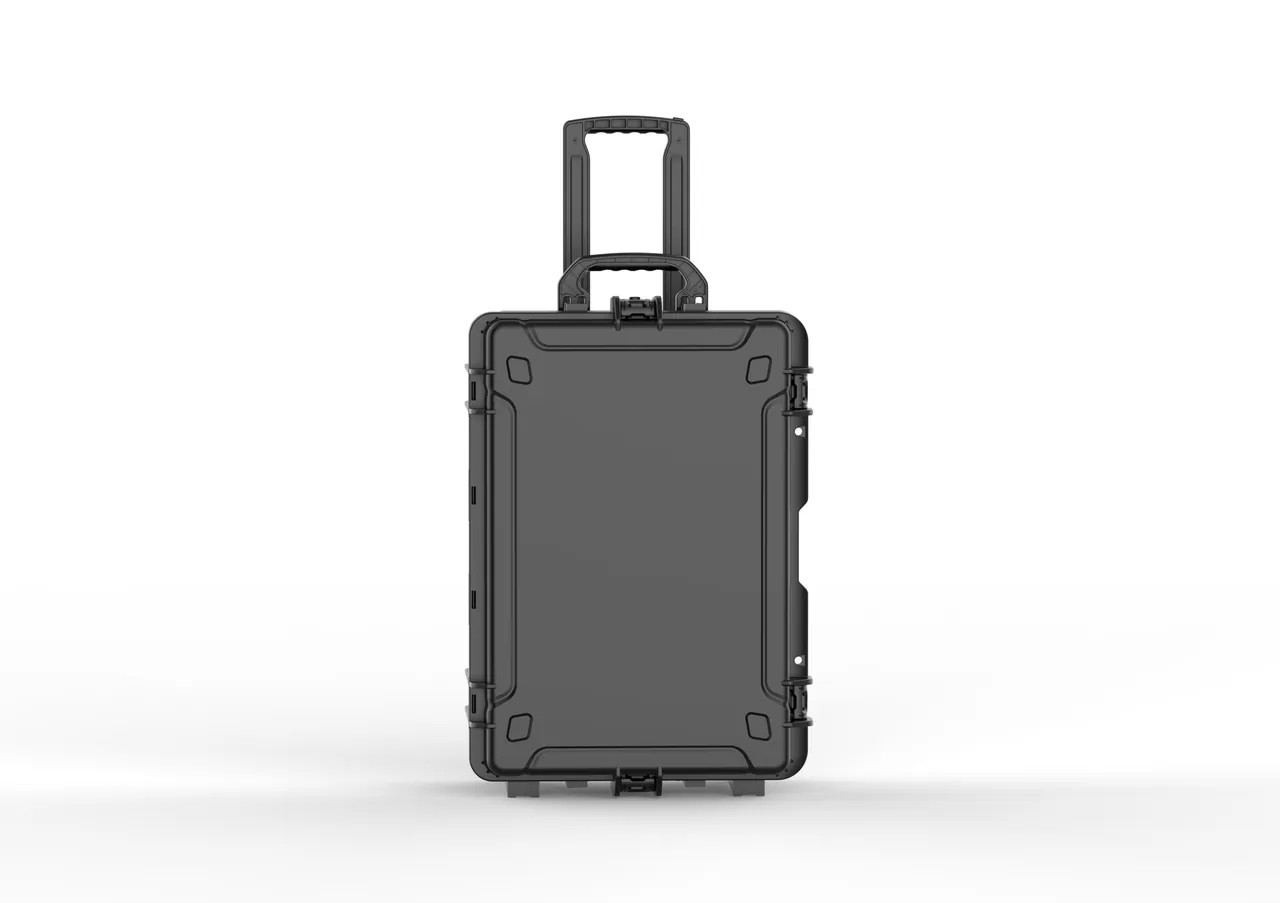
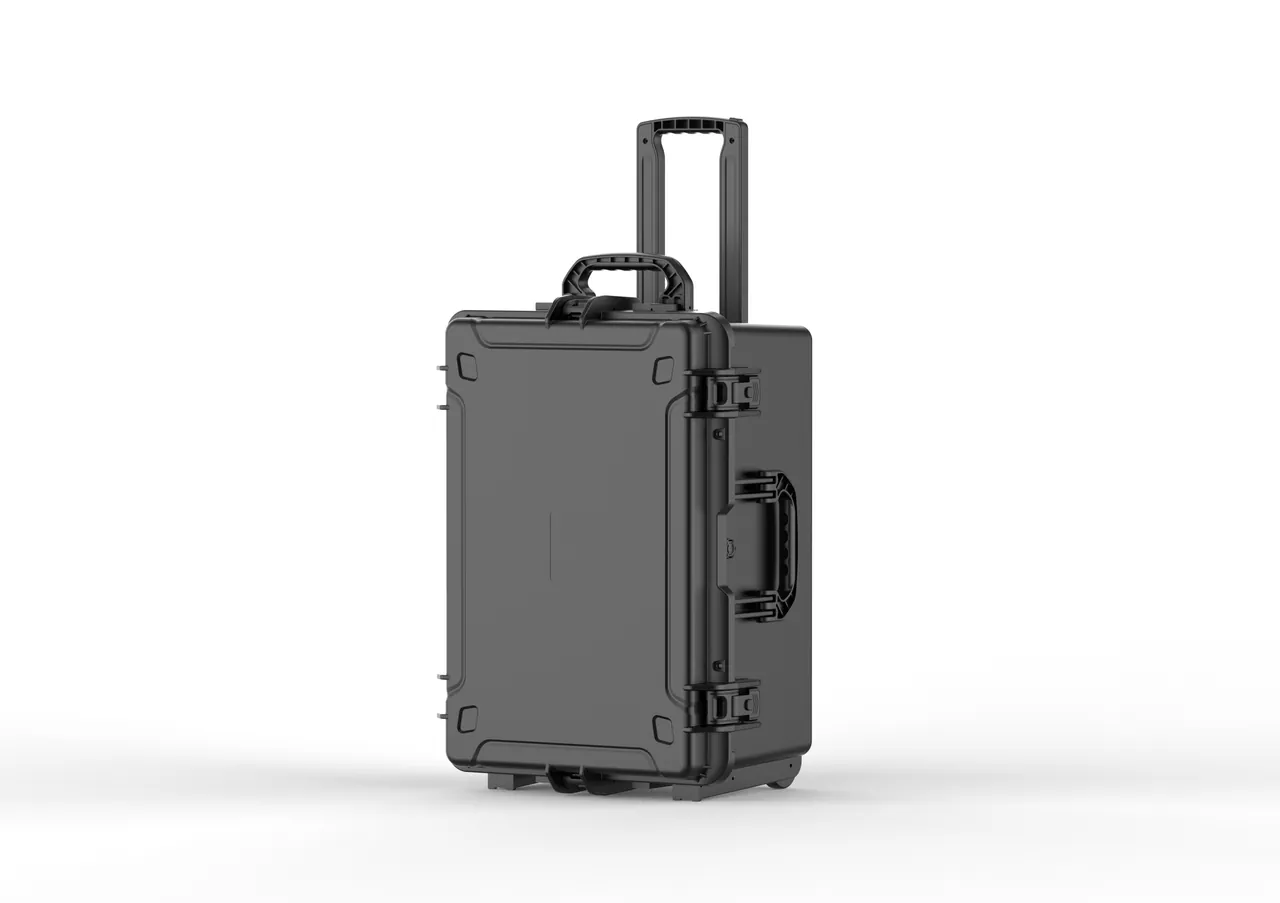
For sheet and structural fundamentals, see plastic protective box selection and structure. For large-capacity card cases that move frequently, add casters and a telescopic handle; see case wheels and trolley handle configuration and portable transport case structure.
13. Environmental and Transport Test Evidence
Specifications should rest on reproducible test evidence.
| Reference | Scope | Relevance to card and game cases |
|---|---|---|
| --- | --- | --- |
| GB/T 4857 series | Stacking, vibration, impact, drop | Establishes stacking limits and a strength baseline |
| ISTA 1/2/3 series | Transport package performance procedures | Combines test intensity by lane |
| ASTM D4169 | Distribution cycle performance testing | Simulates a complete distribution cycle |
| MIL-STD-810H | Environmental test methods | Used as a method reference only; not a military certification |
| IEC 60529 / GB/T 4208 | Enclosure ingress protection | Defines and verifies IP rating |
| UL94 | Flammability classification for plastics | Flammability requirement for inserts and windows |
| ISO 9706 / ISO 18916 | Permanent paper and enclosure compatibility | Reference logic for acid-free enclosure materials |
On MIL-STD-810H. It is a test method standard defining conditions and procedures. Testing according to its methods confers no military certification or approved-status designation, and marketing and documentation must strictly distinguish the two. For card and game cases its practical value lies in providing a reproducible temperature-humidity, vibration and shock procedure, which is well suited to validating a moisture control scheme.
In practice, JUNZHJIA combines test items according to the customer lane. E-commerce parcel lanes center on an ISTA 3A or ASTM D4169 distribution cycle with drop testing and IP65 seal verification. Full-container ocean lanes add high-temperature high-humidity exposure and long-duration stacking. For lanes carrying high-value graded cards, post-unpack verification of card face and holder condition can be added as an acceptance item. See ISTA transport testing procedure selection and ASTM D4169 distribution cycle testing.
14. Trade Shows, Tournaments and Retail Turnaround
Tournaments and events. Characteristics are high-frequency opening, on-site time pressure and a need for fast access. Priorities: a lid that holds position for one-handed use; zoning that matches the format, with separate zones for the main deck, sideboard, tokens and dice; standardized card box sizes; external case numbering; and IP65 with reinforced corners.
Trade shows and card shows. Characteristics are prolonged exposure to a public environment, a need to combine display with protection, and heavy foot traffic. Priorities: UV blocking for windows, since prolonged light fades card faces; separate display and transport positions so supports do not need re-tuning; branding on the case exterior; and gloves on site to prevent hand sweat and fingerprints on card faces.
Retail turnaround and e-commerce dispatch. Characteristics are frequent single-item shipments, extremely condition-sensitive buyers, and costly returns disputes. Priorities: ship single cards in a rigid brick secured in a case rather than a soft envelope; include a state record card; and use single-use tamper-evident labels for high-value singles. Before dispatch, run a final visual check of card faces and corners plus a numbering reconciliation, and retain the record. For the handover-management logic behind high-value items, see precious metal and jewelry transport cases: high-value security.
Long-term storage. Hold in-case RH at 45% to 55%, temperature at 18 to 24 degrees Celsius and keep cases out of light. Inspect every three to six months: whether stacks show a bowing tendency, whether holders show cracks, whether desiccant needs replacing, and whether acid-free materials show discoloration.
15. Tamper Evidence, Numbering and the Manifest System
The high value of collectible cards and games makes tamper evidence a design requirement rather than an add-on.
Three-way numbering.
- Unique case number: bound to the shipping document.
- In-case manifest numbering: every item, card box or slot numbered, with condition notes.
- Single-use seal: unrecoverable once broken, with a number matching the other two.
Any anomalous opening surfaces during reconciliation. For extremely high-value singles, add a temperature and humidity recording label so transport conditions become traceable evidence as well.
The engineering value of a manifest. A manifest is not only a record; it is a packing error-prevention tool. When compartment numbers map one to one with manifest lines, packing becomes "place by number," and misplacement and omission rates drop sharply. That is why insert zoning must be finalized together with the manifest structure.
Coordinating hinges, seals and locks. The reliability of a high-value card case depends on its opening system. Insufficient gasket compression degrades the IP rating; latch clamping force decay loosens the lid; hinge stop failure allows excessive opening angle and contents to slide out. See case hinge, latch and seal selection and case lock customization options.
16. Customization Flow, Acceptance and Cost Structure
Customization flow (six steps).
- Requirement definition: card and game list, unit dimensions and values, lane (parcel, LTL, ocean, air), turnover count, and whether a window or lock is needed.
- Solution design: shell size family, shell material, IP rating, insert zoning scheme, moisture and light control configuration.
- Prototype validation: build slot and compartment prototypes, assemble with real items, and verify the three criteria of zero displacement, zero preload and zero friction.
- Test validation: stacking, vibration, drop and sealing verification against the selected references, with humidity cycling where required.
- Acceptance freeze: acceptance criteria and sampling plan for appearance, dimensions, assembly, sealing, component completeness and manifest documentation.
- Production and delivery: manufacture to batch with inspection records and material documentation per batch.
Cost structure.
| Cost item | Nature | Drivers | Optimization direction |
|---|---|---|---|
| --- | --- | --- | --- |
| Shell tooling | One-time | Size, structure, surface finish | Reuse size families |
| Insert machining and forming | Semi-one-time | Slot count, compartment complexity | Modular slots, standard card box fit |
| Shell material | Recurring | Material type, thickness, flammability requirement | Choose by lane, avoid over-specification |
| Seals and hardware | Recurring | Gasket material, latch grade | Standardize wear parts |
| Acid-free consumables | Recurring | Acid-free card boxes, tissue, corner protectors | Tier usage by value |
| Testing and documentation | Per batch | Item count, laboratory accreditation | Combine the minimum necessary items |
| Assembly labor | Recurring | Compartment count, manifest complexity | Numbering and poka-yoke design |
Acceptance points. Build acceptance at three levels: appearance and dimensions including tolerances; function covering opening, sealing, latching, pressure equalization and slot fit; and packing and documentation covering manifest, numbering, seals and material declarations. Sampling plans can follow AQL methods; see custom case acceptance and AQL sampling. For supplier selection, see how to choose a protective case OEM factory; for tooling economics, custom case mold cost analysis.
Frequently Asked Questions
Q: Why do cards bow, and can it be prevented completely?
A: The root cause is the anisotropic moisture expansion of paper. Paper is a web of fibers, and swelling across the grain is typically much larger than along the grain, with ratios of 2:1 or higher. Coatings or holo films on the front and back further change how fast each face absorbs moisture, so when moisture content shifts the two faces expand or contract by different amounts and the card curves. Complete prevention is therefore physically impossible; what you can do is contain the magnitude. First, hold in-case relative humidity stable at 45% to 55%, because stability matters more than the number — repeated absorption and desorption cycles fatigue paper and crack coatings. Second, avoid over-drying, since below 40% embrittles paper and produces violent re-absorption and worse curl on return to normal conditions. Third, equilibrate cards taken from humid environments for 24 to 48 hours before packing. Slightly bowed cards can be slowly flattened under controlled humidity with even pressure, but holo and coated cards should not be pressed at home because the film layer can be damaged. Where storage has to be flat rather than upright, keep the stack under even, light pressure in an acid-free box rather than a tight bundle, and rotate the stack orientation periodically so residual curl spreads evenly instead of concentrating at one edge.
Q: Should graded cards be stored flat or upright, and can they be packed under compression?
A: Store them upright in dedicated slots and never under compression. Upright storage lets rigid dividers separate holders so card faces never touch adjacent holders, which removes the friction path. Slots should be about 1 to 2 mm wider than holder thickness and 60% to 75% of holder height deep, so the holder is constrained by slot walls rather than bearing on its bottom edge. Compression is explicitly avoided: sustained compressive stress on a high-gloss face can cause stress cracking over time, and any scratch or crack on a gloss face directly affects re-grading and resale price. The correct principle is retention rather than compression — limit displacement without applying sustained load. Where display is needed, keep display and transport cases separate: display prioritizes visibility and appearance with a UV-blocking window, transport prioritizes retention and sealing. Where display and transport must share one case, fit an inner opaque cover so the transport configuration still excludes light, and remove it only for display.
Q: Is more desiccant better? Is lower humidity always safer?
A: Neither. Desiccant exists to bring in-case humidity into the target band, not to drive it as low as possible. Over-drying below 40% RH embrittles paper and cracks coatings, and once the case is opened to normal conditions the cards absorb moisture rapidly and curl sharply — damage that can exceed storing them at 50% RH permanently. A reasonable approach sizes desiccant from both free air volume and paper mass: 20 to 30 g of high-performance desiccant per 20 liters of free air as a baseline, plus 10 to 20 g for each kilogram of paper products, multiplied by a lane factor of 1.2 to 1.8 and using the upper end for intercontinental container freight. All values are typical experience figures, and production specifications should be fixed only after validation on the actual lane. Put a humidity indicator card or a data logger inside the case so decisions rest on measured data, and set the desiccant replacement interval from that data. Write the final quantity on the case label so anyone repacking later applies the same amount rather than estimating, since desiccant quantity is one of the few variables that decides whether a card stack arrives flat or bowed.
Q: Why is acid-free material emphasized? Are ordinary foam and cartons not acceptable?
A: Standard corrugated board, kraft paper and some foams contain lignin or acidic residues that release acids in long contact, yellowing, embrittling and staining cards. This degradation typically takes months to years to appear and is irreversible. International standards exist for permanent paper, such as the ISO 9706 requirements for paper permanence, and for enclosure compatibility, such as ISO 18916, the photographic activity test used to assess whether enclosure materials harm sensitive materials. Both apply in spirit to card enclosures: materials touching card faces, holders or shrink wrap must be acid-free, lignin-free, plasticizer-free and low-outgassing. In practice, require suppliers to provide composition declarations and compatibility test data rather than trusting an "acid-free" label, and for high-value cards run a small-scale compatibility test before volume purchase by placing cards and insert material together under controlled temperature and humidity and comparing color shift and surface condition. Where a supplier cannot provide a composition declaration, treat the material as unverified and test it before it touches anything of value.
Q: When one case holds sealed game boxes and loose cards, how should it be zoned?
A: The core principles are layer by hardness, zone by category and locate by number. Use three layers: the bottom for the original game box and rulebooks as large flat items; the middle for card boxes, bricks and plastic tokens; and the top for miniatures, dice and other fragile or small parts, capped with a rigid load-bearing board. Rigid dividers carry load between layers so upper weight transfers to the case walls rather than onto miniatures or box lids. Hard parts such as metal coins, dice and miniatures must be zoned away from cards, ideally on different levels. Small parts go into lidded sub-boxes that seat in the insert, preventing loose movement and impact. Give each component type a fixed numbered slot, with packing and counting done by number. One frequently overlooked point: playmats and cloth bags should lie flat or roll to a fixed diameter around a rigid core tube, and the roll must not contact hard parts directly, or creases and impressions will form. Photographing the packed case before closing it also shortens any later dispute about whether an item was present and how it was positioned.
Q: Why does a board game case cost so much more than a standard carton, and is it worth it?
A: The difference comes from three parts: tooling and insert machining as one-time investment, acid-free consumables and sealing hardware as recurring cost, and testing and documentation as per-batch or one-time cost. On return, the test is whether avoiding one markdown event exceeds the cost. For sealed games and high-grade cards, a single deflected lid, holder crack or mold patch can produce a 10% to 40% markdown or more, far above the case cost. Meanwhile the three structural gaps of a standard carton — no top load path, no moisture control, no tamper-evident system — map exactly onto those three high-frequency loss types. For higher-value collections, a purpose-built case therefore typically pays back within the first or second shipment. For low-value, short-haul, single-use scenarios, cartons remain acceptable; the key is to select the specification by unit value and lane rather than applying one rule everywhere. The break-even point is usually reached faster than buyers expect, because the loss being avoided is a full-value loss rather than a partial one, and it arrives in the same shipment as everything else in the case.
Q: Should cards and board games be sealed or allowed to breathe? Does sealing trap mold?
A: Seal them, but only with three conditions satisfied. First, the packing environment must be dry — pack at 45% to 55% RH and 18 to 24 degrees Celsius, and equilibrate cards from humid environments for 24 to 48 hours first. Second, desiccant is mandatory, sized from free air volume and paper mass with a lane multiplier. Third, a pressure equalization valve is required — a fully sealed case develops pressure differentials in air freight and high-altitude road transport, producing lid suction on opening and accelerating gasket wear, while a pressure equalization valve passes air but not water and releases differential pressure while preserving the IP rating. Sealing buys a barrier against external moisture, dust and contaminants; whether the interior stays dry depends on packing state and desiccant sizing. The correct formulation is therefore not "sealed or breathable" but "sealing plus desiccant plus pressure equalization," all three together. Recording the pack date and the desiccant quantity on the case label makes the next service interval obvious without opening the case, which is useful when several cases sit in storage for months at a time.
Q: When shipping a graded card, is protecting the card enough, or does the holder need protection too?
A: Both. Holder condition is itself part of the value. Once a high-gloss holder face carries an obvious scratch or crack, it will be questioned at re-grading and resale and price reacts immediately. Right-angle holder corners crack under point load, and cracks propagate along stress concentrations, so the protected object must expand from "the card" to "the card and its holder." Measures include discrete upright slots with rigid dividers between them to remove the friction path between holders; a 3 to 5 mm acid-free soft foam layer at the slot floor so the holder's bottom edge never bears load; plasticizer-free and acid-free materials at every holder contact, since standard PVC film and some foams can bond or haze a gloss surface in long contact; and no compressive loading. In addition, because the holder and the card inside have different thermal expansion coefficients, sharp temperature swings generate internal stress, which makes temperature control at 18 to 24 degrees Celsius and avoiding sudden changes equally important. Keeping a small stock of spare sleeves and acid-free boxes with the case means a damaged enclosure can be replaced immediately rather than improvised under time pressure.
Conclusion and Further Reading
The technical core of a board game and card case is managing the physical instincts of paper. Paper changes dimension with humidity, is attacked by acids, fades in ultraviolet light and takes impressions under sustained compression — protective design counters each instinct in turn. The essentials compress into four statements: control moisture and keep it stable (45% to 55% RH, stability ahead of the exact number, with desiccant and a pressure equalization valve); stay acid-free and low-friction (acid-free, lignin-free, plasticizer-free contact layers with zero relative displacement); retain without compressing (slot retention limits displacement and never applies sustained load); and exclude light and control temperature (UV blocking, 18 to 24 degrees Celsius, illuminance below about 200 lux). Add a three-way numbering and manifest system plus an IP65 or IP67 decision made by lane, and "still collector grade on opening" becomes a specification rather than a hope.
The recommended sequence is: define the zoning scheme from the card and game inventory, validate prototypes against the three criteria of zero displacement, zero preload and zero friction, validate with an ISTA, GB/T 4857 or ASTM D4169 test path, then freeze acceptance with AQL sampling. JUNZHJIA can supply slot-type and compartment-type custom inserts by category, acid-free contact layer configurations, matched desiccant bays and pressure equalization valves, and sealing and lock selection, and can route third-party testing and batch inspection documentation according to the customer lane, supporting wholesale, distribution and OEM/ODM supply.
Further Reading