

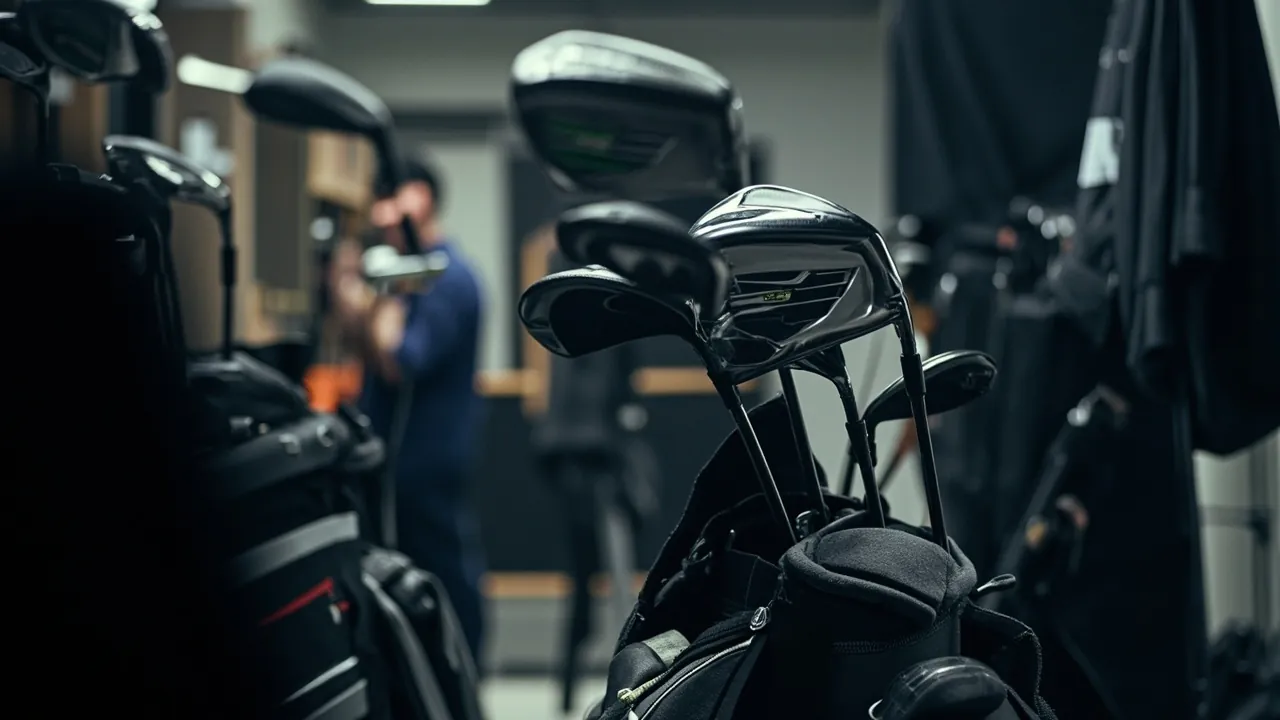
A golf club is a precision and high-value piece of sports equipment. A complete set usually includes woods, irons, wedges and a putter, with shafts made of graphite or steel and heads built from titanium, stainless steel or forged soft iron. Any single drop, crush or exposure to moisture during shipping can bend a shaft, dent a face or age a grip prematurely. The core conclusion for selecting a proper golf club transport case is a three-in-one approach: a rigid shell, a custom-cut foam liner and a dependable sealed latch system, working together to drive down the three dominant transit risks of impact, vibration and humidity. This article systematically breaks down the selection and customization logic for golf club transport cases, from risk mapping and standards to shell materials, liner design, baggage compliance and long-term maintenance, so that clubs, equipment wholesalers and serious players can build a practical protection standard.
For procurement teams buying in volume or requesting OEM customization, the transport case is not merely a container that "fits the clubs." It is a packaging asset that directly determines delivery-intact rate and brand reputation. Throughout this article we reference engineering parameters such as ingress protection, cushioning materials and latch sealing. We recommend reading these alongside the internal case seal materials guide and the IP67 protective case selection references.
Table of Contents
- Core Risks of Shipping Golf Equipment
- Protection Grades and Standards Basis
- Shell Structure and Material Selection
- Liner and Head-Compartment Design
- Special Protection for Heads and Graphite Shafts
- Fixing and Storing Bags and Accessories
- Sealing, Latches and Pressure Equalization
- Airline Checked-Baggage Compliance
- Moisture Control and Humidity Management
- Wheels, Trolley Handle and On-Site Handling
- Purchase and OEM Customization Notes
- Maintenance and Service-Life Management
- Case Dimensions and Club-Length Matching
- Event-Support On-Site Unpacking Checklist
- Frequently Asked Questions
Core Risks of Shipping Golf Equipment
Golf clubs face three typical categories of risk during transit. The first is mechanical shock and drops. Baggage sortation systems, cargo hold loading and courier transfers can all subject the case to instantaneous loads several times its own weight, with the hosel and the head-to-shaft junction being the most vulnerable stress points. The second is continuous vibration and low-frequency jolting. Long-haul road transport and aircraft taxi phases continuously excite shaft resonance, and prolonged bending of graphite shafts leads to microscopic fatigue. The third is moisture and condensation. Cross-border shipping through large temperature swings causes condensation inside and outside the case, leading to moldy grips and oxidized faces.
From an engineering perspective, these three risks map to three protection dimensions: shock resistance, vibration isolation and sealing. A qualified golf club transport case must address all three at once rather than solving only one. Many failures of cheap soft bags come precisely from considering only "capacity" while ignoring drop impact and moisture protection, eventually producing head dents or grip mildew at the shipping stage.
For B2B buyers, we recommend treating "delivery-intact rate" as the core acceptance KPI. For example, you can agree with the supplier to perform incoming inspection according to the custom case acceptance AQL sampling standard, replacing subjective "looks sturdy" judgments with quantifiable defect grading.
Protection Grades and Standards Basis
The most objective way to judge whether a protective case is reliable is to check which standards it cites. The shell sealing grade can follow IEC 60529 (the Chinese national counterpart GB/T 4208) which defines the IP code. Common golf club cases achieve IP65 (dust-tight and protected against low-pressure water spray) or IP67 (dust-tight and protected against temporary immersion). Environmental adaptability can follow the methods of MIL-STD-810H for drop, vibration and damp-heat cycling tests. It must be emphasized that this is only an environmental test basis for the product line, not a military certification.
Transport reliability can reference the series of procedures from ISTA (International Safe Transit Association), especially the vibration-plus-drop combined tests that simulate multimodal shipping. The domestic equivalent is GB/T 4857 for transport packaging basic tests. For flame retardancy and shell strength, UL94 can evaluate the flame class of the shell material, while the IK rating (IEC 62262) describes the enclosure's resistance to external mechanical impact.
The table below summarizes the most relevant standards and what to verify at acceptance:
| Standard / Grade | Dimension | Typical Value for Club Cases | Acceptance Focus |
|---|---|---|---|
| --- | --- | --- | --- |
| IEC 60529 / GB/T 4208 | Dust & water | IP65 or IP67 | Real sealing at seams and latches |
| MIL-STD-810H | Environmental | Drop, vibration, damp heat | Test basis only, not military cert |
| ISTA / GB/T 4857 | Transit reliability | Vibration + drop combo | Intact rate, defect grading |
| UL94 | Flame retardancy | V-0 / V-2 by material | Self-extinguish after flame |
| IK (IEC 62262) | Impact resistance | IK08–IK10 | Latch and corner impact strength |
Writing these standards into the procurement technical agreement significantly reduces the chance of "goods not matching the specification." For a more systematic compliance reading, see the MIL-STD-810H case compliance note and the ISTA transport testing procedure.
Shell Structure and Material Selection
Golf club cases commonly use three shell materials: modified PP (polypropylene) injection-molded in one piece, ABS composite panels and aluminum alloy frames. PP cases are light, tough and have strong impact rebound, making them suitable for high-drop-risk scenarios such as airline checked baggage. ABS is cheaper but brittle in low temperatures, so caution is needed for transfers in cold regions. Aluminum offers high rigidity and premium feel but higher self-weight and tendency to dent after impact.
Wall thickness, rib layout and corner fillet design together determine torsional stiffness. Experience shows that a PP case with wall thickness in the 3–5 mm range and internal longitudinal and transverse ribs delivers better bending resistance at the same weight. For wholesale customers who need logo printing and brand colors, PP injection also facilitates coloring and silk-screening, with relatively friendly OEM minimum order quantities.
When selecting, first clarify the "primary transit scenario": if airline checked baggage dominates, prioritize a PP hard shell with wheels; if fixed clubhouse storage dominates, a lighter ABS or thin-wall PP may suffice. In all cases, the latch and hinge system should meet the reliable closure requirements of the case hinge latch seal system, which is the first gate for true water resistance.
In actual selection, also pay attention to the shell's "rib-corner-edge" details: bottom longitudinal and transverse ribs disperse drop impact to a larger bearing surface, avoiding stress concentration on a single latch; the four corners should be thickened fillets rather than sharp corners, both impact-resistant and avoiding hurting others; the lid-closing stop on the case edge should be continuous without breakpoints, forming a closed-loop compression with the silicone gasket. For wholesale customers printing logos, PP injection can reserve a silk-screen or in-mold labeling area outside the parting line, ensuring brand identity without damaging the sealing face. If considering long-term outdoor or unified fleet appearance, weather color masterbatch and anti-UV formula can also be selected to delay yellowing and embrittlement. Writing these structural points into the technical agreement item by item, together with the liner selection of the case foam material comparison, makes the "hard shell + liner" truly closed-loop.
Liner and Head-Compartment Design
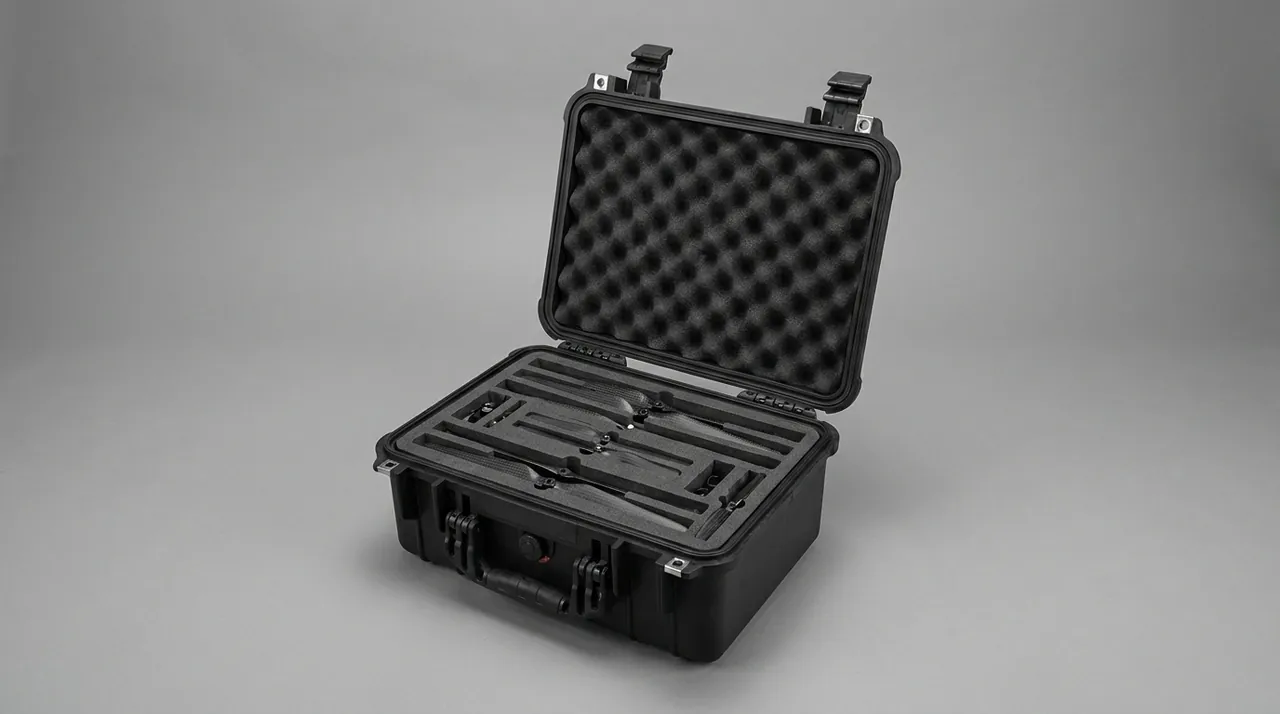
The liner is the soul of a club case. Even with the strongest shell, a bare hard case without liner fixation still lets the clubs collide inside. The mainstream solutions are EVA foam with tear-off dividers, or CNC-cut custom foam shaped to the specific club models. EVA density typically ranges from 30–60 kg/m³; higher density gives firmer support but excessive hardness presses the grips, so a medium density for shaft channels and high density for head bays is recommended.
The core value of a custom liner is "independent molding for each club position." You can consult the custom foam inserts guide and the EVA foam custom process to understand molding and cutting flows. For mixed models (woods, irons and putter together), a modular compartment system is more stable than a single large cavity, avoiding head-to-head compression.
The table below compares two common liner solutions:
| Liner Solution | Best For | Advantage | Caveat |
|---|---|---|---|
| --- | --- | --- | --- |
| EVA tear-off divider | General, mixed models | Low cost, field adjustable | Precision depends on labor |
| CNC custom foam | Fixed models, high value | Perfect fit, best protection | Needs club dimension drawings |
The fit clearance between liner and shell also matters: too large and fixation fails, too small and the lid will not close. Professional manufacturers simulate lid-closing pressure at the drawing stage, which is exactly the "compression rebound" parameter repeatedly emphasized in the case foam material comparison.
From a cost perspective, the liner is often the most variable part of a custom order: one shell can fit multiple liners, so we recommend buyers adopt "standardized shell plus modular liner" as a long-term strategy, reducing first-tooling cost and allowing only the liner to be replaced when clubs are upgraded without changing the case. For distribution and agency customers, JUNZHJIA can provide two product lines: an entry version of "blank liner plus tear-off divider" and a high-spec version of "CNC custom foam," flexibly combined by budget and protection grade. Either line should keep a 2–3 mm lid-closing margin to avoid the lid not closing tightly due to insufficient foam rebound, leaving the gasket unpressed and leaking.
Special Protection for Heads and Graphite Shafts
The head is the most expensive and most fragile part of a club, especially titanium wood faces and forged iron heads, which easily retain permanent dents from point impacts. The specialized approach is: independent head bay plus head cover plus locally reinforced foam. The head cover should use thickened fleece or microcellular foam to avoid direct metal-to-metal friction.
Graphite shafts fear sustained bending and edge cutting the most. During transport, ensure the shaft lies straight in its channel, and the channel inner wall must be free of hard plastic burrs. If hard objects (shoes, balls, tools) are mixed in the case, they must be completely separated by a partition. For buffering and support details, extend your reading to the cushion liner case discussion on multi-point support.
For models with adjustable weights or adjustable hosels, lock the adjustable parts and fix them separately to prevent internal impacts from loosening during transit. These details seem trivial but are the key to zero-defect delivery.
Fixing and Storing Bags and Accessories
Beyond the clubs, a full kit usually includes a bag, balls, gloves, shoes, rain gear, a rangefinder and tools. The bag is bulky and irregular; if placed in the same case as the clubs, a removable divider system must physically separate the "club zone" from the "bag and accessory zone," as detailed in the removable divider system.
Accessories should use small-grid drawers or mesh pockets by layer: shoes in a separate breathable bag, balls and gloves in independent bays, and the electronic rangefinder in a crush-proof box. Humidity-sensitive items (such as spare leather grips) should sit near the desiccant. Reasonable partitioning improves not only protection but also the efficiency of unpacking and inventory; for tour support teams, locating a specific item within 30 seconds is a hard requirement.
Sealing, Latches and Pressure Equalization
Water and dust resistance rely on sealing, but a fully sealed case creates a "negative-pressure suction lid" problem at altitude. After the cargo hold depressurizes, the interior is relatively positive; on landing when external pressure rises, the case can be "sucked" shut, making it hard to open or even damaging the latches. The solution is a pressure equalization valve that lets the interior slowly equalize with the outside, as detailed in the case pressure equalization valve reference.
Latches and hinges are the last ring of sealing. A dual-latch plus silicone gasket is the mature industry solution, and the latch should have a secondary safety against accidental opening. When selecting, always cross-check the case hinge latch seal system to confirm a metal-core hinge and a continuous closed-loop gasket. In addition, the waterproof IP case and the seal shock case provide more sealing-structure references.
Airline Checked-Baggage Compliance
Airlines impose limits on size, weight and shape for checked baggage. Golf club cases are usually charged as "sports equipment" special baggage, yet they are still constrained by single-side length and total weight. The common advice is to keep the full case within the checked allowance; oversize may trigger oversized-baggage fees or even refusal. For air-rail combined transport, also consider the cargo hold loading method to avoid vertical placement under compression.
From a packaging compliance perspective, you can verify the case's stacking and drop performance against GB/T 4857 transport packaging tests. If using cross-border courier, we recommend a packing list and fragile label inside the case, plus a prominent "this side up" mark on the outer box to reduce rough sortation probability.
Moisture Control and Humidity Management
Condensation from cross-border and multi-climate transport cannot be solved by sealing alone; it must be paired with drying measures. Method one: place renewable desiccant (silica gel) inside the case and verify material stability within the temperature range mentioned in the extreme temperature case. Method two: attach a humidity indicator card to the inside of the lid so moisture exposure is known at a glance on opening.
Grips and leather accessories fear mold the most. For long-term storage, keep relative humidity at 40%–60% and ventilate regularly. If the case is used in high-temperature, high-humidity environments such as Southeast Asia or island resorts, prioritize an IP67 style with a gasket, as detailed in the IP67 protective case selection.
Wheels, Trolley Handle and On-Site Handling
A fully loaded club case often exceeds 10 kg, and the last mile between airport and course depends on wheels and a trolley handle. Wheels come in directional and caster types; casters turn flexibly but each has limited load, so we recommend dual-row large-diameter wheels with bearings. The trolley handle should lock at two height stages to avoid wobble while towing. Related structures are covered in the case wheels and trolley handle reference.
Handling also involves "who carries it." We recommend keeping ergonomic handles on both sides of the case, and the connection between handle and shell should have metal inserts for reinforcement to avoid being directly snapped off during cargo hold handling.
Purchase and OEM Customization Notes
For wholesale buyers, the core of selection is to define the standard before the style. We recommend clarifying: target protection grade (IP65/IP67), whether a pressure valve is needed, whether the liner is a universal divider or custom foam, and whether brand printing is required. Custom MOQ, tooling cost and lead time can be estimated in the custom case mold cost analysis; the process of finding a factory is covered in how to choose a case OEM factory.
JUNZHJIA, as the protective-case brand of Kexin New Materials (Guangdong) Co., Ltd., provides an integrated OEM/ODM solution from PP hard shells to EVA custom liners, can match seals and liners by club model, and can supply test documentation to help buyers write standards into contracts. For small and medium wholesalers, a supplier that solves "shell + liner + testing" at once significantly reduces coordination cost.
Before actual ordering, we recommend buyers complete a three-stage verification: first use one or two samples for empty and full-load drop rehearsals to confirm lid-closing pressure and liner fit; then pilot 50–100 units in small batch and perform first-article and incoming inspection by the custom case acceptance AQL standard; finally scale to a full truck or container. On lead time, general PP shells usually take 15–30 days, while orders with custom liner and silk-screening need reserved tooling and cutting time, so we recommend writing the "first-sample confirmation node" into the contract to avoid delays from repeated mold changes. For agency and OEM customers, JUNZHJIA can also provide English test summaries and compliance notes to facilitate overseas customs clearance and acceptance.
Maintenance and Service-Life Management
A transport case is a durable asset, but aged gaskets, loose latches and worn wheels all degrade protection. We recommend basic maintenance every 50 shipments or every six months: wipe the gasket with a neutral cleaner (see how to clean a protective case), check whether the hinge core is rusted, and confirm the pressure valve is clear. Lifecycle management can follow the protective case service life years to establish replacement thresholds.
Another side of maintenance is "authenticity identification." The market has cases that pass off recycled material as new material; you can make a preliminary judgment by wall thickness, odor and latch texture, and a more rigorous method is in identify genuine vs fake case. For B2B procurement, writing authenticity identification into acceptance clauses avoids after-sales disputes at the source.
Common Misconceptions About Protection Cases
Many users think "the heavier the case the sturdier," but weight is actually a reverse indicator of material efficiency. Others think soft bags are more convenient, ignoring the hard gaps in drop and water resistance. The correct approach is to reverse-engineer the protection configuration from transit risk: high shipping frequency means hard shell plus custom liner plus pressure valve; storage-dominant use can skip wheels but keep sealing.
Another misconception is ignoring liner compression. Foam permanently collapses under long-term pressure, so we recommend replacing the high-load liner zone every one to two years, or choosing a material with better rebound. JUNZHJIA's custom liner solution supports local re-cutting without replacing the whole set, balancing cost and protection.
Acceptance and Cost for Bulk Procurement
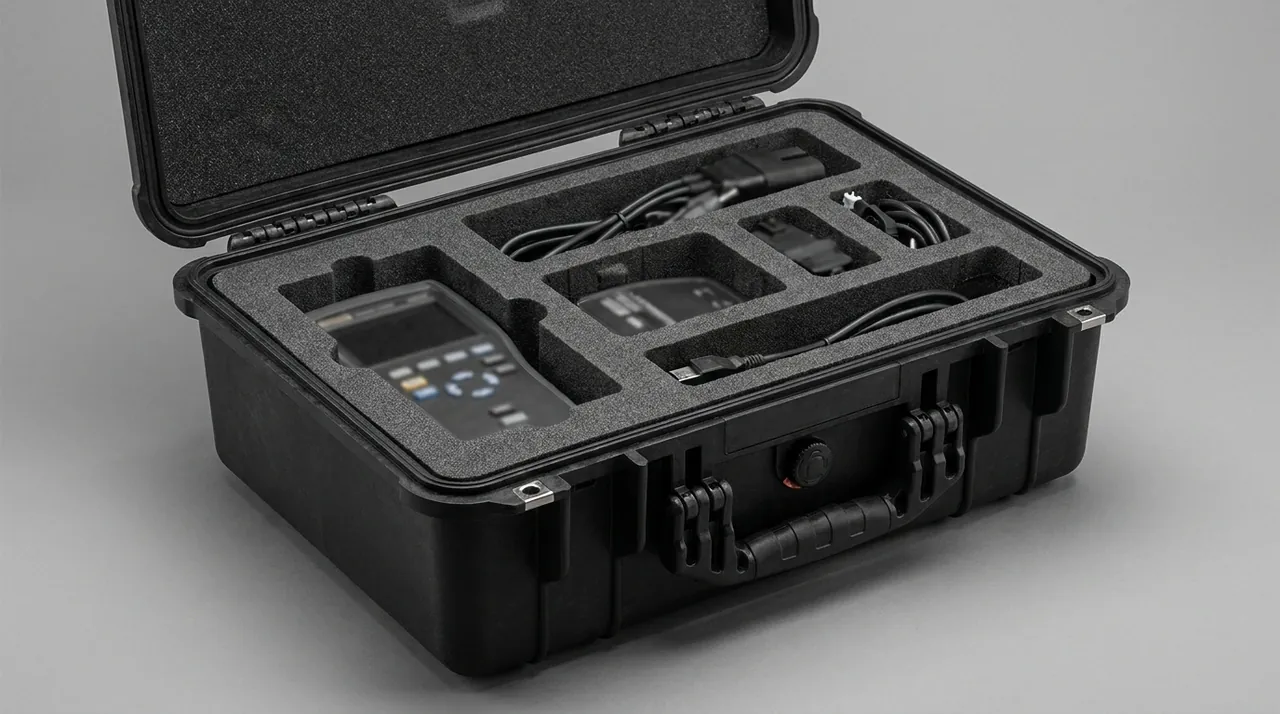
In bulk procurement, looking only at unit price easily leads to pitfalls. More reasonable is converting "intact delivery rate + service life + after-sales" into a comprehensive cost of ownership. We recommend requiring the supplier to provide per-batch ISTA or GB/T 4857 sampling reports and accept by the AQL sampling mentioned earlier. Easily worn parts such as latches, wheels and pressure valves should have clearly stated spare-part prices and supply lead times.
On cost structure, the PP shell is dominated by raw material and injection, while the liner is dominated by tooling and cutting labor. Following the thinking in the custom case mold cost analysis, the larger the batch the lower the unit cost, but you must also weigh inventory and capital occupation.
Case Dimensions and Club-Length Matching
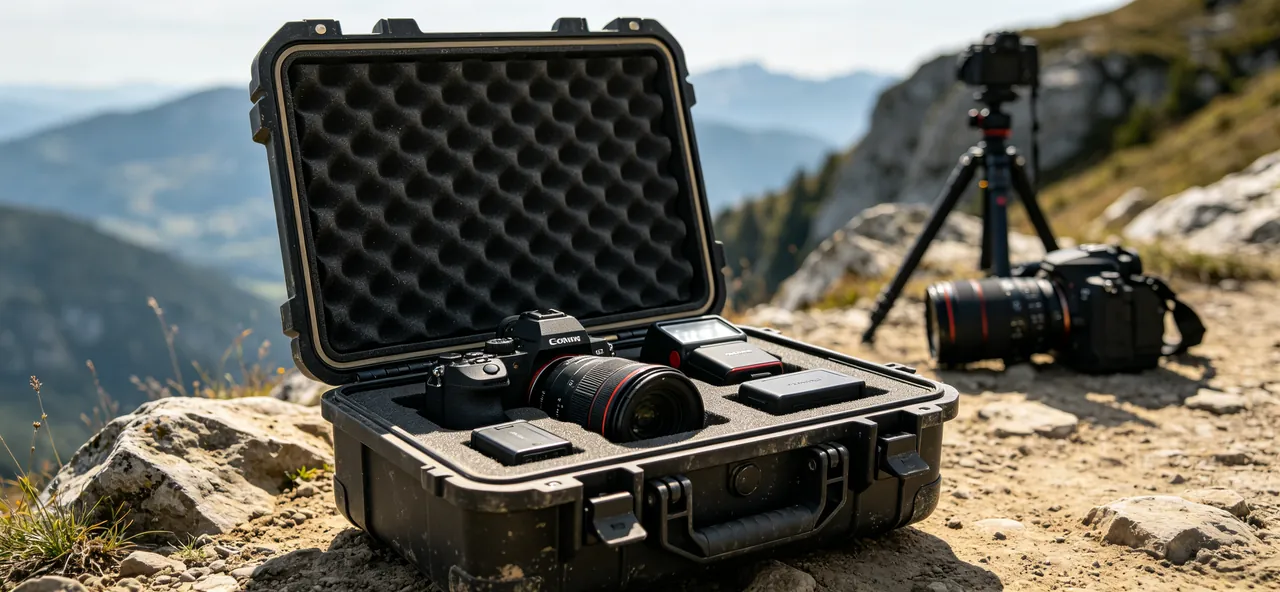
The internal effective length of a club case must cover the longest driver. A driver including its head typically measures between 1.15 m and 1.25 m, so the interior clearance should leave margin for that length plus the thickness of the head cover. Many "just fits" cases let the driver head press against the liner after closing, and prolonged pressure actually damages the hosel.
When selecting, also check the airline checked-size upper limit. If a single side or the total dimension is exceeded, it may trigger oversized-baggage fees or even refusal. We recommend listing three items before procurement — longest club, compressed bag height and stacked accessory height — to reverse-engineer the interior net dimension rather than only looking at external length and width. JUNZHJIA can verify the liner channel length and lid-closing clearance against the customer's driver physical sample or drawing, avoiding "does not fit" or "lid pressure" from the source.
Event-Support On-Site Unpacking Checklist
During a tour or team departure, the unpacking efficiency of the transport case after arrival directly determines the warm-up and pre-match preparation rhythm. We recommend an erasable checklist inside the case: club model and quantity, spare grips, head covers, balls, gloves, rain gear, tools and desiccant remaining. Check each item after opening and restore to original position after the match to significantly reduce loss and misloading.
On site, also prepare spare latches, dust-proof stickers for the pressure valve and a simple cleaning cloth to deal with transit wear. For cross-climate events, check the humidity indicator card first on opening; if it has changed color, it means moisture exposure, and you should ventilate and dry before use. Standardizing these actions, combined with the maintenance rhythm in how to clean a protective case, turns "equipment support" from experience-based work into a reproducible process.
Frequently Asked Questions
Q: Does a golf club transport case have to be IP67? A: Not necessarily; it depends on the transit environment. If transfers are short-haul between domestic clubs and always supervised, IP65 dust-tight and water-spray protected is usually enough. If it involves airline checked baggage, cross-border shipping or rainy island environments, IP67 (dust-tight and temporary immersion) is safer because it copes with cargo-hold water, rain exposure during open-air loading and other accidents. The judgment should combine the three dimensions of drop, water and moisture rather than looking at the IP grade in isolation. At procurement, ask the supplier for the GB/T 4208 corresponding grade test note, and treat the actual waterproofing at seams and latches as an on-site acceptance point instead of only reading advertised parameters.
Q: What does a graphite shaft fear most in transit, and how to protect it? A: A graphite shaft most fears sustained bending, edge cutting and hard-object impact. During transport, lay the shaft straight in the liner channel, and the channel inner wall must be smooth without burrs. If hard objects such as shoes, balls or tools are mixed in the case, they must be completely separated by a removable divider to prevent hard items from bending or cutting the shaft during jolting. An independent head bay plus a head cover avoids metal-to-metal friction. Experience shows a medium-density EVA channel with a high-density head bay is the most balanced. Regularly replacing the compressed liner is also key, because foam permanently collapses and loses support. JUNZHJIA can customize a fitted liner by club model, structurally reducing shaft-bending risk.
Q: Why is a pressure equalization valve needed for airline checked baggage? A: The cargo hold depressurizes at altitude; if the case is fully sealed, when external pressure rises on landing the lid is "sucked" shut, making it hard to open or even damaging the latch or gasket when forced open. A pressure equalization valve lets the interior slowly equalize with the outside, maintaining water resistance while avoiding negative-pressure suction. Note that a valve does not mean the case can be submerged long term; it solves pressure difference, not immersion. When selecting, confirm the valve body uses a waterproof breathable membrane and check periodically for blockage. See the case pressure equalization valve reference and treat it together with the gasket and dual latch as a mandatory inspection item of the sealing system.
Q: Can the golf bag and the clubs be in the same case? A: Yes, but you must physically separate the "club zone" from the "bag and accessory zone" with a partition. The bag is bulky and irregular; pressing it directly on the clubs causes head compression and shaft bending, while shoes, balls and electronic rangefinders should be stored in layered small grids. A removable divider system is recommended because it zones and flexibly adjusts by equipment combination. Electronic accessories such as rangefinders need a separate crush-proof box, and humidity-sensitive items sit near the desiccant. Reasonable zoning improves not only protection but also unpacking efficiency, which is especially important for tour support.
Q: Should the liner be EVA tear-off divider or CNC custom foam? A: It depends on whether the equipment is a fixed model. For mixed models that change often, EVA tear-off dividers are low cost and field adjustable with high cost performance. For fixed-model high-value clubs pursuing zero-defect delivery, CNC-cut custom foam has the best position fit and more stable protection. The two can also be combined: a universal outer layer with tear-off dividers and a custom foam bay for high-value heads. The key is controlling the fit clearance between liner and shell; too large fails fixation, too small prevents lid closing. Before bulk customization, provide club dimension drawings so the manufacturer can simulate lid-closing pressure.
Q: How to tell whether a transport case is real PP or recycled material? A: Judge from three aspects. First, odor: new PP is almost odorless, while recycled material often has a pungent plastic smell. Second, wall thickness and texture: recycled material is brittle, dull-surfaced and uneven in wall thickness. Third, latches and hinges: inferior cases use thin-wall plastic hinges that break easily. A more rigorous method is to require the supplier to provide the material grade and third-party testing, combined with the genuine versus fake case identification points for acceptance. For B2B procurement, writing material requirements and authenticity identification into contract acceptance clauses avoids after-sales disputes and brand risk at the source.
Q: How often should a transport case be maintained, and how? A: We recommend basic maintenance every 50 shipments or every six months. Steps include wiping the silicone gasket with a neutral cleaner and checking for cracks; checking whether the hinge core is rusted and the latch is loose; confirming the pressure valve is clear and unblocked; and checking whether wheels turn smoothly and the trolley lock is reliable. Aged gaskets, loose latches and worn wheels all degrade protection and should be replaced at threshold. Lifecycle management can establish replacement standards by referencing the protective case service life years, and stock easily worn parts in advance to avoid support interruption.
Q: In bulk procurement, how to lower cost without reducing protection? A: The core is to convert comprehensive cost of ownership rather than looking only at unit price. First define the standard (protection grade, whether a pressure valve, liner type, brand printing), then discuss volume and lead time; the larger the batch the lower the unit cost, but weigh inventory capital occupation. Require per-batch ISTA or GB/T 4857 sampling reports and accept by AQL sampling, writing "intact delivery rate" into the KPI. Clarify spare-part prices and supply lead times for easily worn parts such as latches, wheels and pressure valves. Choosing an OEM manufacturer that simultaneously provides shell, liner and test documents, such as JUNZHJIA, reduces multi-supplier coordination cost and is overall more controllable.
Conclusion and Related Reading
Selecting a golf club transport case is essentially "reverse-engineering the protection configuration from transit risk": use a hard shell to resist drops, a custom liner to isolate vibration, and a sealed latch plus pressure valve to resist water and suction. Writing standards such as IEC 60529, GB/T 4208, MIL-STD-810H, ISTA and GB/T 4857 into the procurement agreement turns "looks sturdy" into quantifiable acceptance metrics. JUNZHJIA can provide an integrated OEM/ODM solution from PP hard shells to EVA custom liners, matching seals and test documents by model, making it a worry-free choice for wholesale and agency customers.
Related Reading