Home / Boxknow / Telescope & Astronomy Cases: Move the Optics Without a Scratch
Telescope & Astronomy Cases: Move the Optics Without a Scratch
Published 2026-09-05
Astronomy gear is 'precise and coating-sensitive' optics. A tube's coating fears crush and scratch, eyepieces fear bump, and a mount head fears knock. A soft bag resists dust but not drops; bare gear is both damaged and the coating loss is irreversible. A qualified telescope case fixes the tube, separates eyepieces, absorbs shock and protects optics while carried to a dark site. This guide covers choice and use from an observer's view.
Three Kinds of Scope Risk
Coating loss: tube crush or scratch is permanent.
Eyepiece loss: lens bumped.
Mount loss: head knocked loose.
Priority: tube care > eyepiece separation > mount care.
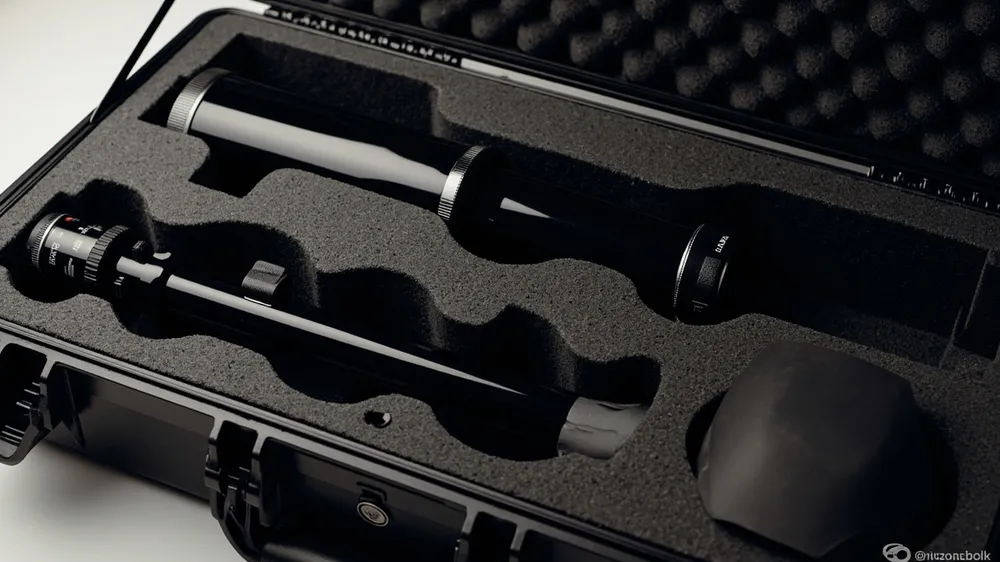
Cutouts fix the tube and isolate each eyepiece from crush.
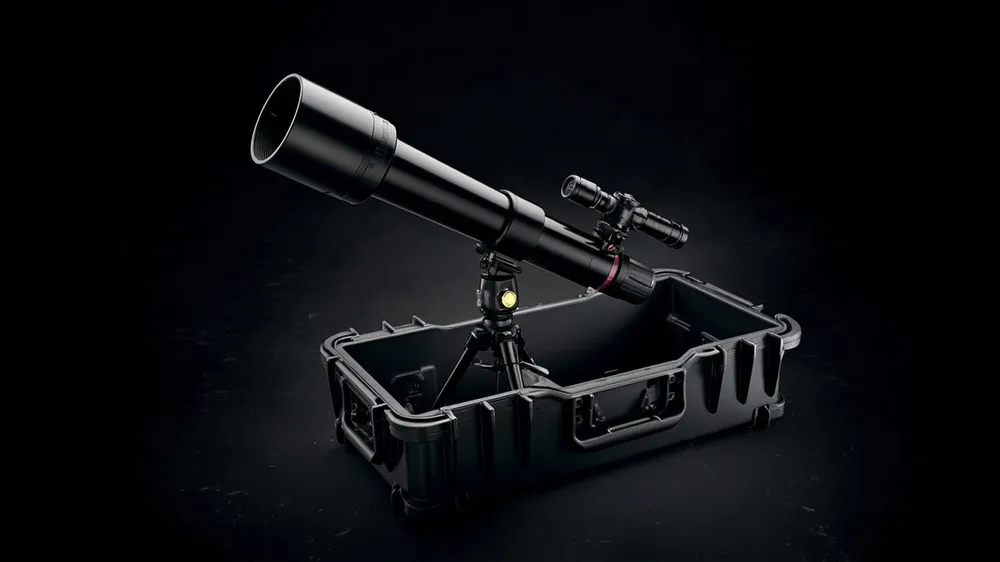
The tube coating is the risk point and must float in a hard cavity, not bottoming or crushed. The idea follows drone foam design floating; the cavity method is in custom foam. In transit the tube is fixed alone and ports get caps.
Eyepiece Separation and Mount
Eyepieces and the mount head each need a home. Methods:
First, tube bottoms out harms coating. Second, eyepieces crushed scratch lenses. Third, mount knocked loosens axis. Fourth, no metal pin loosens after thousands of cycles. Fifth, recycled resin, see virgin vs recycled. Sixth, no humidity control molds coating.
Summary
The key to a telescope and astronomy case is 'care for the tube, separate eyepieces, protect the mount, control humidity': floating cavities keep the coating off the floor, separate slots keep eyepieces from crushing, the head's own cavity avoids knocks, metal latches survive dark-site bumps, and humidity control stops coating mold. At order time, write the kit list (with tube spec) and travel mode as clauses, then ask the supplier to show material and test proof. With the habit of 'tube floating in place, eyepieces alone, wipe after camp, desiccant replaced regularly', optics stay clear across many outings. For floating and separation, cross-read drone foam design and custom foam guide.
Telescope cases reuse the same precise discipline as instrument boxes.
Q4: Fear damp? A: Condensation control in condensation; seal in gasket.
Q5: How to size? A: Measure the longest item and eyepiece count, see how to size.
How should the tube be fixed inside the case so the coating is not damaged?
Seat the tube in a suspended cavity shaped to its outline so the barrel rests on the cavity walls and end stops, never touching the base or rubbing the case wall. Cut the recess in EVA or PU foam to the tube diameter and add a rigid backing plate at the load points. A single cavity suits apertures under 200 mm; above that use two support points to avoid cantilever sag. Fit a cap over the objective end and restrain the dew shield and focuser separately. Verify by inverted and vibration testing that the tube cannot shift and the coated surface never meets a hard part.
Why do eyepieces and the mount head need separate cavities?
Eyepieces have tight internal clearances, so mutual pressure chips edges or scuffs coatings, while a mount head carries worm gears and bearings that lose backlash and develop play after impact. Give every eyepiece its own slot with a 10 to 15 mm cushioning wall between slots and position them by focal length. House the equatorial head in a separate cavity with at least 20 mm of foam on all sides, and keep counterweights and the tripod in another cavity or case. This avoids mixed packing, speeds up retrieval in the dark and prevents wrong reassembly.
How do I choose the shell material and protection rating?
A modified PP shell, or an ABS and PC blend where more stiffness is needed, balances weight and impact resistance at 3 to 5 mm wall thickness with reinforcing ribs. A silicone or EPDM gasket combined with two or more latches that spread compression brings the closed case to IP67 under IEC 60529, equivalent to GB/T 4208. Long-term outdoor observing also demands UV-ageing and low-temperature resistance, so specify a weather-resistant grade and confirm drop performance at minus 20 degrees Celsius. Choose the rating from the real scenario rather than simply buying the highest grade.
Optics hate moisture - how do I prevent condensation and fungus?
Moisture inside a sealed case comes mainly from trapped air and the liner, so add rechargeable silica gel with a humidity indicator card and hold internal relative humidity below 40 percent. Where temperature swings are large, do not carry a cold case straight into a warm room; let it equalise closed for two to three hours before opening to suppress condensation. In dry inland conditions replace desiccant quarterly, while in humid coastal areas dry it after every field trip. Fungal growth on coatings is irreversible, so humidity control matters more than later cleaning.
Can a telescope case be checked in on a flight?
Yes, with the right preparation. For checked baggage use a hard case with a TSA-recognised lock so customs can inspect and relock it, and keep the tube and mount head in separate fixed cavities with nothing loose inside. Air transport also exposes the case to cold hold temperatures and low pressure, and carriers such as UPS or FedEx may ask for a packaging declaration and evidence of ISTA 3A transit testing. For carry-on the closed case must meet the airline size limit. Very large apertures are better shipped as cargo with transit insurance.
What should I watch for in long vehicle transport and stacking?
Vehicle vibration is dominated by low-frequency road input and shock, so place the case on a flat load floor and secure it with straps so it cannot slide under braking. When stacking, confirm the bottom case does not deform under long-term load and keep height to three layers or fewer unless the maker states otherwise. Validation can follow the GB/T 4857 series or MIL-STD-810H methods 514 for vibration and 516 for shock, and the test report should be kept for acceptance. On rough roads a wheeled case must not carry load through its castors alone.
What is the custom liner process and lead time?
Start with the equipment list, the longest item and its dimensions, the travel mode and whether humidity or condensation control is needed. The factory then proposes a liner layout and produces a CNC or vacuum-formed sample; once a trial fit confirms location and access, tooling is released and a first article is checked on four points - dimensions, sealing, load and appearance. Typical lead times are five to seven days for sampling, seven to ten days for tooling and ten to fifteen days for volume production. Put the equipment list and acceptance criteria into the contract.
What are the most common procurement traps for telescope cases?
Common traps include recycled resin marketed as virgin material, which lowers impact strength; plastic-only hinge pins that loosen after a few thousand cycles instead of metal pins; and specifications that omit the protection rating and test methods. Vague spare-part supply and lead times cause later shortages. Ask suppliers for material declarations covering RoHS and REACH and for citable IP67, drop and vibration reports, then verify with a sample case. Confirm mould ownership and who owns later changes. Writing key metrics and acceptance into the contract costs far less than fixing problems afterwards.