

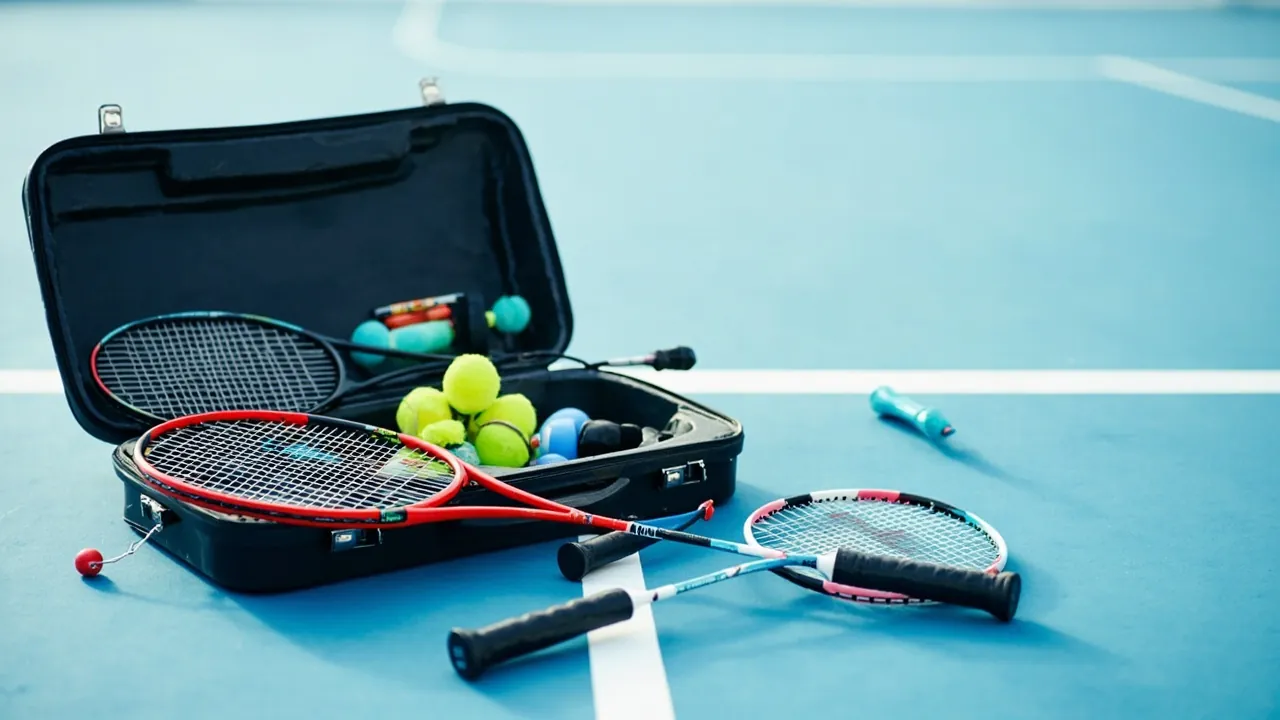
The common trait of tennis and badminton equipment is "thin frame, tight string, mixed accessories." A racket frame is mostly carbon fiber or aluminum alloy with a wall thickness of only millimeters, easily deformed under lateral compression. Tubes, stringing machines, overgrips and shuttlecock tubes have vastly different shapes, and mixing them causes mutual collision that amplifies damage. The core conclusion for a professional equipment case is to use "frame support plus zoned liner plus sealed hard shell" to keep frames uncompressed, string beds dry and precision accessories from being lost. This article breaks down the selection logic for tennis and badminton equipment cases from the angles of risk, standards, shell, liner, frame support, stringing-machine transport, sealing and compliance, targeting equipment wholesalers, club procurement and event-support teams.
For buyers managing unified equipment, we recommend writing "zero frame deformation rate" and "complete-set delivery rate" into acceptance standards. Plan the liner together with the internal case seal materials guide and the custom foam inserts guide.
Table of Contents
- Transit Risks of Tennis and Badminton Gear
- Protection Grades and Standards Basis
- Shell Material and Structure Selection
- Frame-Support Design for Racket Frames
- Fixing Tubes and Shuttlecock Containers
- Special Transport for Stringing Machines
- Liner Zoning and Overgrip Storage
- Sealing Latches and Pressure Equalization
- Moisture Control and String Protection
- Wheels Handling and On-Site Support
- Purchase and OEM Customization
- Maintenance and Service Life
- Transit Tension and Arrival String-Pressure Retention
- Cross-Border Sea and Multimodal Reinforcement
- Frequently Asked Questions
Transit Risks of Tennis and Badminton Gear
The most fragile part of this gear is the racket frame. A carbon-fiber frame undergoes irreversible ovalization under lateral load, while an aluminum frame dents or breaks. The string tension is extremely sensitive to temperature and humidity; moisture or sharp thermal change loosens the strings and loses the feel. For accessories, a stringing machine is precision electromechanical equipment, and transit vibration can drift the head accuracy; a compressed shuttlecock tube collapses and breaks feathers.
Therefore protection must solve three things: lateral compression resistance (prevent frame deformation), vibration isolation (protect machine and tension) and sealed moisture resistance (protect strings and grips). Many general soft bags only solve "capacity" but are helpless against lateral frame compression, which is the fundamental reason equipment cases must be hard-shelled.
In bulk procurement, we recommend treating "zero frame deformation" as a core acceptance item and sampling by the custom case acceptance AQL standard.
Protection Grades and Standards Basis
To judge case reliability, still use standards as the yardstick. Shell sealing follows the IP code of IEC 60529 / GB/T 4208; tennis and badminton cases typically achieve IP65 or IP67. Environmental adaptability can follow the drop, vibration and damp-heat methods of MIL-STD-810H — only an environmental test basis for the product line, not a military certification. Transport reliability follows the vibration-plus-drop combination of ISTA and domestic GB/T 4857. Flame retardancy references UL94, and enclosure impact resistance references IK (IEC 62262).
The table below lists the most critical items:
| Standard / Grade | Dimension | Typical Value | Acceptance Focus |
|---|---|---|---|
| --- | --- | --- | --- |
| IEC 60529 / GB/T 4208 | Dust & water | IP65 / IP67 | Seam and latch sealing |
| MIL-STD-810H | Environmental | Drop, vibration, damp heat | Test basis, not military |
| ISTA / GB/T 4857 | Transit reliable | Vibration + drop | Intact rate, defect grade |
| UL94 | Flame retardancy | V-0 / V-2 | Self-extinguish |
| IK (IEC 62262) | Impact resistance | IK08–IK10 | Corner and latch impact |
Writing these into the technical agreement avoids "goods not matching specification." Further reading is in the MIL-STD-810H compliance note and the ISTA transport testing procedure.
Shell Material and Structure Selection
The mainstream remains modified PP one-piece injection, ABS composite and aluminum alloy. PP is light with good impact rebound, suitable for frequent event transit; ABS is cheap but brittle in low temperature; aluminum is rigid but heavy. For frame cases, prioritize a PP hard shell and pay attention to internal ribs and corner fillets.
Latches and hinges are the first gate of sealing and must meet the reliable closure of the case hinge latch seal system. For wholesale customers printing logos, PP injection facilitates coloring and silk-screening. For a lighter storage version, refer to the lightweight thinking in the portable transport box.
Frame-Support Design for Racket Frames
Frame support is the core craft of this equipment case. The method is to CNC-cut an arc groove that fits the frame perimeter so the frame "lies" in the groove rather than being pressed under other items. Carbon frames should use medium-density EVA support to avoid hard contact; partitions between frames ensure independence.
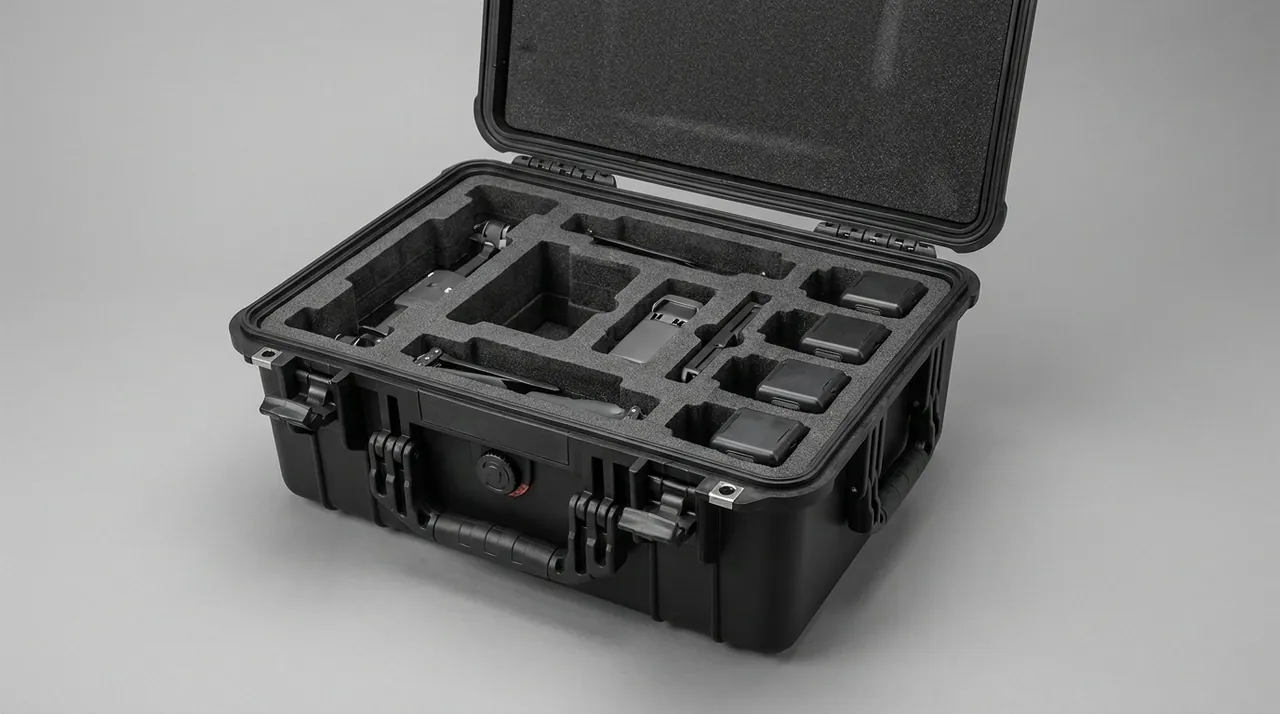
Key point: the support groove depth should wrap more than two-thirds of the frame thickness, and the frame should not shift after the lid closes. Refer to the EVA foam custom process and the multi-point support discussion in the cushion liner case. For mixed rackets, a modular compartment outperforms a single large cavity.
Further, the "fit profile" of the support groove should be differentiated by frame cross-section shape: carbon frames have thin walls and fear point pressure, so a medium-density EVA of 38–45 hardness gives gentle wrapping; aluminum frames tolerate slightly more pressure but scratch easily, so a layer of fleece or microcellular film inside the groove prevents hard contact. The groove mouth should have a 3–5 mm lead-in bevel for quick pick-and-place without scratching the frame edge. For smart rackets with built-in sensors, the support zone should reserve a wiring channel and probe avoidance position to avoid pressing electronic components. Before tooling, JUNZHJIA asks the customer for the physical frame or 1:1 drawing, re-measures the cross-section with a CMM or caliper, and controls the support tolerance within ±0.5 mm, engineering "each racket independent and non-displacing." In addition, a long-used support groove will develop fuzz after repeated pick-and-place; we recommend checking the groove wall each season and locally re-cutting if needed to maintain fit precision.
Fixing Tubes and Shuttlecock Containers
Tennis ball tubes and shuttlecock tubes are cylindrical and highly rollable; if not fixed they crash inside the case. The method is circular card slots or elastic straps, with buffer gaps between tubes. Shuttlecock tubes especially fear compression; a collapsed tube breaks feathers, so they should stand in a separate capped bay.
Training balls can be centralized in a mesh bag but must be physically isolated from frames. The zoning logic references the removable divider system to keep "racket zone / tube zone / ball zone" from interfering.
On fixation details, tennis ball tubes are mostly plastic or metal pressurized tubes, and internal pressure retention is critical to ball life; if the tube body is bent or rolled in transit, it may leak pressure and accelerate ball deflation, so we recommend using diameter-matched circular card slots or elastic straps to lock each tube separately, with a 3–5 mm foam gap between tubes to absorb impact. Shuttlecock tubes are paper or plastic cylinders that fear radial compression causing collapse and feather breakage, so they should stand alone with a top height-limit cover, forbidding horizontal stacking. For loose shuttlecocks, an egg-tray liner with independent cells per shuttle avoids feather mutual-pressure deformation. JUNZHJIA can customize card slots and egg trays by tube diameter and shuttle specification, making "tube not collapsed, shuttle not broken" an acceptable engineering metric and reducing equipment breakage claims after arrival.
Special Transport for Stringing Machines
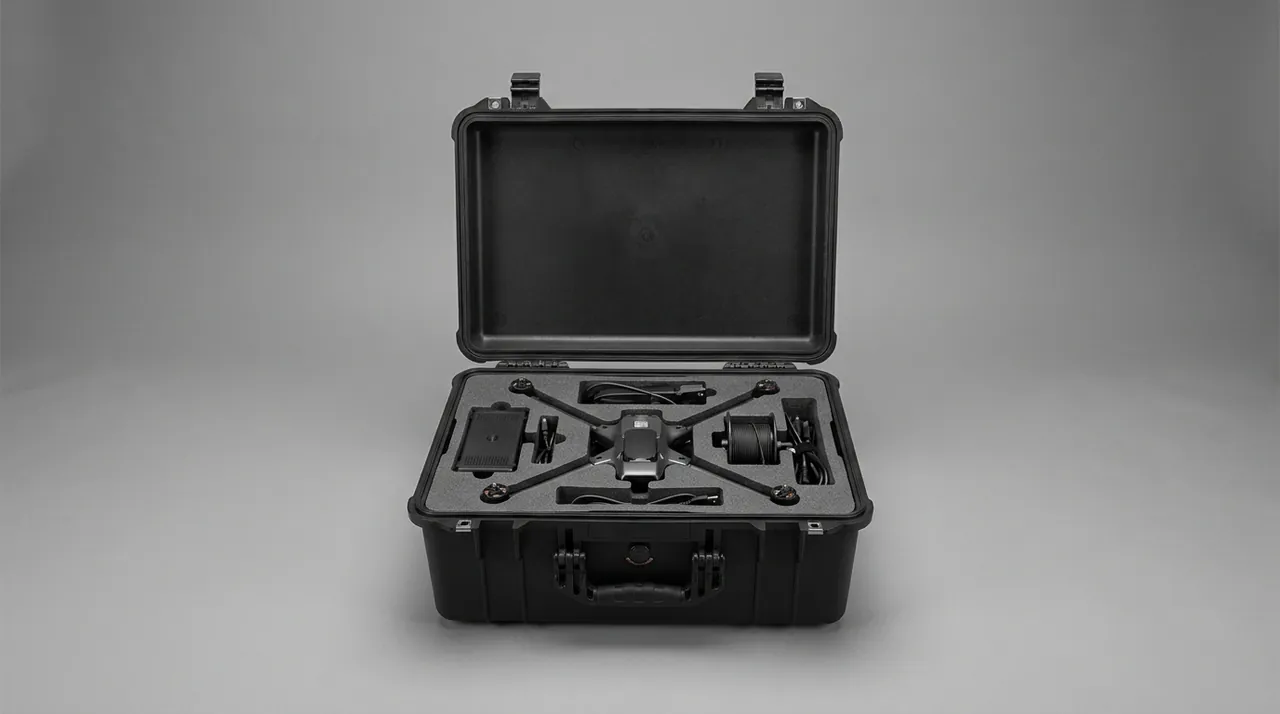
A stringing machine is precision electromechanical equipment; the head tension sensor is vibration sensitive. During transport: lock the head and fix it separately, remove and pack weights alone, and wind the power cord for storage. Wrap the head in high-density foam and fill around it to prevent displacement.
Vibration protection can reference the isolation structure in the seal shock case. If the machine travels with the team, choose a version with wheels and a trolley handle (see case wheels and trolley handle) to reduce on-site handling.
In packing details, the stringing machine base is mostly cast iron or steel, heavy with a low center of gravity, so it should be placed in an independent bay at the lower part of the case, fully wrapped in high-density foam with only the operation face left for access; if the pulling arm is foldable it should be locked and cornered to prevent swinging and hitting the wall in transit. The power cord, foot pedal and accessories should be packed in an independent waterproof bag and fixed to avoid tangling with the head. For high-value electronic stringing machines, a temperature-humidity record card can be placed in the case for full traceability to verify whether it experienced over-limit environments on arrival. JUNZHJIA can provide a three-bay separation plan of "head + base + accessories" by machine model, with buffer air columns, minimizing the transport risk of precision electromechanical equipment, a stable configuration for tour support.
Liner Zoning and Overgrip Storage
Overgrips, sweatbands, strings and pliers are the easiest small items to lose. Use transparent mesh pockets or partitioned drawers by layer: overgrips in independent moisture bags, strings in crush-proof boxes, tools in fixed positions. Humidity-sensitive overgrips should sit near the desiccant.
Reasonable zoning improves unpacking efficiency and avoids small items scratching frames. JUNZHJIA's custom liner can zone the whole set of "racket + tube + machine + accessories," reducing the cost of buyers assembling piecemeal.
In execution, we recommend making "consumable and easy-to-lose" small items their own grids: overgrips and sweatbands in transparent ziplock bags by roll to avoid moisture sticking; strings hung on elastic buckles by gauge and color so they do not tangle; metal tools such as pliers and awls fixed in a hard grid isolated from frames to prevent scratching the frame face in transit. Humidity-sensitive overgrips and spare leather handles should sit near the desiccant bay on the lid rather than against the bottom where condensation accumulates. For tour events, affix a QR or numbered label to each grid so opening and scanning shows missing items, and post-match restoration is one-click check. This "visualized plus gridded" liner reduces support error rate better than pure capacity stacking, and is the core reason professional teams and equipment lessors are willing to pay for custom liners.
Sealing Latches and Pressure Equalization
Water and dust resistance rely on sealing, but high-altitude flight needs a pressure equalization valve to avoid suction lid, as detailed in the case pressure equalization valve. Dual latch plus silicone gasket is the mature solution, with a secondary safety against accidental opening. Sealing structures also reference the waterproof IP case and the seal shock case.
It is worth emphasizing that sealing is not "the tighter the better." An over-compressed silicone gasket permanently deforms under long-term closed storage, losing its rebound sealing ability; we recommend a gasket with Shore hardness 50–60 and a continuous joint-free section, leaving a 0.5–1 mm compression margin when closed. The latch should use a metal-core hinge with a service life counted in tens of thousands of openings, avoiding plastic hinges that brittle-break at low temperature. For frequently traveling event cases, optional lock-hole dust covers and drain valves can be selected to promptly drain water accumulated in the chamber after rainy open-air loading. JUNZHJIA performs water-spray and negative-pressure sampling on each batch before shipment to ensure the IP grade is truly achievable rather than staying at the promotional-parameter level.
Moisture Control and String Protection
Moist strings loosen and overgrips mold. Method: place renewable desiccant inside, attach a humidity indicator card to the lid; keep humidity at 40%–60% for long storage. In high-humidity environments prioritize an IP67 style (see IP67 protective case selection) and verify material stability within the temperature range of the extreme temperature case.
For daily operation, we recommend making "wipe before boxing, desiccant after boxing, check humidity card first on opening" a standard action: in southern plum rain or island events, double the desiccant and regenerate monthly; for long-sealed rackets, it is best to half-inflate or release part of the tension before boxing, giving the strings "a breath," and re-string on arrival, which protects strings better than full tension throughout. Leather grips and sweatbands that are already damp must be dried before boxing, never sealed wet, otherwise they mold within days. JUNZHJIA's removable liner supports whole-piece washing, more hygienic for hot-humid regions than fixed liners, and easier to rezone by racket model, reducing batch mold loss.
Wheels Handling and On-Site Support
A fully loaded case often exceeds 10 kg; event support relies on wheels and trolley. Recommend dual-row large-diameter bearing wheels and a two-stage locking handle. Keep ergonomic handles on both sides with metal insert reinforcement. Related structures are in the case wheels and trolley handle.
On selection details, a racket case often exceeds 10 kg when fully loaded; if wheels stick or the handle wobbles, the round trip between court and hotel becomes physical consumption. We recommend dual-row large-diameter bearing wheels whose single-wheel rated load covers the full load with 30% margin, with sealed bearings against sand and mud for outdoor hard courts; the trolley locks in two stages with a rubber grip. The case should keep ergonomic handles on both sides with metal inserts for locker rooms and stand steps without elevators. For teams needing to board buses, the case height is recommended to fit upright through the luggage compartment mouth. JUNZHJIA can customize wheel specification and handle position by the actual transport path at the OEM stage, building the "last mile" ergonomics into the product rather than remedying afterward. Before departure, do a wheel free-spin and trolley-lock self-test to avoid breakdown where spare parts are unavailable.
Purchase and OEM Customization
The core of procurement is "define standard before style": protection grade, whether a pressure valve, whether custom liner, whether brand printing. MOQ and tooling are in the custom case mold cost analysis, and the factory-finding flow is in how to choose a case OEM factory.
JUNZHJIA provides an OEM/ODM solution from PP hard shells to EVA custom liners, can match seals and liners by racket model and supply test documentation to help write standards into contracts. For wholesale and agency customers, solving "shell + liner + testing" at once is the most worry-free.
Before ordering, we recommend filling a three-part table of "equipment list + transport scenario + budget range": the list states racket models and quantities, tubes, stringing machine and accessories; the transport scenario distinguishes domestic road, airline checked or cross-border sea; the budget decides general liner or CNC custom. JUNZHJIA can then give three tiers of "standard / advanced / premium" with the IP grade, whether a pressure valve and test documents are included per tier. For OEM agency customers, English spec sheets and compliance summaries can also be provided for overseas customs clearance and acceptance. Turning selection from "by feel" into "tier by table" significantly reduces communication cost and return rate.
Maintenance and Service Life
Every 50 transfers or six months: wipe the gasket with neutral cleaner (see how to clean a protective case), check hinge rust, latch looseness, pressure valve clarity and wheel smoothness. Lifecycle management is in the protective case service life years. Authenticity identification is in identify genuine vs fake case, recommended to write into acceptance clauses.
Maintenance is not only about the case itself but also about the rackets stored inside. After each event, open the lid in a ventilated place to dissipate residual moisture, check whether the humidity indicator card has changed color, and replace the desiccant if needed; this single habit prevents most string-loosening and grip-mold problems. The liner should be removed and washed by season, especially the sweatband and overgrip pockets that easily harbor bacteria. For hinge cores, apply a thin rust-proof oil if used in coastal or high-humidity areas, and confirm the pressure valve is not blocked by dust before each flight. JUNZHJIA recommends writing these steps into the team's equipment-management SOP so maintenance becomes routine rather than reactive, and pairs the case with a spare-parts kit of latches, wheels and valves to avoid support interruption during a tour.
Common Protection Misconceptions
Misconception one: soft bags are lighter so more protective — in fact they give no lateral frame compression protection. Misconception two: the harder the liner the better — excessive hardness presses the frame coating. The correct approach is to reverse-engineer from risk: high transfer frequency means hard shell plus frame support plus pressure valve; storage-dominant can skip wheels but keep sealing.
Liner collapses under long-term pressure; replace the high-load zone every one to two years. JUNZHJIA supports local re-cutting without replacing the whole set.
Bulk Procurement Acceptance and Cost
Bulk procurement should convert comprehensive cost of ownership: require per-batch ISTA or GB/T 4857 sampling reports and sample by AQL; clarify spare-part prices and lead times for easily worn parts such as latches, wheels and pressure valves. On cost structure, the PP shell is dominated by material and injection, the liner by tooling and cutting labor; the larger the batch the lower the unit, but weigh inventory.
Transit Tension and Arrival String-Pressure Retention
The "string pressure" (string tension) of a racket is the core of feel and performance, yet string beds are extremely sensitive to temperature and humidity. During transit, if the case interior condensates or experiences large thermal swings, polyester or gut strings absorb moisture and expand, tension drops, and the player clearly feels "softening" or even string slippage after opening, directly affecting match performance. Therefore arrival string-pressure retention is the second hard metric of an equipment case after "frame deformation prevention."
There are three layers to retaining tension. The first is source margin: for professional rackets with the highest precision, leave a tension margin of 0.5–1.0 kg at stringing based on the expected transit duration and temperature-humidity range, offsetting natural decay in transport. The second is sealed moisture control: place renewable desiccant inside, attach a humidity indicator card to the lid, and keep relative humidity at 40%–60% for long storage; in high-humidity environments prioritize an IP67 style (see IP67 protective case selection) and verify material stability within the temperature range of the extreme temperature case. The third is arrival re-inspection: after opening, use an electronic stringing machine or tension meter to sample the string pressure and compare with the factory record; if the deviation exceeds the threshold, re-string to avoid playing with a defective bed.
For tour events, writing "string-pressure re-inspection" into the support SOP is more critical than simply pursuing a hard shell. Vibration also indirectly affects tension — sustained low-frequency jolting loosens string knots, so the isolation structure of the seal shock case is also worth including in selection. At procurement, we recommend taking "arrival string-pressure deviation" as one of the acceptance KPIs, forming a closed loop with the custom case acceptance AQL standard.
Cross-Border Sea and Multimodal Reinforcement
When equipment needs to cross the sea or go through multiple transport modes, the risk escalates from "single drop" to a composite scenario of "long-term stacking plus sustained vibration plus container condensation." A container's inner wall easily condensates under day-night temperature differences at sea, commonly called "container rain"; without sealed moisture protection, frames and strings are batch-moistened. At this point the IP67 grade and gasket quality of the equipment case directly determine the intact delivery rate.
Reinforcement points are as follows. First, reduce void inside the case: fill the gap between equipment and case wall with foam to reduce resonance amplitude. Second, outer-case labeling: affix "fragile / this side up / moisture-proof" labels in prominent positions and attach a packing list to reduce rough sortation probability. Third, stacking restraint: avoid heavy pressure on the case during sea freight, fix with straps or pallets, and verify stacking and drop performance against GB/T 4857 transport packaging tests. Fourth, insurance and documents: high-value batches are recommended to take transport insurance and carry test and inspection documents with the case for easy claims.
The table below gives reinforcement combinations for different transport scenarios:
| Transport Scenario | Core Risk | Recommended Reinforcement |
|---|---|---|
| --- | --- | --- |
| Domestic road | Drop, vibration | Hard shell + custom liner + dual latch |
| Airline checked | Low pressure, drop | Hard shell + pressure valve + IP67 |
| Cross-border sea | Condensation, stacking | IP67 + desiccant + pallet fixing |
| Multimodal | Composite risk | Above combo + outer labels + insurance |
JUNZHJIA can provide an integrated "shell + liner + test documents" solution by transport scenario and supports batch-cost evaluation per the custom case mold cost analysis, a worry-free choice for equipment export and brand going overseas.
Frequently Asked Questions
Q: Can tennis and badminton rackets share one equipment case? A: They can share a class of "frame-support plus zoned liner" hard-shell case, but the liner must be cut separately by the two frame shapes. Tennis frames are larger with tighter string beds, while badminton frames are slimmer and more sensitive to lateral compression, so the support groove curvature and depth should be differentiated. If mixed, use a removable divider to separate the two types and avoid frame-on-frame pressure. Provide physical dimensions or drawings of both rackets before bulk customization so the manufacturer can CNC-fit them. JUNZHJIA can customize the liner by racket model, integrating "tennis + badminton + accessories" into one case, saving space while guaranteeing independent support for each racket, an optimal choice for unified club equipment management.
Q: What should be noted when a stringing machine travels with the team? A: A stringing machine is precision electromechanical equipment; the head tension sensor fears vibration. Before transport, lock the head and fix it separately, remove detachable weights and pack them alone, and wind the power cord for storage to prevent pulling. Wrap the head in high-density foam inside the case and fill around it with anti-displacement material, avoiding direct collision with hard objects. If traveling with the team, prioritize a version with wheels and trolley handle to ease handling. Vibration protection can reference the isolation structure of the seal shock case. After arrival, calibrate the head unloaded before stringing to ensure tension accuracy is unaffected by transit and avoid tension deviation during matches.
Q: Why do racket strings loosen in transit, and how to prevent it? A: String tension is sensitive to temperature and humidity. If the case interior condensates or experiences large thermal swings during transport, the strings absorb moisture and expand, tension drops, and the feel softens or even the strings slip after opening. The key to protection is sealed moisture resistance: place renewable desiccant inside, attach a humidity indicator card to the lid, and keep humidity at 40%–60% for long storage. In high-humidity environments prioritize an IP67 style and verify stability within the material temperature range. Also avoid lateral frame compression because frame deformation directly changes string-bed geometry and indirectly affects tension. Doing both "moisture proof and frame-pressure proof" keeps the factory net pressure after delivery.
Q: Must the equipment case be IP67, is IP65 enough? A: It depends on the environment. If transfers are short-haul between clubs and always supervised, IP65 dust-tight and water-spray protected is usually enough. If it involves airline checked baggage, cross-border or rainy environments, IP67 is safer, coping with cargo-hold water and open-air loading in rain. The judgment should combine impact resistance, water proof and moisture proof rather than looking at IP in isolation. At procurement, ask the supplier for the GB/T 4208 corresponding grade note and treat the actual waterproofing at seams and latches as an on-site acceptance point instead of only reading advertised parameters. For event support, one extra grade of protection often buys zero accidents.
Q: Should the liner be EVA tear-off divider or CNC custom foam? A: For mixed models that change often, EVA tear-off dividers are low cost and field adjustable. For fixed-model high-value rackets pursuing zero deformation, CNC custom foam has the best fit. They can also be combined: a universal outer layer with tear-off dividers and a custom foam bay for high-value frames. The key is controlling the fit clearance between liner and shell; too large fails fixation, too small prevents lid closing. Provide racket dimension drawings before bulk customization so the manufacturer can simulate lid-closing pressure. Referencing the custom foam inserts guide and the EVA foam custom process can bring support precision to the millimeter level.
Q: How to tell whether a case is real PP or recycled material? A: Judge from three aspects. First, odor: new PP is almost odorless, recycled material is pungent. Second, wall thickness and texture: recycled material is brittle, dull and uneven. Third, latches and hinges: inferior cases use thin-wall plastic hinges that break easily. A more rigorous method is to require the supplier to provide material grade and third-party testing, combined with the genuine versus fake case identification points for acceptance. For B2B procurement, writing material requirements and authenticity identification into contract acceptance clauses avoids after-sales disputes and brand risk at the source, especially important for OEM wholesale customers.
Q: How often should a transport case be maintained, and how? A: We recommend basic maintenance every 50 transfers or six months: wipe the silicone gasket with neutral cleaner and check for cracks; check hinge-core rust and latch looseness; confirm the pressure valve is clear; check wheel smoothness and trolley locking. Aged gaskets, loose latches and worn wheels all weaken protection and should be replaced at threshold. Lifecycle management establishes replacement standards by referencing the protective case service life years, and stock easily worn parts in advance. Maintenance also detects authenticity and material degradation early, a key action to extend asset life and guarantee intact delivery.
Q: In bulk procurement, how to lower cost without reducing protection? A: Convert comprehensive cost of ownership rather than looking only at unit price. First define the standard (protection grade, pressure valve, liner type, brand printing) then discuss volume pricing; the larger the batch the lower the unit, but weigh inventory capital. Require per-batch ISTA or GB/T 4857 sampling reports and sample by AQL, writing "zero frame deformation rate" into the KPI. Clarify spare-part prices and lead times for easily worn parts such as latches, wheels and pressure valves. Choose an OEM manufacturer that simultaneously provides shell, liner and test documents, such as JUNZHJIA, to reduce multi-supplier coordination and be overall more controllable and worry-free.
Conclusion and Related Reading
Selecting a tennis and badminton equipment case is using the trio of "frame support against lateral compression, zoned liner for vibration isolation, sealed latch plus pressure valve for moisture" to guard frames, strings and precision accessories. Writing IEC 60529, GB/T 4208, MIL-STD-810H, ISTA and GB/T 4857 into the procurement agreement turns "looks protective" into quantifiable acceptance. JUNZHJIA provides an integrated OEM/ODM solution from PP hard shells to EVA custom liners, matching seals and test documents by racket model, a worry-free choice for wholesale and event support.
Related Reading