

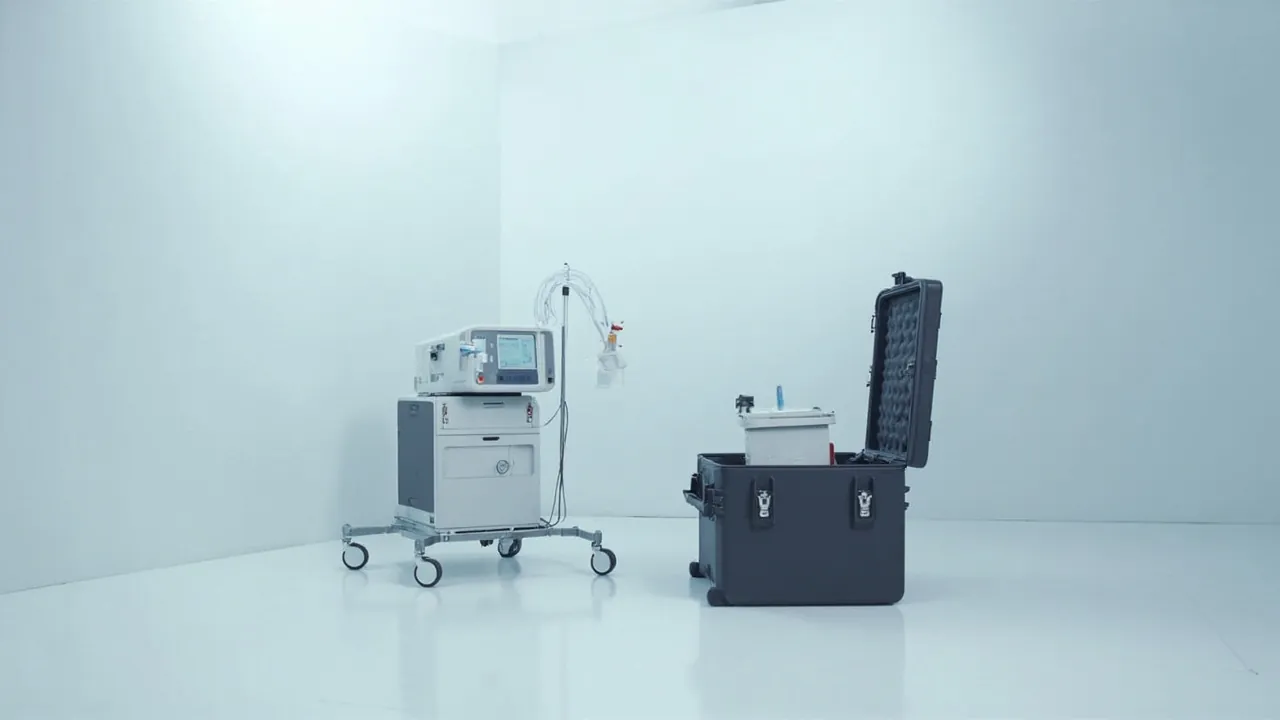
Protecting dialysis equipment in transit means protecting three interlocking chains at once: the water circuit must not retain fluid, the pumps must not take shock, and the electronics must not take moisture. A hemodialysis machine is a tightly coupled assembly of water path, blood path and electrical systems. The blood pump drives the extracorporeal circuit peristaltically, the dialysate pump and proportioning system deliver dialysate at a precise mix ratio, the ultrafiltration system controls fluid removal through transmembrane pressure, and the weighing system, conductivity, temperature and pressure monitoring jointly safeguard treatment. If any of those chains is compromised in transit, the failure surfaces after installation as parameter drift: inaccurate fluid removal, unstable conductivity, fluctuating blood pump speed, or frequent pressure alarms. None of that is visible in an arrival inspection.
Why is transport protection for dialysis equipment harder than for general medical devices? Three compounding characteristics. First, the fluid path is wet: a dialysis machine contains extensive water and tubing circuits, and any residual liquid left after factory testing or clinical use will migrate, pool, corrode and leak on opening; residual disinfectant such as peracetic acid or citric acid that has not been fully rinsed continues to attack tubing and seals. Second, the blood pump is a precision component: a peristaltic pump meters fluid by having rollers occlude the pump segment, so flow accuracy depends on roller clearance, rotor concentricity and the elastic recovery of the pump segment, and a single axial shock can change those geometric relationships. Third, dialyzers and blood lines are sterile barrier systems: once integrity is compromised in transit, whether by puncture, crush or moisture, the item is failed and must be handled under the institution's infection-control policy rather than used because it "looks unbroken".
This article is written for equipment procurement and engineering staff at hemodialysis machine manufacturers and distributors, dialysis centres and hospital nephrology departments, third-party medical equipment service providers, and packaging and supply-chain staff at export trading firms and after-sales parts operations. It covers complete hemodialysis machines, dialyzers and filters, blood lines and pump segments, water treatment system components, and dialysis centre ancillary equipment and consumables, together with standards references, a selection matrix, a packing SOP and arrival functional checks. All figures are typical industry values or empirical ranges; the governing inputs are the equipment drawing, the manufacturer's technical manual, the customer acceptance specification and destination regulations. JUNZHJIA supplies model-specific custom inserts, port caps and restraint structures, sealing and moisture-control configurations, OEM and ODM programmes, and supporting test documentation for dialysis equipment cases.
Table of Contents
- 1. Why Dialysis Equipment Is a Three-Chain Transport Problem: Water, Pump and Electrical
- 2. Machine, Water Treatment, Dialyzer and Tubing: Components and Failure Modes Compared
- 3. Complete Hemodialysis Machine Cases: Restraining the Blood Pump, Water Path and Weighing System
- 4. Dialyzer and Filter Cases: Fiber Protection and Wet or Dry Storage
- 5. Blood Lines and Pump Segments: Peristaltic Deformation and Sterile Barrier Protection
- 6. Water Treatment Components: Reverse Osmosis, Softener and Disinfection Units
- 7. Dialysis Centre Ancillary Equipment and Consumable Cases
- 8. Electrical Safety and the GB 9706 Series: Boundary of Transport Validation
- 9. Sealing, Moisture Control and IP Ratings: IEC 60529 and GB/T 4208
- 10. Transport Test Basis: ISTA, GB/T 4857, ASTM D4169 and MIL-STD-810H
- 11. Packing SOP, Arrival Functional Checks and Pre-Installation Preparation
- 12. Sea Export, In-Hospital Circulation and Infection-Control Tracks
- 13. Supplier Evaluation Dimensions and the OEM/ODM Customisation Path
- Frequently Asked Questions
- Conclusion and Further Reading
1. Why Dialysis Equipment Is a Three-Chain Transport Problem: Water, Pump and Electrical
Dialysis equipment packaging requirements resolve into three coupled chains, and the way they couple is precisely what makes the problem hard.
The water chain. A dialysis machine's internal water path includes the supply line, dialysate proportioning lines, the mixing chamber, the dialysate pump and flow pump, the ultrafiltration pump, and numerous solenoid valves and pressure sensor ports. The core risk in this chain is residual fluid. Residual liquid has four consequences in transit. It migrates along the tubing and pools in low points, causing localised corrosion and release of metal ions. Residual disinfectant continues to attack seals and tubing walls, shortening service life. In a humid environment it supports microbial growth and biofilm formation, and biofilm is extremely difficult to remove once established and will keep affecting dialysate quality. And it leaks on opening, contaminating other components and the equipment exterior. Draining, rinsing, neutralising, blow-drying and capping are therefore four non-negotiable steps in dialysis equipment packing, not optional refinements.
The pump chain. The blood pump and dialysate pump are the precision components at the heart of a dialysis machine. A peristaltic pump meters fluid by cyclically occluding the pump segment, so flow accuracy depends on three geometric relationships: roller radial clearance, rotor-to-housing concentricity, and the wall thickness and elastic recovery of the pump segment. All three are highly sensitive. Axial shock in transit can dent or displace the rotor bearings, making roller clearance uneven, which shows up as speed fluctuation, flow deviation and abnormal pump segment wear. If the pump segment remains occluded for a long period, it takes a permanent set, often called flattening memory, and after installation the segment's elastic recovery is insufficient, producing inaccurate flow and frequent alarms. This is an easily overlooked detail with serious consequences: the pump segment must be removed from the pump head before transport, and the head must never be left clamping it.
The electrical chain. A dialysis machine is medical electrical equipment containing many electronic modules: load cells and amplifier circuits, conductivity and temperature sensing circuits, pressure monitoring circuits, and the main control and display modules. These are sensitive to humidity, corrosion and vibration. The weighing system is particularly distinctive, since it infers ultrafiltration volume from weight change, and its sensors are precision metering elements. Shock and tilt in transit can shift the mechanical zero of the weighing structure, producing ultrafiltration calculation error, and this error triggers no self-test alarm; it simply appears during treatment as delivered fluid removal that does not match the prescription. For protection principles for precision metering components, see instrument and precision equipment case selection guide.
A field observation: in arrival complaints for dialysis equipment, the proportion of "looks fine but treatment parameters are abnormal" cases is normally clearly higher than "visibly damaged" cases. Packaging validation for dialysis equipment must therefore include functional checks, with acceptance criteria led by functional indicators and supported by appearance. An appearance-only acceptance step simply defers the risk to the first treatment session.
The priority order is: solve draining and capping first, which determines whether the fluid path corrodes or becomes contaminated; then secure the pump and weighing structures, which determines whether precision is preserved; then solve sealing, moisture control and infection control, which determines whether the equipment can be put into compliant use.
2. Machine, Water Treatment, Dialyzer and Tubing: Components and Failure Modes Compared
| Component | Primary failure mode | Trigger | Typical consequence | Priority countermeasure |
|---|---|---|---|---|
| --- | --- | --- | --- | --- |
| Hemodialysis machine, complete | Weighing zero drift, structural distortion | Tilt, shock, unrestrained movement | Ultrafiltration error, housing deformation | Level restraint, independent damping, tilt prohibition |
| Blood pump, peristaltic head | Uneven roller clearance, speed fluctuation | Axial shock, bearing denting | Flow deviation, abnormal segment wear | Dedicated head cavity, axial restraint, segment pre-removed |
| Pump segment | Permanent set, flattening memory | Prolonged roller occlusion | Inaccurate flow, frequent alarms | Remove before transport, pack flat and separate |
| Dialysate and proportioning pumps | Pump damage, mix ratio deviation | Shock, air in lines | Unstable conductivity | Independent restraint, port capping |
| Weighing system and load cells | Mechanical zero shift | Tilt, shock, overload | Inaccurate fluid removal | Level transport marking, lock blocks, overload support |
| Solenoid valves and pressure sensors | Valve sticking, zero drift | Debris ingress, shock | Alarms, abnormal actuation | Capping, clean packaging, separate compartments |
| Dialyzer, hollow fiber | Fiber breakage, end-cap crushing | Squeeze, drop, stacking overload | Reduced clearance, membrane rupture | End-cap protectors, separate compartments, no stacking |
| Blood lines and consumables | Sterile barrier breach | Puncture, crush, moisture | Sterility failure, mandatory discard | Rigid outer case, no sharp edges, moisture barrier |
| Water treatment, RO membrane and softener | Membrane drying, resin contamination | Fluid loss, residual, contamination | Degraded water quality | Moisture-retaining pack, sealed closure, clean liner |
| Disinfection unit and lines | Residual disinfectant attack | Incomplete rinsing | Seal ageing, line corrosion | Rinse, neutralise, residue test record |
| Control cabinet and display module | Solder joint fatigue, insulation loss | Cumulative vibration, condensation | Downtime, display faults | Full floating wrap, desiccant, humidity indicator |
| Consumables, concentrate and disinfectant | Leakage, contamination | Packaging breach, tipping | Corrosion of case and other components | Dedicated cavity, leak-proof liner, labelling |
All twelve modes share concealment and delay: damage forms in transit and appears at installation or at the first treatment. Failure priority depends strongly on transport mode. Short in-hospital transfers are dominated by handling shock and tilt; sea export is dominated by humidity, salt fog and cumulative vibration; airfreight is dominated by repeated transhipment and abrupt temperature and humidity change. A design must therefore be configured for the worst credible route and must include a functional check in the acceptance criteria.
3. Complete Hemodialysis Machine Cases: Restraining the Blood Pump, Water Path and Weighing System
A complete hemodialysis machine is the largest, most tightly coupled and highest-value item in dialysis equipment. Its packaging design carries three hard constraints: it must stay level, tilt must be limited, and it must not be overloaded.
Why attitude is a hard constraint. The weighing system, level detection and parts of the fluid path depend on gravity direction. Tilt in transit creates two problems. The mechanical zero of the weighing structure shifts, and because that zero is normally established during installation calibration, a transport-induced shift produces a systematic ultrafiltration error. And residual fluid flows into regions where the design does not permit pooling. The case and insert must therefore hold the machine level within the manufacturer's permitted range; the exterior must carry clear "do not tilt" marking plus a tilt indicator label; and side-laying and inversion must be prohibited during transport and handling. A tilt indicator label is a low-cost, high-value device: it allows an immediate determination on arrival as to whether an out-of-specification tilt occurred in transit.
Handling the pump head and pump segment. Before packing: remove the pump segment from the blood pump head, a step that is often skipped despite its direct consequences; confirm the head contains no segment fragments or debris; apply axial restraint to the head so transport shock is not transmitted to the rotor bearings; and where the head is removable, pack it separately to reduce lever effects. Dialysate and ultrafiltration pumps should likewise be confirmed free of residual fluid with ports capped.
The standard draining and capping sequence. Follow this order and record it. First, run the manufacturer's rinse programme to expel residual fluid. Second, neutralise and rinse the disinfectant using a manufacturer-approved method; note that residual disinfectant attacks seals and metal parts progressively, not immediately, and manifests months later as seal leakage and corrosion pitting. Third, blow the tubing dry with clean compressed air. Fourth, fit dedicated caps or blind plates to the water inlet, drain outlet, dialysate ports and disinfection ports, and place the matching removal tools in the accessory box. Fifth, record the operator and time and file the record with the shipment. The first four steps form the technical closure; the fifth forms the evidence chain.
Weighing system restraint and overload prevention. The weighing system is normally located at the upper hanger or tray area. In transit, the weighing components must not carry the load of other components or of stacking; must not contact the case walls; and, where the manufacturer permits, must be secured with the specified transport restraint such as a locking bolt. A specific warning: all transport restraints must be removed at installation, and leaving one in place causes complete weighing failure or abnormal readings. This belongs on the arrival checklist.
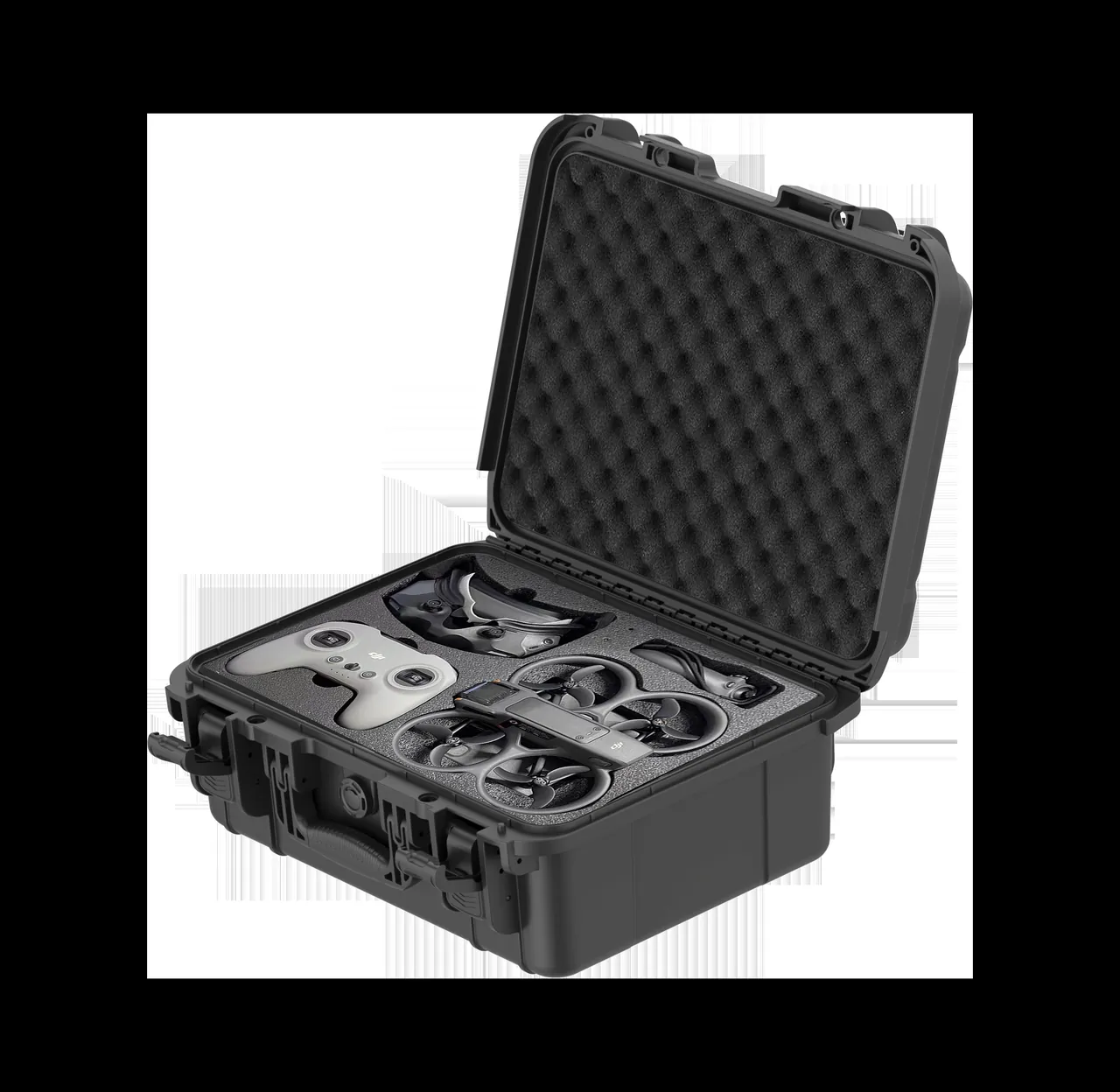
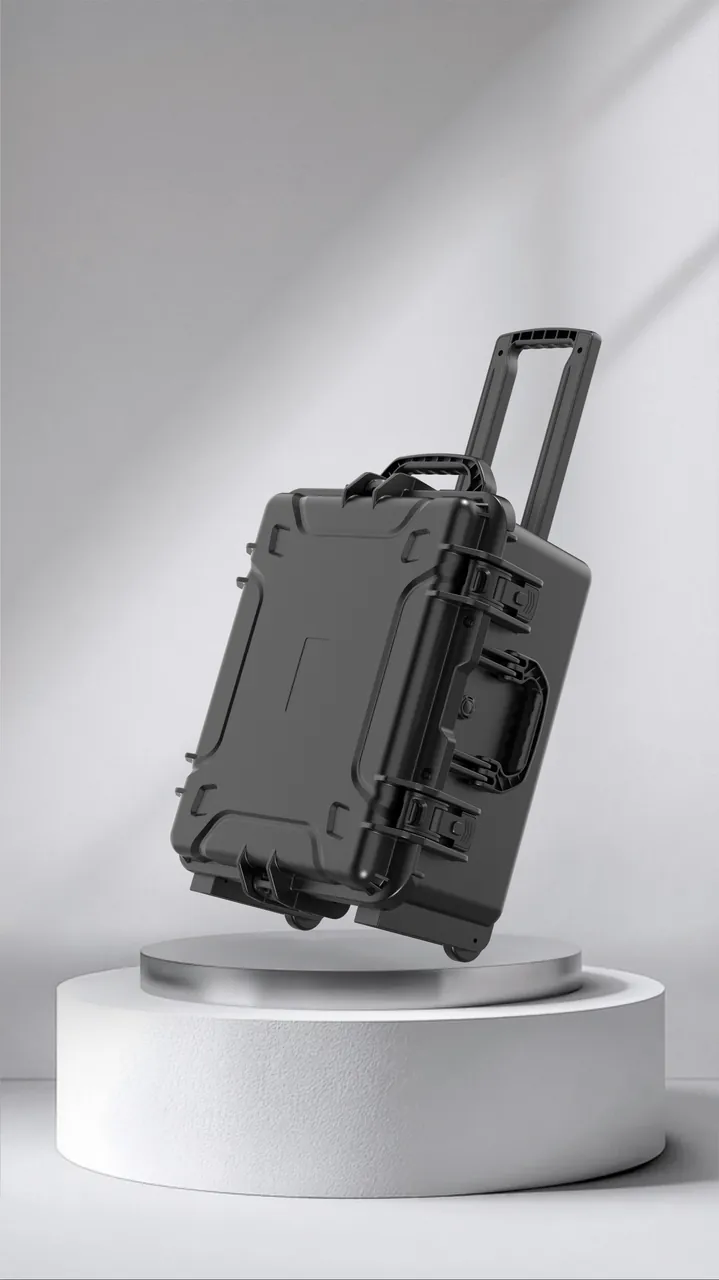
Case format. Complete machine transport normally uses either a heavy-duty frame case on a pallet base with custom inserts, or a reinforced plastic case with inserts and transport restraints. With a timber case, comply with ISPM 15 heat treatment or fumigation and seal the internal surfaces against splinters and dust. With a plastic case, confirm base and corner reinforcement, castor load capacity and low-temperature impact performance. Castor cases improve in-hospital transfer efficiency, but castor and handle load limits must be respected; see case wheels and trolley handle.
4. Dialyzer and Filter Cases: Fiber Protection and Wet or Dry Storage
Dialyzers and filters are components that look unremarkable but are structurally fragile inside. Their protection priorities differ completely from those of a complete machine.
Where the fragility is. A dialyzer packs tens of thousands of hollow fiber membranes into a cylindrical housing, potted at both ends and fitted with end caps and ports. Three weak points apply. The fibers have micron-scale wall thickness and break under squeeze or strong vibration, reducing clearance and raising rupture risk. The potted end faces can develop micro-cracks under load, which become leakage paths. And the end caps and ports are thin-walled and deform under pressure, after which they may not connect reliably to blood line connectors.
Three damage pathways.
- Stacking overload: dialyzers are cylindrical, and when stacked without interlayer support the weight passes through the housing into the potted end faces, causing end-face crushing and micro-cracking.
- Drop and impact: a single-unit drop concentrates shock at the housing and end cap, potentially cracking the cap and deforming the port.
- Mutual collision and rolling: cylindrical items roll easily inside a case, striking each other and accumulating surface damage and port wear.
Design points.
- End-cap protection: fit protectors or caps at both ends so the end caps do not take axial loads or impacts directly.
- Axial support: support cylindrical items at both ends along the axis, with the mid-body either spanning free or on surface-contact support, so no mid-span load is applied.
- No stacking over the body: if stacking is unavoidable, use a tray with interlayer support columns so loads pass through the columns rather than through the dialyzers themselves.
- Anti-rolling: the insert should form one recess per unit, never allowing dialyzers to roll freely. This compartmental locating approach follows the tooling methods in custom foam insert design guide.
- Cleanliness and no sharp edges: the fibers contact blood, so inserts must not shed or release migratable constituents, and the case interior must be free of metal swarf and splinters.
Wet versus dry storage. Dialyzers leave the factory in one of two states: wet, containing a preservative or moisturising fill, or dry, processed so that dry storage is acceptable. Requirements differ:
| State | Main risk | Storage and transport requirement | Arrival inspection focus |
|---|---|---|---|
| --- | --- | --- | --- |
| Wet | Preservative leakage, drying out, freezing | Keep sealed, avoid heat and freezing, prevent end-cap leakage | End-cap leakage, packaging still sealed |
| Dry | Moisture uptake, microbial contamination, squeeze | Keep dry and sealed, avoid moisture, prevent squeeze | Packaging integrity, signs of moisture |
State the dialyzer factory condition and storage requirement in the contract technical annex, because the transport design, meaning whether moisturising, freeze protection or desiccant is needed, depends entirely on that premise. If wet and dry dialyzers travel together, separate them into different cases or strictly segregated zones so that moisture does not migrate between them.
Sterilisation state and barrier protection. Dialyzers and blood lines are normally sterilised before shipment and packed in a sterile barrier system. The transport case is tertiary packaging and its duty is to protect the sterile barrier. The interior must be free of sharp corners, nail heads, splinters, metal swarf and shedding materials, because any puncture fails the barrier, and any significant crush deformation or sign of moisture should likewise be treated as a barrier risk. The international framework for terminally sterilised medical device packaging, such as the ISO 11607 series covering sterile barrier systems, packaging materials and packaging processes, is a useful reference for understanding the division of packaging responsibility. Applicability is governed by the manufacturer's technical documentation and registration requirements; this article does not cover regulatory determination for sterile barrier systems.
5. Blood Lines and Pump Segments: Peristaltic Deformation and Sterile Barrier Protection
Blood lines, including arterial and venous lines, the pump segment, pressure monitoring lines and connectors, are consumables that contact blood directly. Their transport protection has two independent objectives: preserving the sterile barrier, and preserving the geometry and elasticity of the pump segment.
Why the pump segment needs separate treatment. A peristaltic pump meters by cyclically occluding the segment. If the segment stays occluded for a long period after manufacture, for example when coiled under other components or compressed by a strap, it takes a permanent set, often called flattening memory: the cross-section goes from round to oval or flat and elastic recovery falls. After installation the result is inaccurate flow, accelerated segment wear and frequent pressure alarms. The countermeasure is direct: the pump segment must not carry sustained compression, must not be tightened under a strap, must be coiled to at least the manufacturer's minimum radius, and must not share a cavity with hard items. This follows the same principle described in cushion liner and case base interaction, where elastic materials must not carry sustained static load.
Three risks for lines.
- Puncture: sharp corners, nail heads, splinters, screws or shedding material inside the case puncture the line packaging. Line walls are thin, and a single puncture fails the sterile barrier.
- Squeeze: stacking, over-tight straps or sharing a cavity with heavy items flattens the lumen and deforms connectors.
- Moisture and contamination: high internal humidity moistens the packaging, or a case previously used for contaminated items introduces cross-contamination.
Design points.
- Handle lines on a one-set-one-bag basis, keeping the original sterile barrier intact;
- Provide a dedicated cavity with no sharp edges and no hard protrusions;
- Cap connectors, including needle guards, pressure sensor connectors and dialyzer connectors, each with its own relief;
- Coil to at least the manufacturer's minimum radius and secure with a soft tie rather than a cable tie, with a pad at the contact point;
- Never place a heavy object on lines and never use lines as internal void fill;
- Fit desiccant and a humidity indicator card, and check the indicator before deciding to open the case.
Pressure monitoring lines and sensor protection. Some blood lines carry pressure monitoring tubes and protective caps, which are thin-walled and can block or leak under pressure. Give them separate compartments and apply no pressure. Where pressure sensors or sensor guards ship in the case, apply precision-component protection: dedicated cavity, low-rebound pad, no contact with rigid surfaces. See shock and vibration case design.
Consumables and small parts. Dialysis centres ship a wide range of consumables, including fistula needles, syringes, dressings, disinfectant wipes and gloves, in many specifications and large quantities. Use a lidded compartment box, zoned by purpose and labelled by number, with the packing list ordered by compartment number so the site can verify compartment by compartment. Where a removable divider system is used, the compartment count can be adjusted between load configurations; see case removable divider system.
On shipping concentrate and disinfectant in the same case. Dialysate concentrate, both acid and bicarbonate, and disinfectants are liquids and should not normally travel in the same case as new equipment, dialyzers or blood lines. If they must, then: provide a dedicated cavity with leak containment; double-seal bottle closures; allow containment volume inside the case for spilled liquid; strictly segregate them from clean components; and add an outer impermeable membrane. The governing principle is that liquids and clean items do not share a case, because the cost of a single leak, meaning a whole case of sterile items scrapped plus equipment corrosion, far exceeds the cost of separate packaging. Where the transport classification of a disinfectant or chemical needs to be determined, confirm it against the applicable regulations based on composition and concentration; general design thinking is set out in hazmat transport packaging requirements, and whether an item is a dangerous good must be determined by a qualified body, not by this article.
6. Water Treatment Components: Reverse Osmosis, Softener and Disinfection Units
The dialysis water treatment system is the infrastructure of a dialysis centre, and its components, meaning reverse osmosis membrane elements, softeners, carbon tanks, security filters, disinfection units, supply pumps and pipework, often travel long distances when a centre is built or expanded.
Reverse osmosis membrane elements. As with industrial water treatment membranes, RO elements normally ship immersed in a preservative solution and must remain wet throughout transport and storage. Once the membrane dries, the polyamide active layer undergoes irreversible structural change, salt rejection falls, and recovery by cleaning is not possible. Design points: the primary packaging must itself be sealed, normally the manufacturer's vacuum or sealed bag; the case must provide a dedicated moisture cavity so the primary packaging cannot be crushed or punctured; the case interior must be free of sharp corners, nails and splinters; and the minimum temperature along the route must be assessed, because freezing the preservative damages the membrane sheet. Membrane storage temperature ranges are normally specified, and the manufacturer's manual governs. For moisturising and end-face protection detail, see the insulation and validation logic in food cold-chain case insulation and validation; the specific temperature requirement for a water treatment membrane is set by the membrane manufacturer.
Softeners and ion exchange resin. Resin is easily contaminated, and once it contacts oil, rust or other contaminants its exchange capacity falls markedly and is hard to restore. In transit: keep the resin tank sealed; avoid direct contact with carbon steel and timber; and avoid strong vibration that fractures resin beads, since fractured resin raises pressure drop and can block downstream components. Where the tank ships already charged, confirm that the tank and internal distributor are restrained against movement.
Carbon tanks and security filters. Carbon tanks must avoid water ingress and moisture uptake in transit, since damp carbon becomes a microbial growth medium. Security filter cartridges are fragile and must not be squeezed out of shape. These tanks are large and heavy, so the right approach is a heavy-duty frame case on a pallet base, or a dedicated cradle with strapping. The priority is base load capacity and tip-over prevention, not fine vibration isolation.
Disinfection units and pipework. Before transport: drain and rinse; confirm no residual disinfectant remains; cap the pipework; and protect glass or transparent parts. A specific warning: residual disinfectant attacks seals and metal parts progressively, appearing months later as leakage and corrosion pitting. Complete a residue test before packing and record it to form a traceable evidence chain.
Testing for water treatment components. These are mostly heavy tanks and long pipe runs, so test priorities differ from a complete machine: focus on stacking compression, lifting point reliability, and the strength of the base frame to pallet connection. See GB/T 4857 transport packaging application.
7. Dialysis Centre Ancillary Equipment and Consumable Cases
Beyond machines and water treatment, a dialysis centre operates a range of ancillary equipment and consumables requiring transport protection, characterised by moderate unit value, high quantity and diverse specification.
| Ancillary item | Fragile points | Main risks | Protection approach |
|---|---|---|---|
| --- | --- | --- | --- |
| Patient monitor with blood pressure and ECG modules | Display, sensors, boards | Squeeze, vibration, moisture | Rigid screen protector, full floating wrap, desiccant |
| Syringe pump and infusion pump | Drive mechanism, lead screw, sensors | Axial shock, backlash change | Axial restraint, separate compartment, dust protection |
| Blood warmer and return equipment | Heating module, temperature sensor | Shock, moisture | Dedicated cavity, moisture control, temperature component protection |
| Electronic scales and chair scales | Load cells, level structure | Tilt, shock, overload | Level transport, locking, overload prevention |
| Reprocessing and washer-disinfector | Pumps, lumens, heaters | Residual fluid, shock | Drain, rinse, cap, restrain |
| Emergency trolley and kit | Drawer slides, castors | Shock, tip-over | Drawer locking, whole-unit restraint |
| Dialyzer reprocessing accessories | Connectors, lumens | Squeeze, contamination | Separate compartments, moisture control, cleanliness |
Syringe and infusion pump protection deserves separate mention. The core of these devices is the drive mechanism, a lead screw or rack, plus flow control sensors, and they are sensitive to axial shock: impact changes lead screw backlash or shifts the sensor zero, producing reduced flow accuracy and abnormal alarms. Countermeasures are axial restraint, separate compartments, dust protection, and never sharing a cavity with hard items. The detail is developed more fully in the infusion pump direction, but the underlying logic is identical: precision moving parts fear shock and displacement, not pressure.
Reprocessing and washer-disinfector units. These contain pumps, lines and heaters and behave like a dialysis machine: the core pre-transport sequence is drain, rinse, neutralise, blow dry and cap. Note that reprocessing equipment touches blood-contacting parts, so cleaning and contamination requirements exceed those for general equipment, and a case previously used to process contaminated lines must not be transferred to new equipment as described in section 12.
Design logic for consumable cases. Dialysis consumables are numerous in category, small in unit size and fast-moving. An effective approach is "standard case, replaceable compartmented insert, numbered checklist": cases in two to three volume classes; inserts customised by consumable family, for example one set each for fistula needles, catheters, dressings and disinfection supplies; lidded compartment boxes printed with numbers; and the packing list ordered by compartment number. Site counting then proceeds compartment by compartment, so shortages and mis-loading are caught immediately. For case format selection, see portable transport box selection.
8. Electrical Safety and the GB 9706 Series: Boundary of Transport Validation
Hemodialysis machines, patient monitors and syringe pumps are medical electrical equipment, and their basic safety and essential performance normally have to satisfy the general requirements of the GB 9706 series and the relevant particular standards. Hemodialysis equipment also has a dedicated product standard, such as YY 0054 for hemodialysis equipment, and dialysis water treatment equipment has an industry standard such as YY 0572. The purpose of this section is not to discuss conformity with those standards, but to clarify the boundary between transport packaging validation and electrical safety validation.
Three boundaries that must be kept distinct.
First, transport testing does not replace electrical safety validation. Vibration, shock, drop, stacking and water ingress testing of transport packaging, and the electrical safety and electromagnetic compatibility validation required by the GB 9706 series, are two independent evaluation systems. Passing a transport test does not mean the GB 9706 requirements are met, and passing a GB 9706 type test does not mean the equipment can survive transport shock.
Second, transport does not change type test conclusions, but it can change the delivered safety state. Type testing addresses the equipment in its design condition. Shock and moisture in transit can introduce new risks into the actual delivered unit: altered insulation distances, loosened earth connections, failed seals, released mechanical fixings. On arrival, installation inspection and pre-energisation safety confirmation must still follow the manufacturer's instructions, and any electrical safety item must be performed by qualified personnel.
Third, transport effects on the fluid path fall under safety in use. Residual disinfectant, biofilm and line contamination do not appear in electrical safety metrics, yet they directly affect treatment safety. Draining, rinsing, neutralising and residue testing records should therefore be treated as part of arrival acceptance alongside electrical checks.
On biocompatibility and blood-contacting components. Blood lines and dialyzers that contact blood directly are subject to specific material and sterilisation requirements and validation systems. The duty of transport packaging is to protect the compliance state those components already have, meaning the sterile barrier and material integrity, not to confer compliance. Case and insert materials must not release migratable constituents, must not carry odour, and must not shed. Where the customer requires material declarations, state this in the technical annex.
On electrostatic protection for electronic parts. Control boards and sensor signal lines in a dialysis machine can be exposed to electrostatic risk during maintenance and disassembly. Where packaging contains removed electronic boards or sensors, an ESD protection approach is advisable; see ESD shielding case.
9. Sealing, Moisture Control and IP Ratings: IEC 60529 and GB/T 4208
What an IP code means. The IP code defined in IEC 60529 has two digits: the first covers protection against solid foreign objects, 0 to 6, and the second covers water, 0 to 9K. China's equivalent standard is GB/T 4208. Typical dialysis equipment choices:
- IP54: limited dust protection and splash resistance, suitable for covered in-hospital transfers and indoor storage;
- IP65: dust-tight and resistant to water jets, suitable for most domestic and near-sea shipments and the mainstream choice;
- IP67: dust-tight and protected against short immersion, typically 1 metre for 30 minutes, suitable for sea freight, open-air transhipment, rainy regions and storage near wash-down areas;
- IP68: continuous immersion, needed only in extreme duty.
For the trade-off logic between levels, see IP67 protective case design points and the practical meaning of IP ratings.
The real moisture risk for dialysis equipment is internal humidity. An IP rating addresses water entering from outside, but the core risk here is humidity inside the case: reduced electrical insulation, corrosion of metal parts, and moisture uptake by filters and activated carbon supporting microbial growth. Treat sealing, desiccant and humidity indicator as a standard combination, not an upgraded option.
Desiccant quantity cannot be decided by tossing in a few packets. It should be calculated from internal free volume, the hygroscopicity of packaging materials, transit days and target humidity. A 30 to 45 day sea shipment requires substantially more than domestic short haul, and paper manuals, timber pallets and the open-cell structure of foam inserts all absorb moisture and consume desiccant capacity, so they must be included. Checking the humidity indicator colour before deciding to open the case is an extremely low-cost, high-value practice.
A frequently overlooked detail: a well-sealed case cannot easily expel internal moisture across a day-night temperature cycle, so condensation can form. For dialysis equipment containing electronic modules and sensors, the resulting insulation loss and connector corrosion are often harder to diagnose than external water ingress. Where the route involves large temperature swings, fitting a pressure equalisation valve that passes gas but not liquid is more effective than pushing the IP rating higher; see case pressure equalisation valve.
Flammability performance of case materials. Where the customer or the facility imposes requirements on the flammability performance of case materials, the UL94 test methods for flammability of plastic materials are a common reference. Note that UL94 characterises the flammability classification of the material itself; it is not equivalent to a fire certification of the finished case, and it does not replace the fire safety requirements of the facility. The applicable classification should follow the customer specification and procurement documents.
Gasket selection and low temperature. Common gasket materials are silicone, EPDM and TPE foam. Silicone offers the best temperature and weather resistance plus good low-temperature elasticity; EPDM is balanced and suits outdoor duty; TPE foam has low compression set and suits frequent opening and closing. Where a route crosses cold regions, evaluate low-temperature elasticity specifically, because a gasket that stiffens in the cold may not recover its compression after opening and closing, creating a hidden leakage path. Selection guidance is in case hinge, latch and seal selection and case seal materials and selection. Gaskets are consumables and belong on the spare parts list with a defined replacement criterion.
Disinfectant tolerance. Dialysis equipment cases are cleaned and disinfected periodically during in-hospital circulation, so case and insert materials must resist common disinfectants, such as chlorine-based agents, peracetic acid, quaternary ammonium compounds and alcohols, without rapid ageing. A specific warning: chlorine-based disinfectants and peracetic acid carry corrosion risk for stainless steel and some metal parts and stress-crazing risk for certain plastics, and prolonged contact with oxidising disinfectants accelerates gasket ageing. Confirm material compatibility and rinse and dry thoroughly after cleaning. Everyday care guidance is in how to clean and maintain a protective case.
10. Transport Test Basis: ISTA, GB/T 4857, ASTM D4169 and MIL-STD-810H
"Our case is very strong" is not an acceptable qualification statement. An acceptable statement is "it passed this test sequence under this standard, judged against this set of criteria."
ISTA programmes. The International Safe Transit Association defines test procedures graded by package format and weight. Complete machines commonly use ISTA 3E for unitised loads or ISTA 3B for less-than-truckload, with single packages referencing ISTA 2A and 2B and parcel networks referencing ISTA 3A. The value of ISTA lies in sequencing: preconditioning, shock and drop, vibration, temperature and humidity, then re-inspection as a complete chain. See ISTA transport testing procedure explained.
GB/T 4857 series. China's basic test methods for transport packages cover vibration, shock, stacking, drop and compression as separate items, and this family has the highest citation rate in domestic tender and acceptance documents. Application guidance is in GB/T 4857 transport packaging application.
ASTM D4169. This standard assigns test intensity by distribution cycle and is frequently used for packaging validation for North American export markets. See ASTM D4169 distribution cycle testing.
MIL-STD-810H. Its vibration, shock, temperature and humidity, salt fog and low-temperature methods are often cited for environmental test design. It must be stated clearly: citing MIL-STD-810H is a reference to environmental test methods only and does not mean the product has obtained any military certification. See MIL-STD-810H environmental test compliance.
| Test type | Common standard | Example parameters | Significance for dialysis equipment |
|---|---|---|---|
| --- | --- | --- | --- |
| Random vibration | ISTA 3A/3B/3E, ASTM D4169 | Power spectral density, duration | Checks blood pump bearings, load cells and boards |
| Shock and drop | GB/T 4857, ISTA | Drop height, peak acceleration | Checks dialyzer end caps, connectors and housing |
| Stacking | GB/T 4857.3 | Load, duration, temperature and humidity | Checks dialyzer compression and water tank base frames |
| Temperature and humidity cycling | MIL-STD-810H method 507 | Temperature range, cycle count | Checks condensation, insulation and filter moisture |
| Low-temperature test | MIL-STD-810H method 502 | Low temperature value, duration | Checks gasket elasticity and membrane freeze protection |
| Salt fog | ISO 9227 / ASTM B117 | Concentration, duration | Checks stainless fluid parts and metal fasteners |
| Water ingress | IEC 60529 / GB/T 4208 | IPX5 / IPX7 | Checks open-air transhipment and wash-down areas |
| Tilt and attitude | Company protocol with tilt indicator | Permitted tilt, duration | Checks weighing system and residual fluid attitude risk |
On functional checks. Transport validation for dialysis equipment must include functional items, which is what distinguishes it from general medical equipment. After vibration and temperature and humidity testing, check:
- Blood pump: manual rotation smooth with no abnormal noise; idling speed stable; pump head rollers free of binding;
- Weighing system: zero and linearity check using certified weights or a known mass to determine whether the mechanical zero has shifted. This is a dialysis-specific mandatory check and the item most often omitted;
- Water path: lines clear with no leakage; solenoid valves actuating correctly; pressure sensor zero normal;
- Conductivity and temperature: readings within the permitted range against a standard solution or the self-test routine;
- Dialyzers: no cracking or leakage at end caps; no connector deformation;
- Blood lines: sterile barrier intact, no puncture or crush marks, pump segment free of permanent deformation;
- Electrical: insulation, earthing and safety items checked by qualified personnel per the manufacturer's instructions.
Acceptance criteria must be led by functional indicators and supported by appearance. The contract technical annex should specify test items, standard numbers, sample quantities, load condition, acceptance criteria, the report issuer, and responsibilities for corrective action and retest. For export customers, also specify whether the report must come from a third-party laboratory with an English version.
11. Packing SOP, Arrival Functional Checks and Pre-Installation Preparation
- Confirm the plan: check model, configuration list, packing format, complete or broken down, transport mode and destination; confirm the correct case type and insert drawing number; confirm whether transport restraints are required.
- Water path treatment, the critical step: run the manufacturer's rinse programme; neutralise and rinse residual disinfectant; blow the tubing dry with clean compressed air; fit dedicated caps or blind plates to the water inlet, drain outlet, dialysate ports and disinfection ports. Record the operator and time and file the record with the shipment.
- Pump head and segment treatment: remove the pump segment from the blood pump head and pack it flat and separately; confirm the head is clear of debris; apply axial restraint to the head; confirm dialysate and ultrafiltration pumps are free of residual fluid with ports capped.
- Equipment pre-treatment: fit transport restraints as specified by the manufacturer, covering the weighing system and pump frame; remove and separately pack fragile external items such as gauges, hangers, monitor arms and hoses; clean surfaces using permitted methods; inspect appearance and photograph for the record.
- Pre-fit the insert: place load blocks, limit blocks, compartments and pads according to drawing, and confirm no misalignment or omission. Run a first-article trial fit and record it.
- Seat the machine: use suitable lifting gear or a multi-person team; never lift from a single point and never drag; land the machine in the design attitude and keep it level; confirm no contact with rigid surfaces; confirm weighing components carry no additional load.
- Restrain and limit: fit the top clamp and level locking structure; straps are for assistance only and must use corner guards; confirm that hand pressure produces no significant movement, with an empirical criterion of no more than 2 millimetres of displacement; confirm tilt is not possible.
- Accessories and consumables: place consumables and accessories in a lidded compartment box and verify quantities by number; give dialyzers and blood lines separate compartments with no load on them; strictly segregate liquids such as concentrate and disinfectant from clean items or ship them in a separate case.
- Seal and dry: add desiccant calculated from volume and days, plus a humidity indicator card; confirm the gasket is intact with no trapped foreign matter; close latches evenly; where a security seal or single-use tie is used, record the seal number.
- Mark and record: apply centre-of-gravity, lifting, rain protection, this way up, do not tilt, precision equipment and temperature-sensitive markings; fit a tilt indicator label; photograph the packed case for the record; on handover, record the time, tilt label status and case condition.
Arrival inspection checklist, to be signed item by item.
- Case exterior: cracks, deformation, signs of moisture; latches and hinges intact;
- Tilt indicator: whether triggered. A triggered label means an out-of-specification tilt occurred in transit and should be flagged for investigation;
- Humidity indicator: colour within the permitted range, checked before opening;
- Desiccant: condition and quantity as expected;
- Water path: no leakage traces, caps complete; no odour, which may indicate residual fluid or microbial growth;
- Blood pump: manual rotation smooth; pump head rollers free of binding;
- Weighing system: zero check against a known mass;
- Dialyzers: no cracking or leakage at end caps; packaging still sealed for wet type;
- Blood lines and sterile barrier: packaging intact with no puncture or crush marks; pump segment free of permanent deformation;
- Structural parts: load and limit blocks not displaced; transport restraints present for removal at installation;
- Electrical: visual and connector inspection, with pre-energisation safety confirmation by qualified personnel;
- Accessories and consumables: compartment box verified compartment by compartment against the list.
A field practice: use three-point comparison. Record key functional baseline values before packing, for example blood pump idling speed, weighing zero and conductivity self-test readings; photograph the packed case; then re-measure the same set of indicators on arrival. The three data sets form a complete chain of responsibility, cleanly separate incoming issues, packaging issues and transport issues, and prevent arguments about whether transport caused a fault.
Pre-installation preparation. After arrival and before installation: remove all packaging materials and clear the installation area; remove every transport restraint, since leaving one in place is a frequent cause of weighing and pump faults; check that lines and connectors are clean with no foreign matter; confirm the machine is level, using a spirit level if necessary; complete installation and first power-up per the manufacturer's instructions; complete rinsing and residue testing; have electrical safety items performed by qualified personnel; and complete and file the installation record.
12. Sea Export, In-Hospital Circulation and Infection-Control Tracks
Five key variables in sea export. First, route duration of 30 to 45 days means desiccant must be calculated from internal free volume and days, counting the hygroscopicity of paper manuals, timber pallets, the open-cell structure of foam inserts and paper consumable packaging. Second, day-night temperature differences inside the container cause condensation, so a pressure equalisation valve is recommended. Third, deck carriage and open-air storage bring salt fog exposure, so the corrosion protection class of stainless fluid parts, metal fasteners, castors and hinges must be raised, and galvanic corrosion where stainless and carbon steel touch must be addressed. Fourth, sea freight usually stacks higher, so compression strength must be calculated for the worst stacking case, and dialyzer, filter and blood line consumable cases are the weak points in compression and should not be placed at the bottom of a stack. Fifth, wooden export packaging must meet ISPM 15 heat treatment or fumigation; plastic cases avoid this issue but raise questions about destination-country requirements for packaging materials and recyclability. Finally, sea freight normally connects to local truck delivery, and the handling shock in that last short leg is often the most severe of the entire route.
In-hospital circulation. Equipment moves within a dialysis centre for departmental reorganisation, floor changes and off-site repair, and this circulation has three characteristics: high frequency, short distance, and non-specialist personnel and equipment. An in-hospital solution should therefore emphasise ease of use and mistake-proofing: castors and a trolley handle to improve handling efficiency; a mistake-proofed insert so the machine only fits in the correct attitude; a brief handling diagram printed on the case; and intuitive marking, including colour-coded tracks and pictorial instructions. See case wheels and trolley handle.
Returnable re-use and criteria. Six checks before reissue:
- Cracks, deformation and delamination, with particular attention to corners, base and the load-bearing areas of castor cases;
- Gasket hardening, cracking, debonding or permanent compression set;
- Latches and hinges that close reliably with even perimeter load distribution;
- Insert collapse, fracture, contamination or shedding. Shedding is especially dangerous in dialysis because fragments can enter lines and filters;
- Compartment box damage or missing compartments;
- Castor and handle wear, load capacity and locking mechanism function.
Any failed item means replacement before reissue, with criteria along the lines of protective case service life assessment.
Infection-control track management. This is the core management requirement that distinguishes dialysis from other medical equipment settings. A dialysis centre has a clear contamination gradient, from new equipment and sterile consumables, to reprocessed parts after cleaning and disinfection, to contaminated lines and waste fluid, and each level imposes different cleanliness requirements on the case. Strict tracks are recommended:
| Track | Purpose | Permitted contents | Prohibited contents | Identification |
|---|---|---|---|---|
| --- | --- | --- | --- | --- |
| Clean track | New equipment and consumables dispatch and receipt | New equipment, intact sterile barrier consumables, dialyzers | Any used component, waste fluid, disinfectant | White or blue case |
| Reprocessing track | Moving parts after cleaning and disinfection | Components already cleaned and disinfected | Untreated contaminated items, new sterile consumables | Green case |
| Contaminated track | Contaminated lines, waste fluid, scrap disposal | Contaminated components and waste | Anything intended for treatment or reprocessing | Red case |
Cases, inserts and gaskets are not shared between tracks. A specific warning: a case previously used for waste fluid, disinfectant, contaminated lines or dialysis effluent must have all inserts and gaskets replaced and complete cleaning and residue assessment before being used for new equipment or sterile consumables, with infection-control or quality sign-off. The most effective control is a register recording case serial number, cycle count, each use, cleaning and disinfection records and inspection results, with colour-coded tracks as the first line of defence on the floor, since colour is the most visible and least error-prone identifier.
Consumable shelf life and batch management. Dialysis consumables carry defined shelf lives and batch requirements. Where consumables are stored in returnable cases, operate a first-in-first-out rule with an expiry alert, and include batch number and expiry date fields in the packing list so a quality event can be traced quickly.
13. Supplier Evaluation Dimensions and the OEM/ODM Customisation Path
Dialysis equipment cases form a high-value, low-frequency, compliance-heavy category, so procurement emphasis belongs on solution capability and documentation completeness rather than unit price.
Six dimensions for evaluating a supplier.
- Tooling and structural design capability: can they produce a zoned insert proposal from 3D data or physical patterns, especially the load path design for a heavy complete machine, the independent support design for weighing components, and the anti-rolling locating design for cylindrical dialyzers?
- Materials and cleanliness control: foam density and batch consistency, control of insert shedding and migratable constituents, gasket profile and hardness, disinfectant tolerance, and material behaviour at low temperature.
- Test and inspection capability: can they provide records for vibration, drop, stacking, water ingress and temperature and humidity cycling, cooperate on tilt and attitude verification, and supply English-language reports?
- Infection-control support: can they provide statements on insert cleanability and disinfectant tolerance, and a multi-colour track scheme covering clean, reprocessing and contaminated tracks with matching identification?
- Capacity and delivery flexibility: dialysis centre construction has defined milestones, so schedule reliability and peak-season elasticity are real risk points.
- Quality system and sampling rules: defined sampling rules and nonconforming product handling, along the lines of the sampling logic in custom case acceptance and AQL sampling.
The combination strategy of standardised cases with customised inserts. Dialysis equipment case specifications are diverse, since complete machines, dialyzers, blood lines, water treatment tanks and ancillary equipment all differ in size. Use standardised cases with customised inserts: cover most situations with two to four standard case sizes and adapt specific components with custom inserts, spreading tooling cost. For tooling cost structure, see custom case mould cost analysis.
A mandatory separation rule for liquids and clean items. This belongs in the procurement technical agreement: dialysate concentrate, disinfectant and waste fluid must not travel in the same case as new equipment, dialyzers or blood lines. The reason is direct: the cost of a single leak, meaning a whole case of sterile items scrapped, equipment corrosion and cleaning labour, far exceeds the cost of separate packaging. If a customer requires shared transport, they should state it in the technical agreement and carry the corresponding risk, and the supplier should provide a separate leak-contained cavity design.
Enquiry checklist. A practical enquiry should include: equipment model and configuration list with dimensions and weight; packing format, complete or broken down, with a breakdown parts list if applicable; whether transport restraints are required; transport mode and route including transhipment; re-use cycles and circulation scenario, export or in-hospital; storage environment; target IP rating; infection-control and disinfection requirements; whether liquid zoning is required; test and documentation requirements; marking requirements; annual volume and delivery cadence. The more complete the input, the closer the proposal comes to being ready for production. For supplier selection method, see how to choose a protective case OEM factory.
JUNZHJIA's standard approach for dialysis equipment cases is: accept 3D data or physical tooling patterns, produce a zoned insert proposal with load-bearing and locking configurations plus a multi-colour infection-control track scheme, confirm with a first-article trial assembly, move to volume production with sampling inspection, and supply material declarations and test documentation alongside. For customers with recurring demand, a model file can be established so that repeat orders for the same model re-use the approved configuration directly.
Frequently Asked Questions
Q: Why must the water path be drained before transporting a hemodialysis machine, and is draining alone enough?
A: Draining alone is not enough. The complete sequence is drain, rinse, neutralise, blow dry and cap. The reason is that what remains in a dialysis machine's lines is not only water. It may include dialysate residue, which contains bicarbonate and electrolytes that crystallise on drying, disinfectant residue such as peracetic acid, citric acid or chlorine-based agents, and organic matter. Draining only leaves liquid pooling in low points, which migrates under vibration and accelerates corrosion in humid conditions. Draining without neutralising leaves residual disinfectant attacking seals and tubing walls, and that attack is progressive: it does not appear on arrival but manifests months later as seal leakage and corrosion pitting. Rinsing without blow-drying leaves a water film inside the lumens that becomes a starting point for microbial growth in humid conditions, and biofilm is extremely difficult to remove once established, so it will keep affecting dialysate quality. Follow the manufacturer's rinse programme, neutralise and rinse the disinfectant, blow the tubing dry with clean compressed air, then fit dedicated caps or blind plates to the water inlet, drain outlet, dialysate ports and disinfection ports. Finally, record the operator and time and file the record with the shipment, because that fifth step creates the traceable evidence chain needed to demonstrate the packing condition if a quality dispute arises.
Q: What is the most overlooked form of blood pump damage in transport?
A: The most overlooked is not impact damage to the pump head itself but permanent deformation of the pump segment caused by prolonged occlusion. Many packing procedures skip the step of removing the pump segment from the pump head, and after days or weeks of continuous roller compression the segment cross-section changes from round to oval or flat, taking a permanent set. After installation, elastic recovery is insufficient, producing inaccurate flow, accelerated segment wear and frequent pressure alarms. Operators typically suspect the segment batch or a machine fault first and rarely trace the problem back to transport. The second overlooked form is shock denting of the rotor bearings. A blood pump requires even roller clearance, and axial shock in transit dents or displaces the rotor bearings, making clearance uneven, which appears as abnormal segment wear and flow fluctuation. The third is residual fluid in the dialysate and ultrafiltration pumps, where crystallised residue accelerates wear. The countermeasures are: remove the pump segment before transport and pack it flat and separately without strapping or load; apply axial restraint to the pump head and pack a removable head separately to reduce lever effects; and cap the pump ports and confirm no residual fluid remains. All of these belong in the packing work instruction and the arrival checklist.
Q: What is the most common cause of dialyzer and filter damage in transport?
A: The most common cause is stacking overload and mutual collision, not dropping. A dialyzer is cylindrical, with tens of thousands of hollow fiber membranes potted at both ends. When dialyzers are stacked in multiple layers without interlayer support, the weight of the upper layers passes through the housing into the potted end faces, causing end-face crushing and micro-cracks that later become leakage paths; the fibers themselves can break under sustained pressure, reducing clearance and raising rupture risk. The second cause is rolling collision: cylindrical items roll easily inside a case, and the end connectors strike each other, accumulating cap cracking and port deformation, after which the ports may not connect reliably to blood line connectors. The third is sharp-edge puncture of packaging, particularly nail heads and splinters on the internal surfaces of timber cases. Countermeasures are: one recess per dialyzer with no free rolling; end-cap protectors at both ends so the caps take no direct axial load; where stacking is unavoidable, a tray with interlayer support columns so loads pass through the columns rather than through the dialyzers; inserts free of sharp edges, shedding and metal swarf; and for wet-type dialyzers, protection against preservative leakage and freezing. Place dialyzer cases on top of a stack rather than at the bottom.
Q: Why fit a tilt indicator label to a dialysis equipment case?
A: Because tilt affects dialysis equipment far more than general equipment, and the effect is completely invisible in an arrival appearance inspection. A hemodialysis machine infers ultrafiltration volume, meaning fluid removal, from weight change, and its mechanical zero is established by calibration at installation. If transport involves tilt beyond the permitted range, the mechanical zero of the weighing structure shifts, producing a systematic error in ultrafiltration calculation. That error triggers no self-test alarm; it appears during treatment as delivered fluid removal that does not match the prescription, which is a direct treatment safety risk. In addition, level detection and parts of the fluid path inside the machine depend on gravity direction, and tilt causes residual fluid to flow into regions where pooling is not permitted by design. A tilt indicator label provides determinable evidence: if the label has triggered on arrival, an out-of-specification tilt occurred in transit, and the weighing system must be checked for zero and linearity and recalibrated where necessary; if it has not triggered, attitude risk can be largely excluded. The cost is minimal and the value is high. Also apply prominent "do not tilt" and "keep level" markings to the exterior and record the label status on the handover form.
Q: What should be done if the sterile barrier packaging on dialyzers or blood lines is breached in transit?
A: Treat it as a sterile barrier failure. Do not continue to use the item on the grounds that it "does not look punctured" or "was only pressed once". A sterile barrier system prevents microbial ingress, and its integrity validation addresses the packaging in its design condition. Puncture in transit, from sharp corners, nail heads, splinters or metal swarf inside the case, and crush, from stacking, over-tight straps or stacking overload, can both create channels that are difficult to see, such as pinholes, micro-cracks or seal peeling, and moisture weakens barrier performance as well. On arrival, verify each item: packaging intact and undamaged, no puncture marks, no significant crush deformation, no signs of moisture. If any is abnormal, segregate and dispose under the institution's infection-control and consumable management policy, and in practice the outcome is normally discard of the whole item, retaining the original packaging and photographs to support traceability. Preventive measures include inserts free of sharp edges, nail heads, splinters and shedding material; one-set-one-bag handling for lines; capped connectors each with their own relief; never placing heavy objects on lines; never using lines as internal void fill; and fitting desiccant with a humidity indicator card so the indicator can be checked before opening. If multiple items in one case are breached, investigate both the case structural design and whether the packing operation followed the procedure.
Q: What special requirements apply to transporting reverse osmosis membrane elements for a dialysis water treatment system?
A: The core requirements are staying wet and not freezing. Reverse osmosis elements normally ship immersed in a preservative solution, and the polyamide active layer is stable while wet. Once the membrane dries, it undergoes irreversible structural change, salt rejection and flux fall, and recovery by routine chemical cleaning is not possible. Packaging must therefore provide three layers of protection: the primary packaging is itself sealed, usually the manufacturer's vacuum or sealed bag, and is the main barrier; the case provides a dedicated moisture cavity so the primary packaging cannot be crushed or punctured; and the case interior is free of puncture sources such as sharp corners, nails and splinters. The second requirement is freeze protection, because freezing the preservative damages the membrane sheet, so assess the minimum temperature along the route and use an insulation liner with a temperature recorder label in the case where needed. Membrane storage temperature ranges are normally specified, and the manufacturer's manual governs. The third requirement is cleanliness: inserts must not release migratable constituents, paper fill must not touch the membrane surface directly, and carbon steel must not contact stainless steel directly, to avoid galvanic corrosion. Softener resin tanks should also stay sealed, avoid direct contact with carbon steel and timber, and avoid vibration that fractures resin beads.
Q: How should the IP rating be chosen for a dialysis equipment case, and is higher always better?
A: No, choose by actual exposure and understand what the rating does and does not do. For in-hospital circulation and covered domestic transport, IP54 to IP65 is usually sufficient. For sea freight, open-air transhipment, rainy or high salt fog regions, and storage near dialysis centre wash-down areas, IP67 is recommended. Four points to note. First, an IP rating guarantees only that external water does not enter; it does not mean condensation will not form inside. The genuine risk for dialysis equipment is often internal humidity causing insulation loss, metal corrosion and moisture uptake by filters and activated carbon that supports microbial growth, so the combination of sealing, desiccant and a humidity indicator card is more effective than raising the IP rating alone. Second, a higher sealing class means a larger differential pressure as temperature changes, which makes the case harder to open and can draw the gasket inward and deform it, so a pressure equalisation valve is more practical than a higher IP rating. Third, desiccant quantity must be calculated from internal free volume, the hygroscopicity of packaging materials, transit days and target humidity, counting paper manuals, timber pallets and the open-cell structure of foam. Fourth, where the route crosses cold regions, evaluate low-temperature gasket elasticity specifically, because a gasket that stiffens in the cold may not recover its compression after opening and closing, creating a hidden leakage path. If a tender document specifies an IP rating, follow the document and require the corresponding test record.
Q: How should infection control be managed for returnable cases in a dialysis centre?
A: Three things matter: colour-coded tracks, insert replacement, and register traceability. First, colour-coded tracks. Divide cases into a clean track for new equipment and consumables with intact sterile barriers; a reprocessing track for parts already cleaned and disinfected; and a contaminated track for contaminated lines, waste fluid and scrap. Use white or blue, green and red cases respectively, and print the track name and a pictorial guide on each case. Cases, inserts and gaskets are not shared between tracks. Colour is the most visible and least error-prone identifier, which matters particularly in a dialysis centre where staff turnover and shift rotation are common. Second, insert replacement. If a track change is unavoidable, for example converting a contaminated case to clean duty, replace all inserts and gaskets and complete cleaning and residue assessment with infection-control or quality sign-off. The reason is that porous insert structures and gasket crevices adsorb residues that can be released slowly even when surfaces appear clean. Third, register traceability. Keep a register of case serial number, cycle count, each use, cleaning and disinfection records and inspection results. Dialysis patients are generally immunocompromised, and infection-control records in a dialysis centre are typically an explicit item in institutional audits and special inspections, so a complete register substantially reduces compliance risk. Inserts should also be non-shedding, non-absorbent and resistant to microbial growth, because fragments can enter lines and filters.
Q: We buy complete machine cases, dialyzer cases, water treatment component cases and consumable cases. How can packaging cost be controlled?
A: The core approach is standardised cases, customised inserts, track management, numbering traceability and mandatory separation of liquids. First, standardise cases into two to four sizes by volume and load, covering most situations for complete machines, dialyzers, water treatment components and consumables, and spreading tooling cost across many SKUs. Second, customise inserts by component while keeping the internal cavity common so inserts are interchangeable, reducing inventory and switching cost; dialyzers, blood lines and ancillary equipment can each have a dedicated insert ordered by drawing number. Third, operate separate clean, reprocessing and contaminated tracks so cases and inserts are not shared, with colour coding as the most direct control. Fourth, build a packaging file for each model containing 3D data, insert drawing number, breakdown parts list, packing photographs, test records and functional baseline values, so repeat orders reuse it without re-tooling. Fifth, include re-use cycles in cost accounting: single-trip packaging is costed per unit, while returnable packaging is costed as unit price divided by cycle count plus maintenance, including consumables such as gaskets, desiccant, inserts, compartment boxes and port caps. Sixth, enforce the mandatory separation of liquids: concentrate, disinfectant and waste fluid must not share a case with clean items. This looks like an added cost but actually avoids a high-cost event in which a single leak scraps an entire case of sterile items.
Conclusion and Further Reading
Dialysis equipment transport protection is fundamentally about protecting precision that cannot be seen: blood pump roller clearance and segment elasticity, the mechanical zero of the weighing system, the cleanliness of tubing lumens, and the integrity of sterile barriers. None of these shows up in an arrival appearance inspection, yet all appear at the first treatment session as fluid removal deviation, unstable conductivity, flow alarms and discarded sterile items. A dialysis equipment packaging plan must therefore be designed along three parallel chains: use draining, rinsing, neutralising, blow-drying and capping first to remove corrosion and contamination risk from the fluid path; then use load blocks, level locking, axial restraint and tilt control to preserve precision; then use sealing, desiccant, pressure equalisation and infection-control tracks to make compliant use possible.
The implementation path compresses into five steps: define the component list and fragile points; complete fluid path treatment and attitude locking; design the case, insert and restraint structure by zone; close the loop with transport testing plus functional checks, especially the weighing zero check; and manage circulation with infection-control tracks and a register. Follow these five steps and the risk of "arrives intact, fails at first treatment" is reduced to a minimum.
If you need a zoned insert proposal with load-bearing and attitude locking configurations, or a multi-colour infection-control track scheme for a specific model, provide the equipment 3D data, component list, transport mode and circulation scenario to JUNZHJIA, and we will produce a model-specific drawing package and arrange a first-article trial assembly so that the packaging plan can go directly into production.
Further Reading