

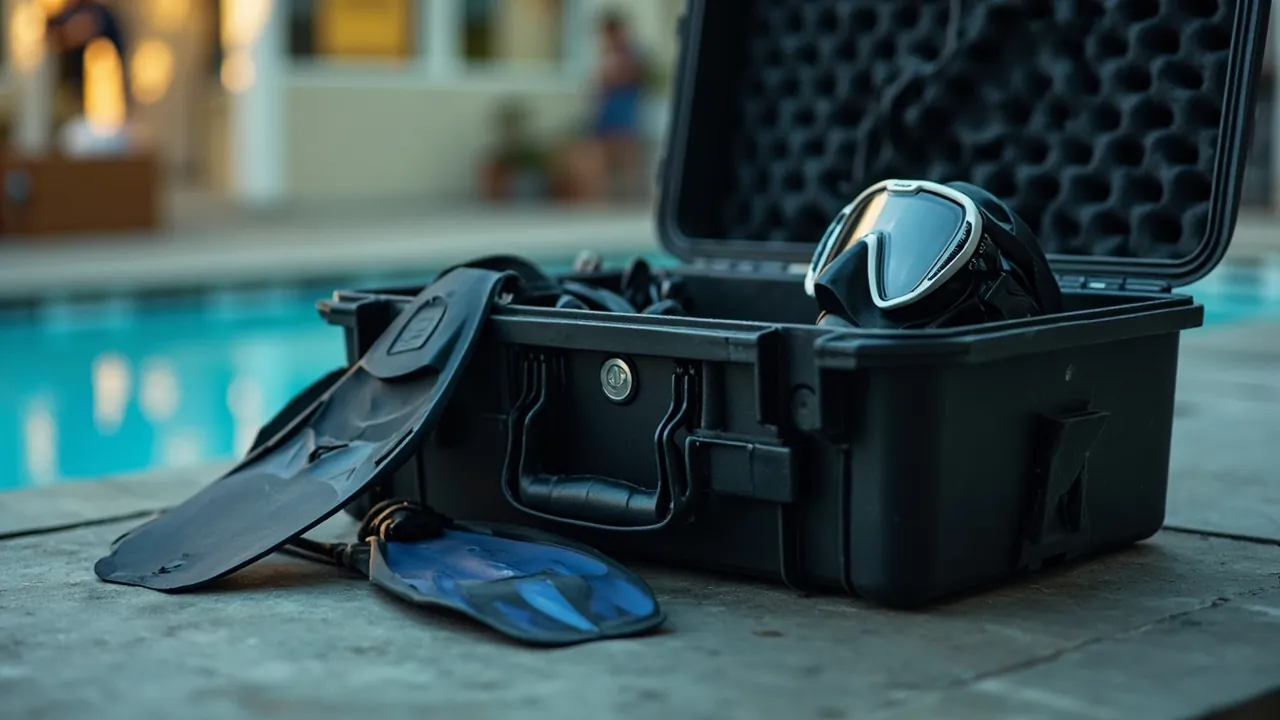
The value of diving and snorkeling gear concentrates in a few categories of equipment that fear pressure, moisture and scratches: the regulator (first stage, second stage), the mask, the snorkel, the BCD (buoyancy control device), fins and weights. What truly decides whether the gear survives intact between liveaboard trips, island hops and airports is the point-to-point support precision of the case foam plus the sealing ability to resist salt spray, interior condensation and cargo-bay dust-water. The regulator carries precision valves and diaphragms inside; impact or sand ingress causes abnormal breathing resistance. The mask's tempered glass and silicone skirt fear pressure and scratches. The BCD's bladder and integrated weight pockets fear puncture and crush. So the core of a dive case is: lock each item into its own cavity with custom foam, resist humidity and water with a seal built to IEC 60529 / GB/T 4208, and rinse with fresh water after diving. JUNZHJIA can deliver custom foam and OEM/ODM cases by equipment list, and the following sections go from damage sources through per-item protection, material choice and procurement acceptance.
The most common mistake by divers and dive shops is to equate "it fits" with "it is protected". A soft bag is acceptable for short hand-carry, but the stacking in a liveaboard luggage bay, drops during dock handling and the high-humidity high-salt environment quickly wet and corrode gear inside a soft bag. This article targets dive logistics, shop purchasers and gear dealers, focusing on quantifiable parameters, citable standards and actionable steps to build a moisture-resistant and durable dive transport system.
Table of Contents
- Transport Damage Sources for Dive and Snorkel Gear
- Precision Protection for the Regulator
- Scratch and Crush Protection for Mask and Snorkel
- BCD Stowage and Support
- Fins, Weights and Loose Accessories
- Insert Selection and Moisture Control
- Dust and Water Sealing with IP Ratings
- Environmental Test Basis MIL-STD-810H and ISTA
- Pressure Equalization Valve and Altitude Transit
- Hinges, Latches and Case Structure
- Wheels, Trolley Handle and Liveaboard Mobility
- Custom Inserts and OEM/ODM Service
- Cleaning, Maintenance and Service Life
- Common Selection Mistakes
- Procurement and Acceptance Checklist
Transport Damage Sources for Dive and Snorkel Gear
Dive gear transport damage falls into four categories: precision-part impact, glass/silicone crush, salt-spray corrosion, and humidity condensation. Precision-part impact mainly hits the regulator, whose first stage carries precision valves and diaphragms inside and a bend-prone low-pressure hose outside; impact or sand causes abnormal breathing. Glass/silicone crush happens to the mask, whose tempered glass fears point pressure and the silicone skirt fears long-term flattening deformation. Salt-spray corrosion comes from residual seawater and high-salt air, slowly attacking metal interfaces and springs. Humidity condensation occurs when gear moves from an air-conditioned room to a hot-humid environment and the inside air cools to drop water, wetting both foam and metal.
Understanding these four sources lets you translate protection into structure. Vibration and drop need rigid foam support; salt and condensation need sealing and desiccant; scratches need partitioned isolation. For distribution simulation, see the ISTA transport testing procedure and test the "fully loaded case" as the object, closer to real risk.
One separate reminder: diving high-pressure cylinders (steel/aluminum tanks) are generally not loaded into this kind of gear case, and filled cylinders are strictly limited by airline and dangerous-goods rules; they should be handled as an independent matter per relevant regulation. This article does not discuss placing cylinders inside the gear case.
Precision Protection for the Regulator
The regulator is the most precise and most delicate dive component. The first stage carries a diaphragm, valves and springs; the second stage has a mouthpiece and exhaust valve; a low-pressure hose connects them. In transit it fears three things: impact misaligning internal seats, sand ingress causing jamming, and the low-pressure hose being crushed.
Protection structure: place the whole regulator in an independent cavity, wrap the first stage in a contoured medium-density EVA channel leaving only the interface outward for inspection; route the low-pressure hose along a large-radius channel fixed to avoid small-radius kinks; cap the second-stage mouthpiece and isolate it in a separate foam cavity. For multiple regulators side by side, insist on "one set per bay" separated by a removable divider system. JUNZHJIA can CNC-route by regulator model (e.g. different first-stage shapes) so interfaces and hose paths correspond one to one.
For support and rebound trade-offs of different foams, compare the case foam material comparison. Before storing, always rinse the regulator with fresh water and air-dry in shade to avoid salt grains wearing the cavity long-term — this belongs to cleaning later, but routing should reserve drainage and ventilation.
Scratch and Crush Protection for Mask and Snorkel
The mask combines tempered-glass lens and silicone skirt. The glass fears hard point pressure and scratches (from sand or metal accessories), and the silicone skirt fears long-term flattening causing permanent deformation and poor seal. The snorkel has a mouthpiece and corrugated tube, fearing crush and bend.
Practice: give the mask its own cavity, face the lens toward a soft PU sponge or flannel isolation layer, support the skirt shape with contoured foam; coil or lay the snorkel straight, avoid bending the corrugated tube below its own curvature radius, and cap the mouthpiece. When several items share the case, place the mask bay near the geometric center, away from the high-pressure zone near lid latches, referencing the combined thinking in seal shock case.
A mask fits the face, so any obvious deformation should be evaluated for replacement per safety guidelines; the case only works to prevent it. For lid sealing and dust resistance, see the IP67 protective case structure and case seal materials.
BCD Stowage and Support
The BCD (buoyancy control device) is bulky, carries a bladder, integrated weight pockets and multiple D-rings; in transit it fears puncture, crush deflation and weight-pocket abrasion of other gear. Its protection focus is "deflate and stow, contoured support, separate weights".
Concrete structure: after fully deflating, fold or lay the BCD into a large bay, wrap the bladder area in a soft PU sponge interlayer to avoid puncture; remove integrated weight pockets and place them in a buffered separate bay to avoid metal weights hitting the mask or regulator; fix D-rings and quick-release buckles in foam recesses against wobble. For dive centers with multiple BCDs, a removable divider system can subdivide the large bay and label it.
BCD nylon fabric and bladder are sensitive to UV and high heat, so case material and foam temperature range need margin; see the extreme temperature case thinking. Before stowage, also rinse with fresh water and air-dry in shade to prevent salt crystals wearing the fabric.
Fins, Weights and Loose Accessories
Fins are long and somewhat elastic; hard-shell fin foot pockets and blade joints fear crush breaks, so support them along the blade direction in a long channel and avoid folding. Weight blocks (lead) are dense and heavy, the "heavy source" inside the case, and must sit in a reinforced bay near the case bottom and near the wheels, limited by EVA to stop sliding into other gear. Loose accessories (dive computer, dive knife, compass, gloves, dive light) are small but valuable and should go into separate foam cavities of a cushion liner case numbered by list.
Dive computers and lights contain electronics, fearing crush and water, needing independent sealed small bays; dive knives and other sharps must be sheathed and physically isolated from other gear to avoid cutting bladders or mask skirts. The total weight of lead blocks also affects whole-case center of gravity and wheel load; the loading layout should be planned at design stage using the custom foam inserts guide.
Insert Selection and Moisture Control
Dive-case foam commonly uses EVA, cross-linked PE, PU sponge and EPP, with the same combination logic — hard support with EVA/cross-linked PE, energy absorption with PU/EPP — and extra emphasis on moisture control:
| Component | Recommended Insert | Moisture Point |
|---|---|---|
| --- | --- | --- |
| Regulator first stage | Medium EVA contoured channel | Wrap, leave interface vented |
| Mask | PU sponge layer + contoured foam | Soft lens isolation, skirt shaping |
| BCD bladder | Soft PU interlayer | Anti-puncture, deflated stow |
| Weight blocks | EVA limit block + bottom reinforce | Anti-slide, near bottom/wheels |
| Electronics | Conductive/anti-static foam small bay | Anti-crush, anti-short |
Another key to moisture control is desiccant inside, replaced periodically, especially after liveaboard high humidity. For finer material parameters, compare case foam material comparison; for customization process see EVA foam insert custom process. JUNZHJIA can combine soft-hard dual-layer inserts by dive-gear list and add numbered silk-screen on foam for pre-dive checks.
Dust and Water Sealing with IP Ratings
Dive gear is extremely sensitive to moisture and salt spray, so the sealing rating is a core metric. Per IEC 60529 / GB/T 4208: IP65 handles shelter dripping and cargo dust, IP67 survives immersion to 1 m for 30 minutes without ingress, steadier for liveaboard deck splash and dock wading transit. Sealing is achieved by an elastic gasket around the lid and the compression structure; gasket material and compression set decide life, detailed in case seal materials and waterproof case IP.
Reminder: the rating is valid only with the lid correctly closed and latches compressed. Dive cases open and close in humid environments, so gaskets easily pick up sand and salt; clean the groove before every closure or the seal breaks and may even scratch the lid. Latches must not only prevent accidental opening but also support personal padlocks or TSA customs locks for cross-border inspection, options in case lock customization options.
The IP rating covers dust and water only; vibration and drop depend on foam and structure, not substitutes for each other. The combined thinking references seal shock case.
Environmental Test Basis MIL-STD-810H and ISTA
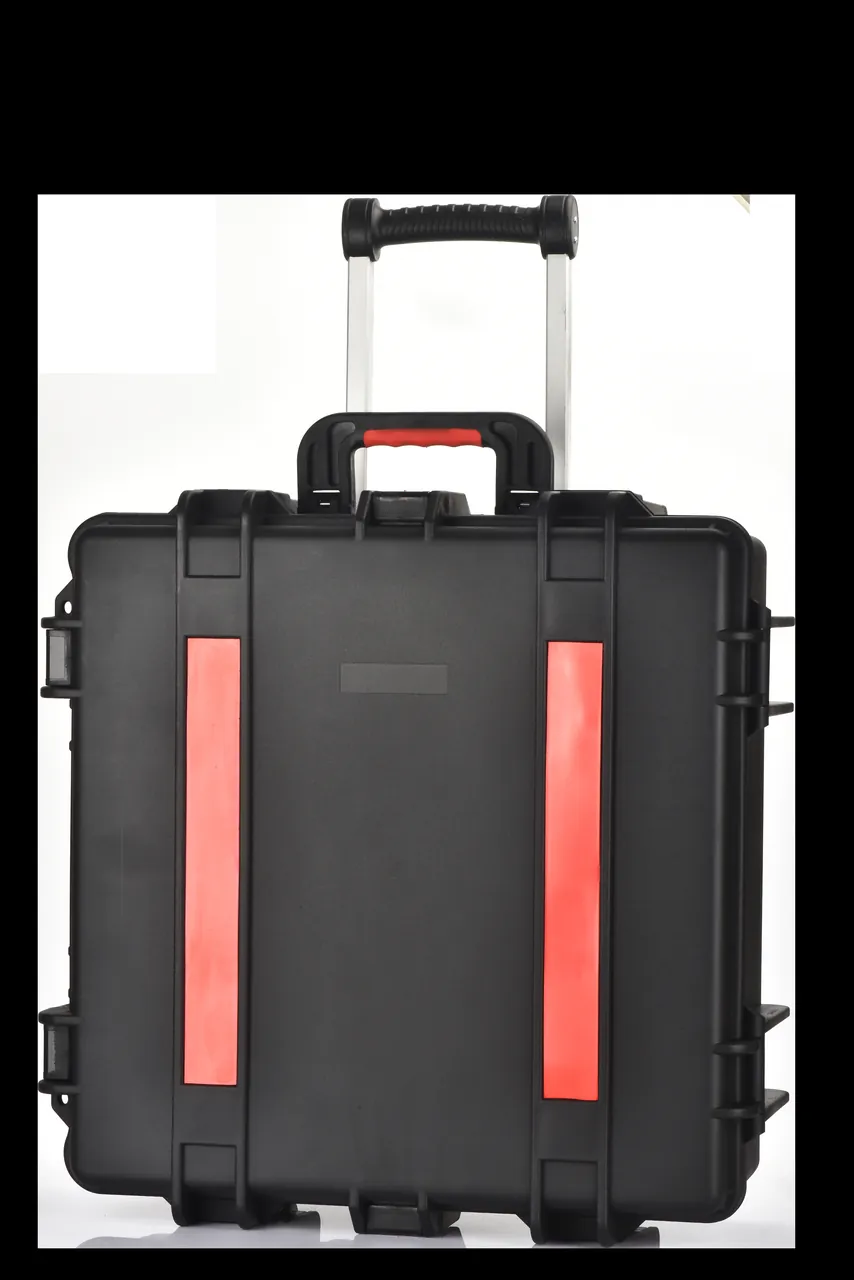
To prove case reliability to buyers, dive cases can also cite MIL-STD-810H and ISTA. MIL-STD-810H is a US DoD environmental engineering test method covering vibration, drop, temperature shock, humidity and low pressure; ISTA focuses on distribution simulation.
It must be clear: MIL-STD-810H in the protective-case field is only an environmental test basis for the product line, used to verify reliability under vibration, temperature, humidity and low pressure; it is not a "military certification", this product does not claim military qualification, and does not imply suitability for any military or law-enforcement use. JUNZHJIA can cite such methods in R&D and outgoing inspection and supply corresponding test or inspection documents commercially to help B2B customers pass supplier audits, premised on civilian/recreational dive compliant transport.
For dive cases the most valuable items are vibration, drop and humid-heat: do a "fully loaded case" random vibration, corner drop and humid-heat cycle, closer to real risk than an empty case. Method boundaries are in MIL-STD-810H case compliance, simulation flow in ISTA transport testing procedure.
Pressure Equalization Valve and Altitude Transit
Airline checked baggage or plateau/island altitude differences create pressure differences; a sealed case may bulge, strain latches or "suck" tight on descent. A pressure equalization valve (breathing valve) lets air move slowly to balance pressure while an internal membrane blocks liquid water, a common IP67 feature. Structure is in case pressure equalization valve.
For divers who fly checked or do cross-climate liveaboards, make the valve a must-have; for local short trips a valve-less seal saves cost. Note the valve's waterproofing relies on the internal ePTFE membrane, which fears oil and sand clogging; cleaning salt and sand around the valve after diving is basic maintenance.
Reminder: diving high-pressure cylinders are not loaded into this gear case, and filled cylinders are strictly limited by airline and dangerous-goods rules; handle them as an independent compliant matter, never with gear in the same case.
Hinges, Latches and Case Structure
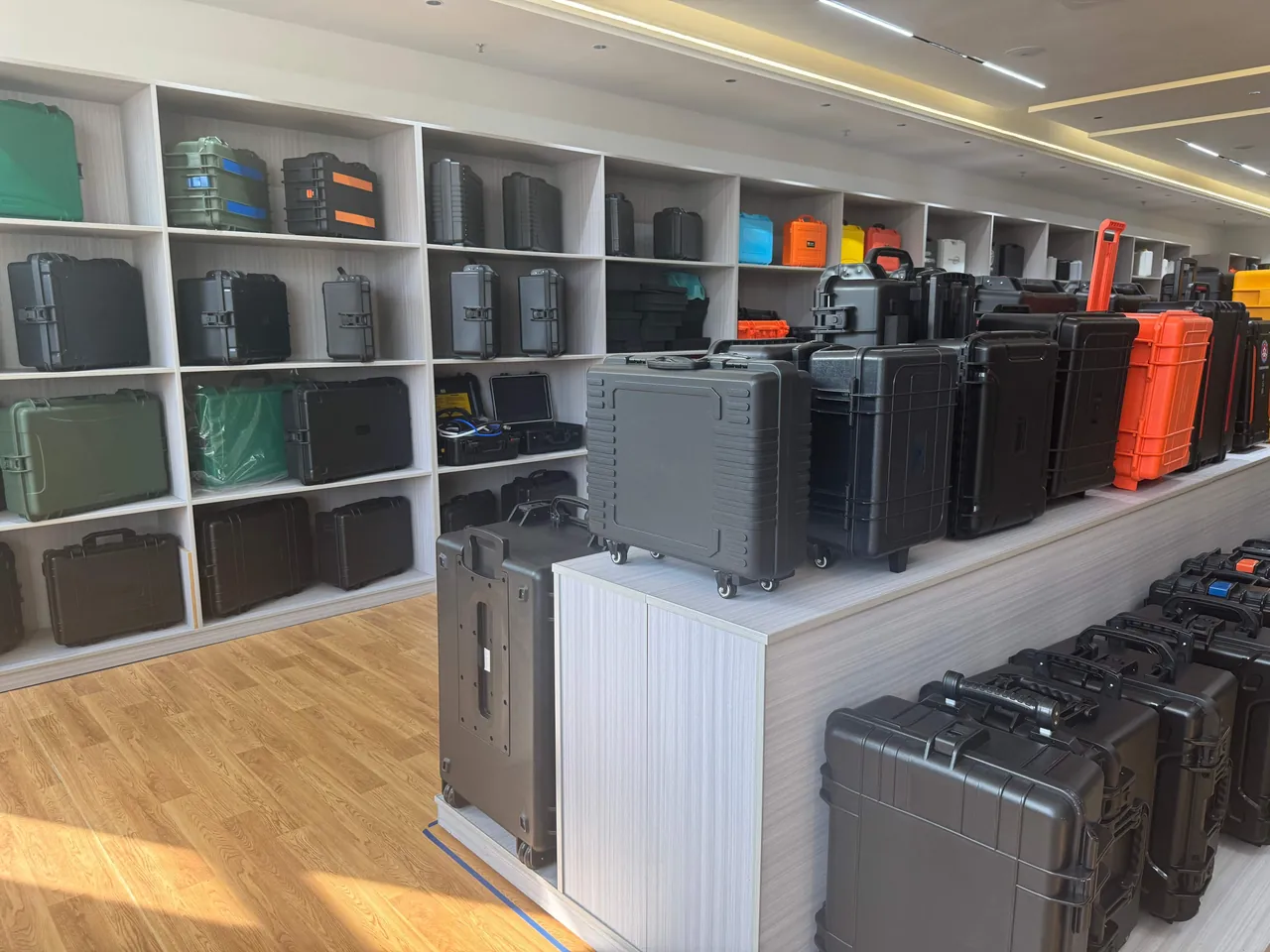
A dive case's "transit safety" shows in latches and hinges. Poor latches loosen under drop impact and scatter gear; the seawater environment accelerates metal corrosion. Choose integrated hinges and latch structures that accept padlocks; latches should also support personal padlocks or TSA customs locks. Combined design is in toolbox hinge latch seal (use this correct slug to avoid a dead link).
Case material trades off between PP and ABS: PP is tough, less brittle cold and relatively better against seawater corrosion, suited to frequent liveaboard checking; ABS is lighter but slightly more brittle cold, suited to mainly hand-carried recreational divers. Wall thickness and ribs decide dent resistance. For shops that check often, prefer PP shell plus hard foam; for holiday short trips, ABS is lighter.
The seawater environment corrodes metal more strongly, so case hardware (hinges, latch tongues) should be stainless steel or corrosion-treated, and wiped dry before each stowage to extend life.
Wheels, Trolley Handle and Liveaboard Mobility
Dive gear includes gear case, weight case and cylinders (handled independently), total weight high; a case with wheels and a retractable trolley handle markedly reduces movement burden between dock and cabin. But wheels and handles must survive checking and deck vibration, or a dropped wheel adds trouble. Selection is in case wheels and trolley handle.
Prefer dual-row large-diameter PU wheels for smoother deck gaps and sand; the trolley should be aluminum inner tube with outer-tube lock against wobble. Weight blocks should sit in the reinforced bay near the wheels so the center of gravity stays close to the axle for stable towing. Moving multiple cases in a train, the lightweight design of portable transport box eases single-case load, and color or number coding distinguishes gear case from weight case.
Custom Inserts and OEM/ODM Service
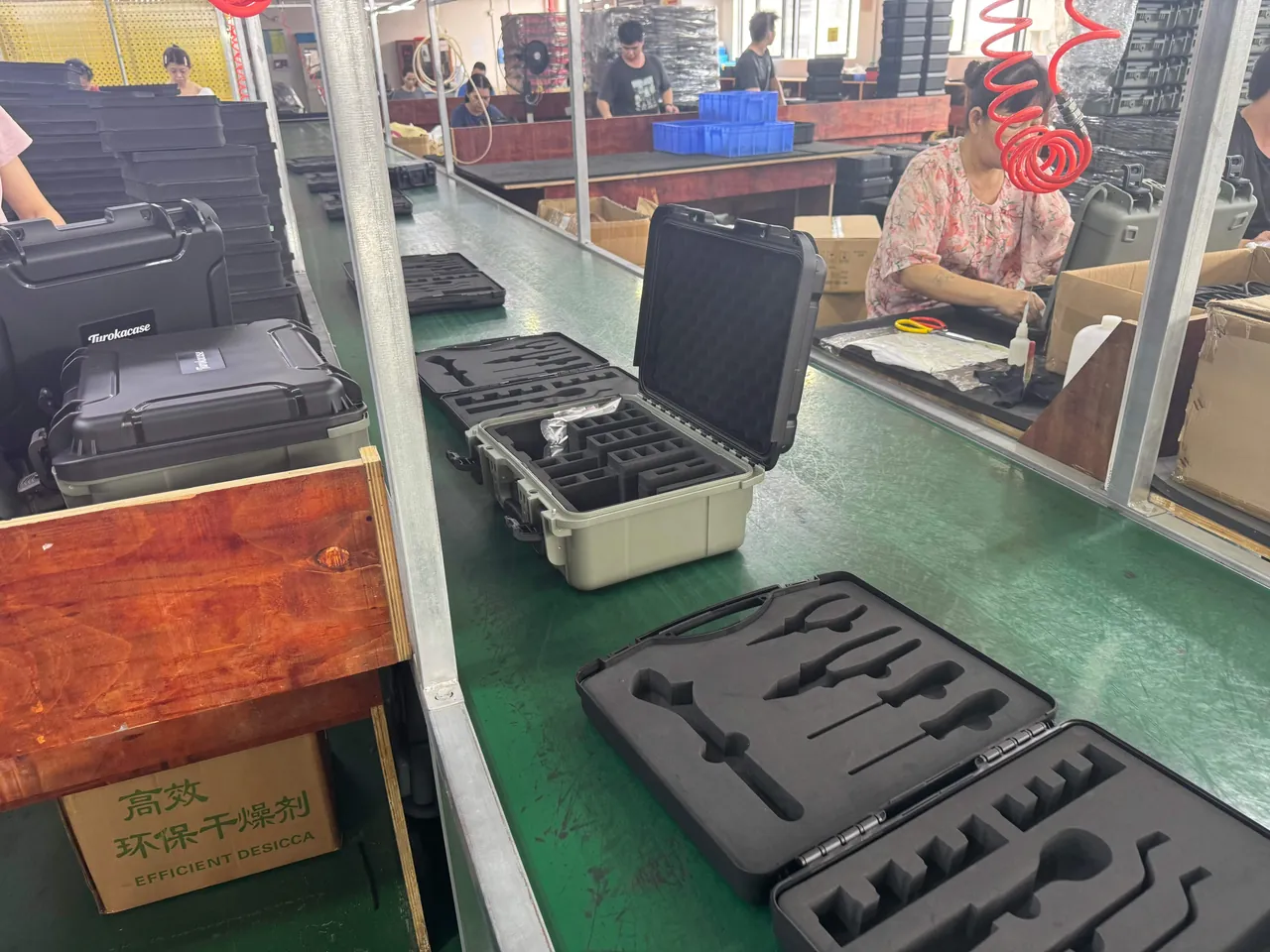
Dive gear dimensions vary widely by brand and model (especially regulator shape and BCD volume), so generic cavities rarely fit. High-protection plans almost always go custom: the customer provides a gear list, key dimensions and depth/use notes, and the maker routes foam and confirms a prototype. JUNZHJIA's strength is exactly from a single sample to volume OEM/ODM, with model-specific seals, model-specific foam and provided inspection documents.
Customization's value is fixing the optimal layout of many item types in a limited volume: regulator independent cavity, mask centered, BCD large bay, weights near bottom, electronics small bay — the whole-case center of gravity and access order set at design stage. Tooling cost logic is in custom case mold cost analysis, factory selection in how to choose a case OEM factory. Low-volume prototyping with EVA foam insert custom process iterates quickly.
Cleaning, Maintenance and Service Life
Dive-case maintenance is heavier than most because salt is the invisible killer. After every dive: rinse gear with fresh water and air-dry in shade before stowage; wipe debris from the lid seal groove and around the pressure valve; replace desiccant periodically; before long storage remove foam to air out and avoid sticky salt-laden foam. Steps are in how to clean a protective case.
For service life, PP/ABS shells at normal temperature and routine use can last several years; the gasket is the wear part and ages faster in salt environment, so replace when it hardens, cracks or takes a permanent flat. An experience range is in protective case service life years. Buyers should learn to distinguish good from bad to avoid substandard products; see identify genuine vs fake case.
Common Selection Mistakes
Mistake one: "a soft bag is enough for liveaboard". Liveaboard stacking, dock drops and high salt quickly wet and corrode gear in a soft bag; rigid support and sealing are needed.
Mistake two: "just drop the mask anywhere". Mask glass fears point pressure and scratches, silicone skirt fears crush deformation; soft isolation and contoured support are mandatory.
Mistake three: "throw lead weights anywhere". Lead is the heavy source and must be reinforced near bottom and wheels; otherwise it slides and hits precision parts.
Mistake four: "only look at IP rating". IP covers dust and water only; vibration and drop depend on foam and structure, see seal shock case.
Mistake five: "put cylinders in the gear case". Filled high-pressure cylinders are strictly limited by airline and dangerous-goods rules; handle them independently, never mixed with gear.
Procurement and Acceptance Checklist
A procurement checklist for dive centers and gear dealers: first, list gear with key dimensions (regulator model, mask outline, BCD volume, total weight) as the custom basis; second, define transit scenarios (hand-carry/check/air/liveaboard) to set IP rating and pressure valve; third, require the maker to provide a foam prototype and a fully loaded simulated transit test (ISTA thinking is fine); fourth, confirm replaceability of wear parts like latches, wheels, valve and corrosion treatment of hardware; fifth, check the sampling standard in custom case acceptance AQL.
Three acceptance checks: close the empty case, invert and shake to hear rattles (judge foam looseness); after loading, short corner drop (about 0.5–1 m, experience value) to observe latches and foam; after spray or rain, open and check interior dry. Only when all three pass should the case enter liveaboard and air transport. Also confirm in writing that high-pressure cylinders are not loaded into this case and are handled independently per regulation.
Frequently Asked Questions
Q: Must a dive equipment case reach IP67, or is IP65 enough? A: Whether IP67 is mandatory depends on your transit environment. If gear is only hand-carried short distances at a pool or resort indoors, with no seawater splash or checked-baggage dust, then basic dust resistance and simple splash protection may suffice, and a formal IP rating is not strictly necessary. But diving happens on liveaboard decks and island docks where gear meets deck splash, dock wading transit, cargo dust and accidental water ingress, so at least IP65 (full dust protection, low-pressure water jet resistance) is advised; if you do frequent liveaboards or wading transit, IP67 (immersion to 1 m for 30 minutes without ingress) is the steadier choice. Note the IP rating is valid only with the lid correctly closed and latches compressed; dive cases open in humid environments and gaskets easily pick up sand and salt, so clean the groove before every closure or the seal breaks and may scratch the lid.
Q: How should the regulator (first/second stage) be stored most safely? A: The regulator is the most precise and most delicate dive component, fearing three things in transit: impact misaligning internal seats, sand ingress causing jamming, and the low-pressure hose being crushed. The correct structure places the whole regulator in an independent cavity, wraps the first stage in a contoured medium-density EVA channel leaving only the interface outward for inspection, routes the low-pressure hose along a large-radius channel fixed to avoid small-radius kinks, and caps the second-stage mouthpiece in a separate foam cavity. For multiple sets side by side, insist on "one set per bay" separated by removable dividers. JUNZHJIA can CNC-route by regulator brand and model so interfaces and hose paths correspond one to one. Before stowage always rinse with fresh water and air-dry in shade to avoid salt grains wearing the cavity; routing should also reserve drainage and ventilation to further reduce residual salt corrosion.
Q: Why can't the mask and snorkel just be pressed anywhere? A: The mask combines tempered-glass lens and silicone skirt, both fearing improper pressure. The glass fears hard point pressure and scratches from sand or metal accessories, harming vision and possibly causing stress cracks; the silicone skirt fears long-term flattening causing permanent deformation and poor seal with leaks. The snorkel's mouthpiece and corrugated tube fear crush and bend, and deformation causes abnormal breathing resistance. The correct practice gives the mask its own cavity, faces the lens toward a soft PU sponge or flannel isolation layer, and supports the skirt shape with contoured foam; coil or lay the snorkel straight, avoid bending the corrugated tube below its own curvature radius, and cap the mouthpiece. Place the mask bay near the geometric center, away from the high-pressure zone near latches. A mask fits the face, so obvious deformation should be evaluated for replacement per safety guidelines; the case only works to prevent it.
Q: How do I pack the BCD so it is not punctured or deflated? A: The BCD is bulky, carries a bladder, integrated weight pockets and multiple D-rings, and in transit fears puncture, crush deflation and weight-pocket abrasion of other gear. The protection focus is "deflate and stow, contoured support, separate weights": after fully deflating, fold or lay the BCD into a large bay, wrap the bladder area in a soft PU sponge interlayer to avoid puncture; remove integrated weight pockets and place them in a buffered separate bay to avoid metal weights hitting the mask or regulator; fix D-rings and quick-release buckles in foam recesses against wobble. For dive centers with multiple BCDs, a removable divider system can subdivide the large bay and label it. BCD nylon fabric and bladder are sensitive to UV and high heat, so case and foam temperature range need margin, and before stowage rinse with fresh water and air-dry in shade to prevent salt crystals wearing the fabric.
Q: Where should lead weight blocks go inside the case? A: Weight blocks (lead) are dense and heavy, the "heavy source" inside the case; placed poorly they slide in transit and hit precision parts, and also skew the whole-case center of gravity and increase wheel load. The correct approach puts weight blocks in a reinforced bay near the case bottom and near the wheels, fixed by EVA limit blocks against sliding; isolate lead from other gear with foam to avoid metal directly hitting mask glass or the regulator. The total lead mass should be planned into the loading layout at design stage, using a removable divider system to lock the heavy load low. If using a separate weight case, the lightweight design of a portable transport box eases single-case load, and color or number coding distinguishes gear case from weight case for clear access and inventory.
Q: Is MIL-STD-810H a military certification that I can put in marketing? A: You cannot present it as a military certification. MIL-STD-810H is a US DoD environmental engineering test method; in the protective-case field it is only an environmental test basis for the product line, used to verify reliability under vibration, temperature, humidity and low pressure. It is not a "military certification", this product does not claim military qualification, and does not imply suitability for any military or law-enforcement use. JUNZHJIA can cite such methods in R&D and outgoing inspection and supply corresponding test or inspection documents commercially to help B2B customers pass supplier audits, but all of this is premised on civilian or recreational dive compliant transport. If marketing mentions this standard, state factually that "reliability is verified by referencing MIL-STD-810H environmental test methods", not "military-grade certified" or similar implication, to avoid compliance risk and misleading customers.
Q: Flying checked with dive gear, will the case bulge or refuse to open from pressure difference? A: A sealed case at low pressure (aircraft hold, high altitude) can indeed bulge and strain latches, or "suck" the lid tighter and make it hard to open on descent. The solution is a pressure equalization valve (breathing valve): it lets air move slowly to balance pressure while an internal membrane blocks liquid water, a common IP67 feature. If you fly checked or do cross-climate liveaboards often, make the valve a must-have; for local short trips a valve-less seal saves cost. Note the pressure valve must not be seen as any "concealment" structure; it only serves transit safety and easy opening. Also, diving high-pressure cylinders are not loaded into this gear case, and filled cylinders are strictly limited by airline and dangerous-goods rules; handle them as an independent compliant matter, never with gear in the same case.
Q: Should the dive case be PP or ABS? A: PP (polypropylene) is tough, impact resistant and less brittle at low temperature, and relatively better against seawater salt-spray corrosion, suited to dive centers that liveaboard frequently and meet dock drops and deck vibration; ABS is rigid, surface-hard and lighter, but slightly more brittle when cold, better for mainly holiday short-trip hand-carried recreational divers. Beyond material, wall thickness and rib layout decide dent resistance. The seawater environment corrodes metal more strongly, so case hardware (hinges, latch tongues) should be stainless steel or corrosion-treated, wiped dry before each stowage to extend life. Either way, the interior must have precisely supported foam, or the hard shell makes gear slam harder against hard walls. Frequent checkers prefer PP plus hard foam; short trips can choose ABS to save weight.
Q: How long does a protective case last, and which parts fail first? A: PP or ABS shells at normal temperature and routine use typically last several years; the first part to age is usually the gasket, which in the high-salt high-humidity dive environment ages faster than general scenes, and under long compression, sunlight and temperature swings hardens, cracks or takes a permanent flat and should be replaced when it loses sealing. The EVA insert also slowly accumulates compression set under frequent handling and heavy pressure, but generally much slower than the gasket. For an experience range of overall service life, see the protective case service life years note; actual life also depends on checking frequency and salt corrosion degree. To extend life: after every dive rinse gear with fresh water and air-dry before stowage, wipe seal groove and valve salt-sand, replace desiccant periodically, and remove foam to air out before long storage. At procurement, confirm wear parts are replaceable individually to avoid scrapping the whole case for a small failure; hardware corrosion treatment and gasket replaceability should be acceptance items.
Conclusion and Related Reading
The essence of a diving and snorkeling equipment case is to minimize the transit risk of regulator, mask and BCD through "precise insert plus reliable seal plus rational structure", and to keep salt spray and condensation outside the case. For dive centers and gear dealers, rather than repeatedly replenishing gear after damage, it is better to make support precision, IP rating, pressure valve and custom insert hard indicators at procurement, while remembering high-pressure cylinders must be handled independently and compliantly. JUNZHJIA can provide a full-chain solution from prototyping to volume OEM/ODM by equipment list with inspection documents, helping B2B customers land the project steadily.
Related Reading
When specifying a transport case for this category, buyers should request the manufacturer's test report (drop, vibration, IP rating) and confirm foam density and cavity tolerance against the actual product dimensions. A short factory visit or sample approval before mass production avoids most field failures and keeps total cost predictable.
A practical pre-dive checklist helps avoid damage: confirm the regulator first-stage is capped, the mask is in its own padded bay, and the BCD inflator is protected. Label each cavity and keep a spare desiccant pack so the case is field-ready for the next trip.