

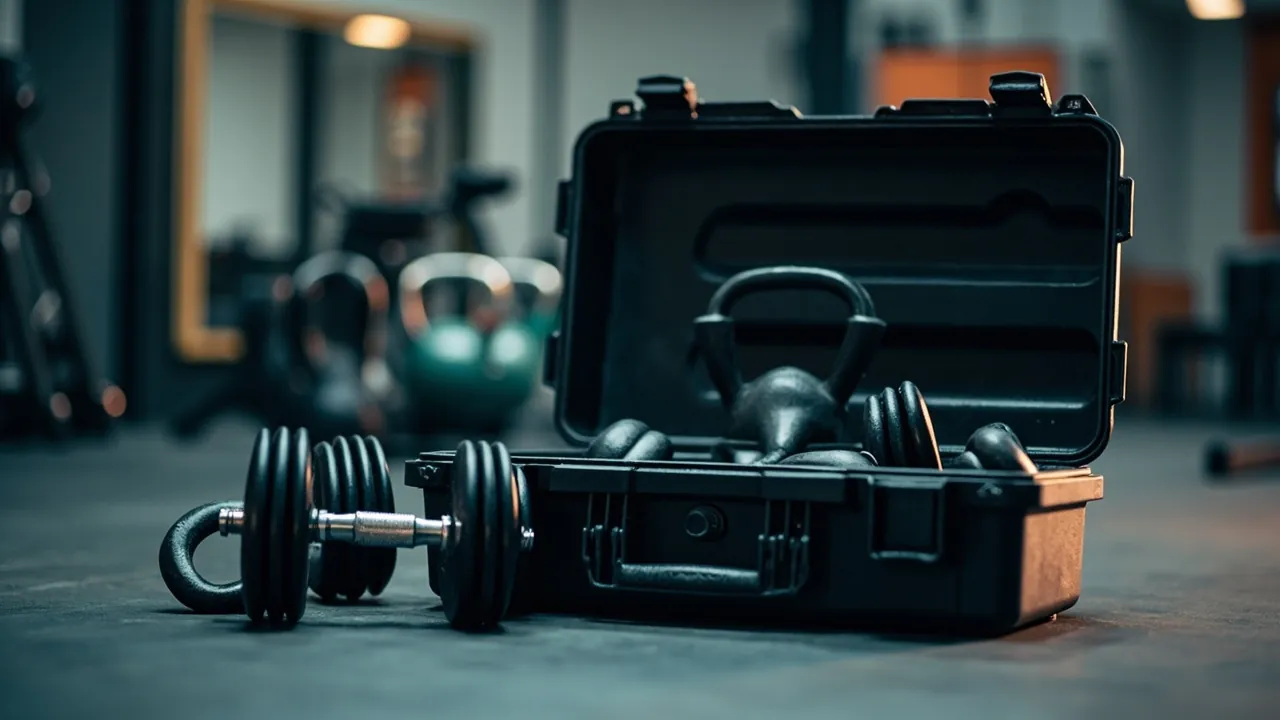
The core contradiction of fitness equipment shipping is that "heavy" and "fragile" coexist: dumbbells and kettlebells are high-density weights, a single piece ranging from a few kilograms to tens of kilograms, acting both as load source and impact source in transit; while adjustable gear (such as adjustable dumbbells and multi-function trainers) contains precision structures like gears, latches and electronic counters that fear drops, moisture and displacement. The core conclusion for a professional fitness equipment case is to use "high-load hard shell plus weight-zone fixation plus cushioning vibration-isolation liner" to solve the self-compression and mutual collision of heavy objects while protecting the precision mechanisms of adjustable gear. This article systematically explains the selection of fitness equipment transport cases from risk, standards, shell load capacity, weight fixation, adjustable-gear protection, sealing compliance to bulk procurement, targeting fitness brands, wholesalers and home-fitness buyers.
Buyers should take "zero weight displacement and zero precision-part damage" as the core of acceptance. Plan the liner together with the internal case seal materials guide and the custom foam inserts guide.
Table of Contents
- Core Transit Risks of Fitness Gear
- Protection Grades and Standards Basis
- Shell Load Capacity and Material Selection
- Weight-Zone Fixation for Dumbbells and Kettlebells
- Precision Protection for Adjustable Gear
- Liner Cushioning and Vibration Isolation
- Accessory and Cable Storage
- Sealing Latches and Pressure Equalization
- Moisture Control and Rust Prevention
- Wheels Handling and Ergonomics
- Purchase and OEM Customization
- Maintenance and Service Life
- Mechanical and Safety Constraints of Weight Transport
- Differentiated Solutions for Home and Commercial Fitness
- Frequently Asked Questions
Core Transit Risks of Fitness Gear
Fitness gear transit has two prominent risks. The first is weight self-compression and mutual collision: stacked dumbbells without fixation will crash into each other during jolting, causing paint loss, chipped corners and even case damage; the weld between a kettlebell handle and body may crack under sustained impact. The second is precision mechanism damage: the weight-selection plate, latch and electronic counter of adjustable dumbbells and trainers cannot withstand drops and immersion.
In addition, metal gear generally fears moisture and rust, especially in sea freight or high-humidity storage. Therefore protection must simultaneously solve load fixation, vibration isolation and sealed rust prevention. General cartons or thin-wall cases almost fail under heavy objects, which is exactly why a professional load-bearing case is needed.
Bulk acceptance should reference the custom case acceptance AQL standard and write "weight displacement" into defect grading.
Protection Grades and Standards Basis
Case reliability still depends on standards. Shell sealing follows the IP code of IEC 60529 / GB/T 4208; fitness cases achieving IP65 or IP67 cope with rainy loading and condensation. Environmental adaptability follows the drop, vibration and damp-heat methods of MIL-STD-810H (test basis only, not a military certification). Transport reliability follows the vibration-plus-drop of ISTA and GB/T 4857. Flame retardancy UL94, enclosure impact IK (IEC 62262).
The table below lists key items:
| Standard / Grade | Dimension | Typical Value | Acceptance Focus |
|---|---|---|---|
| --- | --- | --- | --- |
| IEC 60529 / GB/T 4208 | Dust & water | IP65 / IP67 | Seam latch sealing |
| MIL-STD-810H | Environmental | Drop, vibration, damp heat | Test basis, not military |
| ISTA / GB/T 4857 | Transit reliable | Vibration + drop | Intact rate, defect grade |
| UL94 | Flame retardancy | V-0 / V-2 | Self-extinguish |
| IK (IEC 62262) | Impact resistance | IK08–IK10 | Corner latch impact |
Writing into the agreement avoids mismatch; see the MIL-STD-810H compliance note and the ISTA transport testing procedure.
Shell Load Capacity and Material Selection
For load-bearing cases, prioritize modified PP one-piece injection or aluminum alloy frame. PP has good toughness and impact rebound, suitable for heavy-drop impact; aluminum has high rigidity and carries more but higher self-weight. Key point: the connection between case bottom and handle should have metal insert reinforcement to avoid cracking when lifting heavy.
Wall thickness and ribs determine torsional stiffness; load-bearing versions recommend wall thickness ≥4 mm with bottom longitudinal and transverse ribs. Latches and hinges must meet the reliable closure of the case hinge latch seal system and the latch should withstand full-load opening. A lighter storage version can reference the portable transport box thinking.
In material trade-off, PP and aluminum are not either-or: high-frequency transfer and drop-fearing wholesale and rental scenarios prefer PP because it rebounds after impact and is less likely to crack; while high-end commercial scenarios pursuing ultimate rigidity and mostly fixed storage, aluminum frames resist compression without deformation, only adding self-weight to handling cost. Either way, the "handle-latch-wheel" three force nodes of the case must be metal-insert reinforced, especially the handle root, where the bending moment is largest during full-load lifting and plastic directly stressed easily cracks from there. For fitness brands printing logos, PP injection conveniently reserves a silk-screen area outside the parting line, ensuring brand identity without damaging sealing. If going by sea, also require the shell to provide flame-retardant and weather-resistant notes, combined with the liner selection of the case foam material comparison, closing the loop of "heavy load + protection."
Weight-Zone Fixation for Dumbbells and Kettlebells
Weight fixation is the soul of a load-bearing case. The method is an independent bay per weight plus high-density EVA or PE foam support plus elastic strap locking, ensuring zero displacement in transit. The kettlebell handle should be sleeved with anti-impact foam, and buffer gaps left between bodies, forbidding hard-on-hard stacking.
Key point: single-bay load should match the weight; over-concentration punches through the liner; layered design is safer than single-layer stacking. Reference the EVA foam custom process and the multi-point support in the cushion liner case. JUNZHJIA can customize support by piece weight, structurally avoiding weight collision.
On the layering logic, we recommend "heavy low, light high" as an iron rule: dumbbells and kettlebells as heavy objects go in independent bays at the lower part of the case, adjustable gear and electronics in the middle layer, and light items such as grips and cables on top, lowering the overall center of gravity for steadier handling. The kettlebell handle is a weak stress point, so thicker foam should be added around the handle with ring restraint, forbidding other weights from stacking on the handle. For the "quick-adjust plate" of adjustable dumbbells, an independent lock-position bay prevents accidental shifting in transit. In material, support foam recommends high-density PE or cross-linked EVA, whose resilience and creep resistance are better than ordinary sponge and do not easily collapse under long-term pressure. At the sampling stage, JUNZHJIA uses weights equal to the real object for lid-closing simulation, verifying that a single bay does not deform under 1.5x load and the liner does not puncture, ensuring zero displacement on arrival.
Precision Protection for Adjustable Gear
Adjustable dumbbells and multi-function trainers contain weight-selection plates, latches, gears and electronics. During transport: lock the selection mechanism and fix separately, remove the electronic counter into a crush-proof box, and avoid pressing the damping parts. Wrap the precision zone in high-density foam and fill around it to prevent displacement.
Vibration protection references the isolation structure in the seal shock case. If traveling with a team or for home delivery, a wheeled trolley version (see case wheels and trolley handle) significantly eases handling, especially for home-fitness customers.
In packing details, the "weight-selection plate" of adjustable dumbbells is a precision latch structure that must be dialed to a fixed gear and locked with a lock plate before transit, preventing the latch from misaligning and jamming on arrival due to gear shifting; the electronic counter module and charging port should be removed into a separate crush-proof box with an anti-static bag inside, avoiding discharge from sharing a bay with metal weights. Damping-cylinder parts fear pressure and inversion, so use custom foam "bottom support plus limit" double fixation. For smart gear with APP connection, attach a concise pairing and reset note to reduce after-sales guidance cost. JUNZHJIA can do a three-bay separation of "precision zone + weight zone + accessory zone" by device BOM, and include easily worn latches in the spare list, a stable configuration for smart-fitness brands going overseas.
Liner Cushioning and Vibration Isolation
The liner must both fix weights and isolate vibration. High-density foam supports weights and medium-density wraps precision parts, a common combination. The key is compression rebound: long-pressed zones collapse, so replace or locally re-cut every one to two years. Material comparison is in the case foam material comparison.
The zoning logic uses the removable divider system to keep "weight zone / precision zone / accessory zone" from interfering, improving protection and inventory.
In material selection, foam is not the harder the better: too hard creates local high pressure at weight edges, conversely pressing the paint or shell; too soft fails fixation. The empirical range is medium density (about 40–55 kg/m³) supporting weights and high density (about 60–80 kg/m³) limiting precision parts, with a low-friction film on the force face for easy pick-and-place. Cross-linked EVA has better creep resistance than ordinary EVA and suits long-pressed weight bays. For vibration isolation, reserve a 5–10 mm buffer air cavity between shell and liner to absorb high-frequency vibration in transit and protect the counter and damping mechanism of adjustable gear. After arrival, if a bay's foam is found permanently flattened, it means overload or soft material selection in that zone, and you should promptly replace it with a higher grade per the case foam material comparison rather than continuing to make do.
Accessory and Cable Storage
Wrist wraps, resistance bands, charging cables and manuals are easily lost. Use transparent mesh pockets or partitioned drawers: cables wound and fixed to prevent pulling, electronic accessories in crush-proof boxes, paper documents in waterproof bags. Humidity-sensitive items near the desiccant.
Reasonable zoning improves unpacking efficiency and avoids small items scratching weight paint. JUNZHJIA's custom liner can zone the whole set of "weights + gear + accessories."
In accessory management, we recommend making "easy-to-lose and easy-to-tangle" small items their own grids: charging and data cables are wound and fixed with hook-and-loop to avoid pulling and knotting; textiles such as wrist wraps and resistance bands use breathable mesh bags, not sharing a grid with metal hard objects to prevent snagging; manuals, warranty cards and spare screws are stored edge-wise in a waterproof document bag for after-sales traceability. For multi-gear devices, attach a "packing list + gear-reset diagram" to the case, restoring by diagram on opening to reduce misloading. JUNZHJIA's removable liner supports adding or removing grids by customer BOM, adapting to different models while enabling consistent batch production and reducing the multi-SKU management cost for wholesale customers.
Sealing Latches and Pressure Equalization
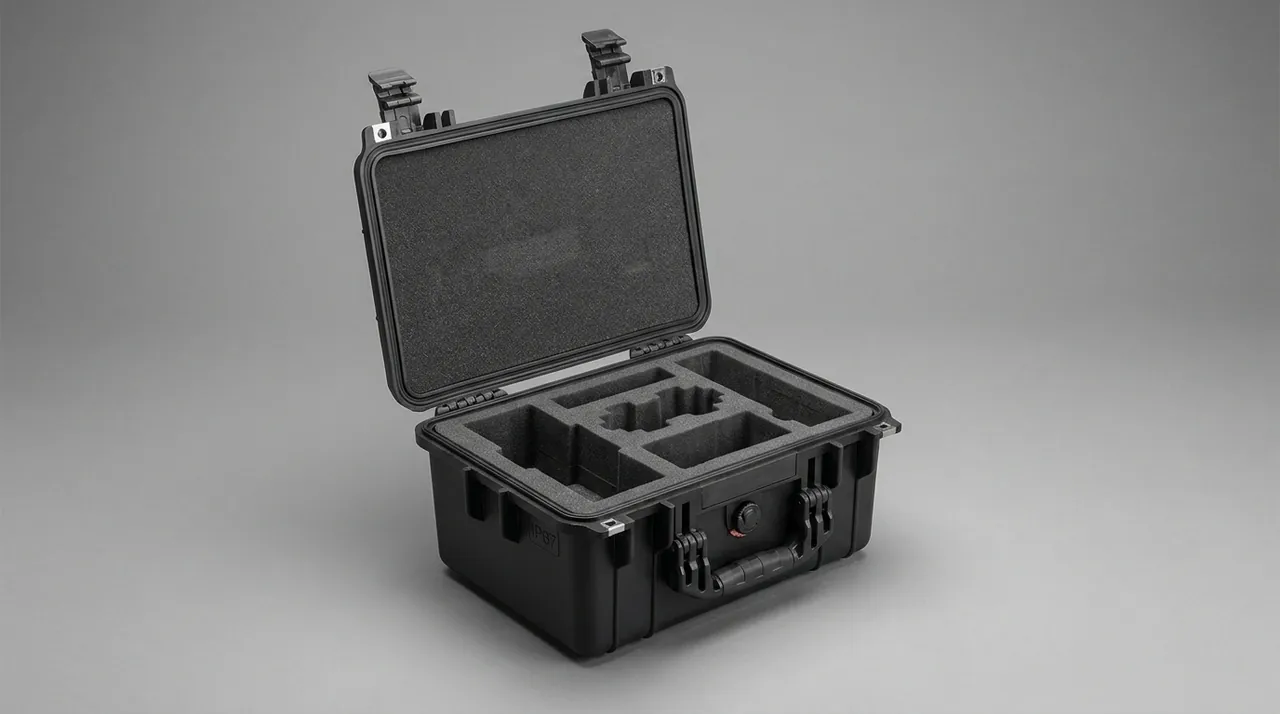
Water and dust resistance rely on sealing, but high-altitude flight needs a pressure equalization valve to avoid suction lid, as detailed in the case pressure equalization valve. Dual latch plus silicone gasket is the mature solution with secondary safety against accidental opening. Sealing structures also reference the waterproof IP case and the seal shock case.
On a weight case, the pressure equalization valve is not optional but mandatory: metal weights are dense, and once the sealed case returns from a high-altitude or cabin low-pressure environment to normal pressure, the internal-external pressure difference will tightly "suck" the lid shut, making opening difficult and possibly damaging the latch and gasket. JUNZHJIA uses a self-resetting waterproof breathable valve that balances pressure during flight while keeping the IP67 dust and water grade intact. For latches, a symmetric dual-latch layout is recommended so the lid is stressed evenly and the seam is compressed consistently, avoiding a single latch loosening under long-term eccentric load; the secondary anti-accidental-opening safety prevents the latch from springing open under transit jolting. For wholesale and rental scenarios with frequent opening and closing, the latch and gasket should be listed as easily worn spares, with a replacement cycle set per the protective case service life years, so that protection does not decay with aging parts during batch transfers.
Moisture Control and Rust Prevention
Metal gear fears moisture and rust, especially sea freight. Method: renewable desiccant inside, humidity indicator card on lid; keep humidity 40%–60% for long storage. In high humidity prioritize an IP67 style (see IP67 protective case selection) and verify material stability within the temperature range of the extreme temperature case. Wipe condensation promptly after arrival to extend gear life.
In specific rust-prevention craft, dumbbells and kettlebells are mostly rubber-coated or baked-enamel metal; if the rubber layer is damaged it rusts first from the break, so transport and storage should avoid hard objects scratching the rubber; baked-enamel parts fear edge chipping exposing the substrate. We recommend sleeving metal weights in a thin fleece or foam bag before entering the case, both preventing mutual knocking and slowing corrosion. For the metal rails and latches of adjustable gear, apply a thin rust-proof oil or wax and use with desiccant in the sealed case to block the electrochemical corrosion chain. During sea freight or high-humidity storage, ventilate and replace desiccant once a month, and do a full wipe-dry and oil care before long sealing. JUNZHJIA can use rust-proof foam or VCI vapor-phase rust-proof paper at liner contact with metal, upgrading "rust prevention" from passive wiping to active in-case protection and reducing batch rust-claim losses.
Wheels Handling and Ergonomics
A case full of weights often exceeds 20 kg; handling relies on wheels and trolley. Recommend dual-row large-diameter bearing wheels and a two-stage locking handle, with ergonomic handles on both sides with metal inserts. Structures are in the case wheels and trolley handle. For home delivery, wheel smoothness directly determines customer experience.
The essence of ergonomic design is reducing handling risk rather than merely saving effort. A weight case loaded above 20 kg, if carried entirely by hand, easily causes back strain and dropping, so a towable solution should be prioritized: dual-row large-diameter bearing wheels lower rolling resistance and ease passing thresholds and elevator sills; a two-stage locking trolley with adjustable grip height fits handlers of different heights and avoids lumbar strain from bent-over towing. Both-side ergonomic handles should carry metal inserts and rounded covers, ensuring strength while reducing hand pressure. For home delivery, JUNZHJIA can add detachable side wheels and a telescopic trolley so the last mile of "entering elevator, passing narrow door, entering home" is smooth; for commercial bulk handling, a pallet jack or stacking wheel rack reduces single-person load. When selecting, be sure to test-drag on site, confirming no play at the wheel axle and no wobble at the trolley under full load, and write "whether it can enter the home smoothly" into acceptance; for the specific structure reference the case wheels and trolley handle once more.
Purchase and OEM Customization
Procurement "defines standard before style": protection grade, whether a pressure valve, whether custom liner, whether brand printing. MOQ and tooling are in the custom case mold cost analysis, and the factory flow is in how to choose a case OEM factory.
JUNZHJIA provides an OEM/ODM solution from PP hard shells to EVA custom liners, can match seals and liners by piece weight and supply test documentation to help write standards into contracts. For fitness brands and wholesalers, solving "shell + liner + testing" at once is the most worry-free.
Before ordering, we recommend filling a three-part table of "equipment list + transport scenario + budget range": the list states dumbbell and kettlebell specs and weights, adjustable gear models and accessories; the transport scenario distinguishes home delivery, commercial handling or cross-border sea; the budget decides general liner or CNC custom. JUNZHJIA can then give three tiers of "standard / advanced / premium" with the protection grade, whether a pressure valve and test documents are included, and the spare-part policy for worn parts. For OEM and overseas customers, English spec sheets and compliance summaries can also be provided for overseas customs clearance and acceptance. Turning selection from "by feel" into "tier by table" significantly reduces communication cost, return rate and arrival disputes, and facilitates later batch replication by team or store.
Maintenance and Service Life
Every 50 transfers or six months: wipe the gasket with neutral cleaner (see how to clean a protective case), check hinge rust, latch looseness, pressure valve clarity and wheel smoothness. Lifecycle management is in the protective case service life years. Authenticity identification is in identify genuine vs fake case, recommended to write into acceptance clauses.
Common Protection Misconceptions
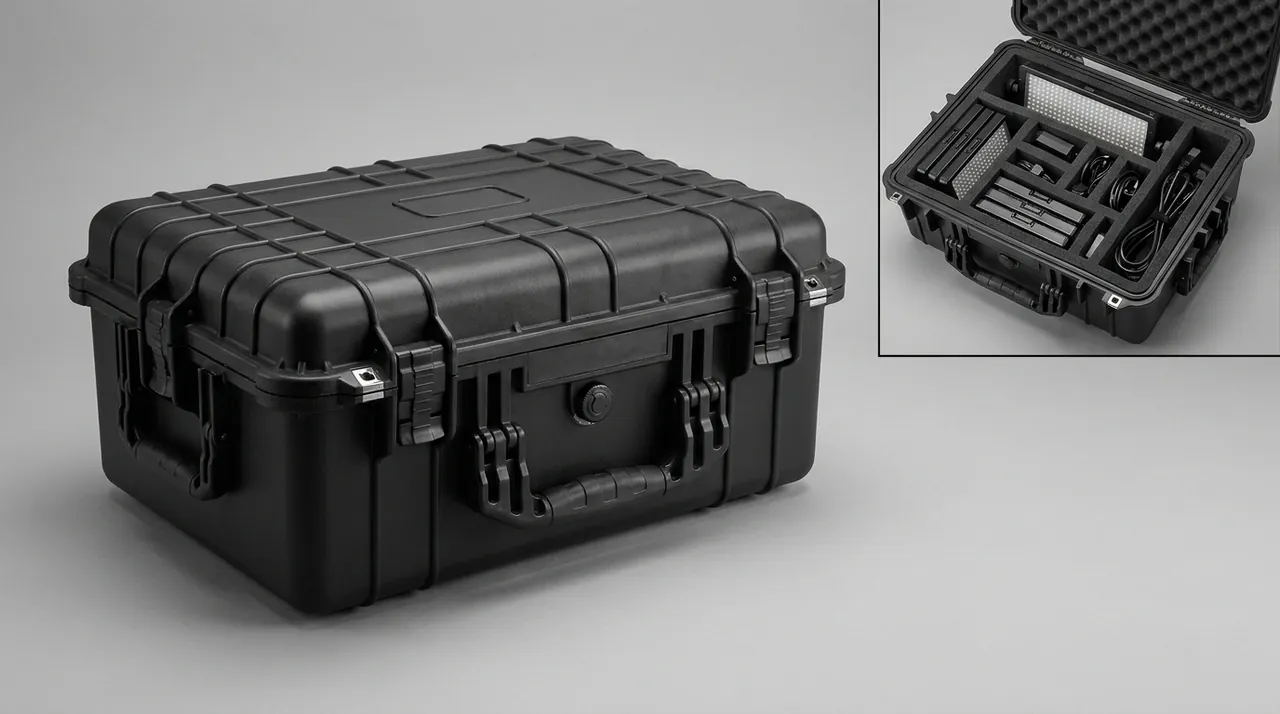
Misconception one: the heavier the case the sturdier — weight is a reverse indicator of material efficiency. Misconception two: heavy objects need no liner — without liner, weights collide and chip corners. The correct approach reverses from risk: high transfer means hard shell plus weight zoning plus pressure valve; storage-dominant can skip wheels but keep sealing.
Liner collapses under long-term pressure; replace the high-load zone every one to two years. JUNZHJIA supports local re-cutting without replacing the whole set.
Bulk Procurement Acceptance and Cost
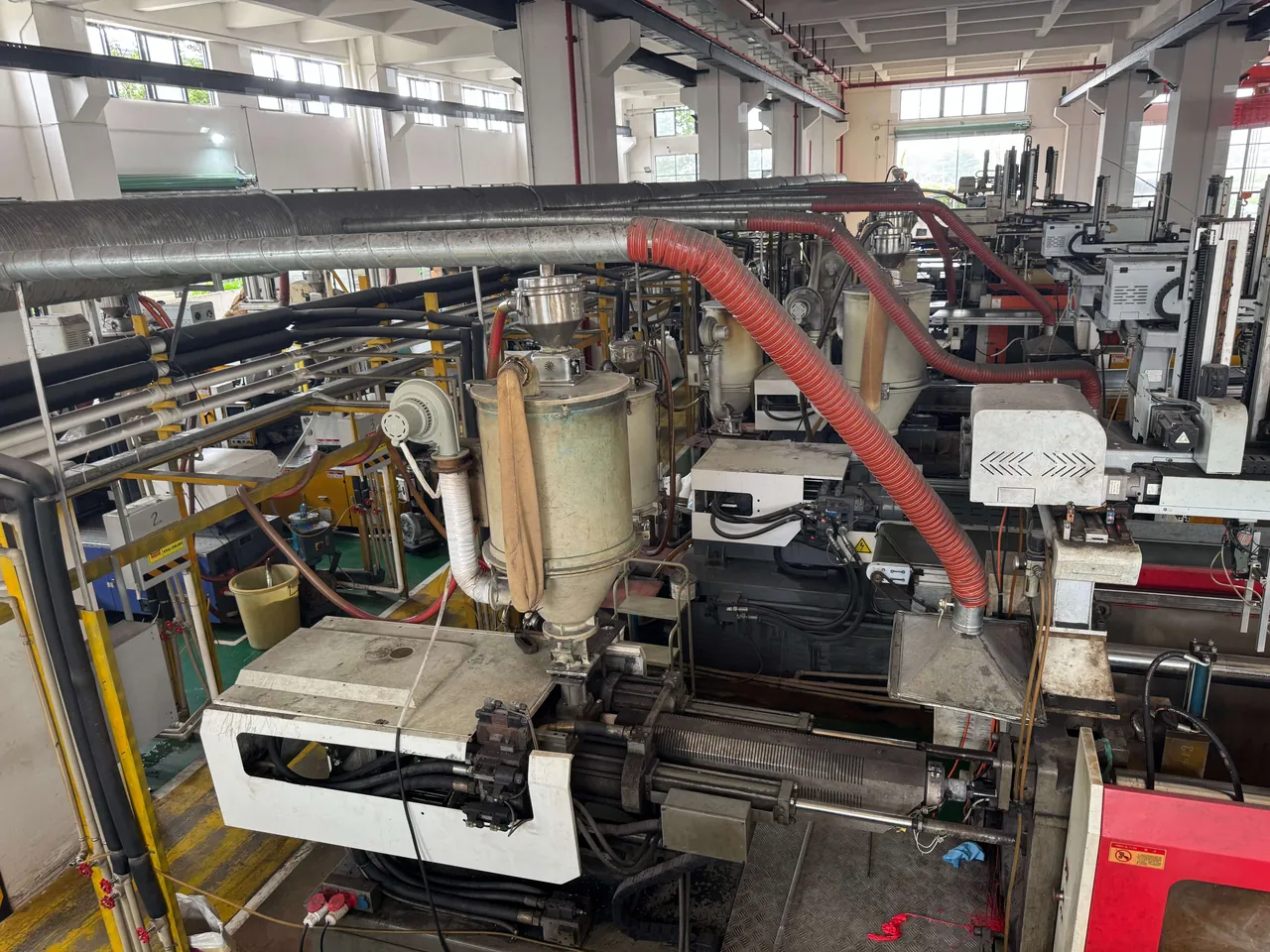
Bulk procurement converts comprehensive cost of ownership: require per-batch ISTA or GB/T 4857 sampling reports and sample by AQL; clarify spare-part prices and lead times for easily worn parts such as latches, wheels and pressure valves. On cost, the PP shell is dominated by material and injection, the liner by tooling and cutting; the larger the batch the lower the unit, but weigh inventory.
Mechanical and Safety Constraints of Weight Transport
Weight equipment transport is not only about "fitting in" but also involves handling safety and mechanical constraints. The first is center-of-gravity control: a case full of dumbbells and kettlebells has a high center of gravity and large mass; if the internal weights are not fixed, the center of gravity drifts during jolting, amplifying the torsional load on the case and even causing the handler to drop it. The professional method is to use a zoned fixation liner to lock the weights near the geometric center of the case, reducing the overturning moment.
The second is single-piece and lift-load: the rated load of the case handle, latch and wheels must cover the full load with safety margin. At procurement, write "full-load lift cycle test" into acceptance and reference the load structure in case wheels and trolley handle. The third is drop and stacking: a heavy case releases huge impact energy when dropped, so the shell and liner must be verified not to crack or be punched through per GB/T 4857 transport packaging tests or the ISTA transport testing procedure.
The fourth is manual-handling compliance: cross-border or site delivery may involve regulatory weight limits for manual handling, so we recommend keeping the gross weight within a range that allows two-person carry or wheeled towing, and marking gross weight and center-of-gravity on the outer case. The table below gives key safety parameter recommendations for weight cases:
| Parameter | Suggested Value | Acceptance Method |
|---|---|---|
| --- | --- | --- |
| Single-bay support | >= 1.5x single weight | Static pressure test |
| Full-load lift | >= 200 cycles | No handle crack, no latch looseness |
| Drop height | By ISTA grade | No shell crack, no liner puncture |
| Wheel load | >= 1.3x full load | Rolling resistance and life |
JUNZHJIA can customize support and reinforcement by piece weight and supply corresponding load test records, helping buyers write safety constraints into contracts.
Differentiated Solutions for Home and Commercial Fitness
Home and commercial fitness have clearly different requirements for equipment cases. The home scenario emphasizes "space-saving, easy entry, coordinated appearance": the case often needs to enter elevators and pass narrow doors, so volume and weight must be restrained, the color can blend with home decor, and the liner mainly uses compact zoning of "dumbbells + adjustable gear + small accessories." The last mile of home delivery relies on smooth wheels and a lockable trolley, see case wheels and trolley handle.
Commercial gyms and brand wholesalers emphasize "durability, brandability, batch consistency": the case must withstand high-frequency handling and warehouse stacking, easily worn parts such as latches and wheels must be replaceable with sufficient spares, and the shell can be silk-screened with logo and model for asset management. Both scenarios should take "zero weight displacement, zero precision-part damage" as the acceptance core, only with different emphasis. JUNZHJIA can provide compact custom liners for home customers and OEM/ODM services with asset-management labels and spare-part plans for commercial customers, see how to choose a case OEM factory.
Frequently Asked Questions
Q: Why must dumbbells and kettlebells use zoned fixation liner in transit? A: Dumbbells and kettlebells are high-density weights, a single piece from a few to tens of kilograms; without fixation they crash into each other during jolting, causing paint loss, chipped corners and even case cracking, while the weld between a kettlebell handle and body may crack under sustained impact. A zoned fixation liner gives each weight an independent bay, using high-density foam support plus elastic strap locking for zero displacement. The kettlebell handle is sleeved with anti-impact foam and buffer gaps left between bodies, forbidding hard-on-hard stacking. Single-bay load should match the weight; over-concentration punches through the liner, and layered design is safer than single-layer stacking. JUNZHJIA can customize support by piece weight, structurally avoiding weight collision, the most stable solution for heavy-object transport.
Q: How to transport the precision structure of adjustable dumbbells safely? A: Adjustable dumbbells contain precision structures such as weight-selection plates, latches, gears and electronic counters that fear drops, moisture and displacement. During transport, first lock the selection mechanism and fix it separately, remove the electronic counter into a crush-proof box, and avoid pressing the damping parts. Wrap the precision zone in high-density foam inside the case and fill around it with anti-displacement material. Vibration protection can reference the isolation structure of the seal shock case. For home delivery, a wheeled trolley version eases handling. After arrival, check whether selection is smooth and electronics are dry before use, avoiding sudden jamming during training.
Q: Must a fitness equipment case be IP67? A: It depends on the environment and transport mode. If transfers are short-haul between clubs and always supervised, IP65 dust-tight and water-spray protected is usually enough. If it involves sea freight, cross-border or rainy environments, IP67 is safer, coping with container condensation and open-air loading in rain. The judgment should combine load fixation, water proof and rust proof rather than looking at IP in isolation. At procurement, ask the supplier for the GB/T 4208 corresponding grade note and treat the actual waterproofing at seams and latches as an on-site acceptance point. For metal gear, one extra grade of protection often means fewer rust-claim batches.
Q: Should the liner be EVA tear-off divider or CNC custom foam? A: For mixed models that change often, EVA tear-off dividers are low cost and field adjustable. For fixed-model high-value gear pursuing zero damage, CNC custom foam has the best fit. They can also be combined: a universal outer layer with tear-off dividers and a custom foam zone for precision parts. The key is controlling the fit clearance between liner and shell; too large fails fixation, too small prevents lid closing. Provide gear weight and dimension drawings before bulk customization so the manufacturer can simulate lid-closing pressure and load distribution. Referencing the custom foam inserts guide and the EVA foam custom process brings support precision to the millimeter.
Q: How to tell whether a case is real PP or recycled material? A: Judge from three aspects. First, odor: new PP is almost odorless, recycled material is pungent. Second, wall thickness and texture: recycled material is brittle, dull and uneven. Third, latches and hinges: inferior cases use thin-wall plastic hinges that break easily. A more rigorous method is to require the supplier to provide material grade and third-party testing, combined with the genuine versus fake case identification points for acceptance. For B2B procurement, writing material requirements and authenticity identification into contract acceptance clauses avoids after-sales disputes and brand risk at the source, especially critical for OEM fitness brands.
Q: How often should a transport case be maintained, and how? A: We recommend basic maintenance every 50 transfers or six months: wipe the silicone gasket with neutral cleaner and check for cracks; check hinge-core rust and latch looseness; confirm the pressure valve is clear; check wheel smoothness and trolley locking. Aged gaskets, loose latches and worn wheels all weaken protection and should be replaced at threshold. Lifecycle management establishes replacement standards by referencing the protective case service life years, and stock easily worn parts in advance. Maintenance also detects authenticity and material degradation early, a key action to extend asset life and guarantee intact delivery.
Q: In bulk procurement, how to lower cost without reducing protection? A: Convert comprehensive cost of ownership rather than looking only at unit price. First define the standard (protection grade, pressure valve, liner type, brand printing) then discuss volume pricing; the larger the batch the lower the unit, but weigh inventory capital. Require per-batch ISTA or GB/T 4857 sampling reports and sample by AQL, writing "zero weight displacement, zero precision-part damage" into the KPI. Clarify spare-part prices and lead times for easily worn parts such as latches, wheels and pressure valves. Choose an OEM manufacturer that simultaneously provides shell, liner and test documents, such as JUNZHJIA, to reduce multi-supplier coordination and be overall more controllable and worry-free.
Q: How to choose handles and wheels for heavy-object cases so they don't break? A: The handle-to-shell connection of a heavy case must have metal insert reinforcement to avoid cracking when lifting; wheels should be dual-row large-diameter bearing wheels whose single-wheel load covers the full load with margin. The trolley handle should lock in two stages to prevent wobble. Structures reference the case wheels and trolley handle. In addition, the case bottom and corners should have reinforcing ribs to disperse stress during lifting and towing. At procurement, write "full-load lift test" into acceptance and require the supplier to provide corresponding load cycle test records, eliminating on-site accidents such as handle breakage and wheel-axle detachment from the source.
Conclusion and Related Reading
Selecting a fitness equipment transport case is using "high-load hard shell against impact, weight-zone fixation against collision, cushioning vibration-isolation liner to protect precision, sealed latch plus pressure valve for rust and moisture" to guard heavy objects and precision parts. Writing IEC 60529, GB/T 4208, MIL-STD-810H, ISTA and GB/T 4857 into the procurement agreement turns "looks sturdy" into quantifiable acceptance. JUNZHJIA provides an integrated OEM/ODM solution from PP hard shells to EVA custom liners, matching seals and test documents by weight, a worry-free choice for fitness brands and wholesalers.
Related Reading