

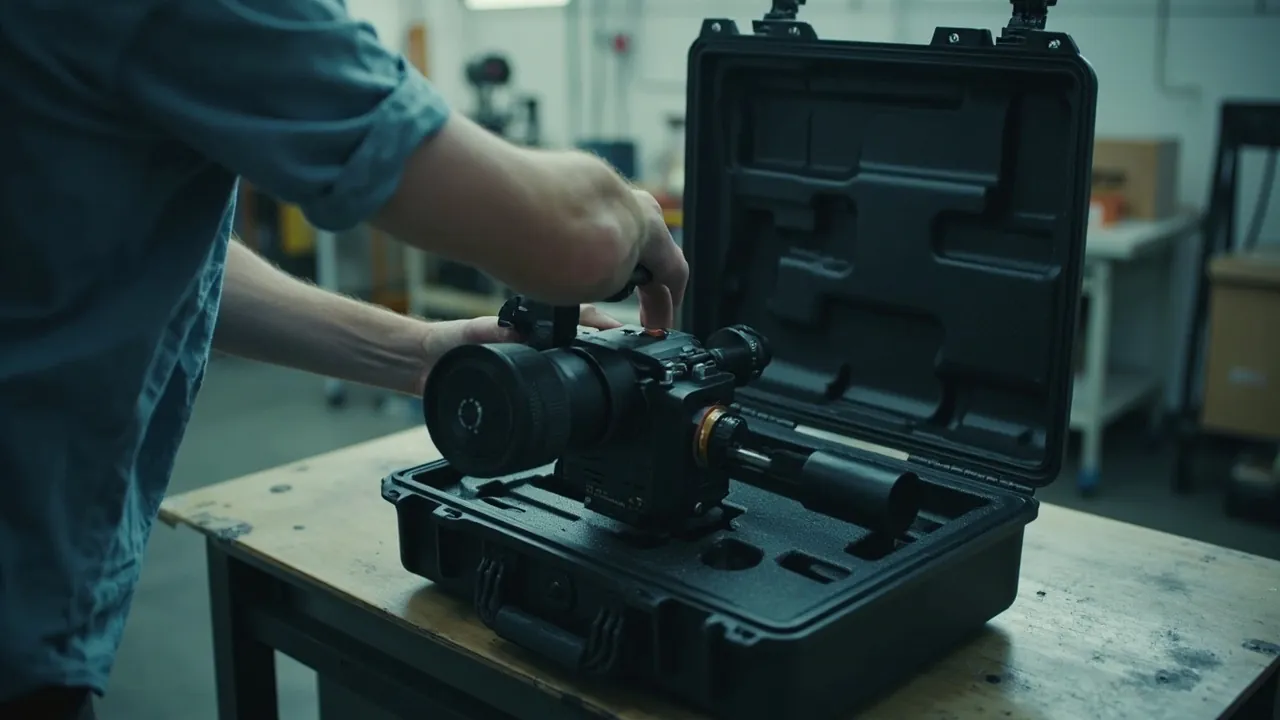
Paintings, calligraphy, and small sculptures face far higher transit risk than ordinary cargo: canvases wrinkle under fold pressure, frame corners chip on impact, sculpture surfaces scratch against hard objects, and paint layers crack from sudden temperature-humidity swings. One unprofessional shipment can permanently strip a work of its exhibition and trade value. For galleries, museums, auction houses, private collectors, and art-logistics companies, a transport case customized to each work's size and material is the professional safeguard that minimizes irreplaceable risk. This article starts from three scenarios — canvas support, frame-corner protection, and sculpture cushioning — and, referencing real standards such as ISTA, MIL-STD-810H, GB/T 4208, and UL94, delivers actionable selection, foam, and climate-control plans.
In the art world, transit loss is extremely costly and usually irreversible. A framed oil painting's four corners are the most fragile points; a slight bump can chip the corner and flake paint. An unmounted scroll pressed under load develops a dead crease that cannot be undone. A bronze or stone small sculpture scratched by a hard object costs far more to restore than the case itself. Therefore "planning protection per work" is the baseline of art logistics, never a generic box.
Table of Contents
- Why art needs dedicated transport cases
- Canvas support and fold-pressure prevention
- Frame-corner cushioning protection
- Sculpture and 3D-object cushioning
- Foam materials and surface protection
- Climate control: humidity, temperature, logging
- Sealing, dustproofing, and pest control
- Vibration isolation and transit test standards
- Custom foam and OEM/ODM workflow
- Case structure and hardware
- Handling, storage, and exhibition handover
- Cleaning, maintenance, and service life
- Common transit damage cases
- How to choose case types by artwork type
Why art needs dedicated transport cases
The fundamental difference between art and ordinary cargo is that it is "non-reproducible and irreversibly damaged." A work's value often lies not in material but in uniqueness; any crease, chip, or scratch directly reduces value or even disqualifies it from trade. Therefore the design goal of an art case is not "fit it in" but "pass every transfer with zero damage."
Mechanically, painting and sculpture damage comes from four sources: static pressure (stacking crushes frames), shock (drop or collision), vibration (low-frequency vehicle vibration fatigues paint layers), and environment (temperature-humidity swings make canvas and paint layers expand-contract and crack). Ordinary cartons or thin-wall cases only handle mild environments; rough handling or long bumps almost guarantee loss.
The professional approach is a "risk assessment" before selection: record size, weight, material (oil/ink/print/sculpture), and fragile points (frame corner/paint layer/fragile base), then design foam zoning. Start with the instrument case selection guide for case basics, then the cushion liner case for zoning.
Canvas support and fold-pressure prevention
Unmounted scrolls and canvas cores most fear local pressure creating dead creases. In transit, lay scrolls horizontally suspended, or flat on a rigid base with buffering fixed around, absolutely avoiding folding, over-tight rolling, or heavy stacking above. For framed flat works, prevent the image face from pressing against hard liner objects.
Framed works recommend a "sandwich" liner: place a low-friction archival acid-free film on both sides of the work before embedding in an EVA recess, so the image never touches foam itself, avoiding paint-layer adhesion or pressure marks. Related buffering is in the cushion liner case. For large works, the case needs ribs to stop the panel denting under stacking.
Before transit, fix orientation "image inward, backboard outward" and place a temperature-humidity logging card inside. If the work is humidity-sensitive, pair with the next section's climate plan. For slotting process, extend to the custom EVA foam insert process.
Frame-corner cushioning protection
Frame corners are the most damage-prone spots in transit. A slight bump can chip the corner and flake paint, fatal for antique frames. The protection key is an independent corner pad: cut high-density EVA or PU matching the corner so the point hangs free and force spreads to the frame edge, not the sharp corner.
Additionally, the whole frame should embed in a fitted recess, bearing only at the edge while the image area fully hangs free. For irregular or thick frames, use the removable divider system to flexibly adjust liner space, fixing the frame yet leaving safe spacing to neighbors. Keep at least 2 to 3 centimeters of buffer between frame edge and wall to absorb side shock.
Emphasize that corner material must be acid-free and non-bleeding to avoid long-term contact staining the frame, consistent with archival storage philosophy. JUNZHJIA custom art cases can mold precisely to frame cross-section dimensions, making corner pads and recesses fit tightly, with acid-free liner options meeting gallery and museum acceptance.
Sculpture and 3D-object cushioning
Small sculptures (bronze, stone, ceramic, resin) are rigid but surface-scratch-prone 3D objects. Transit must prevent both overall displacement collision and surface scratches from liner hard particles or neighboring works. The idea is "full wrap + point suspension": wrap the sculpture in slow-rebound foam or soft non-woven fabric, then fix it in a dedicated cavity so no part touches the wall.
For fragile bases or protruding parts (figure fingers, wings), add local thickened buffering at corresponding positions and avoid these vulnerable points bearing top pressure. For materials, prioritize soft non-woven or archival cotton for surface protection, with EVA outside for support. Energy absorption and surface friendliness of foams are in the case foam material comparison.
3D works are often irregular, making custom foam almost mandatory. JUNZHJIA can build fitted cavities via 3D measurement and supply anti-static and acid-free materials for controllable precision transit. For process and cost, see the custom foam inserts guide and custom case mold cost analysis.
Foam materials and surface protection
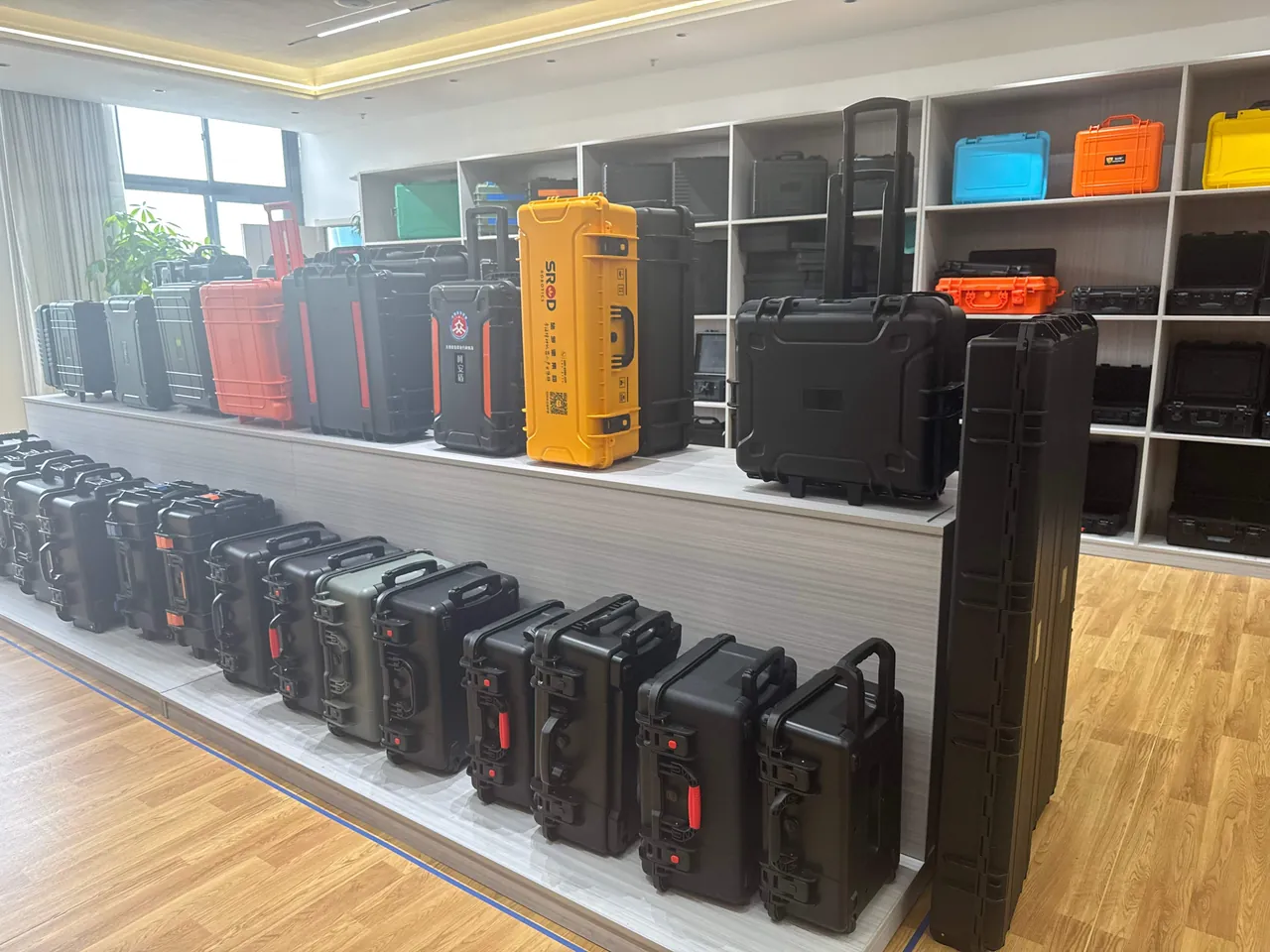
Art liners demand more than ordinary gear: beyond energy absorption, they must be acid-free, non-bleeding, and low outgassing to avoid long-term contact staining the image or sculpture. Among common materials, EVA and pearl cotton need confirmed eco and low-VOC grades; surfaces directly touching the work should be covered with archival acid-free film or non-woven.
| Material | Surface friendliness | Acid-free | Suitable use | Note |
|---|---|---|---|---|
| --- | --- | --- | --- | --- |
| Archival acid-free film | Extremely high | Yes | Direct image barrier | Pair with recess |
| Non-woven / archival cotton | High | Yes | Sculpture surface wrap | Anti-scratch |
| EVA foam | Medium | By grade | Support and recess | Low-VOC grade |
| PU slow-rebound | Medium | By grade | Precision point buffer | Moisture care |
Selection principle: the layer directly touching the work must be acid-free and soft; the support layer uses EVA for rigidity; precision points use slow-rebound to extend absorption time. All liner flammability should meet UL94 grade, especially in power-dense exhibition and storage. Detailed comparison is in the case foam material comparison.
Climate control: humidity, temperature, logging
Paintings and many sculptures are extremely humidity-sensitive. Paper, canvas, and wood frames expand-contract with relative humidity (RH); RH above 65% long-term invites mold, below 40% invites brittle cracking; paint layers and substrates expanding differently cause crazing. Therefore art cases should achieve passive humidity control: humidity indicator cards and adjustable desiccants inside maintain RH in the empirical safe band of 45% to 55%.
For temperature, avoid large day-night swings. The case does not actively control temperature but slows external conduction via sealing and insulation; for long cross-border transit, place a temperature logger inside and read the curve on arrival to confirm no over-limit heat or freeze. This matches the extreme temperature case monitoring idea.
Note that climate control is "slowing" not "constant." For extremely sensitive works, pair with professional constant-humidity transport rather than relying on the case alone. JUNZHJIA can integrate humidity-card and temperature-logger slots in art cases, marked "this side up / avoid light / moisture-proof" to meet gallery and museum transfer requirements. For sealing grade, see waterproof case IP. Practical tip: record the baseline RH of the storage environment before packing and compare it with the reading on arrival, because a stable number across the journey is often more reassuring than the absolute value, and a sudden shift signals a seal or gasket problem that should be investigated before the next leg of the loan.
Sealing, dustproofing, and pest control
Art transit also faces dust and pests. Dust on canvas is hard to clean; wood frames and paper works are high pest-risk. So case sealing must block water, dust, and pests. Per GB/T 4208 (equivalent to IEC 60529), art cases should reach IP65+ dust-water grade with continuous gasket at the lid; related design is in case seal materials and the IP67 protective case.
Another dustproof key is liner self-cleanliness: choose high-cleanliness foam and non-woven to avoid fibers falling on the image in transit. Pest control requires confirming no eggs on work or liner before packing; long-term storage cases may place compliant pest-repellent sheets (never in direct contact with the work). Sealing relies on latch-compressed gasket; hardware coordination is in toolbox hinge latch seal — this site uniformly links to the valid slug toolbox-hinge-latch-seal to avoid dead links.
Vibration isolation and transit test standards
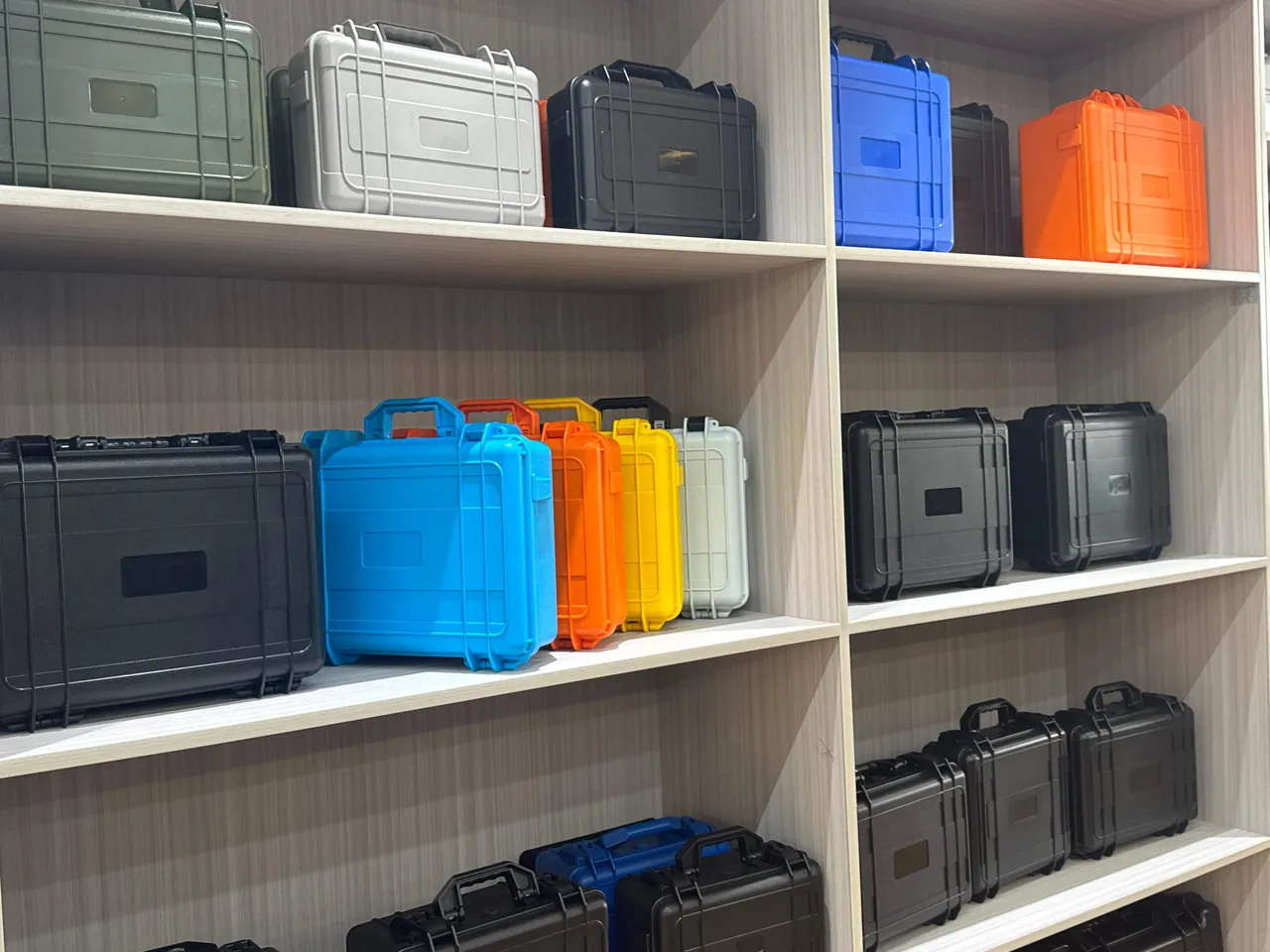
Long-transit low-frequency vibration is an invisible killer: it loosens frame screws, micro-fatigues paint layers, and micro-cracks sculpture bases. Validating anti-vibration uses ISTA series transit tests (simulating vibration and drop of real distribution cycles), MIL-STD-810H environmental tests (severe vibration, drop, climate), and GB/T 4857 and ASTM D4169 for domestic and North American scenarios.
| Standard / Method | Main coverage | Relevance to art cases |
|---|---|---|
| --- | --- | --- |
| ISTA 3E/3A | Single/parcel transit vibration and drop | Validates survival in parcel and truck transit |
| MIL-STD-810H | Random vibration, drop, climate | Severe environmental test basis (not military certification) |
| GB/T 4857 | Domestic transport packaging tests | Meets domestic logistics and inter-museum exchange |
| ASTM D4169 | North America distribution cycle | Cross-border art transit compliance reference |
Specifically: MIL-STD-810H here is only a method basis for product-line environmental testing, proving case reliability under vibration and drop — it does not mean any military certification. Compliance wording is in MIL-STD-810H case compliance. For inter-museum exchange, domestic GB/T 4857 and GB/T 4857 transport packaging case matter equally.
Custom foam and OEM/ODM workflow
Art sizes and shapes vary vastly; standard liners almost never fit, so customization dominates. JUNZHJIA provides a customization chain from physical or drawing measurement, CNC slotting, to full assembly, supporting OEM/ODM private labeling, precisely molding per single work's size, material, and fragile points, with acid-free liner and temperature-humidity logging cards.
Core steps: work list and risk assessment, physical/drawing measurement, liner zoning and corner-pad review, prototype confirmation, mass production. The more accurate the list (size, weight, material, fragile points), the better the fit. For cost and mold, see custom case mold cost analysis; for factory choice, see how to choose a case OEM factory.
Another JUNZHJIA capability is matching seals and hardware per model, ensuring uniform batch specs for museum asset and spare management. For galleries needing global touring, this consistency and ability to supply test documents lower cross-border transfer risk. Complex works can also get anti-static liners to avoid static dust attraction in dry environments.
Case structure and hardware
Art cases must balance "light" and "rigid": easy to carry yet protective under stacking and drop. Skeletons use light PP co-polymer injection with ribs, or aluminum frames; large-work cases need extra beams to stop panel denting. Handling can add wheels and trolley; design is in case wheels and trolley handle.
Hardware decides life and sealing. Hinges survive tens of thousands of opens without loosening; latches compress the gasket and can add TSA customs locks for cross-border inspection; gaskets resist aging. Latch options are in case lock customization options. For pressure equalization, aircraft cargo low pressure creates negative pressure making opening hard; a pressure equalization valve releases the differential smoothly, protecting the gasket and easing opening.
Cases should also consider labeling: mark "this side up / fragile / avoid light / moisture-proof" and the work number prominently. JUNZHJIA supports batch-coded marking for museum and logistics "one case one file" asset management; life management is in protective case service life.
Handling, storage, and exhibition handover
Art transfer values "less handling, less exposure." Before loading, stack heavy low and light high; place painting cases in middle, sculpture cases by weight; fill inventory list and fragile label; lay anti-slip mats and secure in vehicle to avoid sliding on hard brakes. Rain loading needs umbrella or enclosure to stop seam water.
In storage, paintings stand vertically, never flat-pressed; long-term storage cases periodically check humidity cards and desiccant. At exhibition handover, the case ideally acts as a "temporary turnover box" opened on site for direct access, reducing secondary handling. For acceptance sampling, see custom case acceptance AQL.
For touring teams, build "one case one file" recording transit count, temperature-humidity curves, and repair history for wear alerts. JUNZHJIA supports coded marking and spare supply, making large museum and gallery asset management efficient, and can extend use via liner and hardware replacement before total scrap.
Beyond the physical case, the surrounding workflow decides real safety. One often-overlooked step is condition reporting: before packing, photograph and note the work's pre-existing state — existing crazing, frame wear, stable versus active corrosion — on the same sheet as the inventory list, then repeat the check at each handover. This creates an auditable chain that protects both the lender and the carrier when a dispute arises. Pair the report with the temperature-humidity logger data so any environmental excursion is correlated with a visible condition change. The discipline is light but pays for itself; many losses that look like transit damage are actually pre-existing conditions clarified only by good records, and without documentation the responsible party cannot be identified.
Insurance and carrier requirements also shape the case specification. Some fine-art policies require a minimum IP grade, a specific drop-test standard, or dual-custody signatures; confirming these before production avoids costly rework after the fact. The GB/T 4857 transport packaging case and ASTM D4169 distribution cycle case articles map domestic and North American expectations, while seal shock case covers integrated sealing and shock design. Where a policy demands a particular standard, cite it explicitly in the procurement document rather than relying on a generic "protective" claim that no inspector can verify.
Handler training closes the loop. Even a perfect case fails if loaded upside down or strapped so it can slide across the vehicle. Brief everyone who touches the work on orientation marks, fragility labels, and the no-stack-above line; reinforce with the "one case one file" culture from protective case service life. For institutions running many shows, a short standard operating procedure — pack, log, seal, photograph, sign — turns individual care into repeatable process. JUNZHJIA can support this with batch-coded cases and consistent hardware so the procedure never varies by crate. In practice, cases plus procedure together, not either alone, deliver the zero-damage outcome that galleries and collectors expect from a professional art-logistics program.
Cleaning, maintenance, and service life
After use, air-dry the liner, clear dust from frame slots; wipe gasket and periodically check aging; add light lubricant to latches and hinges. Cleaning is in the protective case cleaning guide. If liner contacted a damp work, take it out to dry in shade to avoid mold and odor.
Replace soiled acid-free liner promptly to avoid contaminating later works. Cracks, broken ribs, or failed gasket mean stop use and repair. Service life judges by transit count and duty, not merely years; frequently flown cross-border cases wear far faster than occasionally used in-museum ones. Authenticity and condition are in identify genuine vs fake case and protective case service life.
Common transit damage cases
Case one: scroll dead crease. A shipment laid a scroll flat with a frame pressed above, producing an unrecoverable crease. Key point — scroll horizontally suspended, never fold, never heavy load above.
Case two: frame corner chip. Corners had no pad; a slight bump chipped paint. Key point — independent corner pad, point suspended, force spread to frame edge.
Case three: sculpture surface scratch. Sculpture mixed with hardware, surface scraped by metal. Key point — full wrap plus point suspension, no wall or neighbor contact.
Case four: canvas mold. High humidity no desiccant, canvas molded after long transit. Key point — humidity card and desiccant, RH 45%–55%, sealed dust-moisture proof. The basis is in seal shock case and the ISTA transport testing procedure.
How to choose case types by artwork type
Choose by artwork type. Framed flat painting: prioritized flat case with corner recess; scroll core: suspended-holder tube or rigid-base flat case; small sculpture: full-wrap custom cavity case; multi-work exhibition: use the removable divider system to zone.
With limited budget, prioritize the highest-value and most fragile works; others transition in divider cases. Cross-border touring must value sealing, pressure valve, and customs lock, with test documents attached. With custom foam, acid-free material, OEM/ODM, and per-model seal matching, JUNZHJIA serves galleries, museums, and collectors from single-work to touring full-scenario art protection, with temperature-humidity logging and global supply.
Pre-Order Procurement Checklist
Before ordering an art transport case, preparation determines whether the result protects the work or merely holds it. The first action is to compile a work-by-work record: medium (oil, ink, print, sculpture), framed or unframed dimensions, weight, and the precise fragile points such as frame corner, paint layer, or unstable base. The more exact this record, the tighter the liner fit, and tight fit is what separates a professional case from a padded box. Rounded or missing numbers are the main reason cases come back for rework.
The second step is to define the transit and storage profile. Ask how the work travels and where it waits: air freight, road truck, cross-border loan, or museum storage. Each path carries a different hazard — air stresses drop and pressure, road stresses long vibration, storage stresses humidity — and the foam grade, wall rigidity, and sealing level should follow that profile. Anchor the profile to a test method via the ISTA transport testing procedure.
The third step is material and compliance selection. Confirm liner flammability meets UL94, confirm the sealing target (IP65 or IP67) per waterproof case IP, and decide on acid-free and low-outgassing materials so the work never contacts acidic foam. For climate-sensitive works, plan humidity cards and a temperature logger, with monitoring logic explained in the extreme temperature case. A pressure equalization valve for air freight is detailed in the pressure equalization valve article.
The fourth step is validation. Request a prototype recess, fit the actual work, and perform a gentle in-house drop test before mass production. The custom case acceptance AQL gives a sampling plan for the batch. Finally, select a maker using the criteria in how to choose a case OEM factory to keep hardware and spares consistent across the collection.
Typical Collection Configurations
Configuration scales with the collection. A single framed painting typically needs one flat case with corner recesses and a "this side up" orientation, using the cushion liner case principle of image-surface isolation. An unmounted scroll needs a horizontal suspended carrier so no dead crease can form.
A multi-work exhibition uses the removable divider system to zone works with safe spacing, while small sculptures get full-wrap suspended cavities built from 3D measurement, as compared in the case foam material comparison. Galleries with rotating shows benefit from standardized case sizes so crates interchange between exhibitions.
A museum or auction house handling cross-border loans should add TSA customs locks (see case lock customization options), a pressure equalization valve, and attached test documents, plus continuous temperature-humidity logging for custody handover. JUNZHJIA supports OEM/ODM private labeling and per-model seal matching so an institution's case fleet shares identical hardware and spare parts, easing "one case one file" asset management described in protective case service life. The custom case mold cost analysis helps justify tooling against repeated rental or bespoke builds. With the right configuration, the case becomes part of the conservation plan rather than an afterthought.
Frequently Asked Questions FAQ
Q: Must art transport cases use acid-free liner? A: Strongly recommended, especially for high-value and antique works. Ordinary foam and adhesives may contain acidic substances or continuously release volatile organic compounds (VOC); long-term contact stains the image, frame, and paper, causing irreversible yellowing and embrittlement. Acid-free liner and archival film minimize this risk and are standard in museums and auction houses. Specifically: the layer directly touching the work uses archival acid-free film or non-woven; the support layer uses low-VOC EVA; corner pads are acid-free and non-bleeding. Note acid-free is only a material property and cannot replace buffering and fixation — it must combine with recess and corner pads for complete protection. JUNZHJIA custom art cases offer acid-free liner options with temperature-humidity logging cards to meet inter-museum and collection-grade transfer. When buying, confirm the maker's acid-free test documents.
Q: Why do frame corners break easiest, and how to protect them? A: Frame corners are stress-concentration points; any corner-landing or side collision converges impact on the sharp corner, lightly flaking paint, heavily breaking the corner — fatal for antique frames. The protection core is "independent corner pad plus point suspension": cut high-density EVA or PU matching the corner so the point touches no hard object and force spreads along the frame edge; meanwhile embed the whole frame in a fitted recess bearing only at the edge while the image hangs free. Keep 2 to 3 centimeters of buffer between frame edge and wall for side shock. Corner material must be acid-free and non-bleeding to avoid contact stain. Irregular thick frames can use a removable divider system to adjust space. JUNZHJIA can mold precisely to frame cross-section, making pads and recesses tight, markedly lowering corner damage and meeting gallery acceptance.
Q: What if humidity goes out of control in transit? A: Humidity loss is an invisible killer for paintings and sculptures. RH above 65% long-term invites mold, below 40% invites brittle cracking, and paint-substrate expansion mismatch causes crazing. The professional method places humidity indicator cards and adjustable desiccants inside, maintaining RH in the empirical safe band of 45% to 55%; for long cross-border transit add a temperature logger and read the curve on arrival to confirm no over-limit. Case sealing grade should be IP65+ to slow external moisture; related design is in case seal materials and waterproof case IP. Clarify that case climate control is "slowing" not "constant"; extremely sensitive works need professional constant-humidity transport. JUNZHJIA can integrate humidity-card and logger slots with moisture-light markings for monitoring and traceability in transfer.
Q: How should sculpture works be packed? A: Small sculptures are rigid but surface-scratch-prone 3D objects; the idea is "full wrap plus point suspension." First wrap the sculpture in soft non-woven or archival cotton to prevent scratches, then use slow-rebound foam to thicken buffering at vulnerable points (figure fingers, wings, fragile base), finally fix it in a dedicated cavity so no part touches the wall or neighbors. For materials, the surface layer uses non-woven or archival cotton, the support layer EVA, precision points slow-rebound to extend absorption. Irregular shapes make custom foam almost mandatory; JUNZHJIA can build fitted cavities via 3D measurement with acid-free and anti-static materials. Before transit confirm the base is firm and protrusions thickened, avoiding top pressure on vulnerable points. Detailed comparison is in the case foam material comparison article.
Q: Does MIL-STD-810H apply to art cases, and is it military certification? A: MIL-STD-810H can serve as an environmental test method basis for art cases, but is absolutely not military certification. It is a US Department of Defense environmental engineering and laboratory test method standard providing severe procedures for drop, random vibration, climate, and altitude; many industrial case makers use it to prove reliability under harsh transit. But it is only a test method, not a military certification or adoption qualification. Documents and promotion should write "environmental testing per MIL-STD-810H method" to avoid misleading "military grade" terms. More common compliance for cross-border art transit includes ISTA transport tests, domestic GB/T 4857, and North American ASTM D4169, covering vibration-drop, domestic inter-museum exchange, and North American distribution. Related compliance is in the MIL-STD-810H case compliance article; choose standards by work value and transit path.
Q: How should paintings be placed in the case, vertical or flat? A: Framed flat works are usually placed vertically embedded in a fitted recess, image inward and backboard outward, buffered around to avoid the image touching hard objects; unmounted scrolls should be horizontally suspended or flat on a rigid base, never folded, never over-tightly rolled, never heavy load above, or an unrecoverable dead crease forms. Either way the key is "image not touching liner hard face, buffer around, no displacement." Large-work cases need ribs to stop panel denting under stacking. Before transit place a temperature-humidity logging card and mark "this side up / fragile / moisture-proof." If multiple works share a case, use a removable divider system with safe spacing. JUNZHJIA can mold precisely to work size so the painting stays stable without displacement, reducing paint-layer fatigue from transit vibration.
Q: Does an art case need IP67? A: Most painting and sculpture transit reaches IP65 (water-jet proof) enough for open loading and vehicle dew; IP67 (short immersion) suits users often shipping by sea, wading, or mud transfer, adding immersion redundancy. But clarify: IP only covers dust and water, not constant humidity control; canvas mold mainly comes from long high humidity, not brief water, so beyond sealing also add desiccants and humidity cards and choose low-hygroscopic liner. Sealing is achieved by lid gasket and latch compression; related design is in case seal materials and the IP67 protective case. When buying, confirm the maker can supply grade test documents. JUNZHJIA custom art cases can choose IP65 or IP67 per need, with acid-free liner and temperature-humidity logging, meeting gallery and museum needs from domestic exchange to cross-border touring.
Q: Can broken art-case hardware be replaced individually? A: Yes, and it should be individually replaceable — a key measure of maintainability. Hinges, latches, and gaskets are wear-prone; a professional case should have uniform specs for single-piece replacement. When buying, recognize uniform hinge-latch-seal design ensuring cross-batch interoperability; latch personalization like lock rings or TSA locks is in case lock customization options. Aging cracked gaskets must be replaced or IP fails and dust-pests enter. A blocked pressure equalization valve also affects opening; maintain per the pressure equalization valve article. JUNZHJIA supplies spare parts and batch-coded marking for museum and logistics asset and spare management, extending use via hardware and liner replacement before total scrap, markedly lengthening service life and lowering lifecycle cost.
Q: How to judge an art transport case should retire? A: Retirement should weigh transit count, duty, and appearance, not just years. Frequently flown cross-border cases wear far faster than occasionally used in-museum ones. Retire or repair when: case cracks or ribs break, gasket widely ages and cracks causing IP failure, hinges or latches loosen beyond compression, acid-free liner contaminated or collapsed losing protection. Authenticity and condition are in identify genuine vs fake case; life management in protective case service life. Daily "one case one file" recording transit count, temperature-humidity curves, and repairs aids early warning. JUNZHJIA supports spare replacement and coded management, extending use via hardware, gasket, and liner replacement before total scrap — controlling cost while securing works, a pragmatic choice for museum and gallery asset management.
Conclusion and Related Reading
Art is non-reproducible and irreversibly damaged; a case's goal is not "fit" but "zero damage through every transfer." This article started from canvas support, frame-corner protection, and sculpture cushioning, referencing ISTA, MIL-STD-810H, GB/T 4208, and UL94 to give actionable selection, foam, climate-control, and shipping plans. With custom foam, acid-free material, OEM/ODM, and per-model seal matching, JUNZHJIA serves galleries, museums, and collectors from single-work to touring full-scenario art protection, with temperature-humidity logging and global supply.
Related Reading