

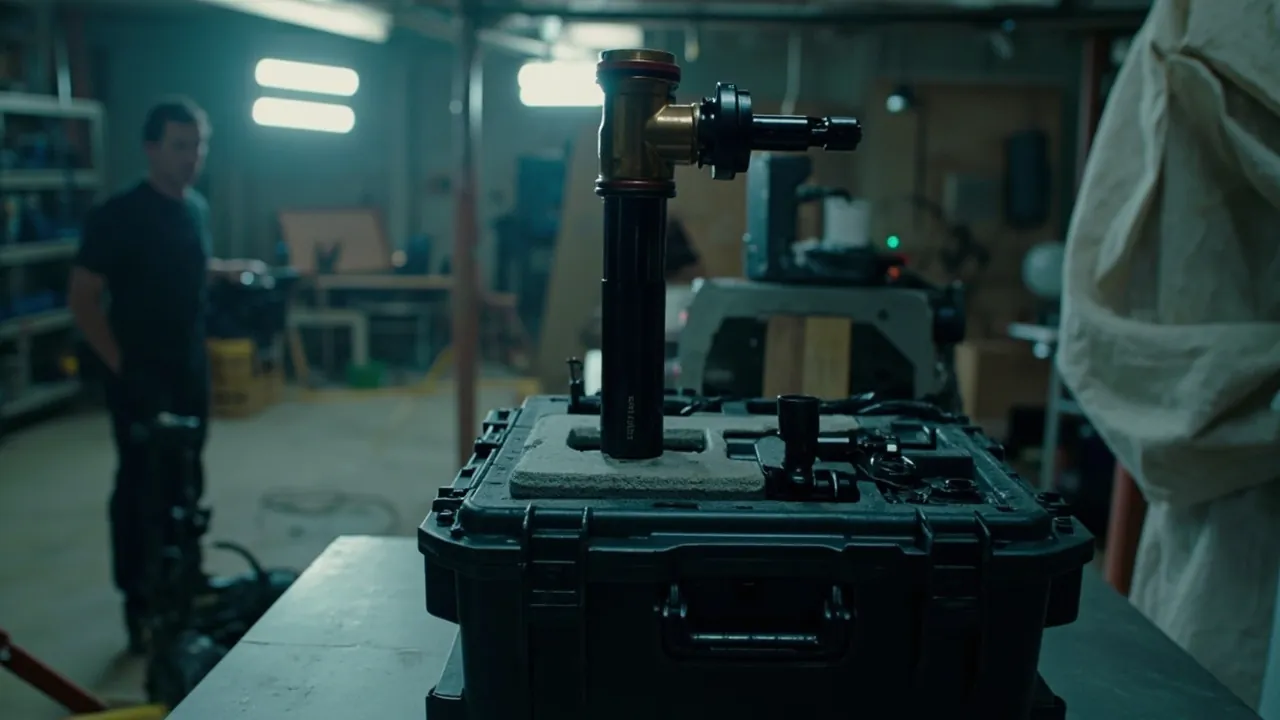
Museum relic transport is the highest-risk link in the conservation chain. Pottery bodies are brittle, bronze corrosion layers fear vibration, painting-like relics fear humidity, and loan artifacts demand full traceability. One unprofessional shipment can permanently destroy an irreplaceable historical remnant whose loss cannot be measured in money. For museums, archaeological institutes, conservation labs, and logistics units handling loans and examinations, a relic transport case conforming to conservation standards is the professional baseline that minimizes irreversible risk. This article starts from three scenarios — pottery support, bronze cushioning, and loan-artifact traceability — and, referencing real standards such as ISTA, MIL-STD-810H, GB/T 4208, and UL94, delivers actionable plans for vibration isolation, climate control, and cushioning protection.
In the cultural-heritage sector, transit loss is extremely costly and irreversible. An excavated pottery may have a powdery body so vibration-sensitive that slight shaking sheds fragments or cracks it. A bronze ritual vessel's surface corrosion and inlaid patterns fear impact and humidity swing. An examination artifact needs not only physical protection but full temperature-humidity logging and custody handover. Therefore a relic case's design goal is not "fit it in" but "pass every transfer with zero damage and full traceability."
Table of Contents
- Why relic transport needs dedicated standards
- Pottery and fragile-body support
- Bronze cushioning and corrosion-layer protection
- Loan and examination artifact traceability
- Liner materials and acid-free low-outgassing requirements
- Climate control: humidity, temperature, full logging
- Sealing, dustproofing, and light protection
- Vibration isolation and transit test standards
- Custom foam and OEM/ODM workflow
- Case structure and hardware
- Handling, loading, and safe handover
- Cleaning, maintenance, and service life
- Common transit damage cases
- How to choose case types by relic type
Why relic transport needs dedicated standards
The fundamental difference between relics and ordinary art is the superposition of "historical uniqueness" and "material fragility." Many relics have survived millennia with bodies, corrosion layers, and painted layers at critically stable states; any vibration, shock, or climate change exceeding the design threshold can cause irreversible damage. Thus cultural-transport has norms above ordinary logistics: from risk assessment and dedicated packaging to custody handover, every link must leave a record.
Mechanically, relic damage also comes from static pressure, shock, vibration, and environment, but with thresholds far below ordinary cargo. For example, pottery may develop micro-cracks under low-frequency vibration that slowly spread; bronze corrosion layers flake in collisions; painted layers lift under humidity swing. Ordinary cartons or thin-wall cases cannot cope and require professional cases.
The professional approach is a "relic risk assessment" before packing: record category (ceramic/bronze/painting/organic), size and weight, fragile points (powdery body/corrosion/paint), and whether full logging is needed. Start with the cushion liner case for liner basics, then the instrument case selection guide for case planning.
Pottery and fragile-body support
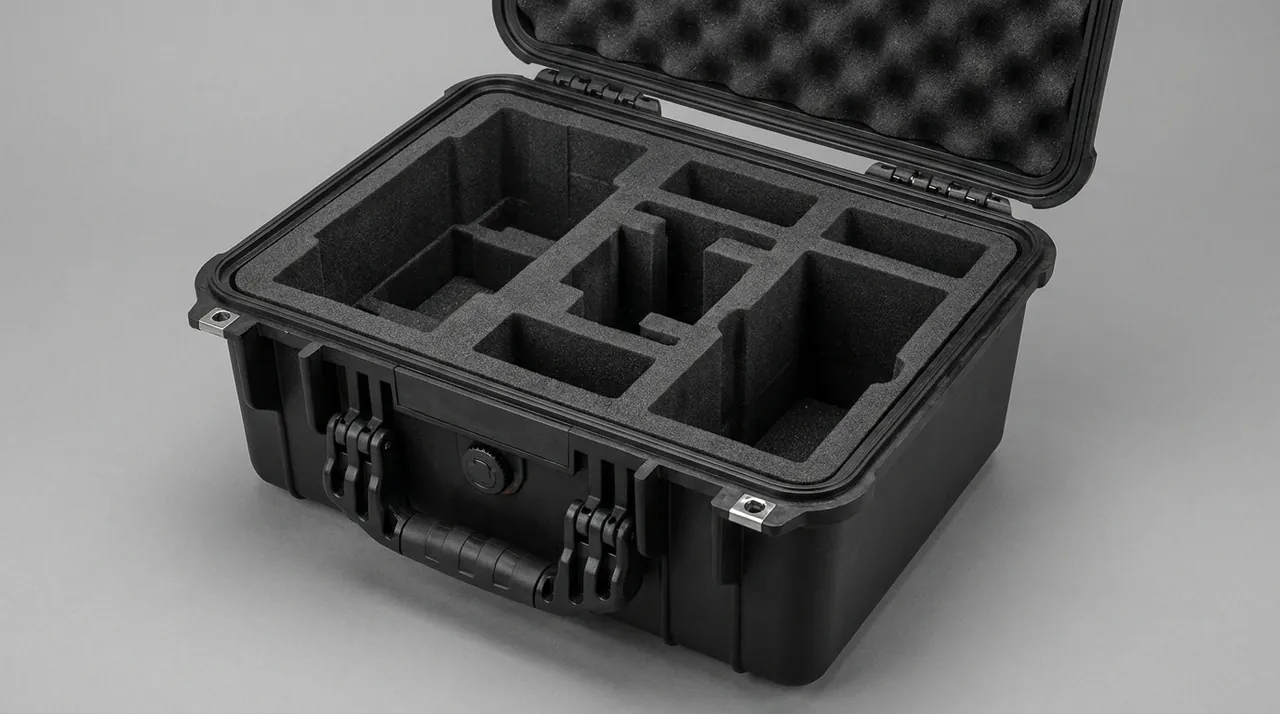
Ceramic and porcelain inorganic relics most fear vibration and shock. Excavated pottery, often powdery from long burial, is extremely vibration-sensitive; transit should use "full-wrap suspension": wrap the object in acid-free soft material, then place it in a slow-rebound foam suspended cavity so no part touches the wall and vibration energy is absorbed by foam compression.
For intact pottery jars, use "point support" — let only the base or thickest part bear load, with the belly and rim fully suspended to avoid shear on thin walls. Related buffering is in the cushion liner case. For repaired or cracked objects, thicken the liner at the crack position and avoid pressure in that direction.
Slotting must be precise to millimeter from physical object or 3D scan data. For the process, extend to the custom EVA foam insert process. JUNZHJIA custom relic cases can mold from 3D object data and supply acid-free liner meeting conservation-unit acceptance.
Bronze cushioning and corrosion-layer protection
Bronze value often lies in surface corrosion stratigraphy and decorative information, not just the metal body. Transit must prevent both overall displacement collision and loss of corrosion layer and inlaid patterns. The idea is "soft wrap plus point suspension": wrap the object in acid-free cotton or archival non-woven, then fix it in a fitted cavity so it touches no hard object.
For surfaces with inscriptions or fine patterns, the wrap must be soft and grit-free to avoid surface abrasion from micro-vibration. For materials, the surface layer uses archival cotton, the support layer EVA, precision points slow-rebound. Energy absorption and surface friendliness are in the case foam material comparison.
Bronze is more shock-resistant than pottery but heavy objects have greater drop inertia, so the case must have ribs and fix the object to prevent secondary impact from sliding. Custom liner is almost mandatory; JUNZHJIA can build fitted cavities via 3D measurement with acid-free and anti-static materials. For process and cost, see the custom foam inserts guide and custom case mold cost analysis.
Loan and examination artifact traceability
Loan and examination artifacts, beyond physical protection, must be "fully traceable." This requires a recorder inside or attached to the case to continuously log temperature-humidity curves and export data at handover; the case exterior marks the artifact number, fragility, and responsible person. On arrival, verifying whether the curve exceeded limits is key evidence for responsibility division and conservation compliance.
In practice, place a temperature logger and humidity indicator card inside, and mark "this side up / fragile / avoid light / moisture-proof" with the artifact number prominently. For inter-museum loans, build "one case one file": record artifact list, transit count, temperature-humidity curves, and each handover signature for wear alerts and accountability. This management idea shares the asset ledger of protective case service life.
JUNZHJIA can integrate temperature-humidity logging-card slots and coded marking in relic cases, and match seals and hardware per model for uniform batch specs, easing museum asset and spare management. Complex objects can get anti-static liner to avoid static dust attraction in dry environments.
Liner materials and acid-free low-outgassing requirements
Relic liners are stricter than ordinary art: beyond energy absorption, they must be acid-free, low-outgassing (low VOC), non-shedding, and non-bleeding to avoid long-term contact staining bodies, corrosion, or paint. Among common materials, surfaces directly touching relics should be archival acid-free film or non-woven; EVA and pearl cotton need confirmed low-VOC and eco grades.
| Material | Surface friendliness | Acid-free | Suitable use | Note |
|---|---|---|---|---|
| --- | --- | --- | --- | --- |
| Archival acid-free film | Extremely high | Yes | Direct relic barrier | Pair with cavity |
| Archival non-woven cotton | High | Yes | Object surface wrap | Anti-abrasion |
| EVA foam | Medium | By grade | Support and cavity | Low-VOC grade |
| PU slow-rebound | Medium | By grade | Precision point buffer | Moisture care |
Selection principle: the layer directly touching the relic must be acid-free and soft; the support layer uses EVA for rigidity; precision points use slow-rebound to extend absorption. All liner flammability should meet UL94 grade, especially in power-dense exhibition and storage. Detailed comparison is in the case foam material comparison.
Climate control: humidity, temperature, full logging
Relics vary in material and are extremely humidity-sensitive. Ceramics tolerate humidity but painted and organic attachments fear damp; bronze above RH 65% long-term accelerates harmful rust; paper, wood, and textile relics crack when too dry. Therefore relic cases should achieve passive humidity control: humidity indicator cards and adjustable desiccants maintain RH in a category-adapted empirical band (commonly 45%–55%).
For temperature, avoid large day-night swings. The case does not actively control temperature but slows external conduction via sealing and insulation; for long transit place a temperature logger inside and read the curve on arrival to confirm no over-limit heat or freeze. This matches the extreme temperature case monitoring idea and is core evidence for examination-artifact compliance handover.
Note climate control is "slowing" not "constant." For extremely sensitive relics, pair with professional constant-humidity transport rather than the case alone. JUNZHJIA can integrate humidity-card and logger slots with moisture-light markings to meet conservation-unit transfer requirements. For sealing grade, see waterproof case IP.
Sealing, dustproofing, and light protection
Relic transit also faces dust and light threats. Dust on pottery may enter micropores hard to clean; painted and organic relics are sensitive to UV and strong light. So case sealing must block water, dust, and light. Per GB/T 4208 (equivalent to IEC 60529), relic cases should reach IP65+ dust-water grade with continuous lid gasket; related design is in case seal materials and the IP67 protective case.
Another dustproof key is liner self-cleanliness: choose high-cleanliness foam and non-woven to avoid fibers falling on the object in transit. Light protection requires reducing strong-light exposure during packing and loading; the case may have an outer light-blocking layer or emphasize "avoid light" in markings. Sealing relies on latch-compressed gasket; hardware coordination is in toolbox hinge latch seal — this site uniformly links to the valid slug toolbox-hinge-latch-seal to avoid dead links.
Vibration isolation and transit test standards
Long low-frequency vibration is the relic's invisible killer: it micro-cracks powdery pottery that slowly spreads, loosens bronze corrosion, and fatigues painted layers. Validating anti-vibration uses ISTA series transit tests (simulating vibration and drop of real distribution cycles), MIL-STD-810H environmental tests (severe vibration, drop, climate), and GB/T 4857 and ASTM D4169 for domestic and North American scenarios.
| Standard / Method | Main coverage | Relevance to relic cases |
|---|---|---|
| --- | --- | --- |
| ISTA 3E/3A | Single/parcel transit vibration and drop | Validates survival in parcel and truck transit |
| MIL-STD-810H | Random vibration, drop, climate | Severe environmental test basis (not military certification) |
| GB/T 4857 | Domestic transport packaging tests | Meets domestic inter-museum and archaeological transfer |
| ASTM D4169 | North America distribution cycle | Cross-border loan compliance reference |
Specifically: MIL-STD-810H here is only a method basis for product-line environmental testing, proving case reliability under vibration and drop — it does not mean any military certification. Compliance wording is in MIL-STD-810H case compliance. For inter-museum exchange, domestic GB/T 4857 and GB/T 4857 transport packaging case matter equally.
Custom foam and OEM/ODM workflow
Relic shapes and fragile points vary vastly; standard liners cannot fit, so customization dominates. JUNZHJIA provides a customization chain from physical or 3D-scan measurement, CNC slotting, to full assembly, supporting OEM/ODM private labeling, precisely molding per single relic's size, material, and fragile points, with acid-free liner and temperature-humidity logging cards.
Core steps: relic list and risk assessment, physical/3D measurement, liner zoning and buffer review, prototype confirmation, mass production. The more accurate the list (category, size, weight, fragile points, whether logging needed), the better the fit. For cost and mold, see custom case mold cost analysis; for factory choice, see how to choose a case OEM factory.
Another JUNZHJIA capability is matching seals and hardware per model, ensuring uniform batch specs for museum asset and spare management. For logistics units handling loans and examinations, this consistency and ability to supply test documents lower cross-institution transfer risk. Complex objects can also get anti-static liners to avoid static dust attraction in dry environments.
Case structure and hardware
Relic cases must balance "light" and "rigid": easy to carry yet protective under stacking and drop. Skeletons use light PP co-polymer injection with ribs, or aluminum frames; heavy-object cases need extra beams to stop panel denting. Handling can add wheels and trolley; design is in case wheels and trolley handle.
Hardware decides life and sealing. Hinges survive tens of thousands of opens without loosening; latches compress the gasket and can add TSA customs locks for cross-border inspection; gaskets resist aging. Latch options are in case lock customization options. For pressure equalization, aircraft cargo low pressure creates negative pressure making opening hard; a pressure equalization valve releases the differential smoothly, protecting the gasket and easing opening.
Cases should also consider labeling and ledger: mark "this side up / fragile / avoid light / moisture-proof" and the relic number prominently. JUNZHJIA supports batch-coded marking for museum "one case one file" asset management; life management is in protective case service life.
Handling, loading, and safe handover
Relic transfer values "less handling, less exposure, traceable." Before loading, stack heavy low and light high; place pottery and bronze cases centered and fixed; fill inventory list and fragile label; lay anti-slip mats and secure in vehicle to avoid sliding on hard brakes. Rain loading needs enclosure or umbrella to stop seam water.
Loading should be done by conservation-trained personnel: handle gently, never throw. At handover both sides verify relic number, case appearance, and temperature-humidity log, signing confirmation. At exhibition handover, the case ideally acts as a "temporary turnover box" opened on site for direct access, reducing secondary handling. For acceptance sampling, see custom case acceptance AQL.
For inter-museum loans and examinations, build "one case one file" recording transit count, temperature-humidity curves, and handover history for wear alerts and accountability. JUNZHJIA supports coded marking and spare supply, making museum asset management efficient, and can extend use via liner and hardware replacement before total scrap.
Beyond the physical case, the surrounding workflow decides real safety. One often-overlooked step is condition reporting: before packing, photograph and note the object's pre-existing state — powdery areas, active corrosion, unstable paint — on the same sheet as the inventory list, then repeat the check at each handover. This creates an auditable chain that protects both the lending institution and the carrier when a dispute arises. Pair the report with the temperature-humidity logger data so any environmental excursion is correlated with a visible condition change. The discipline is light but pays for itself; many losses that look like transit damage are actually pre-existing conditions clarified only by good records, and without documentation the responsible party cannot be identified after the fact.
Insurance and loan agreements also shape the case specification. Some loan contracts require a minimum IP grade, a specific drop-test standard, or dual-custody signatures; confirming these before production avoids costly rework. The GB/T 4857 transport packaging case and ASTM D4169 distribution cycle case articles map domestic and North American expectations, while seal shock case covers integrated sealing and shock design. Where a contract demands a particular standard, cite it explicitly in the packing document rather than relying on a generic "protective" claim that no inspector can verify against the object's condition.
Handler training closes the loop. Even a perfect case fails if loaded upside down or strapped so it can slide across the vehicle. Brief everyone who touches the object on orientation marks, fragility labels, and the no-stack-above line; reinforce with the "one case one file" culture from protective case service life. For institutions running many loans, a short standard operating procedure — pack, log, seal, photograph, sign — turns individual care into repeatable process. JUNZHJIA can support this with batch-coded cases and consistent hardware so the procedure never varies by crate. In practice, cases plus procedure together, not either alone, deliver the zero-damage outcome that conservation departments and archaeological institutes require from a professional relic-logistics program.
Cleaning, maintenance, and service life
After use, air-dry the liner, clear dust from object slots; wipe gasket and periodically check aging; add light lubricant to latches and hinges. Cleaning is in the protective case cleaning guide. If liner contacted a damp object, take it out to dry in shade to avoid mold and odor.
Replace soiled acid-free liner promptly to avoid contaminating later relics. Cracks, broken ribs, or failed gasket mean stop use and repair. Service life judges by transit count and duty, not merely years; frequently flown cross-border cases wear far faster than occasionally used in storage. Authenticity and condition are in identify genuine vs fake case and protective case service life.
Common transit damage cases
Case one: powdery pottery shattered. A shipment pressed pottery directly under heavy load with no suspended liner; vibration shed fragments and cracked it. Key point — full-wrap suspension, object not touching wall, slow-rebound absorption.
Case two: bronze corrosion flaked. Bronze mixed with hardware, surface rust layer and patterns scraped off by metal. Key point — soft wrap plus point suspension, object touching no hard object or neighbor.
Case three: painted layer lifted. In-case humidity swung, paint expanded differently and lifted. Key point — humidity card and desiccant, maintain adapted RH, sealed to slow conduction, attach temperature log.
Case four: missing record, unclear responsibility. Examination relic had no temperature-humidity log; post-arrival dispute could not be assigned. Key point — place logger and humidity card inside, build one-case-one-file signed handover. The basis is in seal shock case and the ISTA transport testing procedure.
How to choose case types by relic type
Choose by relic type. Ceramic/pottery: prioritize full-wrap suspended cavity case; bronze heavy object: ribbed case plus fitted cavity plus soft wrap; painting/organic: acid-free flat case with humidity control; multi-object loan: use the removable divider system to zone.
With limited budget, prioritize the most fragile and highest-grade relics; others transition in divider cases. Inter-museum loans must value sealing, pressure valve, customs lock, and full logging, with test documents attached. With custom foam, acid-free material, OEM/ODM, and per-model seal matching, JUNZHJIA serves museums, archaeological institutes, and examination logistics from single-object to loan full-scenario relic protection, with temperature-humidity logging and global supply.
Pre-Order Procurement Checklist
Before ordering a relic transport case, preparation determines whether the result conserves the object or merely moves it. The first action is a relic-by-relic record: category (ceramic, bronze, painting, organic), dimensions and weight, the precise fragile points such as powdery body, corrosion layer, or paint, and whether full temperature-humidity logging is required for custody. The more exact this record, the tighter the liner fit, and tight fit is what separates a conservation-grade case from a padded box. Rounded or missing numbers are the main reason cases return for rework.
The second step is to define the transit and storage profile. Ask how the relic travels and where it waits: air freight, road truck, inter-museum loan, or archaeological transfer. Each path carries a different hazard — air stresses drop and pressure, road stresses long vibration, storage stresses humidity — and the foam grade, wall rigidity, and sealing level should follow that profile. Anchor the profile to a test method via the ISTA transport testing procedure.
The third step is material and compliance selection. Confirm liner flammability meets UL94, confirm the sealing target (IP65 or IP67) per waterproof case IP, and mandate acid-free and low-outgassing materials so the relic never contacts acidic foam or VOC sources. For climate-sensitive objects, plan humidity cards and a temperature logger, with monitoring logic in the extreme temperature case. A pressure equalization valve for air freight is detailed in the pressure equalization valve article.
The fourth step is validation. Request a prototype cavity, fit the actual object, and perform a gentle in-house drop test before mass production. The custom case acceptance AQL gives a sampling plan for the batch. Finally, select a maker using the criteria in how to choose a case OEM factory to keep hardware and spares consistent across the collection.
Typical Relic Configurations
Configuration scales with the institution. A single pottery vessel typically needs one suspended-cavity case with point support, using the cushion liner case principle of object-wall isolation. A bronze ritual vessel needs a ribbed case with a fitted cavity and soft wrap so corrosion stratigraphy is never touched by hard surfaces.
A multi-object loan uses the removable divider system to zone objects with safe spacing, while fragile items get full-wrap suspended cavities built from 3D scan data, as compared in the case foam material comparison. Museums with rotating loans benefit from standardized case sizes so crates interchange between exhibitions.
An archaeological institute or conservation lab handling cross-border loans should add TSA customs locks (see case lock customization options), a pressure equalization valve, attached test documents, and continuous temperature-humidity logging for custody handover. JUNZHJIA supports OEM/ODM private labeling and per-model seal matching so an institution's case fleet shares identical hardware and spare parts, easing "one case one file" asset management described in protective case service life. The custom case mold cost analysis helps justify tooling against repeated bespoke builds. With the right configuration, the case becomes part of the conservation chain rather than a weak link.
Frequently Asked Questions FAQ
Q: Must relic transport cases be acid-free and low-outgassing? A: For high-grade relics, yes. Ordinary foam and adhesives may contain acidic substances or continuously release volatile organic compounds (VOC); long-term contact stains bodies, corrosion layers, paint, and organic attachments, causing irreversible degradation. Acid-free, low-outgassing liner is standard in conservation units: the layer directly touching the relic uses archival acid-free film or non-woven; the support layer uses low-VOC EVA; the buffer layer slow-rebound. Note acid-free is only a material property and cannot replace buffering and fixation — it must combine with suspended cavity and point support for complete protection. JUNZHJIA custom relic cases offer acid-free liner options with temperature-humidity logging cards to meet inter-museum and examination transfer. When buying, confirm the maker's acid-free and low-VOC test documents.
Q: Why does pottery need suspended liner, and how is it done? A: Excavated pottery is often powdery and extremely vibration-sensitive; ordinary support transmits vibration directly to thin walls, causing micro-cracks that spread or shatter. Suspended liner uses "full wrap plus slow-rebound cavity" to fully isolate the object from the wall: wrap in acid-free soft material, then place in a slow-rebound foam suspended cavity so no part touches the wall and vibration energy is absorbed by foam compression. For intact jars use "point support" — only the base or thickest part bears load, belly and rim suspended. For repaired or cracked objects, thicken the liner at the crack and avoid pressure in that direction. Slotting must be precise to millimeter from physical or 3D-scan data. JUNZHJIA can mold from 3D object data, markedly lowering powdery-body damage and meeting conservation acceptance.
Q: How to make loan artifacts fully traceable? A: Loan and examination artifacts need not only physical protection but "full traceability," centered on continuous logging and custody handover. Practice: place a temperature logger and humidity indicator card inside, with externally exportable continuous temperature-humidity curves; mark the artifact number, fragility, and responsible person prominently; for inter-museum loans build "one case one file" recording artifact list, transit count, temperature-humidity curves, and each handover signature. On arrival, verifying whether the curve exceeded limits is key evidence for responsibility and conservation compliance. JUNZHJIA can integrate logging-card slots and coded marking in relic cases, matching seals and hardware per model for uniform batch specs, easing ledger and spare management. This idea shares the asset ledger of protective case service life, a pragmatic plan to lower cross-institution transfer risk.
Q: How to protect bronze corrosion layers? A: Bronze value often lies in surface corrosion stratigraphy and decorative information; transit must prevent both overall displacement collision and loss of corrosion layer and inlaid patterns. The idea is "soft wrap plus point suspension": wrap the object in acid-free cotton or archival non-woven, then fix it in a fitted cavity so it touches no hard object; surfaces with inscriptions or fine patterns need a soft grit-free wrap to avoid abrasion from micro-vibration. Bronze is more shock-resistant than pottery but heavy objects have greater drop inertia, so the case must add ribs and fix the object to prevent sliding secondary impact. Materials: surface layer archival cotton, support layer EVA, precision points slow-rebound. Custom liner is almost mandatory; JUNZHJIA can build fitted cavities via 3D measurement with acid-free and anti-static materials, detailed in the case foam material comparison and custom foam inserts guide.
Q: Can MIL-STD-810H be used for relic cases, and is it military certification? A: MIL-STD-810H can serve as an environmental test method basis for relic cases, but is absolutely not military certification. It is a US Department of Defense environmental engineering and laboratory test method standard providing severe procedures for drop, random vibration, climate, and altitude; many industrial case makers use it to prove reliability under harsh transit. But it is only a test method, not a military certification or adoption qualification. Documents and promotion should write "environmental testing per MIL-STD-810H method" to avoid misleading "military grade" terms. More common compliance for cross-border loans includes ISTA transport tests, domestic GB/T 4857, and North American ASTM D4169, covering vibration-drop, domestic inter-museum transfer, and North American distribution. Related compliance is in the MIL-STD-810H case compliance article; choose standards by relic grade and transit path.
Q: Does a relic case need IP67? A: Most relic transit reaches IP65 (water-jet proof) enough for open loading and vehicle dew; IP67 (short immersion) suits users often shipping by sea, wading, or mud transfer, adding immersion redundancy. But clarify: IP only covers dust and water, not constant humidity control; pottery paint and organic relics mold mainly from long high humidity, not brief water, so beyond sealing also add desiccants and humidity cards and choose low-hygroscopic liner. Sealing is achieved by lid gasket and latch compression; related design is in case seal materials and the IP67 protective case. When buying, confirm the maker can supply grade test documents. JUNZHJIA custom relic cases can choose IP65 or IP67 per need, with acid-free liner and temperature-humidity logging, meeting conservation units from domestic exchange to cross-border loan.
Q: How to control humidity inside a relic case? A: Relics vary in material, so humidity control adapts by category. Ceramics tolerate humidity but painted and organic attachments fear damp; bronze above RH 65% long-term accelerates harmful rust; paper wood textile crack when too dry. The professional method places humidity indicator cards and adjustable desiccants inside, maintaining RH in a category-adapted empirical band (commonly 45%–55%); for long transit add a temperature logger and read the curve on arrival to confirm no over-limit. Case sealing grade should be IP65+ to slow external moisture; related design is in case seal materials and waterproof case IP. Note case climate control is "slowing" not "constant"; extremely sensitive relics need professional constant-humidity transport. JUNZHJIA can integrate humidity-card and logger slots with moisture-light markings for monitoring and traceability in transfer.
Q: Can broken relic-case hardware be replaced individually? A: Yes, and it should be individually replaceable — a key measure of maintainability. Hinges, latches, and gaskets are wear-prone; a professional case should have uniform specs for single-piece replacement. When buying, recognize uniform hinge-latch-seal design ensuring cross-batch interoperability; latch personalization like lock rings or TSA locks is in case lock customization options. Aging cracked gaskets must be replaced or IP fails and dust-moisture enter, endangering relics. A blocked pressure equalization valve also affects opening; maintain per the pressure equalization valve article. JUNZHJIA supplies spare parts and batch-coded marking for conservation asset and spare management, extending use via hardware and liner replacement before total scrap, markedly lengthening service life and lowering lifecycle cost — a pragmatic choice for cultural-heritage asset management.
Q: How to judge a relic transport case should retire? A: Retirement should weigh transit count, duty, and appearance, not just years. Frequently flown cross-border cases wear far faster than occasionally used in storage. Retire or repair when: case cracks or ribs break, gasket widely ages and cracks causing IP failure, hinges or latches loosen beyond compression, acid-free liner contaminated or collapsed losing protection. Authenticity and condition are in identify genuine vs fake case; life management in protective case service life. Daily "one case one file" recording transit count, temperature-humidity curves, and repairs aids early warning. JUNZHJIA supports spare replacement and coded management, extending use via hardware, gasket, and liner replacement before total scrap — controlling cost while securing relics, a preferred plan for museums and archaeological institutes.
Conclusion and Related Reading
Relics are non-renewable and irreversibly damaged; a case's goal is not "fit" but "zero damage and full traceability through every transfer." This article started from pottery support, bronze cushioning, and loan traceability, referencing ISTA, MIL-STD-810H, GB/T 4208, and UL94 to give actionable vibration-isolation, climate-control, and cushioning plans. With custom foam, acid-free material, OEM/ODM, and per-model seal matching, JUNZHJIA serves museums, archaeological institutes, and examination logistics from single-object to loan full-scenario relic protection, with temperature-humidity logging and global supply.
Related Reading