

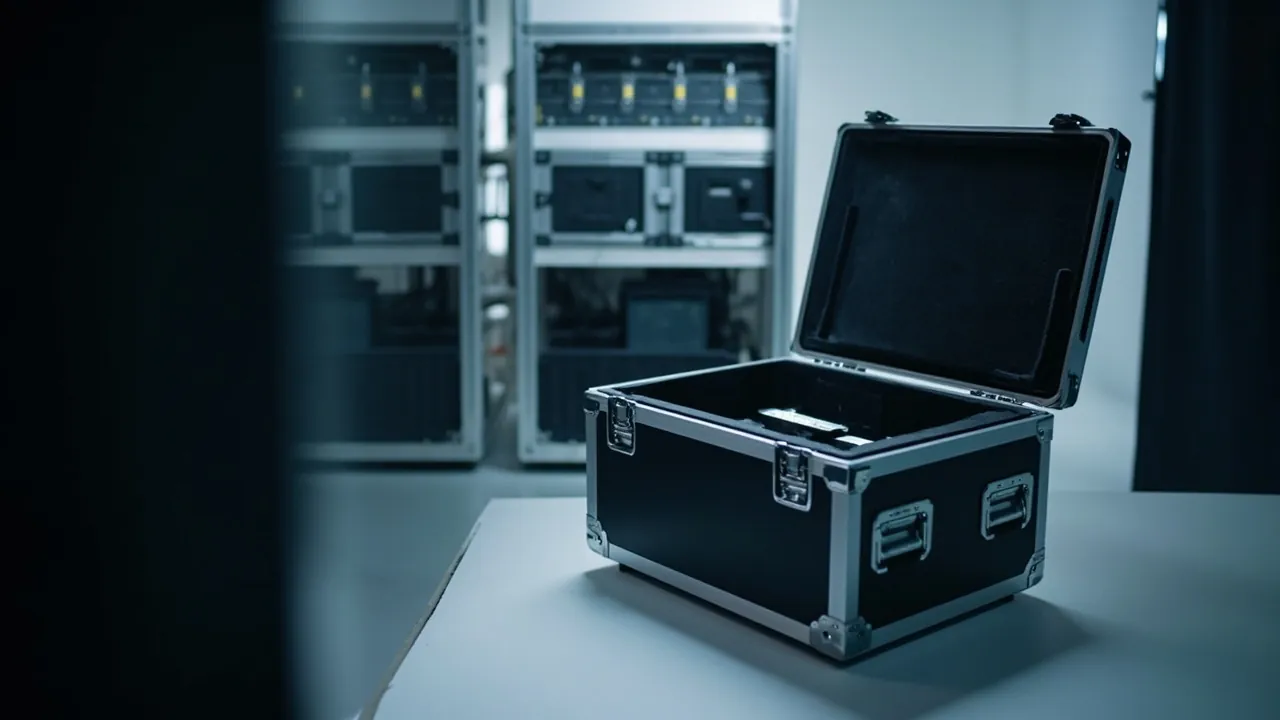
Industrial PCs and edge computing devices are the classic "looks rugged, is actually fragile" transport item: the housing is 1 to 2 mm steel or extruded aluminium, yet inside hangs 50 to several hundred grams of heatsink and expansion card, secured only by a few screws and a board slot. The real killer in transit is not a dented housing but the inertial load of internal cantilever masses - a CPU heatsink swinging through 10 to 200 Hz random vibration and repeated drops can tear solder pads or pop its retention clips, PCIe card gold fingers fretting against their slots, and a mechanical hard drive head scratching the platter under 1000 g class shock (a solid-state drive tolerates far more). Add humidity and static, and industrial electronics failures in transit typically present as "powers up on arrival, intermittent freezes after commissioning".
This article is written for industrial computer brands, edge computing device makers, system integrators, production line owners and spare-parts warehouse managers. It breaks transport protection for industrial PCs, fanless embedded computers, panel PCs and HMIs, edge AI boxes, industrial switches and gateways into actionable engineering items: equipment form factors and vulnerability decomposition, vibration and shock levels, the decisive difference between rotating and solid-state storage, ESD and interface protection, the three defences (moisture, salt spray, mould), enclosure structure and thermal management, cantilever support in custom inserts, IP sealing to IEC 60529 and GB/T 4208, pressure equalization valves in wide-temperature scenarios, ISTA and GB/T 4857 transport testing, UL94 and material compliance, and finally AQL acceptance and OEM/ODM cost structure. All figures are typical industry values and empirical ranges; confirm with physical validation on your own hardware.
Contents
- 1. Why industrial PCs and edge devices need a dedicated transport case
- 2. Equipment form factors and vulnerability decomposition
- 3. Vibration and shock: from heatsink cantilever to PCIe gold fingers
- 4. Rotating drives versus solid-state drives: a decisive difference
- 5. ESD and interface protection
- 6. The three defences: moisture, salt spray and mould
- 7. Enclosure structure, stacking and thermal management
- 8. Custom inserts: cantilever support and locating design
- 9. Sealing and IP ratings: IEC 60529 and GB/T 4208
- 10. Pressure equalization valves and wide-temperature transport
- 11. Transport testing and acceptance: ISTA, GB/T 4857, ASTM D4169, MIL-STD-810H
- 12. Compliance, marking and the battery boundary
- 13. Selection checklist and procurement scoring matrix
- 14. Cost, lead time and OEM/ODM collaboration
- Frequently Asked Questions (FAQ)
- Conclusion and Related Reading
1. Why industrial PCs and edge devices need a dedicated transport case
Industrial PCs have a reputation for toughness: wide temperature range, vibration resistance, dust protection, 24/7 operation. But industrial-grade design addresses the environmental stress of a fixed installation, not the transport stress of repeated handling and stacking. A machine bolted into a cabinet only sees low-amplitude vibration from its own equipment; in transit it faces truck suspension random vibration, parcel-sorting drops, forklift impacts and multiple manual lifts. The levels and spectra of the two load classes are entirely different.
Across the delivery chain, industrial PCs and edge devices typically encounter:
| Transport scenario | Dominant load | Typical risk | Protection focus |
|---|---|---|---|
| --- | --- | --- | --- |
| Brand to integrator (LTL or parcel) | Repeated sorting drops of 60 to 90 cm | Panel denting, heatsink detachment | Reinforced corners, locating insert |
| Integrator to production site (truck or manual) | Sustained 5 to 200 Hz vibration | Expansion card fretting, connector loosening | Cantilever support, resonance avoidance |
| Export sea freight (25 to 45 days) | High humidity, salt spray, day-night temperature swings | Board leakage, terminal corrosion | Barrier packaging, desiccant, equalization valve |
| Long-term spare-parts storage | Static stacking load, humidity and temperature cycling | Insert compression set, gasket ageing | Stack load design, moisture control, periodic maintenance |
| Trade show or customer demo | One-sided lifting, case tumbling | Cosmetic scratches, screen cracking | Soft facing layer, balanced handles, casters |
Three signals that a dedicated case is justified: the device is expensive or business-critical (one edge server going down stops a line); the route includes sea freight, multimodal transfer or multiple handling points; or repair requires shipping the whole unit back because field replacement is impossible. Any one condition is enough for the case to pay back within six to twelve months through reduced damage and faster delivery. If the shipment also contains optically sensitive items such as machine vision cameras and lenses, or cleanroom-grade goods in wafer transport cases, the required protection level rises further.
2. Equipment form factors and vulnerability decomposition
Industrial computers vary enormously in form factor, and so do their vulnerabilities. Decompose the structure before designing any insert.
| Form factor | Typical mass | Critical vulnerable points | Insert contact strategy |
|---|---|---|---|
| --- | --- | --- | --- |
| 4U or 2U rackmount industrial PC | 8 to 25 kg | Front panel and rack ears, PCIe cards, cooling fans, PSU | Full base support, no load on rack ears, clearance above cards |
| Fanless embedded computer | 0.8 to 5 kg | Aluminium heatsink fins, Nano-SIM and antenna connectors, DIN-rail clip | Fins held 3 to 5 mm clear, never compress cabling |
| Panel PC or industrial HMI | 1.5 to 10 kg | Touchscreen glass, bezel gasket, rear mounting clamps | Screen face against soft liner, corners relieved or evenly supported |
| Edge AI computing box | 1 to 8 kg | Passive heatsink fins, M.2 SSD, multiple Ethernet ports | Separate cavity, clearance on the fin side |
| Industrial switch or gateway | 0.5 to 5 kg | Optical module cages, RJ45 retention clips, power terminals | Port-side relief, never stacked on |
| Rack slides and mounting accessories | 1 to 5 kg | Rail cross-section deformation, ball bearing loss | Dedicated cavity with long-item locating |
Three hard rules:
- No rigid clamping. Chassis sidewalls have limited stiffness; a rigid interference fit transfers load straight into the motherboard and slots. Use surface contact with controlled soft compression and deliberate relief.
- Cantilever structures must be supported. Heatsinks, expansion cards and fan brackets are cantilever masses, and the inertial force in transit can far exceed their own weight. For tower heatsinks taller than 40 mm or cards longer than 200 mm, add an independent support block or soft pressure bar inside the case so inertial load returns to the case structure.
- Screens and mirrored surfaces must not be loaded. HMI touchscreen glass is sensitive to point loading; any hard point contact can cause cracking during a drop.
Board-level items shipped alongside industrial PCs deserve the same attention: bare and semi-finished boards in PCB transport cases share the ESD and moisture requirements but need a completely different cushioning strategy - "planar support without flexure" for bare boards versus "cantilever support plus locating" for complete units.
3. Vibration and shock: from heatsink cantilever to PCIe gold fingers
Transport failures in industrial electronics are strongly "internally directed": the housing is intact while the inside is already damaged. The reason is that the inertial load of internal masses is amplified by structural leverage.
Typical levels (confirm by physical validation):
| Item | Typical level | Notes |
|---|---|---|
| --- | --- | --- |
| Road transport random vibration | 5 to 200 Hz, 0.5 to 2 Grms | The primary damage band |
| Parcel sorting drop height | 60 to 90 cm for units under 15 kg | Corner drops are the most severe |
| Hard drive shock tolerance | Roughly 200 to 400 g operating; 900 to 1400 g non-operating at 2 ms | Non-operating gives much greater margin |
| SSD shock tolerance | Typically above 1400 g at 0.5 ms | No mechanical seek mechanism |
| Card gold finger fretting | Occurs from relative motion above about 50 micrometres under resonance | Accumulates into contact faults |
| Heatsink clip fatigue | Failure rate rises noticeably after thousands of cycles | Tower heatsinks carry the highest risk |
Four typical failure mechanisms:
- Solder joint fatigue. BGA and QFN joints crack under vibration cycling, showing up as intermittent freezes after some hours of operation.
- Heatsink and clip detachment. A tower heatsink's centre of mass sits far from the board, so the moment is amplified; once the clip releases, the heatsink can crush the board or strike an expansion card.
- Gold finger fretting. Small relative motion between card and slot repeatedly rubs the gold plating, raising contact resistance.
- Connector and terminal loosening. Power terminals, pluggable terminal blocks and SATA cables gradually back out under vibration, and the rising contact resistance then generates heat.
The engineering measures that reduce these risks act mainly on the insert, not the case:
| Measure | Effect | Implementation note |
|---|---|---|
| --- | --- | --- |
| Soft pressure bar | Limits inertial displacement of heatsink and cards | Must be soft-contact to avoid cracking components |
| Full-unit locating | Removes movement inside the cavity | 1 to 2 mm clearance per side plus 3 to 5 mm relief |
| Layered cushioning | Reduces peak acceleration | Base plus locating layer plus compression layer |
| Resonance avoidance | Keeps system natural frequency out of the excitation band | Tune by thickness and density |
| Separate accessory cavity | Prevents accessories striking the host | Cable coil channels, separate screw bag position |
If your device travels with precision electromechanical components of the kind covered in sealed shock-resistant case structure, the approach is identical: decompose vulnerabilities first, then set cushioning and locating. Cushion layer detail is covered in cushion liner case design and foam material comparison.
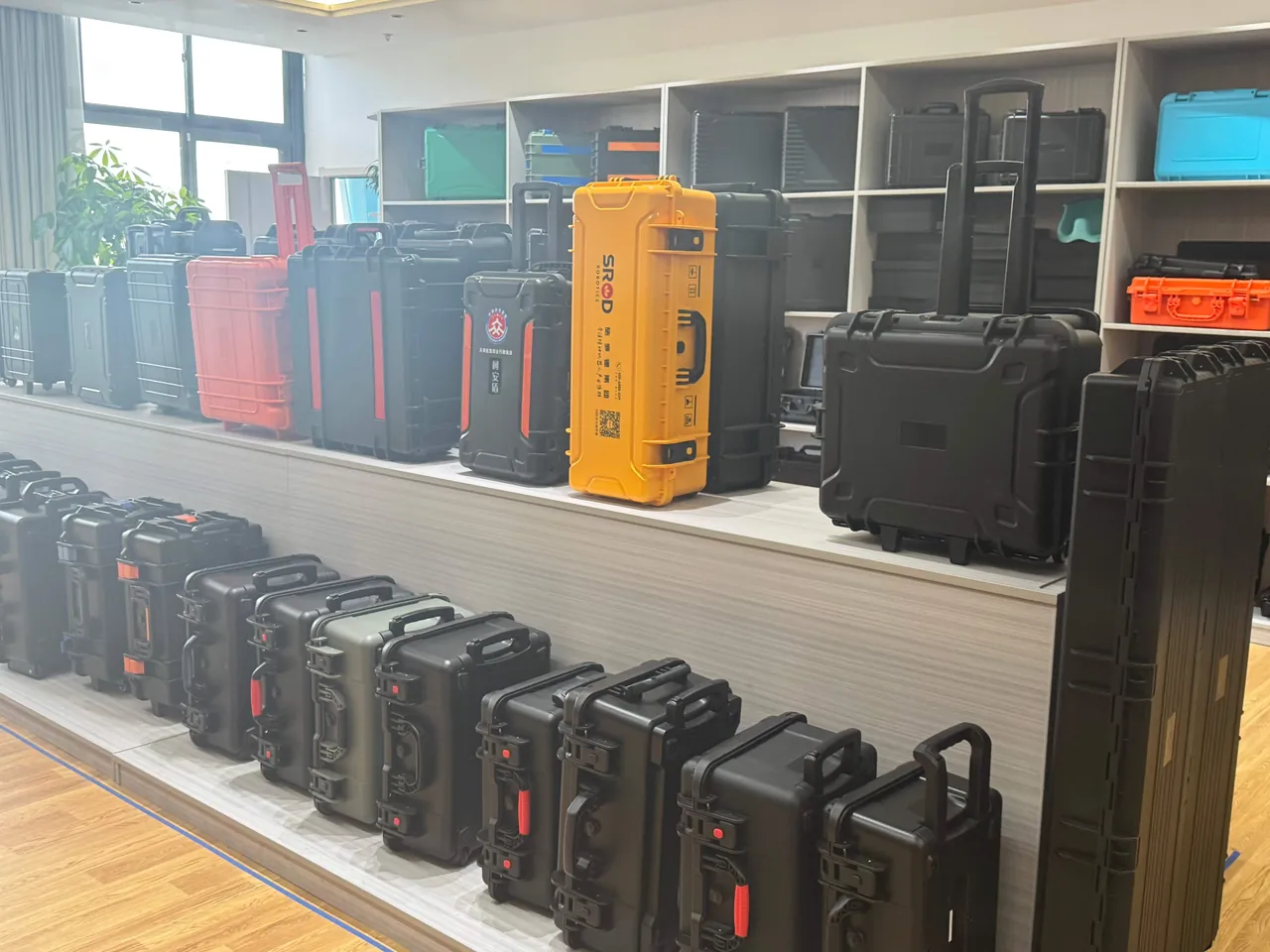
4. Rotating drives versus solid-state drives: a decisive difference
This is the most commonly confused point in industrial PC transport protection: the same machine with a mechanical hard drive versus a solid-state drive can have transport requirements an order of magnitude apart.
| Item | Hard disk drive (HDD) | Solid-state drive (SSD) |
|---|---|---|
| --- | --- | --- |
| Shock tolerance, operating | Roughly 30 to 70 g at 2 ms | Above about 1400 g at 0.5 ms |
| Shock tolerance, non-operating | Roughly 900 to 1400 g at 2 ms | Same, no mechanical difference |
| Vibration sensitivity | High, with seek error risk | Low |
| Dominant failure mode | Head scratching the platter, spindle bearing damage | Solder joint and controller failure |
| Transport recommendation | Ideally remove and pack separately, or immobilise the unit and power down | Can ship installed, but still locate properly |
| Temperature behaviour | Low-temperature start may need warm-up | Better low-temperature tolerance |
Three practical recommendations:
- Remove it if you can. For high-value industrial PCs, remove the mechanical drive and transport it in a separate antistatic foam box, leaving the drive bay empty with a dust cover fitted; install on site. This is most effective for repair returns and trade show shipments.
- If it cannot be removed, power down and strengthen locating. With power off, the head parks on the landing zone and shock margin improves considerably, but the unit still must be firmly located so a case drop cannot cause secondary impact inside the cavity.
- Never share a cavity with heavy items. Rack slides and PSU modules will repeatedly strike the drive bay under vibration.
Storage and humidity. Long-stored industrial PCs also need moisture control, especially around electrolytic capacitors, batteries and connectors. For sea freight and hot humid environments, use the three-layer approach of barrier packaging plus desiccant plus a humidity indicator card; see case pressure equalization valve design and IP67 case sealing implementation.
5. ESD and interface protection
Motherboards, expansion cards and Ethernet PHYs in industrial PCs are static-sensitive. The main charge sources in transit are friction and separation: liner rubbing against housing, protective film being peeled, and the unit micro-moving inside its cavity.
Select insert materials by electrostatic classification (following the logic of IEC 61340-5-1 and ANSI/ESD S541):
| Material class | Surface resistivity | Purpose | Common materials |
|---|---|---|---|
| --- | --- | --- | --- |
| Conductive | 10^2 to 10^5 ohm | Shielding bags, conductive trays | Carbon-loaded PE, metallised film |
| Static dissipative | 10^5 to 10^11 ohm | Inserts, handling trays | Antistatic EVA, antistatic PE |
| Insulative | above 10^11 ohm | Ordinary cushioning, enclosure | Standard EVA, ABS |
| Temporary antistatic | topical treatment | Single-trip protective film | Antistatic-coated film (limited durability) |
Three interface protection details:
- Ethernet ports and optical modules. RJ45 retention clips are fragile; if pressed by cables or accessories in transit they deform permanently. Empty SFP cages should get dust plugs to keep out debris and prevent oxidation.
- Antennas and SIM sockets. Fanless embedded computers often carry SMA antenna connectors and tool-less card sockets; remove antennas and pack them separately so the connector cannot lever the solder pads.
- Terminals and cabling. Pluggable terminal blocks and DC input terminals benefit from protective caps; loose cables should be coiled separately and restrained, never laid on top of the unit.
More on shielding construction, including conductive paths and grounding, is in ESD shielding case construction. On industrial PC projects, JUNZHJIA can supply surface resistivity records for the insert material so that dimensions and electrostatic performance are verified in the same first-article review.
6. The three defences: moisture, salt spray and mould
In industrial settings the "three defences" usually mean moisture, salt spray and mould. For a transport case, the goal is not to make the case itself corrosion resistant but to keep the internal microclimate stable through 30 to 45 days at sea.
(1) Moisture. Container day-night temperature swings can exceed 20 degrees C, and condensation on the ceiling falls as droplets. Control is layered:
- Barrier layer. Heat-sealed aluminium foil laminate, with water vapour transmission around 0.1 g/(m2 per 24 h); ordinary PE bags are often above 5 g/(m2 per 24 h).
- Absorption layer. Silica gel sized against free air volume. Rule of thumb: for a target below 40 percent RH, use 30 to 60 g per 30 litres of free volume, taking the upper end for sea freight.
- Indication layer. Humidity indicator card or electronic logger for arrival assessment.
- Moisture content of the cushioning. EVA and EPP absorb little moisture; PU absorbs more, so long sea voyages need a barrier treatment or a material change.
(2) Salt spray. Coastal shipments can be validated against the salt-spray approach of IEC 60068-2-52. Metal case components (hinge pins, latch hardware, caster axles) should be stainless steel 304 or zinc-passivated. If bare copper busbars or screws are exposed on the equipment side, vapour corrosion inhibitor (VCI) material can be added inside the barrier bag, but VCI compatibility with electronics and optics must be verified on samples first.
(3) Mould. Mould needs humidity above 65 percent RH plus suitable temperature, so mould prevention is fundamentally moisture control. In addition, liners containing natural fibres or untreated textiles become a nutrient source and should be avoided in industrial electronics applications.
| Target relative humidity | Application | Desiccant per 30 L free volume | Additional measures |
|---|---|---|---|
| --- | --- | --- | --- |
| Below 60 percent RH | Domestic trunk routes, short trips | 10 to 20 g | Barrier bag is sufficient |
| Below 40 percent RH | Export sea freight, tropical lanes | 30 to 60 g | Barrier bag plus indicator card |
| Below 20 percent RH | Long-term spare-parts storage | 80 to 150 g | Periodic replacement plus records |
| Below 10 percent RH | Highly moisture-sensitive devices | Molecular sieve required | Airtight structure plus equalization valve |
Remember that desiccant only works in a near-airtight case. A case with visible gaps will equilibrate with ambient humidity within days regardless of how much silica gel is added. Moisture control and sealing must be designed together; see waterproof case IP implementation.
7. Enclosure structure, stacking and thermal management
Industrial PCs concentrate in the 8 to 25 kg range, so enclosure design must balance stiffness, stacking, weight and heat.
| Material | Impact resistance | Low-temperature performance | Achievable flammability | Relative cost | Typical application |
|---|---|---|---|---|---|
| --- | --- | --- | --- | --- | --- |
| Homopolymer PP | Medium | Poor | Requires modification | Low | Single-trip handling |
| Block copolymer PP | High | Good | UL94 HB to V-2 | Medium | Mainstream reusable cases |
| Copolymer PP with glass fibre | Very high | Good | UL94 V-0 depending on formulation | Medium-high | Heavy-duty, large cases |
| ABS | High | Medium | UL94 HB | Medium-high | Cosmetic parts, panels |
| HDPE or LLDPE (blow moulded) | High (tough) | Good | UL94 HB | Medium | Large blow-moulded cases |
| PC | Very high | Good | UL94 V-2 and above | High | Premium small cases |
UL94 is a commonly missed item. For equipment with power modules, lithium batteries or air freight requirements, the customer or carrier may demand UL94 V-2 or even V-0 case material. Two cautions: UL94 evaluates material specimens, not finished cases; and flame-retardant modification reduces impact performance, so the formulation must be balanced. Request a material-level UL94 report such as a yellow card.
Four structural design points:
- Wall thickness and ribs. Mainstream cases run 2.5 to 5 mm; large cases need sidewall ribs or double walls, otherwise the sidewall bulges under stacking and displaces the gasket.
- Stack load. State the static stacking load explicitly (for example, "bottom case supports three fully loaded cases of the same size"); it drives warehouse planning and container fill.
- Corners and parting line. Corners are stress concentrations and need thickening or generous radii; avoid placing the gasket groove on the parting line.
- Thermal management - a counter-intuitive point. Fanless industrial PCs dissipate heat through the housing and can run at high surface temperature. In a sealed case, never pack a unit straight off the line; wait until surface temperature is close to ambient, otherwise the case pressurises and then draws in moisture as it cools. Also confirm the insert material's temperature limit (EVA is commonly limited to about 60 to 70 degrees C for continuous use).
Material and gasket compatibility is covered in case seal material selection and plastic protective case construction.
8. Custom inserts: cantilever support and locating design
The insert is the primary contributor to protection performance for an industrial PC, more so than the enclosure. Standard pick-and-pluck foam is only for emergencies.
A disciplined custom insert flow has six steps:
- CAD or physical capture. Prefer the vendor STEP model; otherwise 3D scan and model with 3 to 5 mm allowance for rack ears, cabling and antenna connectors.
- Vulnerability marking. Mark no-compression zones (screen, heatsink fins, fan intakes), must-support cantilever zones (tower heatsink, long cards) and must-locate zones (rack ears, mounting holes, DIN clip).
- Layer structure. Common stack is base support plus locating layer plus compression layer, 50 to 150 mm total; heavy chassis get a double base.
- Finger clearance and assembly tolerance. Finger notches 25 to 35 mm wide, 20 to 30 mm deep; 1 to 2 mm clearance per side against soft liner, plus 3 to 5 mm relief.
- CNC carving or mould sampling. Small batches use CNC, which needs no tooling and revises easily; large batches move to compression moulding for consistency and lower unit cost.
- Physical fit validation. After loading, perform a full case rotation at 1 m plus lift tests to confirm the unit does not shift and the insert does not tear.
| Insert process | Suitable batch size | Unit cost | Revision flexibility | Consistency | Notes |
|---|---|---|---|---|---|
| --- | --- | --- | --- | --- | --- |
| CNC-carved EVA | 1 to 500 | Medium | Very high | Medium | First choice for sampling, no tooling |
| Compression-moulded EVA | Above 1000 | Low | Low | High | Requires aluminium or steel tool |
| Multi-layer laminated | Any | Medium-high | High | Medium | Suits deep cavities and odd shapes |
| Thermoformed tray | Above 5000 | Very low | Low | High | Suits flat, light components |
Three cantilever support techniques:
- A soft pressure bar, not a hard block. Use a soft bar at least 15 mm wide to limit inertial displacement of cards and heatsinks, avoiding point loading.
- Relief slots. Cut relief at heatsink fins, fan intakes and antenna connectors so the insert does not "hold the shape while crushing the function".
- Double base for heavy units. Above 20 kg, use a base layer at least 30 mm thick with two offset laminated sheets to improve rebound consistency.
On industrial PC and edge device projects, JUNZHJIA typically develops inserts from customer CAD models or scanned physical units, supports both CNC-carved and moulded EVA routes, matches gaskets and latches to the case size, and can provide dimensional reports and drop validation records. If you are comparing insert options, start with the custom foam inserts guide and the EVA foam insert custom process.
9. Sealing and IP ratings: IEC 60529 and GB/T 4208
IEC 60529, mirrored nationally in China by GB/T 4208, is the international basis for enclosure protection ratings, coded IPXY: the first digit covers solid particles and dust (0 to 6), the second covers water (0 to 9K).
| Rating | Dust | Water meaning | Fit for industrial PC scenarios |
|---|---|---|---|
| --- | --- | --- | --- |
| IP54 | 5 | Splash from any direction, no harmful effect | Indoor handling |
| IP65 | 6 (dust tight) | 6.3 mm nozzle jet from any direction | Rainy docks, brief outdoor exposure |
| IP66 | 6 | 12.5 mm nozzle, powerful jets | Washdown environments |
| IP67 | 6 | Temporary immersion, 1 m for 30 minutes | Sea freight, flooding risk |
| IP68 | 6 | Immersion conditions agreed between supplier and buyer | Requires explicit parameters |
| IP69K | 6 | High-temperature, high-pressure jet | Food and cleaning industries |
Three misconceptions to correct:
- IP67 and IP68 are not equivalent. IP68 immersion depth and duration are not fixed by the standard and must be agreed, otherwise the marking has almost no contractual force.
- Dust and water are tested separately. Passing IP6X does not imply passing IPX7.
- Seal performance decays over time. EPDM and silicone gaskets age under ultraviolet, ozone, oils and repeated compression; replacement is usually assessed at three to five years. See protective case service life and maintenance.
High-incidence seal failure points are insufficient flatness of the mating face, mismatch between gasket groove and gasket cross-section causing over or under compression, and uneven clamping between the hinge side and the latch side. These are structural problems that a harder gasket cannot fix; details are in case hinge, latch and seal structure.
10. Pressure equalization valves and wide-temperature transport
Above IP65 a side effect appears immediately: internal air is sealed in, so temperature change converts directly into a pressure differential.
The wide-temperature nature of industrial PCs makes this more pronounced. A typical scenario: the unit is packed in a 25 degrees C workshop, travels on a trailer deck at 60 degrees C, and arrives at a warehouse at minus 10 degrees C. With 30 litres of free air and a 70 K swing, the theoretical differential reaches the order of 20 kPa. Consequences include:
- the case is difficult to open, or the lid springs up and latches fly off;
- the gasket is pumped out of its groove and takes a permanent set;
- each pressure cycle exchanges a small volume of gas, repeatedly drawing in moisture and exhausting the desiccant;
- the barrier bag is pressed against the equipment and may rupture.
The solution is a pressure equalization (breather) valve, whose core is a hydrophobic, oleophobic ePTFE microporous membrane: gas passes slowly, liquid water and dust do not.
| Parameter | Suggested value or concern | Notes |
|---|---|---|
| --- | --- | --- |
| Air flow rate | Matched to case volume | Large cases need a higher-flow valve or two valves |
| Opening and closing differential | Lower is more responsive | Typically a few kPa |
| Water protection contribution | Valve body itself should exceed IP67 | Otherwise it becomes the weakest point |
| Membrane temperature range | -40 to +125 degrees C common | Covers sea and air freight |
| Mounting position | High on a sidewall, out of direct water impact | Also keep clear of the equipment |
| Dust and oil resistance | Consider oil-mist environments | Workshop oil mist can contaminate the membrane |
Note that a sealed case without a breather valve has usually lost its IP67 claim after one inter-climatic shipment. Full design detail is in case pressure equalization valve design. Where equipment is stored long-term in extreme cold or heat, also review extreme temperature case solutions.
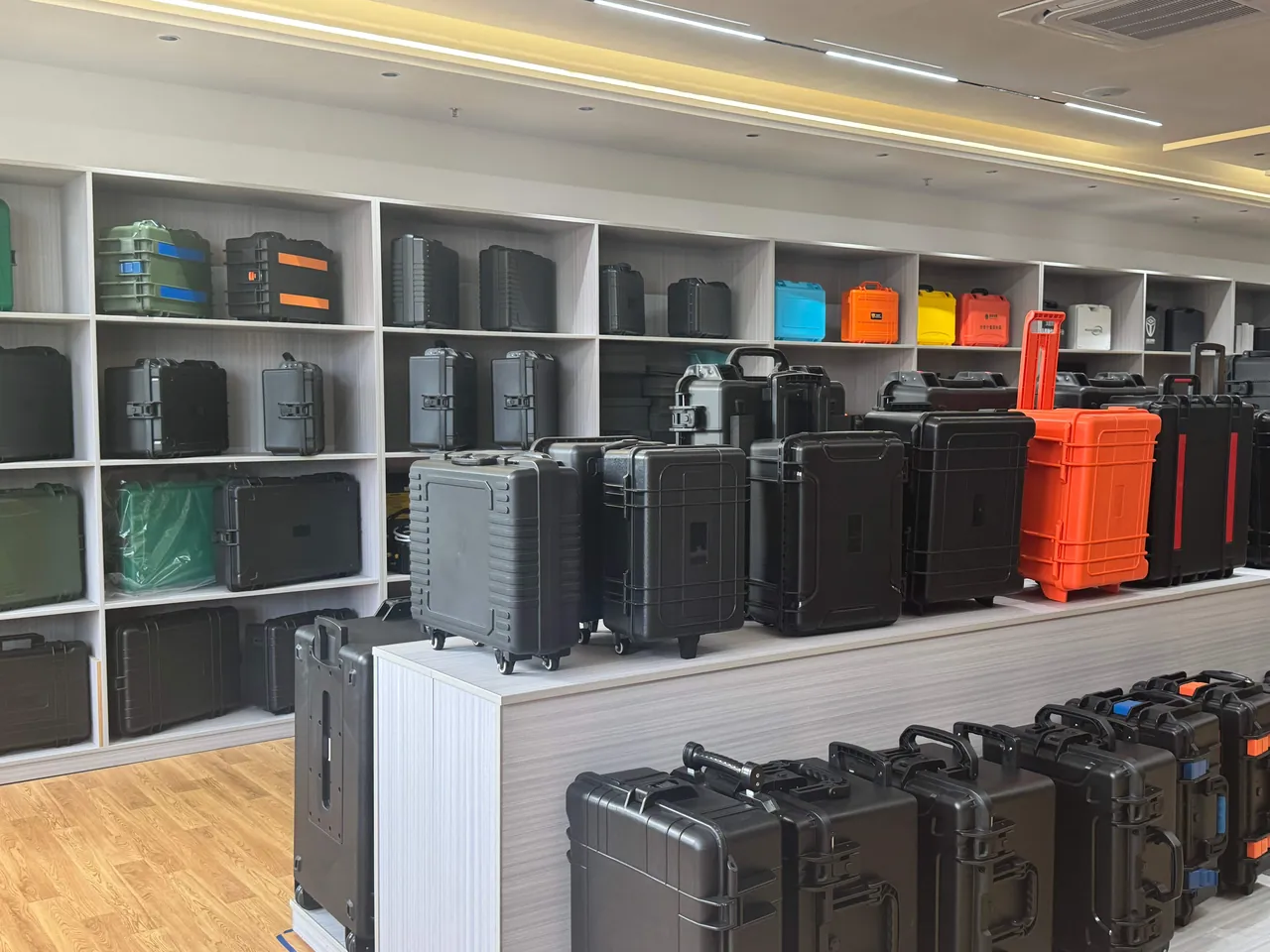
11. Transport testing and acceptance: ISTA, GB/T 4857, ASTM D4169, MIL-STD-810H
Protection capability must be demonstrated by test. At minimum, procurement should specify which standard, which items and to what level.
| Standard | Nature | Content | Meaning for industrial PC cases |
|---|---|---|---|
| --- | --- | --- | --- |
| ISTA Series 1 | Non-simulation performance test | Drop, vibration, compression basics | Basic screening for new designs |
| ISTA Series 2 | Partial simulation | Drop plus vibration plus compression | Common for single-parcel shipment |
| ISTA Series 3 | General simulation | Tailored to package format and route | Closest to cross-border courier and multimodal |
| GB/T 4857 series | National transport package tests | Stacking, vibration, impact, drop as separate items | Common for domestic projects and customer acceptance |
| ASTM D4169 | Distribution cycle performance test | Test sequence per distribution cycle | When full distribution-cycle evidence is required |
| MIL-STD-810H | Environmental test methods | Vibration, shock, temperature-humidity, salt fog methodology | Borrow quantitative methods and levels; not a military certification |
| IEC 60068-2-52 | Salt spray test | Corrosion environment validation | Sea freight and coastal scenarios |
| IEC 60529 / GB/T 4208 | Enclosure protection | IP test methods and criteria | Shared language for sealing performance |
Wording on MIL-STD-810H must be rigorous. It is a set of environmental test methods; a manufacturer may reference its methods (for example Method 514 vibration, Method 516 shock, Method 507 humidity) to structure a validation programme, but referencing a method does not confer military certification or equipment qualification. External documents should state "tested following MIL-STD-810H methods; not a military certification". Further reading: MIL-STD-810H compliance interpretation.
A recommended staged validation path:
- Design freeze (sample case). Loaded corner, edge and face drops at heights set by mass, plus 1 to 2 hours of random vibration and 24 hours of static stacking; afterwards inspect for cracks, gasket displacement and insert compression set.
- Design validation. Full ISTA 3A or ASTM D4169 sequence, focused on whether the equipment still meets its factory specification. For industrial PCs, re-measure memory and card mating force, hard drive SMART status if the drive was not removed, terminal torque, insulation resistance, and a two-hour continuous run.
- Production. First-article confirmation plus sampling of key dimensions and gasket hardness under an AQL plan.
Test details are covered in ISTA transport testing procedures, GB/T 4857 transport packaging testing and ASTM D4169 distribution cycle testing.
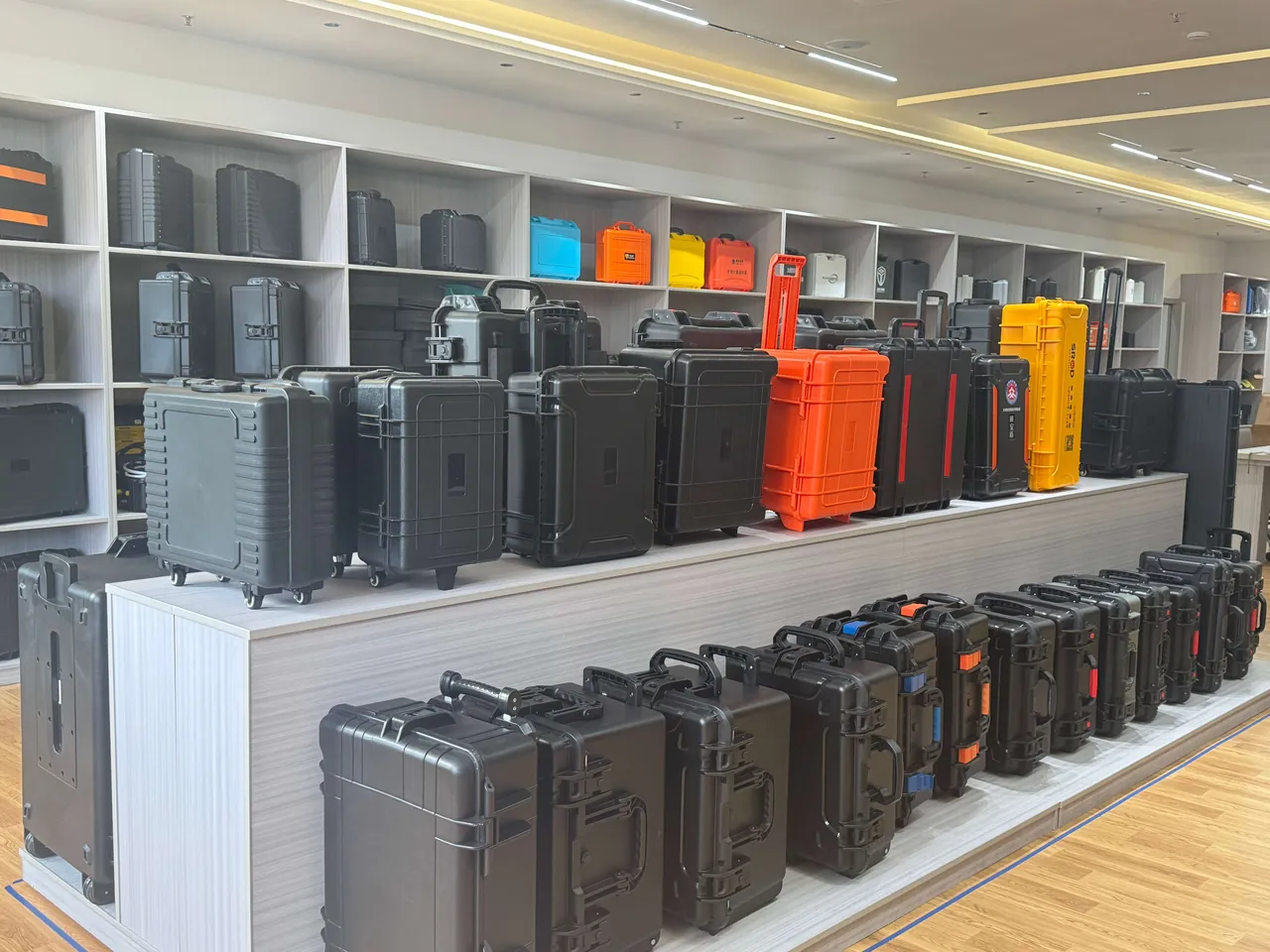
12. Compliance, marking and the battery boundary
Industrial PCs and edge devices are generally not dangerous goods, but four boundaries must be stated clearly:
- Internal batteries. Coin cells (RTC) are usually lithium-manganese and typically covered by exemptions; however, if the device contains a lithium-ion pack (an edge device with a UPS module, or a wireless gateway), it may fall under UN38.3 and lithium battery transport rules with associated packing instruction and state-of-charge requirements. Road ADR, sea IMDG and air IATA differ substantially and must be confirmed per mode; see hazmat-compliant transport cases.
- Supercapacitors and capacitor banks. Some industrial PCs use supercapacitors instead of batteries to hold data through power loss; confirm discharge state and terminal insulation requirements before shipment.
- Wood packaging and ISPM 15. Wooden pallets or crates used for export reinforcement must meet ISPM 15 heat treatment or fumigation with the appropriate mark; a reusable plastic case normally avoids that step.
- Material compliance. EU exports require attention to RoHS and REACH, covering the case, the insert and labelling adhesives. Ask for material declarations in the contract.
Suggested marking list: case model and serial number, IP rating, stack limit, gross weight and external dimensions, equipment name and quantity, handling icons (keep dry, this way up, do not step), desiccant replacement date, and a notice that the case is a reusable transport container. For units containing a mechanical hard drive, add a prominent "contains hard disk drive - do not invert or drop" label so carriers treat it accordingly.
13. Selection checklist and procurement scoring matrix
Compressing the technical items into a scoring matrix you can take into negotiations substantially reduces the risk of choosing by feel. Adjust weights per project.
| Scoring dimension | Suggested weight | What to assess | Typical deductions |
|---|---|---|---|
| --- | --- | --- | --- |
| Insert-to-equipment fit | 25 percent | Vulnerability decomposition, cantilever support, relief, finger notches | Generic pick-and-pluck foam |
| Sealing and IP performance | 20 percent | IP67 with itemised test records, gasket material | "Waterproof" with no data |
| Shock and cushioning design | 15 percent | Material density, thickness, G-level target, drop validation | Wall thickness quoted without insert design |
| ESD performance | 10 percent | Insert surface resistivity, batch consistency | No resistivity records |
| Structure and durability | 10 percent | Hinges, latches, wall thickness, stack load | Plastic hinges, thin walls |
| Ergonomics and marking | 8 percent | Handles, casters, label areas, lid support | No handle, no marking areas |
| Compliance documentation | 7 percent | UL94, RoHS/REACH, test reports | Missing or delayed documents |
| Delivery and after-sales | 5 percent | Lead time, spare parts such as gaskets and inserts | Spares not sold separately |
Three fast field checks:
- Load the unit, drop the case from 1 m onto a corner, then open it and check for unit displacement, loose expansion cards and insert tearing.
- Close the lid and check that latches carry load evenly and the gasket is not locally extruded.
- Hold the case at 60 degrees C for four hours, then open it immediately and feel for a pronounced vacuum - if present, the case lacks a pressure equalization valve.
Supplier evaluation is covered in how to choose a case OEM factory and identifying genuine versus counterfeit cases. If you also ship delicate instruments, see the instrument case selection guide.
14. Cost, lead time and OEM/ODM collaboration
| Cost item | Drivers | Reduction levers |
|---|---|---|
| --- | --- | --- |
| Case tooling | Size, structural complexity, cavity count | Use a standard case size plus custom insert |
| Insert processing | Process (CNC or moulded), layers, material density | Move to moulding at higher volumes |
| Test validation | Number of test items, number of samples | Screen with a single case before full validation |
| Packaging accessories | Desiccant, indicator cards, seals, labels | Standardise procurement |
| Logistics | External dimensions and stacking efficiency | Optimise outline to raise container fill rate |
Lead time is usually set by three things: insert sampling and approval (often the longest), tooling fabrication, and test scheduling. Put all three on the project schedule with agreed gates.
OEM/ODM collaboration points:
- Ownership of drawings and data. Clarify ownership and confidentiality for insert models, case drawings and trademark printing.
- Scope of inspection documents. First-article dimension report, material declaration including UL94 and RoHS/REACH, seal performance and drop test records, ESD performance records.
- Spare-part availability. Gaskets, inserts, latches and casters should be orderable separately so the whole case need not be scrapped.
- Capacity flexibility. Confirm peak-season capacity and minimum order quantity to avoid delivery interruption.
JUNZHJIA, manufactured by Kexin New Materials (Guangdong) Co., Ltd., supplies wholesale, distribution and OEM/ODM customers, and can build inserts and seal sets matched to specific industrial PC and edge computing device models, along with custom screen printing, label areas and seal schemes. For tooling economics see custom case mould cost analysis, and for batch acceptance sampling see custom case AQL acceptance.
Frequently Asked Questions (FAQ)
Q: An industrial PC is already vibration-rated, so why bother with a dedicated transport case? A: Because the ratings address a different load spectrum. Industrial-grade design targets the environmental stress of a fixed installation: low-amplitude vibration inside a cabinet, wide temperature range, dust and electromagnetic interference. Transport stress is a different class: 5 to 200 Hz random vibration from truck suspension, 60 to 90 cm sorting drops, forklift impacts and repeated manual lifts. Industrial PCs are usually qualified for vibration under the assumption of fixed mounting, and their internal cantilever masses - tower heatsinks, long expansion cards, fan brackets - have their inertial load amplified by leverage far beyond their own weight. The result is the classic latent failure: the housing is intact but the inside is damaged, so the unit powers up on arrival and freezes intermittently weeks after commissioning. Evaluate transport protection against the actual transport load spectrum rather than substituting an industrial rating.
Q: Should a mechanical hard drive be removed and shipped separately? A: Yes, especially for high-value industrial PCs and repair returns. A powered-down HDD may tolerate 900 to 1400 g at 2 ms, but in whole-unit shipment the real danger is not direct impact, it is secondary impact inside the cavity and resonance. Mechanical drives are also sensitive to low-frequency vibration, and long road transport can cause seek errors and bearing damage. If removal is not possible, do three things: power the unit down and strengthen locating so clearance is 1 to 2 mm per side, mark the case externally as "contains hard disk drive - do not invert or drop", and keep it away from heavy items such as rack slides. Solid-state drives have no seek mechanism and typically tolerate above 1400 g, so they may travel installed, though they should still be located to prevent secondary impact damaging solder joints.
Q: Should an industrial PC case be IP65 or IP67? A: It depends on whether the route carries an immersion or sustained strong-jet risk. IP65 resists water jets from any direction, which covers rainy dock handling. IP67 requires no harmful ingress during 1 m immersion for 30 minutes, which suits sea freight, open yards and any scenario with standing water. Two things to keep in mind. First, an IP rating describes the enclosure only; it does not mean internal humidity is controlled, and even an IP67 case will see humidity rise through opening cycles and breathing unless desiccant and a barrier bag are used. Second, a sealed case must have a pressure equalization valve, otherwise the differential from temperature change pumps the gasket out of its groove and destroys the seal. The correct combination is an IP67 case plus a valve plus a barrier bag plus desiccant plus a humidity indicator card. If a customer cites IP68, specify the immersion depth and duration.
Q: What interior humidity should I target, and how much desiccant should I use? A: As a rule of thumb, target below 60 percent RH for short domestic trips, below 40 percent RH for export sea freight and tropical lanes, and below 20 percent RH for long-term spare-parts storage with periodic desiccant replacement. For dosage, a convenient rule is 30 to 60 g of silica gel per 30 litres of free air volume for a target below 40 percent RH, taking the upper end for sea freight; for below 20 percent RH, raise this to 80 to 150 g together with a more reliable barrier package. It must be emphasised that desiccant only works in a near-airtight case. A case with visible gaps will re-equilibrate with ambient humidity within days, and adding more desiccant simply wastes it. Design moisture control together with sealing level and the pressure equalization valve, and include a humidity indicator card so the receiver can judge conditions on arrival.
Q: Can a fanless industrial PC be sealed into its case straight off the production line? A: Not advisable. Fanless designs dissipate heat through the housing, so after burn-in or high-load operation the surface temperature can be noticeably above ambient. Sealing it into a closed case immediately heats the internal air and creates positive pressure, adding stress to the gasket; as the unit cools in transit, the case turns to negative pressure and draws in outside moisture, effectively pumping water vapour inside, which exhausts the desiccant quickly. Let the unit cool naturally to near ambient - typically 30 to 60 minutes depending on mass and thermal structure - before sealing, and confirm no condensation remains on the surface. If line takt is tight, add a forced-air cooling station; do not wipe the unit down with a damp cloth, as that introduces liquid water.
Q: After transport testing, what should be re-measured on an industrial PC? A: Five categories are recommended. First, mechanical: memory and expansion card mating force, heatsink displacement, chassis rack ear deformation, terminal torque. Second, storage: if the mechanical drive stayed installed, read SMART data for reallocated sectors and seek error rate; for SSDs, check for drive drops or checksum errors. Third, electrical: insulation resistance and earth continuity, PSU output voltage ripple. Fourth, functional: a two-hour continuous run with no anomalies, Ethernet and serial communication working, watchdog and power-loss recovery functioning. Fifth, cosmetic: screen cracking, irreparable housing dents, detached labels. Only when all five categories pass can you conclude that the equipment inside still meets its factory specification, which is the real pass criterion for a transport test.
Q: Should the insert be EVA or PE foam, and does a fanless industrial PC add any requirement? A: For a reusable industrial PC case, EVA is usually better: low compression set, stable rebound, easy to carve into precise locating features, and surface resistivity tunable through formulation. PE foam is cheaper and softer, which suits a secondary cushion layer or short-trip handling, but collapses after repeated drops and has poor dimensional stability. EPP offers the strongest repeated-impact performance and suits skeleton filling in heavy cases, though it is hard to machine into fine locating features. For fanless industrial PCs, also check the material's temperature limit: EVA continuous use is commonly limited to about 60 to 70 degrees C, so if the housing runs hot or storage is hot, confirm the insert data or add a thermal barrier between insert and unit. Avoid PU foam as the locating layer on long sea voyages because of its relatively high moisture absorption.
Q: What extra requirements apply when an edge device contains a lithium battery pack? A: Once lithium-ion cells are inside the case, packaging enters dangerous-goods compliance. Confirm whether the cells meet UN38.3 test requirements; the packing instruction and labelling applicable to the transport mode (road ADR, sea IMDG, air IATA); state-of-charge limits; and whether short-circuit protection is needed through terminal insulation, separate cavities and preventing contact with metal parts. In case design, put the battery and the main board in separate cavities so the battery cannot press on the control board under vibration, and add a temperature logger in the battery cavity so an abnormal heat event can be identified on arrival. Devices containing only a coin cell (lithium-manganese) usually fall under exemptions, though terminal insulation is still advisable. For cross-border shipments, wood packaging must meet ISPM 15, while a reusable plastic case normally avoids that step. Final conclusions depend on the actual cell specification and carrier requirements.
Conclusion and Related Reading
The central tension in protecting industrial PCs and edge computing devices is that "industrial grade" and "transport grade" are two different load spectra. A device that behaves robustly inside a cabinet cannot automatically be assumed robust under repeated handling, stacking and sea freight. Effective solutions follow the same logic: decompose the vulnerabilities first - especially the cantilever and point-load sensitive items such as heatsinks, expansion cards, drives and screens - then set cushioning, locating, sealing and moisture control against the actual route, and finally prove by drop and vibration testing that the equipment inside still meets its factory specification.
For engineers and buyers, the most useful test is this: the value of a transport case is not that the case survives, but that the equipment can go straight into service after opening. A well-designed industrial PC case typically pays back within two to three years through reduced damage, shorter on-site commissioning and lower spare-part attrition, and the customer confidence it creates should not be discounted either. Start the insert, sealing, moisture, testing and compliance workstreams in parallel at project kickoff, and keep complete design and validation records so later device models can reuse them.
Related Reading