

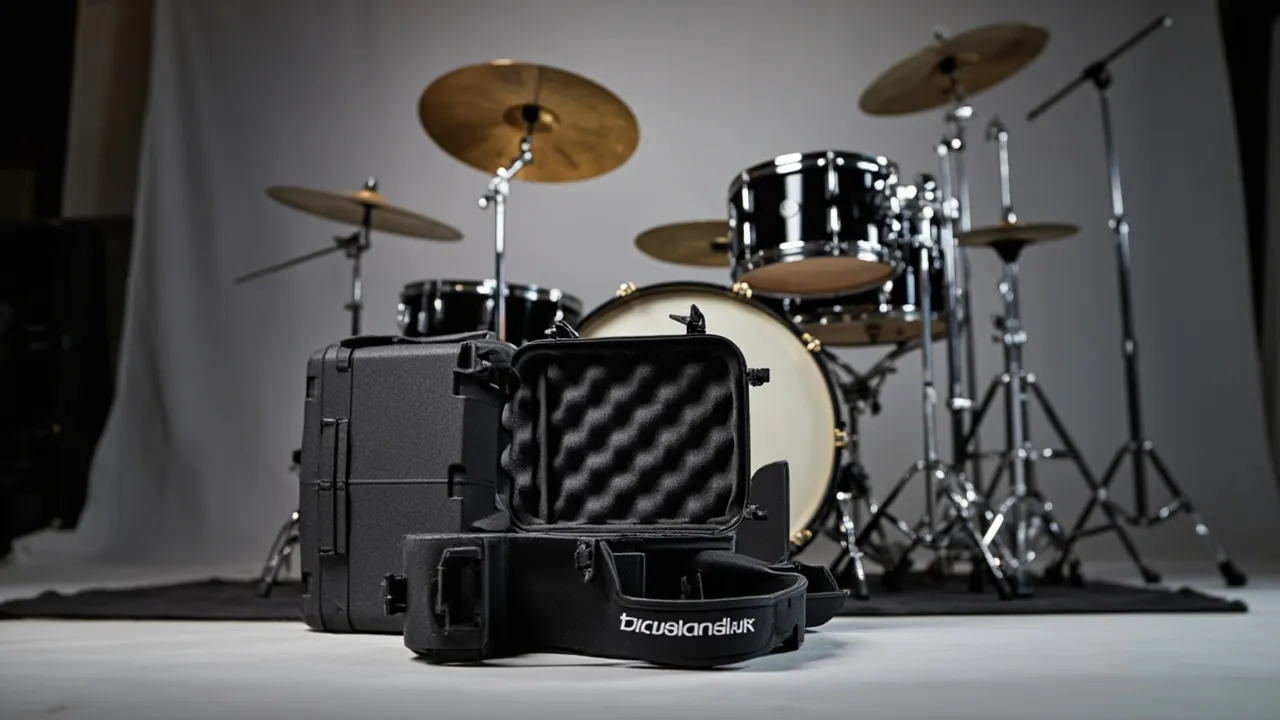
Percussion instruments differ from string and wind instruments in one decisive way: a typical kit is a mixture of parts with wildly different shapes and rigidity. There are paper-thin cymbals, round shell drums, electronic modules packed with circuits and knobs, plus a heap of hardware stands and pedals. When these are mixed and shipped together, the most fragile cymbals deform and crack under pressure, snare shells get their lacquer scratched by hardware, and electronic modules suffer from vibration, moisture, and static. For orchestras, touring companies, individual drummers, and musical-instrument wholesalers, a properly planned percussion protective case customized to the inventory is the single investment that drives transit damage from double digits down to near zero. This article starts from three core scenarios — snare support, cymbal anti-deformation, and electronic-module cushioning — and, referencing real standards such as ISTA, MIL-STD-810H, and GB/T 4208, delivers actionable selection, foam, and shipping guidance.
In daily band touring and school ensemble management, transit loss is consistently underestimated. A professional drummer's standard rig includes at least one snare, one or two cymbal sets (hi-hat, crash, ride), several toms, plus pedals, throne, and stands, easily exceeding 40 kilograms total. When this gear is crammed into a generic hard case or flight case, the vibration, drops, rain, and disordered stacking of transit cause irreversible damage after only a few round trips. Therefore, treating protection as the first procurement metric rather than price is the professional approach.
Table of Contents
- Why percussion needs dedicated protective cases
- Snare support and shell protection
- Cymbal anti-deformation and edge protection
- Electronic-module cushioning, dust, and static control
- Hardware stands and pedal organization
- Foam material selection and comparison
- Sealing, waterproofing, and climate control
- Vibration isolation and transit shock standards
- Custom foam and OEM/ODM workflow
- Case structure and hardware selection
- Handling, checked baggage, and live shows
- Cleaning, maintenance, and service life
- Common transit damage cases and key points
- How to choose case types by ensemble size
Why percussion needs dedicated protective cases
The component mix of percussion determines that it cannot be handled by a one-size-fits-all case. The snare is a thin-shell round cavity whose force points concentrate on the rim and tension lugs. The cymbal is a thin metal sheet where any local bend changes the tone and accelerates fatigue cracks. The electronic module houses circuit boards, LCD screens, and knobs extremely sensitive to shock and static. Their failure modes are completely different, so differentiated foam zoning is mandatory.
From a logistics perspective, show gear travels by air, road, and parcel combined. According to the testing philosophy of ISTA (International Safe Transit Association), transit hazards mainly come from four categories: vibration, drop shock, stacking pressure, and temperature-humidity variation. Ordinary cartons or thin-wall cases only cope with mild vibration; once facing rough handling or rain, loss becomes almost inevitable.
The truly professional approach treats the protective case as part of the instrument itself. Before selection, it is recommended to read the instrument case selection guide to build systematic knowledge of case materials, foam forms, and sealing grades. On that basis, zone design for specific percussion parts controls both cost and safety.
Snare support and shell protection
The snare is the most frequently used and most overlooked part of the kit. Its shell is multi-ply maple, birch, or metal, with gloss or metal plating on the surface. The two biggest transit threats are: lacquer scratches and hoop deformation from collision with hardware, and head collapse from sustained pressure.
For support, CNC-cut EVA or polyurethane (PU) foam is recommended to create a dedicated cavity where the shell is "half embedded," bearing load only at the edge while the head hangs free from any hard surface. For high-end hand-built snares, a slow-rebound foam layer at the cavity bottom further absorbs impact energy from the case floor. For the slotting process, refer to the custom EVA foam insert process.
Head protection matters equally. Before transit, loosen tension to a slack setting (not fully released) to avoid wrinkles from free vibration. If the snare has fragile tuning lugs or engraved hoops, hollow out the corresponding foam position so protruding structures seat properly. To understand energy absorption differences among foams, consult the case foam material comparison.
Cymbal anti-deformation and edge protection
Cymbals are the most delicate parts of percussion. A qualified cymbal is spun from bronze alloy, typically 1.0 to 2.5 millimeters thick, with a blade-like edge. In transit, cymbals fear "point loading" most — for example, a stand pressing through the middle, or another hard object pushing a local bend. Once a crease forms, the tone turns dirty and cracks spread from that point until the whole cymbal fails.
Two mainstream protection ideas exist. The first is "flat-slot": EVA thin pads separate each cymbal, inserted vertically into slots in the case so each cymbal only contacts cushioning material on flat surfaces, with zero point loading. The second is "tube": a round or oval cavity stores a single large cymbal vertically, with soft edge padding preventing the edge from hitting the wall. Either way, cymbals must not rub each other to avoid plating wear.
For edge protection, a soft PU lip at the slot opening eases access and cushions opening-closing shocks. Critically, cymbals should not bear lateral pressure beyond their own weight for long, so internal zones must be fixed and parts must not shift in transit. For general cushioning design principles, extend reading to the cushion liner case.
Electronic-module cushioning, dust, and static control
Electronic drum modules (sound source host, trigger interface, pedal controller) are the "brain" of the modern drummer's tour. Inside are dense circuit boards, connectors, and LCD screens, with engineering-plastic housings. Unlike the rigid acoustic drums, electronic modules fear vibration, humidity, static, and dust — typical precision electronics.
For cushioning, use a "suspended wrap" foam: slow-rebound foam forms an evenly compressed buffer around the module so the body never touches the case wall, and drop shock is absorbed through foam compression. Leave about 5 to 10 millimeters of compression margin between foam and module to avoid long-term overpressure causing housing creep.
For static, in dry or dusty transit use anti-static foam on the module compartment surface or wrap modules in anti-static bags, consistent with the ESD shield case principle. Dust control relies on case sealing, covered next. Note that modules often carry lithium batteries or external power; before long transit, power off, unplug cables, and secure connectors to avoid plug wobble scratching the panel.
Hardware stands and pedal organization

A kit's hardware — cymbal stands, tom mounts, hi-hat stand, pedals, throne — is large, oddly shaped, and mostly metal. If piled randomly, they roll inside the case like weapons, scratching shells and cymbals. Therefore the hardware zone must be physically isolated from the instrument zone, usually via divider panels or a removable divider system.
Here the removable divider system is recommended: it lets you flexibly adjust divider positions per show's inventory, holding the full hardware yet freeing space for other items when gear is reduced. Stands break down into rods and lie flat; pedals get individual recesses to stop the pedal flipping and smashing neighbors during bumps.
Orderly storage has another value: efficiency. Live shows are time-pressed; if every piece has a fixed "seat," loading and unloading is by the map, far faster than rummaging. For show companies this directly cuts labor cost and missed-cue risk. A solid EVA panel should fully separate the hardware and instrument zones to eliminate cross-zone collision.
Foam material selection and comparison
Foam material directly decides energy absorption, durability, and cost. Common materials in percussion cases include EVA foam, polyurethane (PU) sponge, polyethylene (PE) / expanded polyethylene (EPE) pearl cotton, and slow-rebound memory foam. Each fits different scenarios; none is universal.
| Material | Resilience | Compression durability | Slotting precision | Suitable parts | Typical cost |
|---|---|---|---|---|---|
| --- | --- | --- | --- | --- | --- |
| EVA foam | High | High | Excellent (CNC) | Snare, cymbal, hardware | Medium |
| PU sponge | Medium | Medium | Good | General fill | Low |
| PE/EPE pearl cotton | High | High | Medium (die-cut) | Outer buffer, dividers | Low |
| Slow-rebound memory foam | Low | Medium | Good | Precision module buffer | High |
Selection principle: rigid parts (snare shell, cymbal) use high-resilience EVA for support and rebound; precision modules use slow-rebound to extend impact absorption time; dividers and fill use pearl cotton to control cost. Detailed parameters and selection methods are in the case foam material comparison; the custom process is in the custom foam inserts guide. Note all foam flammability should meet UL94 flame-retardant grade, especially in power-dense show venues.
Sealing, waterproofing, and climate control
Show gear is often loaded in the open, parked in vehicles overnight, facing rain, dew, and temperature swing. Per GB/T 4208 (equivalent to IEC 60529), a professional case should reach at least IP65 (water-jet proof) or higher IP67 (short immersion proof). The sealing gasket at the lid and waterproof structure at latches are the keys; related principles are in case seal materials and the IP67 protective case.
For metal cymbals, humidity control is critical. Bronze cymbals in prolonged high humidity oxidize dark and develop patches. Place humidity indicator cards or small desiccants in the case and choose low-hygroscopic foam. For long storage or cross-climate transit, follow the sealing and drainage advice in waterproof case IP.
Clarify that IP grade only covers dust and water, not constant humidity control. Percussion cases usually need no active temperature control, but should achieve passive moisture protection — good sealing, fast-drying foam, no condensate accumulation. For electronic modules, a temperature-humidity logging card verifies whether the case exceeded limits after transit, a concept shared with the extreme temperature case.
Vibration isolation and transit shock standards
Random vibration and drop shock in transit are the main causes of damage. The industry commonly validates with three references: ISTA series transit tests simulating vibration, drop, and stacking of real distribution cycles; MIL-STD-810H environmental test methods providing severe drop, vibration, and climate procedures; and GB/T 4857 transport packaging series plus ASTM D4169 distribution cycle for domestic and North American logistics.
| Standard / Method | Main coverage | Relevance to percussion cases |
|---|---|---|
| --- | --- | --- |
| ISTA 3A/3E | Parcel/single-unit vibration and drop | Validates survival in parcel and truck transit |
| MIL-STD-810H | Drop, random vibration, climate | Severe environmental test basis (not military certification) |
| GB/T 4857 | Domestic transport packaging tests | Meets domestic logistics and school procurement |
| ASTM D4169 | North America distribution cycle | Compliance reference for North American export |
Note specifically: MIL-STD-810H here is only a method basis for product-line environmental testing, proving case reliability under drop and vibration — it does not mean the product holds any military certification. Related compliance wording is in MIL-STD-810H case compliance. For school and institutional procurement, domestic GB/T 4857 and GB/T 4857 transport packaging case matter equally.
Custom foam and OEM/ODM workflow
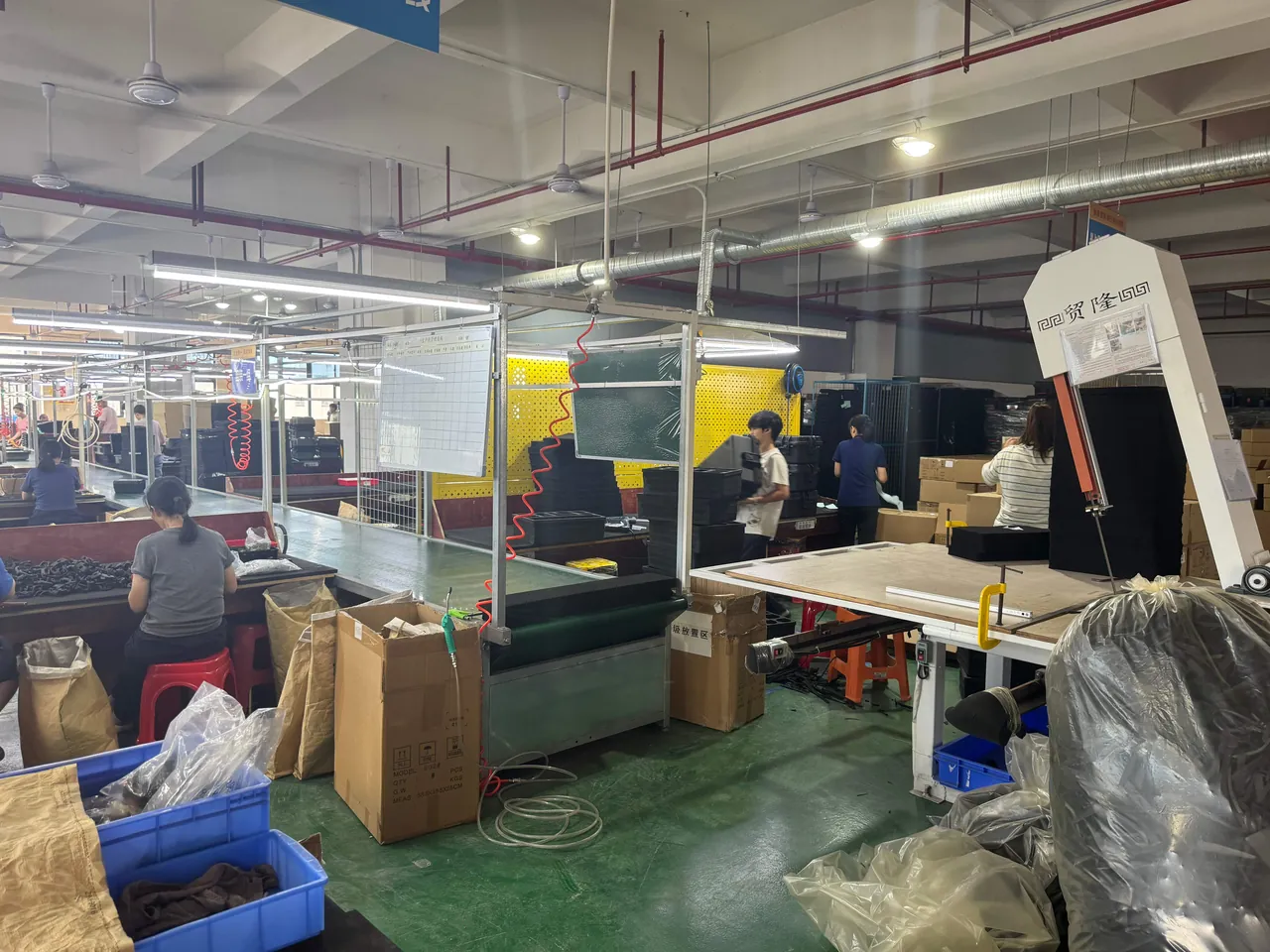
When standard foam cannot fit specific models, customization is the only path. JUNZHJIA provides a customization chain from 3D measurement, CNC slotting, to full case assembly, supporting OEM/ODM private labeling, and precisely molds per customer's snare diameter, cymbal count, and module dimensions. Core steps: inventory confirmation, physical or drawing measurement, foam zoning review, prototype confirmation, mass production.
Before customization, provide a complete inventory: snare diameter and height, cymbal diameters (common 14/16/18/20/22 inch), module dimensions and weight, hardware count. The more accurate the list, the better the fit. For mold cost and cycle, see custom case mold cost analysis; for factory selection, see how to choose a case OEM factory.
Another JUNZHJIA capability is matching seals and hardware per model, ensuring uniform latch, hinge, and gasket specs across a batch for easier maintenance and spare parts. For wholesale and agency clients needing global supply, this consistency lowers after-sales cost. For specific electronic modules, JUNZHJIA can supply anti-static liners and temperature-humidity logging cards, making precision transit more controllable.
Case structure and hardware selection
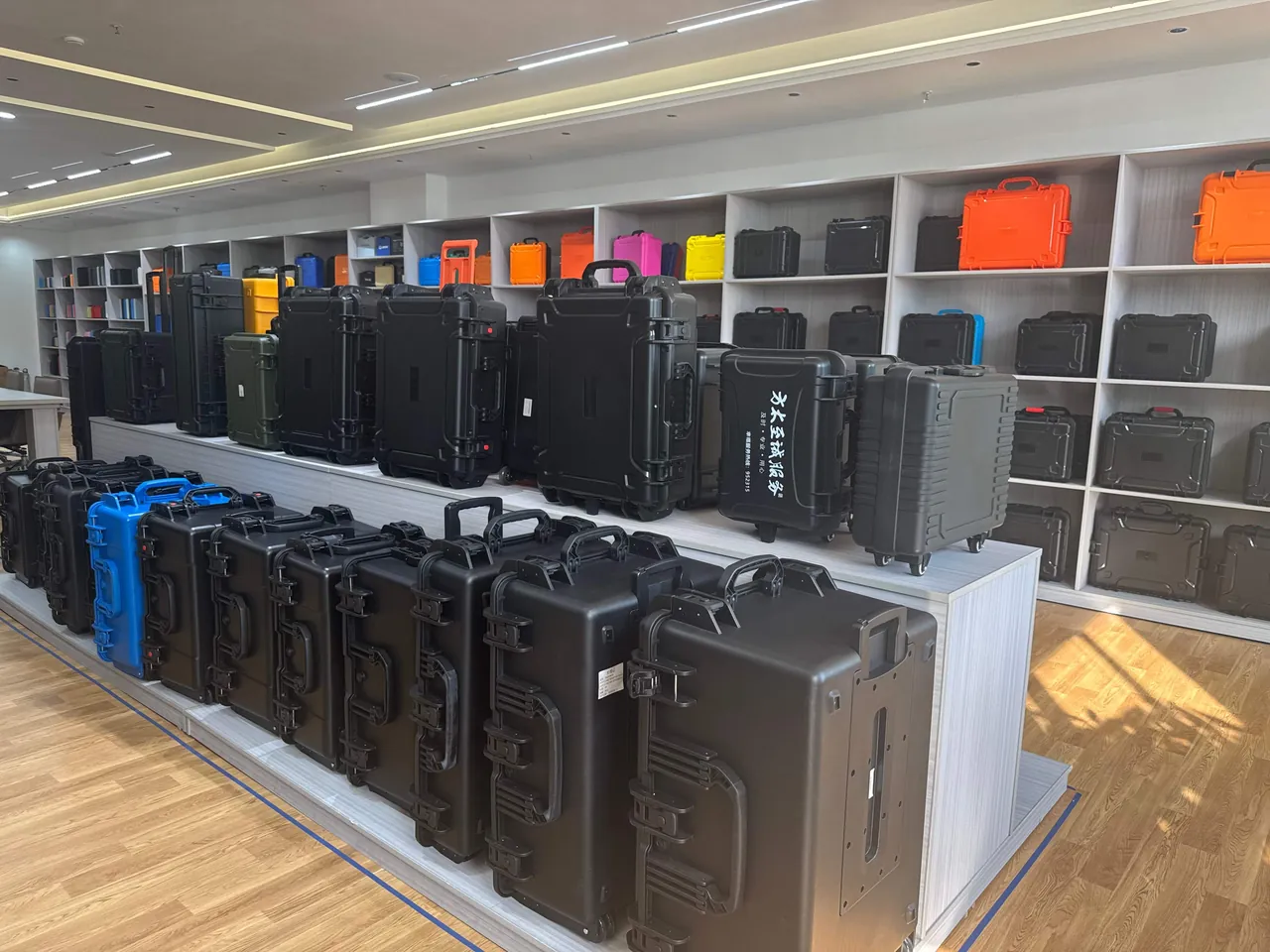
The case skeleton typically uses co-polymer PP injection or aluminum frame; wall thickness and rib design decide rigidity. For full kits above 40 kilograms, choose rib-reinforced injection or aluminum flight cases with wheels and a trolley handle for airport and backstage movement; related design is in case wheels and trolley handle.
Hardware is the lifeblood of case service life. Hinges must survive tens of thousands of opens without loosening; latches must press the gasket without hurting hands; gaskets must resist aging without cracking. For hinge, latch, and seal coordination, always refer to toolbox hinge latch seal — note this site uniformly links to the valid slug toolbox-hinge-latch-seal to avoid dead links. Latch personalization (lock ring, TSA lock) is in case lock customization options.
Cases should also consider pressure equalization. In aircraft cargo low pressure, a sealed case may develop negative pressure making opening difficult; a pressure equalization valve releases the differential smoothly, protecting the gasket and easing opening. For buyers needing certification files, JUNZHJIA can supply corresponding test reports and acceptance documents.
Handling, checked baggage, and live shows
A proven workflow: before loading, stack "heavy low, light high" — hardware case at bottom, snare and cymbal cases in middle, electronic module case on top with no heavy load; fill the case with an inventory list and fragile label; lay anti-slip mats and secure cases in the vehicle to avoid sliding on hard brakes.
For air checked baggage, cymbals and snare usually travel as accompanied or musical-instrument checked; electronic modules are best carried on board to avoid loss. Mark "fragile / this side up" and declare precision instruments at check-in. Live load-out must be fast; zoned foam gives every part a fixed place, and teardown reverses the process, sharply cutting load time.
For touring teams, build "one case one file": record each case's inventory, transit count, and repair history for wear alerts. This matches the protective case service life management idea. JUNZHJIA supports batch-coded marking for large show companies' asset management.
Cleaning, maintenance, and service life
A case is not buy-and-forget. After every transit, open the lid to air-dry the foam, clear dust and metal filings from cymbal slots; wipe the gasket and periodically check for aging cracks; add light lubricant to latches and hinges. Cleaning methods are in the protective case cleaning guide.
If foam is spilled or wetted, take it out to dry in shade to avoid mold and odor. EVA and pearl cotton can be wiped; slow-rebound foam is hard to dry once wet and may need replacement. Cracks or broken ribs mean stop use and report for repair to avoid expansion in transit.
For service-life management, judge by transit count and duty, not merely years. Frequently flown cases wear far faster than occasionally used school ones. For retirement criteria and authenticity, see identify genuine vs fake case and protective case service life. JUNZHJIA supplies spare parts to extend the whole-case service cycle.
Common transit damage cases and key points
Case one: cymbal crease. A band laid cymbals flat with a stand on top; transit produced a bend point and three cymbals were scrapped. Key point — cymbals must be vertical-zoned, non-contacting, zero point loading.
Case two: snare lacquer scratch. The snare was not cavity-fixed and rolled inside hitting hardware. Key point — snare half-embedded support, head free, physically isolated from hardware.
Case three: module screen crack. The module was pressed under heavy load without buffer. Key point — module suspended-wrap, top layer, slow-rebound liner and anti-static bag.
Case four: water in case, cymbal oxidation. Rain loading let water seep through the seam. Key point — choose IP65+ sealing, check gasket, add desiccant. The standard basis for these points is in seal shock case and the ISTA transport testing procedure.
How to choose case types by ensemble size
Choose case type by counting the inventory. Solo drummer: one snare case plus one cymbal case suffices. Full band drummer: split into snare, cymbal, hardware, and electronic module cases, three to four total, so every part has a fixed zone. School drum ensembles or show companies: modular combination by section with unified numbering for asset and fast handling.
With limited budget, prioritize the most fragile — cymbal and electronic module protection gives the highest return. If only one custom case is possible, prioritize a "cymbal + snare" combo case, with hardware in a divider case as transition. For whole-case selection and acceptance, custom case acceptance AQL gives sampling inspection reference.
Ultimately, a case's value is not "it fits," but "every transit arrives intact." With custom foam, OEM/ODM, and per-model seal matching, JUNZHJIA can serve full-scenario percussion protection from solo drummers to large show companies, with test documents and global supply support.
Pre-Order Procurement Checklist
Before placing an order, a short preparation step decides whether the finished case truly protects the gear or merely contains it. The first action is to build a complete inventory table: list every snare diameter and depth, every cymbal diameter (14/16/18/20/22 inch and hi-hat size), every electronic module's length-width-height and weight, and the count of stands, pedals, and thrones. The more precise this table, the tighter the foam fit, and tight fit is what converts a generic box into real protection. Missing or rounded numbers are the single most common cause of returned cases and delayed tours.
The second step is to define the transit profile. Ask how the kit travels: air checked baggage, road truck, parcel courier, or a mix. Each path has a different hazard signature — air emphasizes drop and cabin pressure, road emphasizes long low-frequency vibration, parcel emphasizes rough handling — and the foam density, wall thickness, and sealing grade should follow that profile. Map the profile to a test method by reading the ISTA transport testing procedure, which explains how distribution cycles are simulated in the lab.
The third step is material and compliance choices. Confirm foam flammability meets UL94, confirm the sealing target (IP65 or IP67) per waterproof case IP, and confirm whether a pressure equalization valve is needed for air freight via the pressure equalization valve article. For electronic modules, decide on an anti-static liner referencing the ESD shield case so dry backstage environments do not attract dust to sensitive connectors.
The fourth step is sample validation. Request a prototype cavity, physically fit the actual gear, and simulate a drop or two in-house before mass production. The custom case acceptance AQL gives a sampling plan for the batch so quality is verified rather than assumed. Finally, choose a factory by the criteria in how to choose a case OEM factory to secure consistent hardware and spare parts across the whole fleet.
Typical Ensemble Configurations
Configuration varies sharply with ensemble size, and getting it right early prevents both over-spend and under-protection. A solo practice drummer typically needs two cases: one snare case and one cymbal case, both with vertical slotting and corner-free support. This minimal setup already eliminates the two highest-risk failure modes — cymbal crease and snare lacquer scratch — at modest cost.
A full live drummer expands to three or four cases: a snare case, a cymbal case, a hardware case using the removable divider system, and a separate electronic-module case with a suspended slow-rebound liner. Splitting the module out is non-negotiable because mixing precision electronics with rigid metal hardware invites panel cracks that are expensive and hard to repair on the road.
A school drum ensemble or commercial show company should go modular by section, with unified case numbering and "one case one file" logging as described in protective case service life. Bulk purchases benefit from the cost visibility in custom case mold cost analysis, where higher upfront tooling is offset by lower per-unit foam waste and faster assembly.
For touring acts crossing borders, add TSA customs locks (see case lock customization options) and a pressure equalization valve, and carry test documents to satisfy carriers. JUNZHJIA supports OEM/ODM private labeling and per-model seal matching so a tour's entire case fleet shares identical hardware and spare parts — a practical advantage when a latch fails at 2 a.m. before a show. With the right configuration, the case stops being a container and becomes part of the instrument.
Frequently Asked Questions FAQ
Q: Should cymbals be laid flat or stood upright for transport? A: Strongly recommend upright, vertical zoning. A cymbal is a thin metal sheet that fears point loading producing creases; once bent it creates irreversible stress concentration, the tone turns dirty, and cracks spread from that point. Upright, each cymbal is slotted individually by EVA, contacting cushioning only on flat surfaces with zero local pressure. Flat laying seems safe but if other gear presses on top, the whole cymbal conducts the weight unevenly and the edge deforms easily under stacking pressure. The professional solution is independent slots, inserted one by one, no inter-sheet friction. Before transit also confirm cymbals are off the stand, felt washers and nuts tightened in the center hole to prevent loss, and a soft lip at the slot opening cushions opening-closing shock. Even with rough handling, cymbals then only bear even planar buffering with the highest safety factor.
Q: Does a snare need a dedicated cavity liner? A: Very much so. The snare is a thin-shell round cavity whose force concentrates on the rim and tension lugs; lacquer and plating scratch easily in collision, and the head collapses and wrinkles under sustained pressure. A dedicated cavity liner lets the snare half-embed in foam, bearing load only at the rim while the head hangs free from hard surfaces — impossible with generic fill. Slotting should use CNC-cut EVA or PU for high precision and tight fit. For high-end hand-built snares, add a slow-rebound foam layer at the cavity bottom to absorb floor impact. Before transit, loosen tension to a slack setting to avoid wrinkles from free head vibration. If the snare has engraved hoops or fragile lugs, hollow those foam positions for fixation. In short, the snare should not mix with hardware; physical isolation plus dedicated cavity is the basic principle, markedly reducing lacquer and hoop damage.
Q: Can electronic modules share a case with acoustic drums? A: Not advised. Electronic modules contain circuit boards, LCD screens, knobs, and connectors — precision electronics fearing vibration, moisture, static, and dust — while acoustic drums and hardware are rigid metal that rolls and impacts in transit. Mixed loading easily crushes or scratches the module panel. The correct approach is a separate module compartment, suspended-wrap with slow-rebound foam so the body never touches the wall and drop shock is absorbed by foam compression. In dry dusty environments also use anti-static foam or bags, consistent with the ESD shield case principle. Before transit power off, unplug, and secure connectors to avoid wobble scratches. Place the module compartment on top with no heavy load above. If same-case is unavoidable, at least separate zones with a solid EVA panel plus extra anti-static and buffer layers.
Q: What does IP67 mean on a case, and is it useful for drummers? A: IP is the protection grade per GB/T 4208 (equivalent to IEC 60529); the first digit guards solids, the second liquids. IP67 means fully dust-tight and short-immersion proof (typically 1 meter for 30 minutes). For drummers, IP65 (water-jet proof) already handles most rainy open loading and vehicle dew; IP67 adds immersion redundancy for users often shipping by sea, wading, or performing in mud. Emphasize that IP only covers dust and water, not constant humidity control; cymbal oxidation mainly comes from prolonged high humidity, not brief water. So beyond sealing grade, add desiccants and humidity cards and choose low-hygroscopic foam. Sealing relies on lid gasket and latch compression; related design is in case seal materials and the IP67 protective case. When buying, confirm the maker can supply grade test documents.
Q: How many cases does a full kit need? A: It depends on the ensemble. Solo or practice drummer: one snare case plus one cymbal case usually suffices. Full live drummer: split into snare, cymbal, hardware, and electronic module cases, three to four total, so every part has a fixed zone. School ensembles or commercial show companies: modular combination by section with unified numbering for asset and fast handling. With limited budget prioritize the most fragile cymbals and modules; hardware can transition in a divider case. Also consider total weight and handling; above 40 kilograms add wheels and trolley. JUNZHJIA can plan whole-ensemble configurations from solo drummer to large show company, supporting OEM/ODM labeling and global supply.
Q: What data is needed for custom foam? A: A complete inventory is mandatory before custom foam, as it is the premise of fit. At minimum: snare diameter and height, cymbal diameters and counts (common 14/16/18/20/22 inch and hi-hat size), electronic module length-width-height and weight, hardware types and counts, whether pedals and throne enter the case. Physical measurement or 3D drawings are even better, letting the maker review zoning and CNC-slot. The more accurate the information, the tighter the foam and the safer the transit. For mold cost and cycle see custom case mold cost analysis; for factory choice see how to choose a case OEM factory. JUNZHJIA supports per-model seal and hardware matching for uniform batch specs and easy later spare parts, and can supply anti-static liners and humidity logging cards for complex modules.
Q: Is MIL-STD-810H a military certification? A: No. MIL-STD-810H is an environmental engineering and laboratory test method standard published by the US Department of Defense, providing severe procedures for drop, random vibration, climate, and altitude. Many industrial case makers use it as a method basis for product-line environmental testing to prove reliability under harsh transit. But it is only a test method, not a military certification or adoption qualification. In promotion and procurement documents it should be clearly written as "environmental testing per MIL-STD-810H method" to avoid misleading terms like "military grade" or "military certified." Domestic references also include GB/T 4857 transport packaging series and ASTM D4169 distribution cycle for domestic logistics and North American markets; related compliance is in the MIL-STD-810H case compliance article.
Q: Can broken case hardware be replaced individually? A: Yes, and it should be individually replaceable — a key measure of maintainability. Hinges, latches, and gaskets are wear-prone; a professional case should have uniform specs for single-piece replacement. When buying, recognize uniform hinge-latch-seal design ensuring cross-batch interoperability. Latch personalization like lock rings or TSA locks is in case lock customization options. Aging cracked gaskets must be replaced or IP fails. A blocked pressure equalization valve also affects opening; maintain per the pressure equalization valve article. JUNZHJIA supplies spare parts and batch-coded marking for large clients' asset and spare management, extending whole-case service life and lowering lifecycle cost.
Q: How to judge a case should retire? A: Retirement should weigh transit count, duty, and appearance, not just years. Frequently flown cases wear far faster than occasionally used school ones. Retire or repair when: case cracks or ribs break, gasket widely ages and cracks causing IP failure, hinges or latches loosen beyond compression, foam collapses losing support. Authenticity and condition are in identify genuine vs fake case; life management in protective case service life. Daily "one case one file" recording transit count and repairs aids early warning. JUNZHJIA supports spare replacement and numbered management, extending use via hardware and foam replacement before total scrap, controlling cost.
Conclusion and Related Reading
Percussion is a mix of parts with drastically different rigidity; a case's value is not "it fits," but "every transit arrives intact." This article started from three core scenarios — snare support, cymbal anti-deformation, electronic-module cushioning — and, referencing real standards ISTA, MIL-STD-810H, and GB/T 4208, gave actionable selection, foam, sealing, and shipping plans. With custom foam, OEM/ODM, and per-model seal matching, JUNZHJIA serves full-scenario needs from solo drummers to large show companies, with test documents and global supply.
Related Reading