

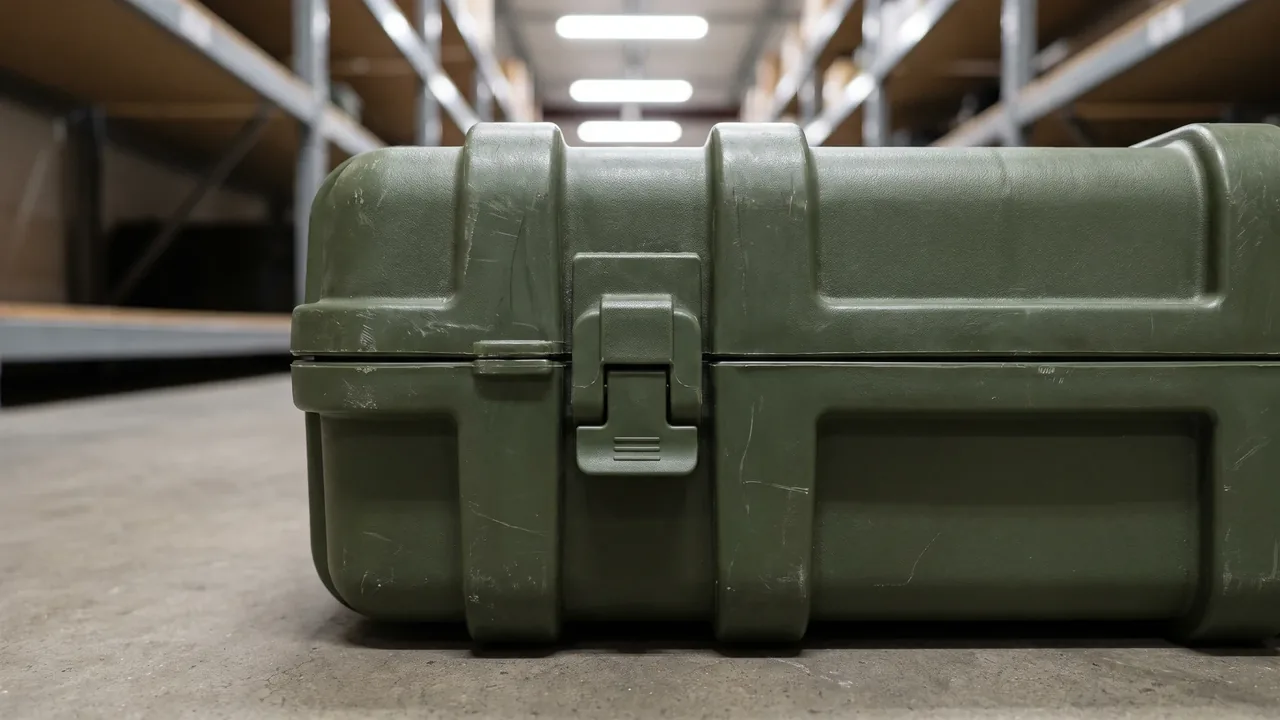
A surveying instrument case is a dedicated protective container built for total stations, RTK receivers, levels, GNSS antennas, rangefinders and the many accessories that accompany field survey work. Survey operations often unfold in mountains, wetlands, coastal zones and dusty construction sites, so the equipment must survive both transit shock and the erosion of high humidity, salt spray and particulates. The central demands on a surveying instrument case are therefore moisture control, positioned storage and portable transfer. When buyers search for terms such as Surveying Instrument Case or Instrument Case, what they actually need is not a box that merely holds the gear, but a storage and transport system that continuously protects precision angle and distance measurement systems in harsh conditions while letting scattered accessories return to a fixed place quickly. This article explains, from a container-engineering perspective, how surveying instrument cases are specified across moisture design, liner zoning, sealing, shock transport, stacking management and procurement acceptance, providing a practical selection reference for survey institutes, geospatial units and engineering investigation teams.
Protected Objects and Field Scenarios
The objects protected by a surveying instrument case are typically high-value spatial-positioning devices such as total station main units, RTK base and rover units, measurement robots, digital levels and the accompanying prisms, tribrach adapters, surveying poles and battery packs. Inside these devices sit precise angle encoders, distance modules and wireless communication units that are sensitive to shock, humidity and temperature swings. Across the chain of topographic mapping, engineering layout, cadastral survey and mine measurement, the case must ride in vehicles over rough roads, move frequently between setups, and stack in camp for storage. Compared with a general Instrument Cases: Precision Meter Transport & Protection, a surveying instrument case puts more emphasis on visual positioning of accessories and loss prevention, because losing a single prism or battery can halt an entire field crew. Clarifying the protected objects and operation frequency is the first step in deciding case capacity, liner zoning and moisture rating. Looking at operation types, control surveys and topographic mapping often use expensive gear with few transfers but long single hauls, so they demand higher shock and moisture protection; engineering layout and as-built surveys happen frequently at scattered points, so they stress retrieval efficiency and accessory positioning; cadastral and property surveys move through towns and villages, so they care more about portability and dustproofing. These different priorities should lead to different choices in capacity, liner density and seal rating rather than one spec for every scenario. Crews that transfer across provinces or borders should also reserve more desiccant and stricter seal checks to counter humidity buildup during long sealed transit, which is a common source of field failures.
Moisture Design: Desiccant Bay and Humidity Indication
High humidity in the field is the primary threat a surveying instrument case faces; once moisture enters the box it condenses on lenses, circuit boards and metal contacts, and over time causes mold and contact oxidation. A mature moisture design usually provides a dedicated desiccant bay or silica pocket inside the case, paired with a humidity indicator card that shows internal humidity at a glance. Desiccant volume should match the internal air volume and the sealed duration, with larger margins in hot, humid regions. Some high-value cases even embed a small temperature-humidity logger to give traceable environmental data for cross-province transfers. It must be clear that this article discusses only container-level moisture management and does not touch the internal electronics or structure of any survey device; specific storage requirements should follow the manufacturer's instructions and local regulations. The moisture thinking works together with the sealing logic in Case Seal Strip: The Key Waterproof and Dustproof Accessory for Protective Cases to build a complete moisture barrier.
Positioned Storage: Liner Zoning and Accessory Fixation
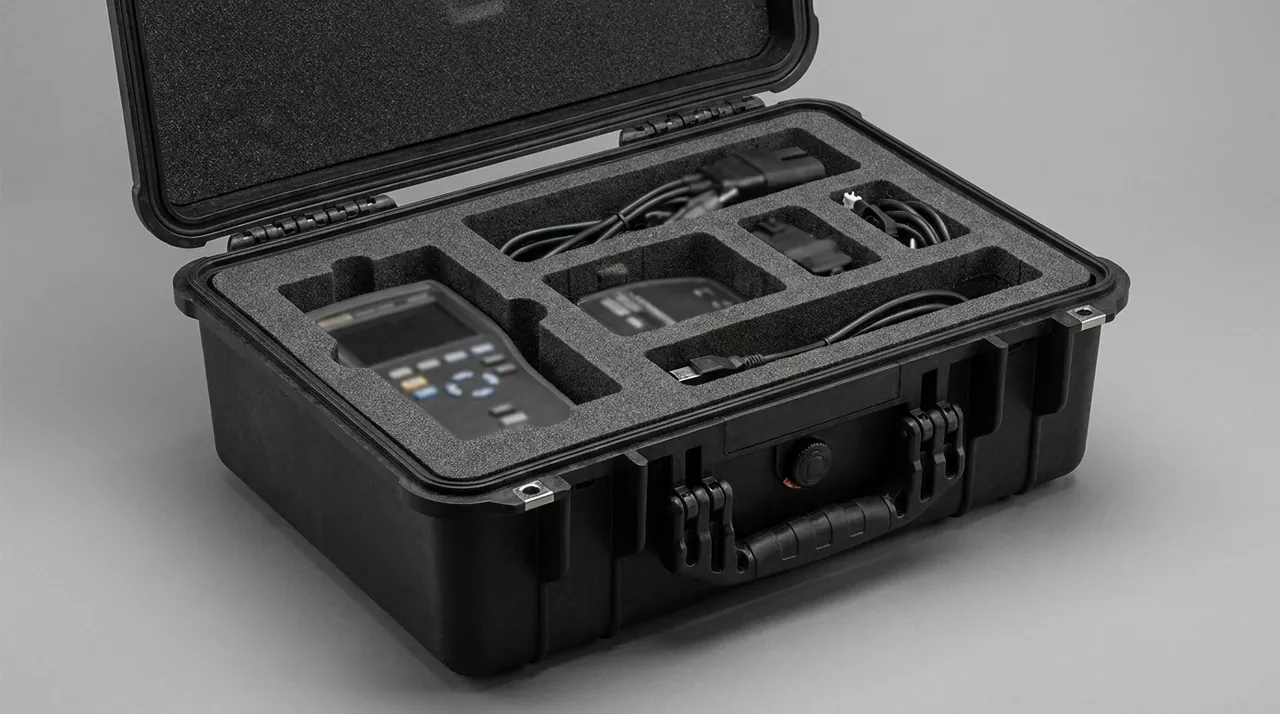
Positioned storage is the capability that sets a surveying instrument case apart from ordinary boxes. Survey accessories are scattered and varied in shape; if piled loosely they are hard to retrieve and collide during transit. The mainstream solution uses CNC-carved or pick-and-pluck foam to create form-fitting zones: the total station gets its own cavity, tribrachs and prisms each occupy a slot, and batteries and cables go into side pockets. Small frequent items can be fixed with elastic straps and mesh pockets to stop sliding. The core of positioned storage is to make every item have a fixed place, so packing back at the end of a session takes seconds, raising efficiency and lowering loss probability. The liner practice is detailed in Case Foam Lining: Cushioning and Customization of Case Interiors, and the zoning logic is compared in Equipment Case and Gear Case: Zoning and Internal Layout for a broader view of case organization.
Shell Material and Lightweight Trade-offs
Survey work often requires personnel to carry gear over mountains, so light weight is especially important for a surveying instrument case. Among engineering plastics, PP and modified PP strike a good balance between weight and low-temperature performance and are the default for most portable survey cases; ABS shells are stiffer but heavier; aluminum shells offer the highest strength at a clear weight penalty. Selection should weigh single-person carry distance, vehicle transport ratio and total equipment weight. For long backpacking stretches, prioritize a PP shell with optimized wall thickness and sensible rib layout, and add shoulder straps or wheels to reduce load when needed. The material trade-off is quantified in Case Shell: Structural Materials and Molding Process of Protective Cases, and the plastic box structure is further explained in Plastic Protective Boxes & Plastic Toolboxes: Industrial Plastic Material & Structure. Beyond weight, surface hardness and scratch resistance also matter, because in the field the shell inevitably rubs against brush, rock and mixed metal tools. If the case is exposed long term to strong UV on plateaus or coasts, anti-aging and anti-yellowing performance should be considered, choosing modified plastic with UV stabilizers when needed. For light cases shipped by air, the balance of weight saving and strength is critical; a topology-optimized rib layout can raise overall rigidity with little added weight instead of simply thinning the wall, which would fail early under stacking and drop loads that the container must survive in service.
Sealing and Dust Control: The Field Meaning of IP67
Surveying happens on dusty construction sites, sandy wilderness and damp tidal flats, so dustproofing and short immersion resistance directly affect equipment life. To reach a rating such as IP67, a surveying instrument case relies on the continuous gasket around the lid and the compression structure: when latches press the lid, the elastic gasket is uniformly squeezed into a face seal that blocks dust and droplets. The gasket is usually EPDM or silicone for UV and temperature resistance in the field. For cases with vents, a pressure equalization valve with waterproof breathable membrane balances pressure while blocking water. Seal quality should be verified against Waterproof Cases: Sealing Structure & Immersion Protection and What Is an IP67 Protective Case? Core Protection and Selection, ensuring the claimed rating is backed by structure and testing rather than marketing language alone, which is essential for buyers approving a production batch.
Shock and Transport: Buffering RTK and Total Stations
The angle and distance modules inside total stations and RTK units are extremely shock sensitive, and drops or road vibration during transit can cause reading drift. The shock isolation of a surveying instrument case relies on combined multilayer foam: a high-density bottom layer carries the main buffer while a lower-density top layer conforms to the equipment shape and absorbs high-frequency jitter. For long vehicle hauls, add cushion pads between case and vehicle and strap the case to limit sliding. The design must match system natural frequency with the allowable acceleration of the contents to avoid amplifying vibration at certain bands. This principle is shared with Shockproof Cases: Cushioning Structure & Impact Isolation Design and echoes the metrology protection emphasis in Precision Instrument Protective Case: Shock Protection and Safety for Metrology and Calibration Equipment, making it a useful extension for buffering RTK main units during transit.
Latches and Pressure Resistance: Transit Safety
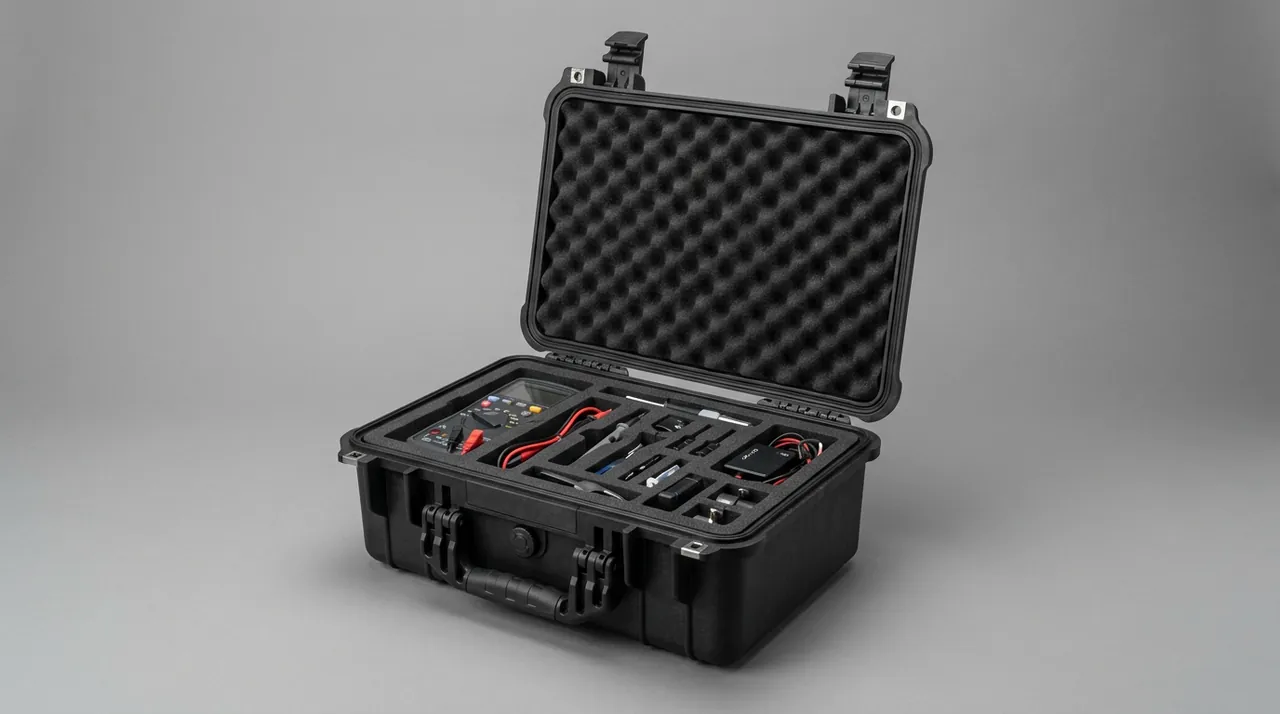
During vehicle transport and air freight, a surveying instrument case lid may open accidentally from pressure difference or vibration, so latch reliability matters. Common configurations include press buckles, butterfly clasps and lockable anti-theft bases; selection should focus on latch material, cycle life and anti-loosening structure. When cases stack, the bottom case bears the weight of all above, so the latch mounts must work with shell ribs to spread load rather than stress the latch points. In high-altitude or air scenarios, a breathable valve that balances pressure significantly reduces latch burden. Latch and pressure selection is detailed in Case Latch: Pressure and Theft Resistance Hardware for Protective Cases; writing the latch grade into the specification at procurement prevents later substitution with inferior parts and protects the whole shipment.
Stacking and Limiting: Multi-Case Turnaround
Survey crews often carry several instrument and accessory cases together, and warehouse or vehicle space is limited, so stacking is normal. Stable stacking depends on top-surface flatness, four-corner stacking corners and locator bosses. A stacking corner conducts the upper case's weight to the lower case's reinforcement ribs and provides alignment to prevent horizontal slip. For cases holding precise angle equipment, stacking height must be strictly controlled; excessive stacking amplifies bottom-case compression and weakens the liner's grip. When planning warehouse and vehicle layout, determine a safe layer height from the principles in Case Stacking Corner: Load-Bearing and Alignment Hardware for Stacked Cases and apply the turnaround logic of Stackable Cases: Warehouse Turnaround & Stacking Protection, so the whole column forms a stable load-sharing body and reduces mutual impact in transit.
Labeling and Asset Management: Rapid Inventory
Survey units manage gear as case groups, and appearance alone makes it hard to identify contents and status. A mature approach sets a label zone on the shell with asset number, equipment name, responsible person and latest calibration date, optionally with a QR code for scan inventory. Color visual management is also used to distinguish total station cases, RTK cases and accessory cases, reducing mispick and omission. Label material must be wear-resistant, weatherproof and not easily erased by solvents, and the position should avoid the seal face and load zones. Through QR and color dual management, administrators can count without opening cases, protecting gear from unnecessary opening disturbance while raising turnaround efficiency. This thinking aligns with Case Labeling and Asset Tracking and Case Color Visual Management used by equipment-intensive organizations for disciplined fleet control.
Certification and Standards: GJB and MIL-STD-810H
Units undertaking national land survey, emergency mapping or overseas projects often require surveying instrument cases to meet environmental and reliability standards. Domestically, GJB Military Standard Cases: China Defense Compliance & Testing sets requirements on material, structure and testing; internationally, What Does MIL-STD-810 Testing Cover? How Protective Cases Comply covers high-low temperature, humidity, vibration, shock and drop tests. For survey gear, vibration and shock are especially critical because they relate directly to angle accuracy and distance stability. At acceptance, require the supplier to provide corresponding test reports and verify that test conditions cover the actual transport scenario. It must be stated that this article discusses only the container's compliance path; the export and transfer of the survey equipment itself must follow local regulations and export control, and this article does not address any performance parameters of the contained devices at all.
Custom Molding and Liner
When a standard surveying instrument case cannot fit specially shaped equipment or complete accessory kits, a custom molding route is needed. Molding splits into shell injection tooling and liner foam processing: the shell tool defines the external shape, wall thickness, ribs and latch mounts, while the liner is CNC carved or thermoformed from the 3D model of the equipment and accessories. Before customization, a tooling review confirms parting line, draft angle, shrinkage and first-trial validation. The liner stage confirms foam density, color and flame class, and designs support zones at vulnerable points. For a complete checklist of liner factors, refer to What Factors Should a Custom Protective-Case Foam Insert Consider? A Complete Checklist Based on Equipment Shape, Weight, and Vulnerability, and the process level extends to Case Shell: Structural Materials and Molding Process of Protective Cases for a full production picture of the case.
Field Workflow: Departure, Transfer and Return
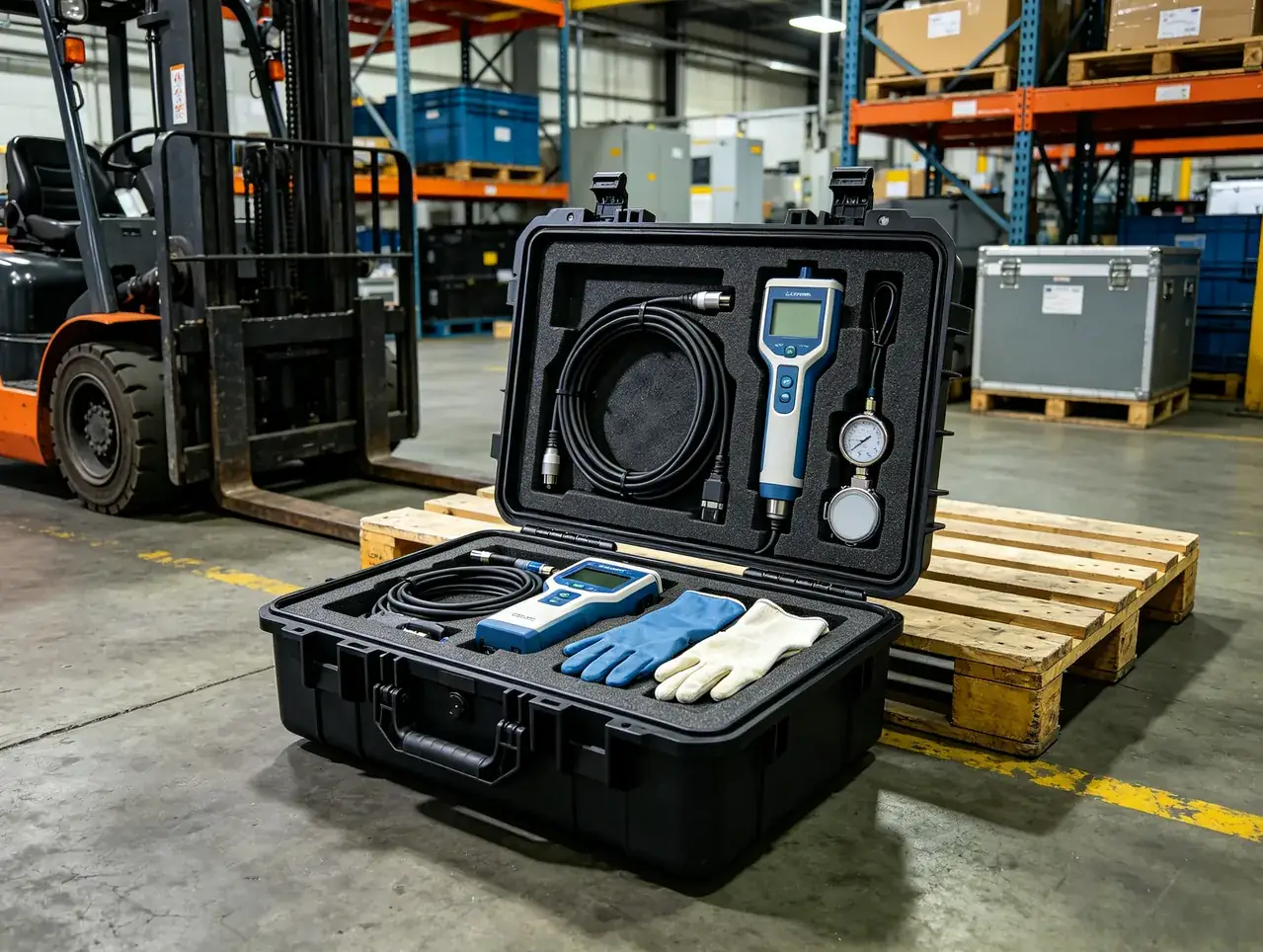
A qualified surveying instrument case only performs under a disciplined workflow. Before departure, check the list and confirm desiccant status, humidity card and liner integrity; place equipment into preset cavities without forcing small items. During transfer, keep the case upright or in the marked orientation and strap it to prevent sliding; for multi-layer stacking align the stacking corners. After returning to camp, open in a clean area, take out equipment, then close or transfer the case promptly to keep dust out. A disciplined process significantly extends gasket and liner life and minimizes human damage. For cross-region crews, attach the packing list and calibration record to the case to form a traceable closed loop, and the turnaround logic also relates to Transit Case and Shipping Case: Roles at Logistics Hub Nodes when planning hub transfers between field bases and central storage with confidence.
Beyond physical design, the human factor decides whether a surveying instrument case actually performs in the field. Crews should be trained on the correct packing sequence, the meaning of orientation marks, and the routine of checking the gasket and desiccant before each departure. A short illustrated card fixed inside the lid can remind handlers of the cavity layout and the maximum stacking layer, reducing the chance that a heavy module is placed on top of a fragile one. Documentation matters too: keep a copy of the packing list, the latest calibration date and the desiccant replacement log with the case, so any handover between shifts is fully traceable. Units that rotate personnel frequently benefit most from this discipline, because a well-engineered container still fails when loaded by someone who ignores the markings. Pairing the case with a simple transit checklist posted at the dispatch point pays for itself after preventing even a single damaged shipment during a busy field season of continuous movement.
Maintenance and Faults: Gasket and Foam
During long service, faults of a surveying instrument case concentrate on two consumables: the seal strip and the liner. Under UV, ozone and repeated compression, the gasket hardens, cracks or loses elasticity, reducing waterproof and dustproof capability; replace it periodically with the same-spec gasket. The foam liner may develop dents, crumbs or collapse after repeated handling and compression, weakening positioning and buffering; local repair or full re-lining restores it. If latches or hinges loosen or stick, tighten or replace them promptly to avoid accidental opening in transit. Maintenance also uses neutral detergent on the shell, avoiding solvents that corrode shell and gasket. A regular inspection and consumable-replacement log guarantees long-term reliability, and the general Protective Case Cleaning and Maintenance method applies here with intervals tuned to duty cycle and climate exposure of the deployed case fleet in the field. The inspection should at least cover whether the gasket is hardening or cracking, whether latches open and close smoothly, whether the liner is collapsing or shedding, and whether the shell has cracks or deformation. Crews working in rainy and humid regions should shorten the replacement interval for gaskets and desiccants and clean the seal face before every departure to remove grit and grass that could embed in the gasket and cause local leaks. Idle spare cases should be opened periodically for ventilation and desiccant replacement to avoid premature gasket aging under long compression and sealing. Assigning maintenance responsibility to specific people with records keeps the whole crew's cases at a consistent protection level that field work depends on.
Procurement Pitfalls: Specification and Acceptance
The most common pitfall when buying a surveying instrument case is comparing price while ignoring the specification. A complete spec should state shell material, wall thickness, liner material and density, seal rating, latch type, stacking load, temperature range and certification. At acceptance, physically check lid closure, gasket continuity, liner fit, latch engagement and stacking stability, and sample drop and vibration tests for critical batches with records kept. For boxes claiming a standard, require the original test report. Solidifying the spec and acceptance checklist effectively avoids mismatch, and more experience appears in How to Avoid Procurement Pitfalls When Buying Protective Cases: Ten Common Quality Problems and How Do You Write Tender Specifications for Protective Cases? Key Points for Compiling a Technical Specification to turn needs into enforceable contract language with measurable acceptance criteria for every delivery.
Frequently Asked Questions
Q: How is a surveying instrument case different from a normal instrument case? A: The core difference is that a surveying instrument case emphasizes moisture control, positioned storage and field portability, while a normal instrument case only needs to hold the gear and close tightly. A surveying instrument case designs independent zones for the total station, RTK and scattered accessories so every item has a fixed place, preventing transit collision and enabling quick retrieval in the field. In addition, survey work happens in humid, sandy and salt-spray environments, so the case commonly carries a desiccant bay, humidity indicator card and continuous gasket to block moisture and dust from reaching sensitive optics and contacts. In material choice, it values light weight, often using PP engineering plastic to lower the carry load for crews moving between setups on foot. In short, a surveying instrument case is a dedicated container aimed at moisture, positioning and portability rather than a generic storage box, and its design must serve the high-frequency transfer and high-humidity reality of survey operations without compromise. The practical payoff is a container that protects both the instrument and the working schedule of the crew that depends on it daily, because a delayed or damaged total station can stall an entire mapping campaign until replacement arrives.
Q: How does a surveying instrument case achieve moisture control? A: A surveying instrument case controls moisture through three coordinated paths: a desiccant bay, humidity indication and a sealing structure. First, a dedicated desiccant bay or silica pocket inside the case lowers local humidity by absorption and is checked periodically with a humidity indicator card that changes color at saturation. Second, a continuous gasket with a compression structure forms a face seal that stops external moisture from entering; cases with vents use a pressure equalization valve with a waterproof breathable membrane so gas can balance without letting droplets through. Third, humid regions should enlarge the desiccant margin and may embed a temperature-humidity logger for traceable environmental data during long transfers. It must be emphasized that these are all container-level humidity management and do not touch the internal structure or electronics of any survey device. Specific operation should follow the manufacturer's instructions and local regulations, and this article discusses only the moisture capability of the container itself without exception or implied coverage of the protected instruments inside the box during storage.
Q: Survey accessories are many and messy; how to store them without loss? A: The key to storing scattered survey accessories is zoned positioning plus visual management. In practice, use CNC-carved or pick-and-pluck foam to create form-fitting zones based on equipment and accessory shapes: the main unit gets its own cavity, prisms and tribrach adapters each occupy a slot, batteries and cables go into side pockets, and elastic straps with mesh pockets fix small items so nothing slides during transit. Once every item has a fixed place, packing back at the end of a session takes only seconds, raising efficiency and lowering the probability of loss at remote setups. Combined with external labels and color visual management, administrators can quickly identify case contents without opening the lid. The liner practice references the foam lining guide, and the zoning logic borrows from equipment case layout, turning scattered accessories into an orderly system instead of random piling that invites loss. A quick end-of-day check that every cavity is filled also confirms nothing was left behind at the survey point before the crew moves on to the next station.
Q: What shock issues should be noted when transporting a surveying instrument case? A: The core of transport shock control is keeping the acceleration on the angle and distance modules of total stations and RTK within a safe range so that reading drift does not appear after delivery. The method is a combined multilayer foam system: a high-density bottom layer carries the main buffer while a lower-density top layer conforms to the equipment shape and absorbs high-frequency jitter from rough roads. For long vehicle hauls, add cushion pads between the case and the vehicle floor and strap the case to limit sliding that could concentrate impact at one corner. Design must match the system natural frequency with the allowable acceleration of the contents to avoid amplifying vibration at certain bands. This principle is shared with shockproof cases generally. At acceptance, sample vibration tests confirm reading drift stays within tolerance, and the buffering selection can also reference the shock protection points of precision instrument protective cases. Documenting the approved transit orientation on the case exterior helps new drivers handle it correctly without special training on the crew.
Q: What should be considered when stacking surveying instrument cases? A: Stacking surveying instrument cases first requires aligning the four-corner stacking corners so the upper weight travels through reinforcement ribs to the lower case rather than pressing on latches or seal faces that could leak. Second, control the stacking layer height, because excessive stacking amplifies bottom-case compression and weakens the liner's grip on precise equipment, raising the risk of internal movement. Third, after stacking, strap or limit the whole column to prevent horizontal slip during transit over uneven terrain or during sudden braking. Finally, determine a safe layer height from stacking test data and apply color-coded management for different categories so handlers do not mix incompatible loads. Following these points saves space while guaranteeing safety, and the load-bearing and alignment principles can be referenced in the dedicated stacking corner guide for protective case fleets that must survive rough handling and uneven pallet loads during extended deployments in varied climates and terrain across the survey region.
Q: What protection rating does a surveying instrument case need? A: A surveying instrument case is usually recommended to reach IP67 or a similar rating to cope with construction dust, wind-blown sand and short accidental immersion in puddles or tidal flats. Reaching that rating depends on the continuous gasket around the lid and the compression structure: when latches press the lid, the elastic gasket is uniformly squeezed into a face seal, and the gasket material is often EPDM or silicone for aging and wide-temperature resistance in the field. If the case has a vent, it must use a pressure equalization valve with a waterproof breathable membrane to avoid becoming a hidden water channel during rain or washing. At acceptance, check that the gasket is continuous without breaks, the lid closes tightly and the latch compresses fully around the perimeter. The sealing structure and materials can be referenced in the seal strip guide and the waterproof case comparison to ensure the claimed rating has testing support. A simple squeeze test of the gasket after delivery can reveal voids that paperwork alone would miss before the case enters service.
Q: What is the custom molding workflow for a surveying instrument case? A: Customizing a surveying instrument case usually splits into shell tooling and liner processing, because standard sizes rarely fit a complete accessory kit exactly. In the shell stage, the external shape, wall thickness, ribs and latch mounts are designed from the equipment and accessory 3D model; after a tooling review confirms parting line, draft angle and shrinkage, a trial mold validates dimensions before mass production begins. In the liner stage, zoned foam is CNC carved or thermoformed based on equipment shape and vulnerable points, with support zones at fragile items. Before customization, confirm foam density, color and flame class, and design retention straps at items that could lift out. Although tooling has higher upfront cost, it maximizes positioned storage and shock isolation and lowers long-term loss and breakage cost across the fleet. Process details extend to shell molding and the custom foam insert factor checklist used by packaging engineers during project validation phases for exact fit. A documented first-article inspection at the supplier is the cheapest insurance against a fully non-conforming batch reaching the field crew after purchase.
Q: How should the specification for purchasing a surveying instrument case be written? A: When purchasing a surveying instrument case, the specification should at least include shell material and wall thickness, liner material and density, seal rating, latch type, stacking load, temperature range, certification and a liner zoning drawing that matches the actual kit. At acceptance, physically check lid closure, gasket continuity, liner fit, latch engagement and stacking stability, and sample drop and vibration tests for critical batches with records retained. For boxes claiming compliance, require the original test report rather than a summary. Solidifying the spec and acceptance checklist effectively avoids mismatch between what was quoted and what was delivered. More systematic writing methods appear in the tender specification compilation guide and the procurement pitfall checklist, which help buyers translate requirements into enforceable contract language with measurable acceptance criteria and clear remedies for non-conforming deliveries from any supplier at any time. Treating the specification as a living document also lets later case variants reuse the same template with only small edits when the crew's kit expands.
Q: Can a surveying instrument case store GNSS antennas and batteries long term? A: A surveying instrument case can be used for temporary and medium-term storage of GNSS antennas and batteries, but supporting measures are required to keep both the container and the contents safe. First, keep the interior dry by replacing desiccants regularly and monitoring the humidity indicator card so condensation never forms on connectors. Second, batteries should be stored in separate limited positions according to the equipment instructions to avoid short circuits with metal contacts, and the relevant container requirements follow the manufacturer rather than this article. Third, avoid direct sunlight and high temperature to slow gasket aging and liner deformation during long idle periods. Long-term storage cases should stand upright, avoid heavy pressure from stacked loads, and carry an external asset label for inventory. It should be stated that this article discusses only the container's storage conditions; the preservation standards of batteries and antennas themselves should follow the manufacturer's instructions and local regulations, and this article does not address battery internal structure or chemical formulation at all under any circumstance.