


Geothermal plant components share two traits that are uncommon elsewhere: prolonged contact with highly mineralised brine, and high operating temperature followed by a cooling phase once the unit shuts down. When wellhead assemblies, plate and shell-and-tube heat exchangers, wellhead valves and corrosion-resistant pipework are stripped for inspection and moved, their surfaces usually still carry brine residue, silica scale and sulphur-bearing deposits. Inside a closed case those residues keep working. Chloride drives pitting, hydrogen sulphide contributes to stress corrosion cracking, and dried scale breaks loose under vibration to become an abrasive. The verdict up front: a geothermal equipment case should treat residue control after cleaning and drying as its first line of defence, carry parts on corrosion-resistant and washable liners, manage thermal condensation through sealing, desiccant and a pressure equalization valve, and locate plates, tube bundles and valve internals in compartments shaped to their true outlines so nothing touches anything else. The sections that follow move from fluid chemistry to structure, materials and acceptance.
Losses tend to happen where nobody is looking. An exchanger plate is a fraction of a millimetre thick and one deformed edge can make an entire pack leak. A tube bundle whose tube ends swallowed debris needs an internal borescope inspection of every tube before it returns to service. A wellhead valve flange groove scored by scale and hard particles cannot be repaired on site and goes back to the workshop. The root cause is seldom distance. It is the handling between dismantling and boxing, together with a case that was never designed for corrosive residue in the first place. For maintenance and procurement teams, putting the case on the tooling list and writing down the post-strip cleaning and drying sequence is an investment that pays back quickly. The cleaning classes, material choices and test bases below can be lifted straight into a procurement specification.
Table of Contents
- 1. Transit Challenges: Brine Residue, Thermal Condensation, Sealing Faces
- 2. Brine Corrosion Mechanisms: Chloride Pitting, Sulphide Attack, Crevices
- 3. Scale and Residue: Cleaning, Drying and Pre-Packing Inspection
- 4. Plate Heat Exchanger Plates: Anti-Distortion and Port Protection
- 5. Shell and Tube Bundles: Support and Vibration Control
- 6. Wellhead Equipment and Valves: Seats, Flanges and Actuators
- 7. Resistant Fittings and Expansion Joints: Bevels and Concentricity
- 8. Residual Heat, Dew Point and Condensation Control
- 9. Damping and Lifting: Load Path and Lift Point Layout
- 10. Sealing Class and Case Structure: IP, Equalization, Salt Fog
- 11. Transit Verification: MIL-STD-810H as a Method Reference
- 12. Selection Table and Typical Applications
- 13. Acceptance, Spare Rotation and OEM/ODM Delivery
- Frequently Asked Questions
1. Transit Challenges: Brine Residue, Thermal Condensation, Sealing Faces
Geothermal fluid is typically high in total dissolved solids, carries chloride and hydrogen sulphide, and in some fields is supersaturated with silica. Components accumulate mineral deposits and corrosion products in service, and if they are boxed without proper cleaning, those deposits become a continuing corrosion source in transit: a brittle salt crust while dry, a corrosive liquid again once it takes up moisture, and always clinging to low points and crevices where nothing can reach it.
Heat is the second challenge. Wellhead temperatures above one hundred degrees Celsius are common, and heat exchangers and pipework retain residual warmth for a long time after shutdown. Boxing a warm part lets the internal air expand; as it cools the case draws a vacuum and condensation forms, and that condensate dissolves residual salts to create a locally aggressive environment in exactly the seal groove roots and bolt hole bores where repair is hardest. The chain is far more damaging than simple dampness, because it supplies both an electrolyte and aggressive ions at the same point.
The third challenge is the fragility of sealing faces and thin-wall components. Exchanger plates, tube ends and valve flange grooves achieve sealing through precision fit, and none of them tolerates either an impact or an abrasive particle. The design sequence for a geothermal case should therefore be residue handling first, mechanics second and sealing third. Running that order backwards produces the familiar outcome of an excellent case and a scrap part.
2. Brine Corrosion Mechanisms: Chloride Pitting, Sulphide Attack, Crevices
Chloride is the principal driver of pitting and crevice corrosion. It concentrates at weak points in the passive film and penetrates the layer, producing pits that grow inward. A pit with a small surface opening is almost invisible to the eye while the wall section and the sealing function are already compromised. Crevice attack occurs in flange bolt holes, gasket grooves, valve packing boxes and plate gasket grooves, all poorly ventilated and prone to liquid retention, and it commonly appears alongside pitting.
Hydrogen sulphide introduces a different risk. In the presence of moisture and tensile stress, high-hardness and high-strength materials can suffer stress corrosion cracking with no visible warning, and the surface may look entirely normal. When specifying metal liner fittings, cradles and fasteners, material systems resistant to both chloride and sulphide should lead, such as duplex stainless, low-carbon martensitic stainless or suitably surface-treated components, and carbon steel or zinc-plated items should not sit against stainless parts over long periods and set up a galvanic couple.
Wet-dry cycling amplifies both mechanisms. On a sea leg or a short open-air hold, day-night temperature swings push internal relative humidity across the critical value again and again. On a metal surface cycling between wet and dry, corrosion products are washed away repeatedly while the passive film struggles to rebuild, so the rate exceeds that of continuous immersion. What the case can do is narrow and specific: reduce residue as far as possible before packing, keep moisture outside, and minimise liquid retained in crevices. Those three map onto cleaning and drying, IP67 sealing with desiccant, and reliable pressure equalization with a washable cavity. Comparable work in near-marine duty is described in desalination plant case and refinery valve case.
| Mechanism | Typical locations | Key point | In-case countermeasure |
|---|---|---|---|
| --- | --- | --- | --- |
| Chloride pitting | Plate surfaces, valve seats, tube ends | Passive film breaks locally, pit grows inward | Deionised final rinse, VCI paper, desiccant humidity control |
| Crevice attack | Flange bolt holes, gasket grooves, packing boxes | Stagnant liquid, oxygen starved, ions concentrate | Blow dry and cap openings, avoid storing gaskets compressed |
| Sulphide-driven cracking | High-strength bolts, springs, hardened faces | Wet condition plus tensile stress, no visible warning | Sulphide-resistant material system, no dissimilar metal contact |
| Scale spalling abrasion | Plate gasket grooves, tube ends, valve bodies | Dried crust breaks loose and acts as abrasive | Descaling before packing, washable cavity, no loose particles |
3. Scale and Residue: Cleaning, Drying and Pre-Packing Inspection
Cleaning is the most effective and the most frequently compressed step in geothermal component protection. The recommended sequence is a low-pressure water rinse to remove loose deposit, a descaling agent suited to the material to attack silica and carbonate scale, a rinse with deionised or demineralised water, and finally an air or nitrogen blow-down until no liquid film remains. For components that have seen sulphide-bearing fluid, the final rinse should also avoid leaving chloride behind, which rules out a general-purpose mains water supply for that stage.
Drying has to be confirmed by location, not by appearance. Enclosed cavities, the interior of a tube bundle, flange bolt holes and gasket grooves are all hard to dry and should be blown through individually and checked by wipe. Packaging materials matter too: absorbent board, timber and cotton liners act as local moisture reservoirs inside the case and should be replaced with closed-cell foam, non-woven fabric and wipeable soft pouches.
A pre-packing checklist is worth making into a signed form: no visible salt bloom or scale trace on surfaces, every opening capped, flange and plate gasket grooves protected by soft shrouds, gaskets and fasteners stored in separate bins, cavity clean of loose particles, desiccant and a humidity indicator card present. File the completed form with the case against the lot number so a site recheck can follow the trail. Cleaning and reuse practice is covered in how to clean protective case; for spares that rotate repeatedly, a liner that can be removed and washed is worth more than single-trip packaging, as described in case removable divider system.
4. Plate Heat Exchanger Plates: Anti-Distortion and Port Protection
A plate heat exchanger plate is pressed from stainless or titanium sheet typically between four and eight tenths of a millimetre thick, with a corrugation pattern and port holes, and the pack is stacked and clamped in a frame. The critical dimensions are corrugation depth, the port periphery and the gasket groove, and distortion in any of them will leave the pack leaking even when correctly clamped. In transit a plate must not be stacked under load, must not be hung from a support, and must never have a port edge resting against a hard object.
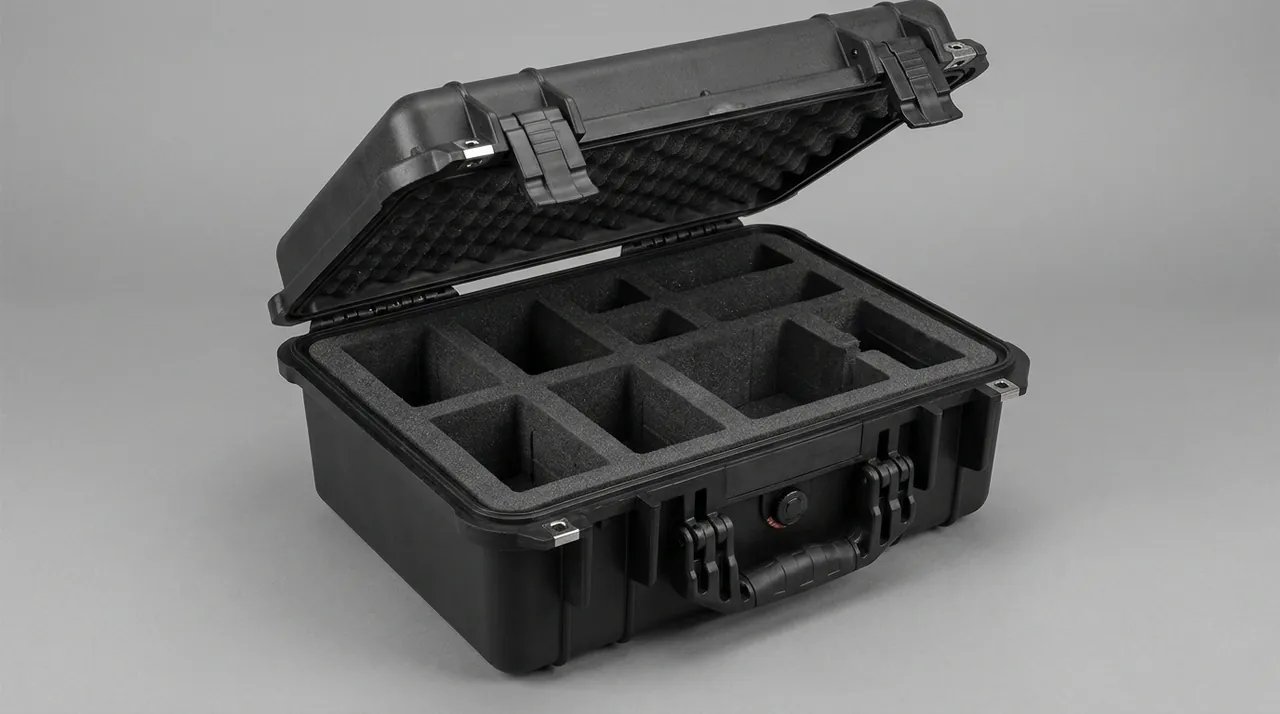
A vertical slot arrangement works well: continuous support slots milled to the plate outline let the base and both sides share the plate weight, the slot mouth is lined with soft facing, and plates are separated by neutral non-woven fabric or a dedicated interleaf so corrugated surfaces cannot rub. Ports and gasket groove areas get corner protection. Where a complete pack is moved in its original order, numbering the plates in sequence inside the case avoids any risk of reversed or misplaced plates during reassembly, which matters particularly for multi-pass patterns.
Gaskets must travel separately. A rubber gasket held under compression for a long period takes a permanent set, so it should not be clamped with the plates during transport and should not be left compressed in store. Store gaskets flat in their own compartment by size, and where needed dress them with talc or a specified release agent before packing. General exchanger practice is covered in heat pipe equipment case, and materials are compared in case foam material comparison; this duty suits closed-cell, non-absorbent cross-linked PE or EVA with a higher temperature rating.
5. Shell and Tube Bundles: Support and Vibration Control
A shell-and-tube bundle consists of tubesheet, tubes, baffles, tie rods and spacers, is often several metres long, has a high slenderness ratio, and combines thin tube walls with precision tube ends that may be welded or expanded. Three difficulties dominate transit: self-weight sag, tube end impact, and debris entering tube bores.
Support is a multi-point job. Three to five cradles spaced along the bundle, with faces profiled to match the surface they carry, prevent point contact from denting a tube wall. Webbing must never be passed directly around tubes; it should wrap the tubesheet or a dedicated clamp so the load is spread, because local crushing deforms the bundle. Tube ends are the weld or expansion interface and need individual caps or a full face plate over the whole tube field, keeping out both particles and moisture. Any liquid left inside the bundle turns into a surging load under transit motion, so drying is part of structural protection, not just a cleanliness measure.
On vibration, a bundle has low natural frequencies that road transport can approach. Adding cradles, shortening unsupported spans and inserting an elastic pad between cradle and bundle brings the risk into a manageable band. Lifting should use a spreader beam or a clamp rather than a wire sling passed around a tubesheet edge. Comparable heavy and slender component practice appears in boiler parts case and cryogenic tank case.
6. Wellhead Equipment and Valves: Seats, Flanges and Actuators
Wellhead assemblies operate at high temperature with sulphide-bearing and highly mineralised fluid, and the seats, stems, packing boxes and flange faces of gate, choke and safety valves are all precision features. A wellhead valve body is usually a corrosion-resistant casting or forging, the stem and seat are stainless or a hardfaced alloy, and the actuator may contain springs and diaphragms. Each of those has a different protection requirement.
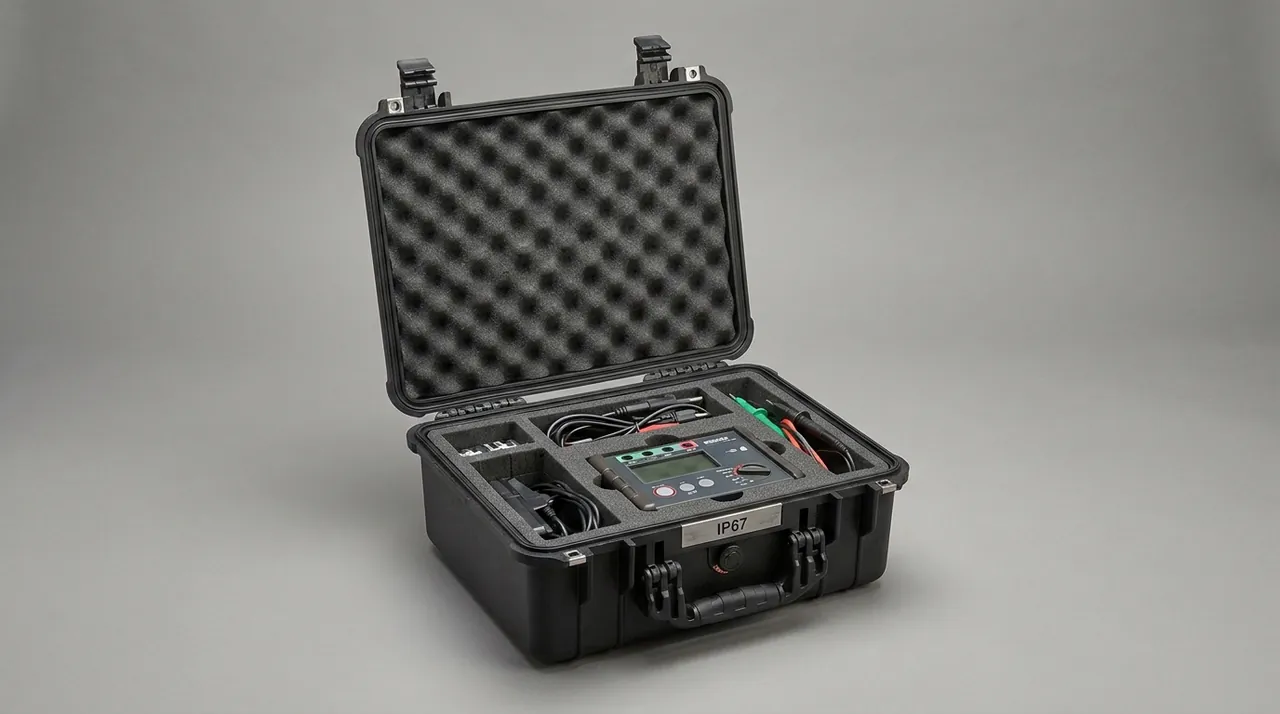
The flange groove is the first object of protection. Geothermal wellheads commonly seal on a metal ring or composite gasket, and a groove chewed by a hard object cannot be repaired in the field. It should receive a soft protective ring, its bolt holes should be capped, and the groove face should carry vapour-phase inhibitor paper. The stem and packing box come next. A stem is slender and tolerance-critical, so it needs multiple cradles and axial restraint to stop it sliding and scoring, and any brine left in the packing box will corrode the stem surface during a long store, so cleaning and drying after strip-down is mandatory.
Actuators and spring elements travel in the free state, never pre-compressed. A safety valve derives set pressure from its spring, and both a drop and prolonged compression shift the set point, so it must be re-set before return to service and the case simply avoids unnecessary mechanical damage. Valves carrying a positioner or limit switches get a separate cavity for the electronics, isolated on their own damping, with a static-dissipative liner so friction against metal cannot build charge. The equivalent practice in oil and gas is described in wellhead equipment case.
7. Resistant Fittings and Expansion Joints: Bevels and Concentricity
Geothermal pipework commonly uses duplex stainless, titanium or copper-nickel fittings, most with a weld bevel at each end. A bevel is a weld interface, and a burr raised or a notch chipped by contact with a hard object means remachining, which is often impossible on site at the original angle. Bevel protection is therefore mandatory: a plastic ring or cap, made from a halogen-free grade so that it cannot release pitting-promoting ions in damp conditions.
Expansion joints and bellows are more fragile again. A bellows wall is extremely thin and cannot tolerate lateral impact or axial compression, and once a convolution is deformed no adjustment will restore it. A bellows therefore travels in its own cavity, never stacked, never with anything placed on top, fixed at both end flanges in a dedicated liner so the corrugated section stays clear of every surface. Multi-piece pipework is slotted by length with continuous base support so no mid-span runs unsupported and bends plastically.
Concentricity and fitted surfaces give the same discipline a second expression. A flanged fitting must not rest its flange face on any hard surface, and a fitting with a locating shoulder must not carry its whole weight through that shoulder. In specification language these constraints become three sentences: one cavity per item, continuous support along the cavity wall, and a soft layer on every contact face. Achieving them in practice depends on liners machined to the real outline. Where carbon steel flanges are welded to stainless spools, the two should be divided or separated by a divider plate to limit galvanic coupling.
8. Residual Heat, Dew Point and Condensation Control
Packing timing for geothermal components is set by temperature. The workable sequence cools the part in a ventilated area to near ambient after cleaning, and only then moves into drying and packing. Where an outage window will not allow the wait, the case must carry a pressure equalization valve so internal air can move freely as temperature changes while an ePTFE membrane keeps water and dust out, preventing the air rush at opening from carrying external dust into a clean cavity.
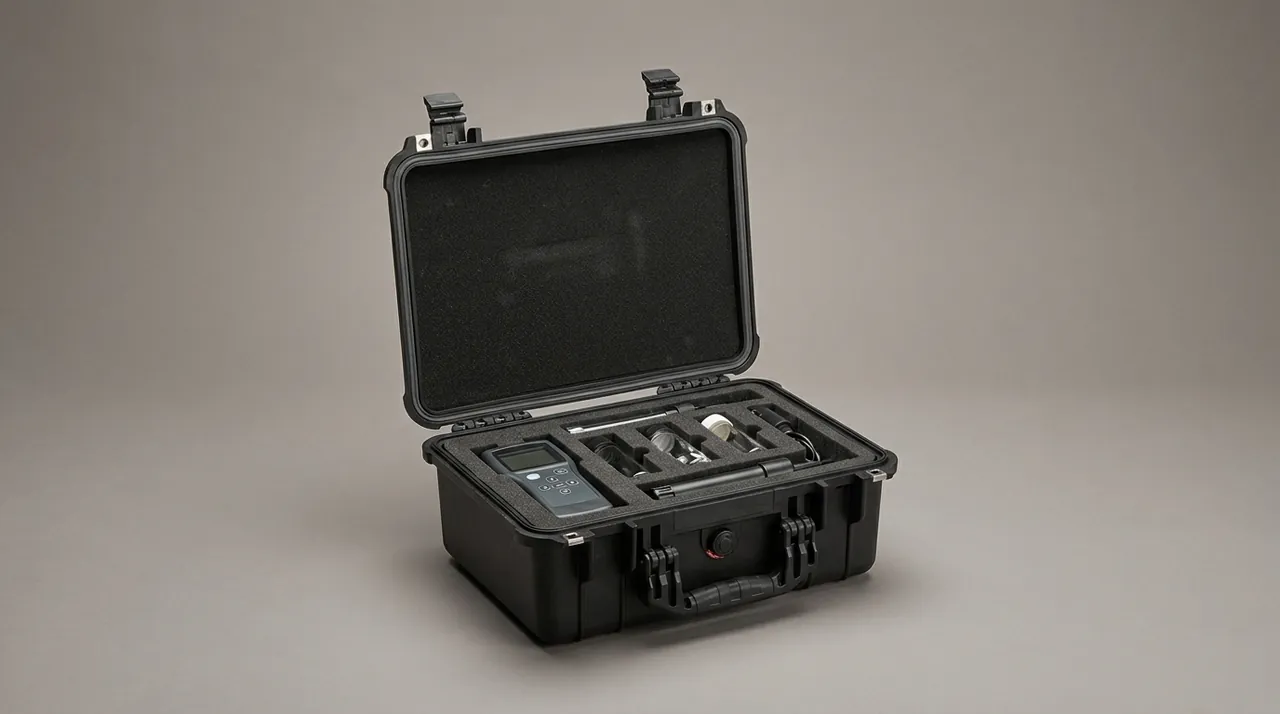
Three humidity measures work in different ways and belong together. The desiccant holds internal relative humidity below the level at which condensation can form, with quantity calculated from internal volume and transit duration. The humidity indicator card provides evidence that reads at first opening, and a colour change means the part was exposed to moisture and should be dried again before return to service. Vapour-phase inhibitor paper establishes a local protective atmosphere around machined surfaces but does not absorb moisture. None of the three substitutes for another, and pushing one to an extreme while omitting the others gives a poor result.
Gasket durability deserves equal attention. Long-haul and sea projects should fix a renewal interval and a spare quantity for sealing elements, and repeated opening and closing should have its own inspection item covering gasket seating and latch tension. Related structures are covered in case pressure equalization valve and extreme temp case. Where a case may stand outdoors for a period in a hot climate, the specification should state a temperature ceiling for the outer finish and the gasket material, because a gasket that softens loses its preload.
9. Damping and Lifting: Load Path and Lift Point Layout
The weight in a geothermal case is rarely evenly spread: a bundle and a valve body cluster on one side while plates and fittings are light. Eccentric loading affects both lifting safety and transport attitude, so the liner layout stage should place heavy items low and central, distribute light items around them, and state a permitted range for the loaded centre of gravity in the specification.
Damping works in two stages. Stage one is cavity support, where a rigid backing cradle carries part weight and passes it into the case base while foam only conforms and locates, so foam is never left under sustained static load where it would creep. Stage two is the buffer between cavity and outer shell, absorbing residual drop and impact energy. Once the division is explicit, the inspection criteria become equally explicit: cradle areas are checked for crushing and displacement, buffer zones for piercing.
For lifting, the base carries forklift slots, the corners carry lift points sized on loaded weight with a dynamic factor, and casters and handles are specified with margin, removed or braced for long hauls. Flexible items need more than a single sling point; bundles and expansion joints should be lifted from a spreader beam or clamp so the load is distributed. Damping material selection is discussed in cushion liner case, and the tooling and cost trade-offs for higher-grade projects in custom case mold cost analysis.
10. Sealing Class and Case Structure: IP, Equalization, Salt Fog
Geothermal plants sit in mountainous, high-altitude or coastal locations, where open-air temporary storage and frequent transfers are normal, so sealing class is usually set to IP67 (IEC 60529 / GB/T 4208), covering dust-tightness and short immersion. The difficulty lies in large lids and constant opening: the gasket should be a continuously moulded EPDM or silicone ring seated in a machined groove, with latches spaced so the ring is pressed evenly throughout, verified by sampled spray or immersion rather than by feel.
Salt fog requirements come from two directions: coastal air carries salt, and brine splash leaves salt on case surfaces. External metalwork generally takes an epoxy primer under a polyurethane topcoat, assessed to the GB/T 10125 neutral salt spray method and reported as hours to red rust, while exposed fasteners should be a higher corrosion-resistance grade. If the case will meet brine in the maintenance area, a replaceable cover or a scheduled wash-down is advisable, so salt does not sit in the gasket channel over long periods.
On hardware, hinges, latches and handles are high-cycle items whose strength and whose sealing role are two separate design problems, and neither should be compromised for visual consistency. Structure is covered in toolbox hinge latch seal and IP67 protective case, with gasket selection in case seal materials. For a spare case that will stand for months in a damp sulphide-bearing atmosphere, the compatibility of gasket and metal fittings should be confirmed item by item.
11. Transit Verification: MIL-STD-810H as a Method Reference
Verification emphasis for geothermal cases differs slightly from general industrial work. Beyond vibration and shock, humidity and temperature cycling carry more weight, because condensation is the dominant failure mechanism. Conditions can be set by reference to the relevant MIL-STD-810H methods, with the explicit note that the standard is cited as an environmental test method basis only and confers no military certification. Domestic projects can combine the GB/T 4857 series, and distribution cycle simulation can follow ASTM D4169 or an ISTA procedure.
| Verification item | Method basis | Experience condition | What is judged |
|---|---|---|---|
| --- | --- | --- | --- |
| Temperature cycling and condensation | MIL-STD-810H Method 507 (method reference only) | Hot humid dwells alternating with cold, simulating warm packing | No internal condensation, indicator card unchanged |
| Random vibration | MIL-STD-810H Method 514, ASTM D4169 | 5-500 Hz covering road and rail profiles | No cradle crushing, no bundle or plate displacement |
| Drop and shock | ISTA series, GB/T 4857 | 1.2 m corner-edge-face drop graded by loaded weight | No frame cracking, no bellows or plate distortion |
| Neutral salt spray | GB/T 10125 | Agreed cycle with hours to red rust recorded | Finish and fastener corrosion resistance |
One design lesson is worth stating. Geothermal failures are frequently a combined effect of corrosion and vibration, and running salt spray alone or vibration alone will not expose it. Where facilities allow, run the temperature-humidity cycle first and vibration afterwards, then examine whether corrosion products or residual salt crust have spalled and damaged surfaces. Method notes appear in MIL-STD-810H case compliance and ASTM D4169 distribution cycle case.
12. Selection Table and Typical Applications
Geothermal maintenance covers an enormous span, from a few kilograms of fittings to metre-scale bundles, and forcing all of it into one specification will fail on the item that mattered. The table below gives configuration direction by component type and can be used directly when drafting a specification.
| Item | Size and mass trait | Liner and locating form | Frame and lifting | Sealing and microclimate |
|---|---|---|---|---|
| --- | --- | --- | --- | --- |
| Plate exchanger plates | Thin sheet, stacked as a pack | Vertical slots with non-woven interleaves | Hand-carried or light heavy-duty shell | IP67 with desiccant, gaskets stored separately |
| Shell and tube bundle | Metres long, high slenderness | Three to five profiled cradles, clamp webbing | Spreader beam or clamp, four-point lift | Capped tube ends plus moisture control |
| Wellhead valves, actuators | Tens to hundreds of kg | Separate cells, protective ring at flange groove | Reinforced base, webbing rings | VCI paper plus humidity indicator card |
| Resistant fittings, bevel ends | Light, mixed lengths | Slots by length, continuous support | Reinforced hand-carried shell | Bevel rings plus capped ports |
| Expansion joints, bellows | Thin wall, easily distorted | Own cavity, corrugated section kept clear | Fixed at both flanges, never stacked | IP67 with pressure equalization valve |
Three application patterns recur. The first is batch return to the workshop after a full outage, where classification and lot control dominate and cases must map to the strip-down work order so nothing is mismatched on reassembly. The second is rotation through a site spare store, where gasket durability and the desiccant and card renewal interval matter most, and a washable cavity is worth more than strength. The third is equipment arrival on a new-build project, where long sea transport puts moisture and salt fog first and the case must accept stacking and repeated lifting. One shell specification can serve all three, but liner, accessory set and renewal interval should be defined per pattern. Rotation and life assessment are covered in protective case service life years; where a cleaning fluid or inhibitor travels with the case, its classification follows ADR and IMDG hazmat transport case.
13. Acceptance, Spare Rotation and OEM/ODM Delivery
Batch acceptance should work item by item against the risk classes with AQL sampling. Structure: every item in its own cavity, thin-wall parts continuously supported, heavy parts inside a defined central base zone, lift points and forklift slots rated for loaded weight. Materials: statements and corrosion-resistance grades for cradles, dividers and fasteners, with the contact surfaces against stainless parts verified in particular. Performance: the sealing spray or immersion record, salt spray hours to GB/T 10125, and temperature-humidity and vibration records to the agreed method. Cleanliness and residue: cavity washable with no dead corners, all caps and covers present, desiccant and humidity card quantities as specified.
Documentation should be bound to the lot number and counted as its own line item, and a lot arriving without records should not be released to store. Finer sampling detail is described in custom case acceptance AQL.
Two delivery routes suit geothermal projects. An OEM programme that applies existing shells and cavity layouts suits plates and fittings that can be compartmented to a standard by model, shortening lead time and keeping spares consistent across several sites. An ODM programme that starts at cavity measurement and material verification suits bundles and expansion joints, which need dedicated support structures and a clear-standing corrugated section built to the real outline. Both routes are delivered with material and test files, support wholesale, agency and global supply, and include a defined supply arrangement for gaskets and sealing elements. Works and process evaluation points are listed in how to choose case OEM factory, and the cost effect of cavity design in custom foam inserts guide.
Frequently Asked Questions
Q: Why do geothermal parts have to be cleaned and dried before packing? A: Because geothermal brine residue is itself the corrosive medium. Once the brine evaporates it leaves chloride-bearing and sulphide-bearing salts plus silica scale, which look harmless while dry but re-absorb moisture and form a locally concentrated electrolyte on the metal surface, so pitting and crevice attack start at those spots. The residue also spalls under transit vibration into hard particles that score plate gasket grooves and valve flange faces, and neither of those is repairable on site. The recommended sequence is a low-pressure water rinse, a material-compatible descaling agent, a deionised or demineralised rinse, and an air or nitrogen blow-down until no liquid film remains, finishing with a check that enclosed cavities, bolt holes and gasket grooves are genuinely dry. Cleaning is not housekeeping. It decides whether the part can still form a reliable seal when it goes back together, and mains water is a poor final rinse because it reintroduces the chloride being removed.
Q: What does brine corrosion mean for case materials and fittings? A: It means every material that touches a part, or could touch it, joins the corrosion design. Four points are commonly missed. Cradles, dividers and fasteners should be duplex or low-carbon martensitic stainless, and carbon steel or zinc-plated items should not sit against stainless parts for months, since a damp film creates a galvanic couple. Rubber and foam should be halogen free, because halogen-bearing materials release pitting-promoting ions when wet, and gasket and adhesive grades should also be sulphur free, since sulphur attacks copper alloys and silver plating. Gaskets should not be stored under sustained compression, or they take a permanent set and lose clamping force. Finally, the cavity must be washable and resistant to brine rinsing so salt does not accumulate through repeated rotations. In a specification these become a material list that can be checked off, not a single line reading corrosion resistant. State the grade for every item rather than a generic family, because duplex and low-carbon martensitic grades behave quite differently in the same brine.
Q: How are plate heat exchanger plates protected from distortion? A: Support and separation are the whole answer. Plates are commonly four to eight tenths of a millimetre thick, and the port peripheries and gasket grooves are the most vulnerable areas, so they cannot be stacked under load or hung from a support. A vertical slot arrangement works: slots milled to the plate outline give continuous support from the base and both sides, the slot mouth is lined to prevent point contact, and plates are separated by neutral non-woven fabric or a dedicated interleaf so corrugated surfaces do not rub together. Ports and gasket groove regions take corner protection. For multi-pass patterns the plates have a required order and orientation, so numbering them in the original sequence inside the case removes any chance of reversal or misplacement during reassembly. Gaskets must be stored flat and separately, never clamped with the pack, because a rubber gasket held compressed develops a permanent set and leaks even when the frame is correctly tightened. If a whole pack travels in its frame, the frame itself needs restraint against movement.
Q: What are the support rules for a shell and tube bundle? A: Three rules: cradle count, how the load is applied, and capping the tube ends. A bundle is often several metres long with a high slenderness ratio, and road transport frequencies can approach its natural frequency, so three to five cradles spaced along the length shorten unsupported spans, with an elastic pad between cradle and bundle to detune the response. On how the load is applied, webbing must never be passed directly around tubes. It should wrap the tubesheet or a dedicated clamp, because local crushing dents the tube wall and that deformation cannot be reversed. Tube ends are a weld or expansion interface, so each needs a cap or the whole tube field needs a face plate, keeping out particles and moisture alike. Any liquid left inside the bundle becomes a surging mass under motion, which makes drying part of structural protection. Lifting uses a spreader beam or clamp rather than a wire sling around a tubesheet edge, which would concentrate stress and cause local damage.
Q: What is the risk of packing a hot component straight after shutdown? A: The sequence is internal pressure rise, then vacuum, then condensation, with softened gaskets throughout. A warm part sealed into a case heats the internal air so pressure rises and pushes on the lid, leaving the gasket under sustained load. As the case cools during transport, internal pressure falls below ambient, which can grip the lid so it has to be forced open, while external moisture finds any weak point in the seal more easily. The cooling phase is also when condensation forms on internal surfaces exactly at seal groove roots and bolt hole bores, the two places hardest to inspect and repair. Once condensate dissolves residual salt, the local environment becomes aggressively corrosive. The practical answers are to cool the part to near ambient before closing, or to fit a pressure equalization valve with an ePTFE membrane so air moves freely while water and dust are blocked. Where a case stands outdoors in a hot climate, the gasket and finish also need a stated temperature ceiling, because a softened gasket loses preload.
Q: How does a geothermal wellhead valve differ from an oilfield one in transit? A: The protection targets overlap but the priorities differ, so a specification should not simply be copied across. Both cases protect flange grooves, seats and stems as precision features, and both use compartmented cells, protective rings and vapour-phase inhibitor paper. They diverge on the fluid and the duty. Oil and gas wellhead work emphasises material resistance to cracking in sulphide service, plus explosion-proof and static control because work happens in a hazardous area. Geothermal wellheads face the same sulphide plus long exposure to high-chloride, high-salinity brine with silica scaling, so descaling and deionised rinsing before packing carry more weight, and the temperature rating of gaskets and liner materials has to be higher. Geothermal sites are also frequently open or semi-open, which raises the salt fog and weather resistance requirement. Establish fluid chemistry and operating temperature first, then set the material system and sealing class, rather than adopting another industry's proven layout wholesale. Where one site handles both, keep separate liner drawings and separate cleaning procedures, because a shared specification will satisfy neither duty.
Q: How should sealing and weather resistance be set for open-air storage? A: Set sealing class to IP67 (IEC 60529 / GB/T 4208), which covers dust-tightness and short immersion and will handle rain and brine splash, then support it with weather-resistant detailing or it will not hold. External metalwork takes an epoxy primer under a polyurethane topcoat, assessed to the GB/T 10125 neutral salt spray method and reported as hours to red rust, with exposed fasteners in a higher corrosion-resistance grade. The gasket should be a continuously moulded EPDM or silicone ring seated in a machined groove, with latches spaced to press the ring evenly, verified by sampled spray or immersion testing. Where a case meets brine on site, a replaceable cover or a scheduled wash-down stops salt sitting in the gasket channel and driving crevice attack. Confirm the gasket temperature ceiling against the highest site ambient, because a softened gasket loses the preload the seal depends on. A spare case kept outdoors should also be inspected after each storm season.
Q: How are site spare cases managed and reused? A: A rotation case earns its keep when single-trip packaging becomes reusable tooling, and that needs a simple ledger. Give each case a number and record the part it holds, the date it entered service, the gasket renewal date and the most recent inspection result. On return to store, work three steps: empty and wash the cavity, check the liner for crushing and shedding, and check gasket and latches for damage. Renew the desiccant before every closure, and if a humidity card reads abnormally, deal with the part before the case goes back out. Geothermal sites carry heavy salt, so a scheduled external wash and a visual check of the gasket channel are worthwhile, and a gasket that has hardened, cracked or taken a permanent set should be replaced immediately. Liners can be replaced individually on wear rather than scrapping the whole case, which is the practical return on specifying a removable liner structure. Service interval guidance appears in the service life reference.
Conclusion and Related Reading
Geothermal failures rarely have a single cause: residue, moisture and vibration combine. Make post-strip cleaning and drying solid, carry parts on washable corrosion-resistant liners, manage the microclimate with sealing, desiccant and a pressure equalization valve, then verify by test. JUNZHIJIA builds compartment liners and face protectors as an OEM/ODM package.
Related reading