

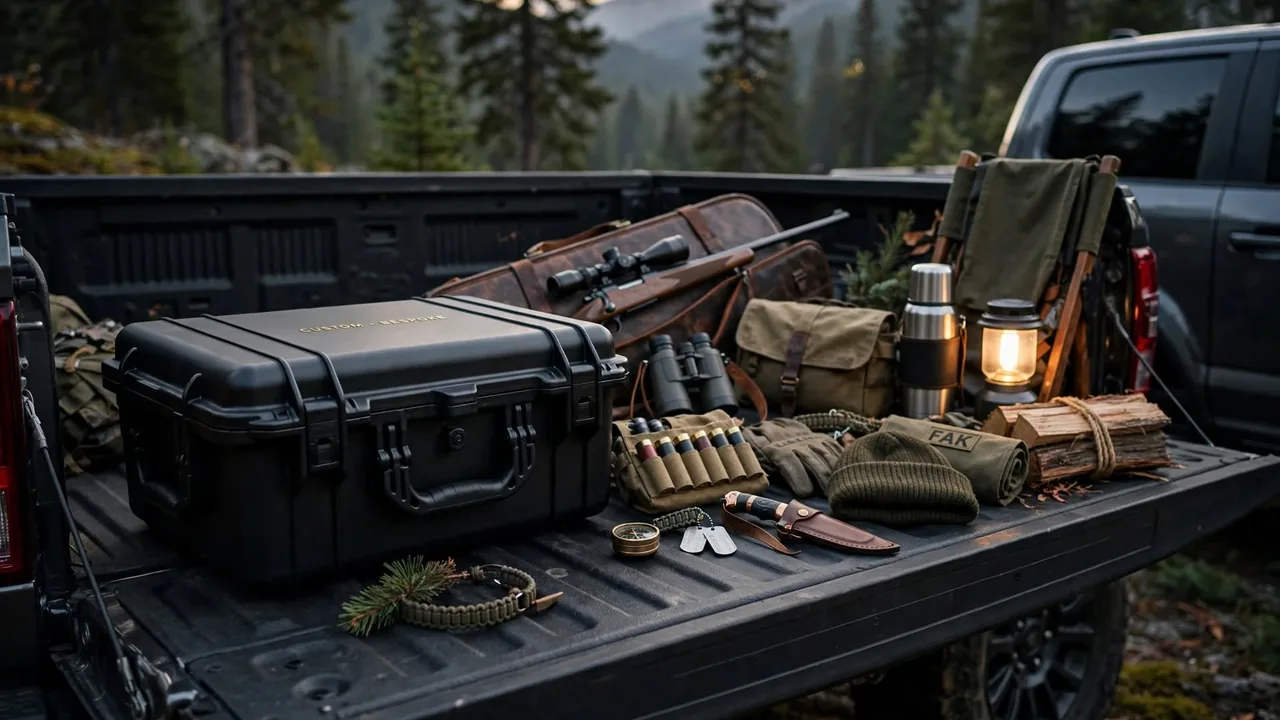
In forest patrol and early fire-response scenarios, the completeness and accessibility of equipment directly determine how effectively a front-line crew can act. A well-trained patrol team should consolidate hand tools, communication devices, and personal protective equipment into a dedicated equipment case rated to IP67, so that the box is mission-ready on opening and every item is reachable in seconds, rather than scattered across a backpack or an open crate that slows deployment. This article focuses strictly on the container itself - the protective, rapid-deployment case for forest-fire prevention patrol gear - and covers material, lightweight yet rugged shell, sealing, quick-access organization, anti-vibration, stacking, locks, wheels, certification, customization, and maintenance. The case is a carrier and protector of gear, not a substitute for any suppression tactic; all field actions must follow the local fire command authority's operating rules, and nothing here should be read as operational fire-fighting guidance.
1. Purpose and Scenario Boundaries of the Equipment Case
A forest fire prevention equipment case is a hard protective container built to store and transport patrol gear. It consolidates hand suppression tools, communication equipment such as radios and positioning units, water and retardant accessories, and personal protective items such as fire-resistant clothing and gloves, letting a patrol crew switch quickly between tasks like foot patrol, checkpoint duty, and initial fire response. Unlike an ordinary tool bag or canvas sack, this case emphasizes enclosure, impact resistance, and vibration damping so that gear stays dry, ordered, and usable on muddy, rainy, dusty, and bumpy forest roads.
In terms of boundaries, the case solves the problem of how gear is reliably carried, protected, and quickly retrieved in complex wilderness, and it does not assume responsibility for source judgment, firebreak cutting, or wind assessment. It serves the logistical goal of rapid deployment and forms the base of standardized carry for a patrol team. For forestry fire-prevention units, a unified case type helps establish consistent inventory lists, loading rules, and handover procedures, reducing the risk of missing equipment at departure and shortening the time from alarm to movement.
At the start of selection, the user unit should first define the single-patrol equipment list and weight ceiling, then work backward to internal volume, load-bearing structure, and empty-weight ratio. A common mistake is building the case as large as possible, which makes solo carry difficult and vehicle loading unbalanced. The correct approach grades gear into must-carry, frequently-used, and reserve categories, placing high-frequency items in the top quick-access layer and low-frequency reserves at the bottom or side bays. For scenario-based case selection, see the guide on outdoor protective case waterproof design, which systematically explains enclosure structure and field adaptation, and pairs well with the material overview below.
2. Shell Material: Engineering Plastic versus Alloy
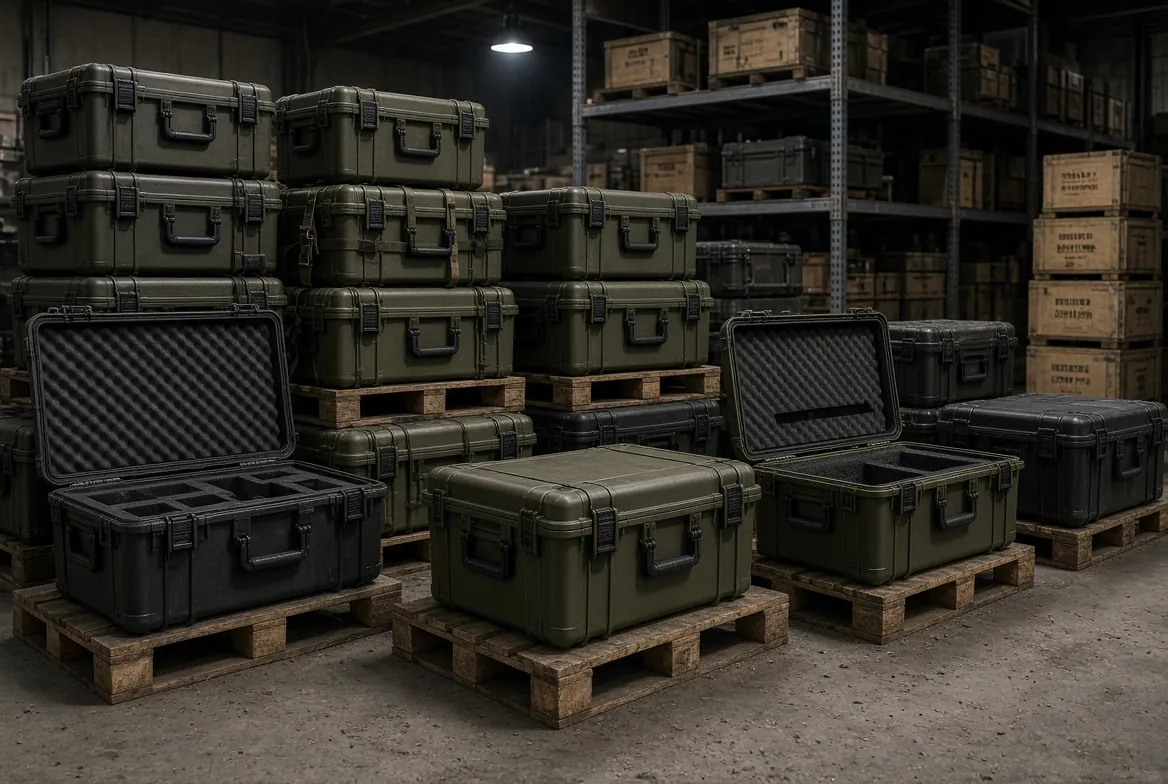
The shell of a forest fire prevention equipment case falls into two families. The first uses engineering plastics such as modified polypropylene, copolymer polypropylene, and ABS/PC blends. The second uses metals such as aluminum alloy and steel plate. Engineering plastics are light, resistant to dents, and slow to rust, and they keep some toughness at low temperature, which suits foot patrol and frequent vehicle loading. Metals excel at compression and puncture resistance but are heavier, prone to surface condensation in the cold, and require extra rust protection in humid conditions.
In real forest use, most patrol teams prefer engineering plastic shells because the lower weight helps long-distance carry and the body resists permanent denting after drops. Modified polypropylene, with its low density and reinforced rib structure, raises overall stiffness without a large wall thickness increase. ABS/PC blends score better on surface hardness and scratch resistance, fitting scenes where the case is dragged or scraped over gravel. Metal cases are better as fixed-post, checkpoint, or vehicle long-term reserve boxes rather than personal mobile boxes, where every kilogram on the back matters more than absolute crush resistance.
Material selection also considers weather resistance and flame behavior. The case interior may hold retardant accessories and battery-powered communication sources, so the shell should use a modified material with a certain flame-retardant grade, and attention should be paid to the burning characteristics described by standards such as UL94. For boxes exposed to long-term sunlight, confirm ultraviolet aging resistance to avoid shell embrittlement that could crack on impact. For a horizontal comparison of materials, see aluminium versus plastic case and protective case plastic materials, both of which give engineering-based trade-offs and help a procurement officer justify the chosen shell to a review committee. When the budget allows, it is wise to purchase one sample case in each candidate material and subject both to a short field trial, because the difference in carry fatigue and drop behavior is far easier to feel than to read in a datasheet.
3. Balancing Lightweight and High Strength
Light weight is a primary constraint for patrol cases. A crew often walks for hours, and every extra kilogram of case empty weight amplifies fatigue; yet over-pursuing lightness can sacrifice strength and cause cracking on drop or compression. A good design uses structural reinforcement rather than simple thinning, dispersing load across the shell through internal longitudinal and transverse ribs, thickened corners, and load-guiding grooves that turn a thin wall into a stiff panel.
Wall thickness is determined by combining material stiffness with the forming process. Injection-molded boxes have fairly uniform walls, with rounded corners reducing stress concentration; rotomolded boxes can vary wall thickness by zone, thickening the base and impact faces. Either way, drop and stacking simulation should be done at the design stage to check stress at key corners and latch mounting zones under full load, avoiding local weak points that surface only after field damage.
Lightweight thinking also shows in accessory choices: hollow alloy pull rods, low-density damping liners, and removable divider panels all cut total weight without weakening protection. Note that weight reduction must not sacrifice seal-face flatness, because tiny deformation of the sealing surface directly lowers the protection grade and can let water track in along the lid. For a systematic weight-strength trade-off, see case weight and strength balance and wall thickness and structural design, which present quantitative design logic and explain why a heavier case is not automatically a stronger one in real service.
4. Sealing Structure and IP67 Engineering
Forest environments are rainy, foggy, and dusty, so the case needs reliable sealing. IP67 is a common rating: under IEC 60529 (the national equivalent GB/T 4208), the "6" means full dust protection and the "7" means short-time immersion to a limited depth and duration without water ingress. Achieving IP67 is not simply gluing a strip around the lid; it requires coordination among the sealing surface, the compression structure, and the latch torque so the gasket is squeezed evenly every time the lid closes.
The seal usually uses EPDM rubber or closed-cell foam, and its cross-section shape - hollow rectangle, lip, or foam round - determines compression and rebound behavior. Design should ensure even and moderate compression of the strip after closure; too little leaks, too much accelerates fatigue and raises open force. The channel that holds the gasket also matters: a captive channel keeps the strip seated through years of open-close cycles and prevents it from rolling out of position during transit vibration.
Beyond static sealing, hinges, latch holes, and pressure-relief structures also need protection so they do not become leak paths. Before shipment, immersion and spray tests are typically run to verify the sealing surface by empirical values, and the results feed acceptance sampling. At acceptance, the user can sample-check using the method in verify IP67 certification, focusing on lid seams, latch holes, and wheel axles. IP67 describes a protection capability, not a license for long submersion or high-pressure jet washing; use it within a sensible duty envelope and document the tested depth and time for the procurement record.
5. Quick Opening and Modular Liner Organization
The core of rapid deployment is retrieval efficiency. A case stuffed with gear but without order becomes an obstacle in an emergency. A modular liner uses removable dividers, elastic straps, and pre-cut foam to fix each item in its own bay, so a member can retrieve a target by touch even with eyes closed. A common practice separates radios and positioning units into one zone, liquid accessories such as water bags and retardant bottles into another, and small loose items like gloves and headlamps into a shallow bay to keep them from migrating under bump.
Quick-access design also means layering: the top layer holds per-shift communication and lighting gear, the middle holds hand suppression tools, and the bottom holds spare power and consumables. At a temporary stop or fast transfer, opening only the top layer completes high-frequency checks without disturbing everything. For liner selection and customization, see custom foam lining case guide and case foam material comparison, which detail foam types and cutting processes used to shape bays around real tools.
To further speed departure, some units paste an equipment list and bay diagram inside the lid so handover and checking are instant. The list should match the equipment standard issued by the local fire command, keeping diagram, item, and sheet aligned. Modularity is not the more the better; over-fine division raises reset difficulty. Follow "frequently used separated, reserve combined" to balance order and efficiency, and review the liner whenever the issued equipment list changes so the layout never drifts from reality.
6. Anti-Vibration and Damping Liner Materials
Forest roads are bumpy and vehicles vibrate often. Gear inside a case without restraint will collide, causing instrument misalignment, tool-edge damage, or battery loosening. The damping liner builds an elastic buffer between gear and shell, absorbing road shock before it reaches sensitive items. Common liner materials include cross-linked polyethylene foam, EVA foam, and pre-cut custom foam, each with different density and rebound for different weights and shapes of patrol equipment carried over rough terrain.
For electronic devices with screens or delicate connectors, such as radios and positioning units, use high-density custom foam wrapping with buffer gaps at bay walls; for edged or handled tools like brush hooks and swatter tools, use slot fixation plus strap tightening for double restraint to prevent shifting in transit. The choice of foam also affects service life: closed-cell foams resist moisture and cleaning better than open-cell types in a wet forest environment. For foam trade-offs, see EPE versus EVA foam toolbox and case internal foam types, which give selection grounds from rebound and durability.
Damping design also watches weight distribution: heavy gear should sit near the geometric center and close to the base to lower the center of gravity and reduce overturning moment on bumps. No cavity should remain between liner and shell, or gear will bounce a second time and amplify shock instead of being cushioned. Periodically inspect the liner for compression set; replace on collapse or cracking to keep buffer ability from decaying, and keep a spare liner kit for the most-used case sizes so a damaged insert can be swapped without pulling a case from service.
7. Latches, Locks, and Anti-Misopen Design
The case latches and locks must stay closed under wilderness vibration yet allow quick opening and theft resistance. A common solution is a dual-lockpoint press latch that creates self-locking force through an over-center mechanism, with optional padlock holes for anti-misopen and theft control. For shared post reserve boxes, numbered padlocks or simple seals clarify responsible persons and opening records, which matters when multiple shifts draw from the same storage.
Latch life depends on material and cycle count. Metal latches are strong but need rust protection; plastic latches are light but should avoid low-temperature brittleness. Either way, pay attention to durability reflected by cycle-open testing at purchase, and ask the supplier for the tested cycle number as a comparison point between models. For latch and lock selection, see case hardware latch guide and latch cycle life testing, which sort out materials and test methods and explain how a stated cycle count maps to field service life.
Anti-misopen also involves mis-touch protection: on hard braking or dropping, the latch should not unlock from vibration. Some designs add a safety flip or secondary press outside the latch so opening requires actively releasing the safety. For bays storing batteries, lock them separately with insulation isolation to prevent short circuits in transit, and label the bay clearly. Latch maintenance matters too: clean shafts and points and apply a little lubricant regularly to avoid sand jamming at the critical moment, because a latch that will not release is as dangerous as one that will not hold.
8. Wheels, Pull Rods, and Carry Mobility
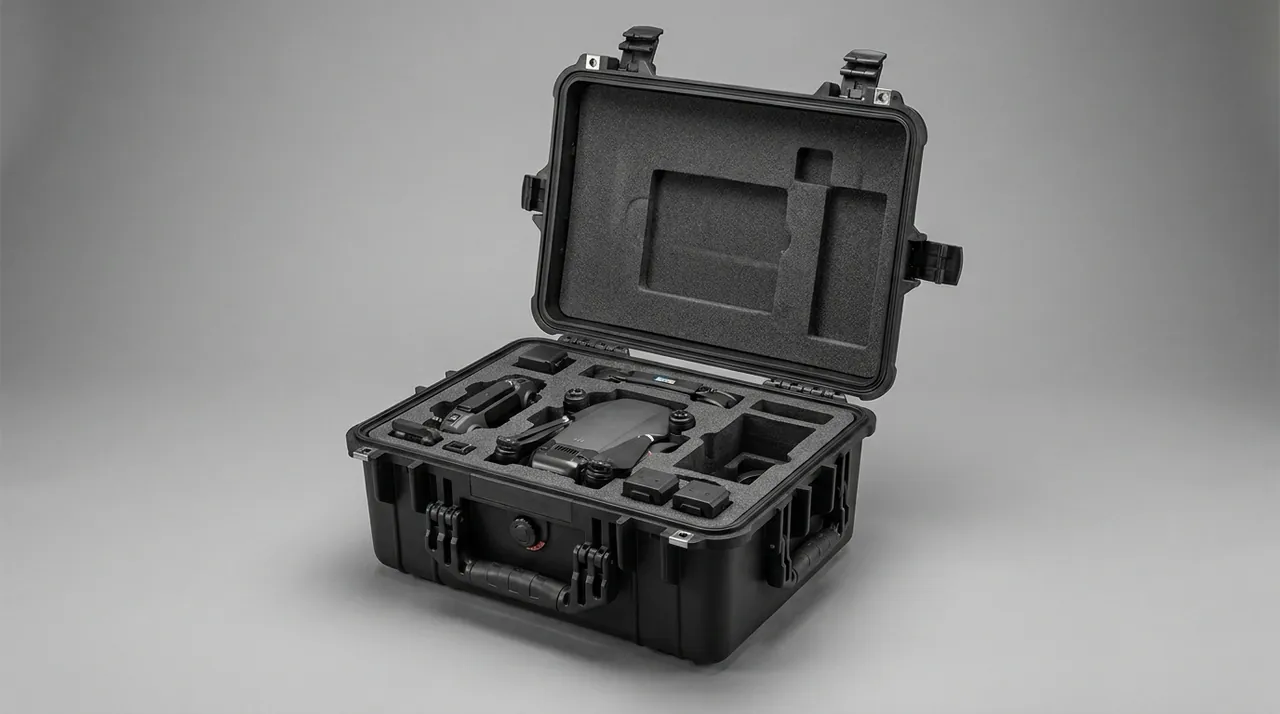
The mobility plan for a patrol case must fit a combined "vehicle plus foot" terrain. Between smooth fire roads and posts, a wheeled case with a telescopic pull rod can be tugged like luggage, greatly lowering member load; entering roadless forest sections requires removing the rod and switching to shoulder straps or a carry frame for hands-free transport. Therefore a good case makes wheels, rods, and carry points detachable and stowable so extra structure does not hinder foot patrol when the ground turns rough.
Wheels should be wide-face rubber or polyurethane to spread pressure on soft ground and absorb gravel shock; the pull rod should use a dual-tube aluminum structure to avoid bending under full load towing. Carry options include top handles, dual-side strap mounts, and a bottom anti-slip pad so the case can be back-carried horizontally or slung sideways. For wheel and rod selection, see case wheels and trolley handle and hard case versus soft tool bag, which give practical mobility advice and show where a hard case beats a soft bag in protection.
Note that wheels and rods consume some empty weight and internal volume, so the unit should weigh mobility against loading capacity by actual patrol radius. For far-mountain foot patrols, prefer a light back-carry type; for plain belt vehicle patrols, favor a wheeled tug type. Whatever the plan, the shell surface should have anti-slip grip zones to ensure stable grasping with wet or gloved hands, and the wheel axles should be sealed against the same dust and water the case body resists. A pull-rod that locks at several height stops suits crews of different statures, and a rod that fully retracts into the shell avoids snagging on brush when the case is carried by its side handles instead.
9. Stacking, Loading, and Transport Planning
Patrol cases are often transported by vehicle or stacked in posts, so stacking stability directly affects transport safety and storage density. Design usually uses top stacking bosses and bottom locating grooves for upper-lower engagement, with four-corner reinforcement conducting upper load to the lower shell rather than the latches. A well-formed stack resists toppling on a tilted truck bed and keeps each lid seal from bearing the weight of the case above it. For stacking structure, see case stacking corner guide and case stackability pallet planning, which explain stacking load and limits per layer.
Loading should follow "heavy low, light high, same type aligned": place heavier full cases on the vehicle floor, light and empty cases on top, and secure with straps or limit rails to prevent sliding on sharp turns. For special air-drop or hoist scenes, calculate single-case weight and lifting-point strength, and mark center of gravity and no-invert on the outer package so handlers do not suspend it by a weak point. For transport loading notes, see case shipping loading precautions and protective case stacking guide, both emphasizing limiting and balancing as the difference between safe and lost cargo.
In post warehouses, plan shelf layer height by case size to avoid over-high stacking that deforms bottom cases. Long-term reserve cases need a rotation system: periodically open for ventilation and check liner and seal status to prevent moisture from long sealing. Stack labels should clearly show unit, batch, and content category for fast identification and dispatch during emergency departure, and the rotation record should be visible so the oldest stock is used or inspected first rather than forgotten at the back of the rack.
10. Pressure Equalization Valve and High-Altitude Use
Forest patrol often involves altitude changes. When a case is moved from low to high ground, falling outside pressure builds relative positive pressure inside, which may slightly push the lid open or keep the seal stretched; descending creates negative pressure, requiring extra force to open and possibly drawing in dust. A pressure equalization valve, also called a breathing valve, slowly balances inside-outside pressure while a waterproof membrane blocks liquid water and particles from entering the case.
Common valves use an ePTFE waterproof breathable membrane whose micropores are far smaller than water droplets but pass air molecules, achieving "breathe but not leak." Design should place the valve where mud water will not directly wash it, with a flow guide at the port so spray runs off instead of pooling. For valve principle and selection, see case pressure equalization valve guide and outdoor case pressure valve, which discuss membrane grade and layout relative to the main seal.
Note the valve improves altitude and temperature usability but does not replace the seal itself; in deep wading or long rain, still rely on the main sealing structure. Before plateau tasks, run an altitude-simulation open-close test to confirm the lid works under positive and negative differential pressure with no obvious water-ingress risk, and train members to recognize the slight resistance change so a clogged valve is reported rather than ignored during a multi-day mountain patrol.
11. Custom Liners, OEM/ODM, and Test Documents
Different patrol teams have different equipment lists, and a standard empty case often fails to fit actual loading, so custom liners become key. Through 3D scanning or physical mapping, a maker can mold custom foam to the exact contour of each tool, fixing every item in place; for irregular communication-device shells, anti-static foam and shielding layers can be added to reduce static and electromagnetic interference in transit. In customization, JUNZHIJIA can supply model-matched seals and custom liners via OEM/ODM, helping units quickly turn existing gear into a standardized carry plan without reinventing the container.
In batch procurement, OEM/ODM value lies not only in appearance but in an engineering closed loop of "build to drawing": from requirement list, liner layout, structure prototyping, to small-batch trial, each step is traceable. JUNZHIJIA has accumulated experience in model-matched seals and equipment-based liners through long-term protective-case projects, and can output a deployable custom plan per a forestry unit's equipment standard, cutting the unit's self-modification time and giving a consistent look across the brigade's fleet of cases.
Test documents are the basis for acceptance and audit. A qualified supplier should provide test reports or conformity statements related to protection grade, drop, vibration, and salt spray, so the user can verify the case meets agreed indicators rather than trusting a label. JUNZHIJIA can cooperate by providing seal and structure test documents at project delivery, helping fire units build equipment archives that survive audit. For supplier evaluation and customization process, see how to audit a case factory and OEM/ODM custom protective cases, which explain cooperation boundaries and document delivery expectations in plain procurement language.
12. Maintenance and Lifecycle Management
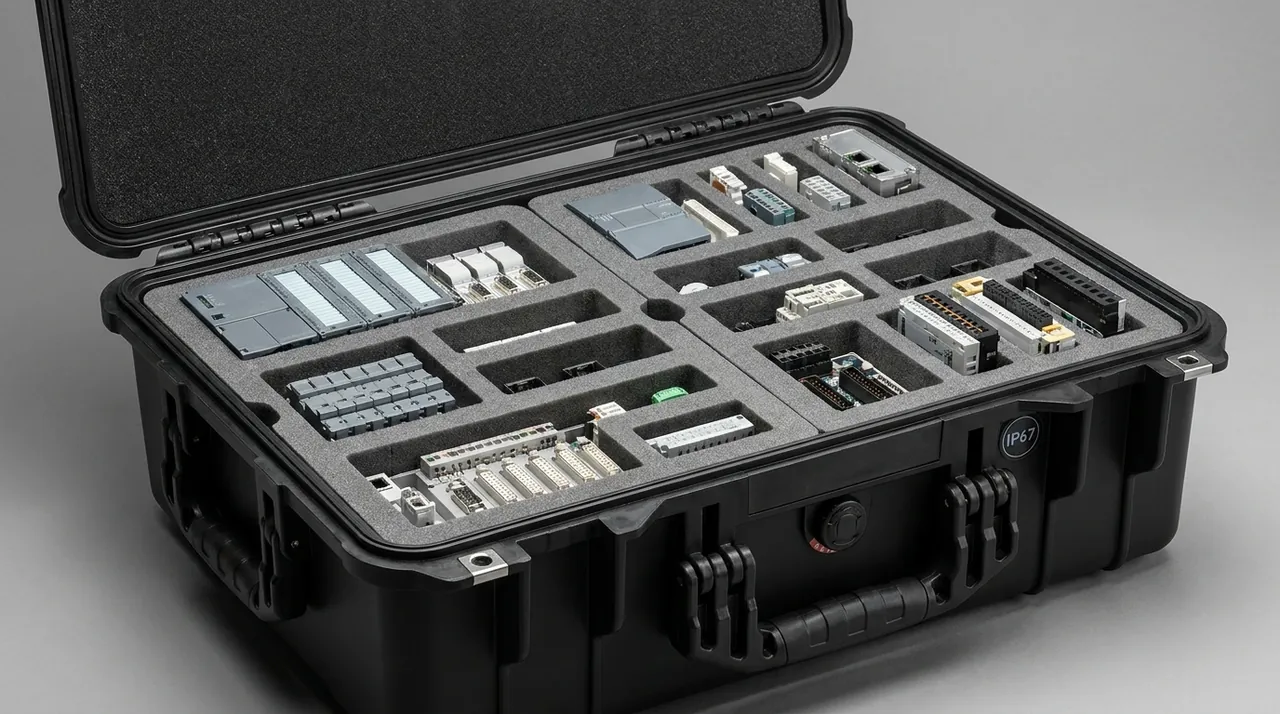
A case is not "buy and forget"; its protection decays with use frequency and environment and needs lifecycle management. Daily maintenance includes cleaning shell mud and plant sap after each task, checking the seal strip for debris or compression marks, confirming latch and lock action is smooth, and verifying the liner is not loose or collapsed. For long-stored reserve cases, open periodically for ventilation and re-test seal status to prevent strip adhesion or liner mildew that quietly undermines the rated protection between inspections.
Spare-parts management is the focus. Seal strips, latch springs, wheel bearings, and valve membranes are consumable or aging parts; the user should build a minimum spare list, referencing case spare parts stocking list and case repair and spare parts to set a supply plan that matches the fleet size. When the strip hardens, cracks, or shows permanent compression marks, replace it promptly to avoid silent grade loss that only shows up when the case is needed most.
End-of-life judgment should be structural, not cosmetic: when the shell shows through-cracks, latch-zone fracture, or damaged stacking bosses, and repair cost exceeds replacement, it should retire. To extend service life, build "one case one file" recording purchase date, task count, and maintenance history, shifting management from experience to data. For systematic upkeep, see protective case maintenance guide and protective case cleaning guide, which give executable checklists a new maintainer can follow without tribal knowledge. A short annual recertification, where a sample from the fleet is opened and pressure-tested, catches gradual seal aging across the whole batch and justifies the spare-parts budget before a failure occurs in the field during peak fire season.
FAQ
Q: What is the core difference between a forest fire prevention equipment case and an ordinary toolbox? A: An ordinary toolbox mainly solves "fit it in and carry it," focusing on volume and portability with little hard requirement for sealing, damping, or protection grade. A forest fire prevention equipment case targets a wild environment of rain, fog, dust, vibration, and low temperature, and its core difference is that protection is a design goal: it has an IP67-level dust and water seal, uses an impact-resistant engineering plastic shell, includes damping liners to fix precision communication gear, and adds structures such as anti-misopen latches and a pressure equalization valve suited to forest conditions. Moreover, the dedicated case emphasizes modular liners and standardized lists so different patrol members can hand over and check quickly, lowering departure omission risk. An ordinary toolbox cannot keep gear dry and ordered under such intense field conditions, so the two are not interchangeable in purpose, and mixing them up undermines a crew's readiness when minutes count during an initial response. (179 words)
Q: How should a patrol team determine the internal volume and weight ceiling of the case? A: The first step is for the user unit to list the must-carry, frequently-used, and reserve categories for a single patrol, then weigh and measure each item. Must-carry gear such as radios, positioning units, headlamps, fire gloves, and basic hand tools should occupy the top quick-access layer; reserve items such as extra batteries, retardant accessories, and consumables go to the bottom or side bays. On weight, combine member fitness, patrol radius, and vehicle load margin to set a total ceiling, usually keeping a solo-carry case within a tolerable range to avoid hurting patrol efficiency on long foot sections. After the list, work backward to net internal volume and load structure, which is more scientific than buying a big case then stuffing it. In selection, also reference field-patrol carry case configuration experience and grade by need, and revisit the ceiling each season as issued equipment changes so the case never becomes overloaded or half empty. (166 words)
Q: What does IP67 mean in real forest use, and what are its boundaries? A: Under IEC 60529 (equivalent GB/T 4208), IP67 "6" means full dust protection and "7" means short-time immersion to a limited depth and duration without ingress. In forests this means the case resists sustained rain, stream spray, and mud splash, and protects interior gear during brief accidental falls into water. But boundaries are clear: IP67 does not mean long submersion, nor does it withstand high-pressure jet washing or prolonged strong spray; sealing depends on the lid gasket and latch torque working together, so if the gasket ages or the lid is not fully pressed, the grade drops. At acceptance, sample-spray the lid seam, latch holes, and wheel axles, and keep wading depth and soak time within a sensible envelope rather than treating the label as unlimited waterproofing. Document the tested depth and time so future buyers and auditors can compare models on the same basis instead of on marketing claims. (161 words)
Q: Do modular liners really speed departure, and do they make reset harder? A: Modular liners assign each item a dedicated bay so a member can retrieve a target by touch in an emergency, genuinely shortening check and departure time, especially for communication gear, lighting, and small loose items. But liners should not be over-fine: excessive division raises post-task reset difficulty and slows the next round of preparation when a tired crew repacks. The sensible rule is "frequently used separated, reserve combined" - put per-shift high-frequency gear in separate top zones and merge low-frequency reserves into larger bays. Also paste a bay diagram inside the lid so diagram, item, and sheet stay consistent, further lowering handover cost. When the equipment list changes, update the liner too, to avoid mismatch between bays and actual items that creates confusion during rapid response. A liner that no longer matches the load is worse than a simple divided tray, so review it on every equipment revision. Field trials with a fresh crew are the best validation: if a new member can find and return each item without instruction, the layout is sound, and if they hesitate, the bay needs to be reshaped before the next deployment. (166 words)
Q: Why does a case need a pressure equalization valve in high-altitude forest areas? A: When a case is carried from low to high altitude, falling outside pressure creates relative positive pressure inside, which may slightly push the lid open or keep the seal stretched; descending creates negative pressure, making the lid harder to open and possibly drawing in dust. A pressure equalization valve uses a waterproof breathable membrane to slowly balance inside-outside pressure while blocking liquid water and particles, letting the lid open and close smoothly under both differential pressures. Note the valve improves usability but cannot replace the main seal; in deep wading or long rain, still rely on the lid seam structure. Before plateau tasks, run an altitude-simulation open-close test to confirm the valve works and there is no water-ingress risk, keeping the case dependable across the full elevation range of the patrol route, and train members to report a clogged valve rather than forcing the lid. Document the valve location on the case exterior so it is inspected during the same routine that checks the main gasket, because a silent clog is easy to overlook until the lid resists opening at the worst moment. (166 words)
Q: What practical value do custom liners and OEM/ODM bring to forestry fire-prevention units? A: Different patrol teams use different tool models and lists, and a standard empty case often fails to fit, so a custom liner molds to each tool's contour, fixing items in place and reducing transit collision loss. OEM/ODM value lies in a "build to drawing" engineering loop: from requirement list, liner layout, structure prototyping, to small-batch trial, each step is traceable, helping the unit turn existing gear into a standardized carry plan fast. Suppliers like JUNZHIJIA with protective-case customization experience can provide model-matched seals and custom liners and cooperate by supplying seal and structure test documents, helping fire units build equipment archives. For batch procurement, customization also unifies case type and markings, lowering cross-team allocation and handover communication cost across the brigade, and it lets a unit refresh the interior when issued tools change without replacing the whole shell. This keeps the capital already spent on proven shells in service while the interior evolves with the mission, so the brigade avoids scrapping durable containers merely because the equipment list was revised by the command. (168 words)
Q: How often should the seal strip be replaced, and how is aging judged? A: The replacement interval depends on use frequency, ambient temperature, and sunlight intensity, with no fixed universal period; judge by actual state. Visible aging signals include surface hardening, tackiness, cracks, or obvious permanent compression marks; a loose lid-seam feel after closure, or seepage found in spray checks; and the strip debonding or shifting from its groove. On any such sign, replace with the same specification promptly to avoid silent grade loss that only appears when the case is needed. In daily care, clean mud and plant sap off the strip after each task, avoid sharp-object scratches, and apply a little silicone oil before long storage to extend life. For spare management, keep same-model strips and latch springs in stock, and build a minimum inventory referencing the spare-parts stocking list so replacement is never delayed by procurement lag during fire season. A small labeled parts pouch taped inside the lid can cut replacement time from days to minutes when a strip fails in the field, and it also reminds the crew which exact specification to reorder. (168 words)
Q: What safety points must be observed in transport and stacking? A: The core principle is "heavy low, light high, same type aligned, limit fixed." Place heavier full cases on the vehicle floor, light and empty cases on top, and secure with straps or limit rails to prevent sliding on sharp turns or hard braking. Between cases, use top stacking bosses and bottom grooves for upper-lower engagement so upper load transfers to the lower shell rather than the latches, avoiding long-term latch deformation. For special hoist or air-drop scenes, calculate single-case weight and lifting-point strength, and mark center of gravity and no-invert on the outer package. In post warehouses, plan shelf height by case size to avoid over-high stacking that crushes the bottom; rotate long-term reserve cases for ventilation and check liner and seal to prevent moisture. All loading should be based on a verified checklist so a case is never dispatched with missing or mis-stowed gear. A final verbal count by the team leader before the vehicle doors close closes the loop on departure discipline and turns a written checklist into a lived habit that survives fatigue and urgency. (169 words)