

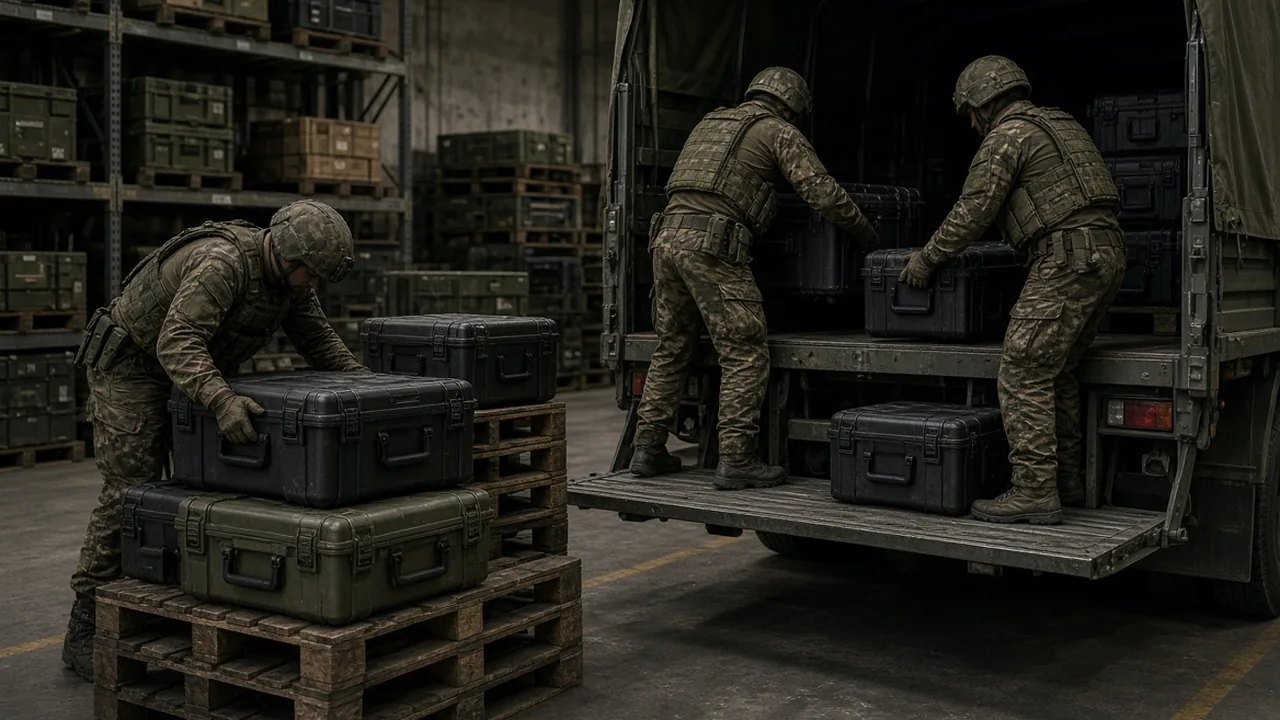
A training case serves instructor schools, recruit training bases, and militia training centres, gathering simulated gear, protective equipment, communications trainers, and teaching aids into one container, and using modular liners, sealing, labeling, and stacking to deliver standardised storage and unified equipment management. This discussion stays with the packaging: shell material, seal design, cushioning, module layout, stacking, and marking, not the physical or functional nature of any item inside. Cross-border movement follows local regulation and export control, and only the container is addressed here. Written guidance for the general approach sits in Equipment Cases: Transport Protection for Instruments and Gear, while the way teaching kits are grouped is shown in Training Kit Cases: Storing Aids and Practice Equipment. Within a training system the case is both a carry unit and an asset point, so its container quality shapes how fast instruction can start and how well the equipment survives turnover. As syllabuses change, the mix and number of items shift too, so leave a margin for growth when choosing the case family rather than forcing a redesign every term. Because one case family covers many courses, the container decisions made at procurement keep paying back across terms, and a well-chosen box quietly reduces the number of times a syllabus change forces new packaging.
The Job of a Training Case
A training case exists to give training supplies a standard, ready-to-hand place so instructors and support staff can assemble the kit before a course begins. What marks it out from an ordinary storage box is the pairing of standardisation, reusability, and fast issue: one box type, one label scheme, and matched liner modules make it standard; the same boxes circulating between classroom, store, and field makes it reusable; issuing by teaching unit makes it fast. Recruit bases hand cases out to squads in bulk, so a case must take constant handling yet stay man-portable, while militia centres alternate between short training bursts and long storage, which raises the bar on sealing and structure. Begin by mapping the equipment for category, weight, and how often it is drawn, then settle the case size and module plan from that, instead of dumping everything into one large box and losing time to searching. A training case is not a universal container either, and once it passes its rated load or protection grade reliability drops, so the boundary between suitable and unsuitable use should be drawn up front. Getting that balance right early avoids the common trap of a case that is cheap to buy but slow to use, because time lost to searching on the day of a course is far more costly than the box itself.
Selecting the Shell: ABS, PP, or Aluminum
Weight, stiffness, and weather tolerance in a training case all begin with the shell. ABS engineering plastic moulds accurately and takes a surface finish, so it suits injection shells that demand close liner fit. PP polypropylene absorbs low-temperature impact well and is lighter at the same wall thickness, which suits a case moved often. Aluminum is the stiffest and carries the highest protection grade, but it is heavier and costlier, so it usually stays in fixed or heavy-duty roles. More on materials and moulding is in Case Shell: Structural Materials and Molding Process of Protective Cases. In practice training organisations lean on PP or ABS injection shells, since the two balance damp resistance, drop survival, and budget; where equipment is static-sensitive, an anti-static foam layer can be laid into the liner, but only the container is treated here. Temperature matters as well: cold climates favour PP for crack resistance, while a need for rigidity in heat may point to aluminum. Beyond the resin, wall thickness and rib design shift stiffness just as much, so request a cross-section and a load note before a large order and check the rated stack load and lifting points rather than judging by material name. For a case used outdoors or near the coast, add UV-resistant resin and corrosion treatment and put metal fittings on the consumables list. Because training bodies rarely replace a case family for years, the material decision should be made for the long haul, and a modest sum spent on the right shell now is normally cheaper than a mid-life replacement across a whole fleet.
Keeping Moisture at Bay
Through the wet season and at coastal training grounds, keeping moisture out is the most basic duty of a training case, because condensation inside can spoil metal equipment and electronic aids alike. Two things must happen at once. As the lid closes, the Case Seal Strip: The Key Waterproof and Dustproof Accessory for Protective Cases presses out a continuous face and keeps external vapour away; inside, a desiccant bag or humidity card draws down what is left and shows the level. The structure of immersion protection is explained in Waterproof Cases: Sealing Structure & Immersion Protection, and the meaning of a protection code in What Is an IP67 Protective Case? Core Protection and Selection. Sealing protects the interior volume only, and the chemical or functional stability of the contents is out of scope here. For a case stored for months, check the seal seam for gaps and change the desiccant as soon as it is spent, so the protection stays a closed loop rather than a one-time act. Where a higher airtight standard is needed, a second seal lip in the lid supplies a fallback if the main seal gives way. A simple routine of checking the gasket and the humidity card at the start of every course keeps the case honest, since a slow leak found early is a cheap fix and a slow leak found late is ruined kit.
Foam Lining and Modular Cells
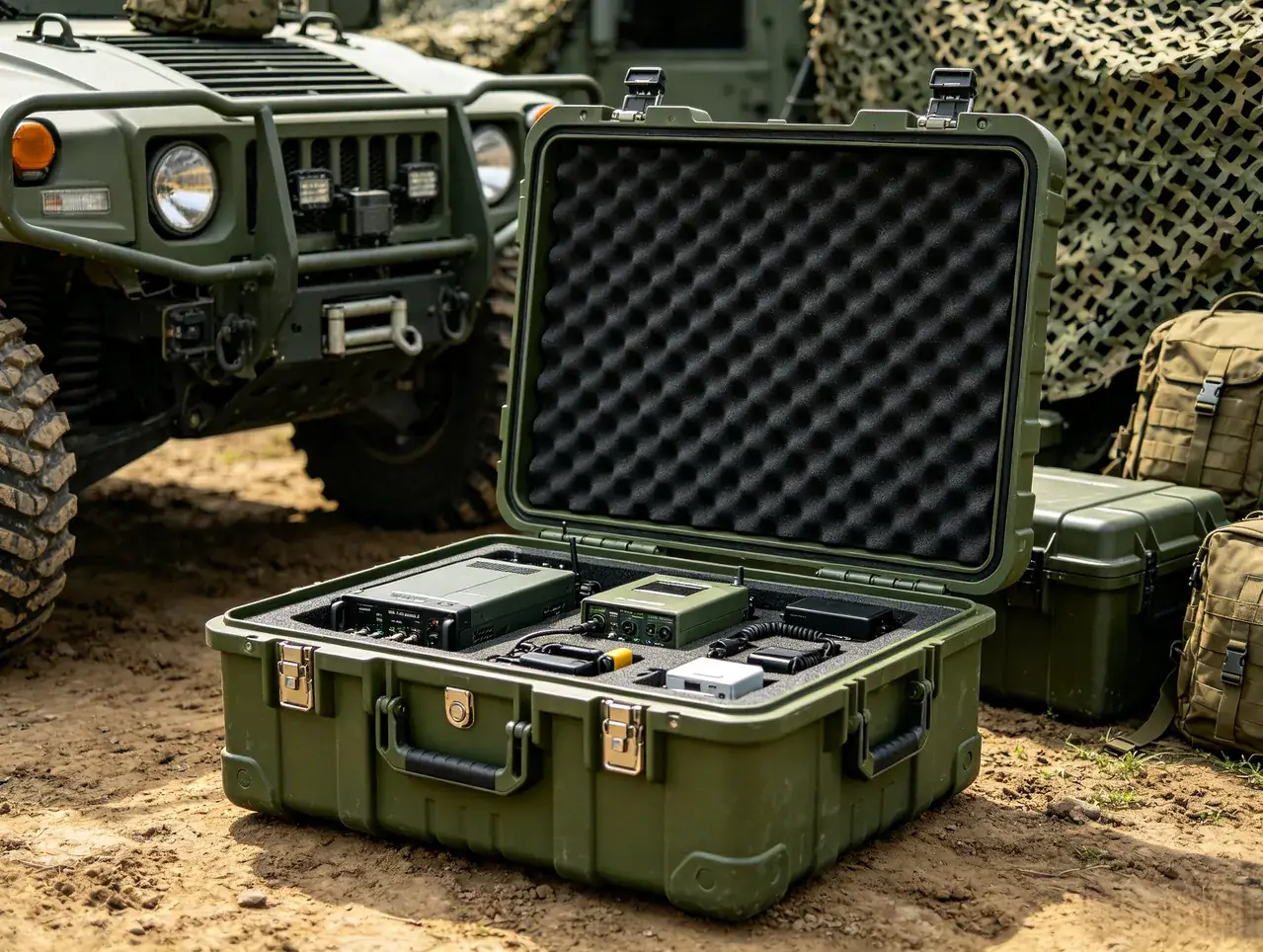
Training gear ranges from models to instruments and consumables, and the resulting mix is vulnerable to vibration and impact in transit. The buffer is the Case Foam Lining: Cushioning and Customization of Case Interiors, cut with slots and hollows so each item sits in its own cut pocket and pieces cannot strike one another. Where a module is swapped regularly, the Dividers for Protective Cases: Designing a Removable Divider System idea lets cells be reshuffled without new tooling. A module layout also gives an index for drawing gear: one label per module, with the module code tied to a teaching unit. EVA and PE foam are the usual liners and differ in bounce and moisture uptake, so the maker should recommend density from item weight and shape. Keep a margin of travel in the liner so that on a drop the foam deforms and takes up the energy instead of handing the shock to the equipment. A layered liner can hold heavier items low and light consumables high, which guards against crush damage and matches the order in which a lesson is set out. It also pays to test the liner with the heaviest item a course uses, because a density chosen for the average load can still give way under the single heaviest piece and let it shift inside the box.
Standard Storage: Teaching Units and Cells
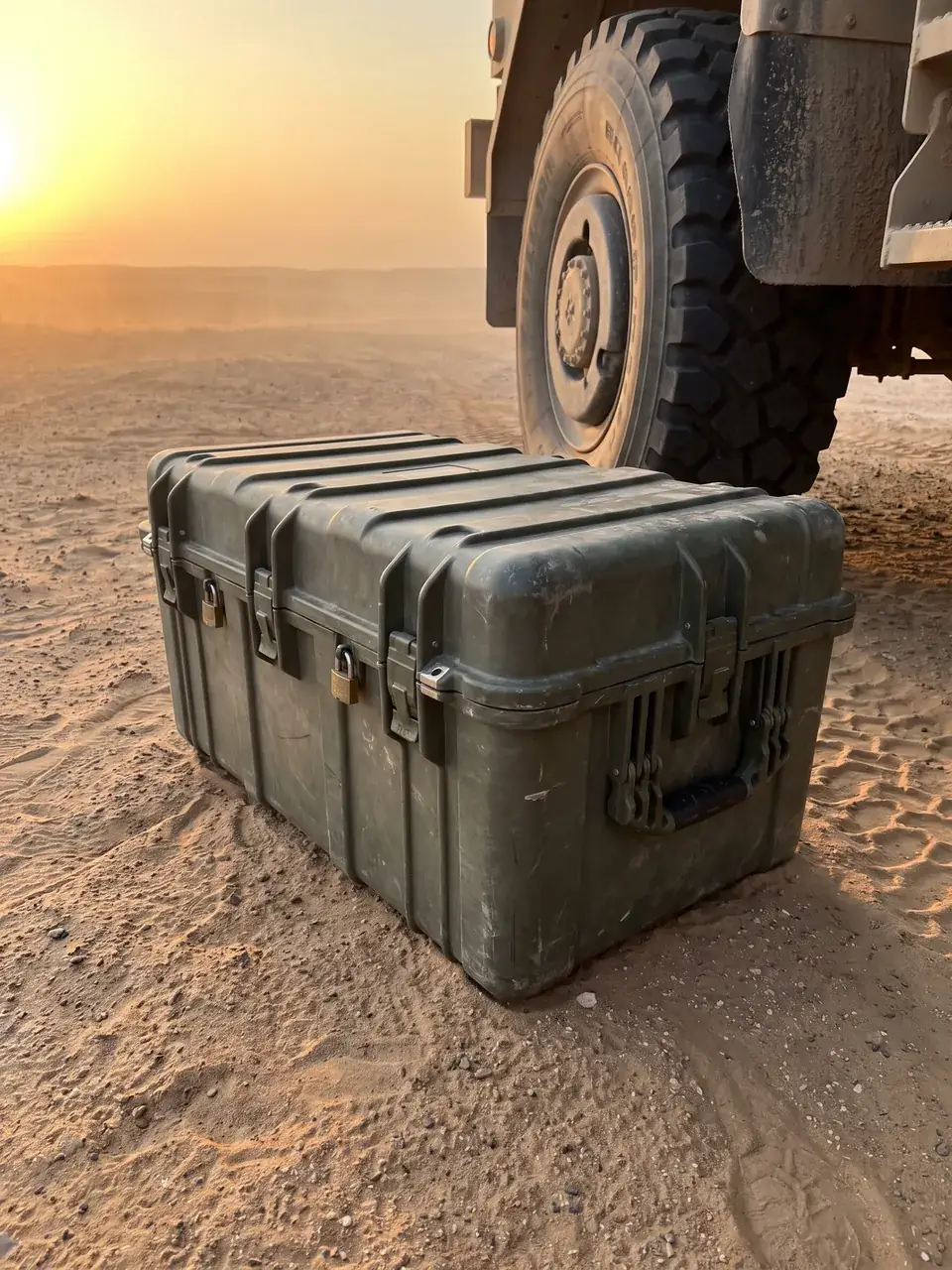
Standardisation is exactly what sets a training case apart from a plain storage box. Training support is normally built around teaching units such as basic operation, protective gear, and communications drills, and each unit owns a fixed set of modules inside the case. Planned well, a case shifts from barely fitting to being drawn to the lesson. The split normally weighs three things: function, how often an item is drawn, and how urgent it is. High-frequency gear sits in the top layer reachable as the lid opens, while critical-path items get a separate cavity so they are not mis-picked. For position planning, borrow the long-keeping idea in Storage Cases: Long-Term Keeping and Warehouse Management, pushing rare items down and frequent items forward. For standard fasteners and small loose parts, the fine-cell approach in Screw, Nut & Bearing Parts Boxes: Fastener Sorting slots into the case liner. Modules are not fixed for good; a training body should keep adjusting cells from live consumption records so the contents follow real teaching habits. When the item list grows, widen the case group rather than making one box taller, so reach and issue speed are kept. The best layouts are usually drawn up with the instructors who use the kit daily, since they know which pieces are grabbed first and which sit untouched until the last week of a course.
Fast Issue and Inventory Labels
Fast issue is where a training case proves its worth. When a base must assemble kit by teaching unit within minutes before a course opens, the labeling has to read clearly to a person and to a scanner. The simple layer is a weatherproof label per module giving name, specification, and count. The richer layer adds Digital Management for Protective Cases: Asset Numbering and QR Code Traceability, giving every case and module a unique QR code that a handheld terminal scans for issue and return. Speed follows standardisation: fixed positions, matching labels, and one coding rule, so every shift works the same way. With several cases, QR codes chain the transfer history and head off both duplicate orders and quiet shortages. Label stock should resist oil and scuffing, and a silk-screened category word on the shell assists recognition from afar. The issue routine belongs in the teaching support spec, setting out the triggers for pre-course, mid-course, and pack-up retrieval, so the standard becomes a daily action rather than a stated intent. Because a course repeats on a cycle, the routine benefits from being timed once and then reused, so each intake starts from a known baseline instead of inventing a new packing order every time.
Stacking, Transit, and Shock Damping
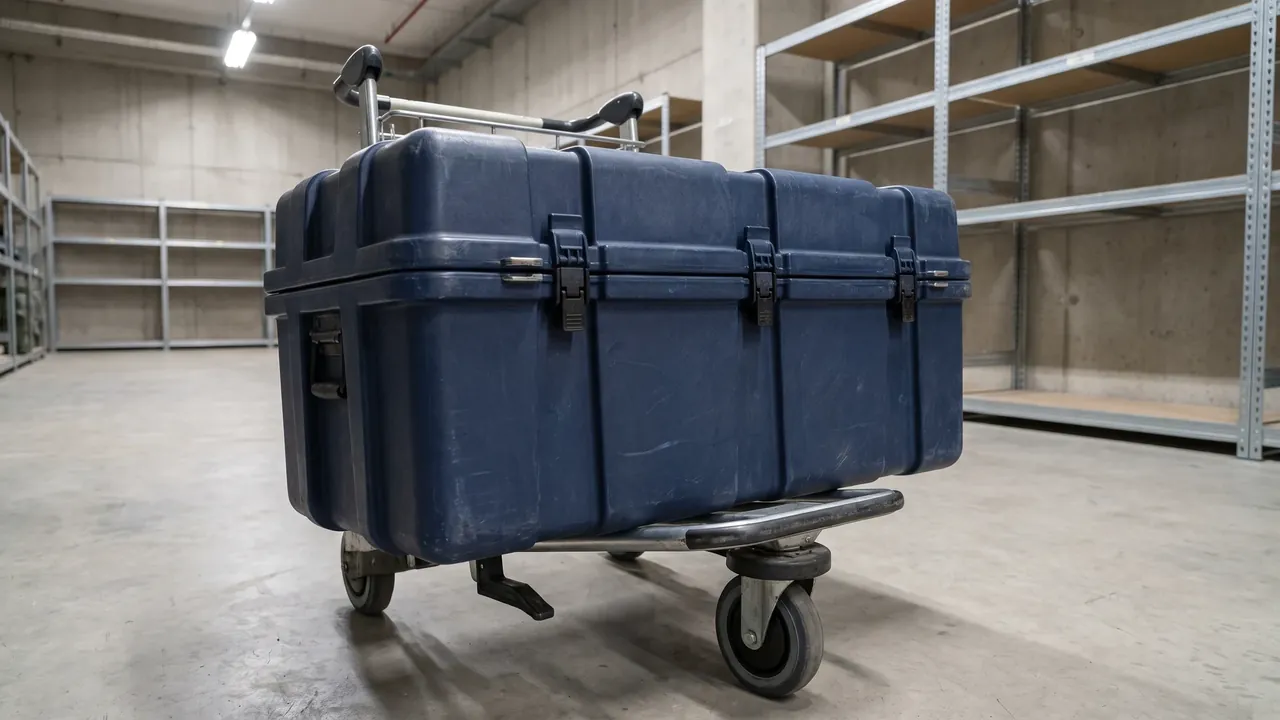
Training cases are stacked in stores, on trucks, and at training grounds, and the steadiness of the stack rests on the Case Stacking Corner: Load-Bearing and Alignment Hardware for Stacked Cases at the corners, which carries load between layers and gives an alignment stop against slip. The general method appears in Stackable Cases: Warehouse Turnaround & Stacking Protection. Transit vibration is shared by shell stiffness and liner; Shockproof Cases: Cushioning Structure & Impact Isolation Design sets out how the buffer layers are arranged. Note that the number of layers is capped by the rated stack load, since overloading crushes the lower seal strip and leaves hidden deformation, so weigh and measure each load and lash the cases down in the vehicle against sideways movement. On a long road move, allow for the road spectrum and the suspension, and put an anti-vibration pad between case and vehicle where needed, which reduces high-frequency transfer to the equipment and lengthens its usable storage life. A store that rechecks its stack heights at intervals avoids the slow drift that happens when a few extra cases are added over months without anyone revisiting the rated figure printed on the box.
Climate Watch and Safety Stock
A training case is more than a container: it is a small asset point for the training site. The safety-stock approach in How Should Protective Case Inventory Be Planned? Setting Safety Stock for Common Specifications sets the minimum holding for key items inside the case. A humidity card or compact logger helps staff catch an abnormal interior early, such as humidity climbing after the desiccant is spent. How Should Protective Cases Be Stored? Moisture and Sunlight Rules for Warehousing stresses warehouse-level damp and sun control, showing that protecting one case and managing the store support each other. Safety-stock levels should come from consumption history and replenishment lead time rather than guesswork, so a peak training period does not run dry and a quiet period does not overstock. For consumables with a seasonal draw, use dynamic safety stock and raise the floor ahead of a course cycle. Logger traces also serve as traceability evidence that the equipment stayed in a controlled environment throughout storage and transit. A short review of those levels at the end of each course cycle keeps the numbers honest, since consumption patterns shift as syllabuses change and a figure set two years ago may no longer match reality.
Latches, Corners, and Load Securing
On the move, a training case must resist theft and accidental opening, and Case Latch: Pressure and Theft Resistance Hardware for Protective Cases sets out latch pressure and anti-theft design. A press latch covers daily use, while a holed latch accepts a cable seal or padlock where a person is accountable. Stacking corners were noted earlier; with the latches they form the outer frame, one governing opening and the other governing stacking. For fixing, straps should run through handles or purpose-made slots so the case holds position under hard braking and rough ground, free of knocks against other cases or the truck wall. A case kept permanently in a vehicle can gain anti-slip feet to reduce resonance. At a shared training point, the seal number and handover note belong in the ledger, so any opening can be traced to a named person, deterring both theft and wrong picks. A quick check of the latch and the seal number at handover costs seconds and often catches a fault before a case leaves the store, which is far cheaper than discovering it at the training ground.
Markings Demystified: IP67, GJB, MIL-STD-810H
Among the marks a buyer meets are IP67, GJB, and MIL-STD-810H. IP67 tells you the case can be immersed to a given depth and time without ingress, a straightforward read on sealing. GJB, the domestic military standard, sets out environmental and mechanical test requirements from the defense-compliance side, explained in GJB Military Standard Cases: Compliance and Test Notes. To see how temperature shock, vibration, and drop are conducted, Military Test Items and the Path to Case Compliance gives a systematic account. Certification proves the container under the stated conditions only; whether an item inside meets trade or export control is outside this text and follows local law. Ask for the original test report rather than relying on the nameplate. Two cases at the same grade can differ widely in seal design, wall thickness, and latch count, so the specific conditions in the report are a better buying guide than the code alone. Where a program spans several sites, keeping one shared set of certified case specifications avoids the confusion that arises when different units buy to slightly different standards and can no longer interchange spares.
Standard Handling as an Equipment Case
A training case is a member of the equipment case family, and it is standard handling that multiplies its value. Field Camp Case: Living and Equipment Storage for Field Bivouac shows cases cooperating in the field, while Logistics Support Box: Modular Resupply Configuration argues for resupply by module. With Reusable Shipping and Storage Container: Economics of Returnable Logistics, a training body can keep the same cases cycling between classroom, store, and training ground, trimming one-way packaging waste. A shared box type, label, and liner module means later batches swap cells and parts, cutting the number of non-standard items on the support chain and speeding response. When several teaching units share one case standard, transfers and short-term loans between units are practical, compressing set-up time and lifting asset use across the chain. Standard cases also make forecasting simpler, because one line of seals and latches serves the whole fleet, and a returning batch can be refurbished against a single checklist rather than a dozen variants.
Colour Coding and Recognition
At a training site many cases stand together, so colour becomes the cheapest way to tell them apart. Can Protective Case Colors Be Customized? Pantone References and Masterbatch Notes shows custom colouring is available. A training case can be colour-coded by teaching unit, one hue for basic operation and another for protective gear, paired with a silk-screened word so the contents are readable at a distance. Colour works with the label system but cannot replace module codes, since shade drifts under poor light or with age. Once set, the scheme enters the teaching support spec so later purchases keep the palette and avoid same-colour, different-class confusion. For a civilian box brought in temporarily, a coloured ring or face strip marks ownership, though the factory palette is best for the long run. Colour can also carry a warning meaning, tagging restricted equipment in a set hue; only container identification is covered here, not control classification of the contents. A training body that keeps its colour and label standard on file finds new staff pick up the system within days, because the visual rules are simple and consistent from one case to the next.
Upkeep, Cleaning, and Part Renewal
A training case is durable, but not care-free. Protective Case Consumables: What to Keep in Stock lists the seal strips, latch tongues, and handles to hold in store. Ordinary upkeep takes a few steps: check the seal for deformation as the lid opens, clear dust from the liner, keep labels readable, and replace the strip the moment it hardens or a latch stops springing back. Ten Quality Faults to Check When Buying Cases helps a buyer catch thin walls and weak latch welds at intake. How Long a Protective Case Lasts and Why notes that life tracks material, use, and climate, and that clean handling and correct storage add years. Wash with a mild detergent, never a solvent that damages the seal and shell; before a long idle, dry the liner, renew the desiccant, and rack the case off the floor so it is ready at the next course. Keep a care list in a clear pocket on the lid so whoever opens the case sees the steps at the right moment. Building those steps into the course close-out routine ensures the work actually happens, since a case packed away in good order needs far less attention before the next intake opens.
Common Questions
Q: How is a training case different from a normal storage box? A: A training case and a plain storage box differ in purpose and design emphasis. A storage box mostly holds loose items and prizes capacity and portability. A training case exists to get a teaching unit open and running quickly and to dispatch equipment in a uniform way, so it leans on standardisation, reuse, damp control, and shock damping. Open one and you will usually find a full seal, a modular liner, position labels, and often a QR asset code, where a storage box tends to be an open frame. For a training body, choosing a case means turning equipment issue into a standard, digital step, which shortens set-up and improves asset visibility. Only the container structure is covered here, not the physical nature of the contents. Keep purchasing, receiving, and the ledger separate from general consumable stock as well, or a mixed count blurs the picture and hides a genuine shortfall.
Q: Which shell material should I choose for a training case? A: Shell choice balances weight, stiffness, and cost. ABS injection shells hold close tolerances and finish well, which suits a liner that must sit exactly. PP polypropylene is tougher, handles low-temperature impact better, and weighs less, so it fits a case carried to and from training. Aluminum is the stiffest but also the heaviest and priciest, and is usually kept for fixed heavy storage. For most training bodies, PP or ABS already covers damp and drop together. Consider the temperature range and whether salt spray is likely, and add a surface treatment if the weather calls for it. Material affects the container only; the compatibility of stored equipment is outside this text and follows local regulation and export control. In cold regions PP's resistance to cracking is a clear advantage, and a metal shell should be reviewed only when rigidity or load support is genuinely required. It also pays to compare wall thickness and rib pattern between suppliers, since two shells of the same resin can behave quite differently after a season of hard use.
Q: What is the effective way to keep a training case dry? A: Keeping a training case dry takes sealing and absorption together. First, the lid seal strip forms a continuous face as it shuts and blocks outside vapour, and it should be inspected for rebound and ageing on a schedule. Second, a desiccant bag or humidity card inside takes up the remaining moisture and shows the level. In a damp or coastal setting, add a second seal at the lid or step up to a higher-grade shell. Remember that dryness only protects the space inside and cannot alter how a stored item takes on moisture, so open the lid briefly and close it promptly. For a move across a border or into a harsh environment, follow local regulation and export control, since this text covers the packaging alone. Once the desiccant is spent it must be changed, and together with the card reading it forms a closed-loop record that holds relative humidity in the safe range. Logging each open and close against that reading turns a rough sense of dryness into evidence an inspection can rely on.
Q: What real help does standardized storage give a training case? A: Standardised storage and issue turns training support from piece-by-piece counting into issuing a whole case by lesson. When each teaching unit owns a fixed set of modules and the module code matches the lesson, staff can hand out a complete case without recounting. Across cases, QR codes also chain the transfer records, keeping duplicate orders and quiet shortages at bay. Three things improve: key modules are confirmed before the course opens, cases return to store intact afterwards, and the end-of-term count becomes a scan rather than a manual tally, which cuts errors sharply. Settle one coding rule and write it into the teaching support spec so every shift follows the same logic. Only the container-side module scheme is covered here. Against jumbled packing, a standardised case can still be located by colour tag during bulk issue, which lowers the chance of handing out the wrong kit. A predictable layout also shortens the handover between shifts, because the incoming team can be told one cell code and act without asking further questions.
Q: How should the foam liner be arranged to cut gear damage? A: Safe stacking depends on the corner hardware and the rated load. A stacking corner provides an alignment stop and passes load between layers against slip; no layer may exceed the rated stack load, or the lower seal strip is crushed and hidden deformation follows. Total the weight and height of each load before lifting so a tall pile does not lose its footing. In a vehicle, strap the stack so a hard stop cannot slide cases into each other. For long storage, follow the damp-and-sun rules: lift the case off the floor and keep it from direct light to slow ageing. These figures apply to the container only; whether the contents tolerate stacking is not judged here and follows local law. Before stacking, check the four corners, since worn stops weaken positioning and should be replaced with spare corners on schedule. Marking the safe height on the box face keeps the rule visible to whoever loads the truck, which matters most under the time pressure of a course start.
Q: What should I watch when stacking training cases? A: The point of lining is to give every item its own shaped pocket. Cut or route the foam so fragile pieces sit in separate hollows and cannot collide in transit; for awkward shapes, layer the foam with light consumables above and heavy models below. EVA and PE foam differ in bounce and water uptake, so match density to item weight. A removable divider set suits modules that keep changing without new tooling. Leave room for a label at each hollow so cells line up with codes and counting is quick. Foam answers only the mechanical side; shielding the contents from electrical or chemical harm is outside this text and follows local rules. Under an impact the foam yields and takes up the energy, so set its thickness and density by the drop the case might face rather than filling it in at random. Where one case serves several teaching units, coloured inserts let the crew change the interior for the day's lesson while the shell stays the same.
Q: Can the latch on a training case provide theft resistance? A: A case latch is meant to hold off casual access, not to defeat a determined thief. It provides the closing squeeze that keeps the lid shut in transit, and an embedded core or external padlock discourages a curious hand. In a training site or shared store, a catch latch with an anti-mistake feature stays closed yet opens fast when speed matters. Where someone must answer for the contents, a holed latch tongue takes a cable seal or padlock, and the seal number with the handover note goes into the ledger so any opening leads back to a name, deterring theft and wrong picks alike. Sound protection joins storage control with asset records instead of trusting one case's latch strength, and that closed loop is what keeps a training chain reliable. Pairing the case with a short consumable list also lets the store order replacement latches on the same order, so a broken catch never stalls the next intake.
Q: How does a QR inventory system work for a training case? A: A QR system points a person to the kit instead of leaving them to hunt for it. Code each module or item type once, and a handheld reader records issue and return while the system keeps the asset list current and flags a shortage. The same codes chain transfer records between cases, so a duplicate order or a silent gap is spotted early. Three gains stand out: key equipment is confirmed before a course opens, items are written off as they return, and the term-end count becomes a reader sweep rather than a manual tally, cutting mistakes sharply. Settle on one coding rule and fix it in the teaching support spec so every shift works the same way. Only the container-side labeling is covered here. Compared with a barcode, a QR holds more and tolerates dirt better, which suits a training ground where items are moved often and handled with oily gloves.