

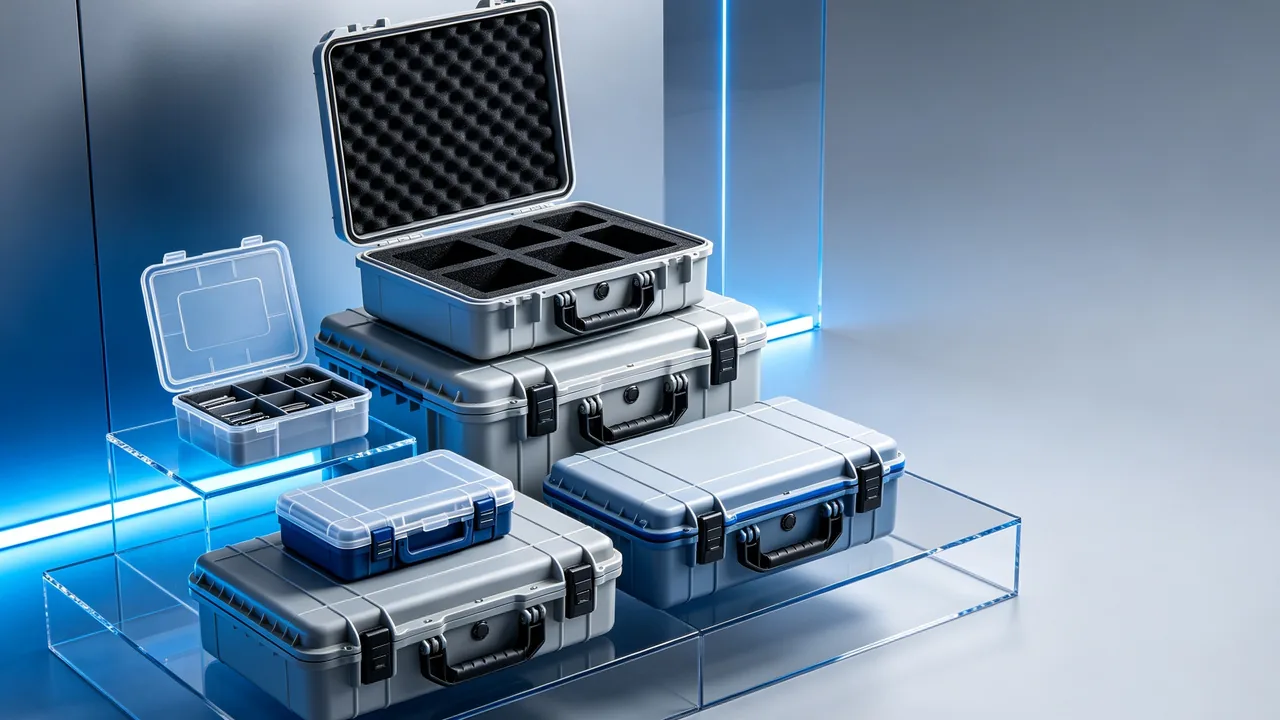
Field bivouac and outdoor camp operations involve a large and varied set of camp supplies, from cooking rations and bedding to lighting, power and repair tools. When these items are moved and organized as loose pieces, omission, misplacement, moisture ingress and impact damage become frequent. Consolidating all camp supplies into standardized protective cases for containerized carry is the key engineering measure to raise camp setup efficiency, cut material loss, and sustain continuous personnel living support. This article systematically explains the design points and procurement logic of the field camping logistics case across shell structure, liner zoning, sealing and waterproofing, latch compression, shock and stacking, thermal and humidity control, identification and tracking, selection decisions, customization capability and certification maintenance, providing an actionable reference for military bivouac units, outdoor camp operators and emergency logistics teams.
1. Definition and the Philosophy of Containerized Carry
A field camping logistics case is a rigid container dedicated to the centralized storage, zoned positioning, protective transit and rapid deployment of camp supplies in field training, outdoor camp and emergency support scenarios. Its essential difference from a household storage box is that the former treats transport protection and mission availability as the primary goals, while the latter is built for static home organization and largely ignores shipping shock and field sealing.
The core idea of containerized carry is to pack originally scattered camp supplies into several uniformly sized protective cases by functional module, so that the individual soldier and the squad can use the whole case as the smallest work unit during four phases: movement, unloading, setup and recovery. This brings three benefits. First, inventory efficiency rises sharply because checking case numbers confirms completeness instead of counting loose items. Second, protection level is unified because every module shares the same waterproof, dustproof and shock resistant capability. Third, space utilization improves because regular case shapes stack neatly inside vehicles, shelters and tents, and interface smoothly with the resupply system described in the Logistics Support Box modular resupply configuration.
From an engineering view, the field camping logistics case should be seen as a mobile miniature storage unit rather than a simple container. It must solve not only "fits inside" but also "travels stable, stays findable, remains usable, recovers fast". Therefore three inputs must be fixed before design: mission duration decides capacity and ration quantity, movement mode decides shell strength and weight ceiling, and setup frequency decides latch life and liner durability. Only when these inputs are written into the technical specification do subsequent material, sealing and liner plans have a basis.
In the camp living support chain, the logistics case also plays a peace-to-crisis bridging role. The material forms of peacetime outdoor camps, scientific stays and exercise support highly overlap with disaster relief and emergency duty, so one containerized carry scheme can be reused across scenarios. This is why the field camp case for field bivouac living and equipment storage attracts growing attention from logistics units.
2. Shell Structure and Material Selection
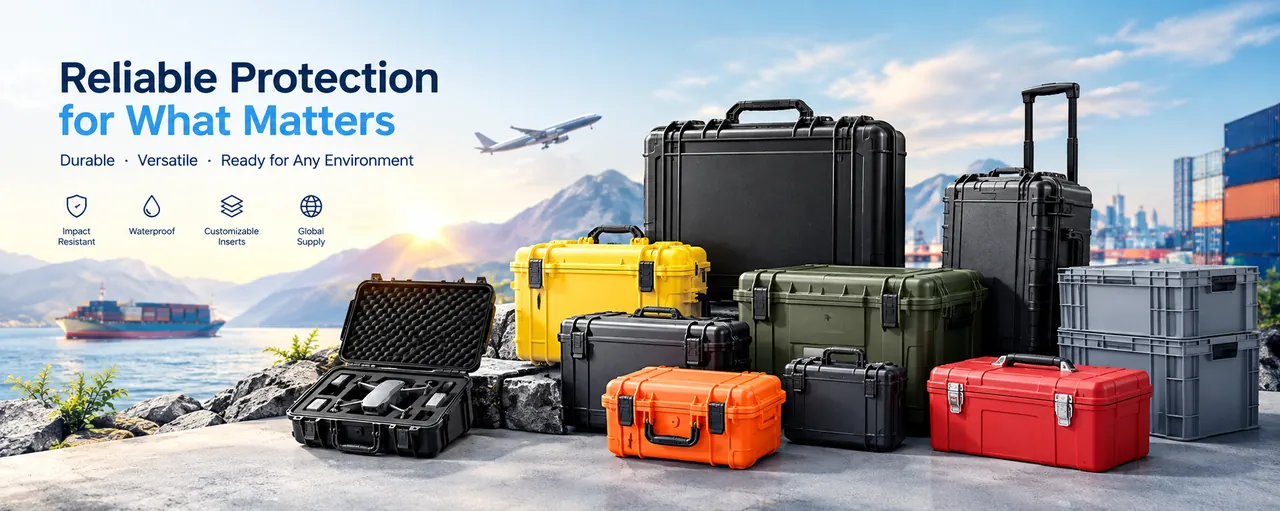
The shell is the first barrier of protection, and material directly decides weight, strength, weathering and cost. Mainstream shells for field camping logistics cases fall into three categories: rotomolded modified engineering plastic, injection molded plastic, and aluminum alloy, each matching a different mission profile.
Rotomolded shells use linear low density polyethylene or modified polypropylene, formed in one piece with no weld seam, good impact toughness and low temperature resistance against brittle fracture, making them suitable as main cases for heavy camp supplies. Wall thickness is typically four to six millimeters, with embedded metal reinforcement ribs or steel frames to bear stacking loads. The advantage is knock resistance and repairability; a local dent can be reset by hot air. The drawback is relatively higher self weight and slightly lower dimensional precision than injection parts. Structural differences between the two forming processes are covered in rotomolded vs injection cases.
Injection molded cases use polypropylene or acrylonitrile butadiene styrene copolymer, offering high dimensional precision, smooth surfaces and lighter weight, suitable for bedding, stationery and medicine of light to medium load. Their weakness is that corners and thin walls may crack under strong impact, so reinforcement ribs and rounded transitions are added. For ultimate lightweight carry units, the lightweight protective case composite weight reduction gives carbon fiber and sandwich structure routes.
Aluminum alloy cases are welded or riveted from aviation or anti rust aluminum profiles, with high strength, wide temperature range and many reuse cycles, fitting hard protection of high value power, communication and repair modules. Their drawback is fast heat conduction, requiring insulated liners to avoid overheating under summer sun, and higher cost than plastic. Material trade offs are detailed in aluminum vs plastic cases.
Regardless of material, the shell should have rounded transitions to reduce snagging in transit and reinforcement ribs to lift bending stiffness. Color should be low visibility military green, sand or dark gray, aiding camouflage and slowing UV aging. Shell resin should meet the environmental and flame baseline involved in the protective case CE certification EU market path and provide a restricted substance declaration where possible.
3. Liner and Zoned Layout: Classification of Camp Supplies
Seven tenths of containerized carry success depends on the liner and zoning. Camp supplies vary extremely in shape: cookware is hard, sleeping bags are bulky, medicine is delicate, cables are soft, fuel is hazardous. Mixed loading lets hard objects crush soft ones and liquids contaminate dry ones under vibration. Therefore the liner goal is not to fill voids but to zone by function, isolate by hazard and layer by access frequency.
A typical five layer logic exists. The bottom holds pressure resistant heavy items such as iron pots and water containers to lower the center of gravity and improve stacking stability. The middle holds bulky bedding with foam compression rebound cushioning. The upper quick access layer holds lighting, washing and common tools so camp setup needs no digging. Side pockets hold slender cables and straps fixed by elastic bands. An independent sealed small compartment holds medicine and documents against moisture and misuse. This layering thinking also appears in the equipment case and gear case zoned design.
Liner material prefers cross linked polyethylene foam and ethylene vinyl acetate copolymer foam, both closed cell, low water absorption and good cushion rebound. For delicate items like headlamps and thermometers, CNC cut cavities by shape let the object embed in a fixed position with zero shift during vibration. Cutting methods split into pre cut and on demand carving; the former suits batch standard cases, the latter suits custom mission cases, with process detail in custom foam lining for protective cases.
Dividers can use a modular insert board system, letting users re partition by the current mission for one case multi use flexibility. For rolling gas cans and bottles, elastic rings or molded grooves should be configured; for sharp cookware, a wear fabric layer over the foam prevents cutting. Importantly, fuel items must be physically isolated from food and medicine in different cases, and the fuel case should meet relevant ventilation and explosion proof requirements, drawing on the isolation thinking in the oil and gas field operation case explosion proof storage.
4. Sealing System and Ingress Protection Rating
Water and dust are the greatest enemies of camp supplies. Case sealing is jointly decided by the lid gasket, the shell mating face and the latch compression force. Gasket material is mostly ethylene propylene diene monomer rubber or thermoplastic elastomer; the former resists ozone and weathering better, the latter rebounds and performs better at low temperature. Shapes commonly use continuous closed loop hollow tube or tongue lip seal, forming a continuous watertight line when closed.
Protection level follows the IP code of GB/T 4208 and IEC 60529. Field camping logistics cases should reach above IP65, and IP67 for rain and creek crossing, with IP68 for short time immersion during river crossing carry. The first digit after IP denotes dust resistance, six meaning fully dust tight; the second digit denotes water resistance, five meaning water jet, six meaning powerful water jet, seven meaning immersion at one meter for thirty minutes, eight meaning deeper continuous immersion per maker agreement. Rating meaning and verification are in protective case IP rating quantified grading and protective case IP68 rating immersion verification.
Sealing effectiveness depends on the uniform compression from latches. Fewer latch points or lid deformation create local weak bands and lower the overall rating. Therefore sealing design must be checked together with latches and hinges. The lid hinge should use anti rust metal or reinforced nylon with opening life meeting high frequency camp setup. For gasket aging and replacement cycles, set a periodic inspection system, detailed in case seal strip waterproof dustproof accessory.
On plateau and high altitude movement, day night pressure change creates a pressure difference inside and outside the case, sucking the lid shut or letting dust in. A pressure equalization valve should then be fitted, slowly balancing internal pressure with the environment while the valve body carries a dust and water membrane that does not affect the rating. This part is a key option in the protective case accessories upgrade latches wheels handles valves.
5. Latches, Hasp and Anti Theft Compression Design
Latches and hasps perform two functions: compressing the lid during transit to maintain sealing, and preventing casual opening during stay. Common compression types are butterfly latch, lever latch and draw latch. The butterfly latch presses the lid down through a cam, with high compression and fast operation, making it the mainstream for camp logistics cases. The lever latch suits large heavy cases and can be locked with one hand. The draw latch is used where a personal padlock or numbered seal is needed. Latch selection points are in case latch pressure theft resistance hardware.
For compression capacity, the joint between latch and shell is the most failure prone node, and stress should be spread by thickening the mounting plate, embedding metal inserts or lengthening screws. Under stacking load, the lid bears not only its own weight but the whole upper case, so latch points must keep compression without decay across the full life. Hinges likewise need shear resistance to avoid sagging from long opening that misaligns the mating face and fails the seal.
On anti theft, camp logistics cases often hold batteries, fuel and tools of high value or controlled status, so a latch nose accepting a personal lock or numbered seal is advised, combined with camp material control. For classified or controlled items, the shielding structure in protective case EMC shielding signal isolation can be added, though rarely needed in ordinary camp scenes. Latch surfaces should be anti salt spray treated, especially for coastal or humid camps.
Latch life is measured by open close cycles; a quality butterfly latch exceeds several thousand. Procurement should require cycle life and salt spray test data from the supplier, tied to the corrosion requirement in protective case salt spray test marine humid, ensuring no jam or rust within one mission cycle and years of reuse.
6. Shock Isolation and Stacking Load
The camp logistics case endures continuous random vibration and occasional drop shock in vehicle and vessel transit; internal foam is the first shock line and the shell frame is the second. The isolation goal is to control the peak acceleration transmitted to supplies within the device tolerance. For fragile lamps and instruments, calculate their fragility value and choose foam thickness and density accordingly; for impact resistant cookware, thin appropriately to save space.
Stacking load is decided by side wall bending, stacking corner location and lid compression. Standard cases set stacking corners or bosses at the four top corners, passing the upper case weight vertically through corner points to the lower case corners, avoiding side wall shear. Stacking corner design and load calculation are in case stacking corner load bearing alignment hardware. In a vehicle, limit one stack to four layers, heavy case below and light above, fixed by straps against side shift.
To verify stacking and transit reliability, simulate per ISTA series and MIL-STD-810H. ISTA focuses on combined vibration, drop and compression of the distribution environment; MIL-STD-810H covers a harsher military environmental spectrum. Test logic is in protective case ISTA test distribution simulation and protective case stacking test warehouse load. In selection, use the total load of the highest stacking layer appearing in the mission as the design input, not merely the single case nominal load.
Isolation and stacking also consider the center of gravity. Filling the upper layer with bulky bedding raises the whole case center and risks rollover on long off road runs, so the principle of heavy down and light up must run through the loading rule. For large volume remote movement, the space planning in stackable container stacking strength efficiency helps embed case size into the whole vehicle load calculation.
7. Thermal Control and Humidity: Shelf Life Environment of Camp Supplies
Among camp supplies, medicine, food and some electronics are temperature and humidity sensitive. A normal protective case is a passive thermal barrier whose control comes from shell material thermal resistance, liner air layer and sealed moisture proofing. In plateau and desert with large day night swings, the temperature swing inside is buffered by foam liner; in plum rain and coastal areas, relative humidity is controlled by gasket and desiccant.
Passive moisture proofing routinely places reversible desiccant such as color change silica gel inside, with a humidity indicator card on the lid, readable at a glance whether replacement is needed. For higher requirement rations and medicine, an active thermal module can be fitted, embedding a thermoelectric cooler and insulation layer in the wall, powered by battery or vehicle supply to hold a set temperature band. The active scheme is detailed in active temperature control protective case thermoelectric cooling, sharing the food shelf life goal with the ration box food grade sealing bulk issue.
Note that thermal control and sealing are a pair needing coordination: full sealing helps hold moisture yet hinders heat release, while active cooling creates condensation. So professional schemes fit a water guide trough and absorbent at the cold end, and set an openable breath membrane for non water scenes. For medicine temperature records, embed a temperature logger or Bluetooth probe, exporting the curve after return as shelf life evidence.
The other side of moisture proofing is anti mold. Bedding stored damp in humid environments grows mold, so liners should use anti mold foam and ensure supplies are dry before long sealing. The return cleaning and drying flow can follow the protective case cleaning hygiene seal care, suppressing mold and odor at the source.
8. Identification, Asset Tracking and Transport Marking
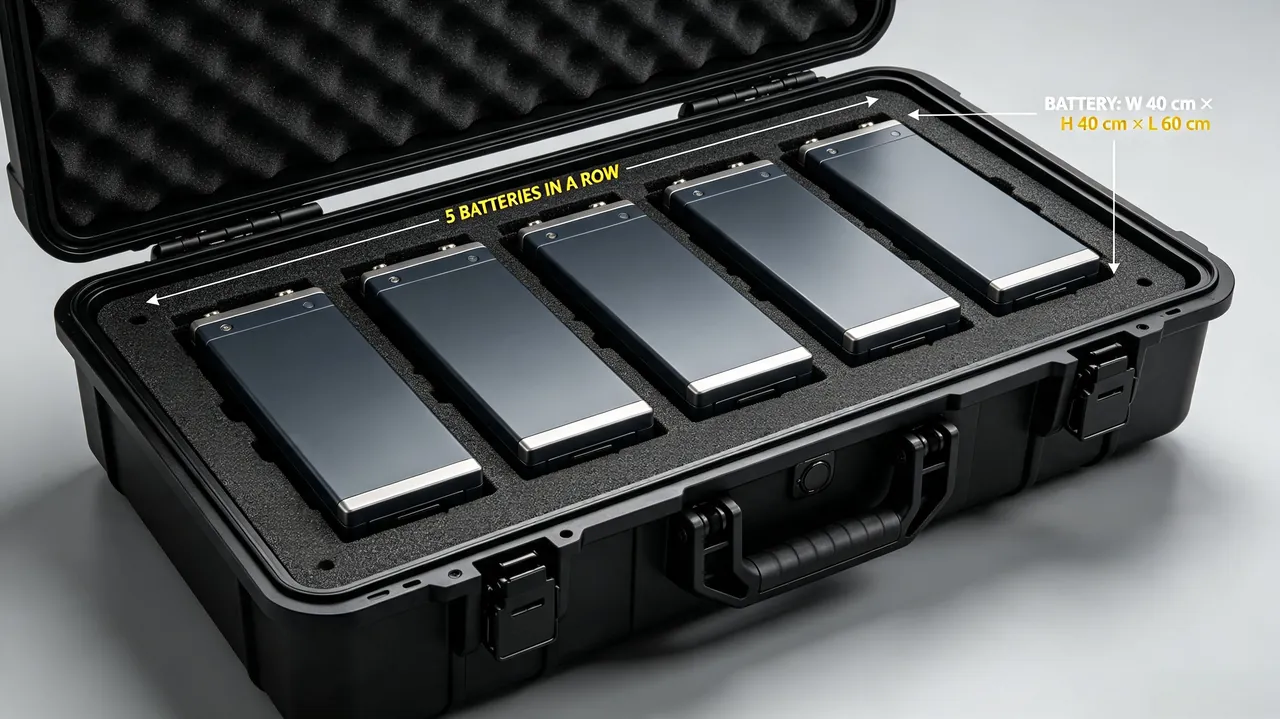
The manageability of containerized carry largely comes from the identification system. Each camp logistics case should carry a fixed nameplate and a replaceable label area on the lid outside, marking case number, owning squad, function module, configuration version and last inventory date. Color management is also effective: color codes distinguish five modules of ration, bedding, lighting, repair and medical, so setup takes by color and recovery returns by color, sharply cutting misplacement.
For asset tracking, embed a weatherproof QR code or RFID tag inside the wall, linking with the camp material system for in out scan and location query. The QR label should be laminated away from the tread surface; the RFID tag must consider metal shell signal shielding, using external or anti metal tags when needed. Identification and tracking practice references the protective case transport marking pictograms labels and asset label norms.
Transport marking targets the logistics link, requiring upward, fragile, moisture proof and stack limit layer signs per national and industry graphic standards, plus gross weight and center of gravity outside. For cross border or military trade kits, marks should meet destination regulation and language. Marks must not cover the sealing face or latch area, and use weatherproof ink or laser etching to avoid falling off in rain and sun.
In large camp support, identification is also the base of box as account. Digitizing each case inventory list into a QR lets commanders scan with a terminal to grasp total stock without opening cases one by one, exactly the ready to use thinking advocated in the war reserve case combat readiness box packaging strategy.
9. Selection Decision: Capacity, Load and Size Match
Procuring a camp logistics case needs a quantitative decision table, avoiding choice by appearance or price. Core parameters include outer size, inner clear size, empty weight, rated load, stacking layers, protection rating, operating temperature range and latch life. The inner clear size matters more than outer size because it decides actual volume, while shell thickness eats a sizable share.
Capacity planning starts from mission headcount: multiply per person daily ration, bedding and shared supply volume by mission days, then add a redundancy factor to get the net volume a case should have. For a ten person squad on seven day training, the ration and bedding modules usually split into three standard cases plus one repair tool case, rather than one oversized case that saves case count but loses zoning flexibility and load balance per vehicle.
Load check distinguishes inner load from stacking load. Inner load is the weight this case holds; stacking load is the total weight of the upper whole case pressing on this lid. Selection should take the larger and leave safety margin, typically designing load at one point five times the mission peak. Size match also considers the internal clearance of the carrier: door height of vehicles, shelters and transport aircraft often blocks over wide cases, so the case long side should fit standard pallet or cargo hold module.
The selection process should form a written specification and score item by item against the dimensions in the protective case selection guide parameter decisions. For uncertain items, validate with a sample case real load before batch finalization, avoiding size or zoning mismatch after bulk arrival.
10. Custom Liner and OEM or ODM Capability
Standard cases cover most scenes, but camp logistics often has exclusive items such as specific cookware, issued sleeping bags and custom power modules that need cavity cut liners for zero shift carry. JUNZHIJIA can customize liners from the customer physical item or 3D model, CNC carving cavities in cross linked polyethylene foam so each item has a unique fixed position, both shockproof and easy to inventory.
At the OEM and ODM level, JUNZHIJIA can undertake the full chain from shell structure optimization, seal selection to logo printing. For example, for high cold camps, the standard case can be upgraded with a low temperature elastomer gasket, thicker foam liner and preset pressure equalization valve; for rainy jungle, reinforce lid drain slope and latch anti rust. This same platform multiple configuration derivation lowers the procurement and spare complexity across scenes.
Note that customization is not the more the better. Over customization sacrifices generality and interchangeability and raises spare variety. The reasonable approach is standard cases for common modules and custom liners only for high value or irregular exclusive items, keeping the support chain both professional and controllable. JUNZHIJIA usually provides liner plan review and sample confirmation at project start, helping users balance customization depth and generic cost, related to the process in custom foam lining cavity cut cushioning.
For upgrading existing cases, JUNZHIJIA also offers gasket replacement, latch reinforcement and wheel handle fitting as after sales, extending the service life of in use cases, echoing the option logic in protective case accessories upgrade.
11. Certification and Compliance: CE, RoHS, REACH, UL 94, IK Rating
Protective cases entering formal procurement and export chains should provide relevant compliance files. For the EU market, CE marking is the access premise, covering material safety, flame and electromagnetic dimensions; restricted substances need RoHS and REACH declarations with material statements and test reports. Flame performance can be rated by UL 94 for shell plastic burning level, commonly reaching V-0 or V-2.
On mechanical protection, the IK code per GB/T 20138 and IEC 62262 rates the shell against external impact, higher number meaning stronger. Camp logistics cases inevitably knock during handling and stacking, so key load and latch areas should correspond to IK08 or above. The combination of IP and IK forms the environmental protection profile; procurement should require the supplier to list them separately in the test report, not merely claim orally.
For military trade or government projects, GJB class military standards and MIL-STD-810H environmental test compliance may be involved; for derivative cases carrying dangerous goods, United Nations packing certification is required. Certification paths and documents are in protective case UN certification hazardous goods packing and protective case CE certification EU market path.
Compliance is not one time. Material formula change or supplier switch may affect RoHS and REACH, so set a change notice mechanism and require batch accompanied substance declarations. JUNZHIJIA can provide corresponding test and compliance files at delivery, easing buyer archiving and later sampling.
12. Use Scenarios: Military Bivouac, Outdoor Camp and Emergency Support
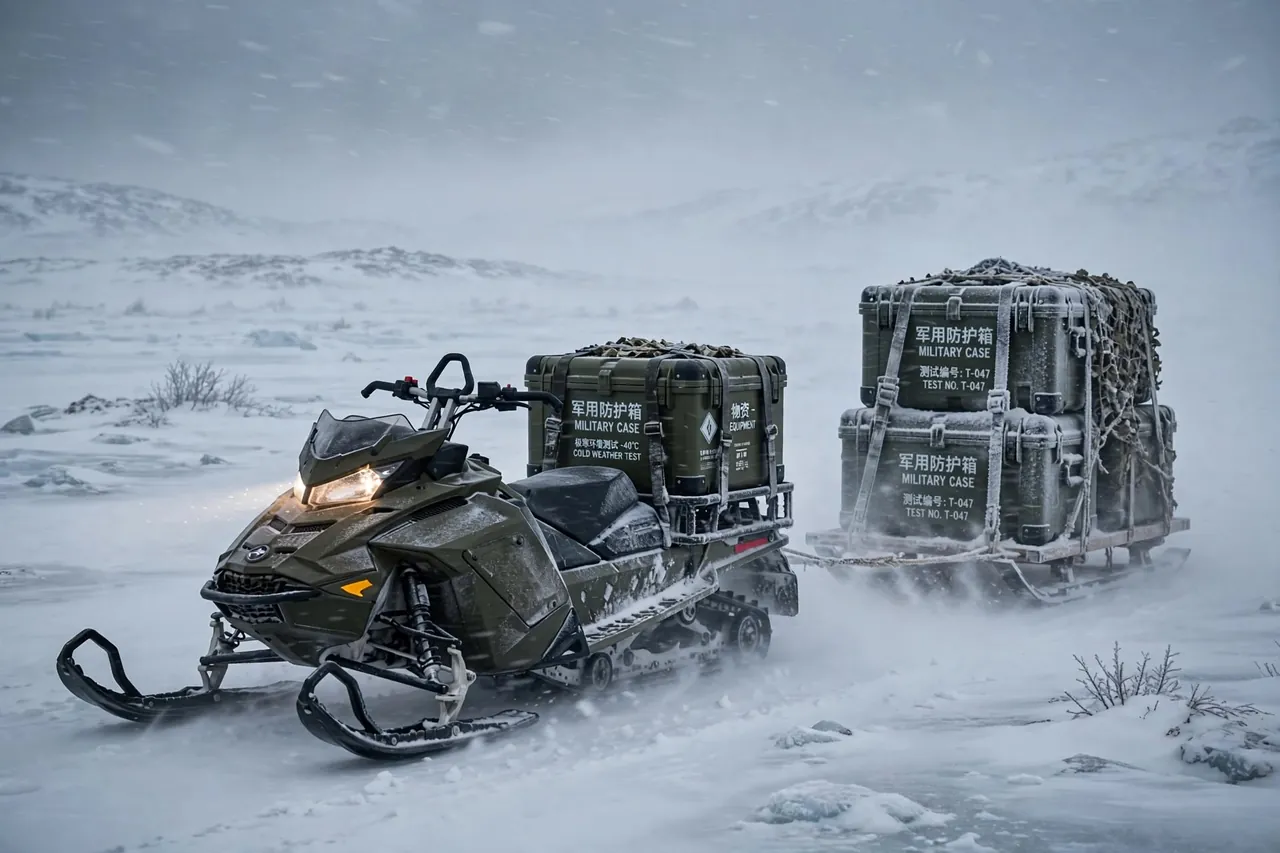
In military bivouac and training, the logistics case is organized into the squad by module: ration case, bedding case, lighting case, repair case and medical case each with a case number and carry position. Setup unloads by number and returns by color, recovery reverses the action, turning camp living support into standard moves. This organization shares the issue logic of the emergency relief supplies case turnover distribution, both emphasizing the whole case as unit.
For outdoor camp operation, commercial camps, study bases and outdoor clubs can manage public supplies with uniform logistics cases, cutting management cost and lifting guest experience. Scientific and exploration stays value weathering and sealing more, often separating instruments from camp supplies, referencing the scientific expedition instrument case extreme protection weathering config.
In emergency support, the logistics case is the carrier of pre positioned disaster relief supplies. When flood, earthquake and cold freeze hit, pre packed camp supplies by module load directly onto trucks, skipping on site sorting. Its rapid deployment matches the rescue case modular configuration, and can run parallel with the wilderness first aid case medicine temperature sorting medical module, forming a complete field living support package.
Worth adding, the camp logistics case also serves film location, geological survey and border patrol of long field work; these scenes share light weight and drop resistance needs, only differing in quantity and liner, so one case platform with swapped liner reuses across missions, lifting asset turnover efficiency.
13. Maintenance, Cleaning and Life Extension
Case service life depends on daily maintenance. Each return should run three steps: open lid to vent, clear mud and sand, check seal and latch. Opening vents inner moisture; a soft brush or compressed air clears sand from hinge and seal groove; visually check gasket cracking and latch jam. The seal is a consumable; replace on hardening or deformation, method in case seal strip waterproof dustproof accessory.
Cleaning avoids strong solvent that erodes plastic shell and rubber ring; food or medical grade modules use neutral cleaner and dry before sealing. Mud left long on the surface speeds UV aging, so return washing should be a rule. Full cleaning norm is in protective case cleaning hygiene seal care.
Stacking and storage also matter: long storage should be single or limited layer flat, away from direct sun, heavy below; idle cases half open to avoid permanent gasket deformation. Lubricate latch and hinge with a little anti rust grease periodically to extend open close life. A systematic checklist is in protective case maintenance life extension and protective case stacking guide warehouse safety.
When cracks or loose latch points appear, assess repair versus retirement. Small rotomold shell cracks can be hot welded with same material; structural damage suggests return to factory. A one case one file life ledger recording each mission mileage, damage and repair is the necessary link of refined logistics asset management.
FAQ
Q: What is the core difference between a field camping logistics case and a household storage box?
A: The core difference lies in design goal and protection rating. A household storage box targets static home organization and basically ignores shipping shock, waterproofing, dustproofing and stacking load, with simpler material and latch. The field camping logistics case treats mission availability as the primary goal, emphasizing that internal camp supplies stay intact and accessible under bump, rain, sand, low temperature and stacking pressure. It has engineered shell material, sealing ring, compression latch, shock liner and identification system, usually verified by IP rating, IK rating and transit tests. For support units reusing across scenes, the standardized case shape also stacks neatly inside vehicles and shelters, which an ordinary storage box cannot provide. Choosing the right grade prevents both over specification cost and under protection failure in the field. Buyers should therefore map the actual mission environment and handling profile before specifying, then match the case grade to that profile rather than to the lowest catalog price.
Q: How should camp supplies be zoned to be both shockproof and quickly accessible?
A: Zoning should follow the principle of zone by function, isolate by hazard and layer by access frequency. The bottom holds pressure resistant heavy items like iron pots and water containers to lower the center of gravity. The middle holds bulky bedding with foam compression rebound cushioning. The upper quick access layer holds flashlights, washing and common tools so setup needs no digging. Side pockets hold slender cables and straps fixed by elastic bands. An independent sealed small compartment holds medicine and documents against moisture and misuse. Fuel items must be physically isolated from living supplies in a different case. Liner material prefers cross linked polyethylene or ethylene vinyl acetate closed cell foam, with cavities cut by shape for delicate items to achieve zero shift. This protects transit shock and lets camp setup take by layer and recovery return by position. Color coding the lid by module further speeds setup at night, so crews grab the right case without opening it and the whole site returns to order after the mission.
Q: How to choose between IP67 and IP68, and how is the immersion test done?
A: IP67 means dust tight six and short time immersion, typically verified at one meter for thirty minutes; IP68 means deeper continuous immersion per maker agreement with a higher grade. Ordinary camp movement crossing creeks and rain is fine with IP67, while river crossing carry or possible whole case dropping in water needs IP68. The immersion test follows GB/T 4208 and IEC 60529, immersing the case at a set posture and depth for a set time, then opening to check inner water entry and seal failure. Note the overall rating is jointly decided by gasket, mating face and latch compression; fewer latch points or lid deformation create local weak bands, so sealing must be checked together with latch and hinge rather than the gasket alone. Procurement should require the rated test report instead of oral claims to avoid misleading grade. For camps that may ford streams, request the deeper immersion value in writing and confirm the gasket and latch are the same configuration as the tested sample.
Q: How to determine a safe stacking layer count?
A: Safe stacking should take the total load of the highest stacking layer appearing in the mission as the design input, not merely the single case nominal load. Stacking load is decided by side wall bending, stacking corner location and lid compression; standard cases pass the upper weight vertically through top corner points to avoid side wall shear. Limit one vehicle stack to four layers, heavy below and light above, fixed by straps against side shift. Require the supplier to provide ISTA and MIL-STD-810H stacking and vibration test data, and use one point five times the peak total load as design margin. Size planning can reference the stackable container space efficiency method to embed case size into the whole vehicle load calculation, preventing overloaded or unstable stacks during off road transit and storage. Mark the approved layer count on the case face so drivers and crews follow one rule in the field, and recheck straps after the first hour of rough road.
Q: What sealing and thermal points matter for high cold and rainy camps?
A: High cold camps have large day night pressure change that sucks the lid shut or brings dust, so fit a pressure equalization valve with dust water membrane; also ordinary rubber rings harden and crack at low temperature, so use low temperature elastomer gaskets and thicker foam liner to slow temperature swing. Rainy jungle camps focus on waterproofing and anti mold: reinforce lid drain slope and latch anti rust, vent and clear sand on return, ensure bedding is dry before sealing, and use anti mold foam liner. Active thermal modules work in both scenes but need condensation handling with a cold end water trough and absorbent, plus a temperature logger for medicine as shelf life evidence. Coordinating sealing with cooling avoids the trap of sealed yet moldy or cooled yet wet interior. In practice, log the gasket type and liner material per case so cold weather swaps are done before the season and mold risk stays low during long wet storage.
Q: Does a custom liner sacrifice the case generality and interchangeability?
A: Reasonable customization does not sacrifice generality; the key is customization depth. Common modules like ration and bedding should use standard cases with standard liners for cross squad interchange; only high value or irregular exclusive items get cavity cut custom liners for zero shift and easy inventory. This same platform multiple configuration derivation is both professional and controllable, and lowers spare variety. JUNZHIJIA usually provides liner plan review and sample confirmation at project start, helping balance customization depth and generic cost. For existing cases, only local upgrades like gasket replacement and latch reinforcement are done rather than whole remake, protecting the invested assets while still meeting the new mission profile without blowing the spare parts budget. Keep the custom cavity drawings with the case file so future re cuts stay identical and a damaged liner can be remade without re measuring the original items. Storing the liner spec alongside the shell drawing also helps when requalifying the case after a material change, since auditors can confirm the cavity still matches the listed contents.
Q: What compliance and test files should procurement require from suppliers?
A: Formal procurement should at least obtain CE related files for the EU, RoHS and REACH restricted substance declarations, UL 94 flame rating, IK mechanical impact grade and IP protection test report, plus ISTA or MIL-STD-810H transit and environment test data. Military trade or government projects may also need GJB class standard compliance, and dangerous goods derivative cases need United Nations packing certification. Crucially, set a change notice mechanism: material formula or supplier switch may affect compliance, so require batch accompanied declarations and archive them for later sampling. JUNZHIJIA can provide corresponding test and compliance files at delivery, supporting the buyer to complete acceptance and ledger management with verifiable evidence rather than trust alone. Ask suppliers to state the exact model and configuration covered by each certificate so the paper matches the physical case during later audit and re procurement. Keep a single compliance folder per case model so every certificate, declaration and test report sits together and the whole set is ready before the next tender or shipment.
Q: How to maintain the logistics case after return so it lasts longer?
A: On return, run three steps: open lid to vent, clear mud and sand, check seal and latch. Opening disperses moisture; a soft brush or compressed air clears sand from hinge and seal groove; visually check gasket cracking and latch jam. Clean with neutral agent, avoiding strong solvent that erodes shell and ring; food grade modules wash and dry before sealing. Long storage should be single or limited layer flat, away from direct sun, heavy below; idle cases half open to avoid permanent gasket deformation, and lubricate latch hinge with anti rust grease periodically. The seal is consumable, replace on hardening. A one case one file life ledger recording mission mileage, damage and repair is the necessary link of refined management, significantly extending the service life of the whole support asset fleet across repeated field deployments. Schedule the three step check after every return, not only when damage is visible, because small seal wear and hinge grit cause the largest losses over a season.